Garden Blog - Top Tropicals

Date: 9 Dec 2020

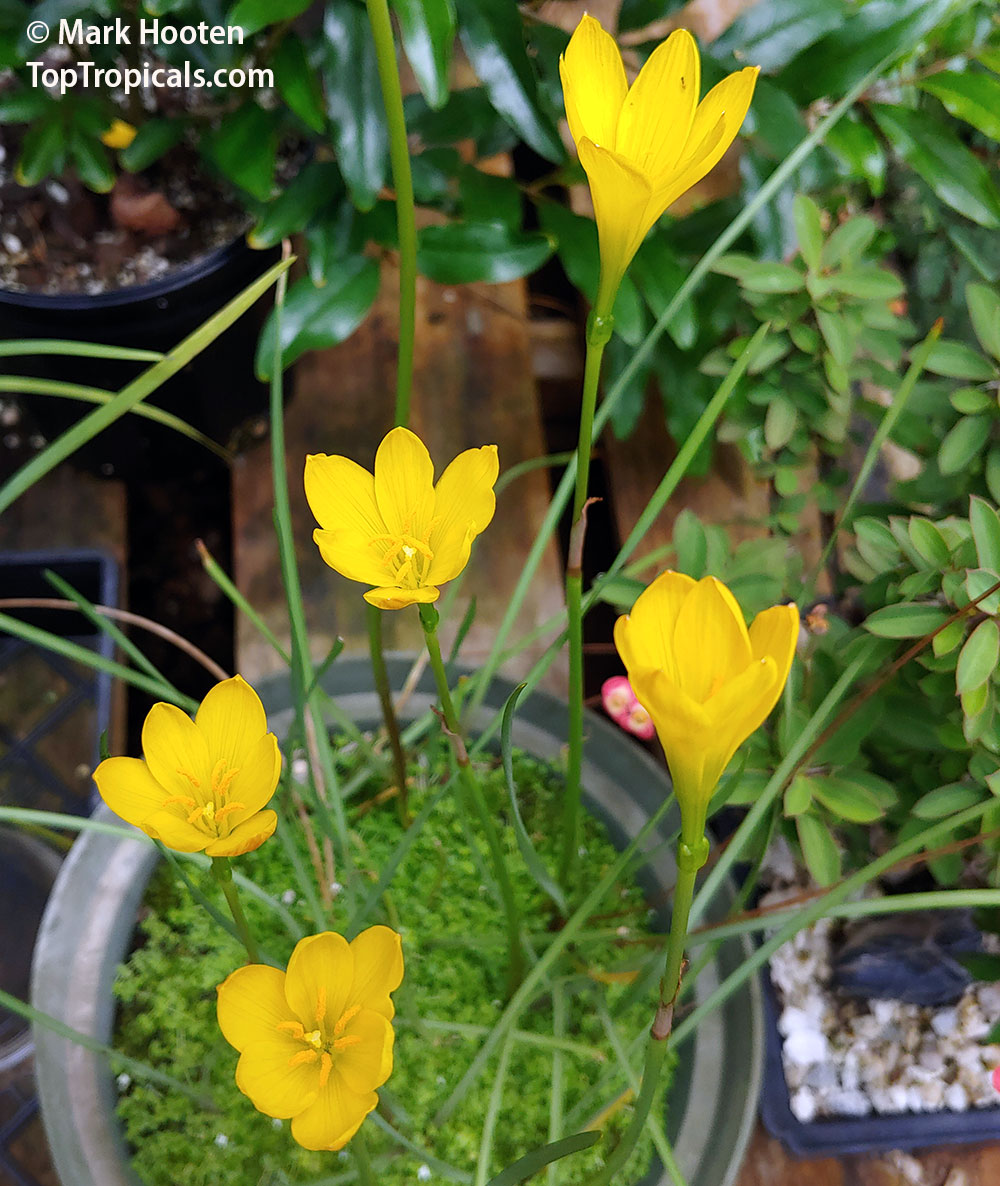
Zephyranthes pulchella - sunny face of incredible Magic Lily

by Mark Hooten, the Garden Doc
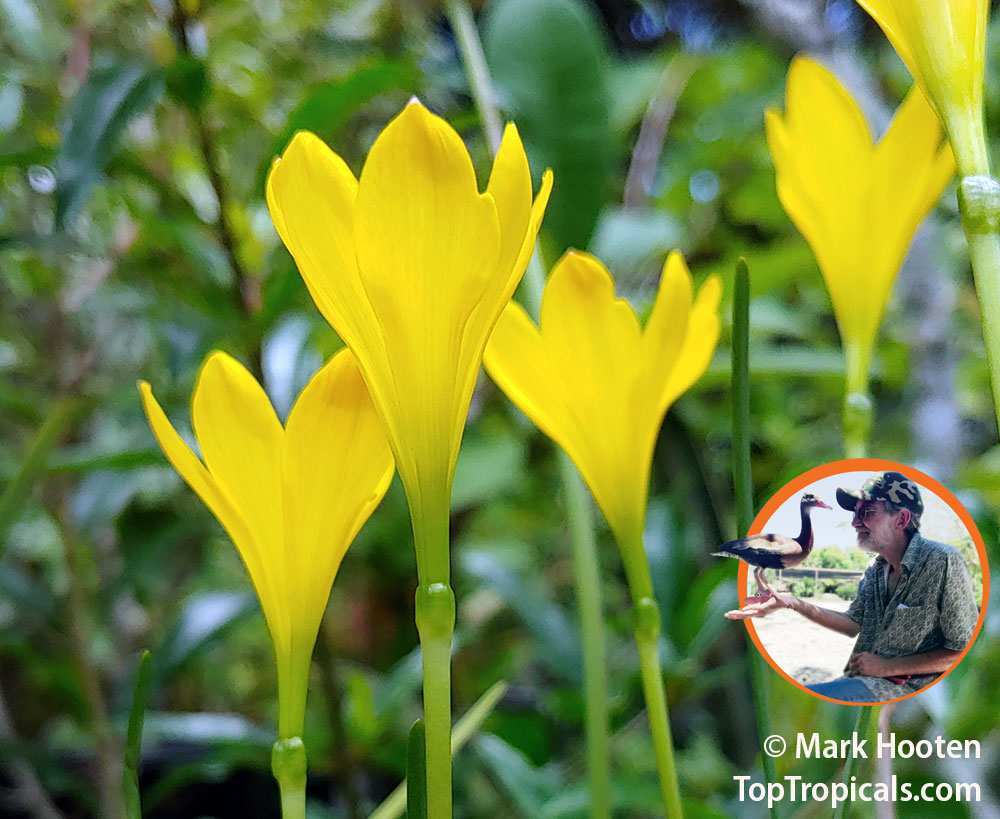
...These wonderful little lilies came as a gift from a botanist studying the native plant life of Southern Texas nearly 30 years ago. Originally grown from seeds collected for a doctoral thesis, near the town of Refugio (along the Southern Texas Gulf Coast, just north of Corpus Christi), this brilliant, fetching tiny lily really deserves to be more well known. The thin, grass-like leaves grow from small onion-like bulbs that produce an abundance of shockingly bright cadmium-yellow flowers which greatly resemble those of certain yellow Crocus, except on longer stems.
There is one caveat which goes along with this incredible species... it can be wonderful, depending upon a growers situation... which is that this species is "apomictic". This means that they produce seeds which do not require cross pollination, and technically are clones of each mother plant!..

CONTINUE READING >>

Date: 4 Dec 2020

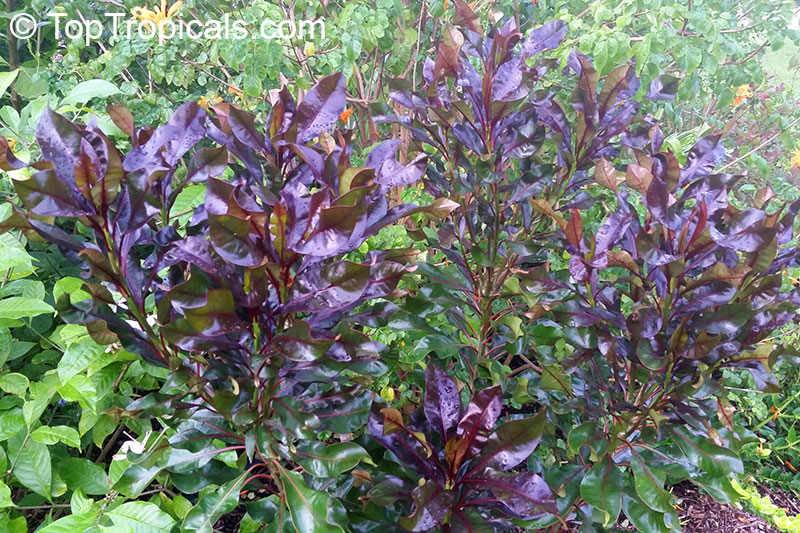
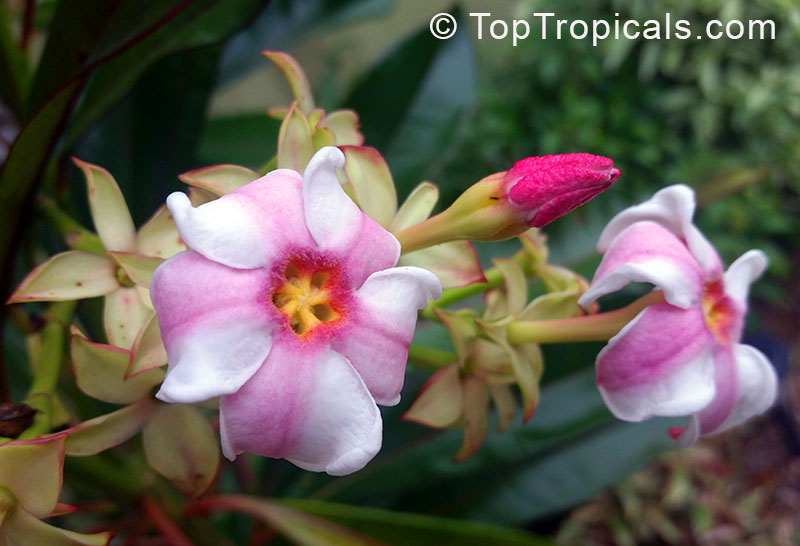
Establishing Cerbera Manghas
after a long shipping trip

Q: I live in Hawaii. I purchased Cerbera x manghas - Enchanted Incense. I followed the repotting instructions but it looks like dying? Is the normal for all the leaves to fall off? I only use purified water to mist and water the plant. I let it dry between watering and still it looks sad. Please help!

A: Cerbera is very sensitive to shipping stress (in particular to darkness) and it often loses leaves in transit. Considering long trip to Hawaii, it had extra 1-2 days in transit, longer than to most of the states. Your plant looks very much alive, however we understand your concern about lost leaves.
You need to treat it like Plumera: keep on a dry side until it starts sprouting new leaf growth. Once it gets re-established, you may move it out into regular irrigation or rain.
We recommend to keep it under roof to control water input, but in very blight spot, preferably sunny.
Make sure the soil doesn't get soggy, too much water may kill the plant especially when it is leafless and hence doesn't consume/evaporate much water.
Water only when top of the soil gets slightly dry.
Do not put into bigger container until roots start growing. The plant should recover and start new growth under proper care. Keep us in loop how the plant is doing!

Date: 4 Dec 2020

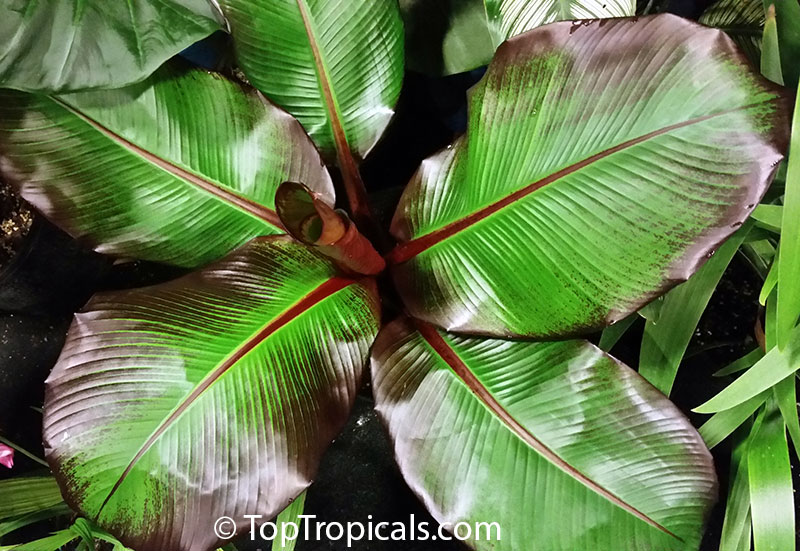
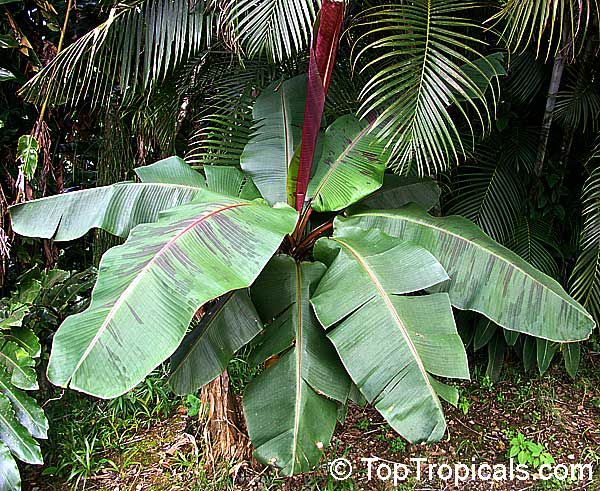
Musa ensete Maurelli - Red Abyssinian Banana

by Onika Amell, tropical plant expert

Q: I am looking for a colorful, tropical plant with in particular, coarser texture, to add to planting beds next to my decks and around my swimming pool. Any suggestions? I am located in St. Petersburg, FL.

A: Consider incorporating some fast growing Red Abyssinian Banana, also known as wild banana or Ethiopian banana. This is a fantastic ornamental from East Africa and an excellent choice to create a tropical feel and to add coarse-textured foliage. This plant is not a true banana and therefore does not produce any edible fruit. American gardeners were rather slow to discover this enormous perennial, but finally woke up to them over the last decade to a point where they now are considered to be one the most beautiful ornamental banana plants for the landscape and for good reason...

CONTINUE READING >>

Date: 29 Nov 2020

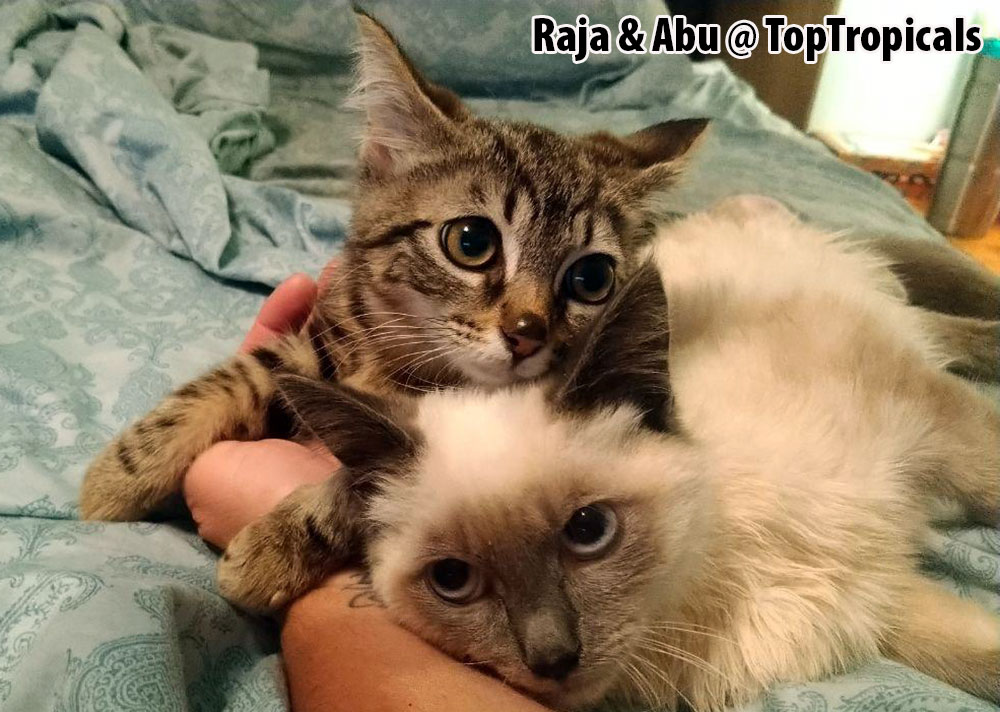
PeopleCats of TopTropicals. Cat of the Day: Story of Raja, Part 2

Everybody was touched by the tragic story of Raja - the kitten Kristi rescued from the tough street challanges and gave her a chance for Life...
Today we continue this story. And although it is a sad one, there will be a happy ending, and there will be always lessons we learn from the experience of taking care of our loved once.
Raja taught us to never let our disabilities define what we can and can't do. She taught us that every live creature deserves to know what love, a warm home, and a family means. She taught us resilience, determination and perseverance. Sometimes goodbye is not always an end, but a possible new beginning with new lessons learned...

CONTINUE READING >>

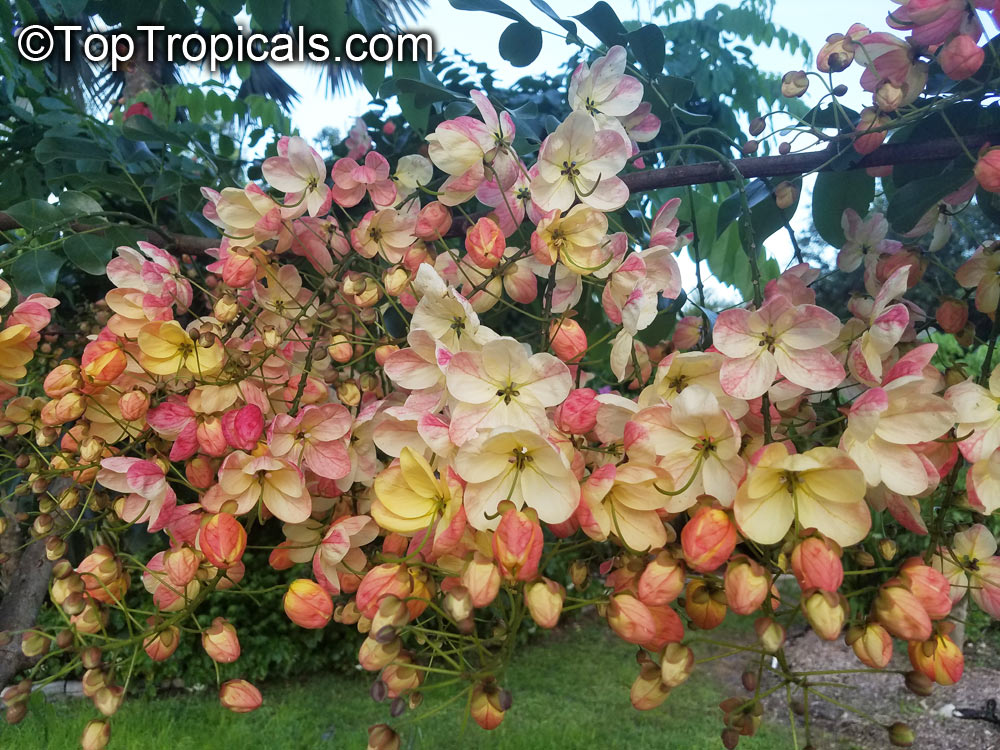
In the photo: Raja's Rainbow Cassia

TopTropicals PeopleCat Club and Zoo

Thank you for supporting us in helping PeopleCat Community!
Make your kind donation today and receive a surprise gift from us! Every little bit helps. Thank you and God bless you and your pets!

Date: 29 Nov 2020

Cold protection of tropical container plants

Q: I am long time customer of yours, I live in San Diego California and while the summer and Fall temperatures are warm to mild, the winter temperatures dip to a point where some tropicals die off. We are experimenting with different variations of way to heat and insulate the pots we have the tropicals planted in as a way to keep them alive during the colder winter months. I was wondering if you knew of the ideal soil temperature for these tropical in order to look their best year round. All of the heaters we have installed have thermostats and temperature adjustments so we can now keep the soil anywhere between a range of between 65-75 degrees. Any advise you can provide would be greatly appreciated.

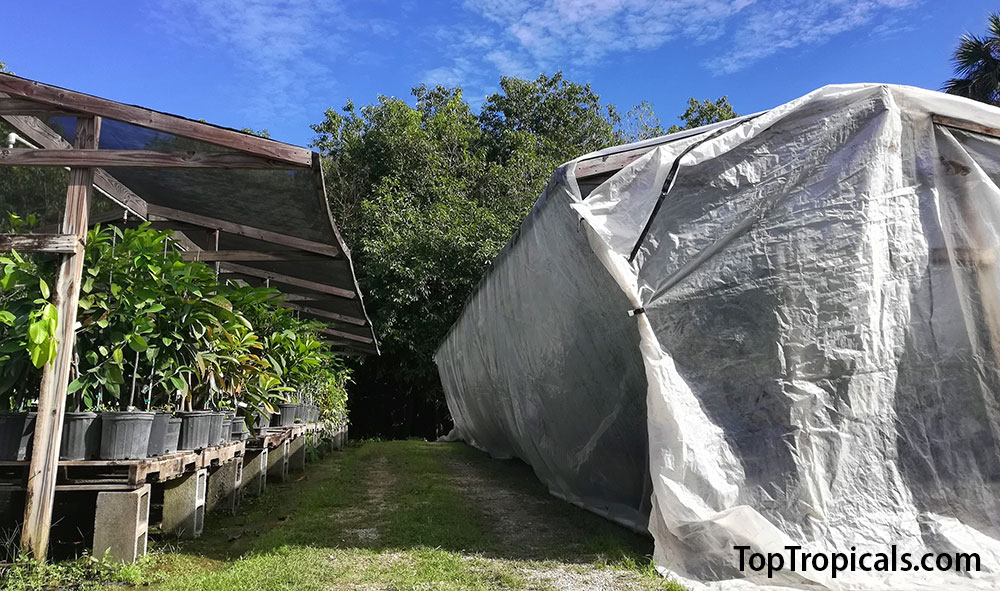
A: This is a very interesting concept you are working with. Indeed, keeping pots/roots warm, may help a lot! We've been experimenting with cold protection for a long time - for the above-ground plant parts. For sure keeping roots protected (even with a thick layer of mulch) will benefit tropical plants during winter. In case with container plants, this may help dramatically.
The guideline is, tropical plants slow down or stop their metabolism at 65F. As long as you can keep soil above that temperature - this should work great. Of course, the higher the better.
Optimum temperature for growing tropical plants in general - 70-85F. Above 90F, metabolism stops too, unless it's a heat tolerant, desert plant.

More information on winter cold protection of tropical plants and zone pushing:

Greenhouse in Virginia
Plumeria cold protection
Ghost Cold Protection
Seven rules of cold protection for tropicals
About Cold Protection
Cold protection - winter action for your plant collection
Tropical Treasures articles on zone pushing.