Garden Blog - Top Tropicals

Date: 23 Apr 2019

Fruit tree size and production
TopTropicals.com

Q: I am interested in a Strawberry Tree... does this tree produce fruit while still small or do I have to wait until it is large before it produces? Should I fertilize it so it produces sooner? I ask because my garden is not large and I prefer to keep my fruit growing trees in a smaller size. Also, how big is the fruit and does it have a seed?

A: Strawberry Tree, Muntingia Calabura, is one of those fascinating fruit trees that starts flowering and fruiting in small size. We have plants growing in 1 gal containers that already have flowers. This tree is nearly year-round producer providing warm conditions. It is a fast grower, although a compact tree when mature, and can be trimmed to desirable size without affecting production.
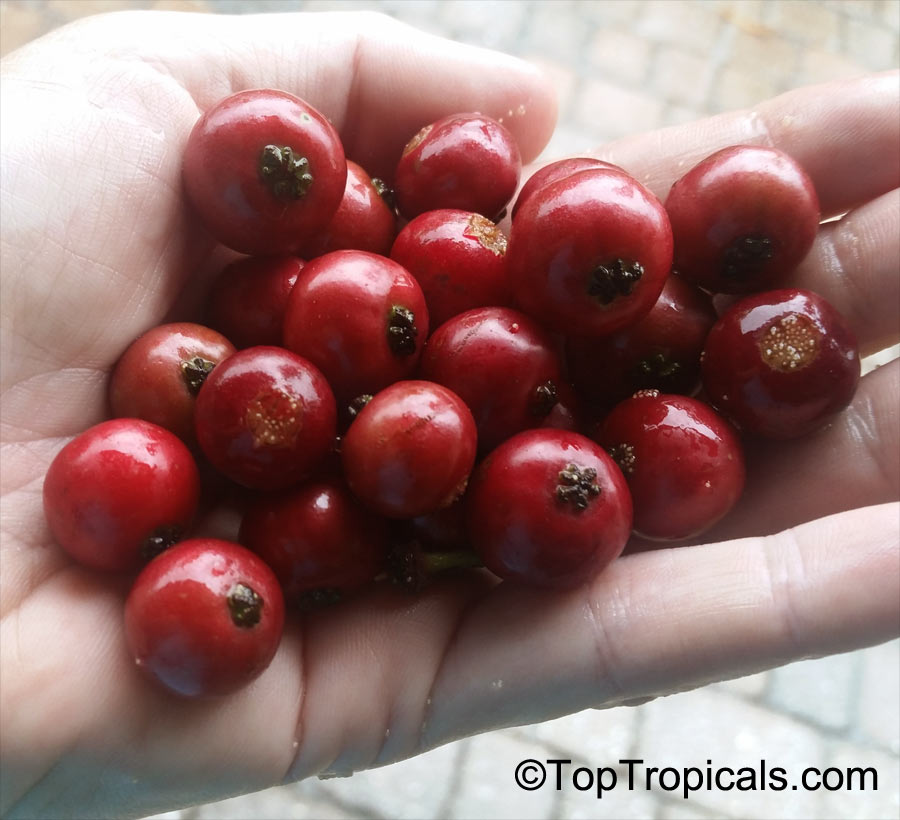
Muntingia fruit is one of our favorites. It is super sweet and juicy, and the seeds are tiny small, not bigger than the strawberry seeds, so you don't have to spit them out. The fruit size normally about 1/2 inch, but we have a tree in our garden that produces almost cherry-size fruit! See picture above. The secret is, good watering and using fruit booster - SUNSHINE honey micro-element supplement. We also fertilize our fruit trees using Fruit Festival and Mango-Food fertilizers.

Date: 23 Apr 2019

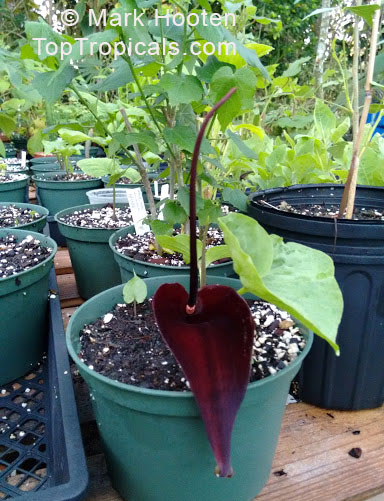
Love (and FEAR) the black flowered Dead Rat Lily!

TopTropicals.com

By Mark Hooten, the Garden Doc

I acquired this rare and freaky aroid, (Typhonium roxburghii) when my wife Suzie and I were living in So. California in the early 1990's... When I first saw this plant (growing in a few pots of bamboo, along with other weeds), it had perhaps the most unusual flowers of anything I had ever seen...

Continue reading...

TopTropicals.com

Date: 20 Apr 2019

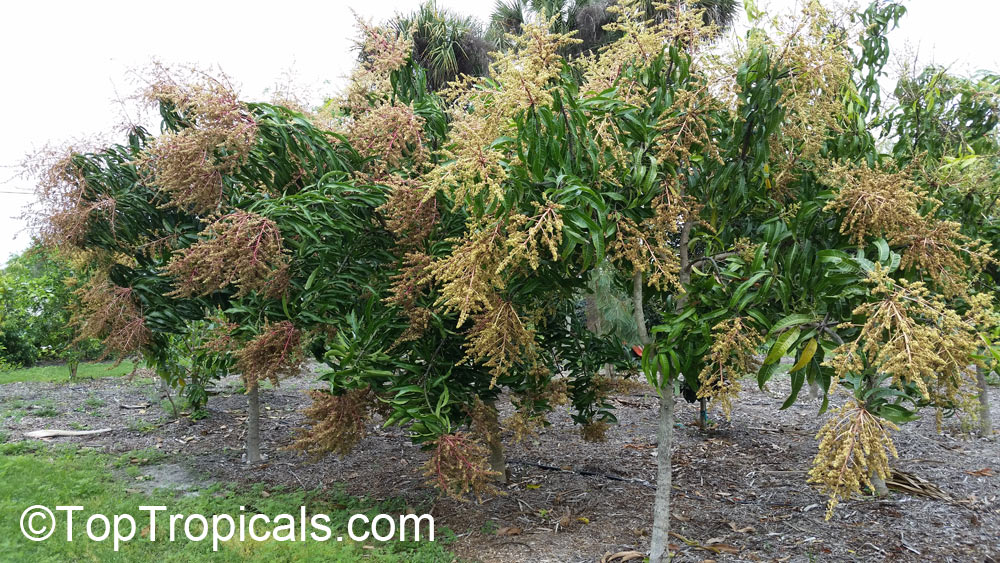
Growing mango tree in California

TopTropicals.com

Q: I just ordered a mango tree. I live in Southern California and was wondering if you have any tips on how to acclimate the mango to our climate. I know it is coming from hot and humid Florida to hot and dry Southern California and don't want to kill it because of the differences in climate.

A: Mangos in fact prefer dry conditions rather then humid. It may be perfect conditions for a mango tree at your place. Plant your tree in a pot size of the root ball; give it ample water and then let the soil surface slightly dry before watering again. Keep the plant in bright shade and gradually move into full sun. Once the tree is recovered from shipping stress, you may plant it in the ground and make sure to protect from freezing temperatures in winter. Use Mango Food for quick establishing and better fruit production. More to read:
Mango boosters
How to grow Mango in hot climates
Growing Mango in Arizona.

Date: 20 Apr 2019

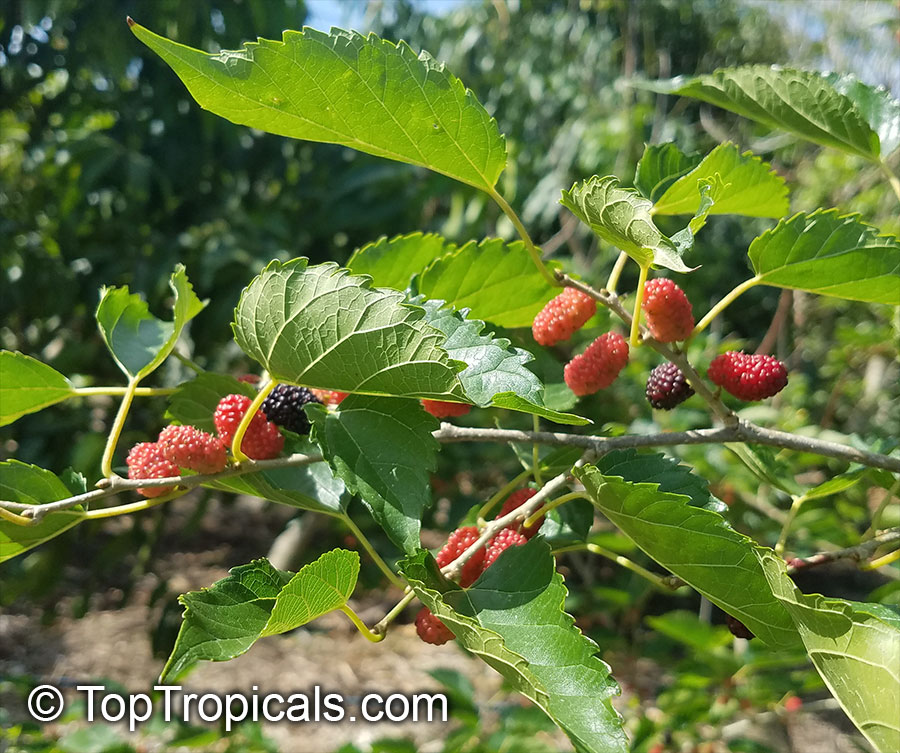
More about Mulberries

TopTropicals.com

Customer comment on our Mulberry column in the previous newsletter:

...I planted a Himalayan mulberry, Morus macroura, about six years ago. For several maddening years, it shot only very long, un-branching tentacles out there, and it resisted my efforts to force some branching by pruning. It would send another long, reaching shoot from the tip of the pruned branch, with NO laterals. Several times, it did this. Finally, two years ago, it broke buds that looked like they meant it all along those long branches, and in one season, it fluffed out. The next season it elaborated on this, acting much more like a proper tree. The fruit is fabulous, three or more inches long, very sweet, with a rich berry flavor that's more raspberry than mulberry. I guess it just needed more time. My understanding is that mulberries don't really like to be pruned, but it needed to happen in this case, along a driveway, so I reigned it in, and now it's a treasure. Be patient.
Cheers, your admirer, C

Check out our Mulberry trees.

Date: 17 Apr 2019

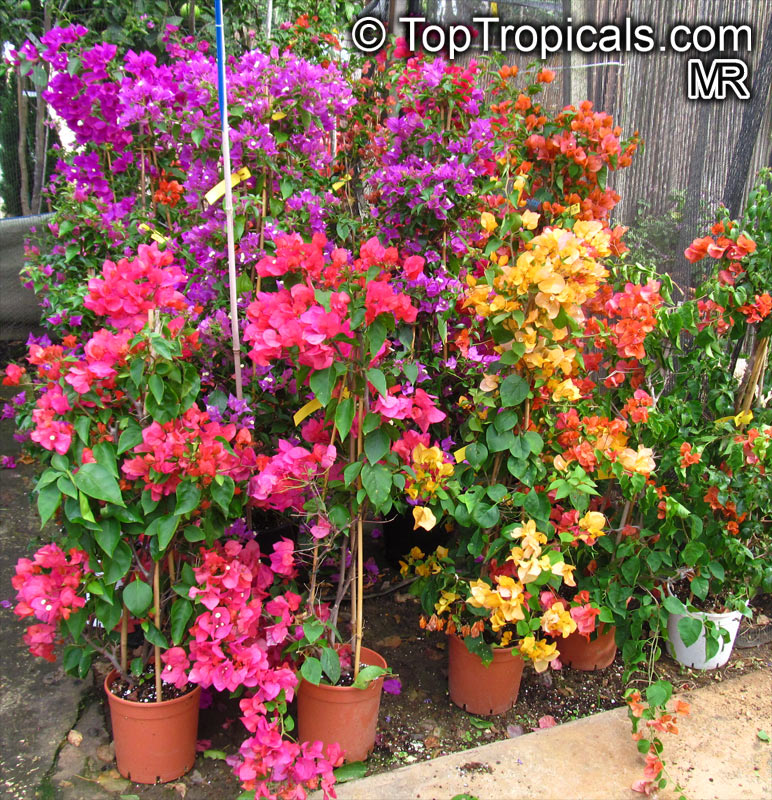
Secrets of Happy Bougainvilleas

TopTropicals.com

Q: When I visited Hawaii I saw their everblooming bougainvilles, flowering non-stop! How come our bougainvilles in Florida are not flowering as much? Is there any special secret to make them bloom?

A: Bougainvilleas prefer drier climate and especially drier summers. Florida summers are rainy and humid. The steaming greenhouse conditions are favorable for most tropical plants (except desert plants like most cacti). Bougainvilleas also grow vigorously in Florida heat and frequent rains, but most cultivars prefer dryer conditions for profuse flowering. These are a few tips that can help you grow happy Bougainvilleas and enjoy their showy flowers even in humid climates:

- In Florida, Bougainvilleas bloom mostly in Winter. If you are a snowbird, this plant is definitely for you!
- Choose sunny, dry, and elevated location for Bougainvilleas, never a low spot and never a shade spot. Give it as many hours of sun as possible.
- Use only well-draining soil. Usually, sandy soils work well when mixed with some compost. If your soil is too heavy, add soil conditioners like perlite, bark, sand.
- Take advantage of cultivars that are well adapted to humid climates: Dwarf Everblooming Pixie, Thornless B. arborea.
- Remember Bougainvilleas are the easiest and the most rewarding potted plants.
- Use bloom boosters along with well-balanced slow release plant food. We recommend these: Pink-N-Good flower booster and smart-release granulated Tropical Allure.
- Do not overwater and keep the plant on a dry side.