Garden Blog - Top Tropicals

Date: 24 Jun 2018

TopTropicals

Avocado, Lychee and Mango setting fruit... give them some FOOD!

Q: Do I need to fertilize tropical fruit when they set fruit?

A: It is traditionally believed that mango and other tropical fruit shouldn't be fertilized during fruiting period. It is true to an extent: you don't want fruit to burst from fast excessive growing. Instead, try to feed fruit trees wisely, because they still need proper nutrition to produce flowers and fruit.
Our spring specials of Lychee, Avocado and Mango are full of buds and some already set tiny fruit (see examples on the photo). Here is the feeding plan for these plants once you receive your mail order:
1) Once received the plant, pot it into container size of the root ball and let establish for couple weeks. Use SUNSHINE-E to help the plant recover from shipping stress and establish root system.
2) Apply SUNSHINE-Honey right before flowering, and next time at setting fruit, to provide sweeter and bigger fruit, eliminate fruit cracks and help resist fungus and other fruit diseases.
3) Use balanced granulated fertilizer, 1 tsp per each gallon of soil. Apply once a month during Spring-Summer season. This gives the plant balanced macro-elements (NPK) necessary for overall plant health. Do not use on fruit trees fertilizers with high Nitrogen content.
4) Apply SUNSHINE SuperFood micro-element booster to keep fruit trees vigorous, develop strong root system and avoid deficiencies.
5) In case of signs of chlorosis (yellowing leaves with darker veins), give the tree SUNSHINE-GreenLeaf and watch the leaves turning green quickly.
After harvesting, don't forget to make another treatment of SUNSHINE-Honey as a preparation for the next year flowering and fruiting season.
Date: 24 Jun 2018

NEW SLIDESHOW: Top Tropicals - We Grow Happiness!

Look at these most spectacular flowers of the Tropical World.

You can have them... We can ship!
Whether you live in Tropical Florida or Downtown New York, you can grow tropical plants and enjoy the beauty of fragrant flowers and exotic fruit. Bring some happiness into your life and let us do the rest - grow these plants for you and give you some advice how to keep them happy.

Stay updated with TopTropicals Videos by subscribing to our channel at YouTube.com/TopTropicals and get our latest video news of what is fruiting and blooming!

Date: 24 Jun 2018

TopTropicals

When does the Spring begin?

Q: Many refer to Astronomical Spring on March 20, as the first "official" day of spring. But some will argue that spring begins a few weeks before, on March 1st. When does the Spring begin?

A: Most people consider the first day of spring to be the Spring Equinox, which will start this year at 12:15 p.m. EDT, March 20th. This is because, astronomically speaking, the sun is directly overhead of the Equator as the Earths tilt begins to point the northern hemisphere towards the sun.
As the earth rotates around the Sun, the Sun will be situated directly overhead at mid-day at different times of the year. The Vernal (Spring) Equinox is the day the Sun is again highest in the sky at noon over the equator as the apex progresses north. The day the Sun is straight up at noon over the Tropic of Cancer and Capricorn (23.5 degrees N and S latitude) are the summer and winter solstices, respectively. Many refer to Astronomical Spring on March 20, as the first "official" day of spring. Most meteorologists say that spring begins a few weeks before, on March 1st, because they observe seasons over different time periods. Meteorological spring began March 1, summer begins June 1, fall begins on September 1 and winter begins on December 1.

Date: 24 Jun 2018

TopTropicals

Varieties of Guava

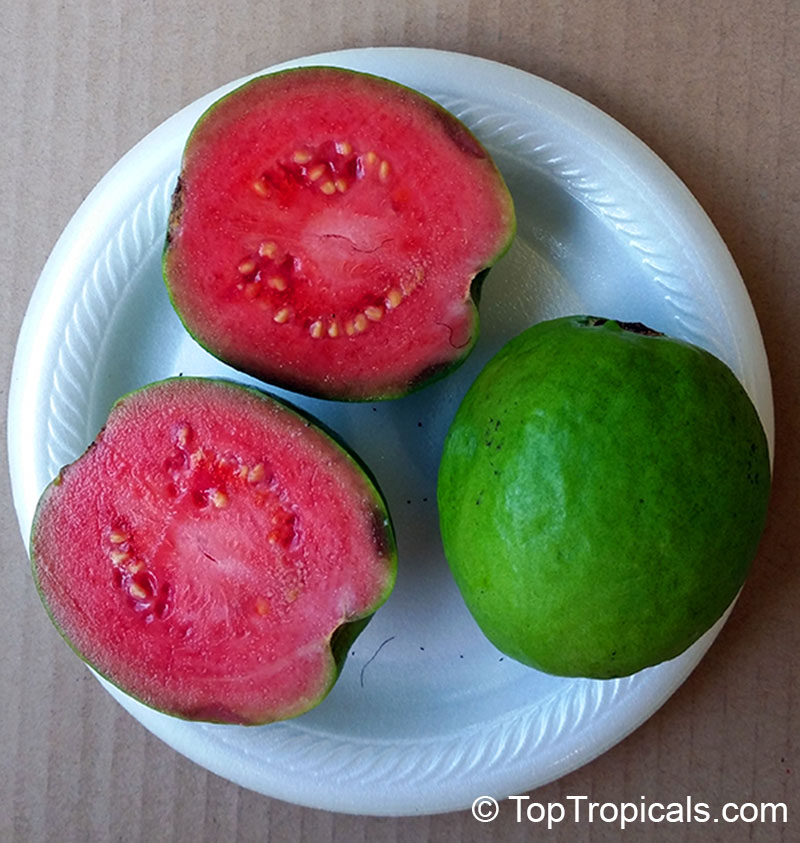
Q: We were just in Australia where guava juice was available in the markets. Pretty sure I can grow different varieties of Guava's here, as I have 3 already, but wondering if it would be psidium guajava or littorale as the best bet for making the pink juice we enjoyed. Thanks so much, your plants are so healthy when they arrive!

A: Both species are used for commercial juice making. We grow lots of Psidium littorale - Cattley Guava, Strawberry Guava - and we make delicious juice. Psidium guajava - Tropical Guava, Guajava - is less juicy, fruit is somewhat dry, but it still has a great flavor; you may need to add water to blended pulp. And sugar - add it to both kinds of fruit!

Check out our Guavas!

Date: 24 Jun 2018

TopTropicals

Cleanest fruit?

"Dirty" fruit: According to the Environmental Working Group research, Strawberries are top the list of the 12 "dirtiest" fruits and vegetables grown commercially. Spinach is the second, followed by (in order of contamination) nectarines, apples, grapes, peaches, cherries, pears, tomatoes, celery, potatoes and sweet bell peppers. Each of these foods tested positive for pesticide residues and contained higher concentrations of pesticides than other produce. This causes of course chronic health implications. Children are of special concern as younger bodies have greater susceptibility to pesticides than adult bodies, the report emphasizes. Pesticides may induce chronic health complications in children, including neuro- and behavioral problems, birth defects, allergies, asthma, and even cancer...

"Clean 15": Avocados lead 2018's clean fruits and veggies list, that also includes: mangoes, papayas, pineapples, kiwi, sweet corn, cabbage, onions, frozen sweet peas, asparagus, eggplant, honeydew melon, cantaloupe, cauliflower and broccoli.
Obviously, home grown fruit and vegetables are even better. Such fruit as Custard Apples, Sapodilla, Sapote, Jackfruit, Dragon Fruit, Passion Fruit and other rare varieties of tropical fruit, are even better for you because they are not grown commercially, and the choice from your own organic garden is the healthiest for yourself and your family!
Plant them today and get your cleanest fruit tomorrow!

Check out all tropical fruit trees and all tropical spice plants.