Garden Blog - Top Tropicals

Date: 24 Jun 2018

Full Sun Garden vs Shade Garden

"Someone is sitting in the shade today because someone planted a tree a long time ago." (Warren Buffett)

Q: I live in California and I have a large area of my garden in full shade. Are there any plants that will be happy there? I am looking for something colorful. I also have a smaller area in front of the house that has full sun almost all day long, but I am afraid this can be too hot for flowering plants? Can you recommend something?

A: Full sun gardens have a strong, bright look while shade gardens have cooler, subdued appearance. Both types of gardens are fun to design and maintain as long as you pick the right plants.
Full Sun Garden is the easiest to grow. Depending on exposure, it may require some plants that can tolerate the hottest summer days and the dry conditions in your area. The good news is, the majority of tropical and subtropical plants prefer full sun, so you have a large selection to pick from - fruit trees, flowering trees, shrubs, vines, and small perennials. The more sun, the more flowers and fruit you will get! However, keep in mind that sun gardens require more water, but generous mulching will help to minimize watering.
Shade Garden is much more restful in appearance, but sometimes may be a little more difficult to work with. As shade trees grow bigger and thicker, it may become too dark; nothing will grow in total darkness. In this case you need to prune back some branches to let more light in. Filtered sunlight or dappled light coming through the leaves of the trees is beneficial and considered light shade, which would be the best light conditions for shade loving plants to thrive. Although shady cooler spaces attract more insects and will require more attention to control them, they also have some advantages over sun gardens. You can enjoy working in cooler conditions, and your garden will require less water. Many foliage plants look more deeply colored and healthier than in full sun; white flowers shine instead of looking washed out!
Our favorite shade plants are fragrant brunfelsias , clerodendrums, and of course colorful gingers and heliconias. You may also consider ornamental foliage of Calatheas, lush Alocasias, Colocasias, and colorful Cordylines. Check out our shade loving plant list for more colorful suggestions. These are also great for indoor gardens!

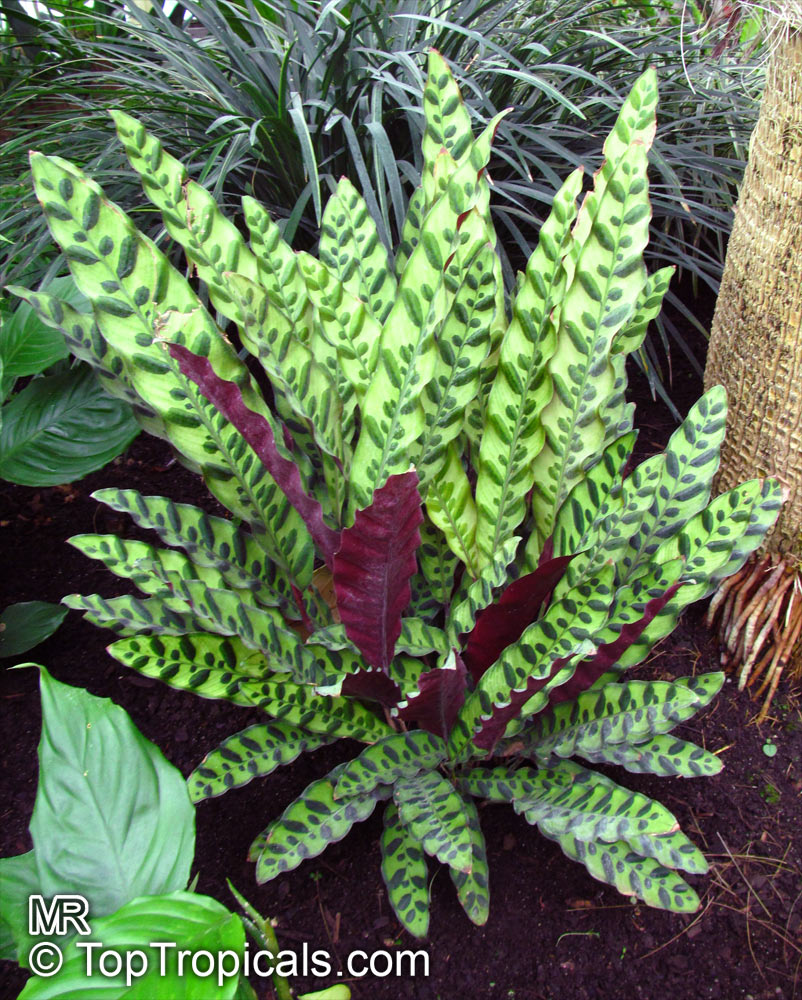
On the photo: Calathea lancifolia Rattlesnake

Date: 24 Jun 2018

TopTropicals

Spring is coming, plants need food! Time to fertilize...

Last winter was long and snowy in the most part of our country. Hold on fellow gardeners up North, it is almost over!
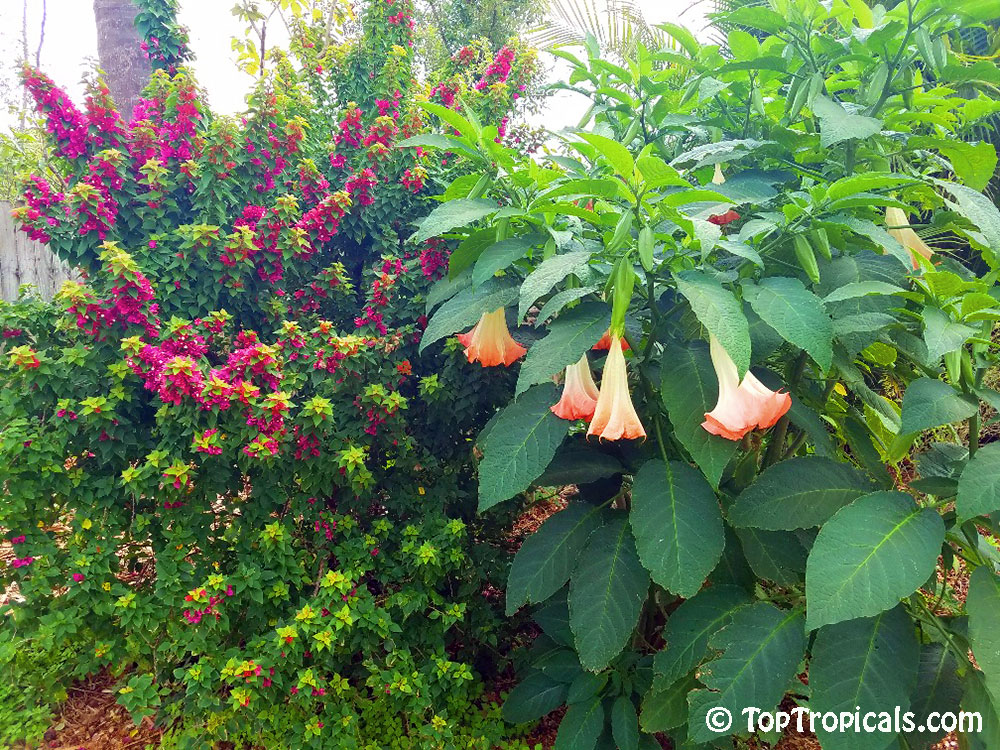
Here in Florida we have been blessed again with a mild winter without serious cold snaps. Early Spring that is already in the air. Look at this picture of flowers in our front yard now.
If the weather is already warm in your area (low temperatures above 55), it is time to start fertilizing. We are sending our love and support to tropical Puerto Rico suffered from hurricane last year, and will be happy to help you guys to restore your lost gardens!

CHECK LIST

what to do to give your garden a good kick start:

1. Slow release granulated food. Apply Slow Release Fertilizer and continue once a month. 1 tsp per gallon of pot, or a handful for in-ground plants. This will provide essential macro elements (NPK) required for a plant growth.

2. Water soluble micro-elements. Besides macro-elements, plants need many other elements that most of the time missing in soil. A lack of micro-elements causes different deficiencies, resulting in weak root systems, slow growth, deformed leaves, leaves yellowing, lack or no flowers/fruit. Apply these supplements as a foliar spray once a month to induce healthy growth and flower/fruit development. We recommend the following micro-element products to keep your plants healthy and vigorous year round:
a) SUNSHINE SuperFood - plant health booster. This revolutionary new liquid complex contains ALL microelements needed and can fix all possible problems occuring to your tropical plants - from roots to flowers and fruit. We have convenient dropper bottles of 5 ml for small plant collections, 50 ml for larger gardens, and 100 ml for professional landscape applications.
b) SUNSHINE-Micro - Microelement booster - for common iron deficiency (pale leaves)
c) SUNSHINE-Super-Iron - Microelement booster - for severe iron deficiency (severe yellowing leaves)

3. SUNSHINE plant boosters - SUNSHINE-E, -BC (caudex plants and bonsai), -H (house plants). Apply these natural plant stimulants to help plants recover from cold, dormancy, increase plant's metabolism and make a plant more readily absorb both Macro- and Micro-elements. SUNSHINE boosters also will help plants grow vigorously, withstand Summer heat and drought, and produce bigger and better flowers and fruit.

4. Kickstart a sweeter fruit. To get a better and sweeter crop in Summer and Fall, you need to start first application now. SUNSHINE Honey - is natural, Amber-colored, honey-like liquid microelement product for fruiting and edible plants that will make them sweeter, tastier and more flavorful! Very effective for tropical fruits, tubers, vegetables. Great for tropical fruit trees: Mango, June Plum, Annonas, Tropical Cherries, Carambola, Citrus; subtropical fruit trees: Peaches, Apricots, Loquat and berry plants (blackberry, mulberry, etc.)

5. SUNSHINE-S. Don't forget to plant seeds! It's a perfect timing now to start your tropical garden indoors even if it is still cold outside. Soak them in SUNSHINE-S solution to increase germination rate.

See full list of SUNSHINE boosters. All these products are essential plant elements. They are not toxic and can be used safely for edible landscapes.

Date: 24 Jun 2018

How to keep your plants green

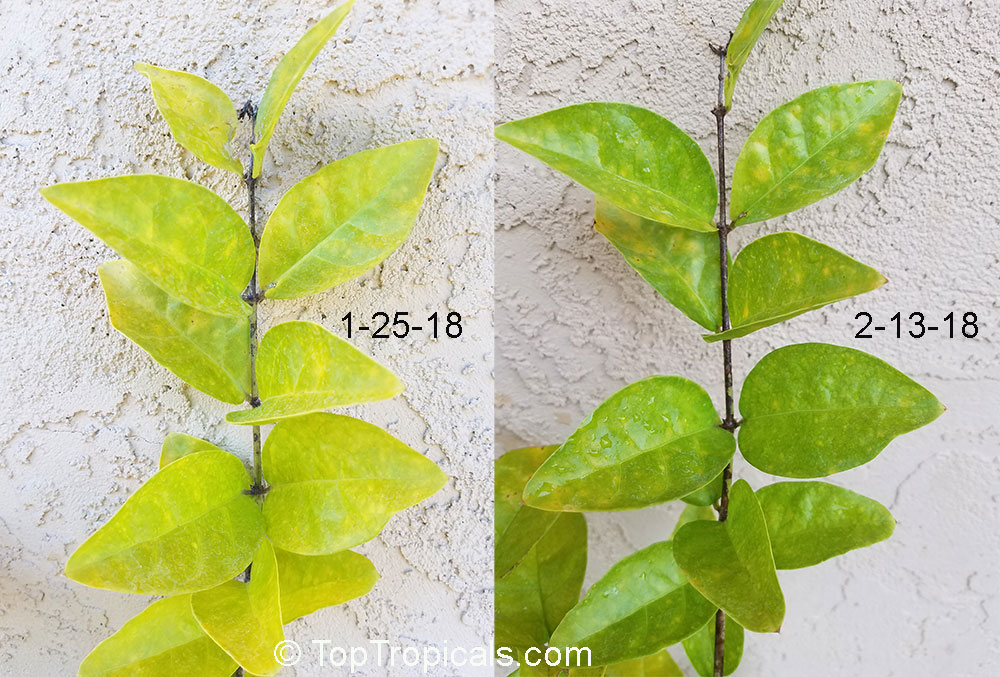
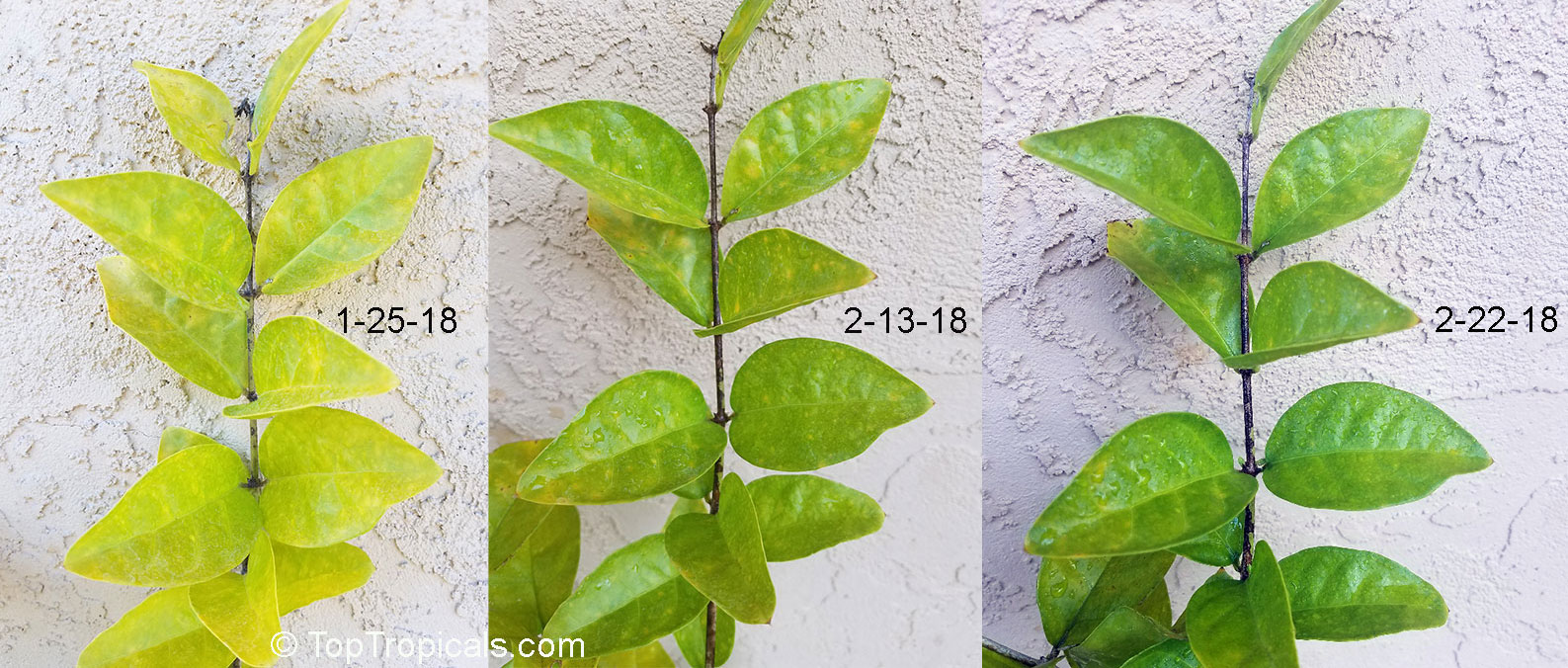
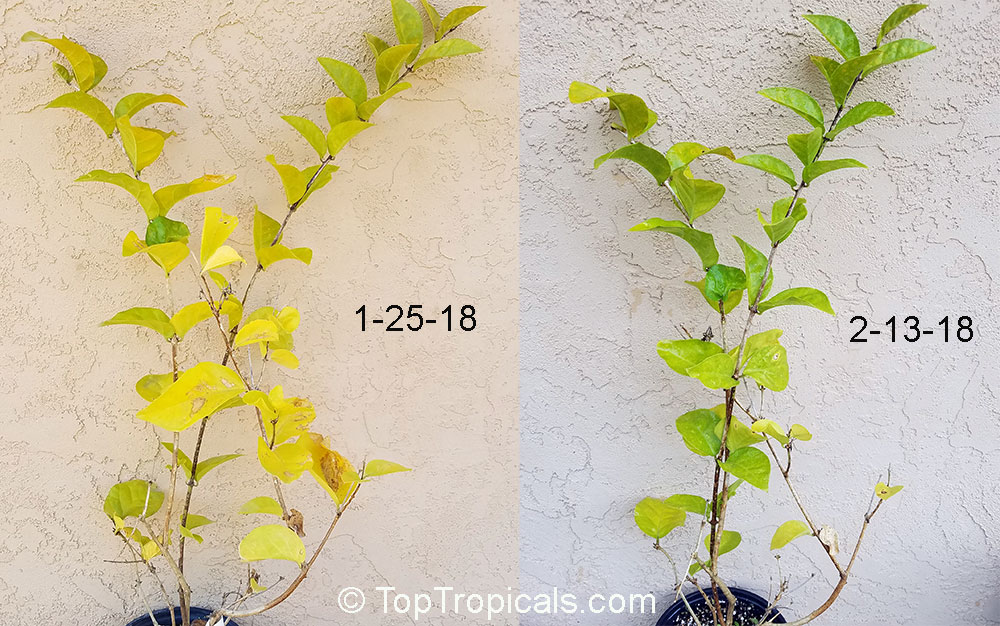
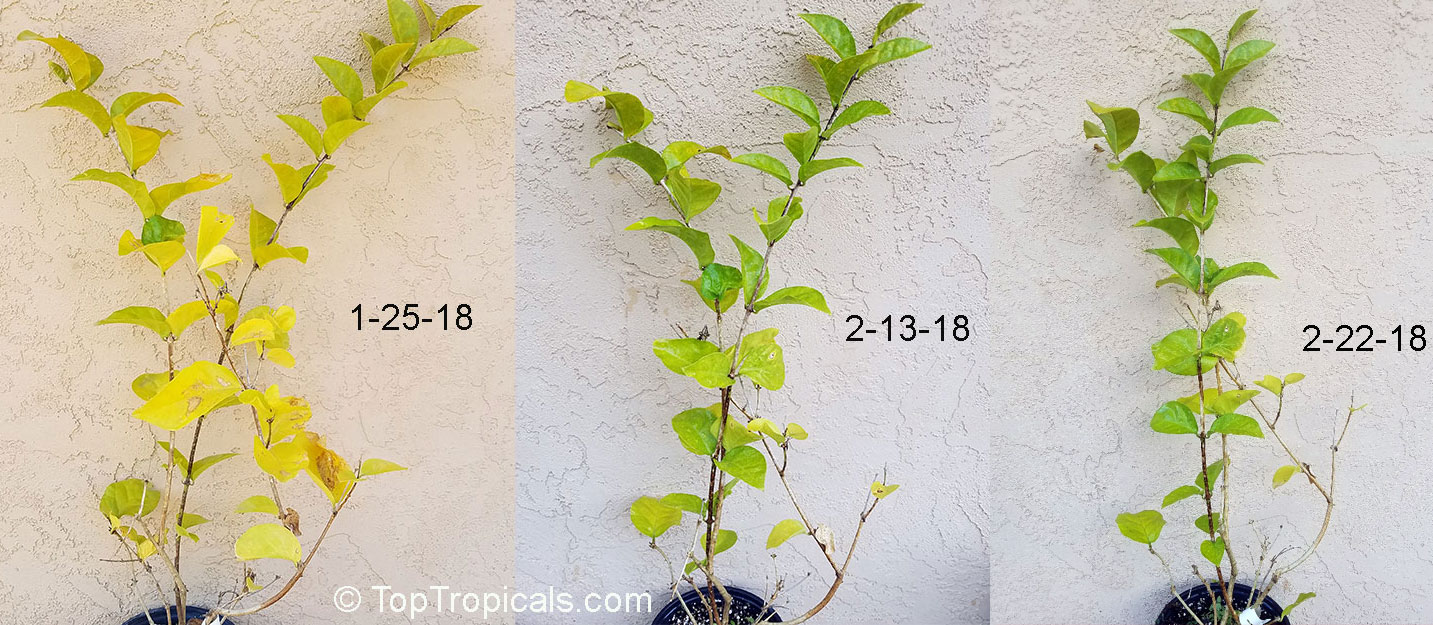
We continue experimenting with a new plant health booster SUNSHINE SuperFood. Couple weeks ago we grabbed a very sad looking jasmine with completely yellow leaves... It suffered from winter cool night temperatures plus some overwatering that caused weak roots and due to that - a number of deficiencies. The plant looked pretty hopeless as far as turning yellow leaves back to green. The best bet to revive it was to cut it short, remove old leaves and wait for new healthy growth... but we decided to try SuperFood. And it worked! Since the plant was almost hopeless, we put it in a far corner and forgot about it. Imagine the surprise when we looked again and it was green! See full plant photo of this jasmine.

Try SUNSHINE SuperFood on sick looking plants, especially with yellowing and/or deformed leaves. There are no miracles, but this one works a like a Miracle! All you need is a few drops of SUNSHINE SuperFood - item 6000!
Read more about SUNSHINE SuperFood...

Buy 5-ml bottle for only $4.95

Date: 24 Jun 2018

Asian New Year started! Year of Down to Earth Dog...

Chinese New Year, also known as the Spring Festival, started on February 16, 2018. It is the Year of the Yellow Dog, or the Earth Dog.

According to Chinese horoscope, in 2018, the corresponding element is Earth. Earth is also associated with the color yellow. The Year of the Earth Dog is therefore also known as the Year of the Yellow Dog. So what happens when you mix the Dog with the Earth Element?
The Dog is sincere, independent, and clever. Like man's best friend, they are extremely loyal and devoted and you can always count on them to stick by your side.
The Earth element, by its very nature, denotes origins and growth and is associated with practicality, harmony and hard work. The Earth seeks to nurture and be nurtured, it anchors you and provides stability.
A loyal and hard working Dog combined with the steady and sensible characteristics of Earth, heralds a secure, rewarding and profitable year. A year of blossoming, to achieve things, and to thrive. An Earth Dog combines the integrity and diligence of the dog with a very "down-to-earth" climate, perfect for longstanding projects requiring persistence and grit. Real estate is high in the agenda in the year of the Yellow Dog, whether you are contemplating any investments or purchasing a home, everything should align well for you this year.
The Year of the Dog follows an energetic and chaotic Year of the Rooster... An Earth Dog Year will welcome some much needed sense of harmony, peace and goodwill, a year of unity and understanding that will reward all of us for our hard work and diligence!
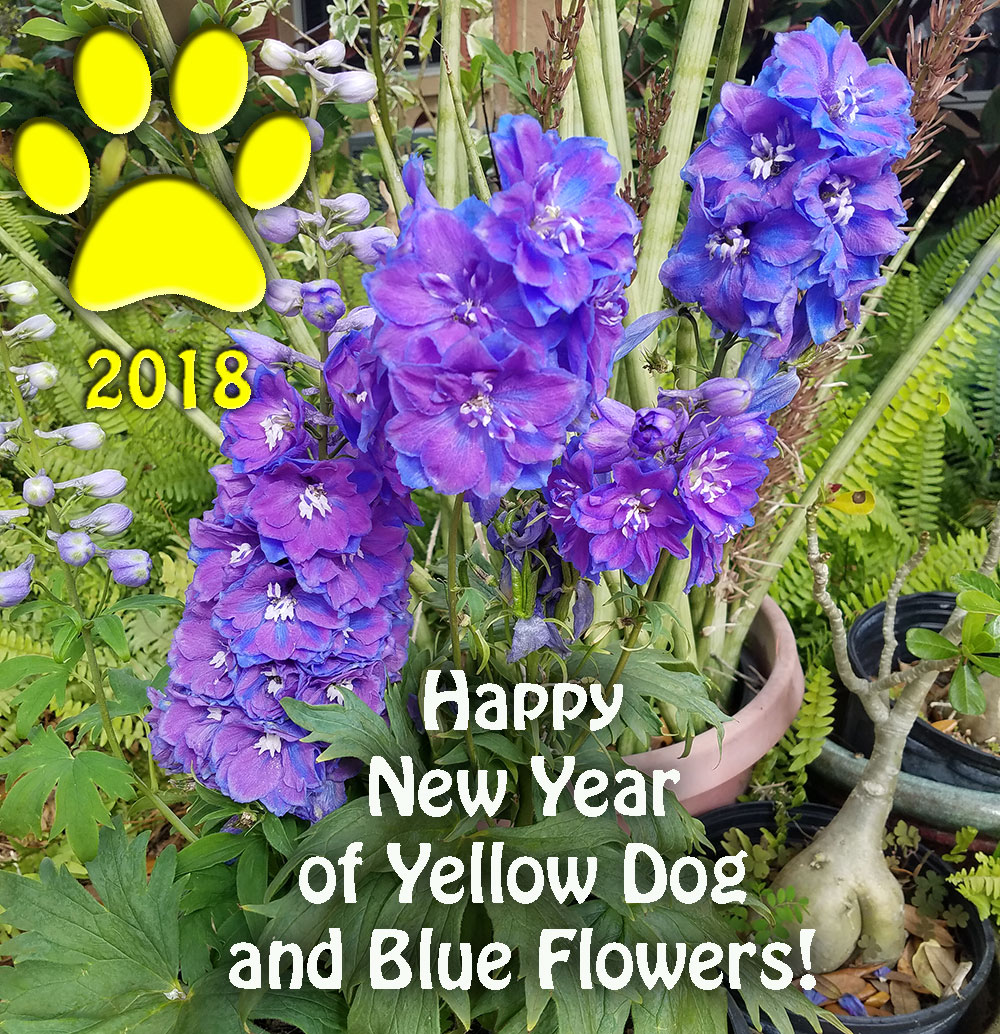
Lucky colors for 2018 are colors that symbolize the element Wood (green) and the element Water (blue). Just keep your plants green, and get some blue flowers!

For more information on Plant Astrology, see Plant Horoscope.

Date: 24 Jun 2018

TopTropicals

SUNSHINE-SuperFood for your plants health

We are getting very high interest from our customers to our new plant booster SUNSHINE-SuperFood as well as many questions. We continue experimenting with the Jasmine that you saw in our previous newsletter, that had pale yellow leaves and numerous deficiencies. Right now, after only 2 applications, it looks healthy green again. Click on the picture to zoom in and see leaves turning from yellow to green within less than a month. See also full plant photo of this jasmine.

Q: Is SUNSHINE-SuperFood a fertilizer?

A: Traditionally we call a fertilizer macro-elements (NPK - nitrogen, phosphorus, and potassium). Technically, SUNSHINE-SuperFood is a complex of micro-elements that are essential for plant's health. It provides such elements as Mg, Fe, Mn, Zn, Cu, B, Mo, S, and Amino-acids that our soils are usually poor of. These elements are responsible for proper development of leaves, roots, flowers, and overall plant vigor. Read more about role of these micro elements.

Q: Can I just get these additional elements in a dry form and add to soil like a fertilizer?

A: No. Some of these elements must present in extremely low concentrations (this is why they are called micro-). SUNSHINE-SuperFood is a liquid substance with very high bioavailability that has very complicated formula; it is not just a mix of the elements. The formula is developed with the maximum efficiency for a plant to absorb through leaves and a root system.

Q: Is it better to spray leaves or water the plant with the solution?

A: Foliar applications are always most efficient in regards of seeing a quick result. However, we recommend to also drench the root ball with SUNSHINE-SuperFood solution to deliver the necessary elements evenly to all parts of the plant through its natural metabolism.

Q: My gardenia looks very sad after winter - most leaves are yellow and some have pale spots. Should I use SUNSHINE-SuperFood more often and in higher concentrations?

A: We recommend to apply SUNSHINE-SuperFood once a month to maintain a general plant health. In difficult cases like with this jasmine on the photo, you can do twice a month. However do not exceed recommended concentration. The rule of thumb is, you can apply water soluble fertilizers and supplements more often, but with lower concentrations - this way a plant will be more responsive. Plant metabolism in general is rather slow, changes take days and weeks - don't try to speed it up. Your patience will be rewarded.

Try SUNSHINE SuperFood on sick looking plants, especially with leaves that are yellowing, deformed or have spots (see photos of different deficiencies). There are no miracles, but this one works like a Miracle! All you need is a few drops of SUNSHINE SuperFood - item 6000! We also have bottles 50 ml and 100 ml for large plant collections and yard/landscape applications. Read more about SUNSHINE SuperFood...