Garden Blog - Top Tropicals

Date: 24 Jun 2018

Asian New Year started! Year of Down to Earth Dog...

Chinese New Year, also known as the Spring Festival, started on February 16, 2018. It is the Year of the Yellow Dog, or the Earth Dog.

According to Chinese horoscope, in 2018, the corresponding element is Earth. Earth is also associated with the color yellow. The Year of the Earth Dog is therefore also known as the Year of the Yellow Dog. So what happens when you mix the Dog with the Earth Element?
The Dog is sincere, independent, and clever. Like man's best friend, they are extremely loyal and devoted and you can always count on them to stick by your side.
The Earth element, by its very nature, denotes origins and growth and is associated with practicality, harmony and hard work. The Earth seeks to nurture and be nurtured, it anchors you and provides stability.
A loyal and hard working Dog combined with the steady and sensible characteristics of Earth, heralds a secure, rewarding and profitable year. A year of blossoming, to achieve things, and to thrive. An Earth Dog combines the integrity and diligence of the dog with a very "down-to-earth" climate, perfect for longstanding projects requiring persistence and grit. Real estate is high in the agenda in the year of the Yellow Dog, whether you are contemplating any investments or purchasing a home, everything should align well for you this year.
The Year of the Dog follows an energetic and chaotic Year of the Rooster... An Earth Dog Year will welcome some much needed sense of harmony, peace and goodwill, a year of unity and understanding that will reward all of us for our hard work and diligence!
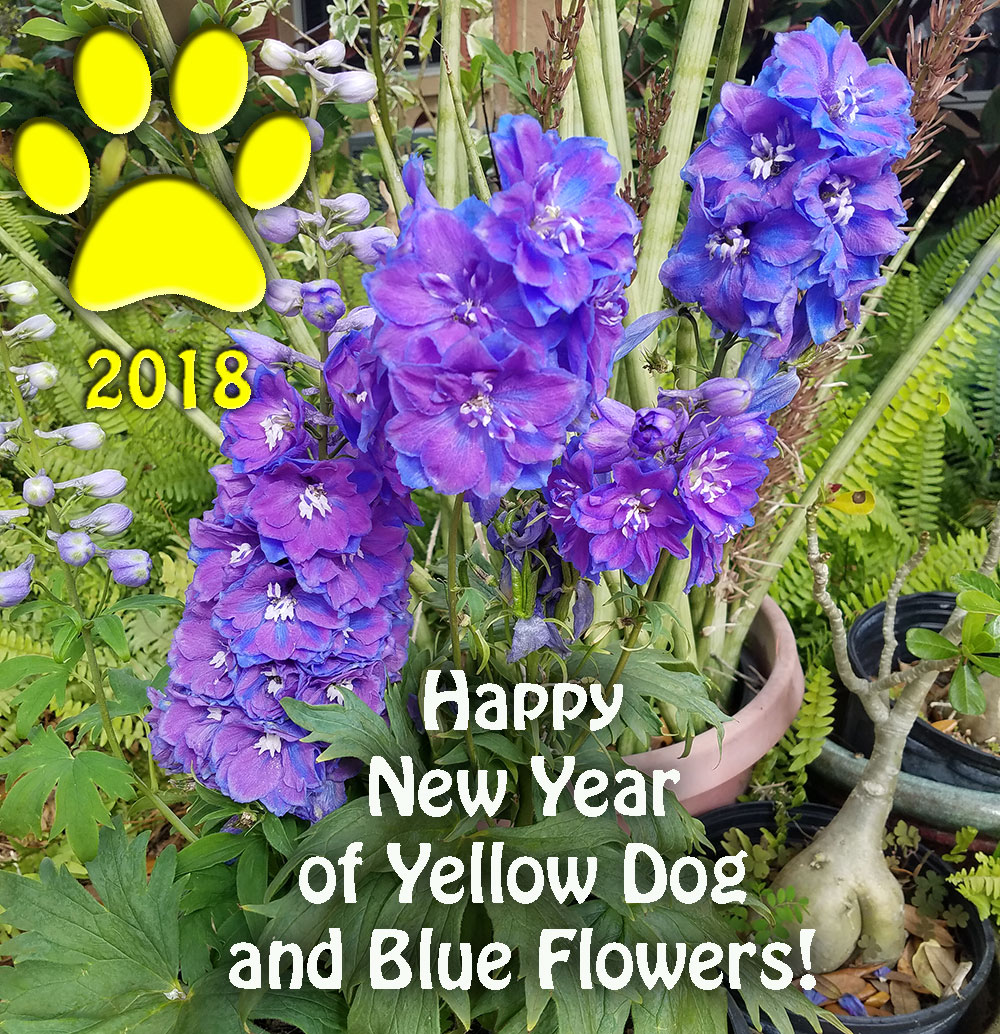
Lucky colors for 2018 are colors that symbolize the element Wood (green) and the element Water (blue). Just keep your plants green, and get some blue flowers!

For more information on Plant Astrology, see Plant Horoscope.
Date: 24 Jun 2018

TopTropicals

SUNSHINE-SuperFood for your plants health

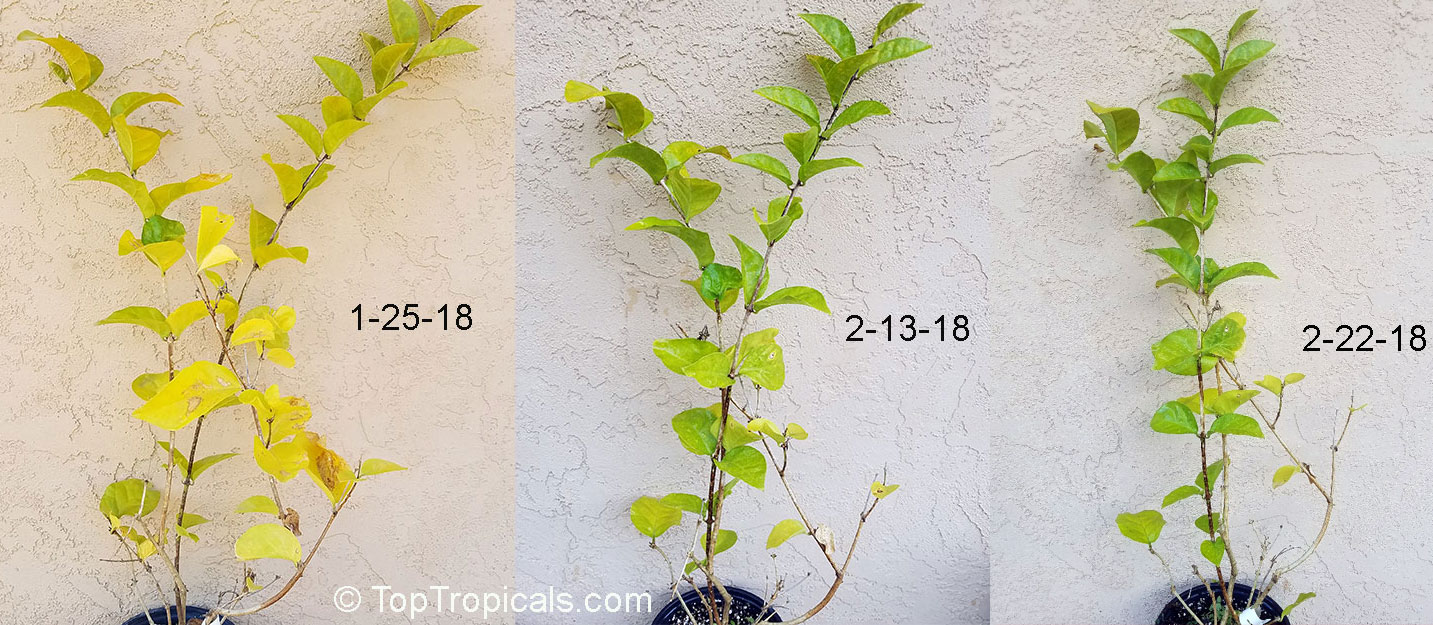
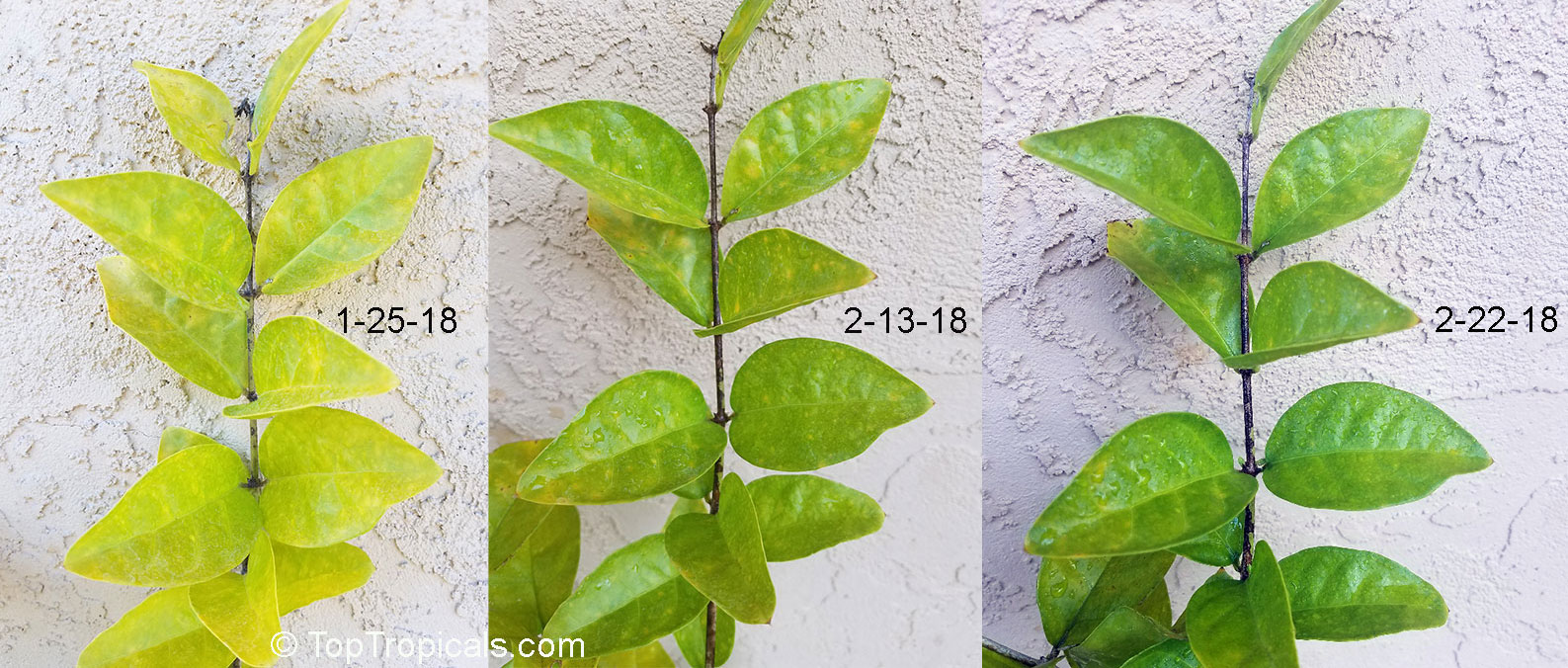
We are getting very high interest from our customers to our new plant booster SUNSHINE-SuperFood as well as many questions. We continue experimenting with the Jasmine that you saw in our previous newsletter, that had pale yellow leaves and numerous deficiencies. Right now, after only 2 applications, it looks healthy green again. Click on the picture to zoom in and see leaves turning from yellow to green within less than a month. See also full plant photo of this jasmine.

Q: Is SUNSHINE-SuperFood a fertilizer?

A: Traditionally we call a fertilizer macro-elements (NPK - nitrogen, phosphorus, and potassium). Technically, SUNSHINE-SuperFood is a complex of micro-elements that are essential for plant's health. It provides such elements as Mg, Fe, Mn, Zn, Cu, B, Mo, S, and Amino-acids that our soils are usually poor of. These elements are responsible for proper development of leaves, roots, flowers, and overall plant vigor. Read more about role of these micro elements.

Q: Can I just get these additional elements in a dry form and add to soil like a fertilizer?

A: No. Some of these elements must present in extremely low concentrations (this is why they are called micro-). SUNSHINE-SuperFood is a liquid substance with very high bioavailability that has very complicated formula; it is not just a mix of the elements. The formula is developed with the maximum efficiency for a plant to absorb through leaves and a root system.

Q: Is it better to spray leaves or water the plant with the solution?

A: Foliar applications are always most efficient in regards of seeing a quick result. However, we recommend to also drench the root ball with SUNSHINE-SuperFood solution to deliver the necessary elements evenly to all parts of the plant through its natural metabolism.

Q: My gardenia looks very sad after winter - most leaves are yellow and some have pale spots. Should I use SUNSHINE-SuperFood more often and in higher concentrations?

A: We recommend to apply SUNSHINE-SuperFood once a month to maintain a general plant health. In difficult cases like with this jasmine on the photo, you can do twice a month. However do not exceed recommended concentration. The rule of thumb is, you can apply water soluble fertilizers and supplements more often, but with lower concentrations - this way a plant will be more responsive. Plant metabolism in general is rather slow, changes take days and weeks - don't try to speed it up. Your patience will be rewarded.

Try SUNSHINE SuperFood on sick looking plants, especially with leaves that are yellowing, deformed or have spots (see photos of different deficiencies). There are no miracles, but this one works like a Miracle! All you need is a few drops of SUNSHINE SuperFood - item 6000! We also have bottles 50 ml and 100 ml for large plant collections and yard/landscape applications. Read more about SUNSHINE SuperFood...

Date: 24 Jun 2018

Growing tropicals from seeds.

From Kristi the Wizard of Rose: I grow many plants from seeds, both for my personal collection, and for TopTropicals. I receive many questions from customers who want to grow tropical plants from seeds. Some of them live in colder climates and try to extend growing season of their tropical collections by starting new varieties early in the year from seeds. These are a few tips that may be helpful.

Q: What do I need to do to speed up germination process?

A: Many factors affect germination. Considering you get fresh seeds (for example from TopTropicals) and Mother Nature gives them a good kick start, there are a few things that may speed up germination:
1) Scarification. Large seeds with a hard outer shell can be slightly sanded down just enough for moisture to get inside to wake up the seed during the pre-soaking. Be careful not to damage the seed. See example of Lotus seed scarification.
2) Pre-soaking. We recommend pre-soaking most of the seeds for only a few hours (3-8 depending on species. Some seeds are very sensitive to moisture and may start rotting if stay wet without air circulation. Small seeds, especially tiny ones like dust, should not be soaked.
3) SUNSHINE-S treatment. Adding a few drops of SUNSHINE-S booster when pre-soaking seeds increases their germination rate 3-5 times.
4) Temperature. Warm temperatures help germination. If grown indoors, put seeds containers or trays in the warmest spot of your house; you may use heat pads. Outdoors, putting them in full sun helps a lot, just don't let soil to dry out.

Use only special porous seed germination mix to provide air circulation and prevent seeds from rotting.

Q: Should I keep seeds in refrigerator before planting?

A: Do not refrigerate tropical seeds. Stratification (treatment with cold) works only for temperate species, and some subtropical (like non-tropical Magnolias)

Q: How do you grow eucalyptus from seeds? I tried a few times with no success.

A: The secret of germinating tiny seeds like eucalyptus is - to sow them on top of the moist soil surface (soil must be very fine and soft), without covering. Keep container covered with clear plastic, in bright light. Use spray bottle to keep surface moist but not soggy. I have a customer who germinates eucalyptus seeds using an old fish tank, covered with a glass. Perfect environment - bright light and moist all the time.

Date: 24 Jun 2018

TopTropicals

Secrets of perfect mulch

Poor man's mulch... or natural solution? With warmer weather weeds started spreading around the garden... pulling, spraying, mulching them... that helps. Here are a few tips about natural mulch based on our own experience.

1) Do not rake dry leaves and pine needles, use them as natural mulch. A leaf is a part of a plant with the highest nitrogen content which is a major plant nutrient. After breaking down, leaves will work as a fertilizer. If you prefer to have a fancy mulch, put it on top of those leaves.

2) Do not dispose cut grass. Spread it around trees and shrubs. Hay is one of the best mulching materials. It has at least 2 exceptional benefits: a) after couple rains it becomes dense, creating perfect protection from sprouting weeds, and b) grass is actually also a leaf - so it had built up lots of nitrogen too, and works as a fertilizer.

3) Be careful with "bulk mulch" that sometimes offered by local tree service companies (usually for free). It often contains bugs, plant parts that are infested with bad insects, or simply fleas. Natural mulch from your own garden is always the best choice, proven organic and safe solution.

4) A few layers of newspaper (or even better - cardboard from your endless Amazon deliveries) placed underneath the mulch work as a great weed barrier and will make your mulching work results last 4-5 times longer. Water drains through them, and paper products are ecologically safe and biodegradable.

Date: 24 Jun 2018

TopTropicals

How to make a Mango tree bloom and fruit

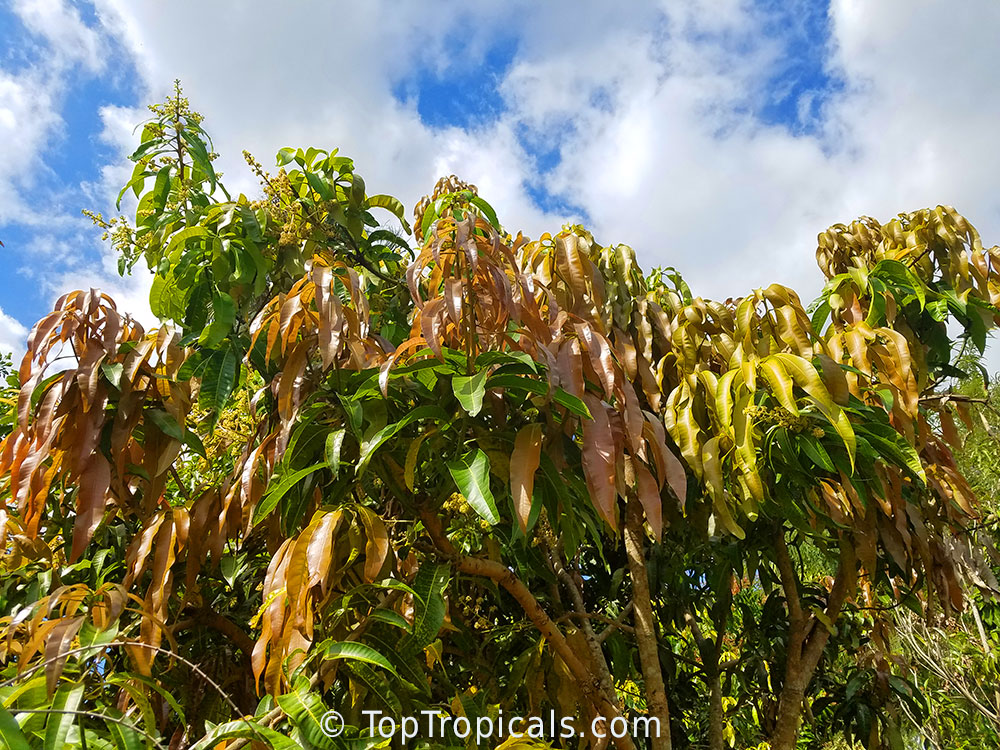
Mango trees are especially beautiful during spring time when they flush out multi-color new leaves! But you want your mango be not only beautiful but fruitful as well. Here are some tips:

1) Fertilize Mango tree with a balanced slow release fertilizer starting March. Use 1 tsp of granulated fertilizer per 1 gal of soil, or a handful or two for an in-ground tree. You may add one application of foliar spray of a water-soluble bloom booster fertilizer (the one for Roses or Azaleas will work). This will give your tree a good macro-nutrient kick-start.

2) Spray entire tree with SUNSHINE-Superfood solution. This will provide all necessary micro-elements and keep the plant healthy and strong throughout the season. Repeat treatment once a month until harvest time.

3) For sweeter fruit, apply SUNSHINE-Honey solution several times:
- early spring before flowering
- at setting buds
- right at the beginning of setting fruit
- after harvesting, to provide the tree with all good micro-nutrients before resting season.