Garden Blog - Top Tropicals

Date: 24 Jun 2018

TopTropicals

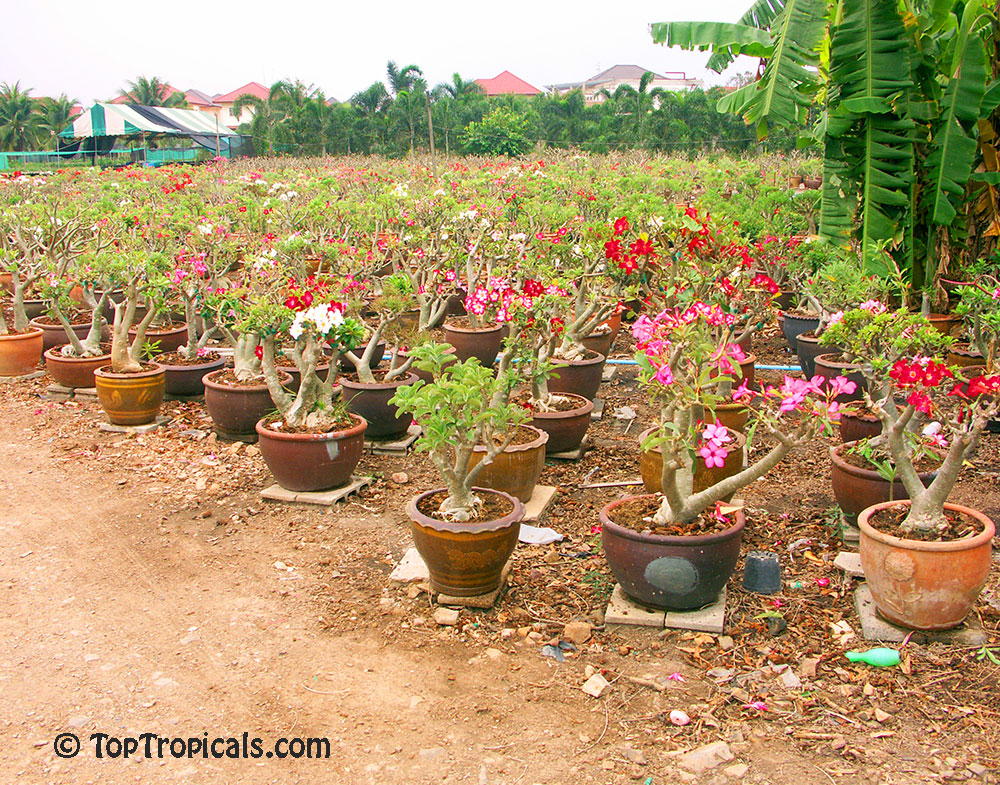
What you need for successful growing Adeniums

1) Adenium plants - from TopTropicals Endless selection of Adeniums. We have double flower, red, purple, yellow and even black flowers!
2) A small pot with excellent drainage is a must. Position the plant in a pot, size of root system.
3) Adenium soil mix. TopTropicals Adenium Soilless Mix. Use only well-drained soil.
4) Lots of light. Adeniums need lots of light for heavy flowering. However from our own experience, in super hot climates, they look healthier in filtered bright light. After initial planting, once the plant is established and starts growing new leaves (may take a few weeks), gradually move it into brighter light.
5) Little water. Adeniums like a neutral to hard water. Acidic water tends to sour the soil too fast and may cause root rot. Water plants preferably in the early morning, and allow them to drink up throughout the day. Watering can be done daily to every few days. Do not water again until soil dries on surface. Never allow your plants to sit in a saucer of water, but don't let them to dry out too often - this causes adeniums to go into early dormancy. Adeniums do not like both over-watering or drying-out.
6) Fertilizer. To make your plant develop a large swollen base/trunk, you'll need a good quality fertilizer. Use slow-release granulated fertilizer for overall plant health, and liquid water soluble fertilizer for swelling up trunks that is also used to increase flowering. It shouldn't be too high in nitrogen, the middle number should be the highest (similar to 10-50-10). Never apply fertilizer directly on roots and do not liquid feed when a plant is thirsty: always water first slightly to avoid root burn and leaf drop. Do not wet leaves.
7) SuperFood micro-elements. Besides macro-nutrients provided by fertilizer, Adenium needs micro-elements for balanced development of root system and especially caudex: Sunshine-SuperFood.
8) SUNSHINE-BC. Spray leaves with SUNSHINE-BC once a month to encourage young growth, profuse flowering and large caudex.
9) Growing caudex. There is a secret how to create a large swollen caudex: raise the plant a bit every time you re-pot it, so that the upper part of roots will be a little exposed. The plant will form more roots that will go down.

See full list of Adeniums - plants and seeds.

Date: 24 Jun 2018

TopTropicals

Avocado, Lychee and Mango setting fruit... give them some FOOD!

Q: Do I need to fertilize tropical fruit when they set fruit?

A: It is traditionally believed that mango and other tropical fruit shouldn't be fertilized during fruiting period. It is true to an extent: you don't want fruit to burst from fast excessive growing. Instead, try to feed fruit trees wisely, because they still need proper nutrition to produce flowers and fruit.
Our spring specials of Lychee, Avocado and Mango are full of buds and some already set tiny fruit (see examples on the photo). Here is the feeding plan for these plants once you receive your mail order:
1) Once received the plant, pot it into container size of the root ball and let establish for couple weeks. Use SUNSHINE-E to help the plant recover from shipping stress and establish root system.
2) Apply SUNSHINE-Honey right before flowering, and next time at setting fruit, to provide sweeter and bigger fruit, eliminate fruit cracks and help resist fungus and other fruit diseases.
3) Use balanced granulated fertilizer, 1 tsp per each gallon of soil. Apply once a month during Spring-Summer season. This gives the plant balanced macro-elements (NPK) necessary for overall plant health. Do not use on fruit trees fertilizers with high Nitrogen content.
4) Apply SUNSHINE SuperFood micro-element booster to keep fruit trees vigorous, develop strong root system and avoid deficiencies.
5) In case of signs of chlorosis (yellowing leaves with darker veins), give the tree SUNSHINE-GreenLeaf and watch the leaves turning green quickly.
After harvesting, don't forget to make another treatment of SUNSHINE-Honey as a preparation for the next year flowering and fruiting season.

Date: 24 Jun 2018

NEW SLIDESHOW: Top Tropicals - We Grow Happiness!

Look at these most spectacular flowers of the Tropical World.

You can have them... We can ship!
Whether you live in Tropical Florida or Downtown New York, you can grow tropical plants and enjoy the beauty of fragrant flowers and exotic fruit. Bring some happiness into your life and let us do the rest - grow these plants for you and give you some advice how to keep them happy.

Stay updated with TopTropicals Videos by subscribing to our channel at YouTube.com/TopTropicals and get our latest video news of what is fruiting and blooming!

Date: 24 Jun 2018

TopTropicals

When does the Spring begin?

Q: Many refer to Astronomical Spring on March 20, as the first "official" day of spring. But some will argue that spring begins a few weeks before, on March 1st. When does the Spring begin?

A: Most people consider the first day of spring to be the Spring Equinox, which will start this year at 12:15 p.m. EDT, March 20th. This is because, astronomically speaking, the sun is directly overhead of the Equator as the Earths tilt begins to point the northern hemisphere towards the sun.
As the earth rotates around the Sun, the Sun will be situated directly overhead at mid-day at different times of the year. The Vernal (Spring) Equinox is the day the Sun is again highest in the sky at noon over the equator as the apex progresses north. The day the Sun is straight up at noon over the Tropic of Cancer and Capricorn (23.5 degrees N and S latitude) are the summer and winter solstices, respectively. Many refer to Astronomical Spring on March 20, as the first "official" day of spring. Most meteorologists say that spring begins a few weeks before, on March 1st, because they observe seasons over different time periods. Meteorological spring began March 1, summer begins June 1, fall begins on September 1 and winter begins on December 1.

Date: 24 Jun 2018

TopTropicals

Varieties of Guava

Q: We were just in Australia where guava juice was available in the markets. Pretty sure I can grow different varieties of Guava's here, as I have 3 already, but wondering if it would be psidium guajava or littorale as the best bet for making the pink juice we enjoyed. Thanks so much, your plants are so healthy when they arrive!

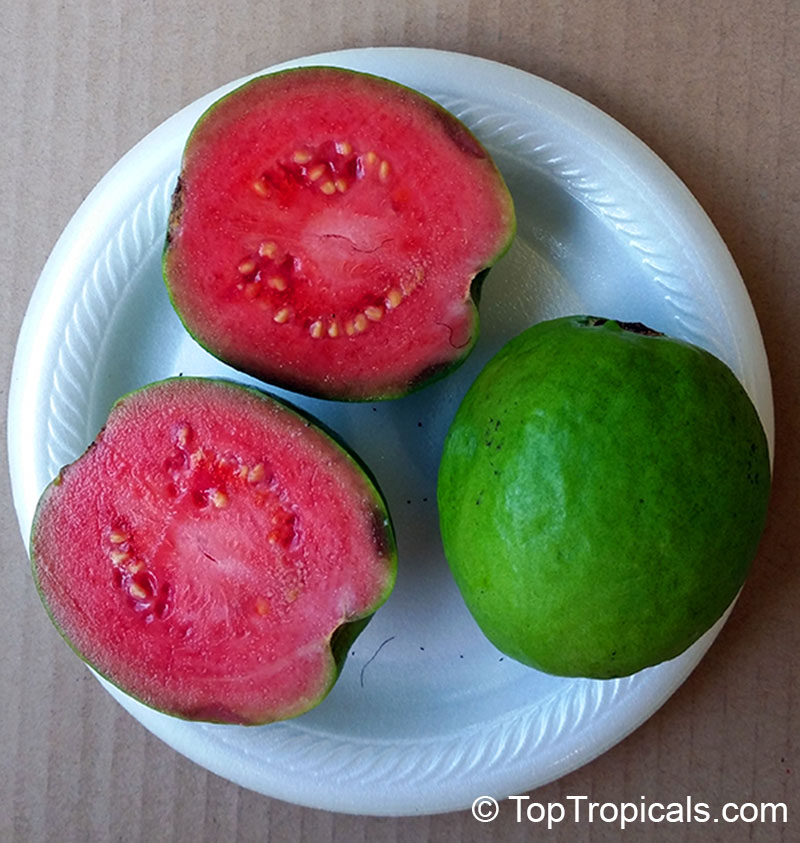
A: Both species are used for commercial juice making. We grow lots of Psidium littorale - Cattley Guava, Strawberry Guava - and we make delicious juice. Psidium guajava - Tropical Guava, Guajava - is less juicy, fruit is somewhat dry, but it still has a great flavor; you may need to add water to blended pulp. And sugar - add it to both kinds of fruit!

Check out our Guavas!