👽 The "Tree" That Isn't: African Giant Single-Leaf Wonder - Anchomanes difformis
Quick Take: It boasts a thorny trunk, a lace-like canopy, and stands several feet tall - yet it isn’t a tree at all. The entire structure is just
one single leaf.
Walk through a tropical rainforest in West Africa and you might spot what appears to be a young, prickly tree with huge, deeply divided foliage. Look closer, though, and you’ll discover one of the botanical world's greatest illusions:
Anchomanes difformis (previously classified as
Amorphophallus difformis var. Benin).
For rare plant collectors, this strange survivor breaks almost every rule in the book.
🌵 One Leaf Does All the Heavy Lifting
Unlike standard plants that sprout dozens of stems and leaves,
Anchomanes grows a single spectacular leaf each season.
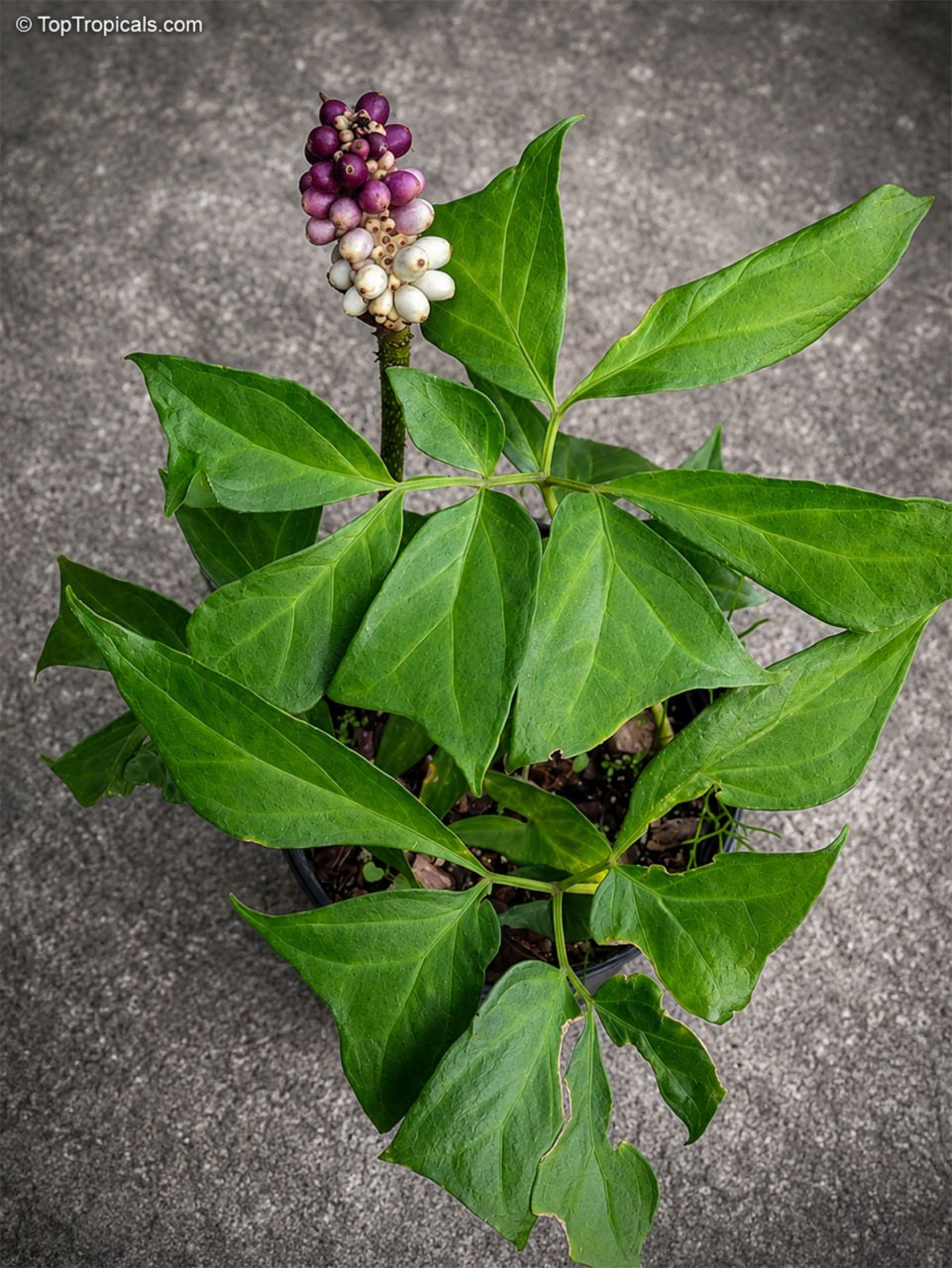
The Canopy: Reaching over 30 inches tall, the single leaf branches into dozens of leaflets, creating an intricate canopy.
The Look: Featuring bi-lobed lobes and natural leaf windows (
fenestrations), it looks like a cross between a giant fern, a
Monstera, and bat wings.
The Reset: When the season ends, the leaf dies back completely, leaving an empty plot of soil until the plant re-emerges in spring.
🌵 A "Trunk" Made of Pure Deception
The thick, patterned stalk supporting the plant looks remarkably like a young tree trunk covered in snake-patterned skin and sharp prickles.
In reality, it’s just a petiole (the stalk supporting the leaf). Those rose-like prickles give the plant a prehistoric, dinosaur-era aesthetic, but their main job is keeping that massive single leaf upright and protected.
🌵 The Hidden Underground Giant
The real engine behind this botanical marvel stays completely out of sight:
•
Massive Tubers: Anchomanes grows from a thick, creeping underground tuber just below the soil surface.
•
Smart Strategy: Instead of wasting energy building permanent woody branches, the plant invests everything into expanding its underground reserve.
•
Yearly Comebacks: As the tuber branches over time, it stores enough energy to power an even larger leaf the following season.
Botanical Surprise: Mature tubers will often send up a dramatic flower
before the leaf even emerges for the season.
🌵 Weird Flowers & Purple Berries
Like many members of the
Araceae (aroid) family, its bloom consists of a fleshy hood (
spathe) wrapped around a central spike (
spadix).
The Pollinator Trap: Rather than sweet perfume, the short-lived flower can emit a pungent odor designed to lure wild flies and beetles.
The Reward: If pollination succeeds, the bloom transforms into striking clusters of bright violet-purple berries.
🌵 Growing & Care Guide
Native to tropical West African woodlands (including Benin),
Anchomanes thrives on warmth and humidity.
Active Season: Warm temperatures, rich soil, high humidity, and consistent moisture.
Dormancy: Keep the subterranean tuber cool (frost-free) and mostly dry once the leaf drops.
Outdoor Growth: Thrives in the ground year-round in frost-free climates (like South Florida).
Safety Note: Like most aroids, the plant contains calcium oxalate crystals, which cause irritation if handled carelessly or ingested.
🌵 Why Collectors Can't Resist It
Anchomanes difformis delivers maximum drama:
• A single leaf pretending to be a whole tree.
• A snake-patterned, thorny stalk that’s secretly just a leaf stem.
• A crawling subterranean tuber that resets every winter.
It’s the ultimate garden conversation starter - a plant that inevitably makes visitors stop, stare, and ask:
"Wait... what on Earth is that?"🛒 Bring Home This Alien Plant📚 Learn more:
Anchomanes difformis, Amorphophallus difformis
Anchomanes
USDA Zone: 9 - 11
·
Anchomanes difformis in Plant Encyclopedia ·
The world's strangest plant that makes healthy noodles·
Amorphophallus konjak·
Amorphophallus bulbifer·
Amorphophallus paeoniifolius: what's inside the Devils Tongue that smells like trouble? ·
The biggest flower in the world - Amorphophallus·
Different species of Amorphophallus
#Nature_Wonders #Shade_Garden #Container_Garden #Discover
🟢 Join 👉 TopTropicals