Garden Blog - Top Tropicals

Date: 28 Oct 2016

Devil Flowers - Bat Lilies - for Halloween!
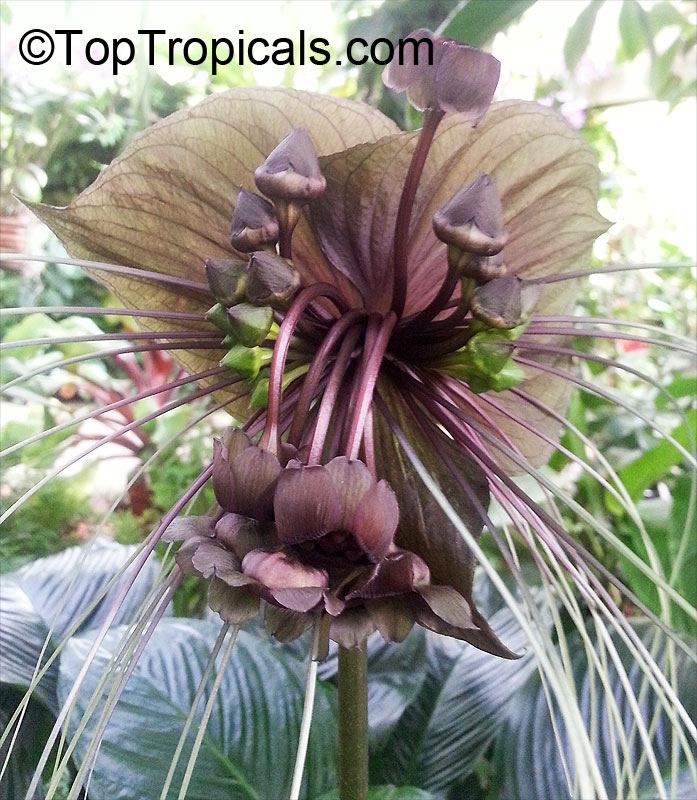
Tacca. Growing Tacca is a great way to have an unusual flower or novelty plant, both indoors and out. Tacca is an exotic plant with flowers that mimic a bat in flight, deep purple (or white), with ruffled wings and long, hanging filaments. Curious, bat-like inflorescence both in shape and color, with wide spreading, wing-like bracts of rich maroon-black (some varieties have white flowers), accompanied by long trailing filaments or "whiskers"; the small black flowers are succeeded by heavy berries; corrugated olive-green leaves with oblique base surround the bloom... Those in warm areas can learn how to grow the beautiful and unique bat flower outdoors. In more seasonal areas, bat flower info says the plant and frilly flower grows vigorously indoors when it is happy with the conditions.

How to Grow Bat Flower. Growing bat flowers requires a little extra care, but blossoms of this unusual specialty plant makes it worthwhile. Large plants usually have a greater rate of success than smaller ones. Keep your bat flower away from cold temps and away from direct sun. When growing this plant outside, plant it in the shade. Care of bat flower indoors will include a shady location as well, and yearly repotting for the rapidly growing plant. This plant does not like to be root bounded. Pot up until reaching a 10- or 12-inch pot; after that, trim the roots and return to the same size pot, if desired. Well-drained soil is a must when growing Tacca bat flowers and should remain slightly moist. Soil should be light and retain moisture but never allowed to get soggy. Our special potting mix will work best for this plant.
The plant should be allowed to dry out during dormancy. Keep this in mind during its time of rest, in fall and winter. In warmer areas, bat flowers reportedly do not experience a dormant period. Fertilize monthly or every six weeks with a slow-release plant food.
For improving cold hardiness in winter, and heat tolerance in summer, apply SUNSHINE-E booster once a month. Tacca, as well as most plants with large lush foliage, responds well to such treatments, the plant will look greener, healthier, and bloom more readily.

Black Tacca and White Tacca, as well as Tacca seeds

Date: 24 Oct 2016

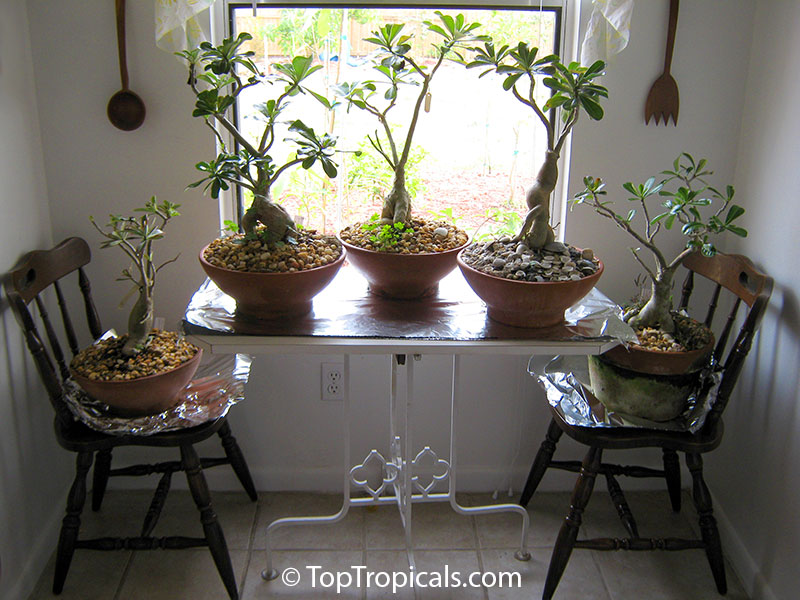
Overwintering Adeniums outside of tropics

Q: We bought several adenium plants from you. We are moving to the Denver area of Colorado. How can we make sure the plants survive? Should we use a green house?

A: Adeniums are perfect container plants, and house plants. They can be easily grown outside of tropical climate. During winter, Adeniums drop leaves and go into dormancy which makes it easy to keep these plants in a dormant stage in a warm location of your house, or possibly even in well-lit spot of garage (with a window), with temperatures above 50-60F.
Here in South Florida, during time of cold, when chances of freeze are high, we move our own Adenium collection into lanai, with plastic sheet protection around lanai.

In colder climates, Adeniums can be kept indoors as house plants during winter. There are some requirements/tips for you:

  • Temperature. Move Adeniums indoors when temperature starts dropping below 45F.
  • SUNSHINE. Use SUNSHINE boosters to improve cold resistance of Adeniums, and essure healthy plant throughout winter. SUNSHINE-BC

Date: 22 Oct 2016

Plant Horoscope. Scorpio Zodiac lucky plants: Nearly indestructible plants

Scorpio - 10/23-11/21. A WATER sign ruled by both Mars and Pluto.
Scorpio's plants are often found in remote places or on poor ground. They will likely have thorns, can be red in color, and grow under adversity. The good news is, most of these plants are nearly indestructible! This makes them desirable for every gardener.
The reproductive organs are ruled by Scorpio, so these are plants that balance the hormones, regulate the menstrual cycle, help with childbirth and pregnancy. Until this century, Scorpio was ruled by Mars, and the herbs associated with it had to do with the urogenital system and the colon. Many of the herbs related to Scorpio are cleansing and revitalizing. Now, astrologers assign Scorpio to Pluto, discovered in 1930 (Pluto is said by astrologers to be a higher octave of Mars). Physiologically, Scorpio involves the processes of catabolism and anabolism, the death and regeneration of body cells. Diseases of Scorpio are often involved with the slow buildup of toxic substances in the body (carcinogens, etc) or in the mind (anger, jealousy). Scorpio loves a spice with depth and complexity. Camphor Basil adds rich flavor to every dish it seasons, and its own aphrodisiac tendencies appeal to Scorpio's lusty nature.

Scorpio Zodiac lucky plants: Ceiba,  Baobab,  Pistachio,  Nutmeg, Black-eyed Susan Thunbergia, Combretums,  Dragon fruit,  Medinilla,  Camphor Basil,  Cuban Oregano, Vanilla orchid,  Hibiscus, Various  cacti and succulents,  Adenium, Honeysuckle,  Peppers,  Cordyline,  Spider plant,  Jasmine,  Gooseberries, Wild indigo,  Bougainvillea,  Aloe vera,  Raspberry,  Palmetto,  Horseradish tree,  Camphor,  Allspice and Bay Rum, Jujube,  Sweet Mimosa,  Agave, Milkweed,  Hong Kong Orchid Tree,  Pony Tail,  Dwarf Poinciana, Bottlebrushes,  Clusias,  Crocosmia,  Zig-Zag Cactus,  Dracaena,  Fire Bush,  Hoyas,  Jatropha,  Kalanchoe,  Sausage tree,  Devils Backbone, Pereskia, Red Plumeria,  Firecracker,  Rattlebox,  Rhoeo, Calendula, Geranium, Thistles, Mint, Sage, Catnip, Coriander, Sandalwood, Ginseng, Euphorbias, Acacias.

For other signs information, see full Plant Horoscope

Date: 18 Oct 2016

Checklist - preparing for winter in subtropical areas.

Date: 10 Oct 2016

Cold protection - winter action for your plant collection

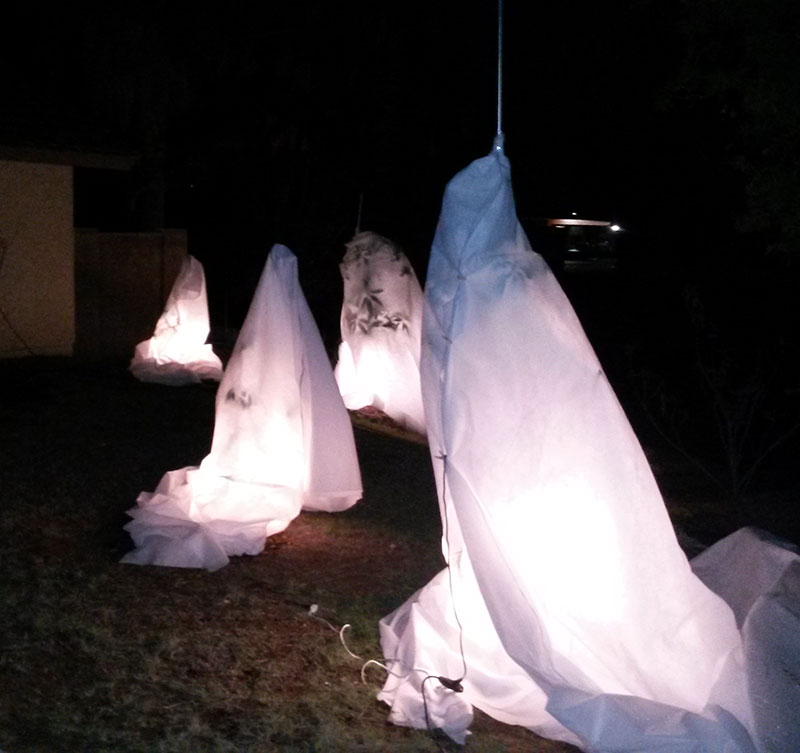
A note from our customer: Last winter was very cold here in Arizona, lower 30's. I used white synthetic sheets (called frost cloth, it is very light and yet effective) to cover my fruit trees, and kept simple light garlands on for the whole night. Sending you couple photos so you can share with others. It worked pretty well for my plants and no cold damage!

With winter approaching, it is time to take some actions to protect your rare plants from cold stress and damage.
If you live in a mild climate, you still need to get ready for the cold nights. When expecting a cold night, individual plants and trees can be wrapped with sheets, or blankets, to protect them from the wind chill. Christmas lights is a good idea for an additional warm up.

For large collections of tropical plants, temporary winter greenhouse doesn't have to be expensive. An easy-assembly mobile carport from a hardware store covered with a plastic or fabric will cost you $100-200. It can fit a hundred plants or more!

If you live in area with a hard freeze, Southern exposure windowsill will work for most of the compact tropicals providing proper care. Larger collections may also move into your garage for a few cold nights, or for longer periods if the garage has a bright light source.

Factors affecting tropical plant winter survival:

1. Duration of cold period. Tropical plants can't stand long periods of cold. A few days of even upper 30's may kill a tropical plant. A few hours of frost may cause leaf drop but the plant will recover.
2. Minimum temperature - of course, the warmer the better. But see 1) - if cold is not for too long, it may be OK.
3. Wind-chill can be more dangerous than low temperatures.
4. Exposure. Southern slopes get warm during daytime and stay warm longer.
5. Protection with a house, fence, larger trees - where a "pocket" of warm air forms and stays - is beneficial.
6. Humidity. A lake or a river nearby (especially ocean) will mild the micro-climate.
7. Individual species hardiness. Don't try to grow Orchid Tree outdoors in New York.
8. Plant maturity and health. A well-established plant with developed root system has more chances to survive cold. If a plant had a good change to develop during warm season (bright light, enough water, fertilizer), it will be more cold hardy. Healthy plant can withstand lower temperature, so proper nutrition is important, including micro-element applications. Large specimens, even ultra-tropical, may survive cooler winter than they normally do in their natural habitat. The Nature provided plants with better hardiness level than it is normally used. To boost plant immune system and improve cold tolerance even more, use SUNSHINE plant boosters. SUNSHINE-T