Tabebuia impetiginosa (Pink Tabebuia)
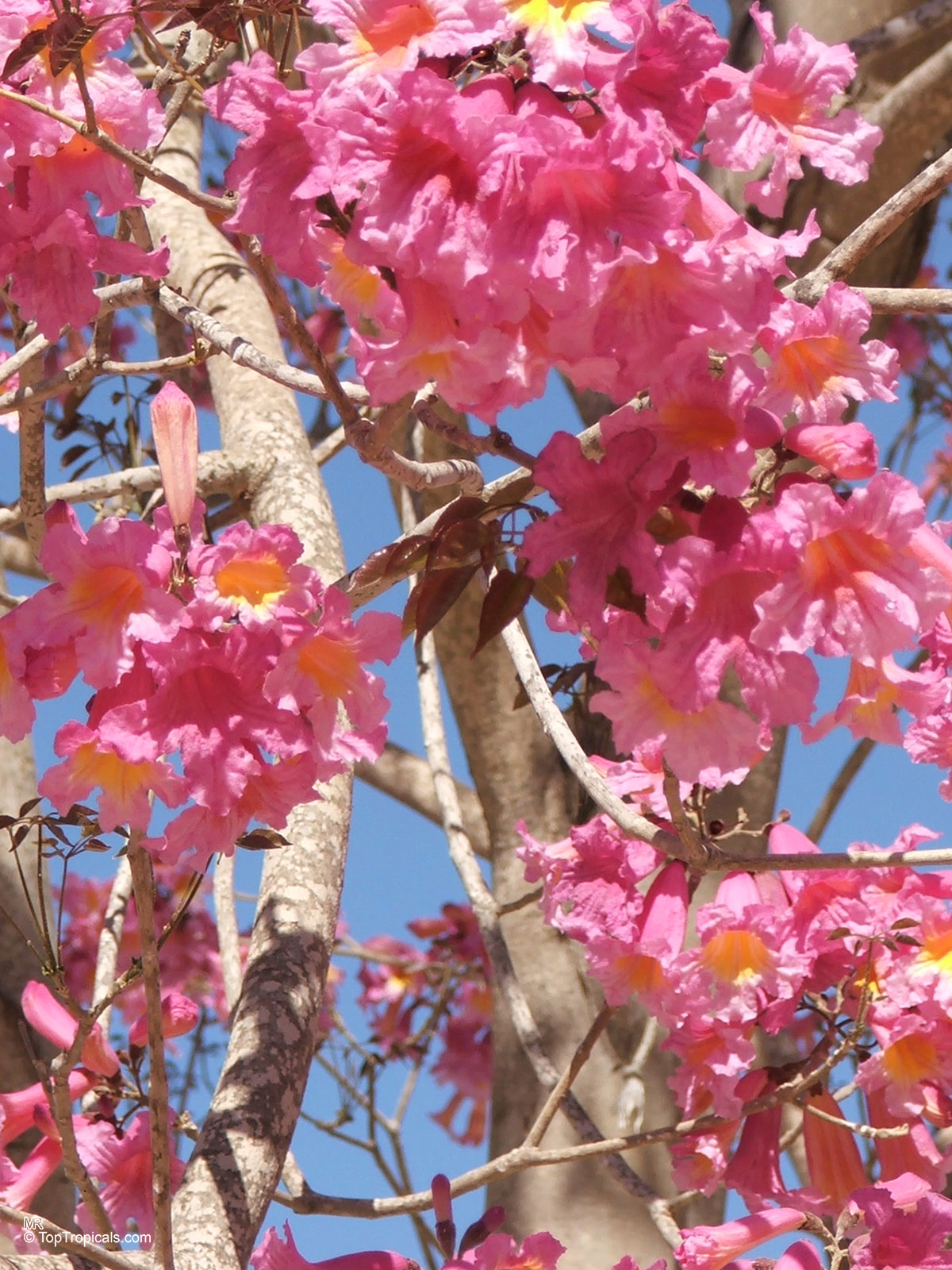
Botanical names: Tabebuia impetiginosa, Handroanthus heptaphyllus, Handroanthus impetiginosus, Tabebuia avellanedae
Common names: Pink Tabebuia, Ant Wood, Pau DArco, Ipe Roxo, Lapacho, Taheebo
Family: Bignoniaceae
Origin: Tropical America

USDA Zone: 9-11
Cold tolerance: 30°F
 Plant form: Small tree
 Mature height: 10-20 ft
 Sun exposure: Full sun or bright light indoor
 Cold tolerance: Tolerates light freezing to about 30°F for short periods (mature plants). Young plants must be protected.

 Watering: Regular; moderate
 Flower color: Pink
 Suitable for: Outdoors in the suitable USDA zone; small gardens, containers, and indoor growing
 Foliage: Deciduous
 Wildlife: Attracts butterflies and hummingbirds
 Ethnomedical: Ethnomedical plant, traditionally used in folk or indigenous medicine
Handroanthus impetiginosus, formerly known as Tabebuia impetiginosa, is a deciduous tree in the Bignoniaceae family, commonly called Pink Trumpet Tree, Pink Ipe, or Pau d'Arco. Native to tropical and subtropical regions of Central and South America, it occurs in seasonally dry forests and woodlands. The tree typically reaches 20-40 feet in cultivation, although wild specimens may grow considerably taller. Its palmately compound leaves usually have five serrated leaflets, and the young branches and leaf undersides may be covered with fine hairs. In late winter or spring, often before new leaves emerge, the crown becomes covered with dense clusters of trumpet-shaped flowers ranging from pale pink to deep rose-purple, usually with a yellowish throat. The flowers are followed by long, narrow capsules containing numerous winged seeds.
Handroanthus impetiginosus thrives in full sun and well-drained soil, tolerating seasonal drought once established. It is widely cultivated as an ornamental shade and street tree, particularly valued for its spectacular leafless flowering display. Suitable for USDA Zones 9b-11, established trees may tolerate brief light frosts, although young plants require protection from freezing temperatures. Its dense, durable wood is also highly valued, but the species is primarily grown ornamentally for its brilliant seasonal flowers.
Similar plants: Tabebuia impetiginosa (Pink Tabebuia)
- Handroanthus chrysotrichus (Dwarf Golden Tabebuia)
- Tabebuia alba (Lapacho Amarillo)
- Tabebuia angustata (Roble Blanco)
- Tabebuia aurea (Silver Trumpet Tree)
- Tabebuia bahamensis (Dwarf Bahamian Trumpet Tree)
- Tabebuia haemantha (Blood-Red Trumpet Tree)
- Tabebuia heterophylla (Pink Trumpet Tree)
- Tabebuia riparia (White Tabebuia)
- Tabebuia rosea (Rosy Trumpet Tree)
- Tabebuia roseoalba (White Trumpet tree)


