Tabebuia impetiginosa (Pink Tabebuia) - Video 2
Botanical names: Tabebuia impetiginosa, Handroanthus heptaphyllus, Handroanthus impetiginosus, Tabebuia avellanedae
Common names: Pink Tabebuia, Ant Wood, Pau DArco, Ipe Roxo, Lapacho, Taheebo
Family: Bignoniaceae
Origin: Tropical America
USDA Plant Hardiness Zone Map
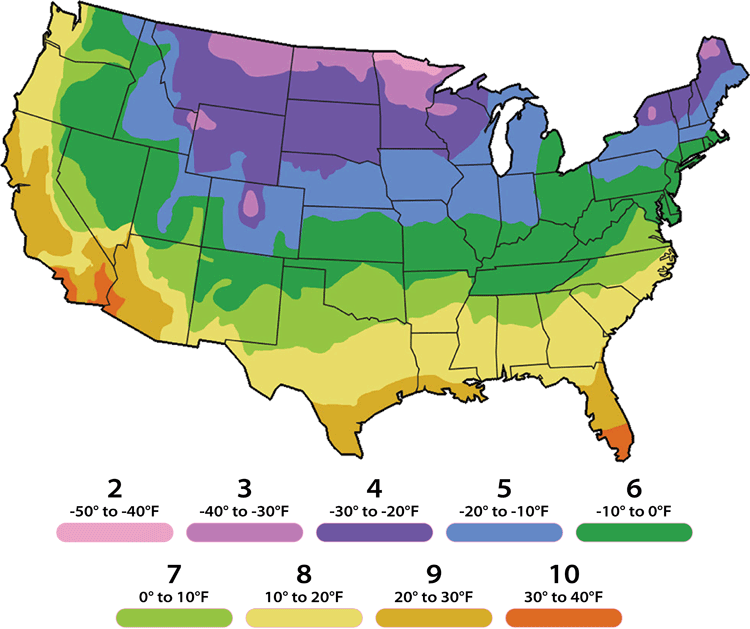
USDA Zone: 9-11
Cold tolerance: 30°F
 Plant form: Small tree
 Mature height: 10-20 ft
 Sun exposure: Full sun or bright light indoor
 Cold tolerance: Tolerates light freezing to about 30°F for short periods (mature plants). Young plants must be protected.
 Watering: Regular; moderate
 Flower color: Pink
 Suitable for: Outdoors in the suitable USDA zone; small gardens, containers, and indoor growing
 Foliage: Deciduous
 Wildlife: Attracts butterflies and hummingbirds
 Ethnomedical: Ethnomedical plant, traditionally used in folk or indigenous medicine
Tabebuia impetiginosa is one of the most beautiful Florida trees
Learn more about
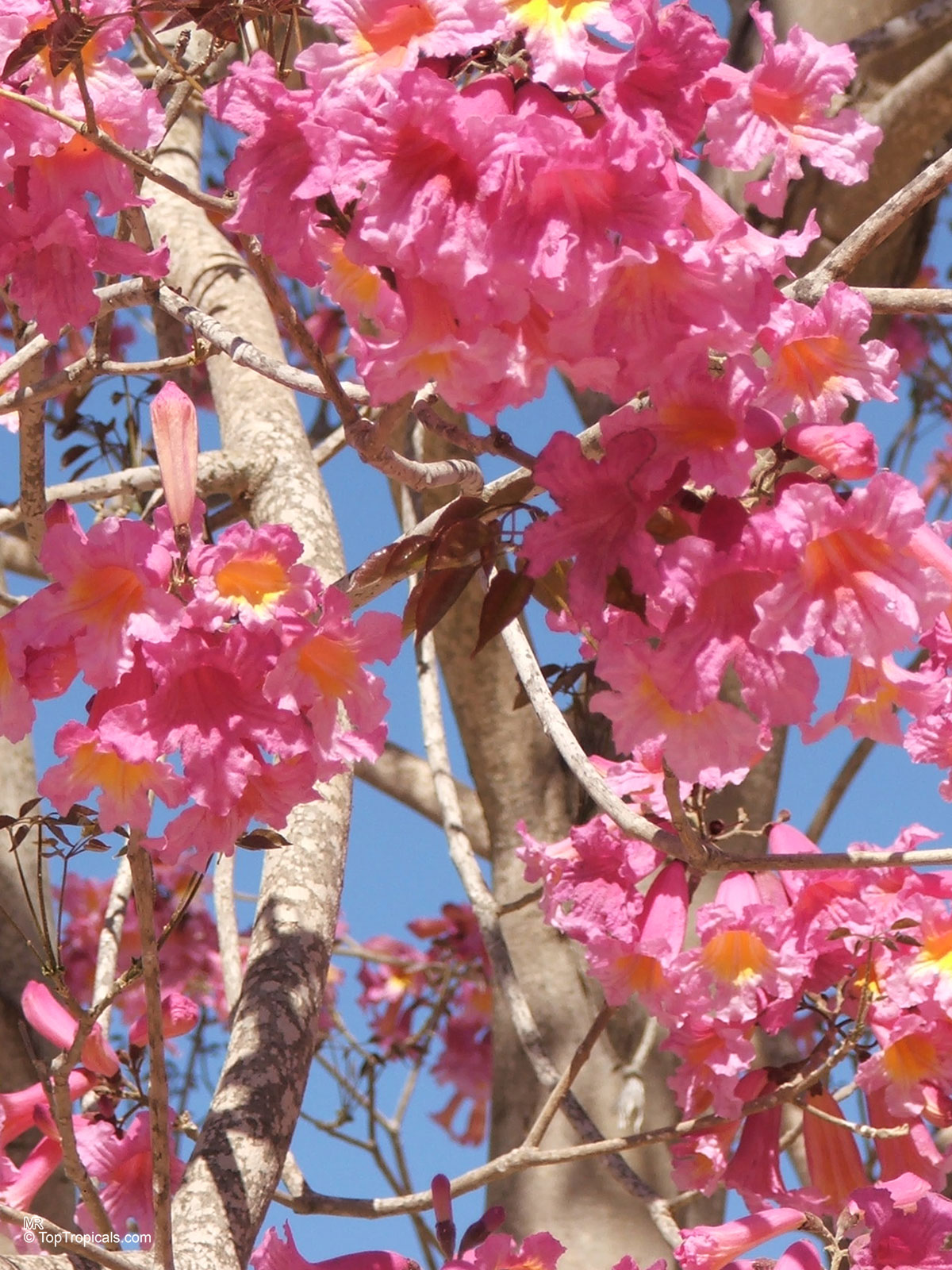
Pau DArco, Taheebo, Dwarf Pink Tabebuia. Looking for the most beautiful winter-flowering tree for your Florida garden? This stunning tree offering bright pink flowers with a splash of yellow, blooming before the leaves even appear. Perfect for smaller yards, this compact tree brings vibrant color without taking up too much space. Ideal for snowbirds visiting Florida in winter, it's not just pretty - it's also cold-hardy down to the upper 20's, making it a great fit for Central Florida gardens. Plus, it's a practical tree with medicinal benefits! Pau D'Arco (Taheebo) bark has been used for centuries to brew a smooth, earthy tea packed with beneficial compounds. A tree that's beautiful and useful - what's not to love? Starts flowering at a very small size!
Grown in
10"/3 gal pot, large plant