Salvia lanceolata (Rusty Sage)

Botanical name: Salvia lanceolata
Common names: Rusty Sage, Lance-leaf Sage
Family: Lamiaceae
Origin: South Africa
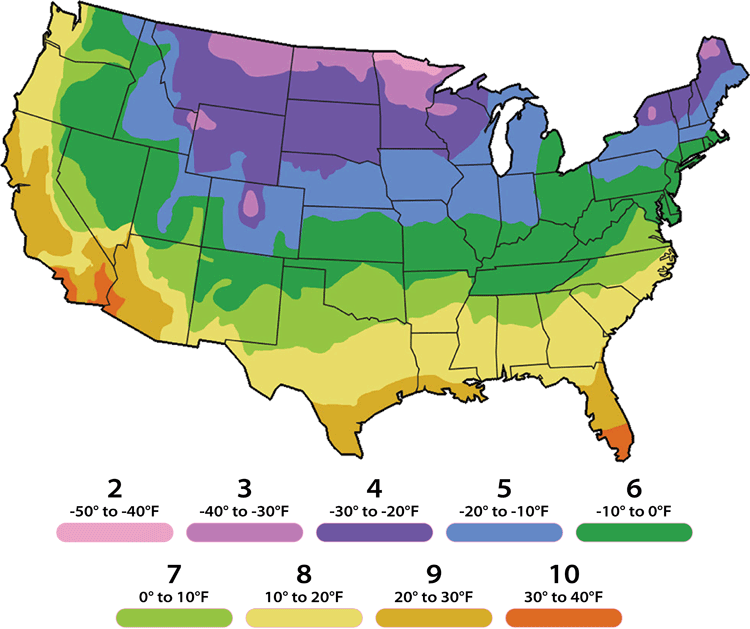
USDA Zone: 8-11


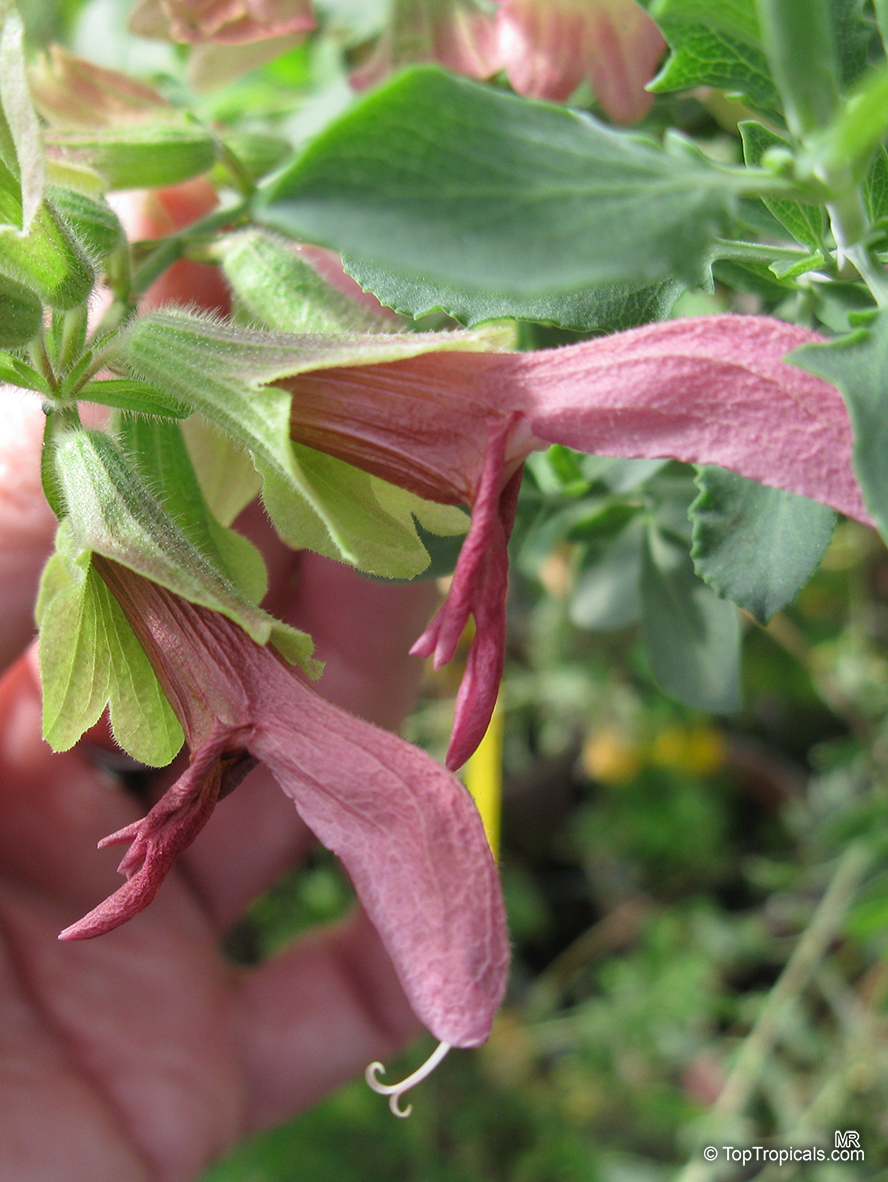
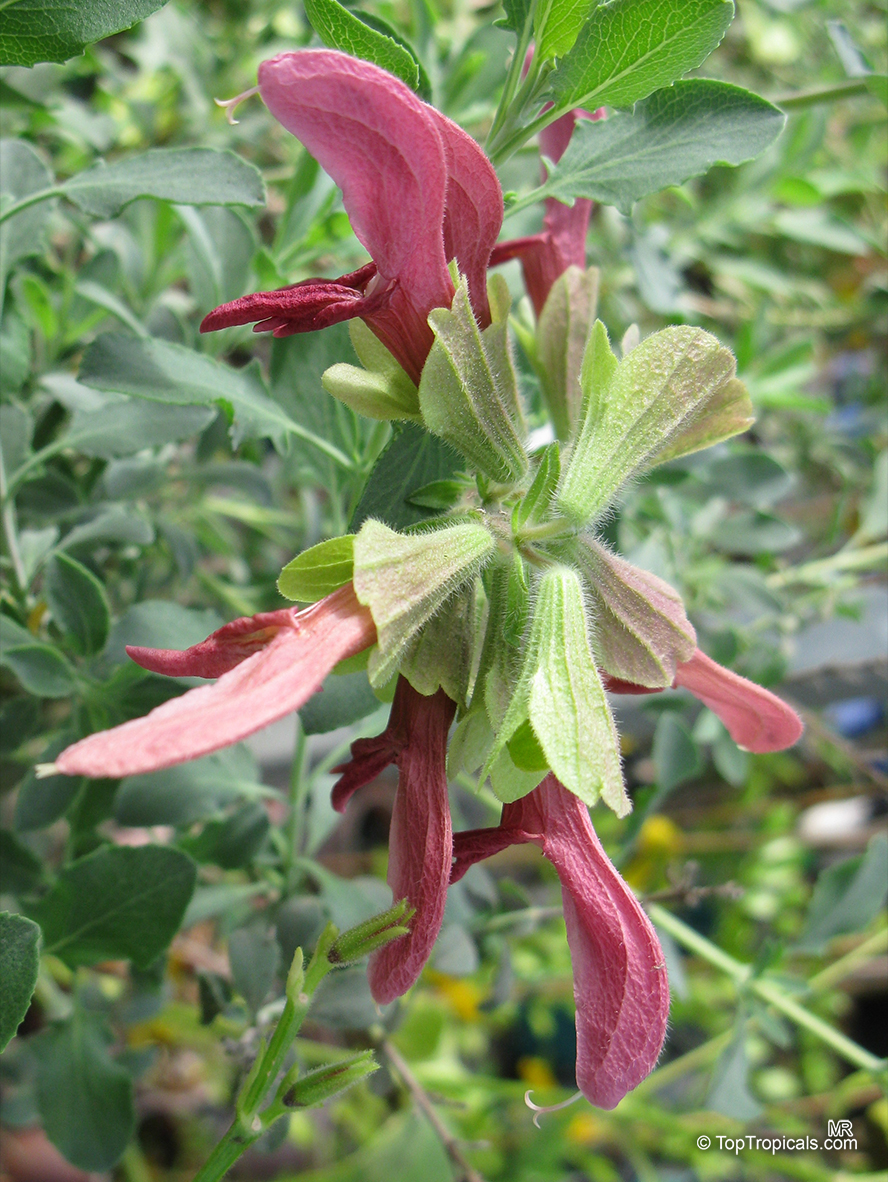
Salvia lanceolata (Rusty Sage), also known as Lance-leaf Sage, is an aromatic shrub native to the coastal regions of South Africa. It typically forms a rounded, densely branched plant reaching 3-6 feet in height and width. The narrow gray-green leaves are covered with fine hairs and release a pleasant fragrance when touched, reflecting the species' adaptation to sunny, dry, and often windy coastal habitats.
The plant produces spikes of tubular flowers that range from soft pink and salmon to brick-red and mauve, with the flower color often changing as the blooms age. Flowering may occur for much of the year in mild climates, attracting bees, butterflies, and other pollinators. Unlike many salvias grown primarily for colorful floral displays, Salvia lanceolata is valued equally for its ornamental foliage, drought tolerance, and extended blooming season. It grows best in full sun and well-drained soil and performs particularly well in coastal gardens where salt spray and sandy conditions challenge less adaptable plants. Suitable for USDA Zones 9-11, it can also be grown in containers and requires little maintenance once established. The aromatic leaves have a history of culinary and traditional use in South Africa, where they are occasionally used to flavor foods and herbal preparations.
Similar plants: Salvia lanceolata (Rusty Sage)
- Salvia argentea (Silver Sage)
- Salvia aurea (Brown Salvia)
- Salvia coccinea (Red Salvia)
- Salvia discolor (Andean Sage)
- Salvia dolomitica (South African Sage)
- Salvia elegans (Pineapple Sage)
- Salvia farinacea (Mealy Sage)
- Salvia guaranitica (Anise-scented Sage)
- Salvia hispanica (Chia)
- Salvia lanigera (Wooly Sage)