Salvia elegans (Pineapple Sage)

Salvia elegans (Pineapple Sage) vertical stem with long red tubular flower clusters rising upward.
Botanical name: Salvia elegans
Common names: Pineapple Sage, Pineapple Scented Sage
Family: Lamiaceae
USDA Plant Hardiness Zone Map
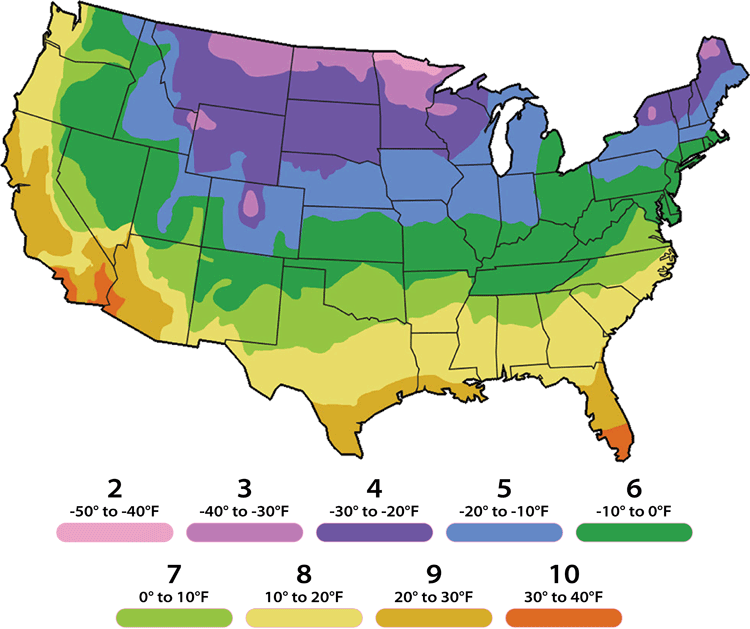
USDA Zone: 8-11
Plant type: Fruit or edible; spice or herb
Fruit type: Fruit or edible
 Plant form: Small
 Mature height: 2-5 ft
 Sun exposure: Full sun or bright light indoor; semi-shade
 Cold tolerance: Tolerates light freezing to about 30°F for short periods (mature plants). Young plants must be protected.
 Watering: Regular; moderate
 Flower color: Red, crimson, vinous
 Suitable for: Outdoors in the suitable USDA zone; small gardens, containers, and indoor growing
 Fragrance: Fragrant; perfume plant
 Wildlife: Attracts butterflies and hummingbirds
 Ethnomedical: Ethnomedical plant, traditionally used in folk or indigenous medicine
Pineapple sage grows naturally in oak and pine scrub forests at elevations from 8,000-10,000 ft in Mexico and Guatemala.
Pineapple sage is rarely grown from seed. Tip cuttings taken in spring are easy to start.
The fresh leaves of pineapple sage are used in fruit salads and drinks. Crush a few fragrant leaves into hot or iced tea for a flavorful treat. The delicious flowers add color and flavor to salads and deserts.
Similar plants: Salvia elegans (Pineapple Sage)
- Salvia argentea (Silver Sage)
- Salvia aurea (Brown Salvia)
- Salvia coccinea (Red Salvia)
- Salvia discolor (Andean Sage)
- Salvia dolomitica (South African Sage)
- Salvia farinacea (Mealy Sage)
- Salvia guaranitica (Anise-scented Sage)
- Salvia hispanica (Chia)
- Salvia lanceolata (Rusty Sage)
- Salvia lanigera (Wooly Sage)
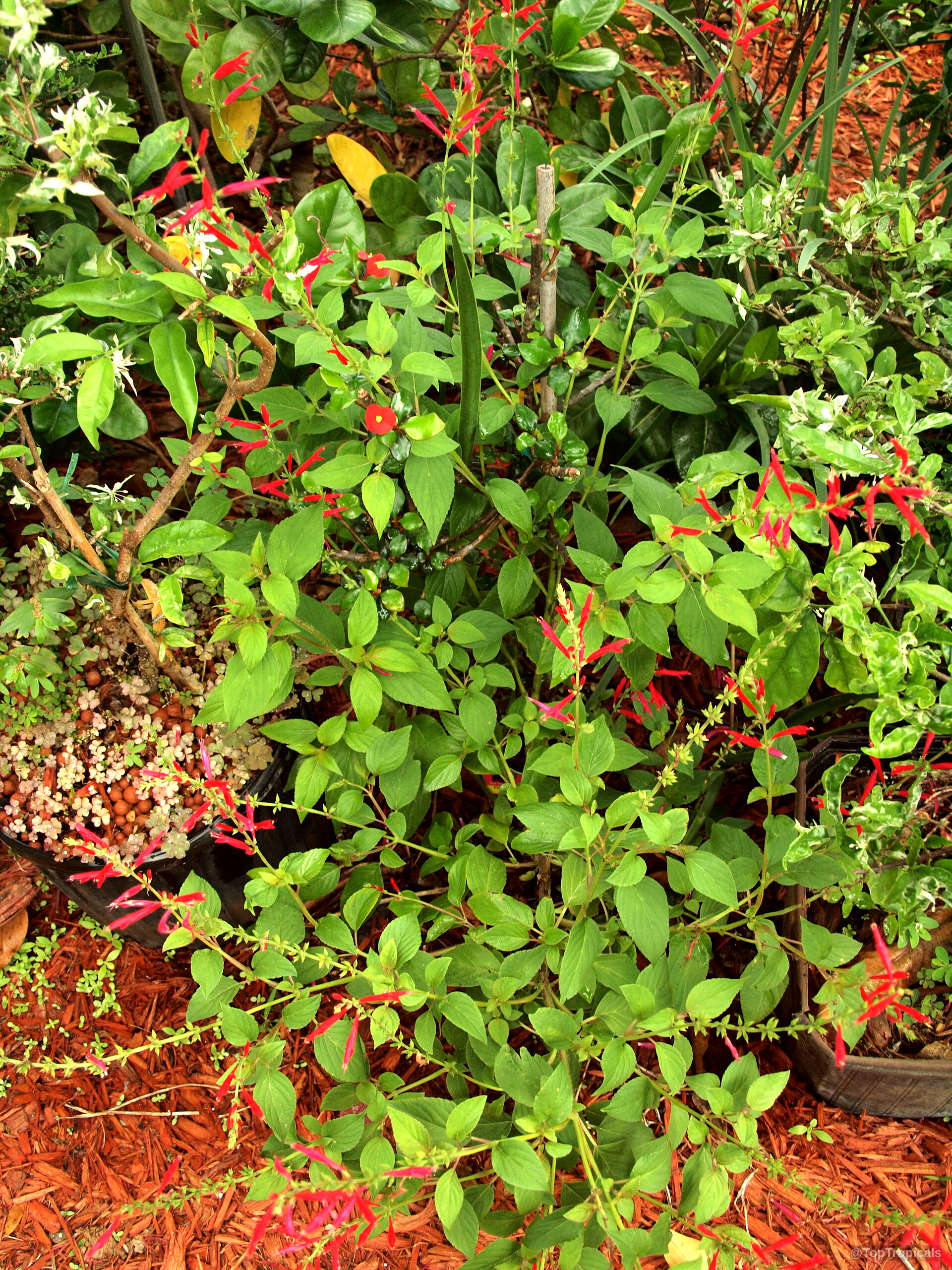
Salvia elegans (Pineapple Sage) with thin red flower spikes growing in a black container

Salvia elegans (Pineapple Sage) with distinct long red tubular flower spikes and green textured foliage.
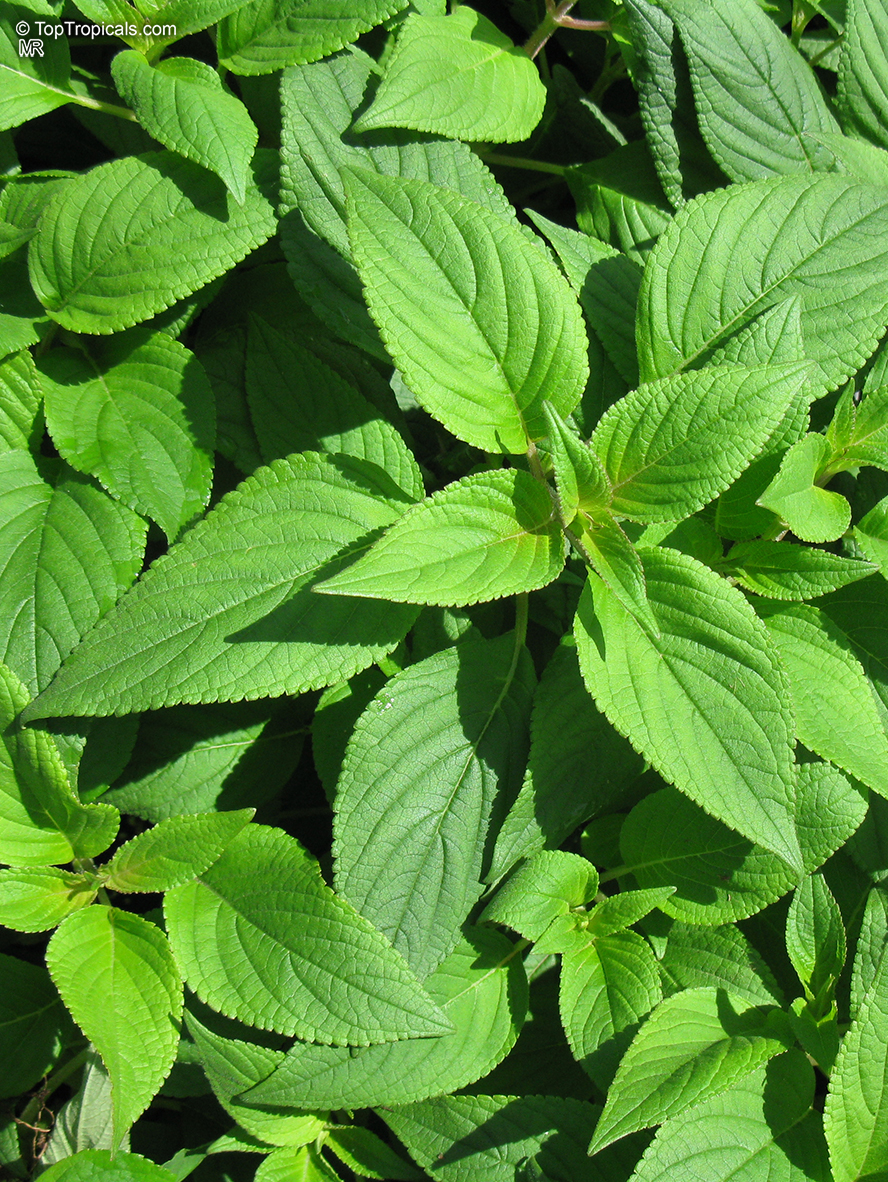
Salvia elegans (Pineapple Sage) with lush green foliage filling the frame in a dense cluster.
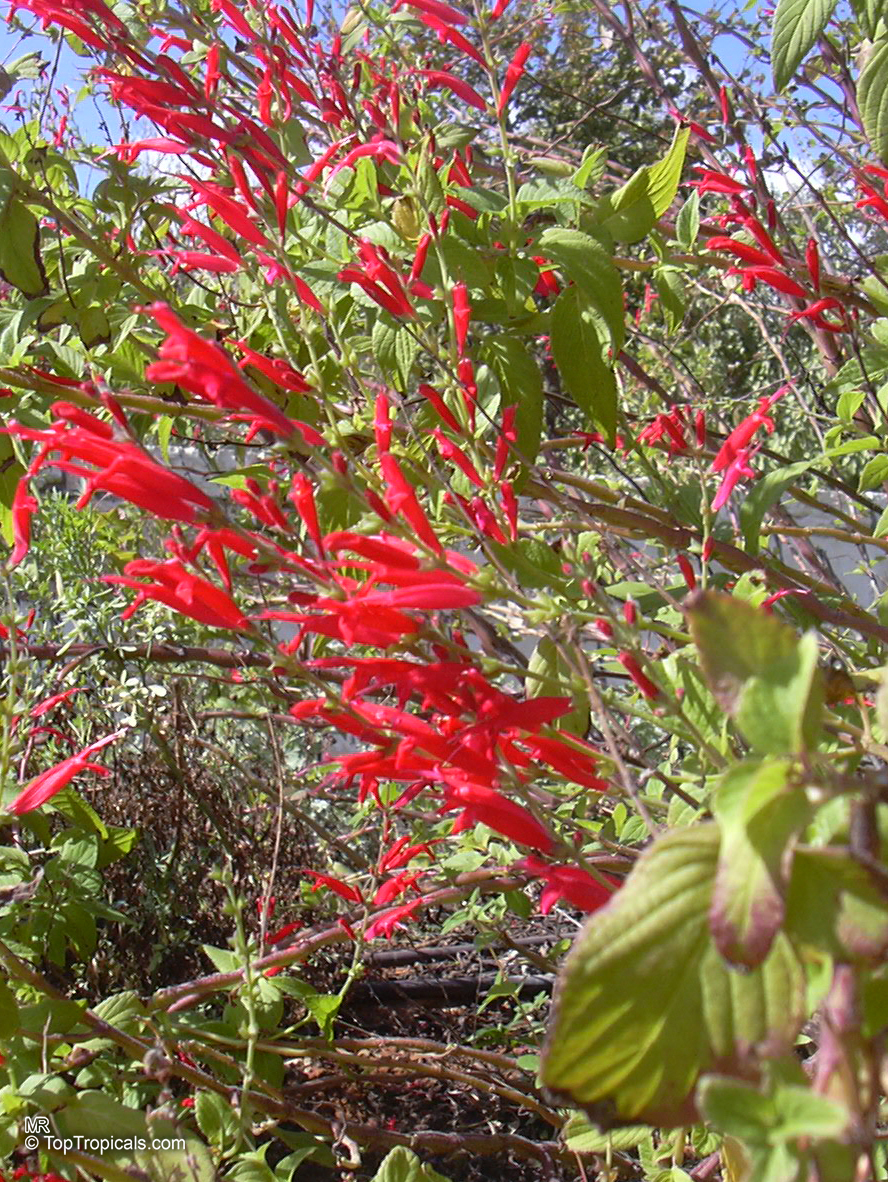
Salvia elegans (Pineapple Sage) with numerous long red tubular flowers amidst soft green foliage
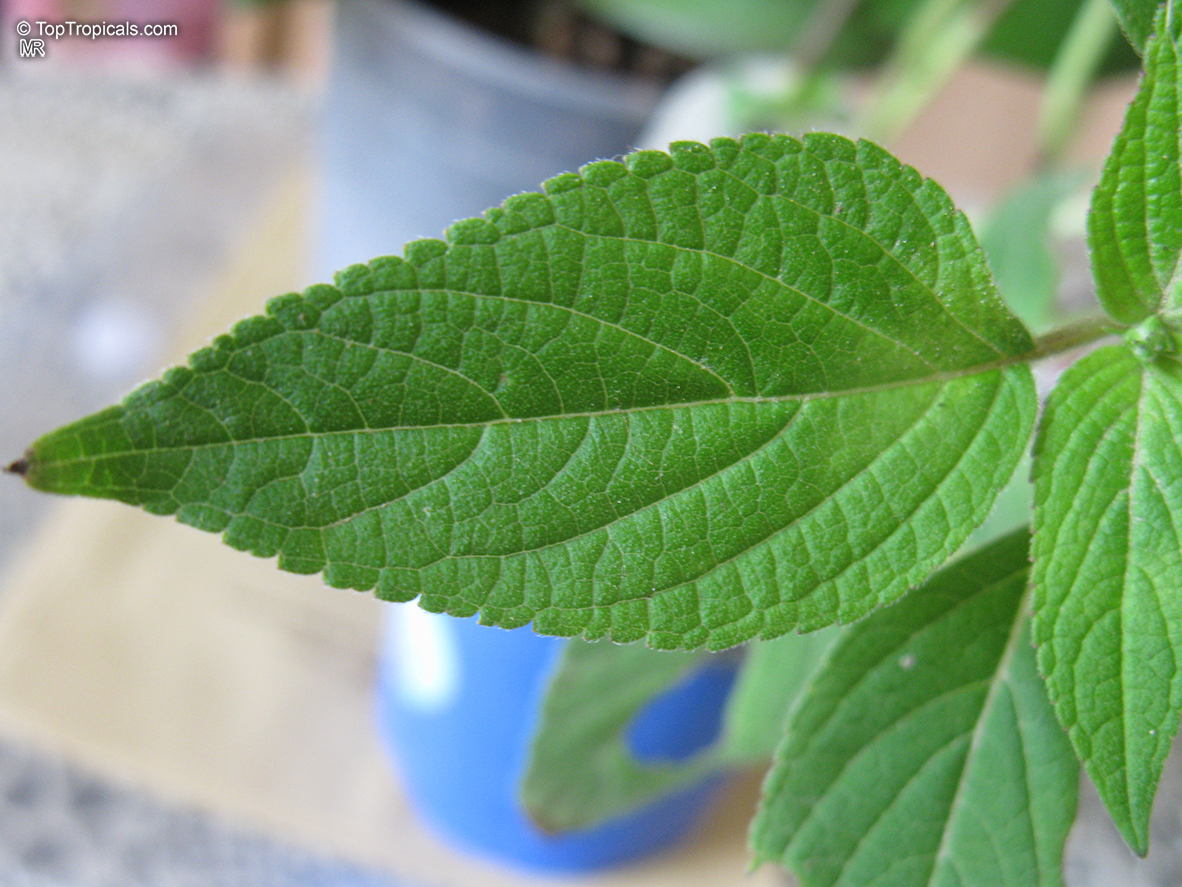
Salvia elegans (Pineapple Sage) green leaves with visible veins and soft textured surface.
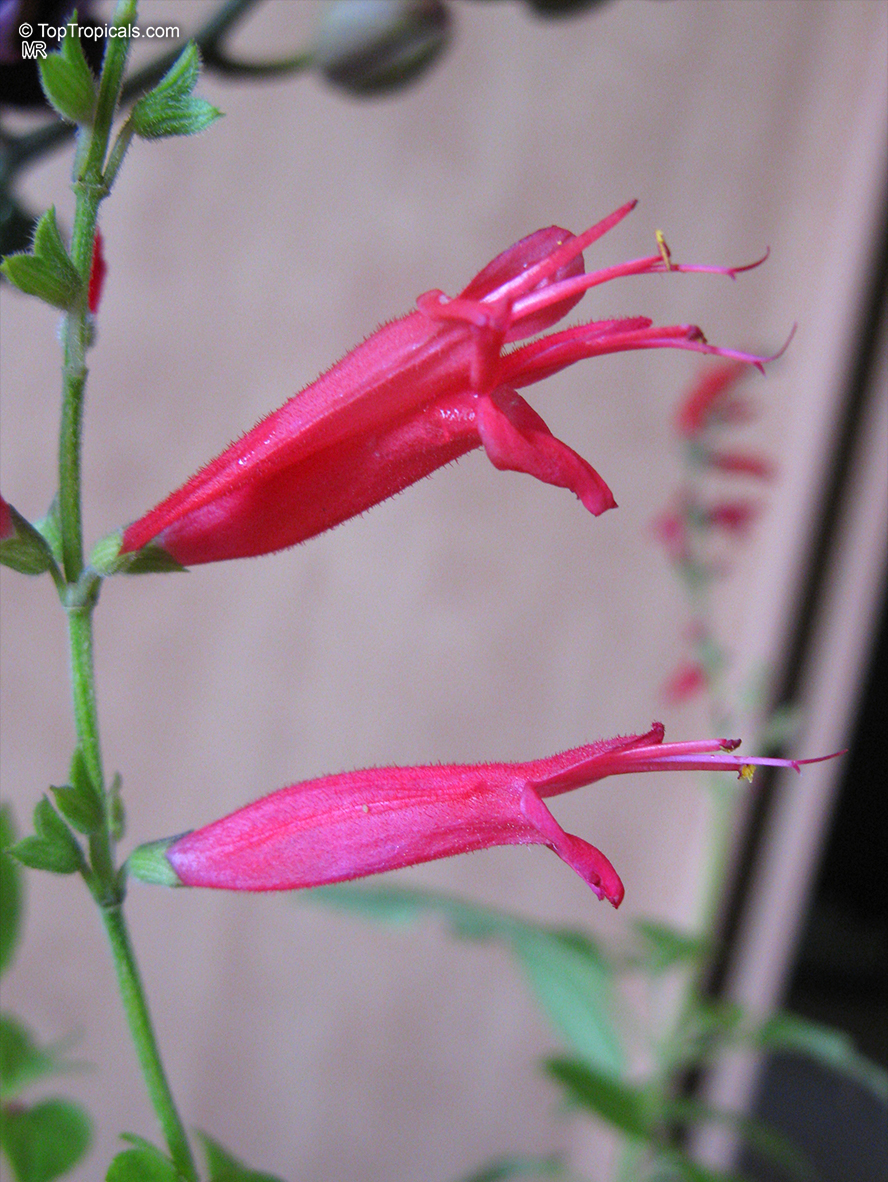
Salvia elegans (Pineapple Sage) red tubular flower on a thin green stem against plain background
Link to this plant:
https://toptropicals.com/catalog/uid/salvia_elegans.htm