Salvia farinacea (Mealy Sage)
Botanical name: Salvia farinacea
Common name: Mealy Sage
Family: Lamiaceae
Origin: Mexico
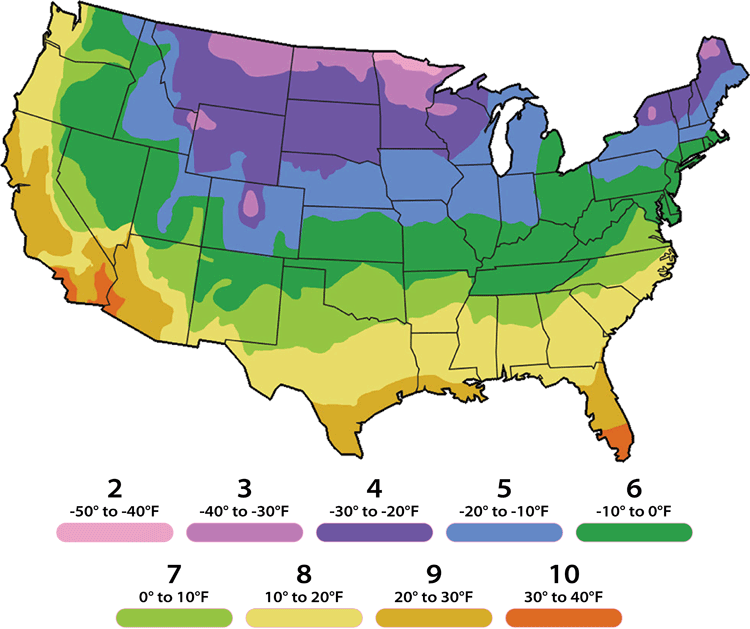
USDA Zone: 8-11
 Plant form: Small
 Mature height: 2-5 ft
 Sun exposure: Full sun or bright light indoor; semi-shade
 Cold tolerance: Frost sensitive. Protect from freezing.
 Watering: Regular; moderate
 Flower color: White and off-white; blue, lavender, purple
 Suitable for: Outdoors in the suitable USDA zone; small gardens, containers, and indoor growing
 Wildlife: Attracts butterflies and hummingbirds
Salvia farinacea, commonly known as Mealycup Sage or Blue Sage, is an ornamental perennial valued for its colorful flower spikes and reliable garden performance.
Native to Texas, New Mexico, and northeastern Mexico, this member of the mint family forms neat clumps of upright stems with narrow green leaves. Plants typically reach 1 to 3 feet in height and are widely grown for their long season of bloom.
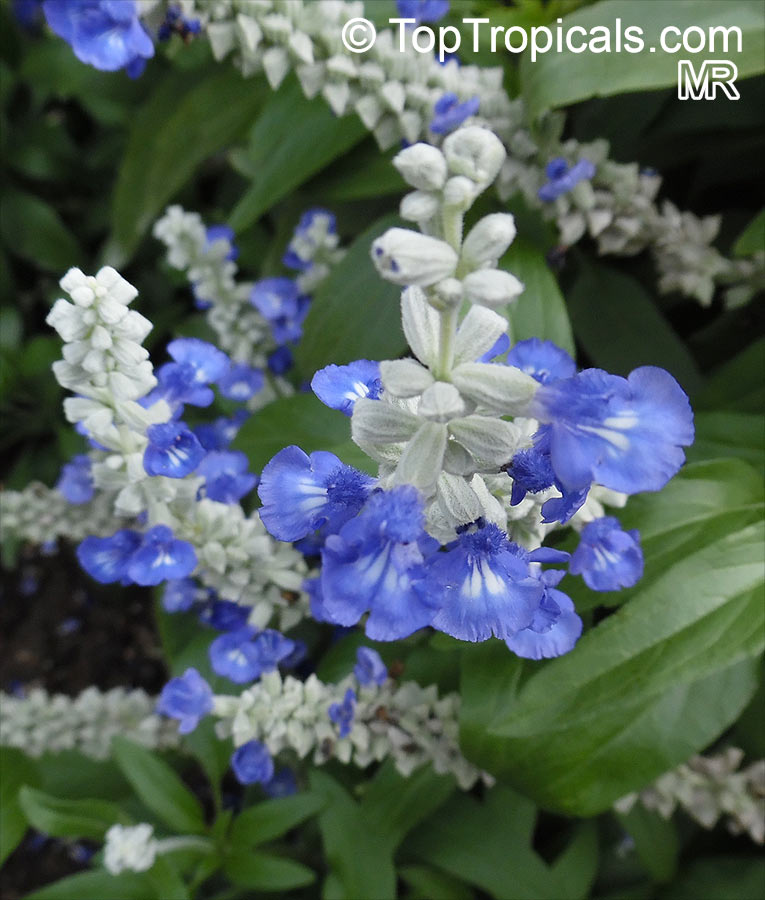
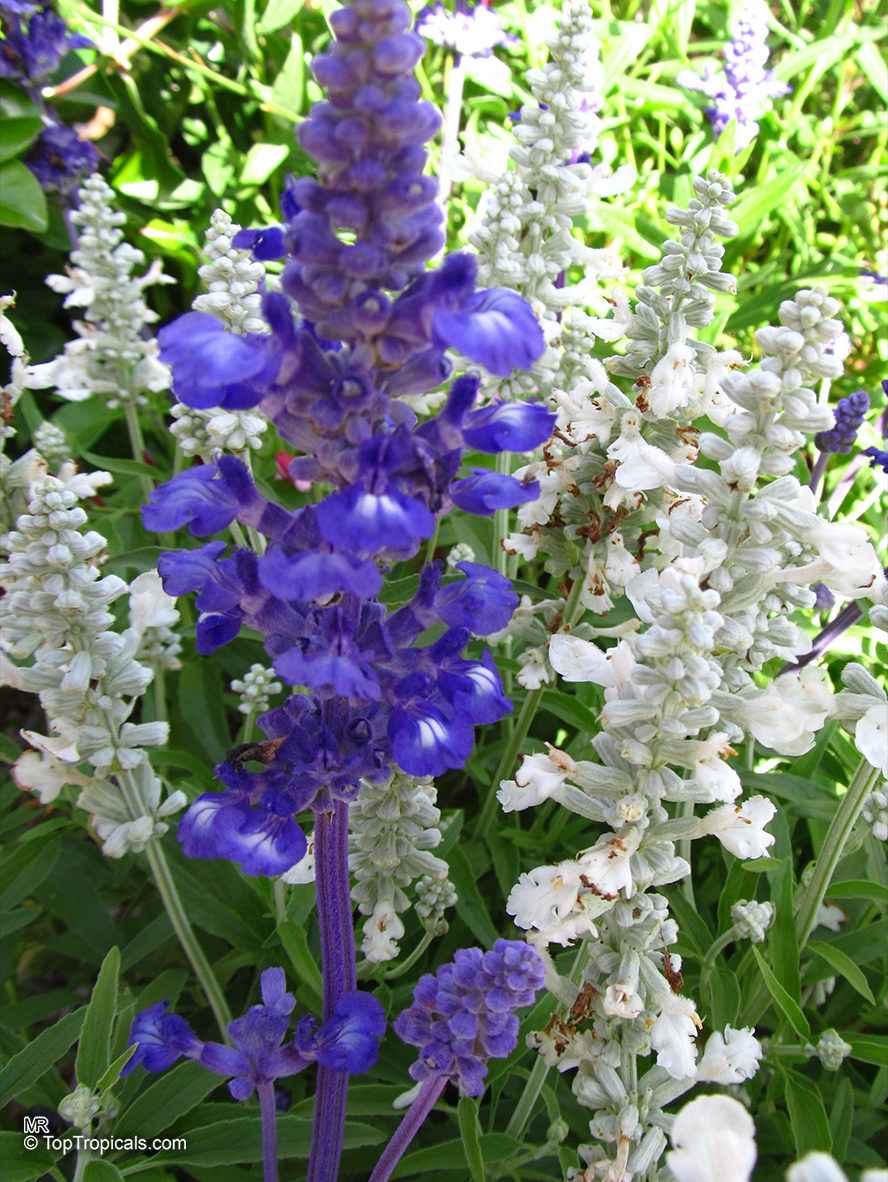
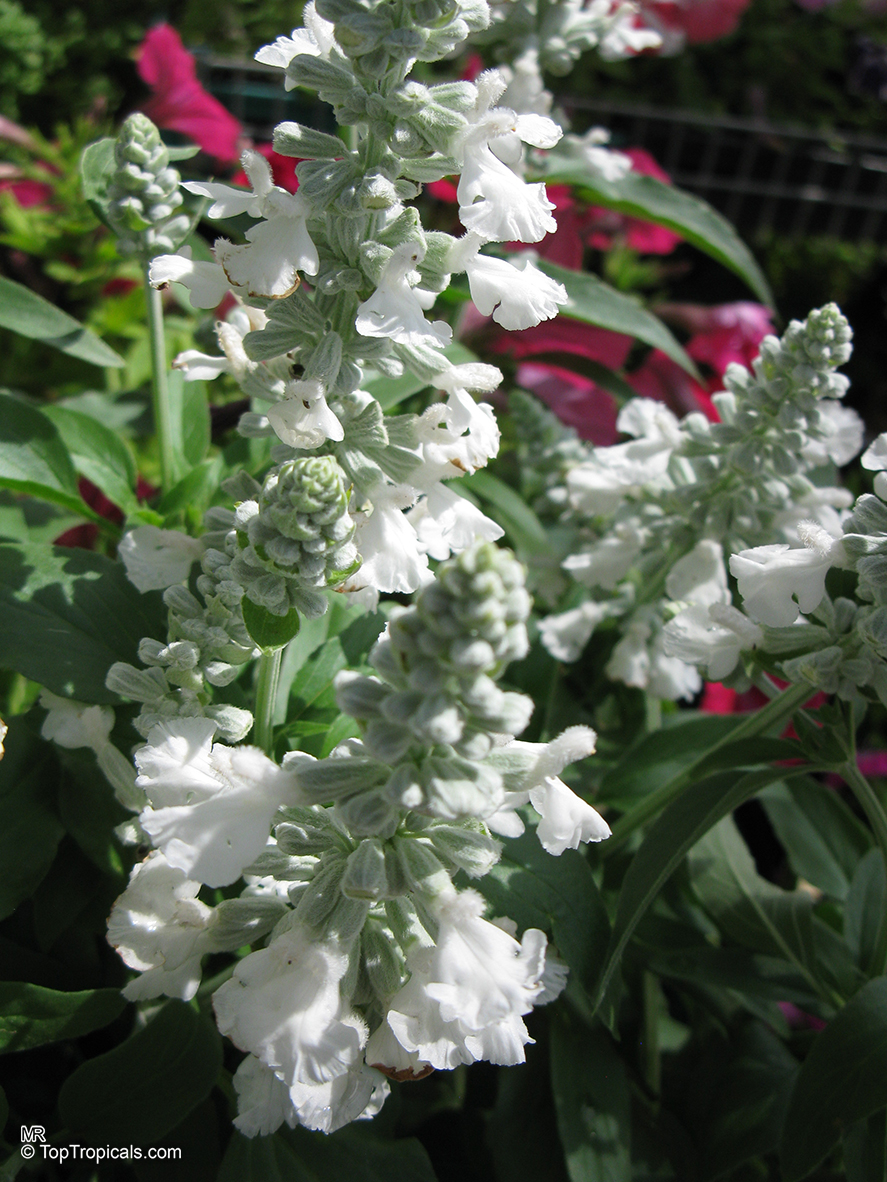
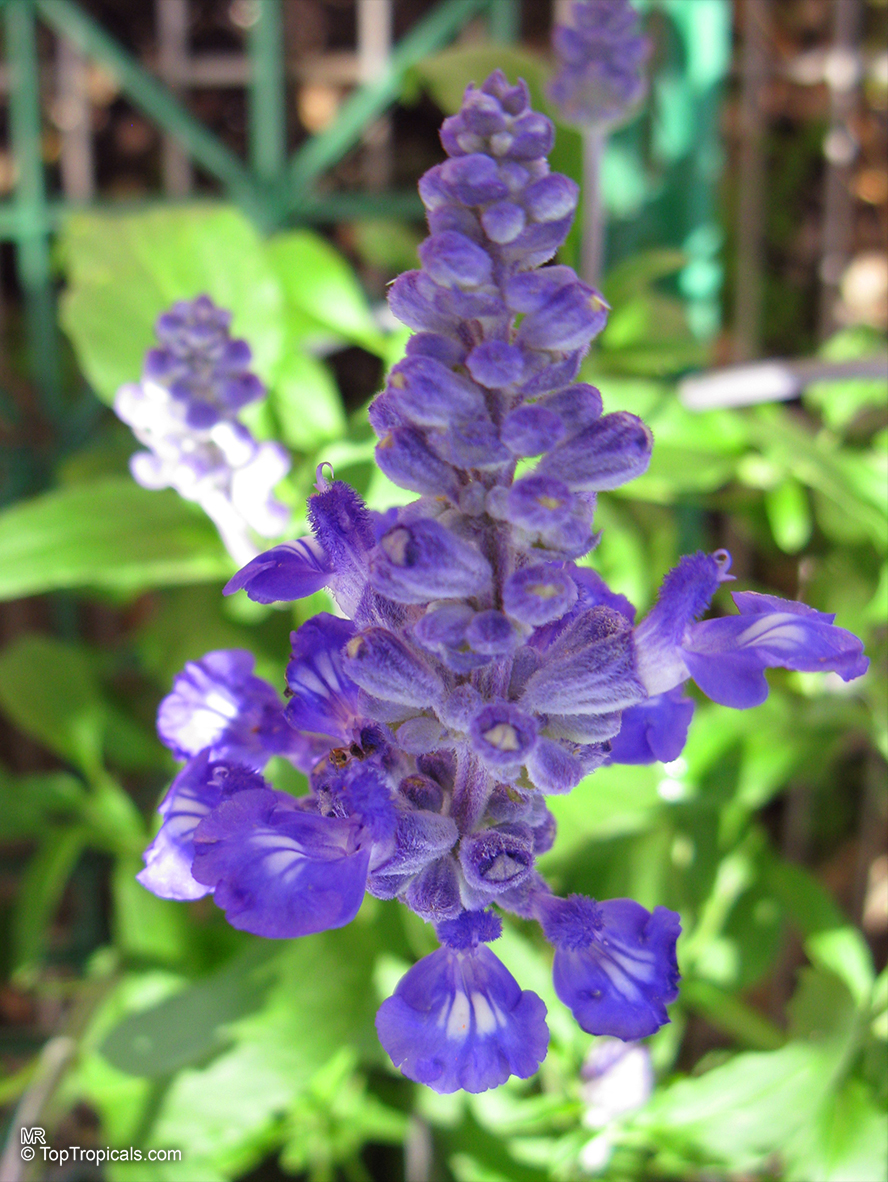
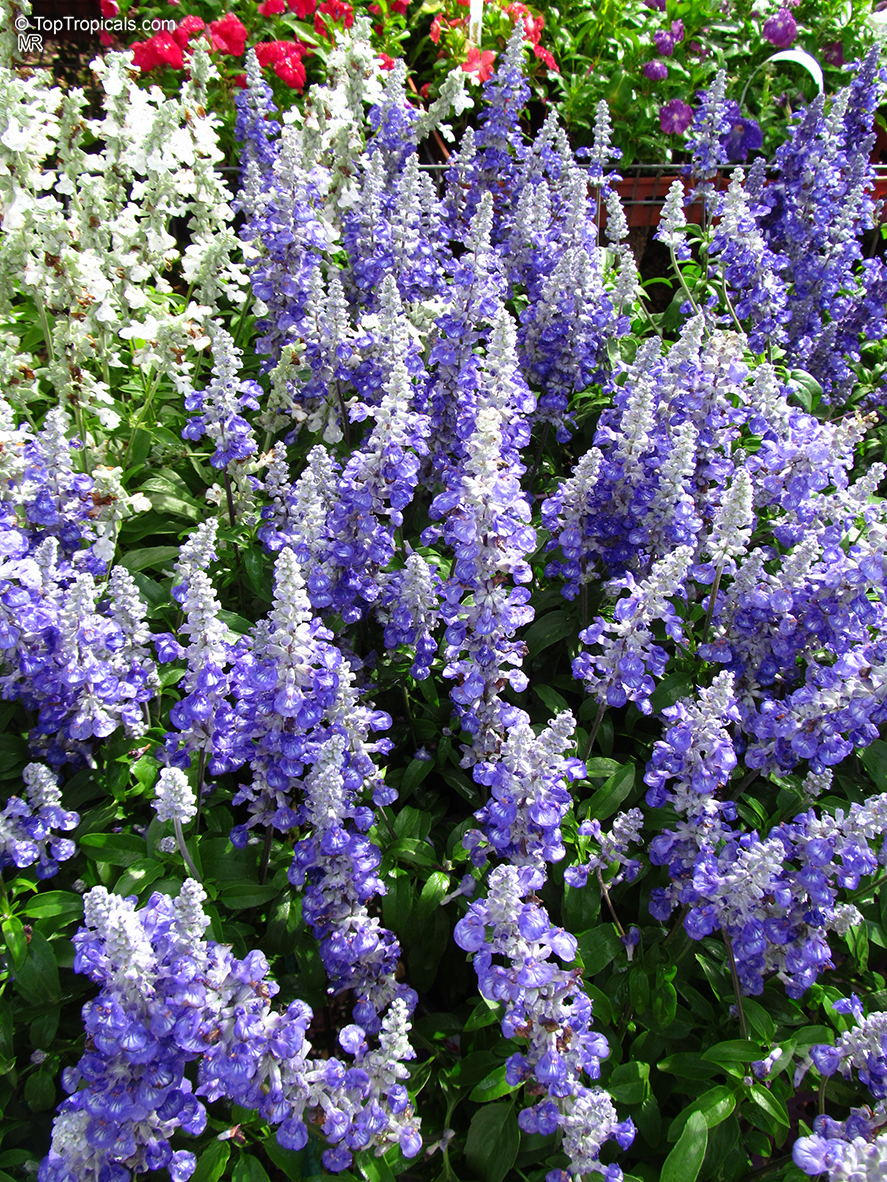
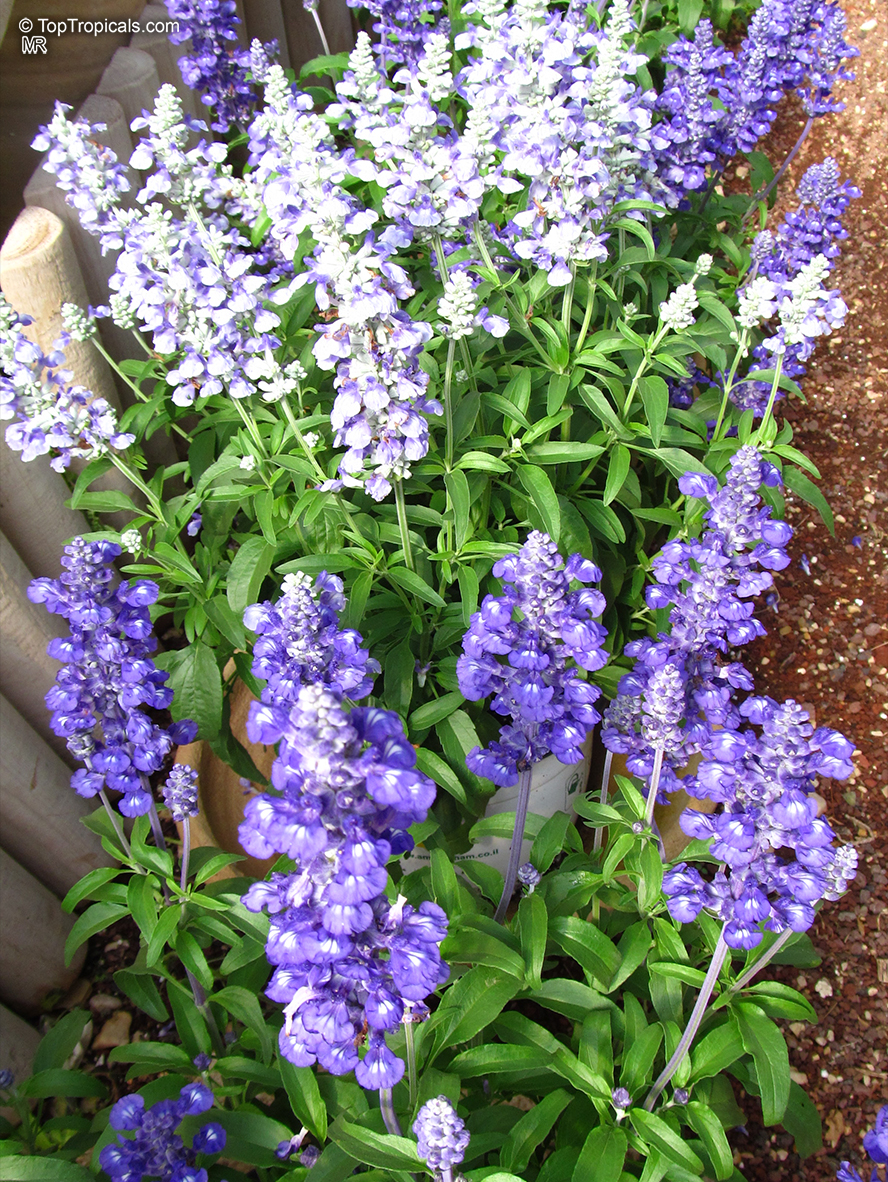
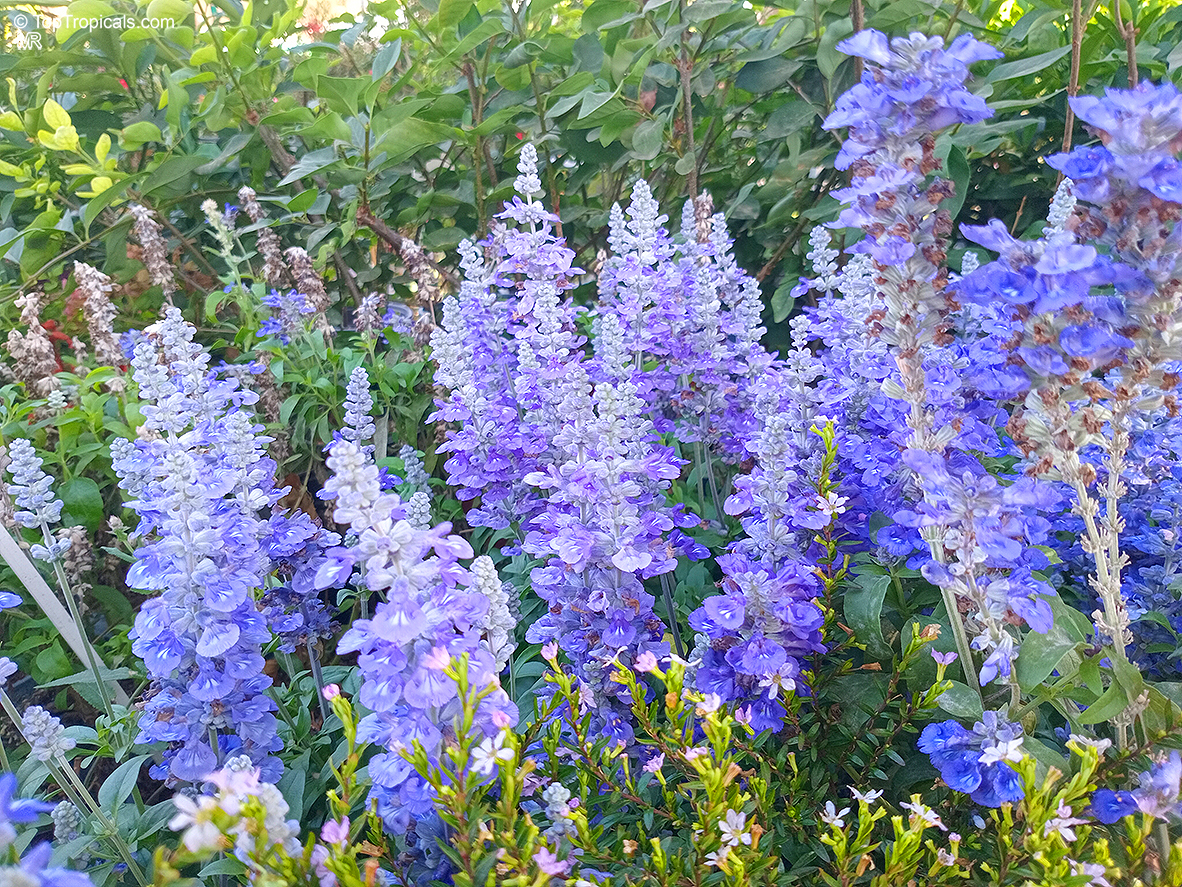
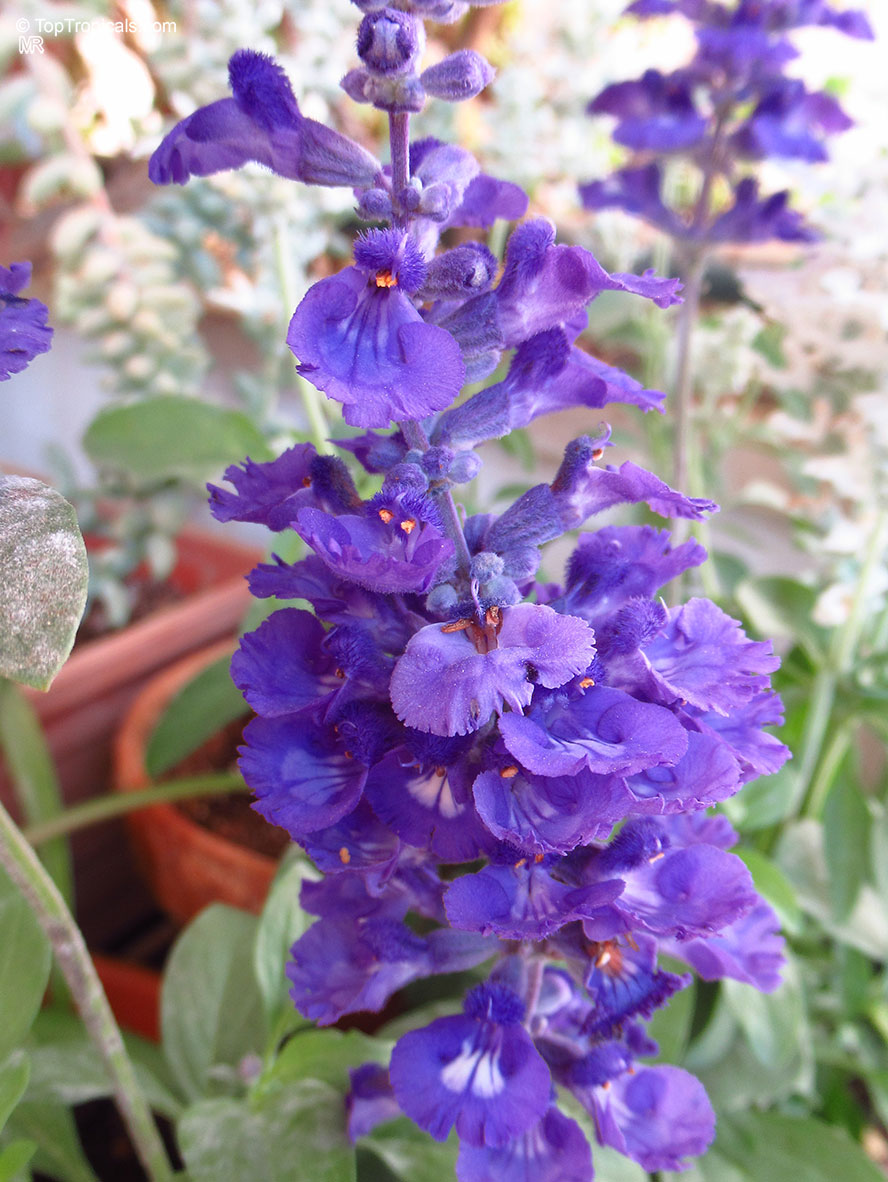
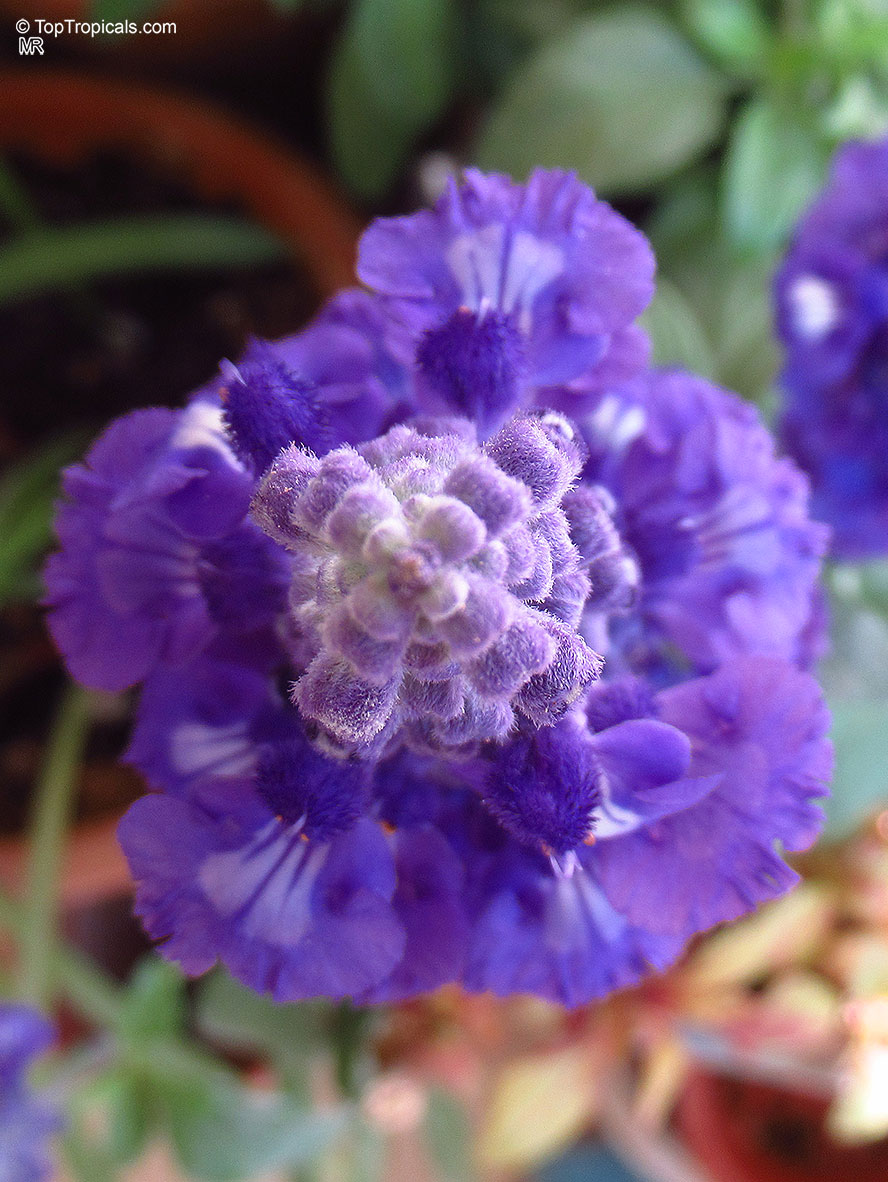
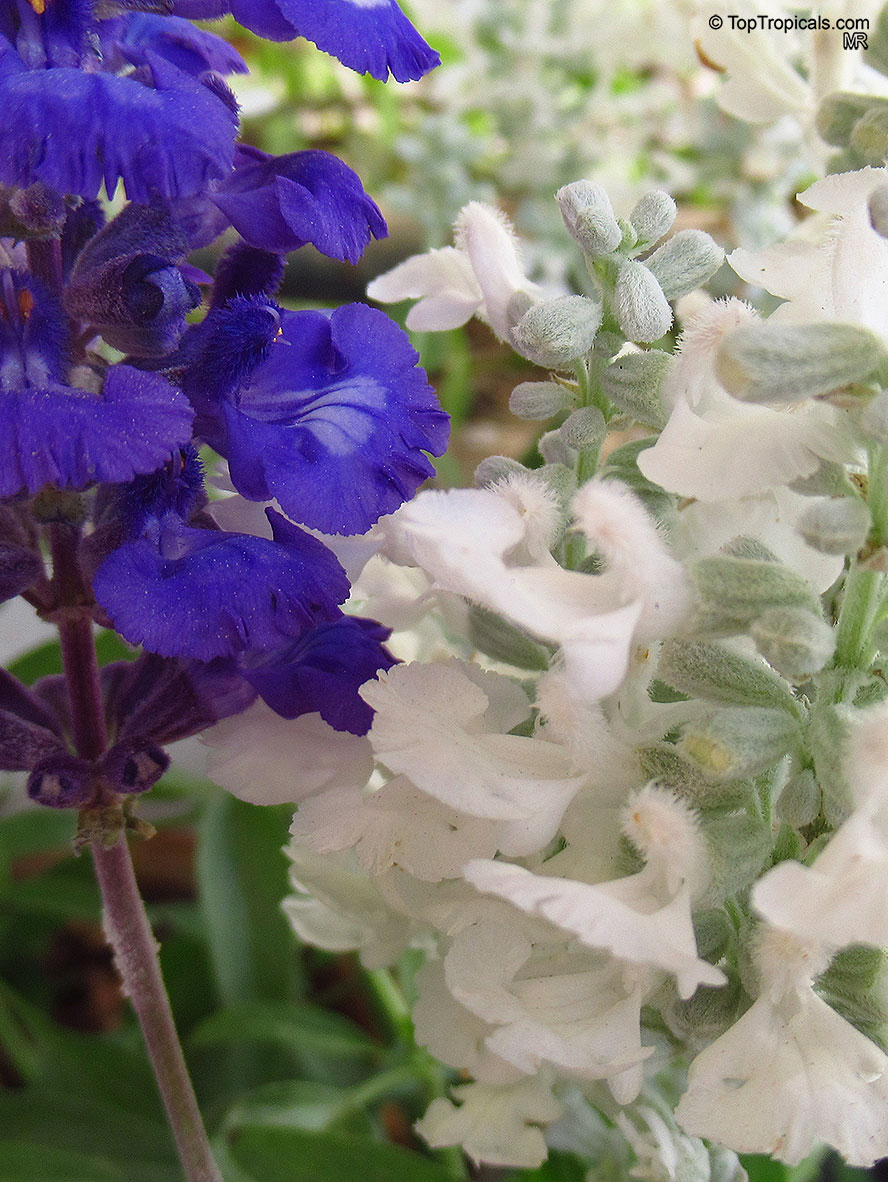
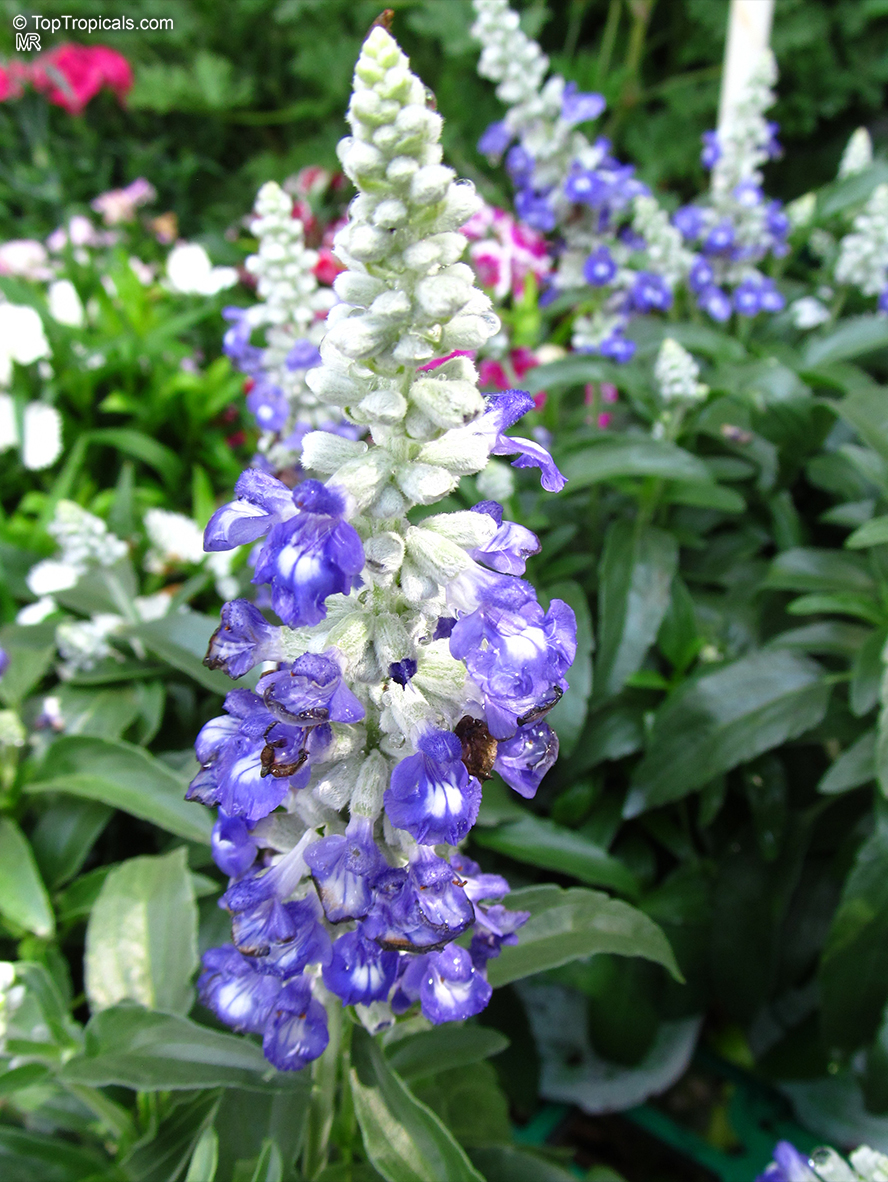
The species receives its common name from the pale, powdery coating that often appears on the flower calyces and stems. Tall spikes of tubular flowers rise above the foliage and are most commonly deep blue or violet, although white, lavender, and bicolored cultivars are also available.
Salvia farinacea performs best in full sun and well-drained soil. Once established, it tolerates heat, drought, and periods of neglect better than many bedding plants. Regular deadheading can encourage additional flowering, although many modern cultivars bloom heavily with minimal maintenance. The plant is equally useful in borders, pollinator gardens, containers, and mass plantings.
USDA Plant Hardiness Zones: 8-11. In colder climates it is commonly grown as an annual, while in warmer regions it may persist as a short-lived perennial.
Similar plants: Salvia farinacea (Mealy Sage)
- Salvia argentea (Silver Sage)
- Salvia aurea (Brown Salvia)
- Salvia coccinea (Red Salvia)
- Salvia discolor (Andean Sage)
- Salvia dolomitica (South African Sage)
- Salvia elegans (Pineapple Sage)
- Salvia guaranitica (Anise-scented Sage)
- Salvia hispanica (Chia)
- Salvia lanceolata (Rusty Sage)
- Salvia lanigera (Wooly Sage)