Garcinia subelliptica (Happiness Tree)
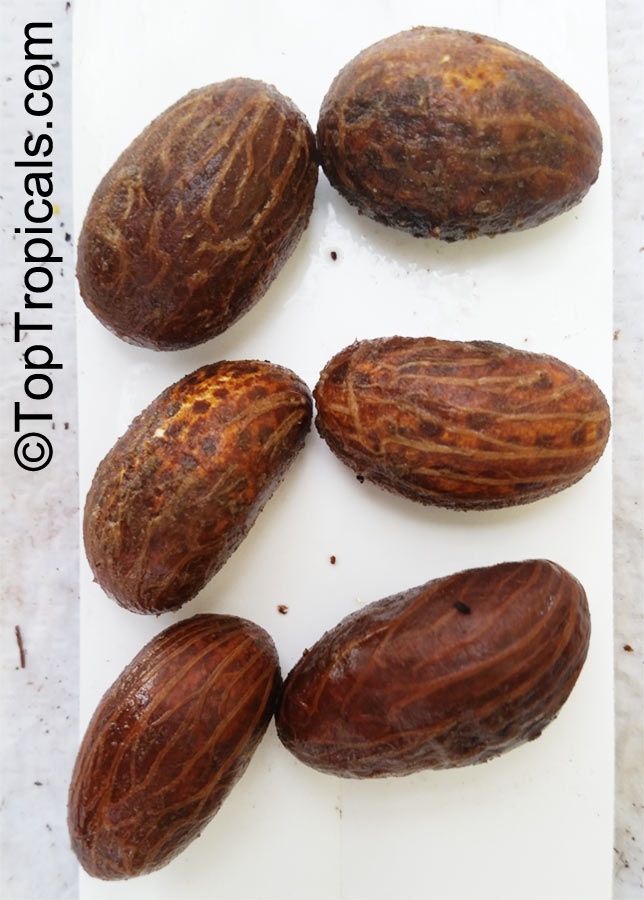
Botanical name: Garcinia sp.
Common name: Garcinia
Family: Clusiaceae / Guttiferae
Origin: Southeast Asia


Garcinia sp. refers to a diverse group of tropical trees and shrubs in the Clusiaceae family distributed across Southeast Asia, India, Africa, and Central and South America. Species vary widely in size but often form dense, evergreen crowns with thick, glossy, dark green leaves. Flowers are typically small and fleshy, followed by round to slightly flattened fruits that may be yellow, orange, red, or purple depending on species. Many members of this genus produce edible fruits with a sweet to tart flavor, while others are grown primarily for ornamental foliage and structure.
This group prefers full sun to partial shade and well-drained soil with consistent moisture. Growth rate is generally moderate in warm, humid conditions. Cold tolerance is limited, with most species sensitive below about 40F; best suited to USDA Zones 10 to 11. Garcinia species are suitable for tropical landscapes and can be grown in containers when young or maintained under protection in cooler climates.
Similar plants: Garcinia sp. (Garcinia)
- Garcinia gummi-gutta (Brindleberry)
- Garcinia hombroniana (Seashore Mangosteen)
- Garcinia intermedia (Monkey Fruit)
- Garcinia livingstonei (Imbe)
- Garcinia mangostana (Mangosteen)
- Garcinia megaphylla (Bacuru Pary)
- Garcinia portoricensis (Reedia)
- Garcinia prainiana (Cherapu)
- Garcinia schomburgkiana (Madan)
- Garcinia spicata (Garcinia)
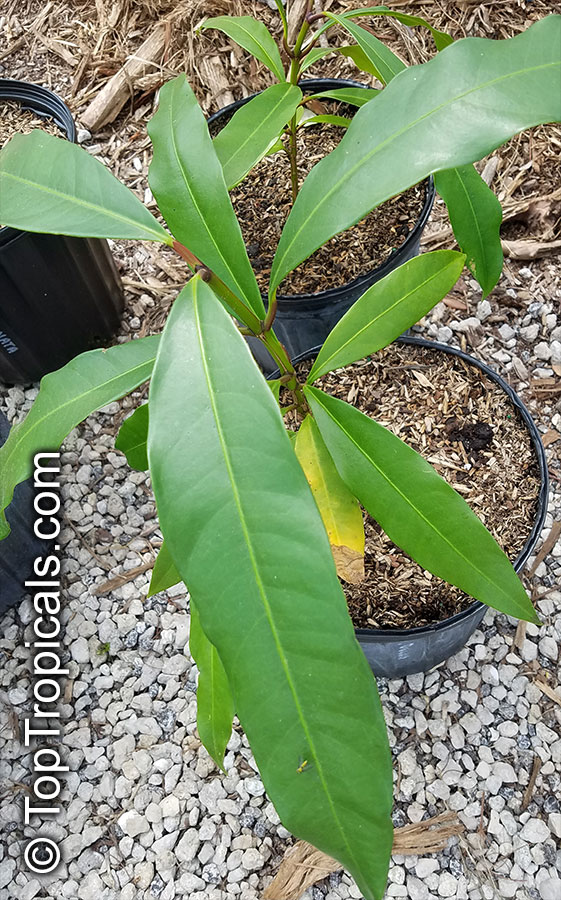
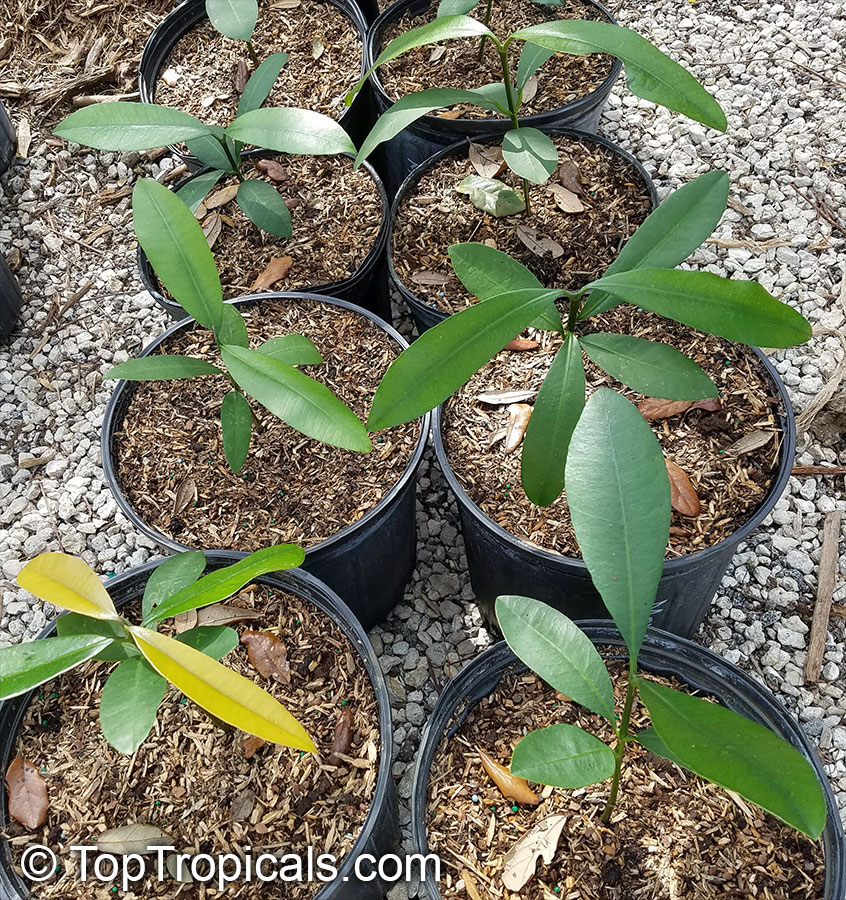
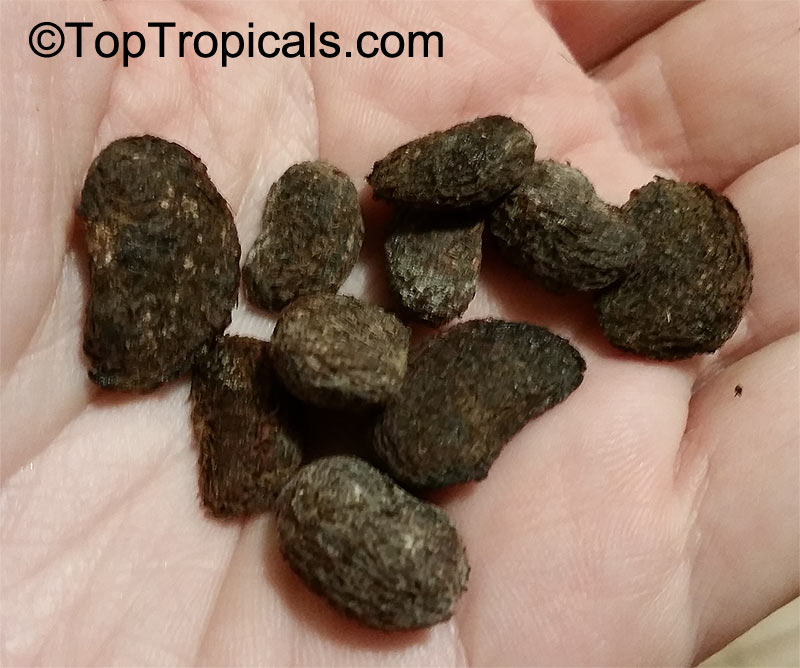
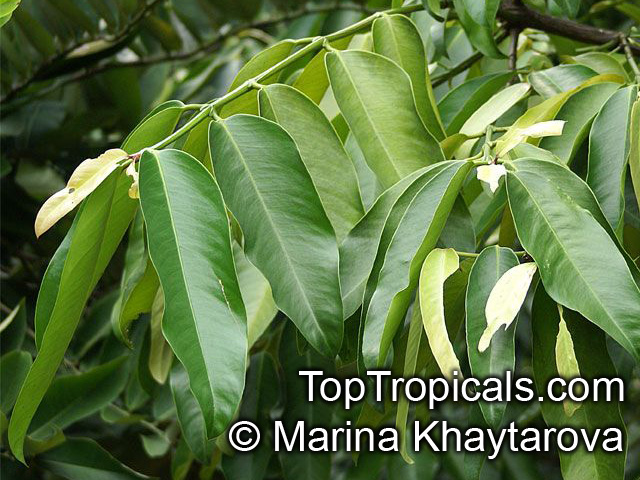
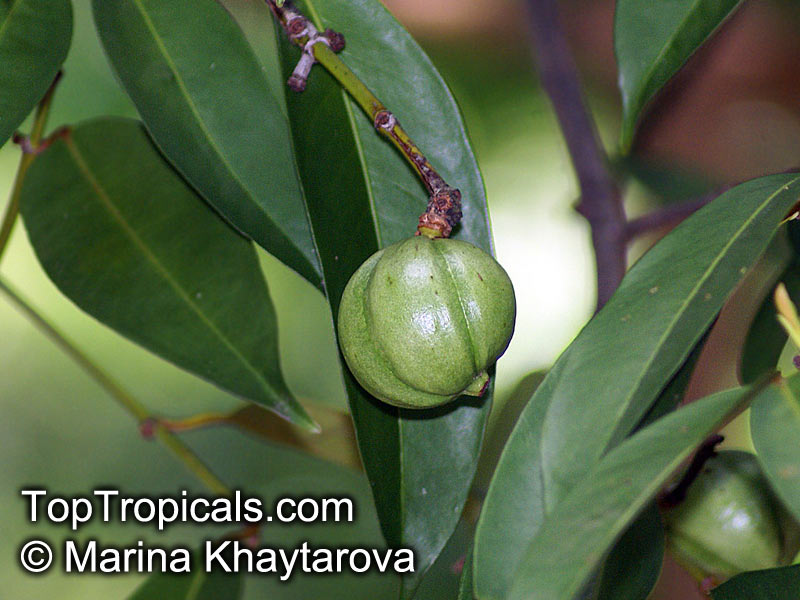
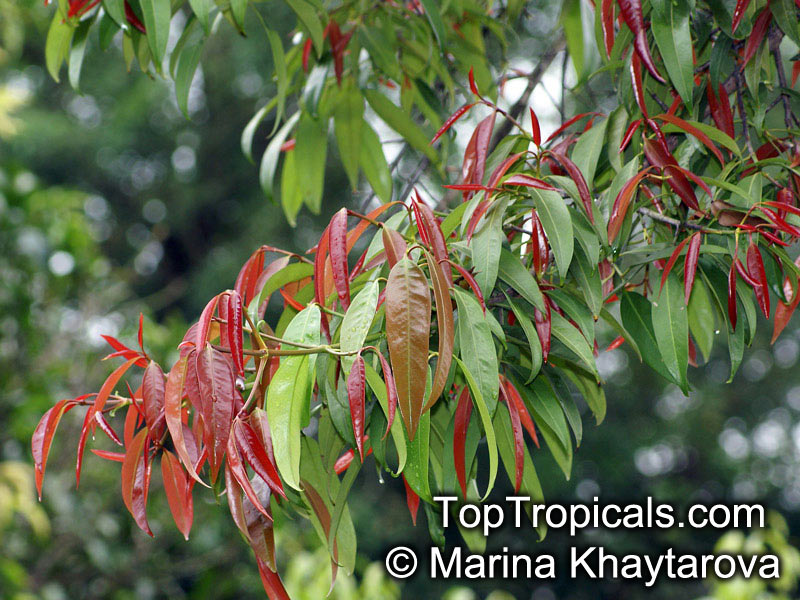
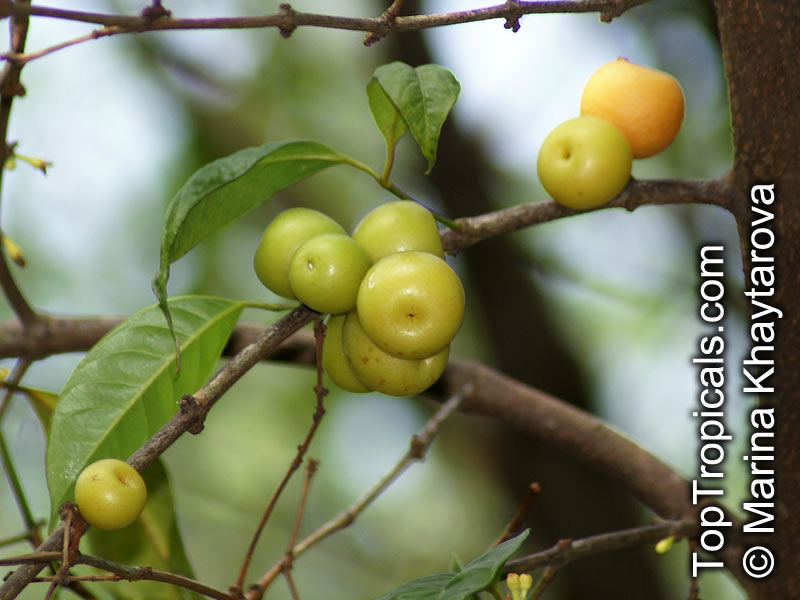
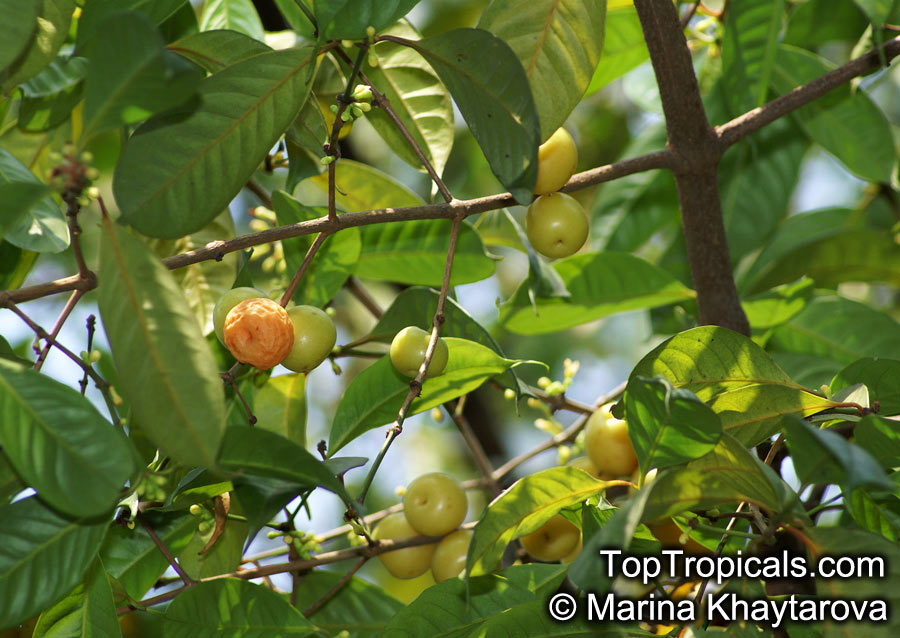
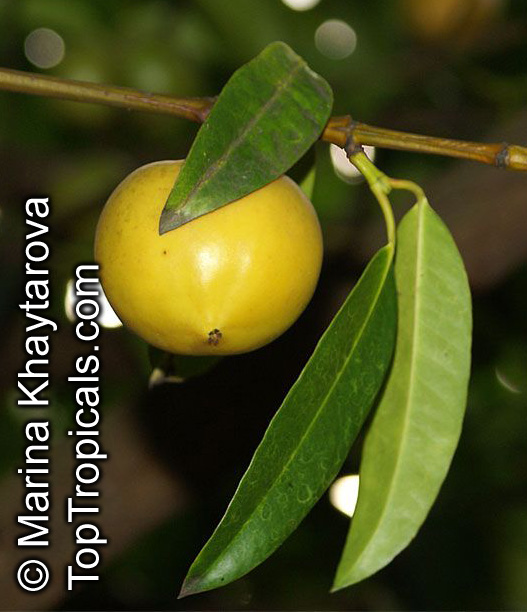
The small tree with a pyramidal canopy is prolifically-fruiting. It grows in the southern part of the Amazon basin in the central area of Bolivia. Achachas are tangy and refreshing with a delicate subtle sweetness, a fine balance between sweetness and acidity, producing an unusual taste sensation. Fruit should be picked mature as it does not ripen further on storage. In addition to having a great flavor, Achacha fruit has more flesh relative to its weight, when compared to the renowned purple mangosteen. Its rind is also palatable and easily utilized for beverages. The Bolivian name of the fruit is Achachairu and translated means honey kiss in Guarani language. Nutritionally, Achachas are valuable source of vitamin C and folate, as well as potassium, riboflaving and antioxidants.
Easy to grow in south Florida and must have for every tropical fruit lover. Grows well in a container.
Express shipping via 1-day service. No replacements or refunds on this item. Watch for the delivery, do not keep the package on a sunny porch!
Recommended Fertilizer: SUNSHINE C-Cibus - Crop Nutrition Booster
SUNSHINE-Honey - sugar booster
 SUNSHINE C-Cibus (NPK 2-2-4) - Crop Booster for every watering.
 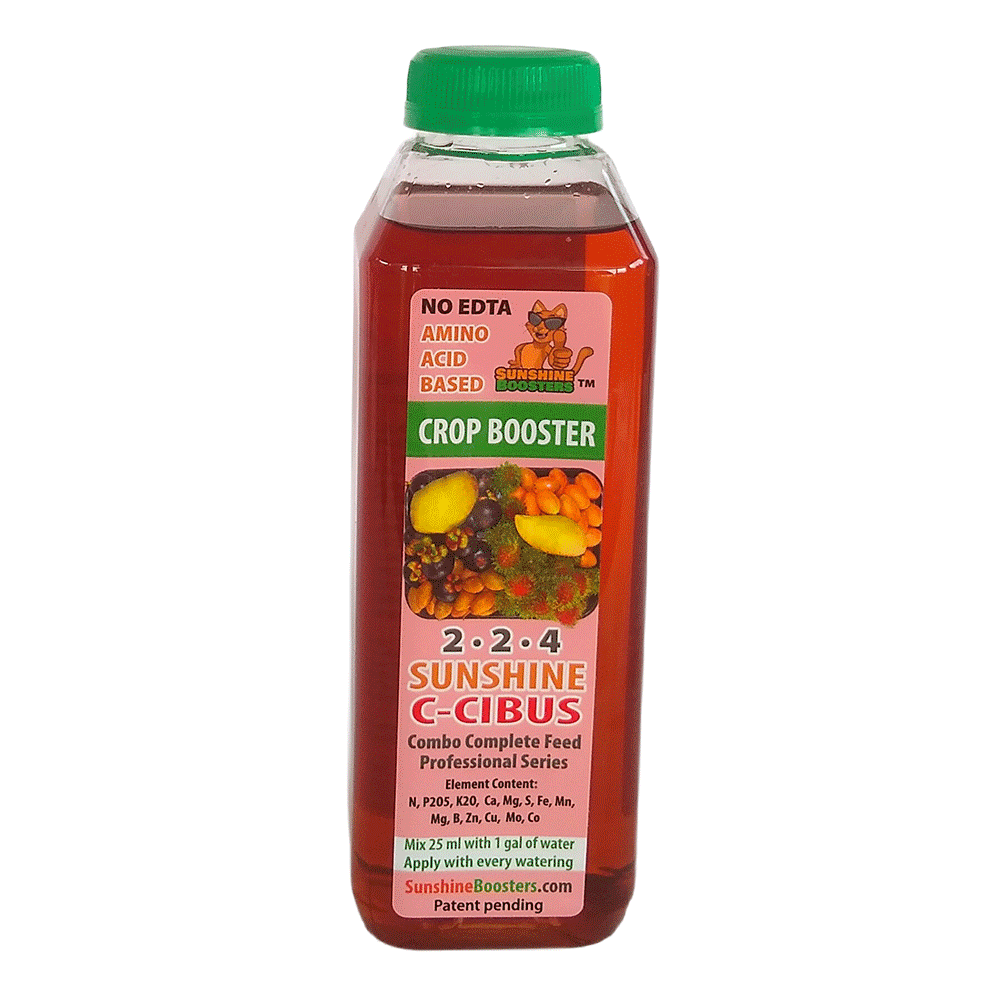 SUNSHINE C-Cibus (NPK 2-2-4) - Crop Booster for every watering.
 Last one