Garcinia megaphylla (Bacuru Pary)
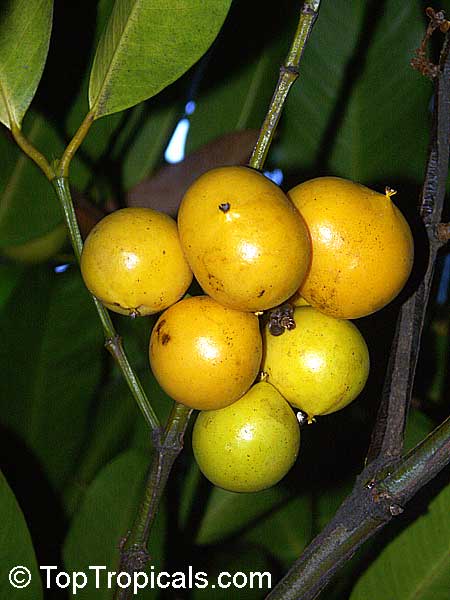
Garcinia megaphylla clusters of round yellow fruit growing on slender woody stems
Botanical names: Garcinia megaphylla, Garcinia macrophylla, Rheedia macrophylla, Garcinia magnifolia, Rheedia magnifolia
Common names: Bacuru Pary, Bacuripari
Family: Clusiaceae / Guttiferae
Origin: South America
USDA Plant Hardiness Zone Map
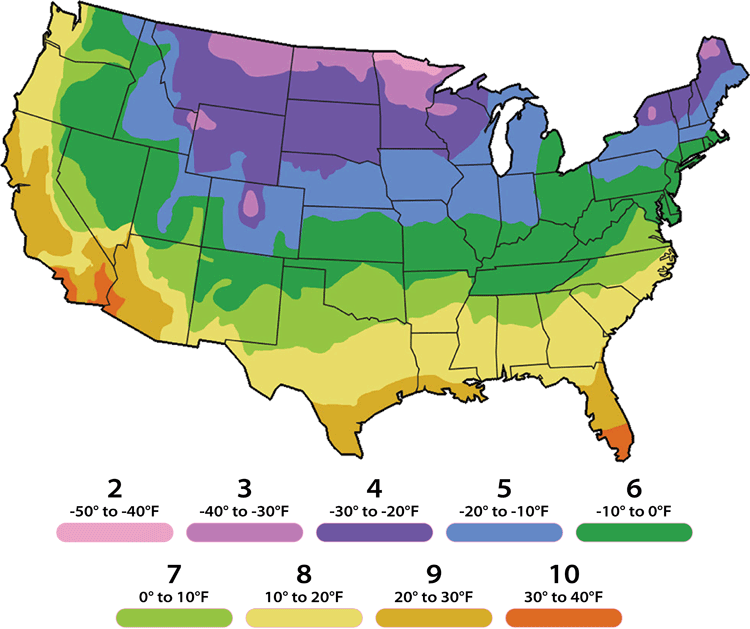
USDA Zone: 9-10
Plant type: Fruit or edible
Fruit type: Fruit or edible
 Plant form: Small tree
 Mature height: 10-20 ft
 Sun exposure: Full sun or bright light indoor; semi-shade
 Cold tolerance: Frost sensitive. Protect from freezing.
 Watering: Regular
 Flower color: White and off-white
 Suitable for: Outdoors in the suitable USDA zone; small gardens, containers, and indoor growing
 Ethnomedical: Ethnomedical plant, traditionally used in folk or indigenous medicine
In some sources Garcinia megaphylla is indicated as synonim of Garcinia magnifolia.
It is found in Brazil in 1841, in the Amazonian montian forests.
Bacuripari is an evergreen tree with stiff, leathery leaves, growing 20-25 ft tall.
The fruit is very popular within its native range. It is commonly gathered from the wild, and is also sometimes cultivated, especially in home gardens, for the fruit which is widely sold in native markets. It is eaten raw or made into jams. The white, aril-like pulp is agreeably subacid. It has many medicinal properties.
Similar plants: Garcinia megaphylla (Bacuru Pary)
- Garcinia intermedia (Monkey Fruit)
- Garcinia portoricensis (Reedia)
- Rheedia brasiliensis (Bakupari)
- Garcinia gummi-gutta (Brindleberry)
- Garcinia hombroniana (Seashore Mangosteen)
- Garcinia livingstonei (Imbe)
- Garcinia mangostana (Mangosteen)
- Garcinia prainiana (Cherapu)
- Garcinia schomburgkiana (Madan)
- Garcinia sp. (Garcinia)
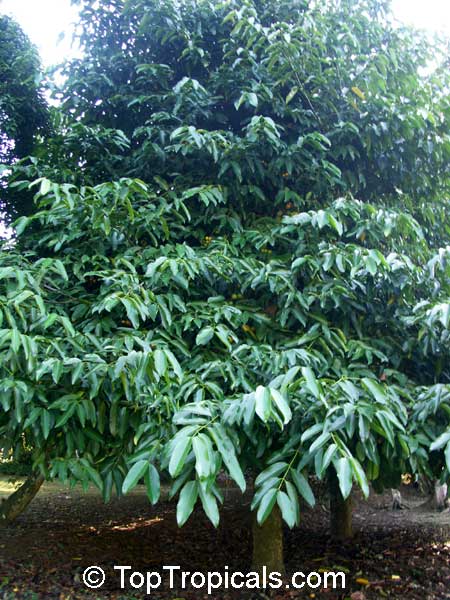
Garcinia megaphylla tree with dense green foliage and clusters of small yellow fruit
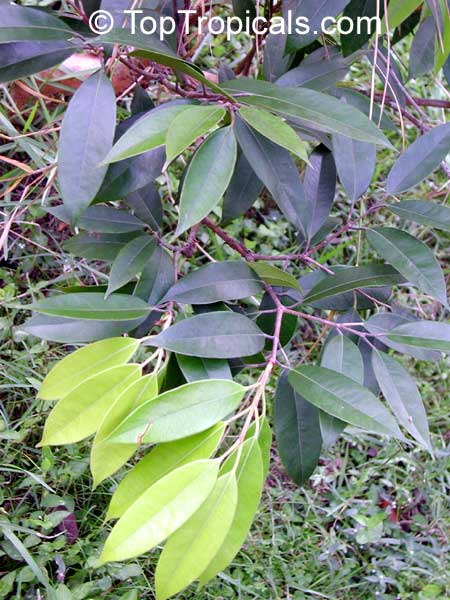
Garcinia megaphylla leaves with dark green foliage and soft lime colored tips
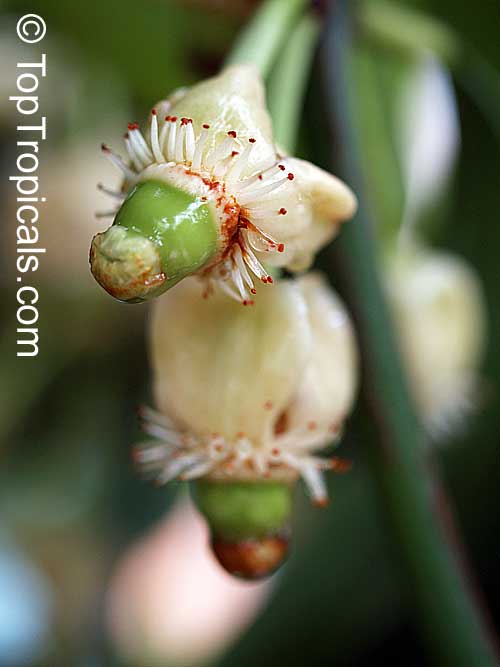
Garcinia megaphylla (Bacuru Pary) white flower hanging on a branch with distinct green central column
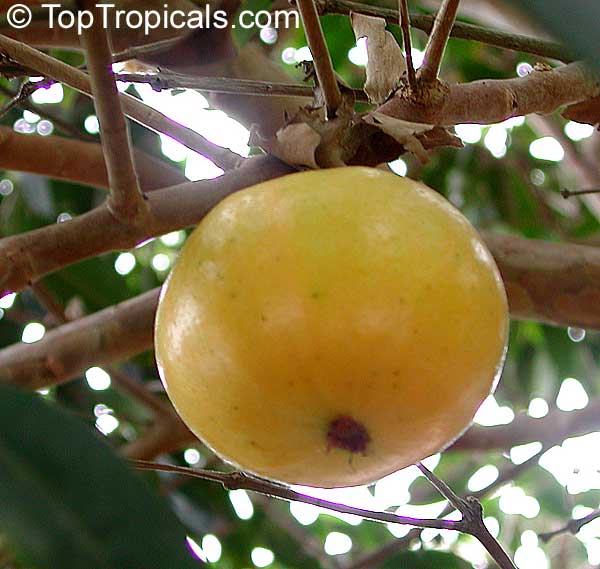
Garcinia megaphylla round yellow fruit hangs on branches among dark green leaves.

Garcinia megaphylla (Bacuru Pary) leaves grow from woody stems in this clear plant image.
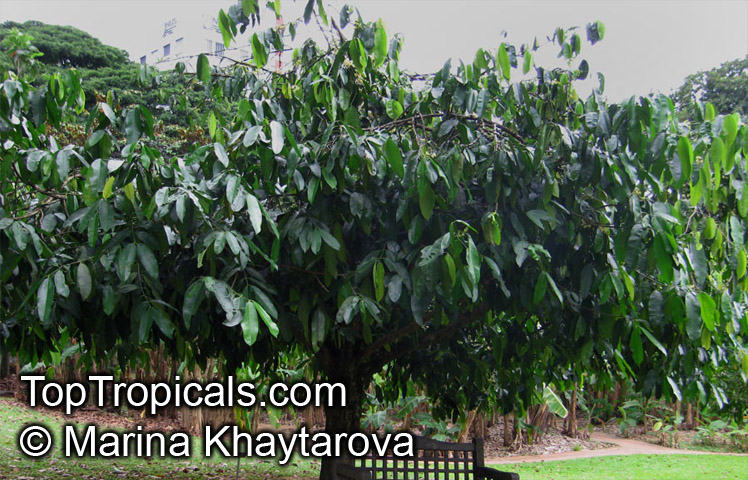
Garcinia megaphylla (Bacuru Pary) tree displaying a full canopy of dark green leathery oval leaves
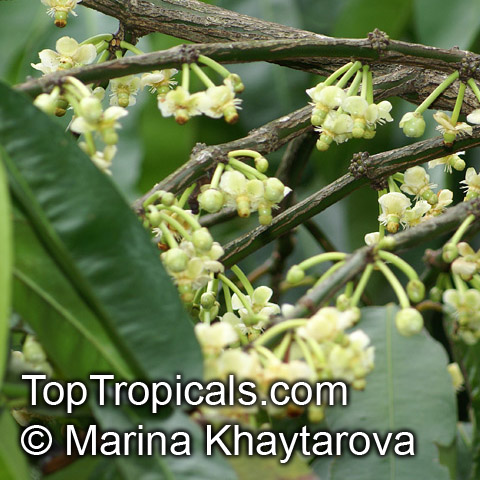
Garcinia megaphylla (Bacuru Pary) woody branches crowded with small yellow flower clusters on thin stems
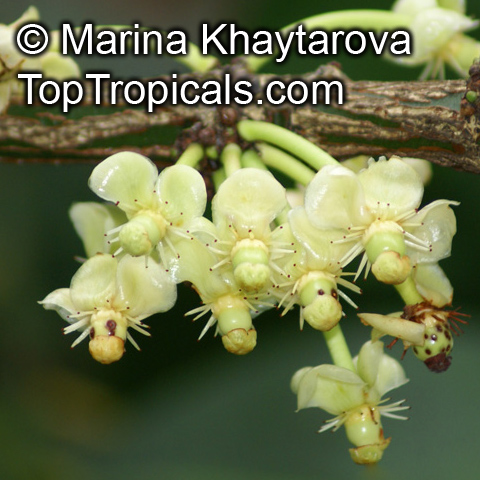
Garcinia megaphylla (Bacuru Pary) pale yellow flower cluster hanging from woody stem segment
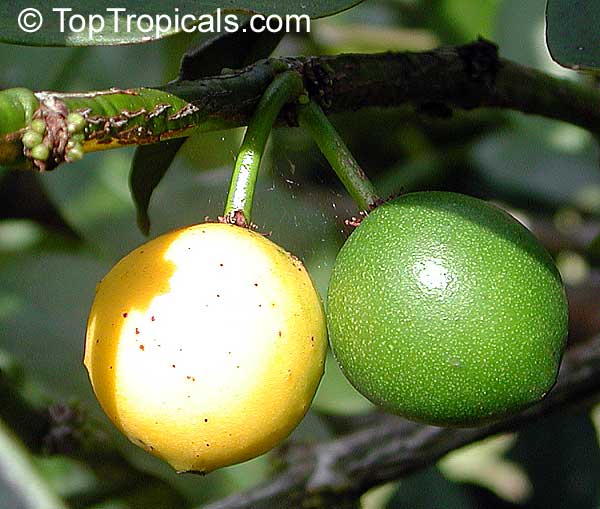
Garcinia megaphylla round fruit with yellow and green skins hanging from stems.
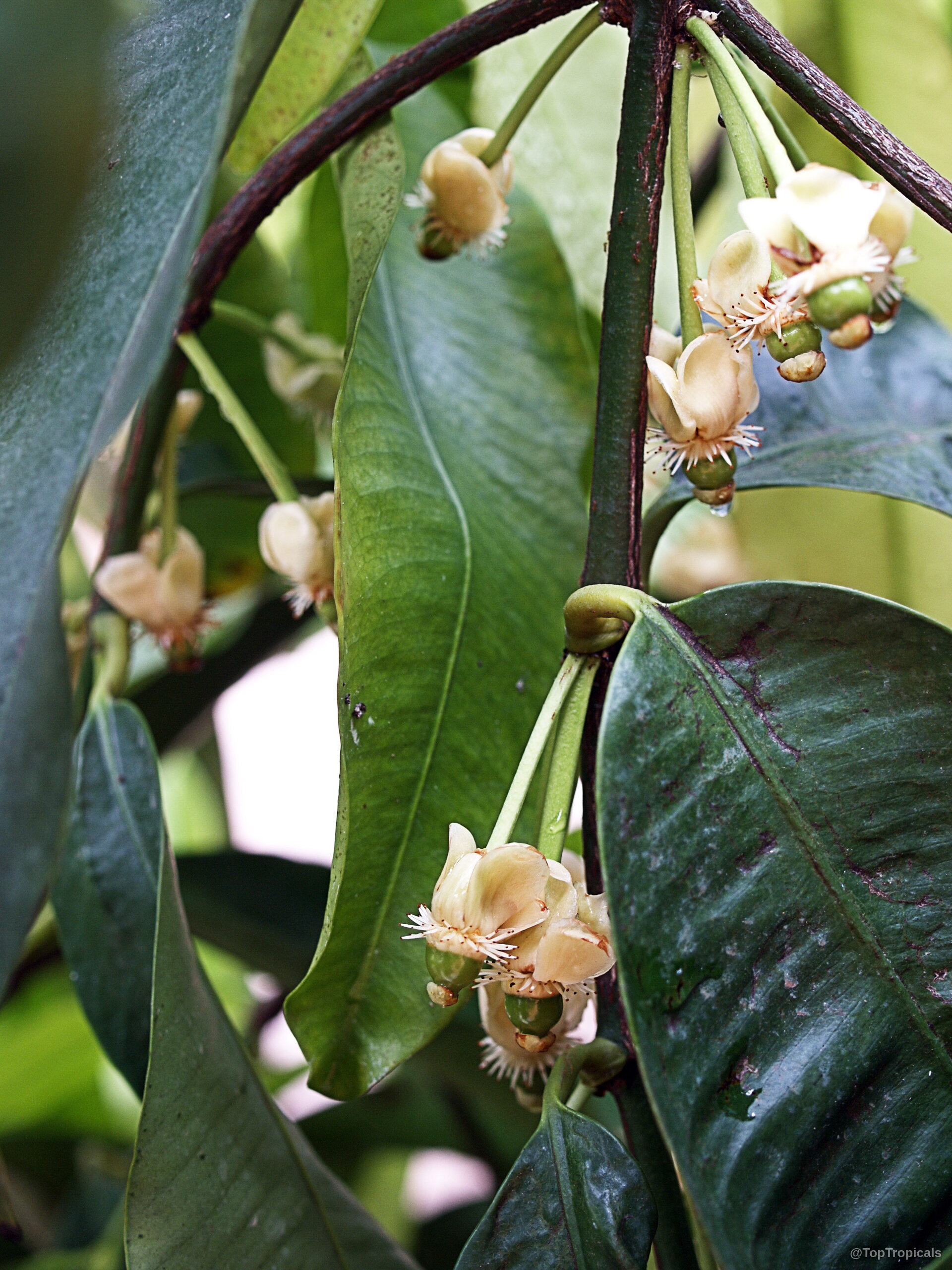
Garcinia megaphylla (Bacuru Pary) cream flower clusters hang from the dark green foliage stem.

Garcinia megaphylla (Bacuru Pary) pendulous cream flower clusters hanging near thick dark green waxy leaves.
Link to this plant:
https://toptropicals.com/catalog/uid/garcinia_megaphylla.htm