Cinnamomum camphora (Camphor Tree)
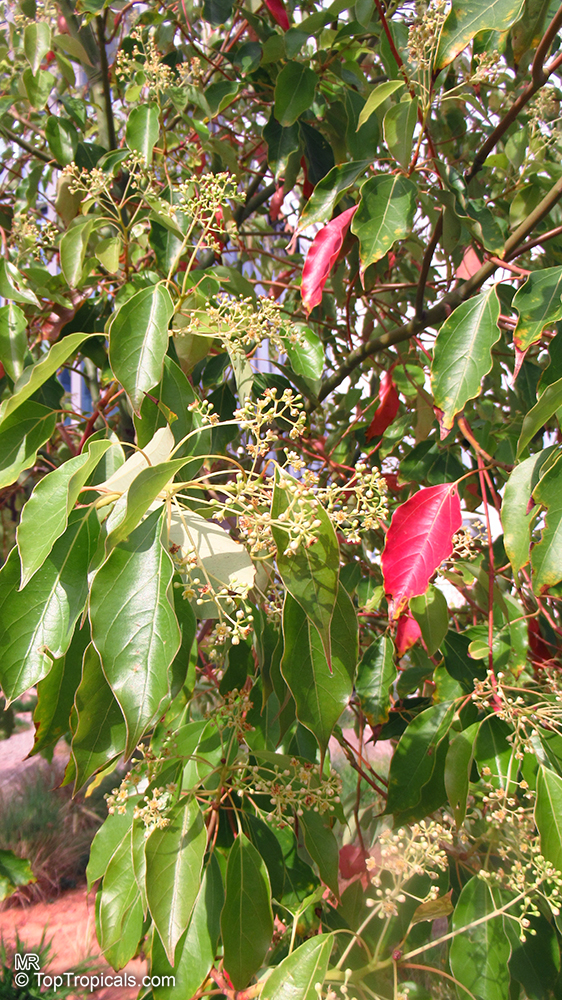
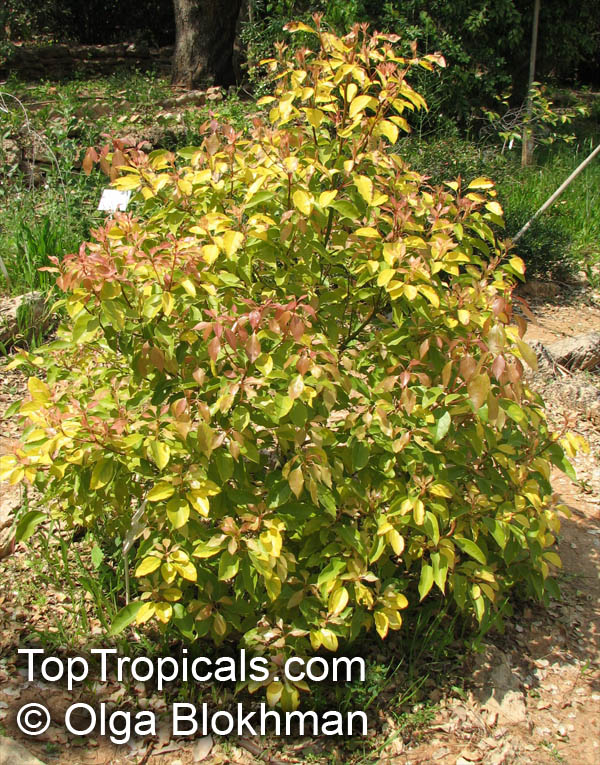
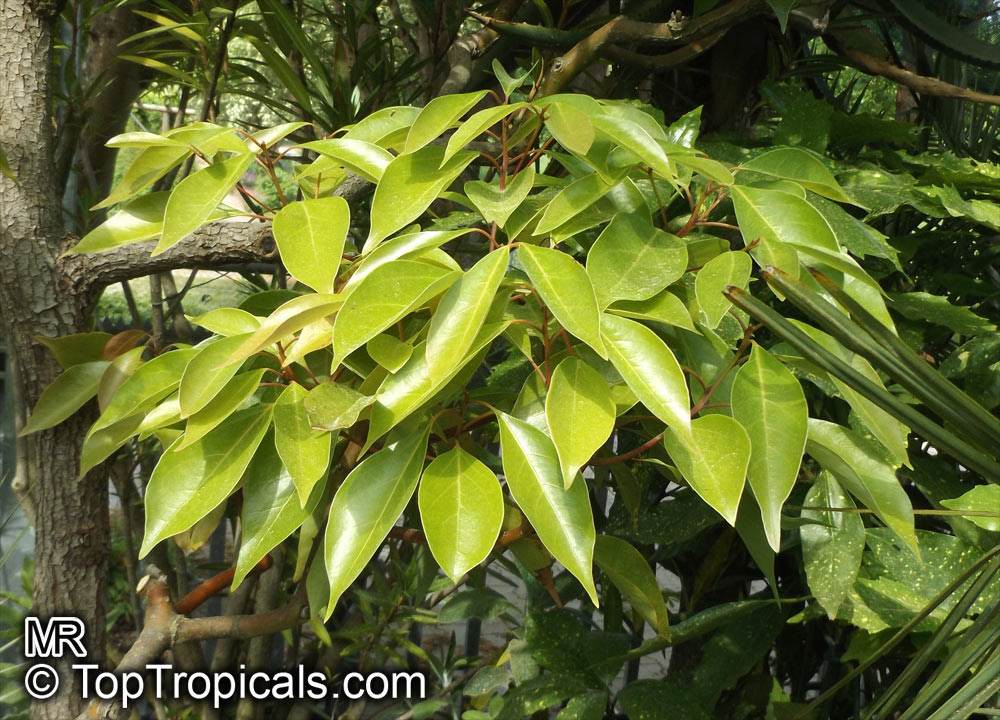
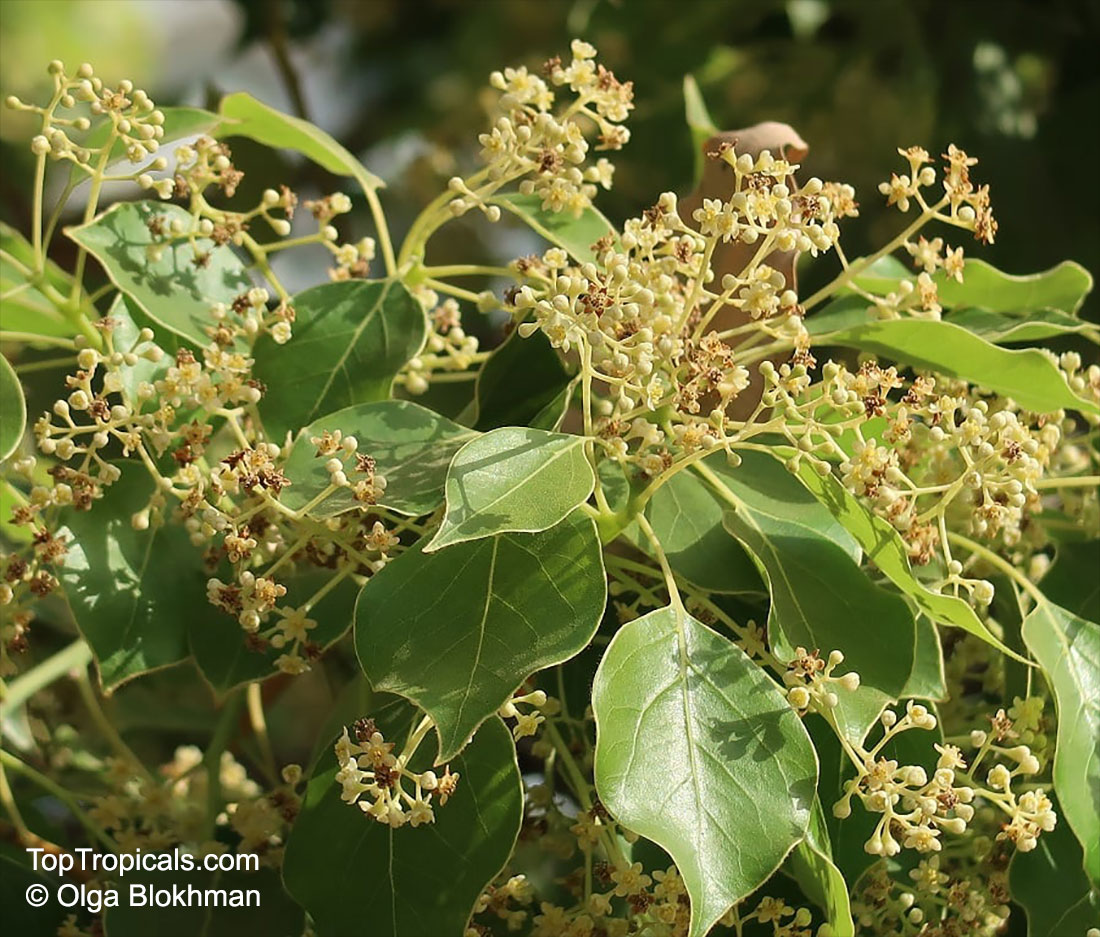
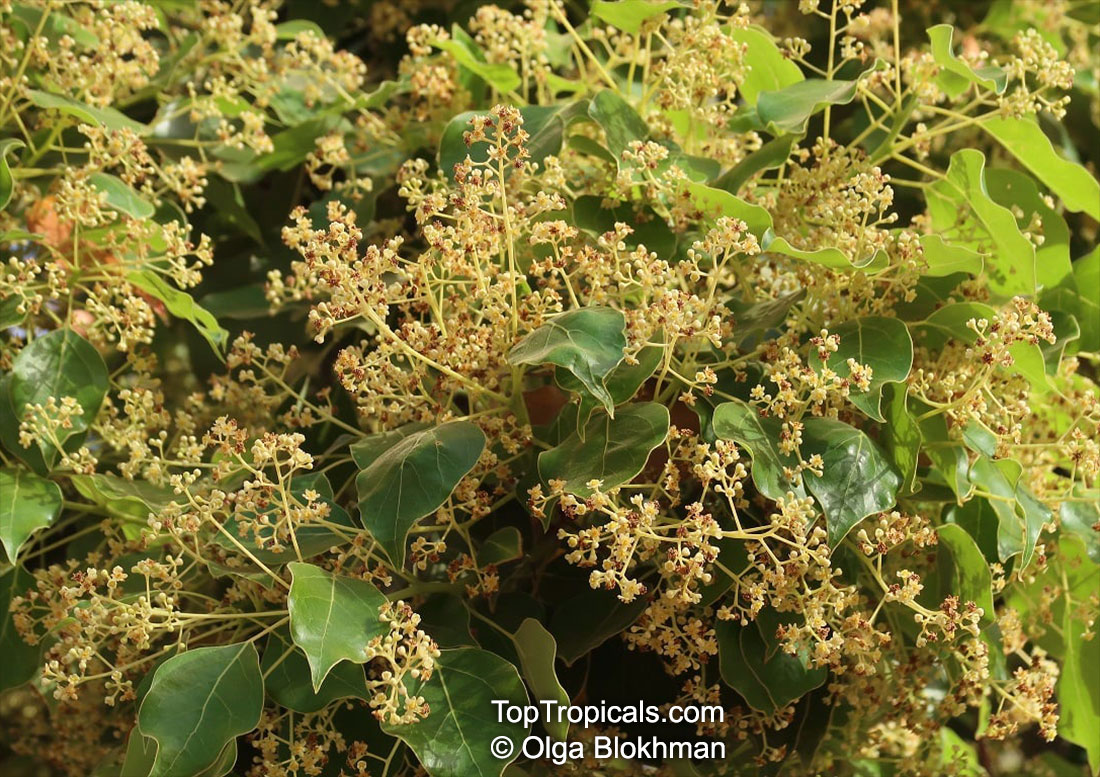
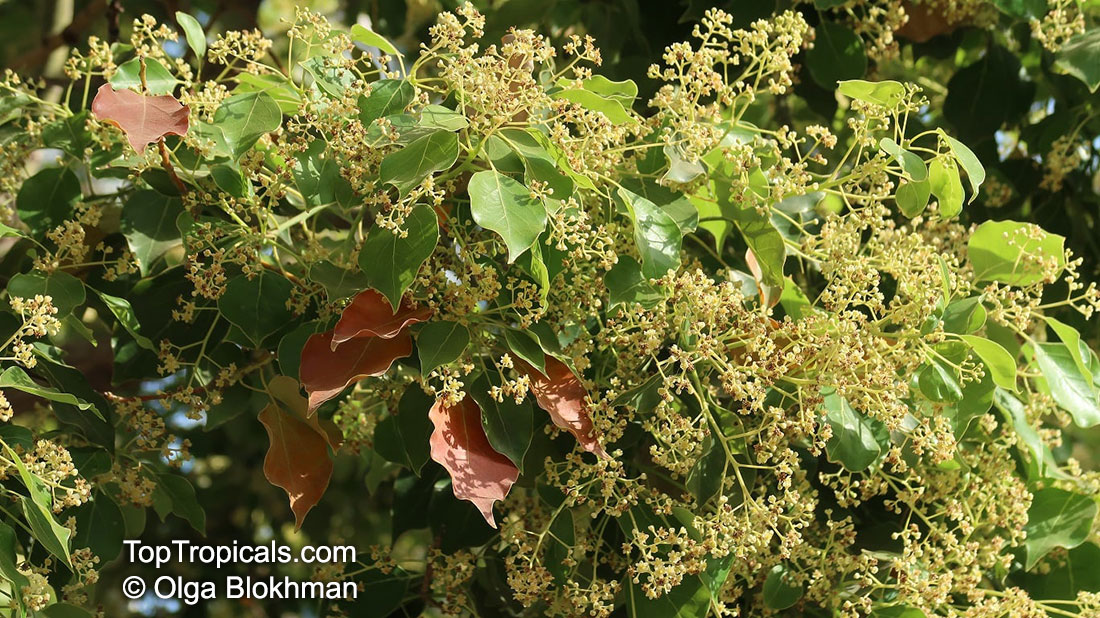
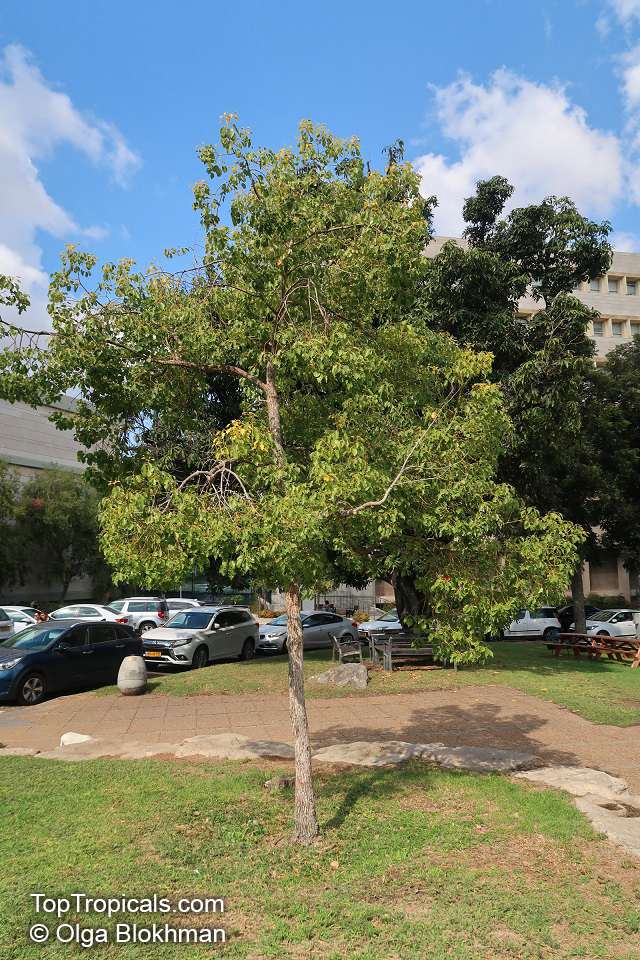
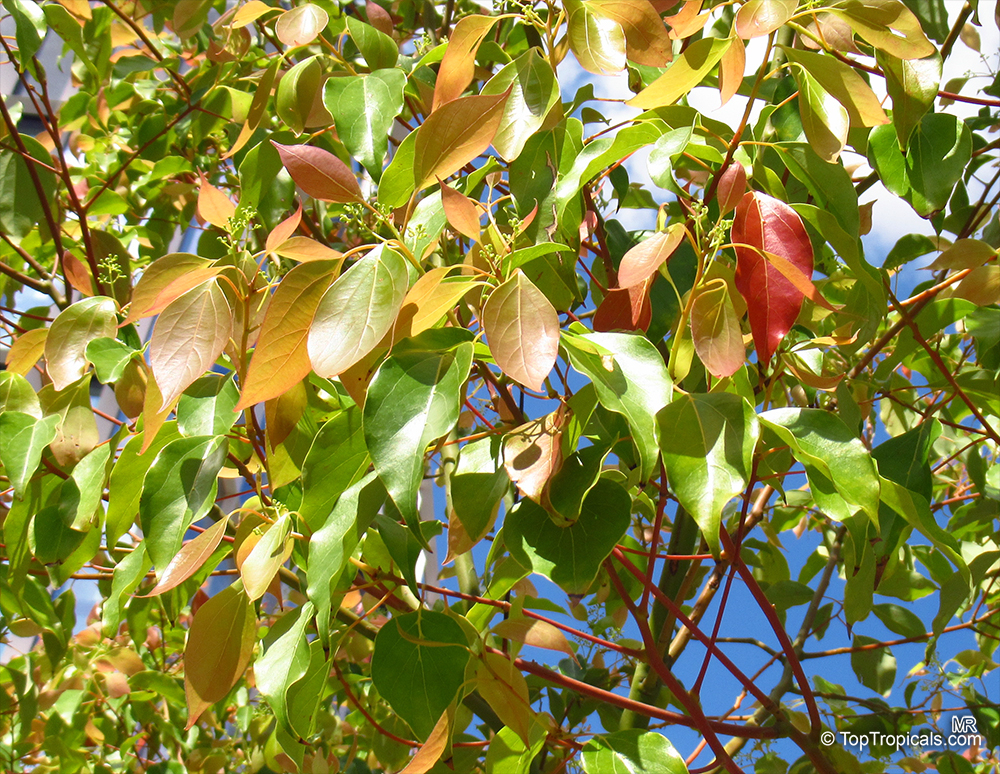
Cinnamomum camphora (Camphor Tree) with green foliage, red new leaves, and small yellow flowers.
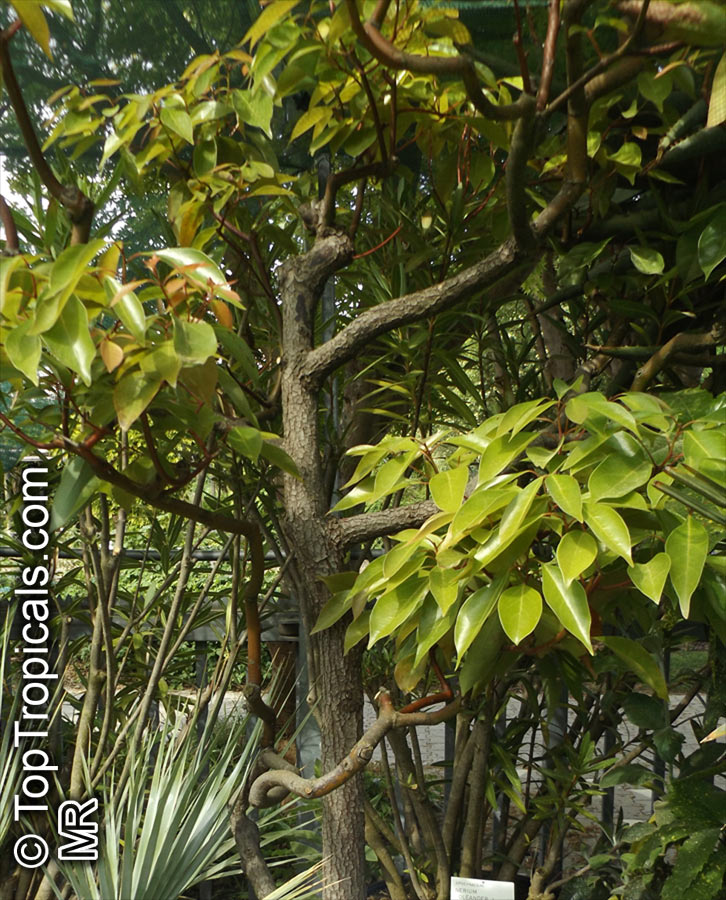
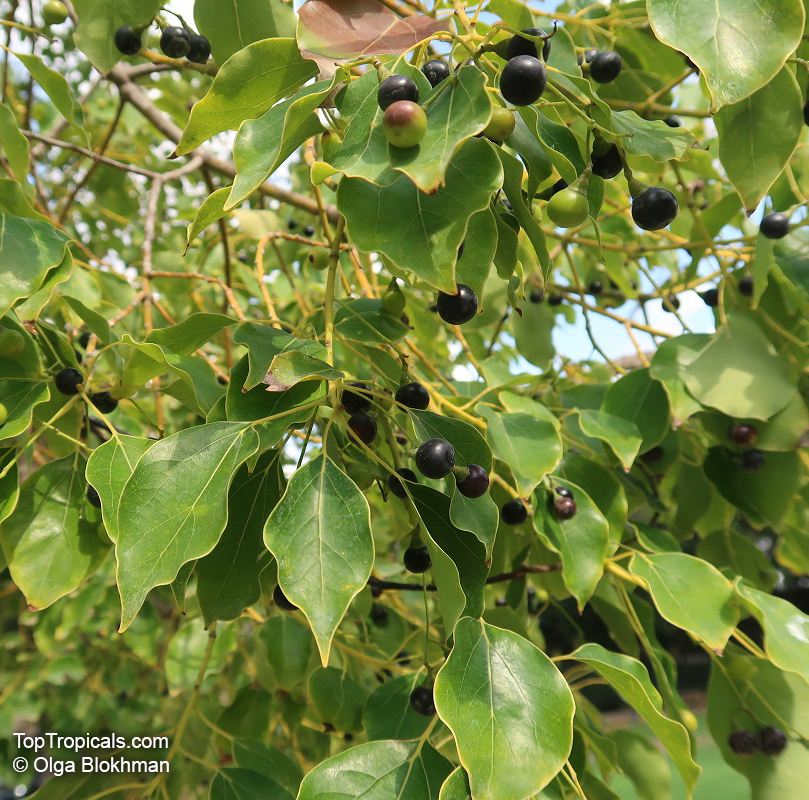
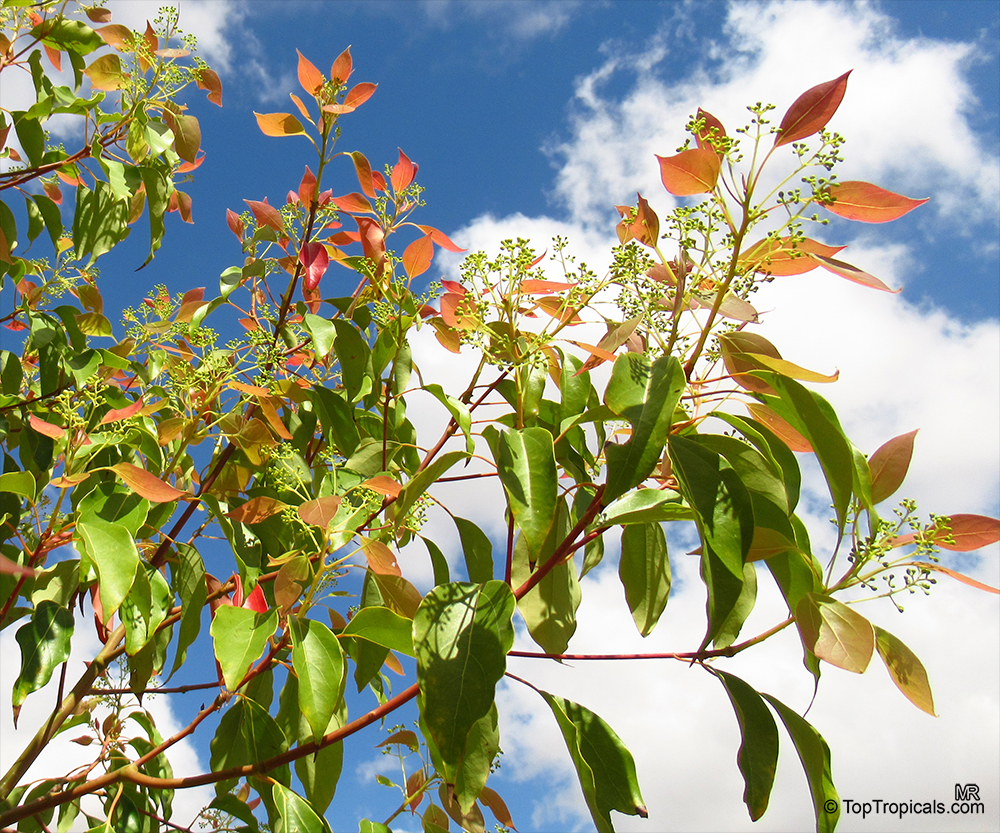
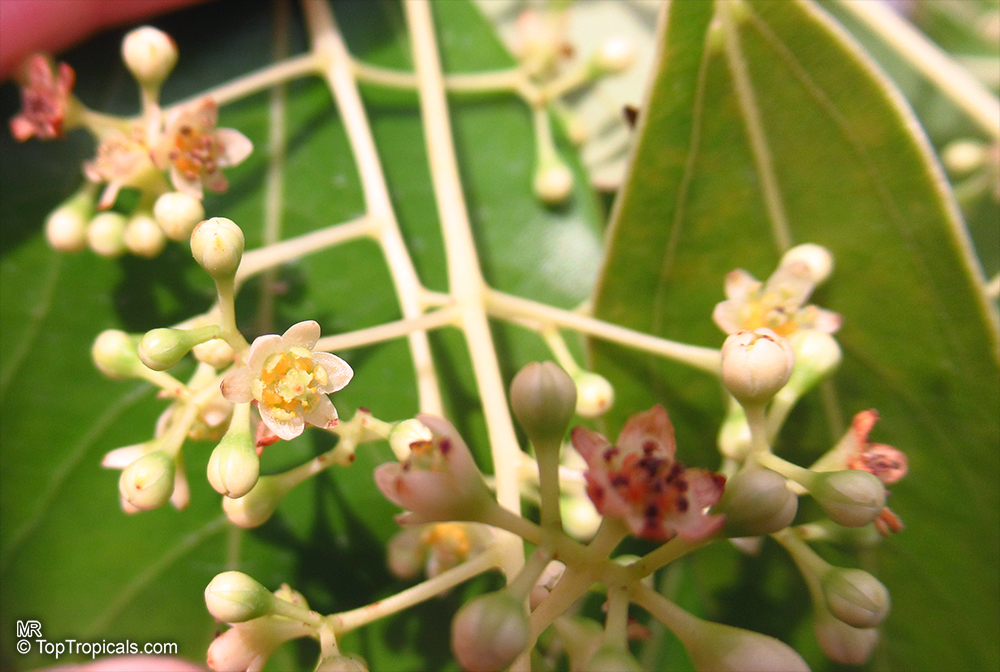
Cinnamomum camphora (Camphor Tree) with glossy green oval leaves, red new growth, and small yellow flowers.

Botanical name: Cinnamomum camphora

Common names: Camphor Tree, Camphor Laurel

Family: Lauraceae

Origin: China, Japan
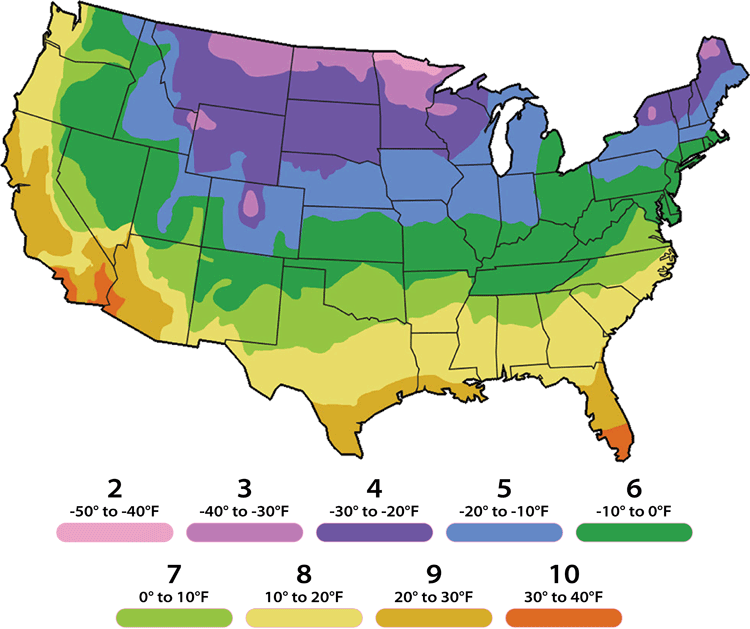
USDA Zone: 8-11

Cold tolerance: 15°F

Plant type: Fruit
Fruit type: Cinnamon
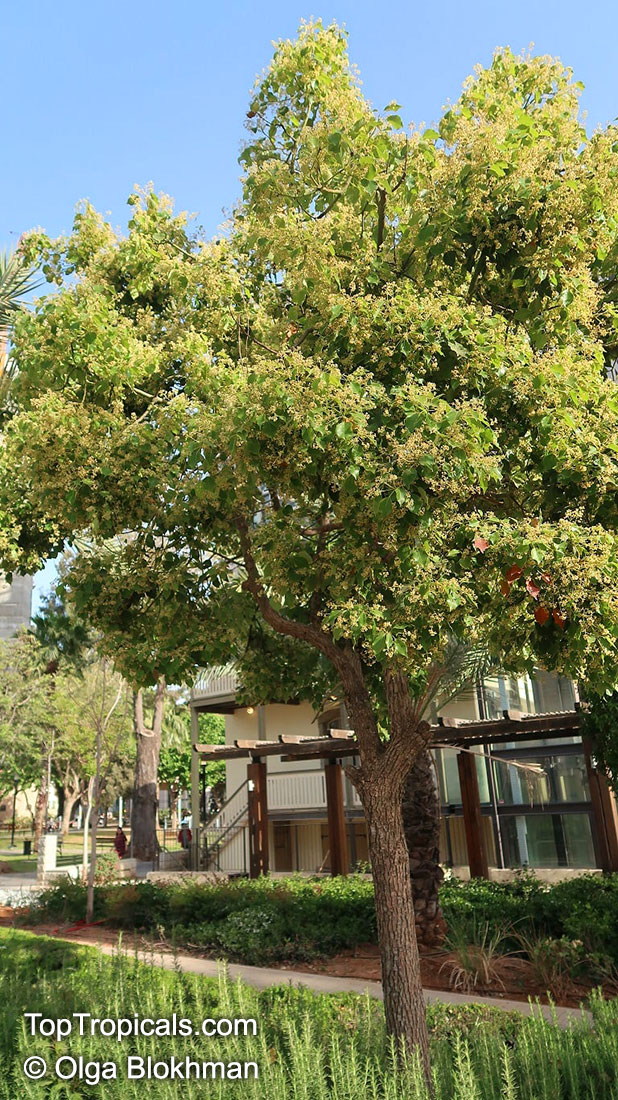
Large tree taller than 20 ftPlant form: Large tree
Plant mature sizeMature height: 20 ft or more
Full sunSun exposure: Full sun or bright light indoor
Subtropical plant. Mature plant cold hardy at least to 30s F for a short timeCold tolerance: Tolerates light freezing to about 30°F for short periods (mature plants). Young plants must be protected.
Watering: Moderate. Water when top soil feels dryWatering: Moderate
Suitable forSuitable for: Outdoors in the suitable USDA zone; large gardens
Fragrant plantFragrance: Fragrant; perfume plant
Ethnomedical plant.
Plants marked as ethnomedical and/or described as medicinal, are not offered as medicine but rather as ornamentals or plant collectibles.
Ethnomedical statements / products have not been evaluated by the FDA and are not intended to diagnose, treat, cure, or prevent any disease. We urge all customers to consult a physician before using any supplements, herbals or medicines advertised here or elsewhere.Ethnomedical: Ethnomedical plant, traditionally used in folk or indigenous medicine

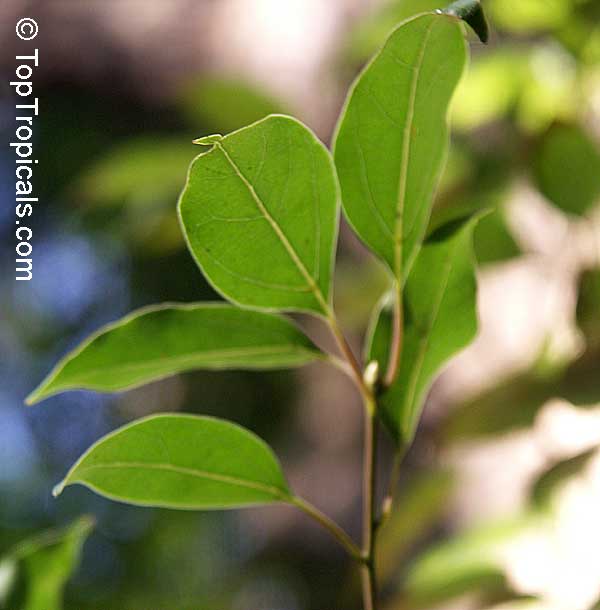
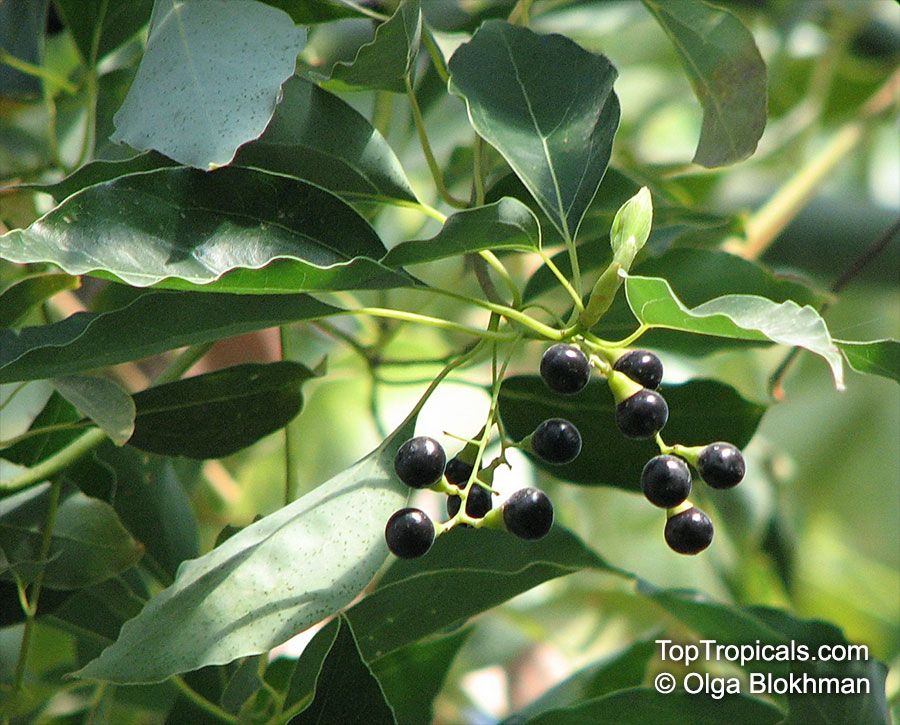
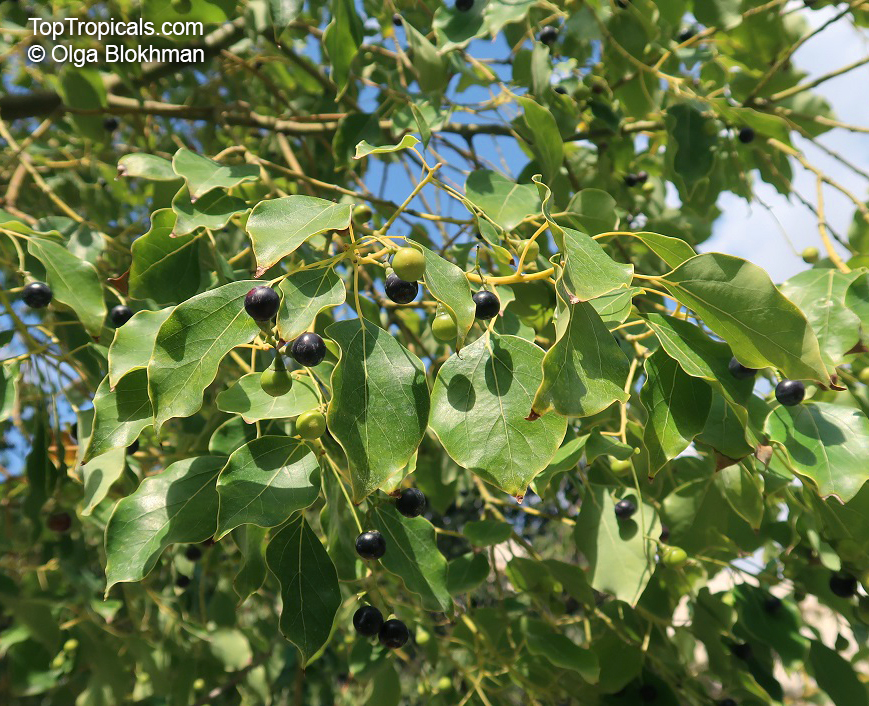
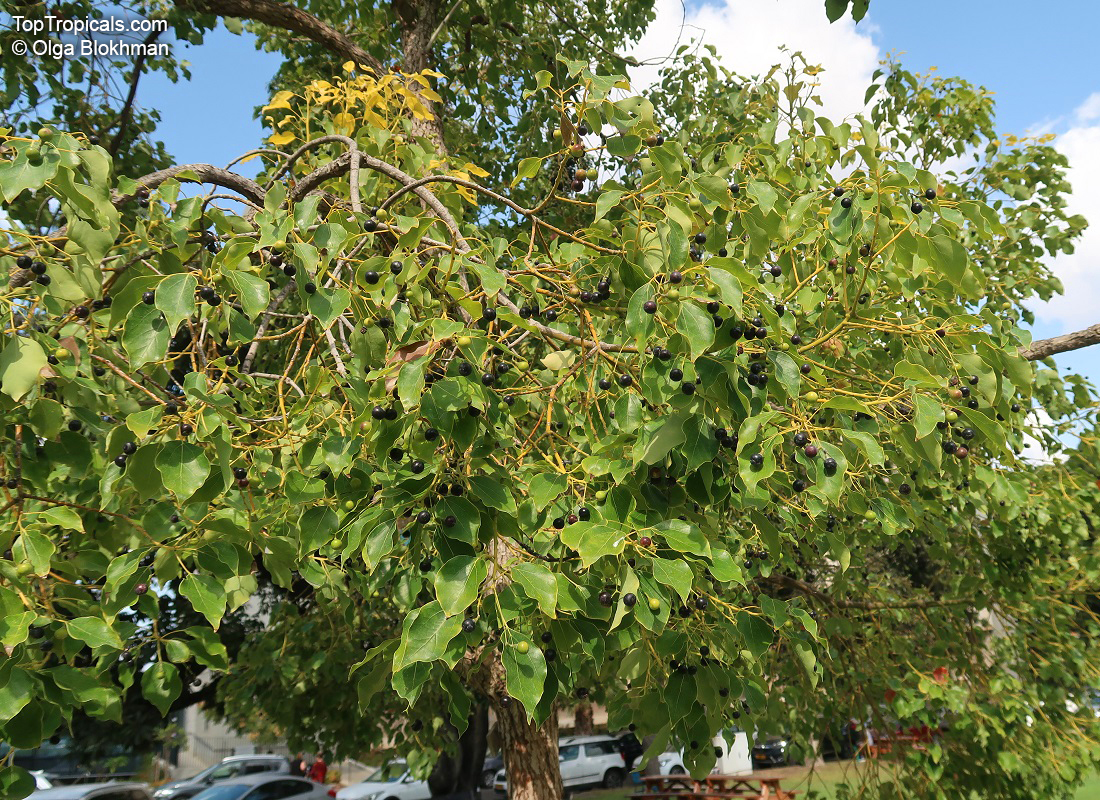
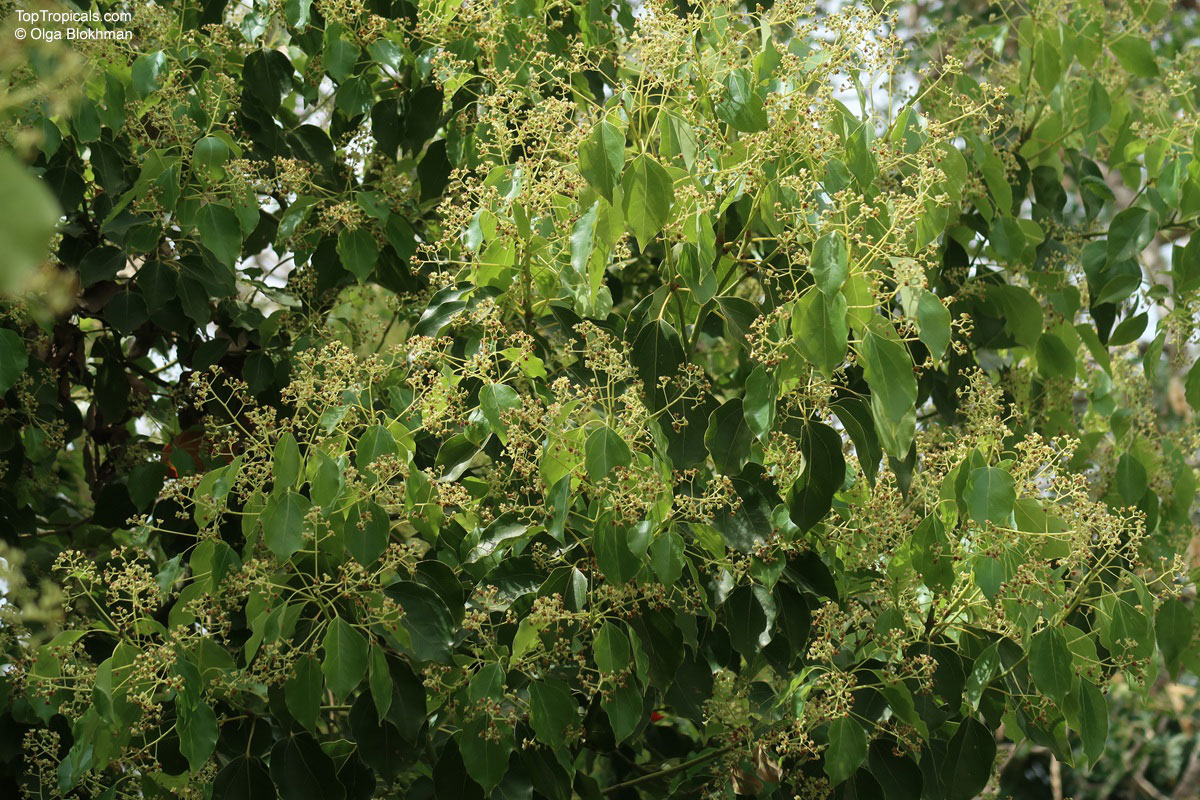
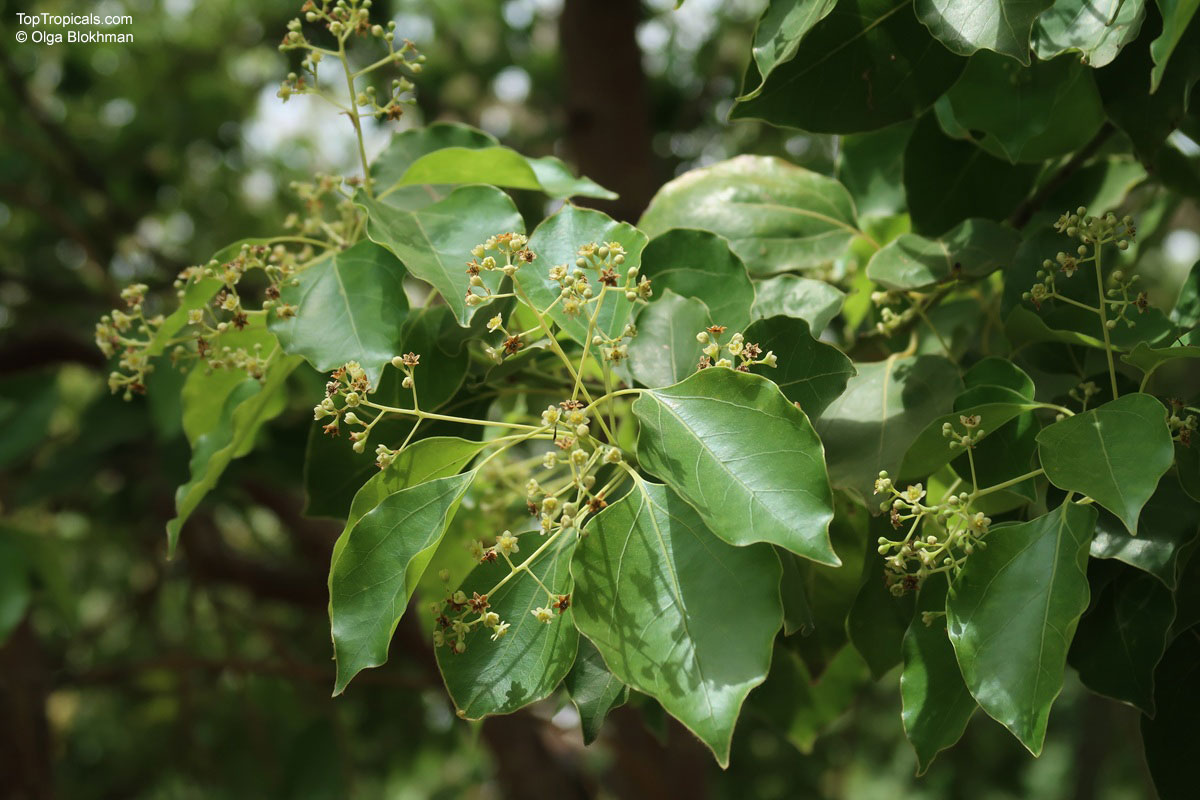
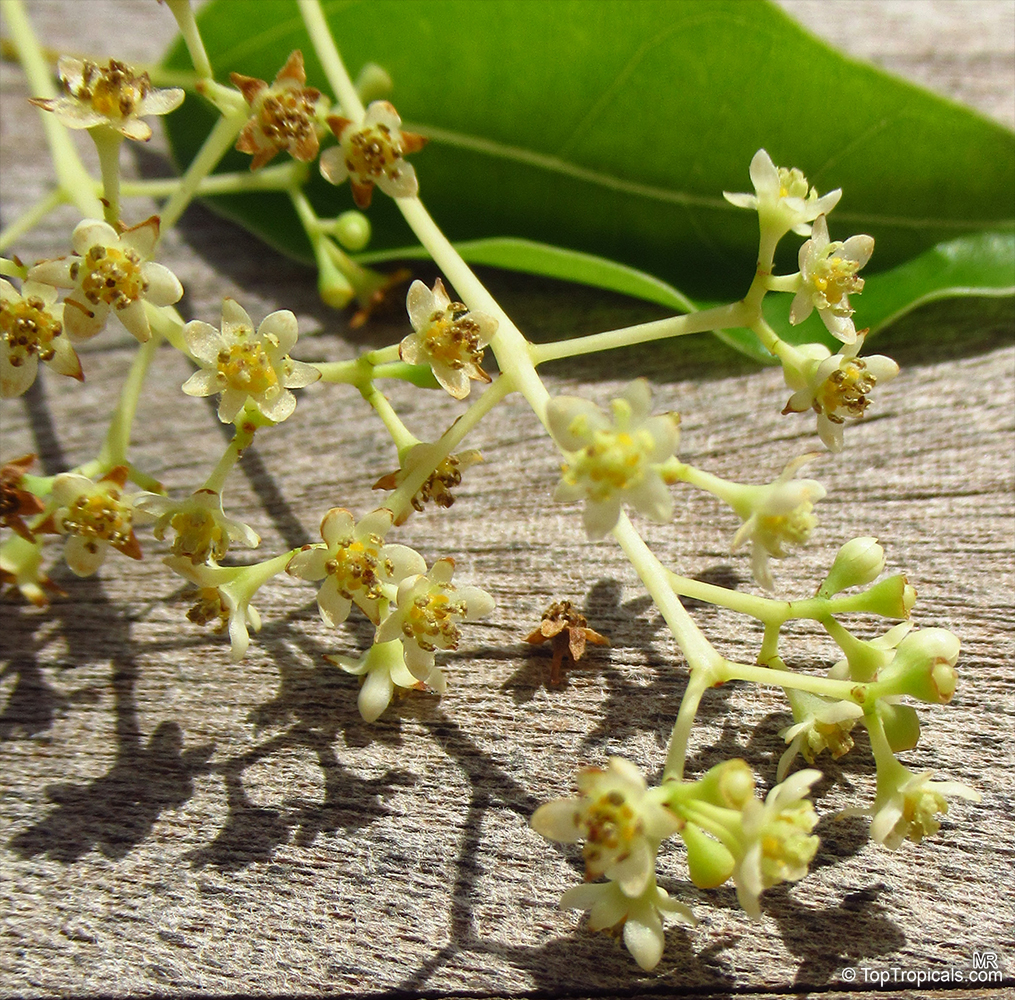
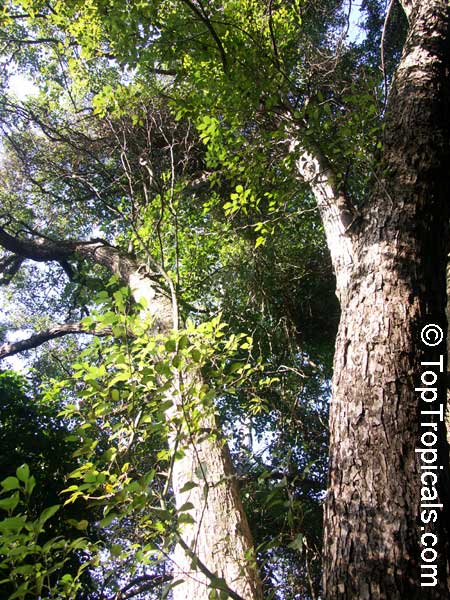
This is an exotic tree that has been widely cultivated for more than a century as a shade and ornamental tree in Florida and elsewhere. This is the aromatic tree from which camphor was derived (used in medicines and mothballs), until camphor oil began to be made artificially in the 1920s. The camphor quickly grows into a good-looking shade tree which is frequented by berry-eating birds. The camphor tree is a broad-leaved evergreen that is often twice as wide as it is tall. It grows to 50 to 100 feet tall. Where trees are present, the ground is often well-populated with camphor seedlings or small trees; of course this is when they are easiest to control. A quick way to identify camphor is to crush some leaves in order to smell the pungent camphor odor. Camphor trees are densely covered with shiny oval and elliptical leaves, up to 5 inches long. Young leaves are reddish. In spring, the tree grows 3 inch spikes of very small yellowish-white flowers, which are soon replaced by black pea-sized berries. Camphors grow either in full sun or light shade, and prefer well-drained, sandy soil.

Similar plants: Cinnamomum camphora (Camphor Tree)


Link to this plant:
https://toptropicals.com/catalog/uid/cinnamomum_camphora.htm

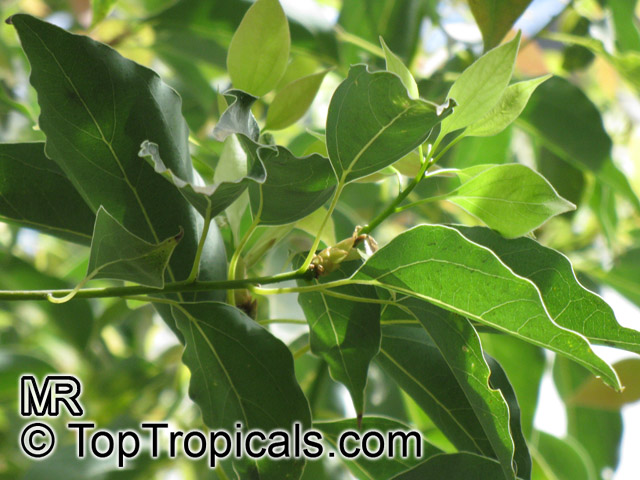
Cinnamomum camphora (Camphor Tree) with green and copper leaves and small flower clusters above.
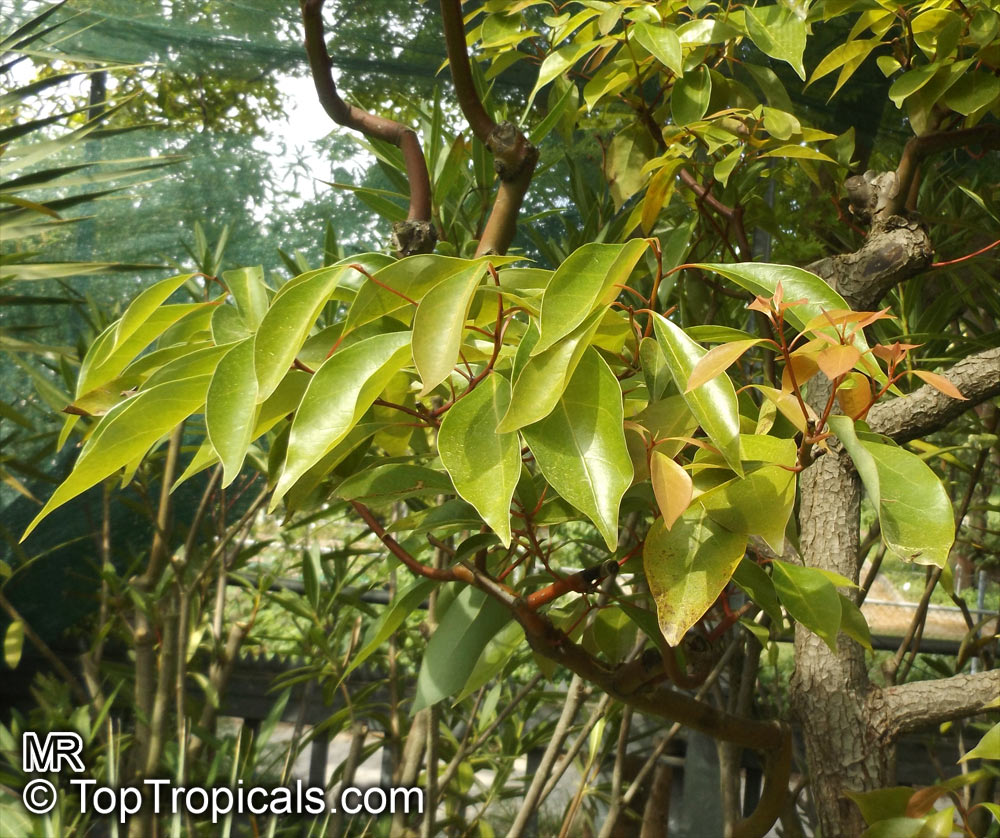
Camphor Tree, Camphor Laurel. This is the aromatic tree from which camphor was derived (used in medicines and mothballs). Camphor trees are densely covered with shiny oval and elliptical leaves, up to 5 inches long.
Branches and leaves are used for aromatic medicinal sauna.
Grown in
10"/3 gal pot, large plant
4 plants in stock
$39.95