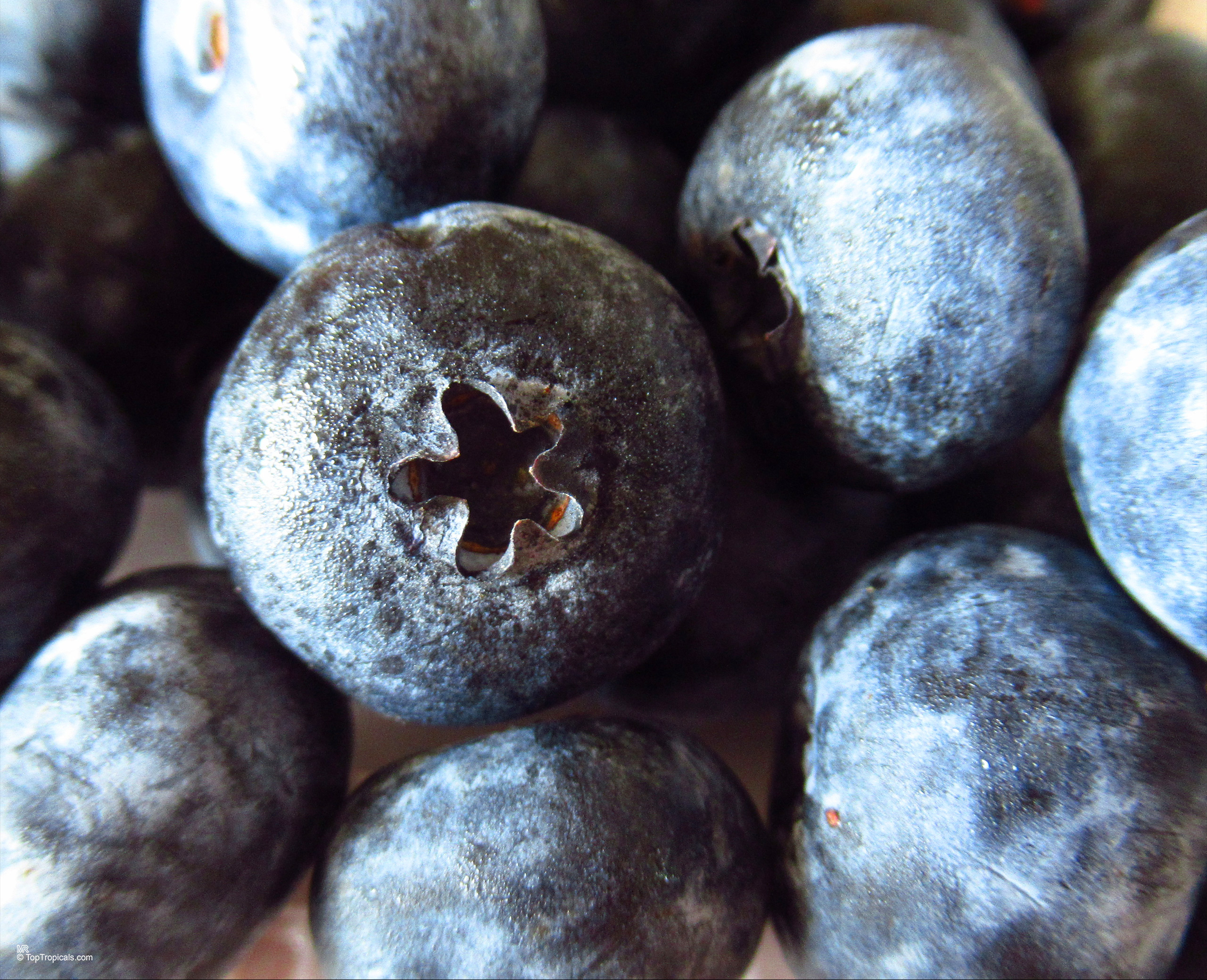
Vaccinium corymbosum (Tropical Blueberry)

Botanical name: Vaccinium corymbosum
Common names: Tropical Blueberry, Lowbush Blueberry
Family: Ericaceae
Origin: North America, Europe and Asia

USDA Zone: 4 8
Cold tolerance: -10°F
 Plant form: Small
 Mature height: 2-5 ft

 Sun exposure: Full sun or bright light indoor; semi-shade
 Cold tolerance: Tolerates light freezing to about 30°F for short periods (mature plants). Young plants must be protected.
 Watering: Regular

 Flower color: Pink; white and off-white
 Suitable for: Outdoors in the suitable USDA zone; small gardens, containers, and indoor growing
Vaccinium corymbosum, commonly known as Highbush Blueberry, is a deciduous fruiting shrub in the Ericaceae family, native to eastern North America. It typically grows 4-8 ft (1.2-2.4 m) tall, although size varies considerably among cultivars. Small white to pinkish, urn-shaped flowers appear in clusters in spring and develop into round berries that ripen from green through reddish stages to blue or blue-black with a characteristic waxy bloom. The sweet to pleasantly tart fruits are eaten fresh and widely used for preserves, baking, and freezing. Numerous cultivars have been selected for fruit size and flavor, ripening season, productivity, and adaptation to different climates.
Highbush Blueberry grows best in full sun and moist, well-drained, highly acidic soil, generally around pH 4.5-5.5. Its fine root system is sensitive to both drought and waterlogged conditions, and organic mulch helps maintain even moisture and suitable soil conditions. Plants are generally self-fertile, but growing compatible cultivars together can improve pollination, berry size, and yield. Depending on cultivar, Vaccinium corymbosum is grown approximately in USDA Zones 4-8; cultivars also differ greatly in their winter chilling requirements. Regular pruning of established bushes encourages vigorous new growth and maintains fruit production.
Similar plants: Vaccinium corymbosum (Tropical Blueberry)