Garden Blog - Top Tropicals
Date: 30 Oct 2026
Glory Bower: the fragrant pink cousin of Cashmere Bouquet with a hardy secret
Big fragrant blooms, butterflies, and a tropical jungle in record time! Glory Bower (Clerodendrum bungei), also called Pink Cashmere Bouquet - is an equally ambitious pink cousin of Clerodendrum philippinum from our previous story of its fluffy white, carnation-scented flowers.
Both share a remarkable personality: fragrant flowers, lush foliage, vigorous growth, and an unstoppable desire to expand their territory.
But Glory Bower has a few surprises of its own!
During Florida’s brutal February 2026 freeze, Glory Bower was one of our survivors, bouncing back as an even thicker, lush flowering hedge - almost as if the cold had encouraged it to spread and bloom with renewed enthusiasm!
💐 Giant pink bouquets that butterflies love
Imagine big, rounded clusters of rosy-pink flowers, up to 6 inches across, rising above lush tropical foliage.
Each bouquet contains dozens of tiny, star-shaped blossoms that open gradually, creating a spectacular pink dome.
The fragrance is wonderfully sweet, attracting butterflies and other pollinators.
And the foliage is just as attractive! Large, dark green leaves, often tinged with deep purple, provide a dramatic contrast to the bright flowers.
💐 One plant, an entire fragrant hedge!
Want a lush, flowering privacy screen in record time? Glory Bower is an excellent choice!
This vigorous shrub spreads through underground suckers, producing new stems that quickly develop into a dense colony.
One little plant can become an impressive flowering thicket in just a couple of growing seasons!
But be warned: those wandering roots don't respect garden boundaries.
💡 Our advice: Plant it in an isolated corner where it can spread freely, or grow it in a large container to keep its ambitions under control.
- UF/IFAS - spreading behavior and Florida status
💐 Tropical beauty with surprising cold hardiness
Here's where Glory Bower really stands apart from its white-flowered cousin!
While many tropical shrubs struggle with freezing temperatures, Clerodendrum bungei can survive winters in USDA Zone 8!
A hard freeze may kill the aboveground stems, but established roots can survive and send up vigorous new shoots in spring.
A tropical-looking shrub that practically rebuilds itself after winter!
💐 Easy to grow, hard to contain!
✦ Light: Full sun to partial shade.
✦ Water: Regular moisture; some drought tolerance once established.
✦ Soil: Adaptable, but prefers good drainage.
✦ Hardiness: USDA Zones 8–10; may die back in winter.
✦ Growth: Fast, vigorous, spreading through root suckers.
✦ Pruning: Cut back to control size and encourage bushy growth.
✦ Containers: Excellent for keeping those wandering roots confined.
💐 Two Cashmere Bouquets, two personalities!
One offers fluffy white carnations, the other spectacular pink flower clusters.
Clerodendrum philippinum - Clerodendrum bungei - both bring wonderful fragrance to the garden - and both need a little discipline!
🛒 Buy Clerodendrum bungei – Cashmere Bouquet
📚 Learn more:
• Clerodendrum bungei in Plant Encyclopedia
• The shrub that smells like a royal bouquet and grows like a weed
• How to get a large, lush and fragrant bush in no time
• What is the most spectacular Clerodendrum
• How to grow Clerodendrums
• How to grow fragrant Cashmere Bouquet
• 5 secrets how to turn your garden into a butterfly magnet
• Cashmere Bouquet: a bunch of spicy carnations in one bush!
#Hedges_with_benefits #Perfume_Plants #Shade_Garden #Container_Garden #Butterfly_Plants #Discover


Date: 29 Oct 2026
Two Cats, Two Philosophies, One Garden
Smokey: Is it contagious?
Sunshine: Millions of people will watch me dance!
Smokey: Then humanity is in serious trouble.

It's barely light out. Smokey has already checked the overnight low, answered six emails, and found seven things to worry about. Sunshine has decided to film a dance video. He's wearing the parrot pants, the phone is on a selfie stick, and he's not taking requests. Smokey watches over his glasses, the way you'd watch a sprinkler watering the driveway. Then he goes back to work, because somebody has to.
If you've read our newsletters, you know these two. They argue about everything, but somehow it always comes back to donuts. We wouldn't trade either one.
The Engineer and the Dreamer
Smokey believes nature isn't impressed by good intentions. He knows the fastest way to lose an Adenium (Desert Rose) is a cold, wet pot, and he checks drainage holes like a building inspector. He knows a Dwarf Golden Tabebuia wants the sunniest spot in the yard and will sulk anywhere else. He keeps notes. The notes have notes.
Sunshine keeps no notes, but he has never missed a bloom. He's the one who comes running in to announce that the Desert Rose is open, or that the Heliconia is unfolding its red-and-yellow bracts one boat at a time, like something designed by a committee of parrots. Smokey points out that Sunshine's pants were also designed by a committee of parrots. Sunshine takes this as a compliment.
When the Dwarf Golden Tabebuia turns solid yellow, Sunshine drags a chair out in front of it. Smokey moves the chair because it's blocking the hose. Sunshine moves it back. This can take most of a morning.
Our Small World

Smokey: Probably someone we will never meet. A tree like this takes years.
Sunshine: Good. Then we plant it for them today, and someday they can sit there and eat a donut for us.
Smokey: That is the first long-term plan you have ever made, and it still ends in a donut.
The news is rarely cheerful, and very little of it can be fixed from a nursery in Florida. What does get fixed here is dinner. Over the years we've taken in quite a few abandoned cats, mostly because a hungry cat at the edge of a parking lot doesn't wait for the rest of the world to sort itself out.
Feeding that cat will not change history. It does change the evening for the cat, which, from where the cat sits, is the part that matters.
Every evening Sunshine heads out with the bowls, humming something that isn't quite a song. Smokey follows with the food bag and a list of who has eaten. The cats have never once looked at the list. They have, however, memorized the sound of the bag.
They also find time to plant a tree now and then.
🍩 The Philosophy of the Donut

Smokey has a list. There's a cold front next week, a shipment on Tuesday, and a bench of seedlings that needs repotting. The list grows faster than he can cross things off, and he has a theory that once it's done, he'll relax.
Sunshine has noticed that the list is never finished. Nobody has ever finished a garden. The day you pull the last weed, three more are already germinating behind you, and the plant you just repotted is quietly planning to outgrow its new pot.
So Sunshine has brought donuts. The Desert Rose is blooming and a rescued kitten is asleep under the potting bench. Smokey's list can survive ten minutes. He checks afterward, just to be sure. It survived.
Sunshine calls this the Philosophy of the Donut. Smokey says the theory has never passed peer review. Sunshine points out that Smokey has eaten half the evidence.
Why We Need Them Both
Left alone, Smokey would keep everything alive and never once sit down to look at it. Sunshine would have a wonderful month, followed by a greenhouse full of very dry plants and a very confused cat. Together they manage fine, although they still haven't settled the chair.
A Little More Sunshine for Your Garden

Golden Penda (Xanthostemon chrysanthus). Big, fluffy golden flowers with a sweet scent that reminds many people of apple blossoms. Sunshine approves of both.
Sunshine shops for plants by walking the rows until something makes him stop. Smokey asks how big it gets and what it thinks of frost. Lately, though, Sunshine has been pausing for a reason that has nothing to do with color.
🌸 Stop to smell the flowers!

You usually notice a fragrant plant before you see it. You're walking past with the hose when the air suddenly turns sweet. You stop, look around, and try to figure out where it's coming from.
Sunshine does this several times a day. In the evening, Angel's Trumpet (Brugmansia) releases more of its fragrance. After dark, Night-blooming Jasmine and Parijat take their turn. Sunshine has been known to interrupt an important conversation because something wonderful is blooming twenty feet away.
At the Plumeria, he stops completely and closes his eyes. Smokey says this is how deliveries get missed.
Then there are Champaka, Jasmine Sambac, and Ylang-Ylang. Sunshine moves from one to another, sniffing flowers with the concentration of a professional perfumer. Smokey asks whether he's discovered anything useful. Sunshine says yes, but further research is required.
Ylang-Ylang, incidentally, is one of the notes in Chanel No. 5. Sunshine now tells visitors he wears it.
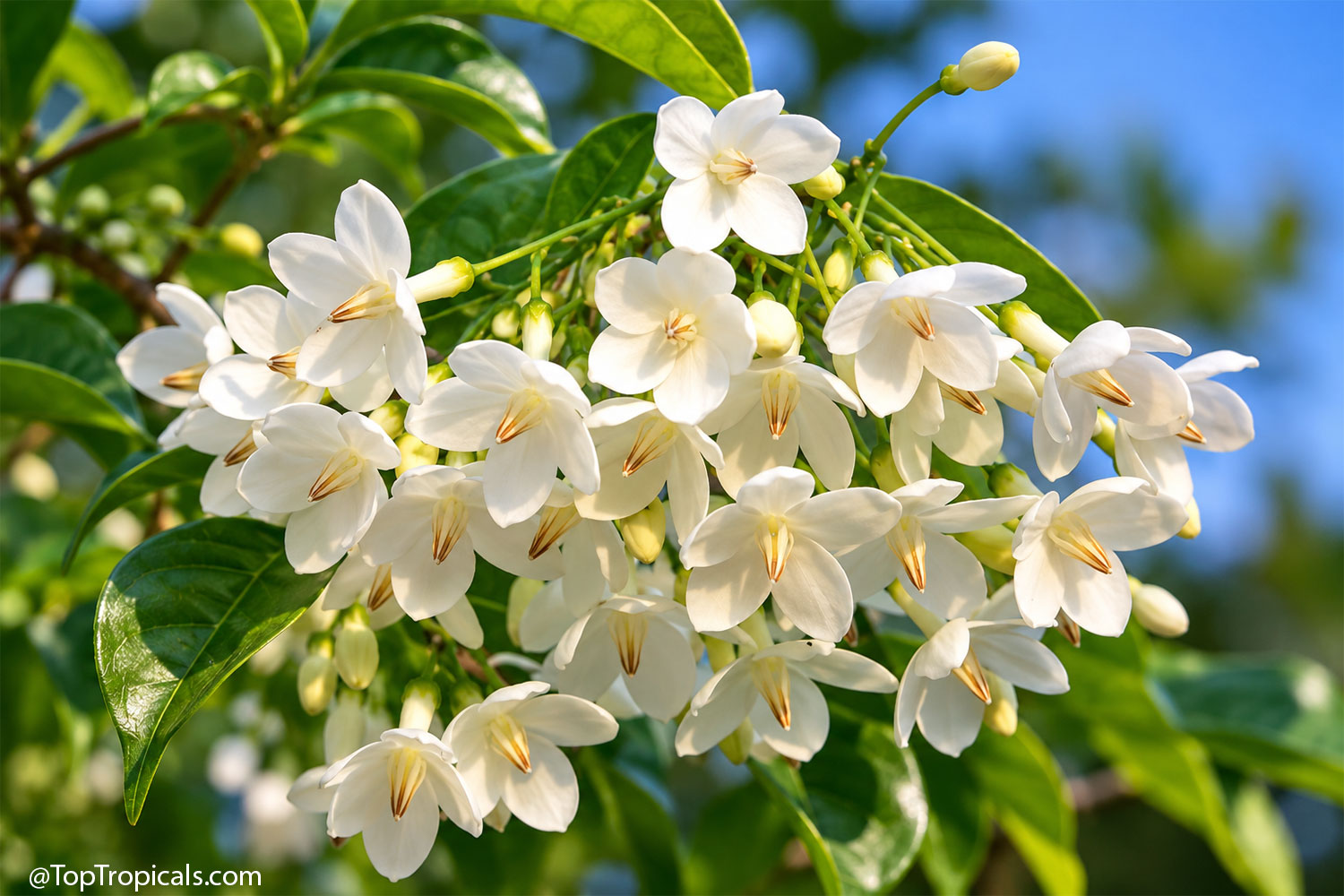
Some of the best things in a garden can't be photographed.
We tried anyway. The Water Jasmine above looks lovely, but the picture leaves out the best part. The same goes for Climbing Ylang-Ylang, Hiptage, French Jasmine, and Cashmere Bouquet. Smokey has a page of growing notes on each one. Sunshine has smelled every one of them. Sunshine finished first.
Until Next Time
Thank you for reading, and for sharing our interest in plants, animals, gardening, and the occasional ridiculous conversation between two cats. Tell us which one you are: Smokey, Sunshine, or, like most of us, some mix of the two.
Smokey has already started next month's list. Sunshine has already found three things blooming that aren't on it.
🛒 SHOPPING LINKS:
Date: 29 Oct 2026
Daily Dose of Cat: Twin Brothers

🐾 Daily Dose of Cat: Twin Brothers
Remember the box of miscellaneous cats someone left at the Top Tropicals door? The story wouldn't be complete without Mufasa and Rossi, two look-alike brothers who stole our team's hearts and became the official Watchers of our Fort Myers office!
Are they identical twins? We don't know. But they're doing an excellent job impersonating each other! They look like mirror images. We suggested color-coded collars, but their adoptive moms, Kristi and Jamie, insist they can tell them apart. And indeed, same stripes, different personalities!
🐈 Rossi is slightly darker, a little bigger, and more affectionate. He's the cuddler who always wants attention.
🐈 Mufasa is the playful adventurer with an unusual drinking habit: he likes to stand IN his water bowl!
For now, the brothers rule the office, with plans to eventually explore outdoors during the day and sleep safely inside at night. They've already begun customer service training by inspecting a mouse pad featuring two twin kittens in a hammock. Apparently, they approve!
🐾 Can cats recognize their twins?
We may struggle to tell look-alike cats apart, but cats rely heavily on scent, familiar sounds, and behavior to recognize each other. No color-coded collars needed in the feline world!
🐾 Are cats really identical twins?
Identical twins are extremely rare in cats. Most look-alike littermates are simply siblings who inherited similar coats. Same stripes, same birthday, completely different cats!
🐈 Top Tropicals rescued twin cats Mufasa and Rossi at PeopleCats.Garden.
📚 Learn more:
• Orphaned kittens finding the Right Door
• Simon "Walkie-Talkie" - the cat who made the right decision
• Marie the Pirate: Pets don't know they're disabled
• Zhu-Zhu, the Bumblebee, or How Simon became a daddy
🐈 Stay with us for your #DailyDoseOfCat!
#DailyCatLesson #PeopleCats
🟢 Join 👉 TopTropicals
Date: 29 Oct 2026
Champaka growing guide: Everything gardeners want to know
☀️ Champaka growing guide: Everything gardeners want to know
Magnolia champaca is more than just a perfume tree. Why we love growing this fragrant beauty in Florida - and how to grow your own?
People ask us about Champaka all the time:
Is it easy to grow? Will it survive Florida's heat? How fast does it grow? When will it bloom? Can I keep it in a pot? And what happens if we get another freeze?
After years of growing Champaka at our Sebring farm, we've learned quite a few things about this remarkable tree. We've fallen so much in love with it that Champaka has become a Signature Plant of Top Tropicals - it's even featured on our avatar! And some of the things we've discovered about this beauty might surprise you!
· 🏵 First, that famous perfume!
Golden Champaka (Magnolia champaca), also called Joy Perfume Tree, produces golden flowers with an irresistible fruity bubble gum fragrance. Its precious floral extracts are used in luxury perfumery, including the legendary perfume Joy. In India and Southeast Asia, Champaka is also considered a sacred tree.
And here's the best part: Champaka starts blooming just 2-3 years from seed and flowers repeatedly, almost year-round in warm climates!
· 🌳 More than fragrance: A perfect tree for Florida!
Unlike other Magnolia species that struggle in scorching weather, Champaka LOVES heat! It's vigorous, fast-growing, and develops a beautiful, naturally columnar, bushy crown.
And those leaves! Soft, lush, lemon-lime salad-green foliage gives the tree a fresh tropical appearance even without flowers.
Plant several trees 10 ft apart for a spectacular Perfume Hedge! Birds love the dense canopy and often build nests there in spring.
· ❄️ Can Champaka survive a freeze?
Surprisingly, established trees can tolerate light freezes! Our Champakas survived Florida's record 2026 freeze and recovered vigorously. Young trees need more protection.
🎥 Watch our Champaka freeze-survival video
· Can I grow Champaka in a container?
Absolutely! Its upright growth habit makes it suitable for large pots with occasional pruning. Provide good fertilizer and regular watering.
· 💦 Does Champaka like water?
YES! Champaka loves fertile soil and consistent moisture. Florida's sandy soils dry quickly, so regular irrigation is important. A permanent sprinkler system works beautifully. Just avoid waterlogged roots.
· 🎥 See our Champaka trees in action!
This video shows actual trees growing at B-Farm and the beautiful plants available for sale.
🛒 Choose your Champaka:
🌱 3 gal: 3-4 ft - ready to bloom within a year. Shippable.
🌱 7 gal: 5-6 ft - ready to bloom. Shippable.
🌳 15 gal: 6-8 ft - already blooming. Pickup or delivery.
🌳 25 gal: 8-10 ft - already blooming. Pickup or delivery.
Free delivery for qualified orders.
· ✨ Why plant just one?
Imagine a living wall of lush, lemon-lime foliage, golden flowers, and heavenly perfume drifting through your garden!
Fast-growing, evergreen, beautiful, and fragrant - Champaka offers so much more than its famous flowers.
🛒 Plant your own Perfume Hedge and enjoy the Joy!
📚 Learn more:


• Magnolia champaka in Plant Encyclopedia
• White Champaka Did Better at 25F Than the "Hardier" One
• Which Champaka tree is better - White or Golden?
• What tree to plant for wonderful fragrance?
• Golden and White Champaka side-by-side
• Why is my Champaka Tree dropping leaves?
• What does a mature Champaka Tree look like? Practical Growing Guide.
• The Magic Number 65: when tropicals finally wake and the 7-Day Rule you should know
• How to grow Magnolia champaca and get some Joy
• When does Champaka tree start blooming?
• Why Champaka is such a popular perfume tree
• Flower of the most expensive perfume
• Article about Champaka
#Perfume_Plants #Container_Garden #Trees #Discover #How_to
🟢 Join 👉 TopTropicals
Date: 28 Oct 2026
Parijat: the flower that refuses to face the sun
It blooms after sunset, perfumes the darkness, and carpets the ground with flowers by morning. No wonder this little tree inspired legends of love and heartbreak.
Some flowers greet the morning sun. Parijat does the opposite.
As darkness falls, its white flowers open, revealing brilliant orange centers and releasing an enchanting fragrance. By sunrise, they've fallen, carpeting the ground like tiny white stars.
Why does this tree seem unwilling to face the sun?
🕊 The princess who loved the Sun God
Legend tells of Princess Parijataka, who fell in love with Surya, the Sun God. When her love went unreturned, she died of heartbreak.
From her ashes grew a tree whose flowers opened only at night, refusing to face the sun. Each morning, they fell like tears.
Its botanical name, Nyctanthes arbor-tristis, means night-flowering sad tree.
Few trees express sadness so beautifully!
🕊 A flower brought from heaven
Another Hindu legend tells of a celestial Parijat tree growing in Indra's paradise.
Krishna brought it to Earth, where it sparked jealousy between his wives, Rukmini and Satyabhama.
In one version, Krishna planted it in Satyabhama's garden, but its fragrant flowers fell into Rukmini's courtyard!
Parijat remains sacred in Hindu traditions. Its fallen flowers are gathered for offerings, an unusual distinction when freshly picked flowers are generally preferred.
🕊 The secret of the orange center
Look closely! White petals surround a vivid orange tube, like a tiny glowing candle.
For centuries, these orange tubes have been used to produce natural dyes for silk and other fabrics. Their color comes from carotenoid pigments.
And despite its common name, Night Jasmine, Parijat isn't a true jasmine. It belongs to the olive family, Oleaceae, alongside Jasminum.
🕊 A perfume tree for small gardens
Native to South Asia, Parijat grows as a small shrub or tree, generally 5–10 feet tall in cultivation.
Its greatest attraction isn't perfect symmetry. It's stepping outside in the evening to discover the garden filled with perfume!
Plant it near a patio, walkway, or window to enjoy its nighttime fragrance. And don't rush to sweep up the fallen flowers. That fragrant morning carpet is half the magic!
🕊 Easy to grow, easy to love
· ☀️ Light: Full sun to partial shade for abundant blooms.
· 💧 Water: Moderate watering, good drainage.
· 🌱 Soil: Well-drained, enriched with organic matter.
· ✂️ Pruning: Trim to encourage branching and compact growth.
· ❄️ Cold: Best in frost-free climates. Freezing temperatures may damage growth.
· Containers: Great for patios. Move indoors or protect during cold weather.
· Feed regularly during active growth to encourage flowering.
🕊 Bring a little heaven into your garden
Parijat asks for little space but gives something extraordinary: heavenly perfume after dark and a shower of delicate flowers every morning.
A tree born from heartbreak, brought from heaven, and loved for centuries.
🛒 Turn heartbreak into blossoms
📚 Learn more:


• Nyctanthes arbor-tristis in Plant Encyclopedia
• Night jasmine that disappears with sunrise: Parijat
• Sacred perfume tree for small spaces: Parijat blooms with heartbreak and heaven
• Six most desired perfume plants
• Five best fragrant plants for summer plantings
#Perfume_Plants #Trees #Discover #Hedges_with_benefits
🟢 Join 👉 TopTropicals