Garden Blog - Top Tropicals
Date: 31 Jul 2026
The worlds strangest plant that smells like roadkill and makes healthy noodles
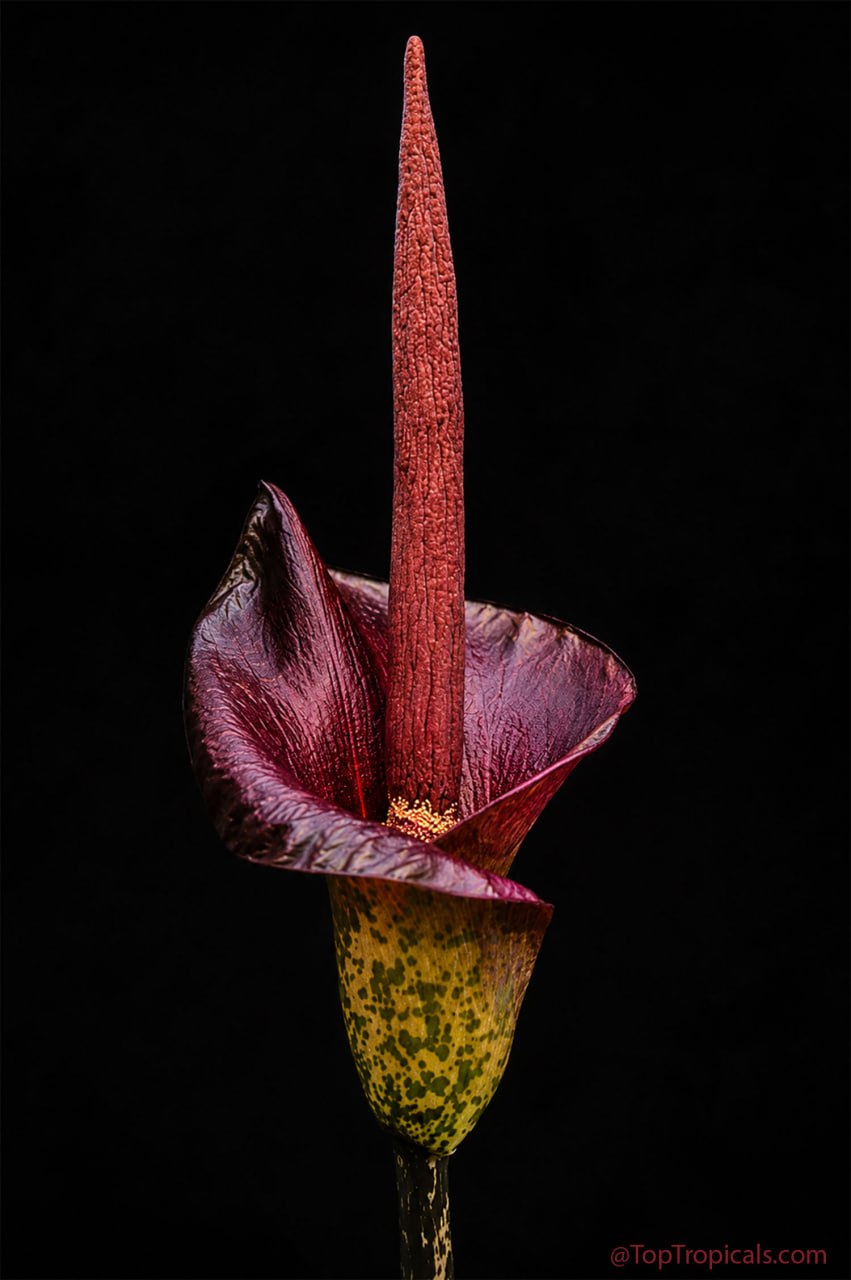

🍝 The world's strangest plant that smells like roadkill and makes healthy noodles
Most houseplants reward you with beautiful flowers or sweet fragrance. Amorphophallus konjac has a completely different strategy.
Once mature, this bizarre species sends up a dramatic, deep purple bloom from a single underground corm (a large bulb-like root). For just one day, it releases a scent remarkably similar to rotting meat. While unpleasant to us, it is absolutely irresistible to the flies and beetles that pollinate it in nature. Thankfully, the odor fades almost as quickly as it arrives - and what happens next is why plant collectors (and health food lovers) are obsessed with it...
🍜 The shocking secret behind your shirataki noodles
Here is the twist almost no one expects: if you have ever eaten low-carb konjac noodles, shirataki noodles, konnyaku jelly, or taken the high-fiber supplement glucomannan, you have eaten this exact plant.
The underground corm of the voodoo lily has been cultivated across Asia for over 2,000 years. While the raw corm isn't edible fresh due to irritating calcium oxalate crystals, traditional processing transforms it into a zero-calorie, high-fiber dietary staple. Most people buying these "miracle noodles" at the grocery store have no clue they come from a rare, alien-looking tropical beauty.
🍜 It grows a literal tree from a single leaf
The blooming event is a solo show - the flower appears completely on its own before any foliage emerges. Once the bloom fades, the plant shifts gears into its vegetarian phase, producing just one single, massive leaf.
But calling it a leaf hardly does it justice. It stands on a thick, beautifully mottled, snake-patterned stalk and branches out into hundreds of smaller leaflets. It looks so much like a miniature tropical palm tree that visitors will refuse to believe it is actually just one giant, highly divided leaf. On mature specimens, this single leaf can tower 4 to 6 feet tall.
Bigger and bolder every year: Unlike its cousin Amorphophallus bulbifer, this species doesn't grow baby clones on its leaves. Instead, it pours all its summer energy straight back down into the underground corm. Every year the corm grows larger, the tree-like leaf gets taller, and the future blooms get even more spectacular.
🍜 Surprisingly easy to grow at home
Despite its highly exotic reputation and ancient history, this voodoo lily is remarkably easy to keep alive, making it a fantastic conversation piece for shade gardens or large patio pots:
Light: Prefers bright shade or dappled, filtered sunlight.
Soil & Water: Thrives in rich, well-draining soil with regular watering during the summer heat.
Winter Rest: After a few months of glory, the giant leaf naturally dies back for the winter. You simply keep the pot dry and let the corm sleep until it wakes up to surprise you next spring.
🍜 Voodoo Lily Quick Stats
🌿 Botanical Name: Amorphophallus konjac
✨ Claim to Fame: The actual source of shirataki & konjac noodles
🌡 Hidden Talent: The flower warms itself up (thermogenesis) to blast its scent
🌴 Foliage Habit: Grows a massive, single leaf that looks like a palm tree
Add this true botanical wonder to your rare plant collection. It’s weird, beautiful, educational, and guaranteed to be the most talked-about plant in your entire collection.
🛒 Bring home this spectacular noodle-making wonder
📚 Learn more:


· Amorphophallus konjac in Plant Encyclopedia
· Amorphophallus konjak: fun fact about Voodoo Lily
· Amorphophallus bulbifer: the flower that smells like a dead rat, but gardeners can’t wait for it to bloom
· Amorphophallus paeoniifolius: what's inside the Devils Tongue that smells like trouble?
· The biggest flower in the world - Amorphophallus
· Different species of Amorphophallus
#Nature_Wonders #Shade_Garden #Container_Garden #Discover
🟢 Join 👉 TopTropicals
Date: 30 Jul 2026
The need to exercise
🏋️♂️ The need to exercise
"Whenever I feel the need to exercise, I lie down until it goes away." - Paul Terry
🐈📸 Cat Pelmen's morning exercise for PeopleCats.Garden.
📚 More Pelmen's achievements:
· The Champion gets it right
· The reward for good work
· Pelmen before and after sunbathing
· Pelmen arrived from Planet Nibiru
· The alien upgrades his winter uniform
· Pelmen's new athlete record - many cups he can jump at the end?
· Alien by the Christmas Tree
· Achieving the impossible
· Pelmen growing in progress
· A tree dog or a flying alien
· Why Sphynx cats always need a sweater?
· Shower of Joy
· Talent at hard work
#PeopleCats #Quotes
🟢 Join 👉 TopTropicals
Date: 30 Jul 2026
Which Adenium Blooms the Longest? Meet Flamingo Glow
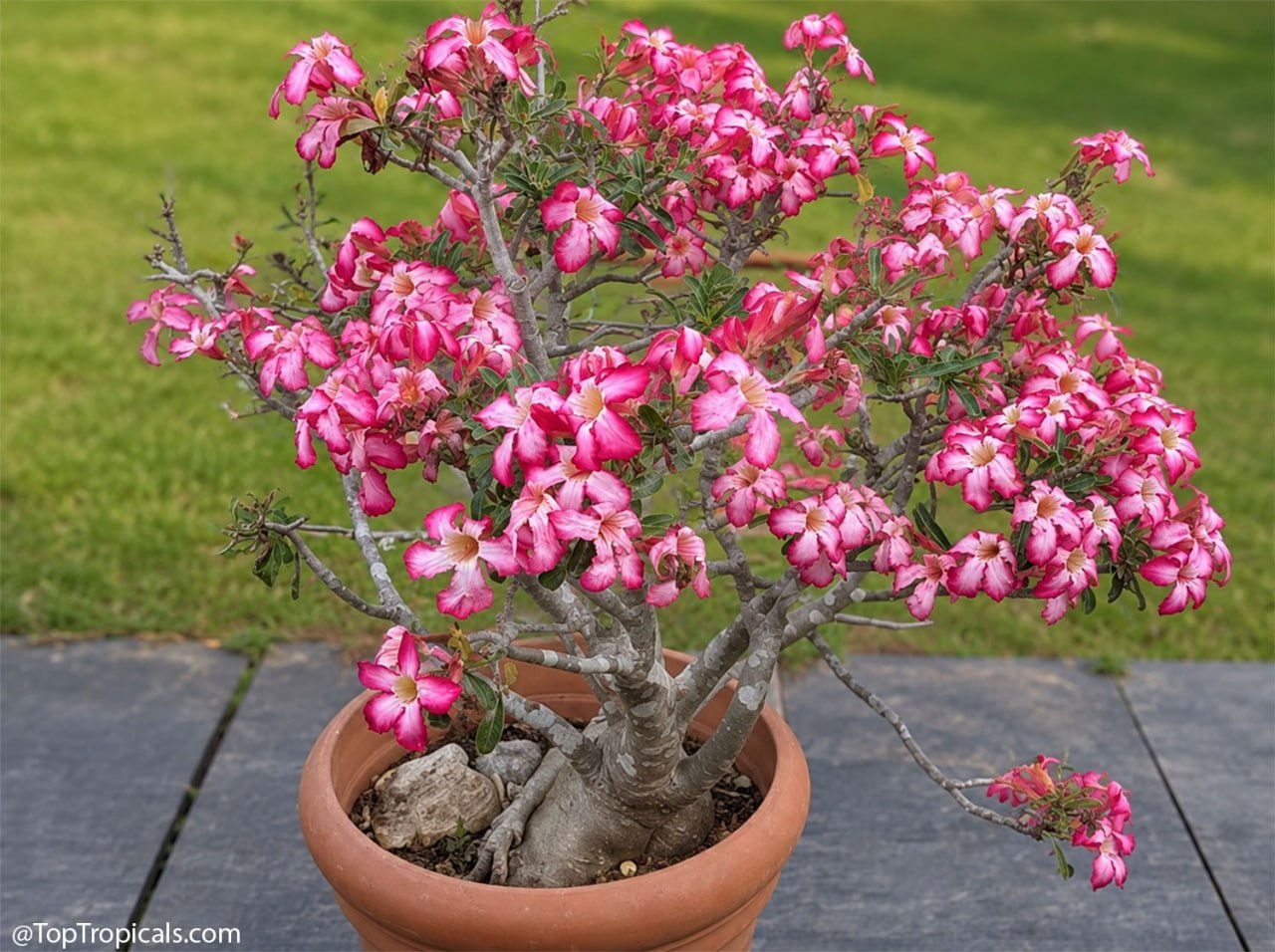
Which Adenium Blooms the Longest? Meet Flamingo Glow
Some adeniums put on a spectacular show for just a few short weeks. Others bloom in unpredictable waves. But every now and then, you encounter a variety that seems to stay covered in flowers almost all year long.
At Top Tropicals farm, two Desert Rose Flamingo Glo' specimens have become true local celebrities. Grown in 7-gallon containers, these mature plants spend the vast majority of the year smothered in radiant pink blossoms, taking only a brief rest during their light winter dormancy. Visitors constantly pause to photograph them, ask about their care, and add them straight to their plant wish lists.
The Seedling Surprise: Inheritance Done Right
What makes Flamingo Glow even more exciting is what happened behind the scenes.
Our two mother plants naturally cross-pollinated and produced a batch of seed pods. We harvested the seeds, potted them up, and waited patiently as they grew. About three years later, those offspring bloomed for the very first time.
If you grow adeniums, you know that hybrid seedlings are notorious for wild genetic variation. You rarely get an exact match to the parent. The best surprise? These young plants inherited the exact vibrant, glowing color that made their parents famous. Seeing seedlings reveal their personalities is always thrilling, but watching them stay remarkably true to the original mother plants felt like hitting the horticultural jackpot.
Hybrid Genetics: Compact Form Meets Everblooming Power
Flamingo Glow is a specialized hybrid between Adenium arabicum and Adenium obesum, combining the absolute best characteristics of both species:
Architectural Structure: From A. arabicum, it inherits a naturally compact habit and a thick, sculptural caudex (swollen trunk) perfect for bonsai-style growing.
Prolific Blooms: From A. obesum, it gains an incredible bloom count and dynamic petal coloration.
These flowers are fascinating to watch. Each bloom opens in a soft blush pink before deepening into rich rose shades with darker splashes radiating across the petals. This gradient gives the flowers the warm, luminous appearance that inspired the variety's name.
Easy Care for Year-Round Color
Unlike high-maintenance tropicals that demand constant intervention, adeniums are surprisingly resilient companions. To get maximum blooms out of Flamingo Glow:
· Sunlight: Place in full, direct sun (at least 6 hours daily).
· Watering: Water deeply during warm growing months, but allow the potting mix to dry out completely between waterings.
· Soil: Use a gritty, fast-draining succulent mix to protect the caudex. We use our own Adenium Mix.
In return, they reward you with striking, sculptural structure even when resting, and a continuous show of flowers whenever warm weather returns.
Whether you're an avid container gardener, a bonsai enthusiast, or simply looking for a hardy succulent that doubles as a vibrant centerpiece, Flamingo Glow continues to exceed expectations. And thanks to this successful seed crop, a brand-new generation of these glowing beauties is finally ready to begin its own journey.
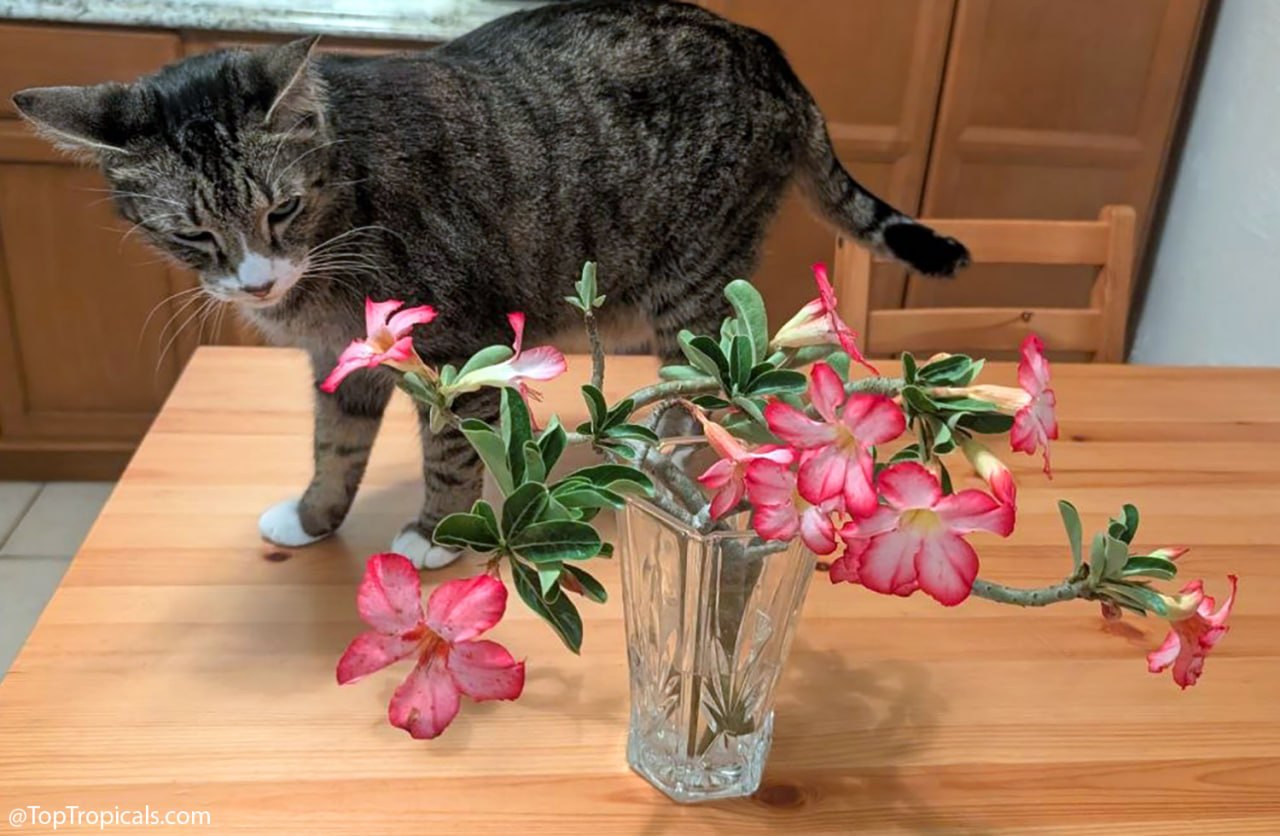
📸 James Coconuts the Cat has questions. Mostly for the flowers. 🌸😼
📚 Learn more:
• Adenium arabicum in Plant Encyclopedia
• Which adenium is ever-blooming? Discover Flamingo Glow
🛒 Add Your Flamingo Glow to your collection and discover more Adenium colors
#Container_Garden #Adenium #Discover


Date: 29 Jul 2026
We are listening!

We are listening!
"The less you speak, the more you will hear." - Alexander Solzhenitsyn
🐈📸 TopTropicals rescued cat Lilimon with her toy cat collection at PeopleCats.Garden.
#PeopleCats #Quotes
🟢 Join 👉 TopTropicals
Date: 29 Jul 2026
The Ultimate Glow-Up
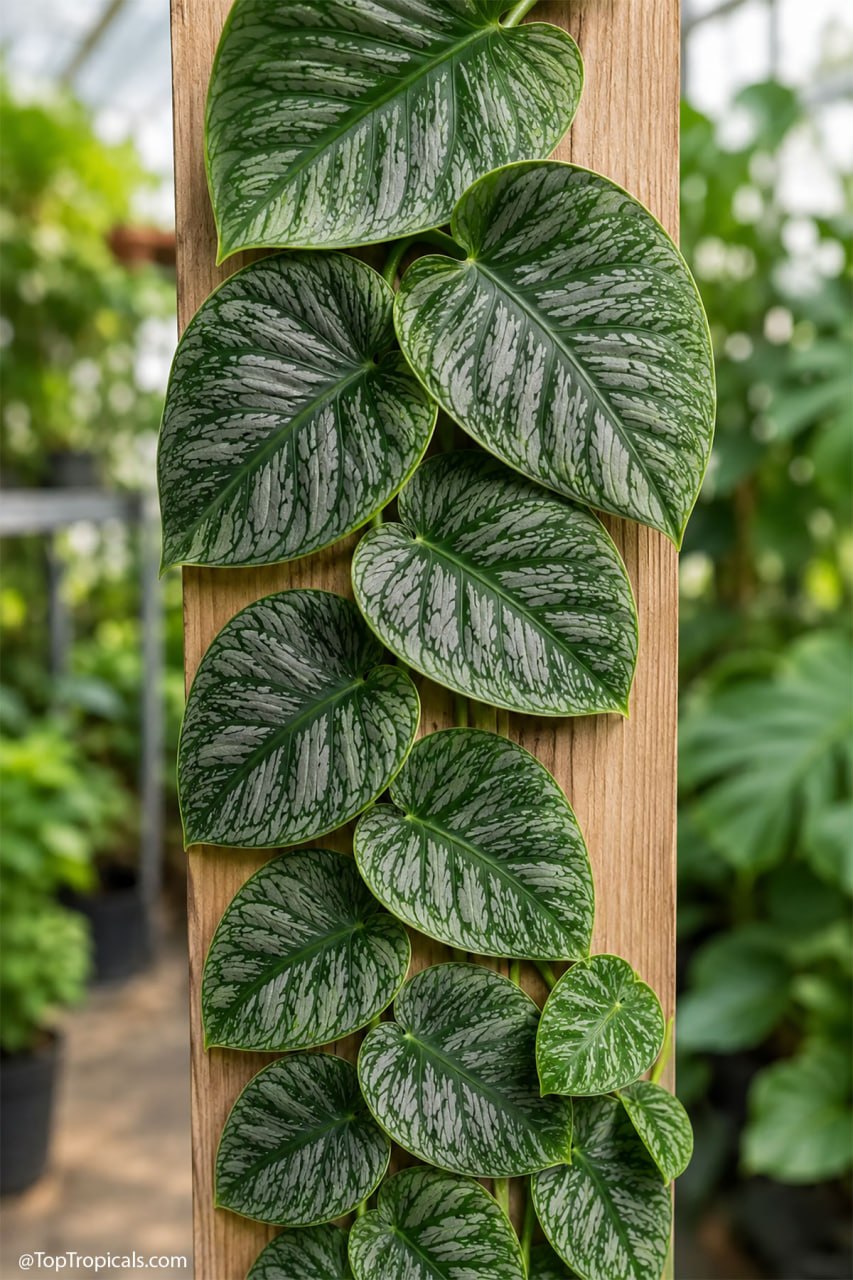
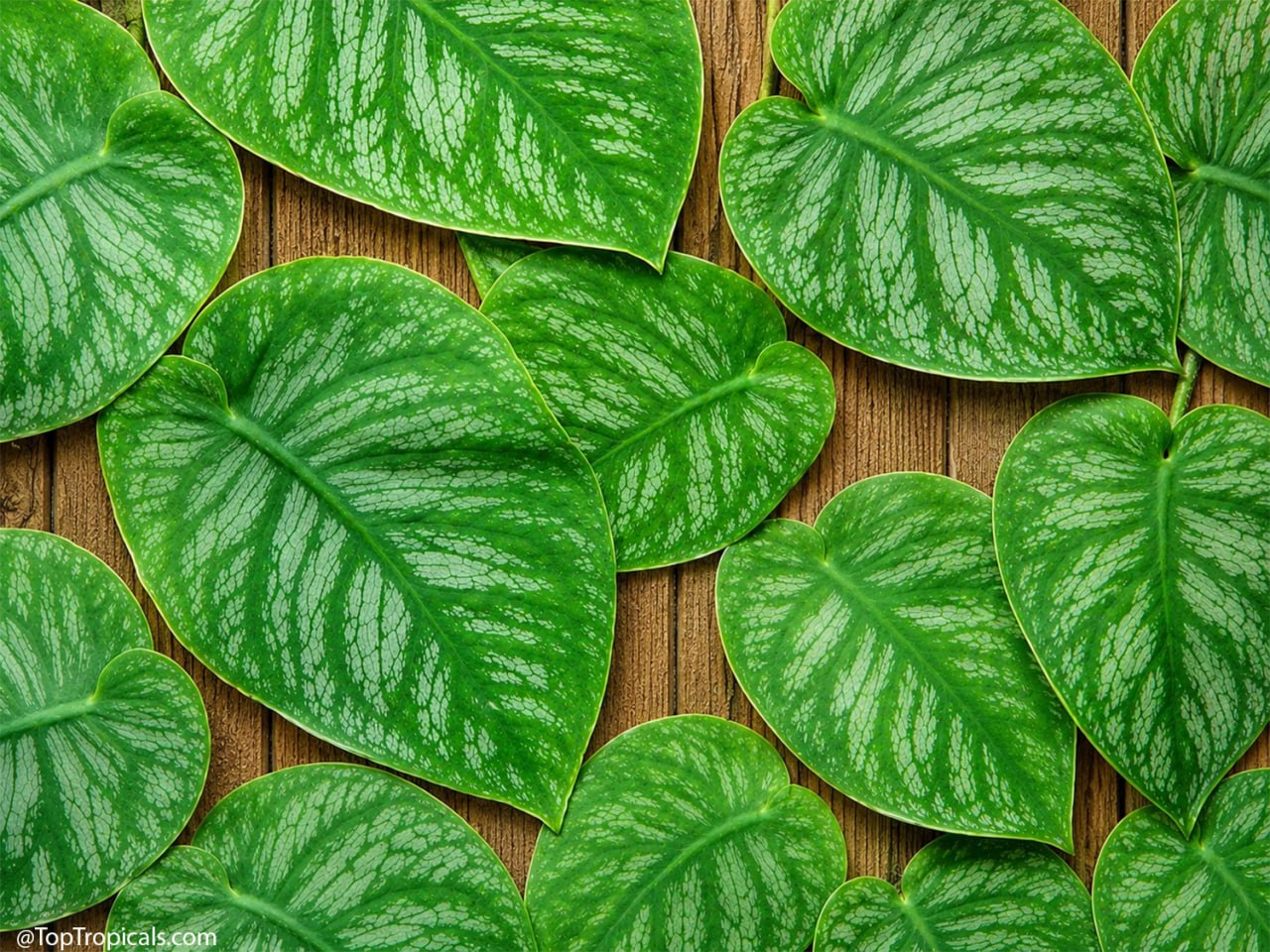
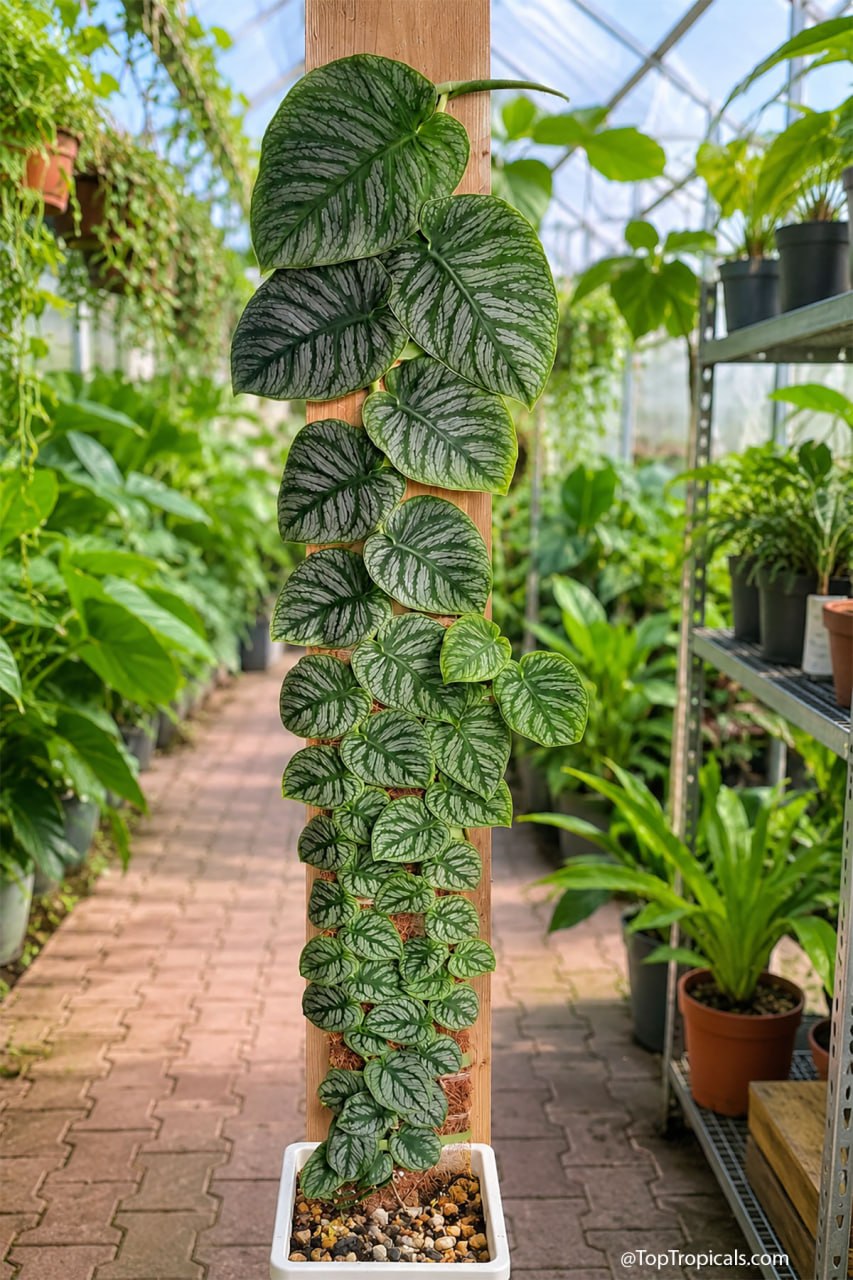
🌿 Why This Monstera Looks Like It Was Painted on the Wall
Most Monsteras grow away from whatever they’re climbing. Monstera dubia does the exact opposite.
Its juvenile leaves press themselves flat against tree trunks, rocks, or wooden boards so tightly they look glued on. Botanists call this shingling because each leaf overlaps the next like roof shingles.
It’s one of the most unusual growth habits in the houseplant world - and the reason collectors become obsessed with it.
🌿 Nature's Living Wallpaper
In the tropical rainforests of Central and South America, young Monstera dubia spends years creeping upward on tree trunks. Instead of producing giant split leaves immediately, it stays flat against the bark.
Each new leaf overlaps the previous one, creating a living mosaic of silver and emerald. Give it a wooden board, plank, or moss pole indoors, and it behaves exactly the same way.
It's less like growing a vine - and more like growing living art.
Here’s where things get even stranger.
Most people buy Monstera dubia for those beautiful silver, leaf-mosaic patterns. But that’s only Phase One!
Once the plant reaches the top of its support and feels it has "climbed the tree", it undergoes a dramatic transformation:
Leaves pull away from the board.
They grow massive - often over 2 feet long!
The silver pattern turns deep green, developing classic splits and holes (fenestrations).
Many growers who see an adult Monstera dubia for the first time don't even realize it's the same plant.
Besides its incredible appearance, Monstera dubia is surprisingly rewarding to grow. Its thick climbing stems root naturally at every node, making propagation simple.
🍀 Growth Habit: Shingling climber that hugs its support
☀️ Light: Bright indirect light
💧 Water: Keep evenly moist but never soggy
Soil: Chunky, fast-draining aroid mix
🌡 Temperature: Loves warm tropical conditions
👍 Best Feature: Silver juvenile leaves that cling tightly to wood
🏆 Collector Bonus: Eventually transforms into a giant fenestrated adult Monstera with leaves over 2 feet long
🏡 Best For: Plant collectors, moss poles, wooden boards, indoor jungles, terrariums, green walls, and anyone who loves unusual foliage.
• Uncertain Origins: The name "dubia" means doubtful or uncertain in Latin because early botanists struggled to classify it.
• Built for Storms: In nature, the shingling habit helps maximize light capture while preventing damage from heavy tropical rain and wind.
• First Discovery: The species was officially described in 1845 by German botanist Karl Koch.
• Wild Fruit: In the wild, mature plants produce edible fruit - though indoor flowering is extremely rare!
If you're looking for an ordinary houseplant, this isn't it. Monstera dubia gives you two spectacular plants in one - first a stunning shingling climber that looks like wallpaper, and later a giant tropical vine with massive split leaves. Watching that transformation happen in your own home is half the fun!
🛒 Shop Monstera dubia and All Monstera plants


• Monstera dubia in Plant Encyclopedia
• The Big Secret Behind the "Mini Monstera" - Rhaphidophora tetrasperma
• How mini is Mini Monstera?
• How to harvest and eat Monstera Ice Cream
• Monstera x adansonii - Baby Swiss Cheese Plant
#Shade_Garden #Nature_Wonders #Container_Garden #Discover
🟢 Join 👉 TopTropicals
Most Monsteras grow away from whatever they’re climbing. Monstera dubia does the exact opposite.
Its juvenile leaves press themselves flat against tree trunks, rocks, or wooden boards so tightly they look glued on. Botanists call this shingling because each leaf overlaps the next like roof shingles.
It’s one of the most unusual growth habits in the houseplant world - and the reason collectors become obsessed with it.
🌿 Nature's Living Wallpaper
In the tropical rainforests of Central and South America, young Monstera dubia spends years creeping upward on tree trunks. Instead of producing giant split leaves immediately, it stays flat against the bark.
Each new leaf overlaps the previous one, creating a living mosaic of silver and emerald. Give it a wooden board, plank, or moss pole indoors, and it behaves exactly the same way.
It's less like growing a vine - and more like growing living art.
🌿 The Ultimate "Glow-Up"
Here’s where things get even stranger.
Most people buy Monstera dubia for those beautiful silver, leaf-mosaic patterns. But that’s only Phase One!
Once the plant reaches the top of its support and feels it has "climbed the tree", it undergoes a dramatic transformation:
Leaves pull away from the board.
They grow massive - often over 2 feet long!
The silver pattern turns deep green, developing classic splits and holes (fenestrations).
Many growers who see an adult Monstera dubia for the first time don't even realize it's the same plant.
🌿 Monstera dubia: Care & Quick Stats
Besides its incredible appearance, Monstera dubia is surprisingly rewarding to grow. Its thick climbing stems root naturally at every node, making propagation simple.
🍀 Growth Habit: Shingling climber that hugs its support
☀️ Light: Bright indirect light
💧 Water: Keep evenly moist but never soggy
Soil: Chunky, fast-draining aroid mix
🌡 Temperature: Loves warm tropical conditions
👍 Best Feature: Silver juvenile leaves that cling tightly to wood
🏆 Collector Bonus: Eventually transforms into a giant fenestrated adult Monstera with leaves over 2 feet long
🏡 Best For: Plant collectors, moss poles, wooden boards, indoor jungles, terrariums, green walls, and anyone who loves unusual foliage.
🌿 Did You Know? Fast Botanical Facts
• Uncertain Origins: The name "dubia" means doubtful or uncertain in Latin because early botanists struggled to classify it.
• Built for Storms: In nature, the shingling habit helps maximize light capture while preventing damage from heavy tropical rain and wind.
• First Discovery: The species was officially described in 1845 by German botanist Karl Koch.
• Wild Fruit: In the wild, mature plants produce edible fruit - though indoor flowering is extremely rare!
🌿 The Verdict
If you're looking for an ordinary houseplant, this isn't it. Monstera dubia gives you two spectacular plants in one - first a stunning shingling climber that looks like wallpaper, and later a giant tropical vine with massive split leaves. Watching that transformation happen in your own home is half the fun!
🛒 Shop Monstera dubia and All Monstera plants
📚 Learn more:
• Monstera dubia in Plant Encyclopedia
• The Big Secret Behind the "Mini Monstera" - Rhaphidophora tetrasperma
• How mini is Mini Monstera?
• How to harvest and eat Monstera Ice Cream
• Monstera x adansonii - Baby Swiss Cheese Plant
#Shade_Garden #Nature_Wonders #Container_Garden #Discover
🟢 Join 👉 TopTropicals