🌿The Tree You can Harvest Again and
Again
By Tatiana Anderson, Plant Expert, Top Tropicals
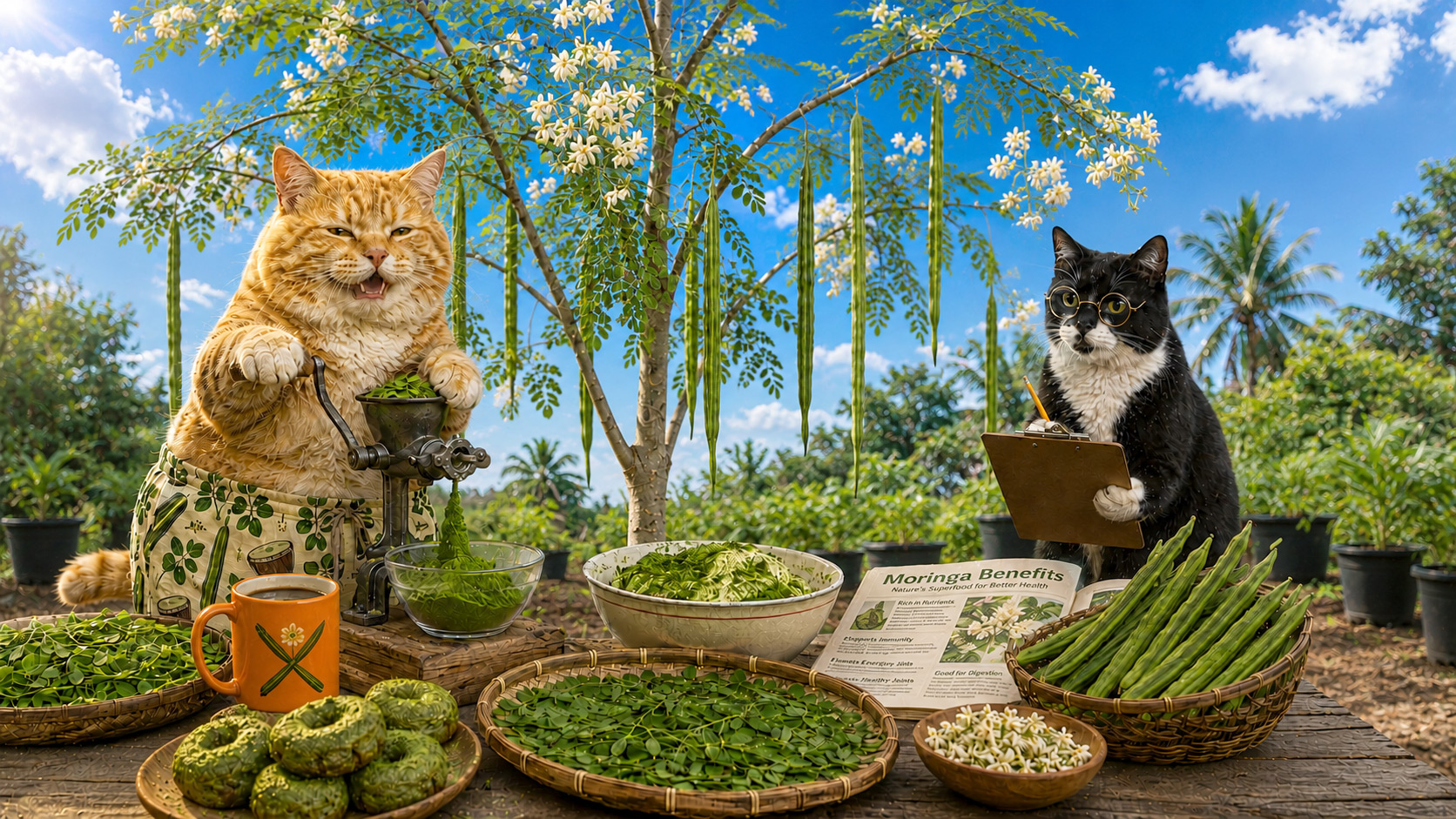
Sunshine: I dried the leaves, ground them, and added them
to the donuts.
Smokey: The article says Moringa has benefits. It says
nothing about donuts.
Sunshine: Exactly. I am testing whether the benefits
transfer. The first twelve samples were inconclusive, so I need at least
twenty
more.
Smokey: How come your research always requires donuts?
Most edible plants give you one main harvest. A mango tree gives you
mangoes. A lemon tree gives you lemons.
Moringa oleifera works differently.
From one tree, you can harvest tender leaves for the kitchen, cook with
the flowers, pick long green pods, and save the seeds. Cut the tree back,
and
it responds with fresh new growth.
Moringa is also known as the Drumstick Tree, Horseradish Tree, and Ben
Oil Tree. It belongs to its own plant family, Moringaceae, and comes
originally from India and nearby parts of South Asia, where it has been
grown as a
vegetable tree for generations.
Some people call it the Tree of Life. The name may sound dramatic, but
the tree earns its reputation through what it actually does in the
garden.
🏆 What Makes Moringa Unusual
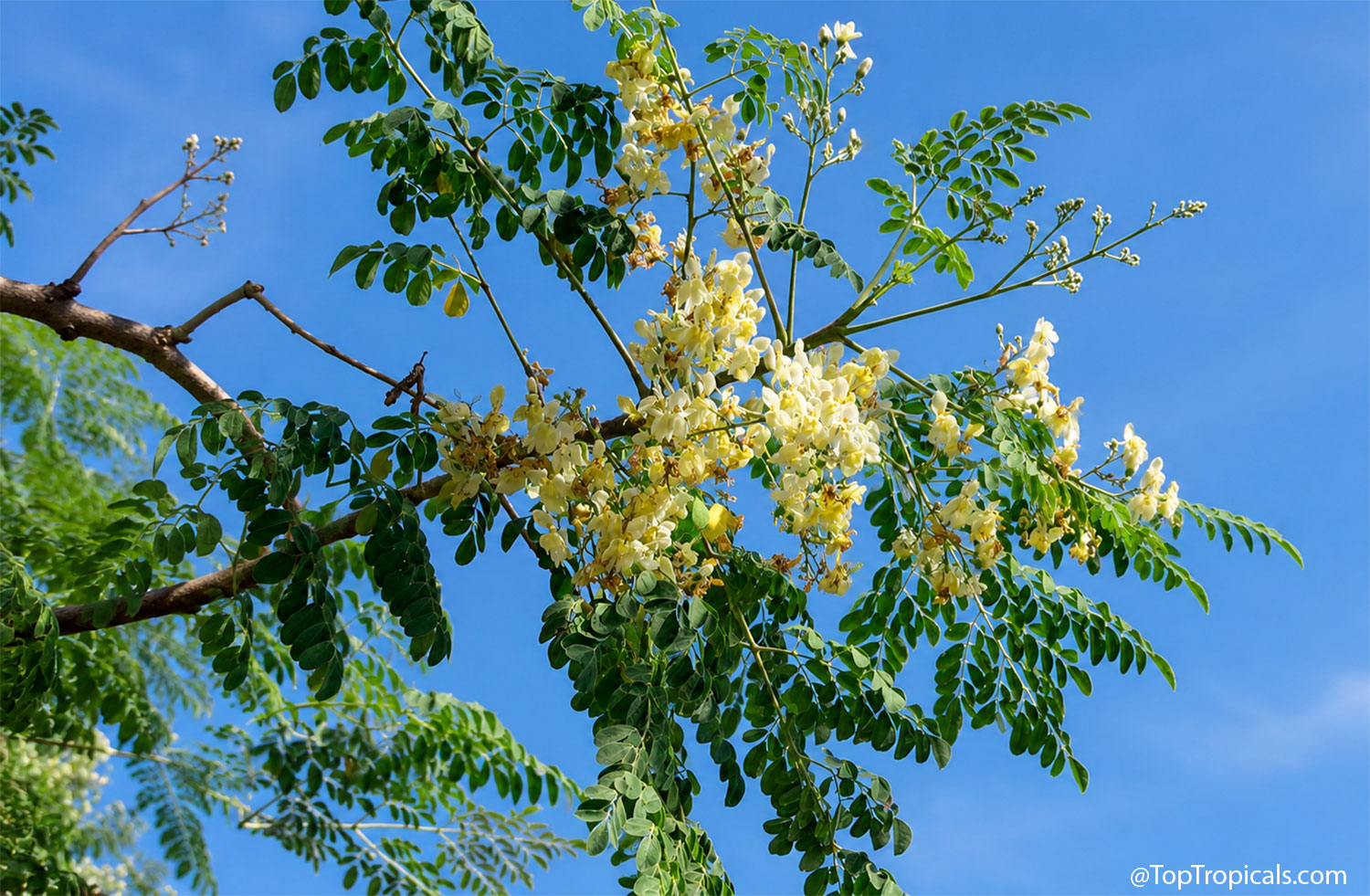
Moringa combines ornamental beauty with exceptional usefulness. Its
fern-like foliage, fragrant flowers, and long seed pods create a striking
display
while providing edible leaves, flowers, and pods from one remarkably
fast-growing tree.
Most trees pick a lane: ornamental or practical. Moringa does not.
Its finely divided foliage gives the canopy a light, airy appearance,
more like a fern or jacaranda than a dense shade tree. Sunlight filters
through
the branches instead of being completely blocked. The creamy white to pale
yellow-white flowers appear in loose clusters and have a noticeable
fragrance,
followed by long, slender green pods, often more than a foot long, hanging
from the branches like drumsticks.
Add fast growth in warm weather, good drought tolerance once
established, and a tree that responds well to regular pruning, and you have
a plant
doing several jobs at once.
What can you harvest
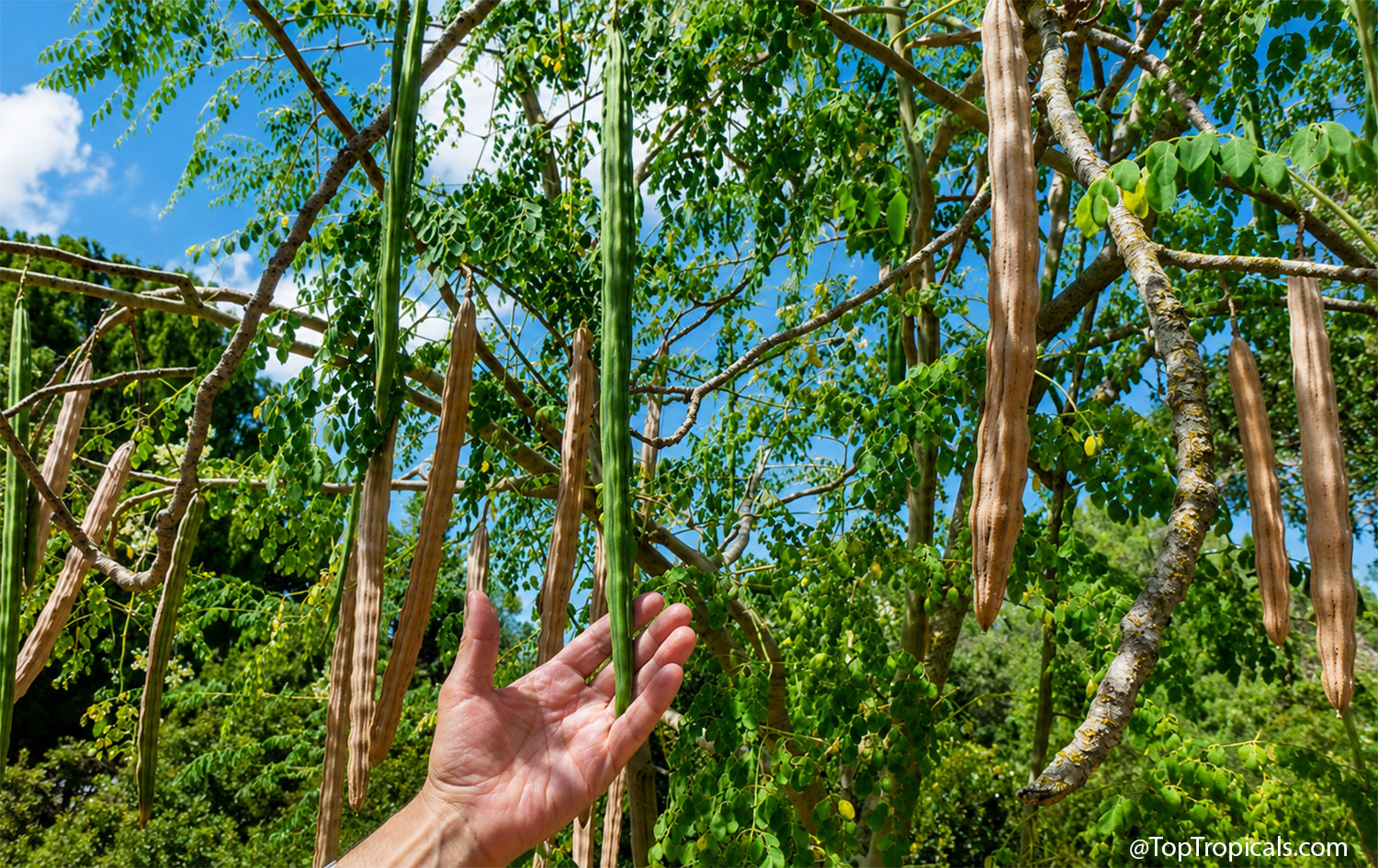
Young moringa pods are tender and edible, while older pods dry on the
tree
and produce seeds for propagation. Young green pods and mature brown pods
often hang on the tree at the same time during its long fruiting
season.
🍃 Leaves
Young Moringa leaves are the most practical everyday harvest, used as
cooked greens throughout South Asia, Africa, and other tropical regions.
Pick
the tender new growth and the tree responds by producing more.
💮 Flowers
The fragrant flowers are edible too, usually cooked rather than eaten
raw. They can be added to omelets, stir-fries, and soups, or used as a
garnish.
A healthy tree in bloom may produce more flowers than one household can
use.
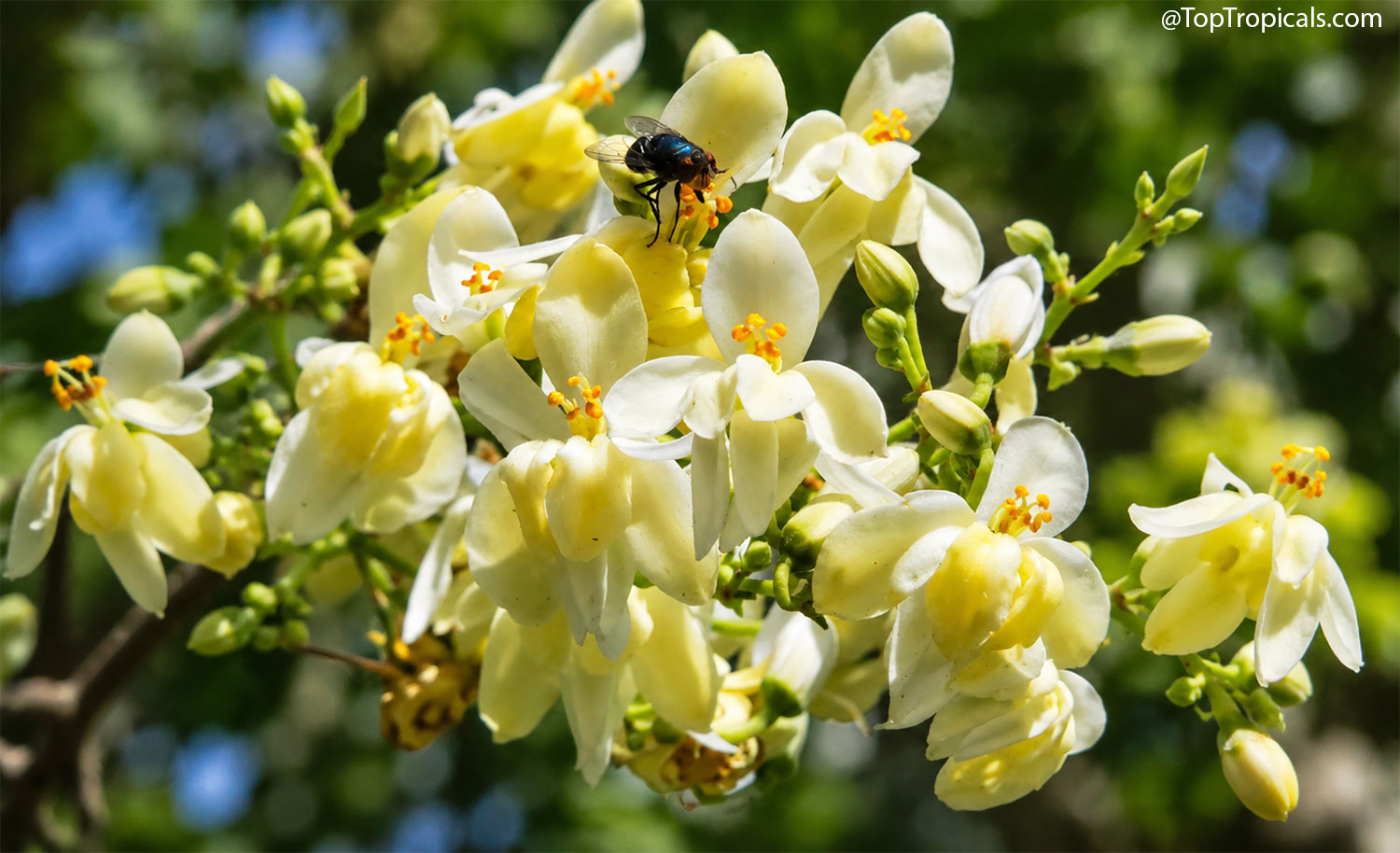
Moringa flowers attract bees, flies, and other pollinators that help
the
tree set pods.
 Pods
Pods
The long green pods are the reason for the name Drumstick Tree.
Picked while young and tender, they are commonly used in curries, sambars,
and
stews. The tender interior is eaten, while the outer walls become fibrous
and woody as the pods mature, so harvest them early, or scrape the soft
flesh
and seeds from older pods.
 Seeds
Seeds
Mature seeds have a long history of culinary and practical use,
including as the source of ben oil. They are best used in moderation rather
than
eaten in large quantities.
⚠️ A note about the roots: older
references sometimes describe Moringa roots as a substitute for horseradish.
We do not
recommend eating the roots or root bark because they contain compounds that
may be unsafe. The leaves, flowers, and pods already provide plenty to
harvest.
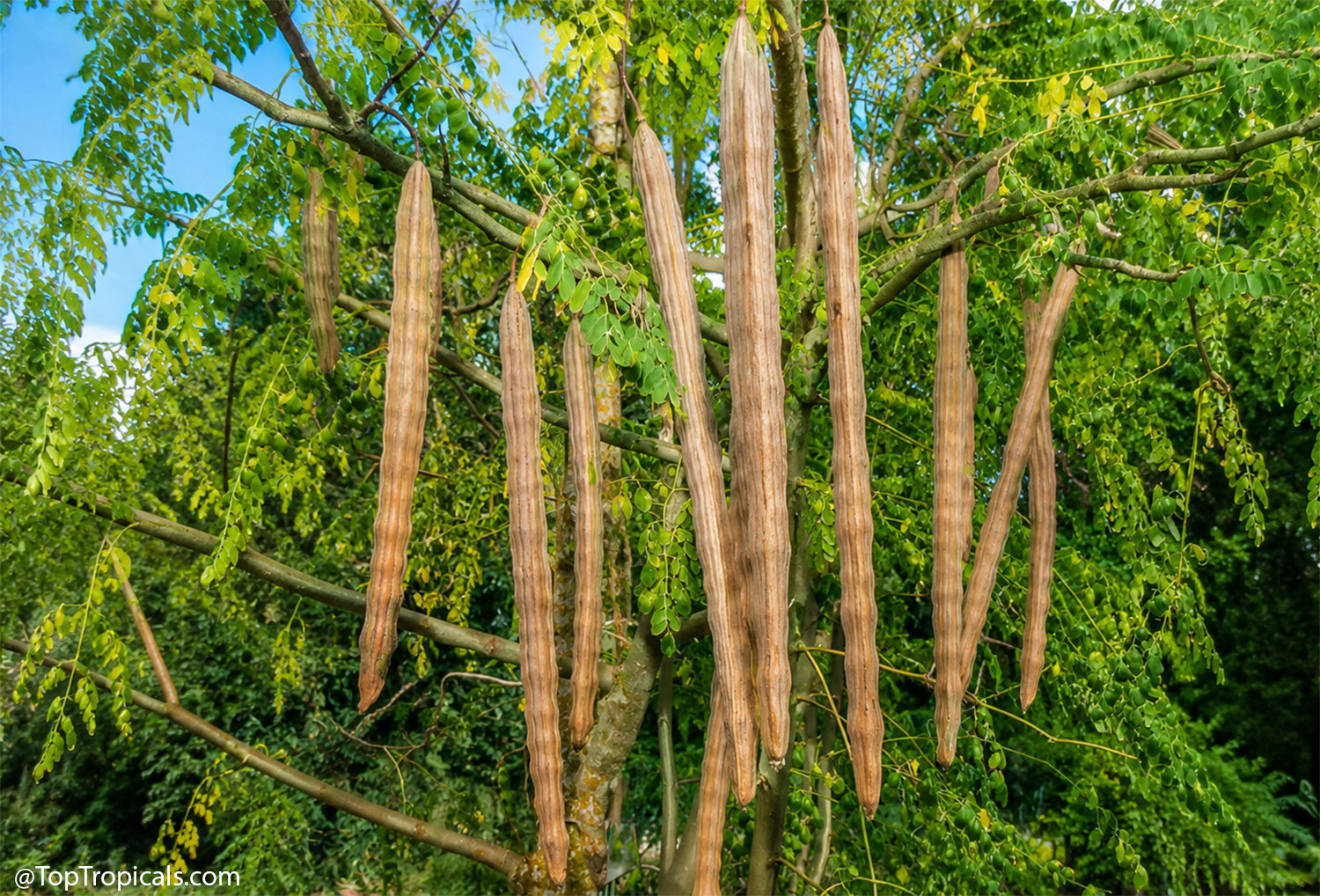
Mature moringa pods can grow well over a foot long. Once fully dry,
they
split open naturally to release winged seeds.
A Word on Nutrition
Moringa leaves have earned a solid reputation as a nutritious leafy
green. They contain:
- Plant protein
- Fiber
- Beta-carotene
- Vitamin C
- Calcium
- Potassium
- Iron
- Antioxidant compounds
The exact nutritional values depend on whether the leaves are fresh,
cooked, or dried. Drying concentrates some nutrients, while cooking may
reduce
others.
Researchers are studying Moringa for possible effects on blood sugar,
inflammation, and other areas, but that research is still developing. It is
better to think of Moringa leaves as a useful vegetable, similar to spinach
or
kale, rather than as a cure or medicine.
Anyone who is pregnant, taking medication, or managing a medical
condition should speak with a healthcare professional before using
concentrated
Moringa products or making major dietary changes.
🍴 Six Simple Ways to Use Fresh Leaves 🌿
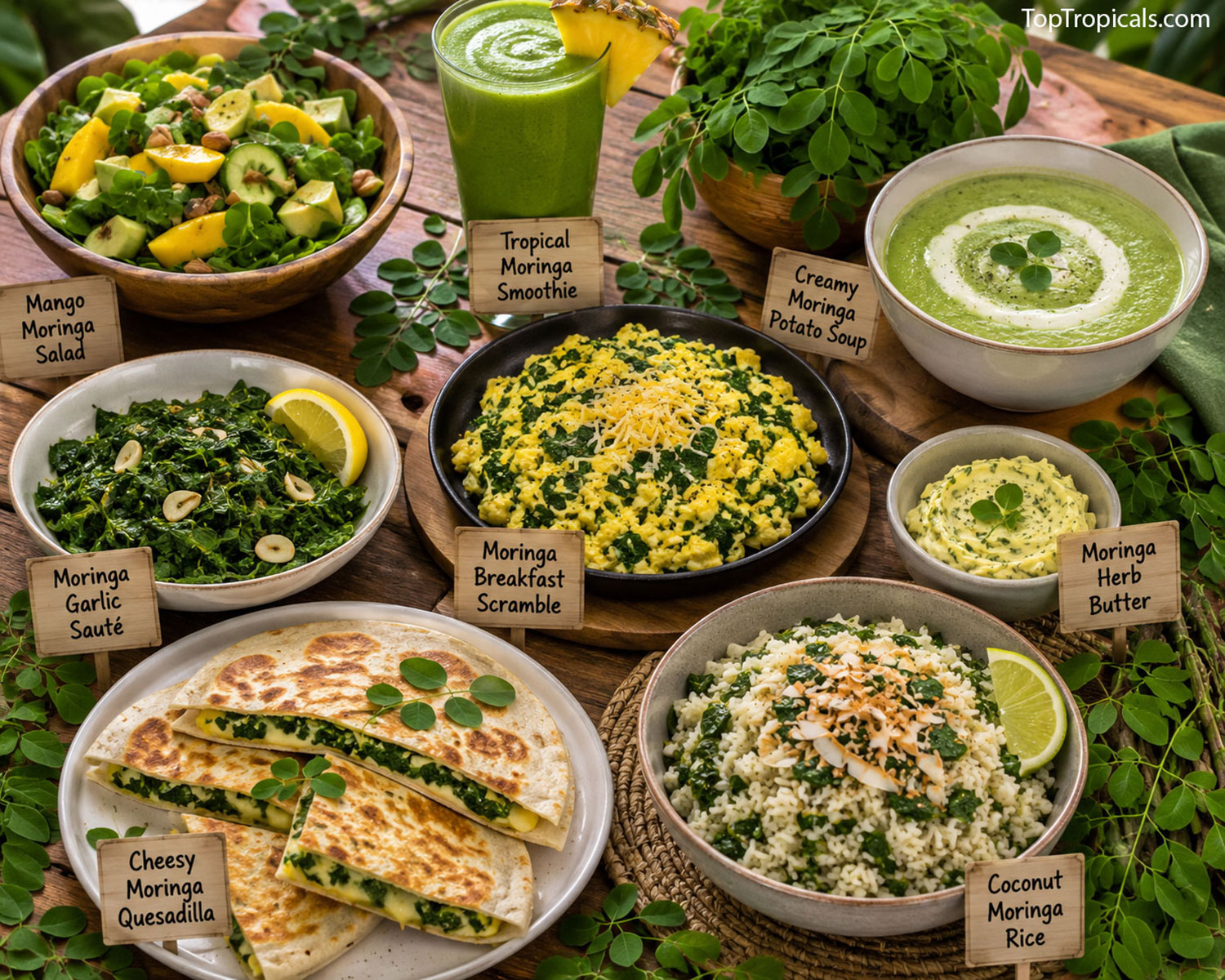
Fresh moringa leaves are remarkably versatile in the kitchen, adding
mild,
spinach-like flavor and nutrition to smoothies, soups, salads, egg dishes,
rice, quesadillas, and many other everyday recipes.
You do not need a complicated recipe.
- Add chopped leaves to an omelet during the final minute of cooking
- Stir a handful into soup or stew just before serving
- Saute the leaves with garlic as a quick side vegetable
- Blend a small amount into a smoothie
- Dry the leaves and steep them for tea
- Mix chopped leaves into flatbread dough, savory pancakes, or dal
- Or follow 😺 Sunshine's experimental recipe and make Moringa
donuts. Please share the results with us - especially how many samples it
takes
before the research becomes conclusive.
Treat young Moringa leaves the same way you would treat any tender
cooking green.
🍴More recipes
 How To Grow Moringa
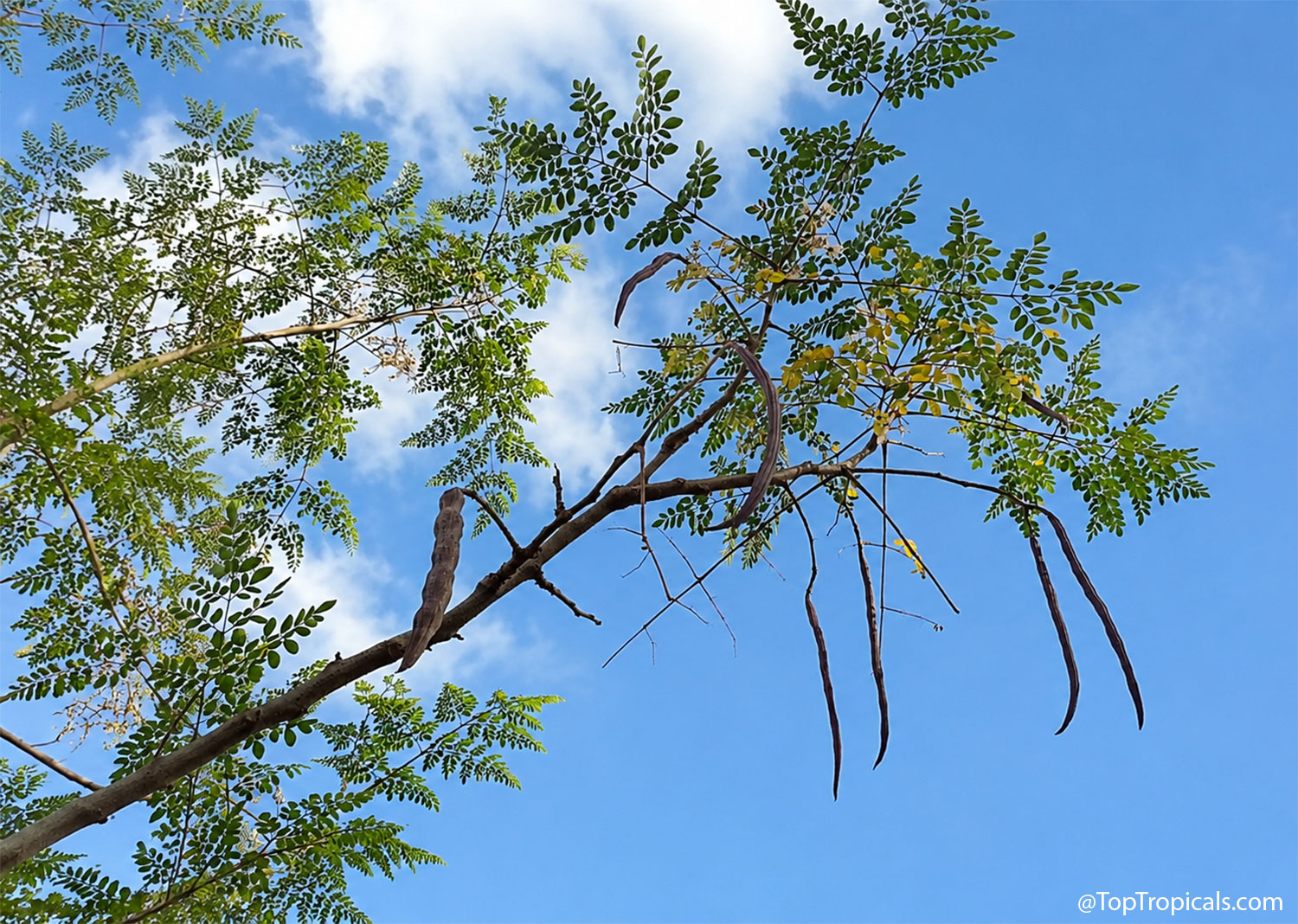
As moringa seed pods mature, they dry and turn brown while remaining
suspended from the tree, eventually splitting open to release their winged
seeds.
Moringa is one of the more forgiving edible trees, provided it gets
three things: sun, heat, and drainage.
- Light: Plant Moringa in full sun for the strongest
growth, flowering, and pod production.
- Temperature: Moringa grows most actively in warm
weather, especially when temperatures remain above 70 degrees F. Growth
slows
significantly during cool weather.
- USDA zones: Moringa performs best outdoors year-round
in USDA Zones 10-11. It can also be grown in Zone 9, but freezing weather
may kill the top growth. Gardeners in colder zones can grow it in a large
container or treat it as a fast-growing seasonal plant.
- Cold hardiness: Moringa is tropical and not reliably
frost-hardy. Temperatures near 32 degrees F can damage leaves and young
branches. A hard freeze may kill the tree to the ground, although an
established
plant may resprout from the roots when warm weather returns.
- Soil: Use fast-draining soil. Sandy or loose soil
works well, and the tree often performs better in lean soil than in rich,
soggy
ground.
- Water: Water moderately while the plant is young.
Once established, reduce watering and allow the soil to dry between
waterings.
Mature trees handle dry spells well but do not tolerate constantly wet
roots.
- Pruning: In warm conditions, Moringa can grow
quickly. Left alone, it tends to become tall, narrow, and open, with the
best leaves
moving out of reach. Cutting the tree back encourages branching, keeps the
leaves within reach, and produces a steady flush of tender new growth.
- Harvesting: Once the tree is established, pruning and
harvesting are almost the same activity. Regular cutting keeps the plant
shorter, bushier, more manageable, and easier to harvest.
- Flowers and pods: Flowers and pods appear most
reliably older trees, strong sunlight, and consistently warm growing
conditions.
Give a young tree time to establish before expecting a heavy crop of
drumsticks.
- Fertilizing Moringa: Moringa can grow in relatively
lean soil, but container plants and frequently harvested trees benefit from
regular nutrition. Use a balanced fertilizer Green Magic
Controlled Release Fertilizer during active growth to
support healthy foliage, branching, flowering, and pod production. For
additional
plant support during active growth, explore Sunshine
Boosters.
💡Read more about Sunshine Boosters and plant nutrition
🏡 Growing Moringa in a Container
Gardeners outside tropical climates can still grow Moringa in a large
container. Give it your sunniest spot, excellent drainage, warm
temperatures,
enough room for the roots, and regular pruning, then move it somewhere
protected for winter.
Be realistic about what a container-grown plant is likely to produce. A
potted Moringa is usually most useful for leaf production. It may provide a
steady supply of fresh greens during the warm season even if it does not
produce many pods, which may be exactly what gardeners growing it mainly for
the
kitchen are after.
Moringa in the Food Forest
Moringa fits naturally into a food forest or edible landscape. Its open
canopy lets some light reach the plants growing below it, and regular
pruning
generates a steady supply of organic material for mulch, on top of the
leaves, flowers, and pods you are already harvesting.
Moringa is not a legume and does not fix nitrogen. Its value here comes
from fast growth, an open canopy, and how well it responds to repeated
cutting back.
🛒 Grow Your Own
Top Tropicals offers living Moringa plants for gardeners who want fresh
leaves, fragrant flowers, and homegrown drumstick pods within reach of their
own kitchen.
👉 Shop Moringa
📚 Learn More
Moringa does not ask a gardener to choose between beauty and usefulness.
It offers graceful foliage, fragrant flowers, edible leaves, and unusual
pods, all from the same plant.
Few trees give you that many reasons to grow one.
Sunshine: So it produces leaves, flowers, pods, and seeds,
and on top of that, every time we harvest it, Moringa grows more.
Smokey: That is the idea.
Sunshine: Finally, a plant that restocks itself.
📚 Learn about Moringa from Top Tropicals Garden Blog
🎥 Watch the video