Garden Blog - Top Tropicals

Date: 27 May 2026

How to Root Plumeria Cuttings: The Dry Method for Success
How to Root Plumeria Cuttings: The Dry Method for Success
How to Root Plumeria Cuttings: The "Dry" Method for Success ✔️

Plumeria cuttings root with incredible ease if you respect their succulent nature. Most failures come from two mistakes: planting too early and watering too much. Whether you use the traditional potting method or the professional Thailand "Surface" Method, the secret is: Keep it dry until it grows

✍️ Stability Note: Cuttings vs. Grafted Trees


While cuttings are easy, they develop shallow, horizontal root systems.
Best for: Pots and sheltered garden spots.
For windy or hurricane-prone areas: Consider Grafted Plumeria. Grafted trees use a seedling rootstock with a strong taproot, providing much better anchoring and long-term stability.
  • 🌸 5 steps how to root plumeria cuttings - simple method that works
  • 🌸 Step 1: Prepare and Cure (The 5-Day Rule)


Before a cutting ever touches soil, it must heal.
Cut: Take healthy branches 6-12 inches long and remove all leaves.
Cure: Place the cuttings in bright shade with plenty of airflow.
The Goal: Wait 3-5 days until the cut end is bone-dry, firm, and callused.
Pro Tip: Planting a "wet" cutting is the #1 cause of stem rot. If it isn't callused, do not plant it.

🌸 Step 2: Use Fast-Draining Soil


Plumerias hate "wet feet." You need a medium that drains instantly.
The Recipe: 50% professional potting mix (like Top Tropicals Abundancу mix) and 50% coarse sand.
Why it works: The bark provides structure, while the sand ensures water runs straight through, leaving no stagnant moisture.

🌸 Step 3: Planting & The "Thailand Method"


You have two proven ways to set your cuttings:

Method A: The Traditional Pot
1. Hormone (Optional): Dip the dry end in rooting hormone and tap off the excess.
2. Depth: Insert only 2–3 inches deep. Roots emerge from the base, not the stem.
3. Secure: Firm the soil so the cutting doesn't wobble.

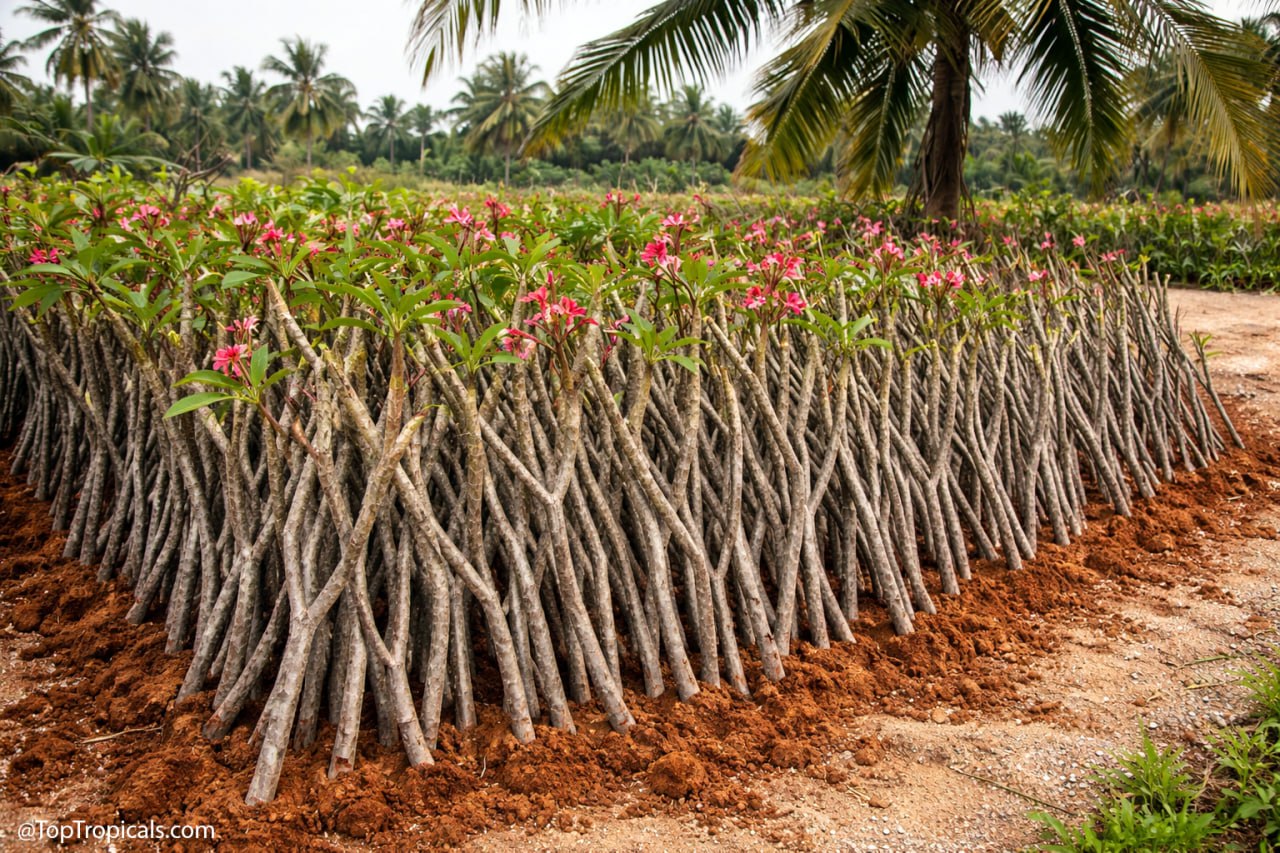
Method B: The Thailand Style (Surface Rooting)
As seen in the image, large-scale growers often don't bury cuttings at all.
1. The Bed: Prepare a bed of well-draining soil.
2. The Placement: Stand the cuttings on top of the soil, leaning them against each other or a support.
3. The Benefit: This provides maximum airflow to the base and zero risk of rot. Roots will naturally dive into the soil as they emerge.

🌸 Step 4: Critical Watering Rules


This is where most gardeners fail.
Initial Watering: After planting, moisten the soil slightly—just once.
The Wait: Do not water again for 5–7 days. The Logic: No roots = No water intake. If the soil stays wet without roots to drink it, the cutting will rot.

🌸 Step 5: Heat, Light, and Air


Sun: Start in bright shade for a few days, then move to full sun. Heat is the catalyst for root growth.
Ground Heat: Placing pots on a warm surface (like a concrete patio or black ground cover) can accelerate rooting.
Airflow: Never root plumeria in a humid greenhouse or enclosed space. They need "open air" to thrive.

🌸 What to Expect


2-4 Weeks: Callusing ends and initial roots form.
4-8 Weeks: New leaf "claws" appear at the tip.
Success: Once you see full leaves, you can begin a regular watering and fertilization schedule.

✅ Quick Success Checklist


Dry the cutting for 3–5 days.
Use 50% sand for instant drainage.
Plant shallow (or use the Thailand surface method).
Wait a week before watering again.
Provide maximum sun and airflow.

❌ What NOT to do:


Avoid frequent watering. If you think it’s time to water, wait one more day.
Plumeria cuttings have no roots to drink with yet.
If the soil looks dry and you feel the urge to water, wait 24 hours. When in doubt, keep it dry.
Remember: You can save a dry cutting, but you can't save a rotten one.

🛒 Shop Grafted Plumeria Collection

📚 Learn more:
· Plumeria varieties in Plant Encyclopedia
· #PlumeriaRainbow

#Perfume_Plants #Container_Garden #How_to #Discover

Dwarf Plumeria Plant Facts

Botanical name: Plumeria alba
Also known as: Dwarf Plumeria
USDA Zone: 9 - 11
Highligths Large shrub 5-10 ft tallSmall tree 10-20 ftFull sunWatering: Moderate. Water when top soil feels dryWhite, off-white flowersFragrant plant
Get personalized tips for your region
🟢 Join 👉 TopTropicals

Date: 20 May 2026

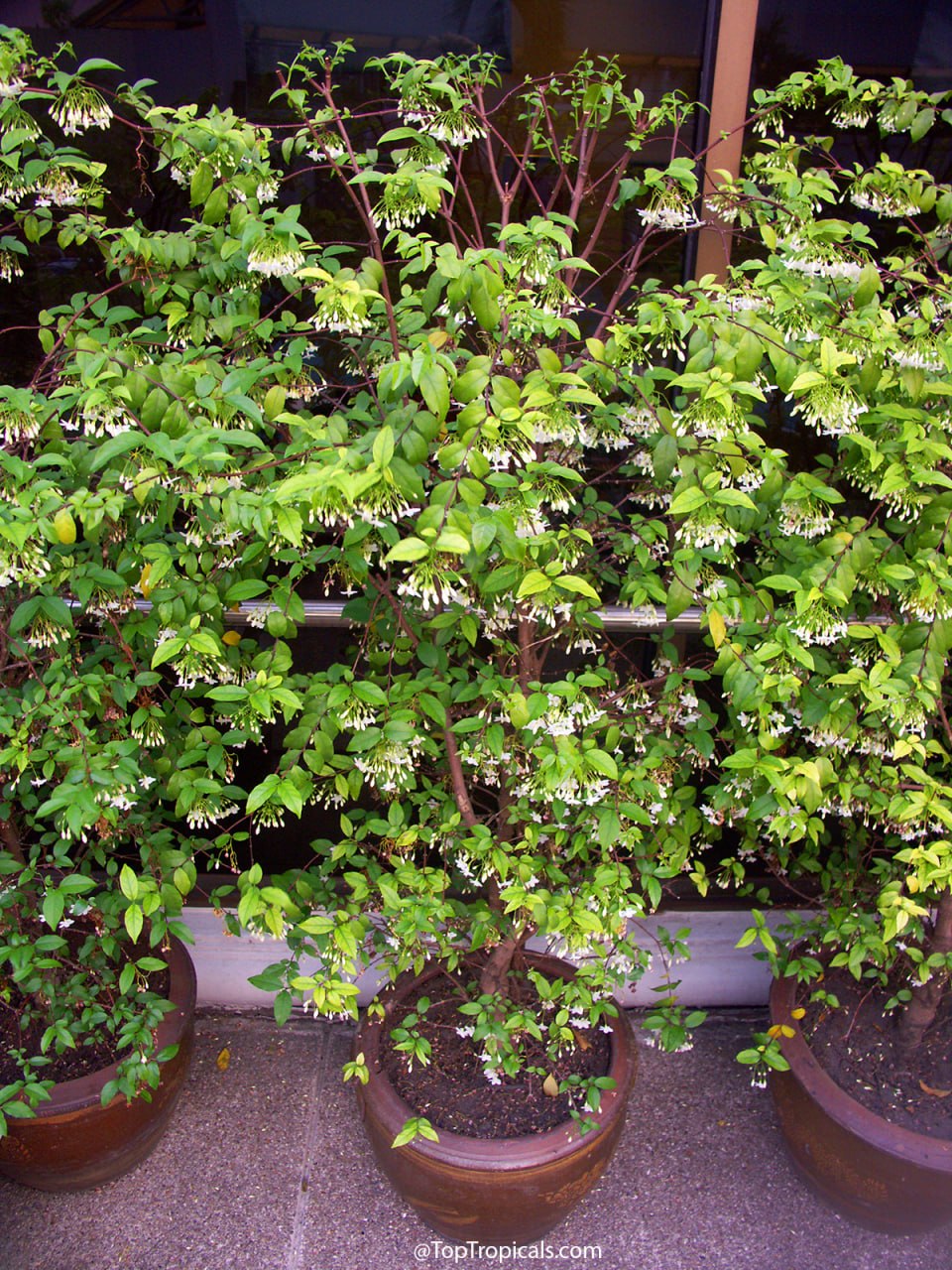
Why in Thailand Wrightia religiosa is near all temples and homes

Wrightia religiosa - Sacred Buddhist, plant

Wrightia religiosa - Sacred Buddhist, plant

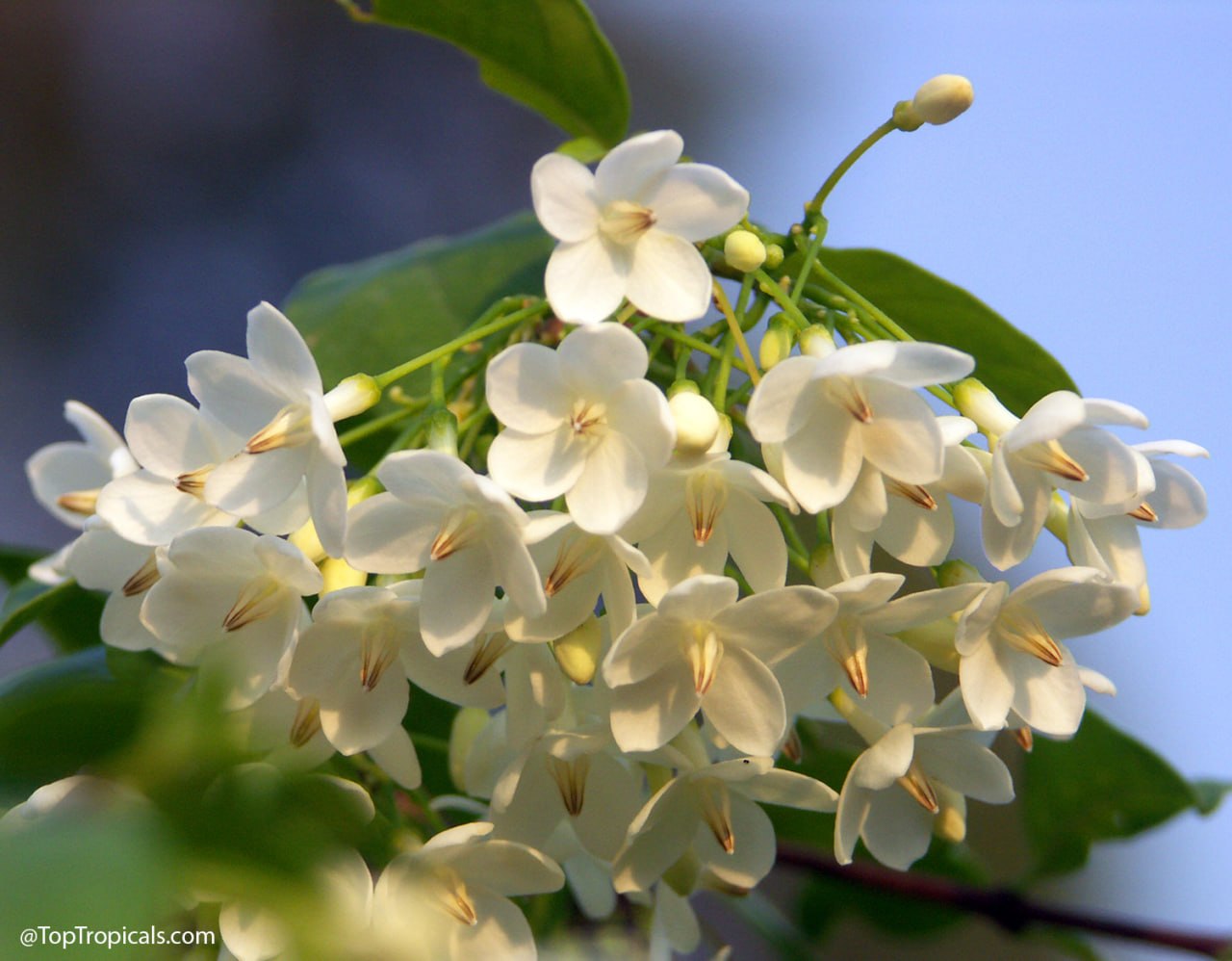
Wrightia religiosa - Sacred Buddhist, flowers

Wrightia religiosa - Sacred Buddhist, flowers

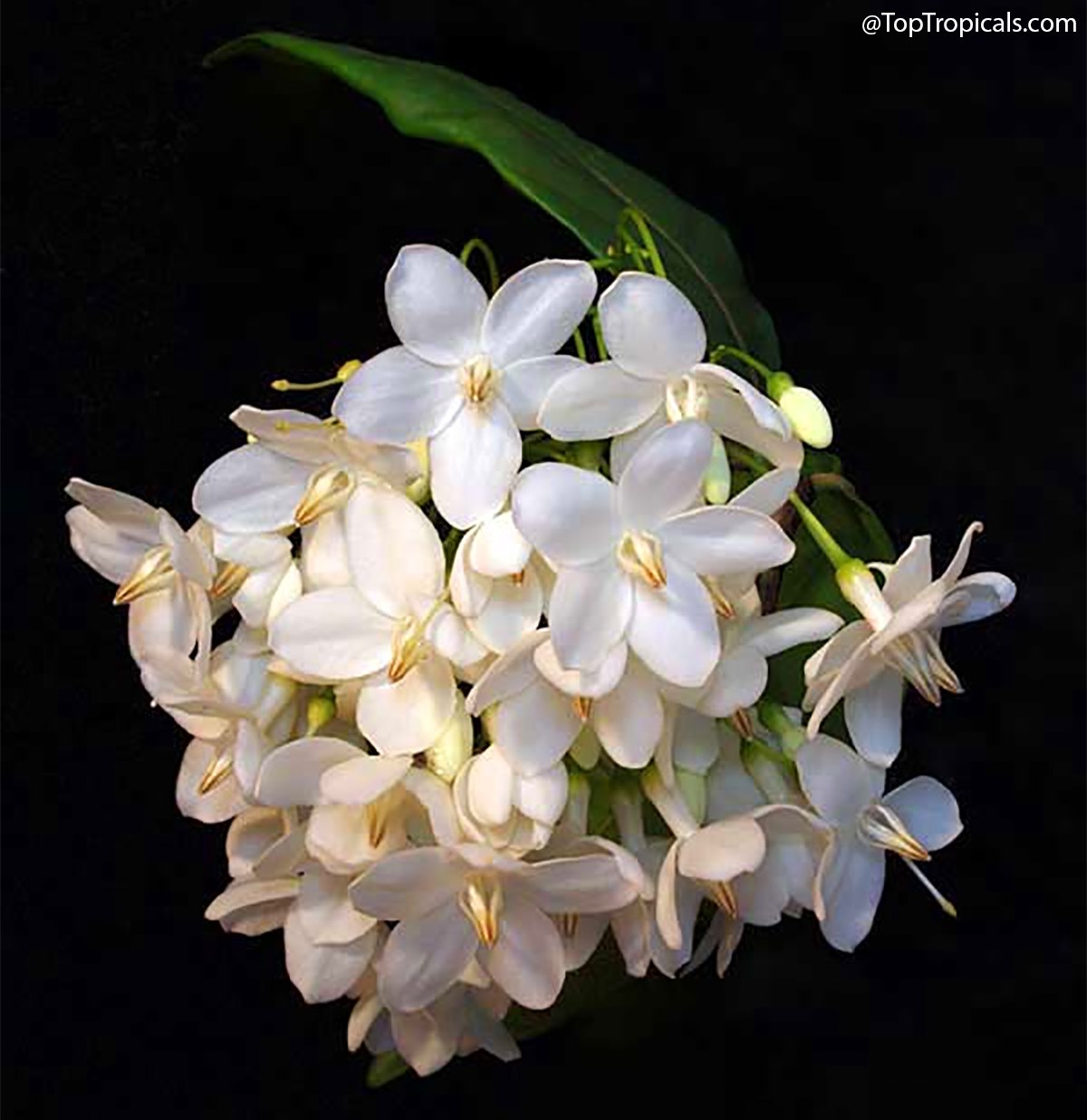
Wrightia religiosa - Sacred Buddhist, flower close up

Wrightia religiosa - Sacred Buddhist, flower close up

🏯 Why in Thailand Wrightia religiosa is near all temples and homes


In Thailand, you will smell the Water Jasmine before you see it. Trace that soft, fruity, jasmine-like fragrance and you'll find Wrightia religiosa - an unassuming tropical shrub with tiny white flowers hanging like pendants. Also called Sacred Buddhist, this beloved plant is everywhere in Southeast Asia, cherished for its rich cultural history and old-world charm rather than loud colors.

Sacred Buddhist Plant Facts

Botanical name: Wrightia religiosa, Echites religiosa
Also known as: Sacred Buddhist, Wondrous Wrightia, Wild Water Plum, Water Jasmine
USDA Zone: 9 - 10
Highligths Plant used for bonsaiLarge shrub 5-10 ft tallSmall tree 10-20 ftSmall plant 2-5 ftSemi-shadeFull sunWatering: Regular. Let topsoil dry slightlyWhite, off-white flowersPlant attracts butterflies, hummingbirdsEthnomedical plant.
Plants marked as ethnomedical and/or described as medicinal, are not offered as medicine but rather as ornamentals or plant collectibles.
Ethnomedical statements / products have not been evaluated by the FDA and are not intended to diagnose, treat, cure, or prevent any disease. We urge all customers to consult a physician before using any supplements, herbals or medicines advertised here or elsewhere.Fragrant plantSubtropical plant. Mature plant cold hardy at least to 30s F for a short timeFlood tolerant plantSeaside, salt tolerant plant
Get personalized tips for your region


💮 The Shrub of Buddhist Symbolism that Thai Temples Have Been Planting for Centuries

The species name religiosa is no accident. It literally refers to the plant’s long association with religious, spiritual, and cultural traditions across Thailand, Vietnam, Malaysia, and Singapore.

While the flowers themselves are visually simple, their unique growth habit has inspired generations of Buddhist symbolism. Unlike many flowers that point proudly toward the sky, the blooms of the Water Jasmine hang downward. In Thai culture, this downward-facing habit became a beautiful symbol of modesty and humility - a physical representation of bowing down rather than standing in pride.

Furthermore, many gardeners and monks associate the flower’s five distinct petals with foundational Buddhist virtues: wisdom, compassion, patience, kindness, and generosity. Whether ancient legend or folk interpretation, this cultural meaning has earned the plant a reputation as something sacred, making it a staple near homes and temple grounds.

💮 The Fragrance People Fall in Love With


Visually, Wrightia religiosa does not try to dazzle you with giant petals or wild, neon colors. Instead, its magic lies entirely in its scent.

The perfume it throws into the air is the real reason people become obsessed with it. It is a clean, intoxicating fragrance that drifts gracefully through the evening air. For anyone living in a warm climate, the best part is that the Water Jasmine is not a "one-and-done" bloomer. When the plant is happy, it flowers repeatedly and almost continuously throughout the year, meaning that incredible scent becomes a permanent fixture in your garden.

💮 From Temple Gardens to Bonsai Pots


Part of what makes Wrightia religiosa so widespread is its sheer versatility. It is an incredibly agreeable plant that adapts beautifully to whatever form a gardener desires. In Southeast Asia, you will see it styled as:
· A standalone specimen shrub
· A dense, fragrant privacy hedge
· A patio accent in containers
· A small, sculptural tree

It has also become an absolute classic in the tropical bonsai world. Because its branches are flexible, fast-growing, and highly responsive to pruning, even beginners can easily wire and shape young plants into twisted, artistic forms. Left to grow naturally, older plants develop a graceful, twiggy, and airy structure that looks naturally sculptural.

💮 The Fake-Dead Winter Quirk


Wrightia is easy to care for with standard sun and water, but it hates the cold (although survives it well). Below 65F, it abruptly drops all its leaves and looks completely dead. Many gardeners panic and throw it away - but it’s just resting. Simply bring container plants indoors for the winter. Once the warmth returns, it wakes up, flushes green, and resumes blooming.

💮 Subtle Beauty with Deep Roots


Some tropical plants impress with sheer size, but Wrightia religiosa does the opposite. Its beauty is quiet - thin branches, dangling white pendants, light green foliage, and a fragrance that gently fills a yard.

It is a plant with a few centuries of cultural history carried in its branches, and it is one of those rare garden gems you cannot truly appreciate until you experience its scent in person.

🛒 Plant the Sacred Buddhist and enjoy the magical aroma

📚 Learn more:


Wrightia religiosa and other wrightias in Plant Encyclopedia

#Discover #Perfume_Plants

🟢 Join 👉 TopTropicals

Date: 29 Apr 2026

Soft peach tones - calm and glowing plumerias

Plumeria Morland

Plumeria Morland

Plumeria Thong Taweechok

Plumeria Thong Taweechok

Plumeria Gred Gaew

Plumeria Gred Gaew

Plumeria Moung Sangeam

Plumeria Moung Sangeam

Soft peach tones - calm and glowing plumerias. Pruning tip 🌈

Plumeria Plant Facts

Botanical name: Plumeria sp.
Also known as: Plumeria, Frangipani
USDA Zone: 9 - 11
Highligths Large shrub 5-10 ft tallSmall tree 10-20 ftFull sunWatering: Moderate. Water when top soil feels dryYellow, orange flowersRed, crimson, vinous flowersWhite, off-white flowersPink flowersPlant attracts butterflies, hummingbirdsDeciduous plantFragrant plantSeaside, salt tolerant plant
Get personalized tips for your region


This set is all about warmth without intensity - soft peach, coral, and golden tones that feel calm, balanced, and easy on the eyes. These are the plumerias you enjoy up close, where the subtle color blends really shine.

🌸 Today's featured plumerias:


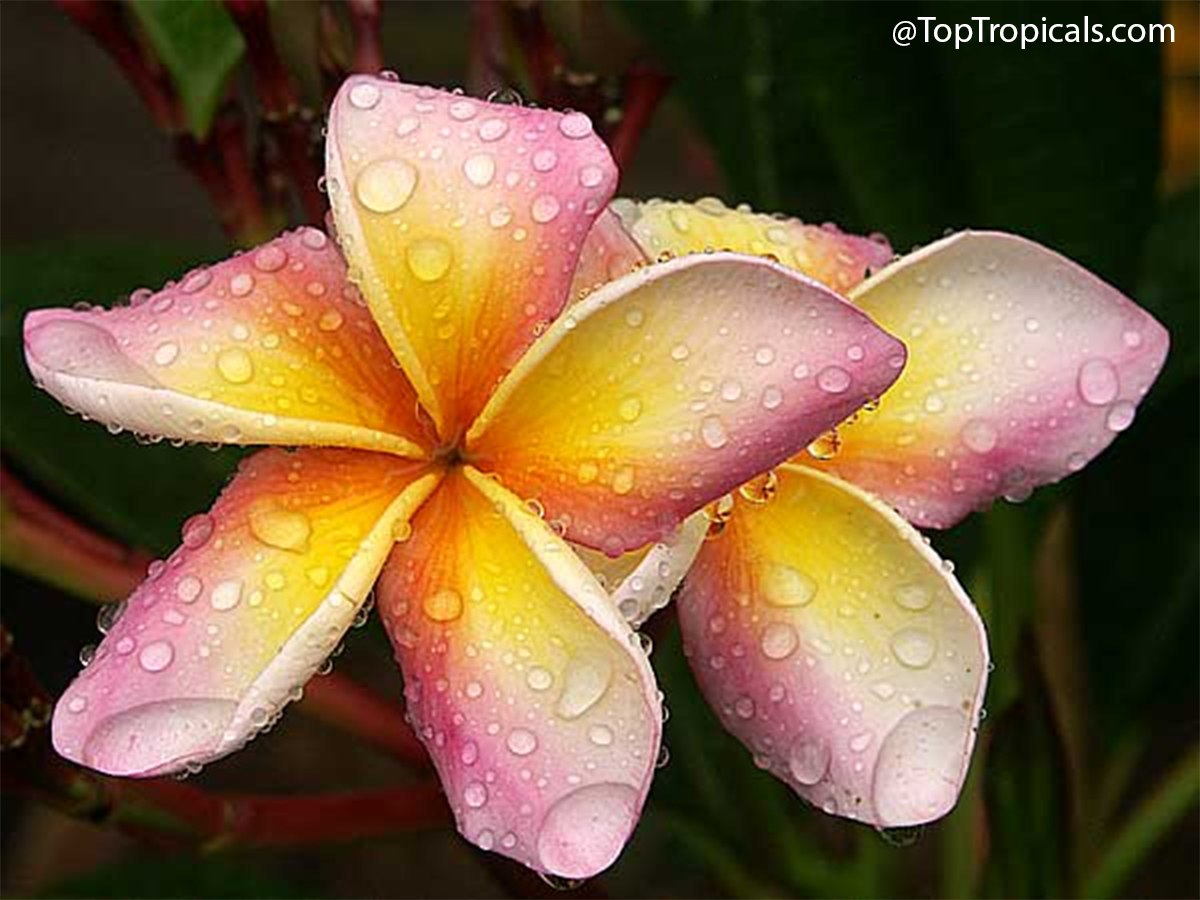
 ✦ Plumeria Morland - soft pink petals with a creamy yellow center fading into white edges. Gentle gradient with a fresh, radiant look and light fragrance.
 ✦ Plumeria Thong Taweechok - warm golden-yellow petals infused with orange and coral, softening into creamy edges with a light pink blush. Smooth, glowing and well-balanced.
 ✦ Plumeria Gred Gaew - soft coral and peach tones with a glowing orange center and a clean white edge. Refined, crisp, and quietly elegant.
 ✦ Plumeria Moung Sangeam - creamy white to pale blush petals with a warm golden-orange center and a hint of peach at the edges. Soft, delicate, and naturally graceful.

💡 Plumeria tip: pruning for more blooms


Light pruning encourages branching - and more branches mean more flower tips. Trim after a bloom cycle or in early growing season, and your plumeria will come back fuller, bushier, and ready to produce more flowers.

🛒 Shop Plumeria Collection and Enjoy the fragrant blooms

📚 Learn more:
· Plumeria varieties in Plant Encyclopedia
· Rainbow plumerias - the wild side of color. Winter dormancy tip
· Bold reds and ruby tones - plumerias with real intensity. Feeding tip
· Dwarf plumerias - big blooms in small spaces. Sun tip
· Plumerias that stand out: bold colors and clean contrasts. Pot size tip
· 5 striking variegated plumerias you can’t ignore. Soil tip
· Plumeria rainbow: Symbol of the Tropics
· 5 simple rules to grow a fragrant plumeria and make it bloom like the pictures
· What is the most celebrated fragrant flower?
· Thailand Plumerias
🎥 How to get endless Plumeria Blooms

#Perfume_Plants #Container_Garden #How_to #Discover #PlumeriaRainbow

🟢 Join 👉 TopTropicals

Date: 27 Apr 2026

Rainbow plumerias - the wild side of color

Plumeria Mui Rainbow

Plumeria Mui Rainbow

Plumeria Pink Jaopraya

Plumeria Pink Jaopraya

Plumeria Sunset Symphony

Plumeria Sunset Symphony

Plumeria Dook

Plumeria Dook

Rainbow plumerias - the wild side of color. Winter dormancy tip 🌈

Some plumerias don’t follow rules - they mix, swirl, and splash colors all over the petals like a tropical sunset in motion. These “rainbow” types are the most playful and unpredictable, with every bloom looking a little different from the next.

Plumeria Plant Facts

Botanical name: Plumeria sp.
Also known as: Plumeria, Frangipani
USDA Zone: 9 - 11
Highligths Large shrub 5-10 ft tallSmall tree 10-20 ftFull sunWatering: Moderate. Water when top soil feels dryYellow, orange flowersRed, crimson, vinous flowersWhite, off-white flowersPink flowersPlant attracts butterflies, hummingbirdsDeciduous plantFragrant plantSeaside, salt tolerant plant
Get personalized tips for your region


🌸 Today's featured plumerias:


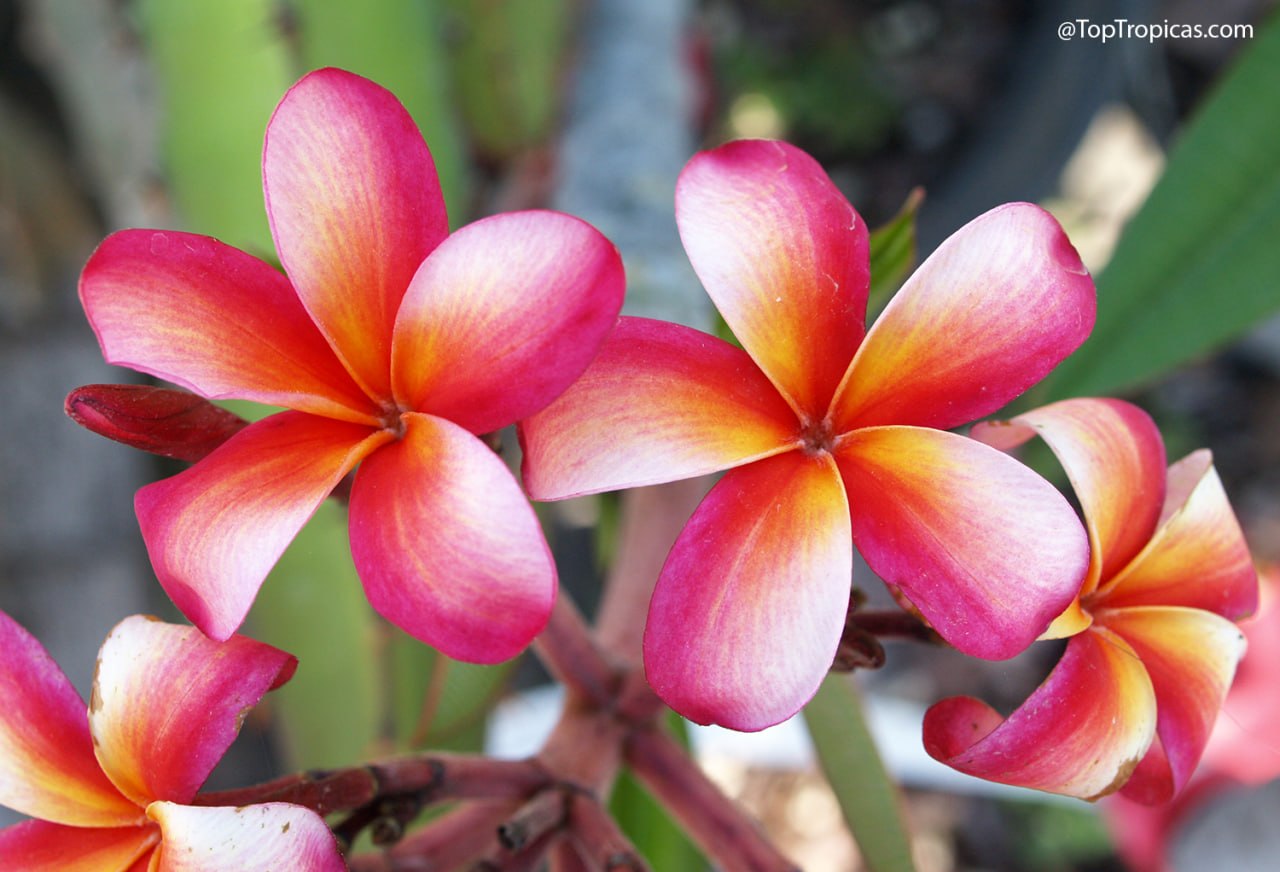
 ✦ Plumeria Mui Rainbow - deep orange-red center blending into golden yellow and finishing with pink to magenta edges. Bright, fiery colors with a smooth, glowing transition.
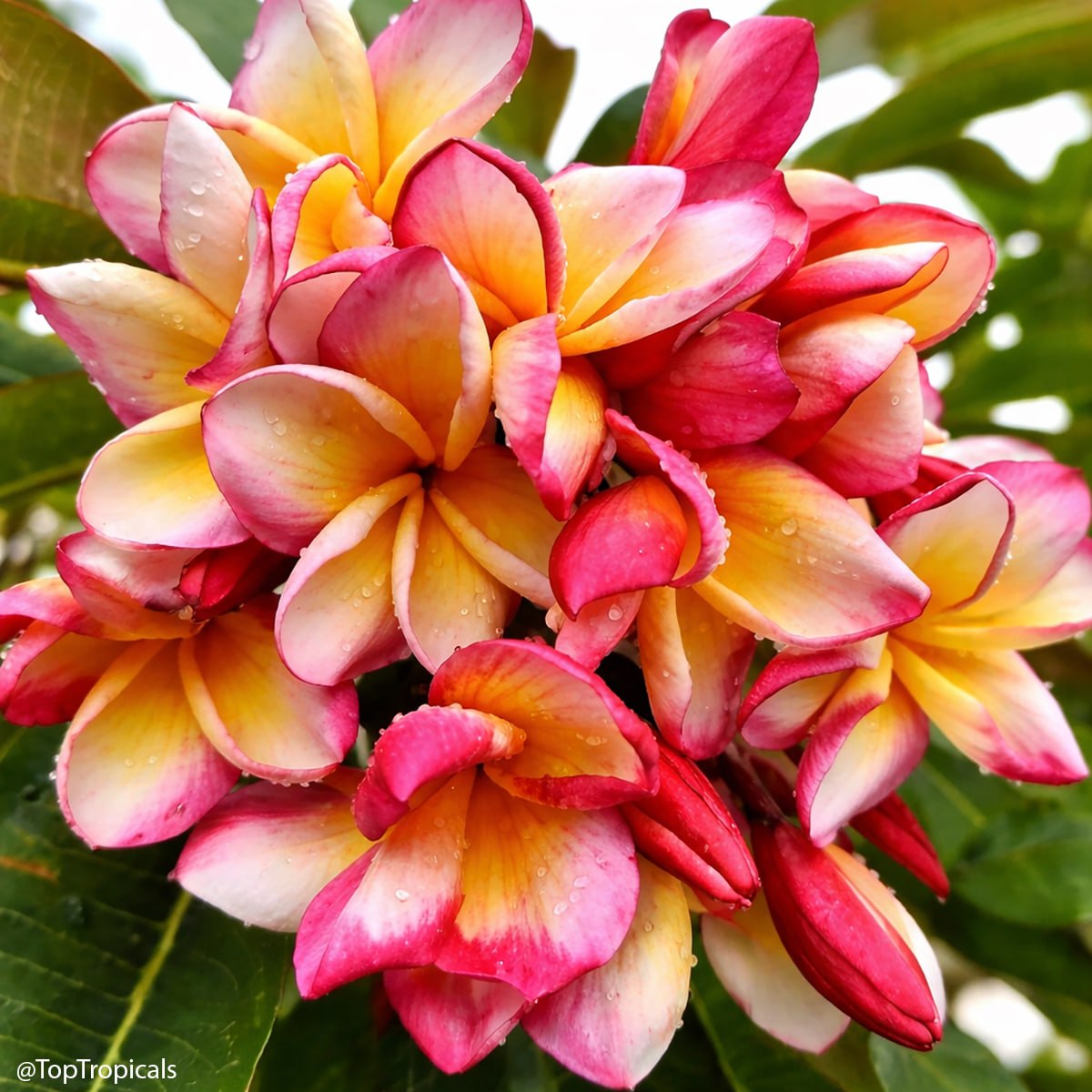
 ✦ Plumeria Pink Jaopraya - a bold swirl of red, white, pink, and yellow all in one flower. Complex, eye-catching, and impossible to ignore.
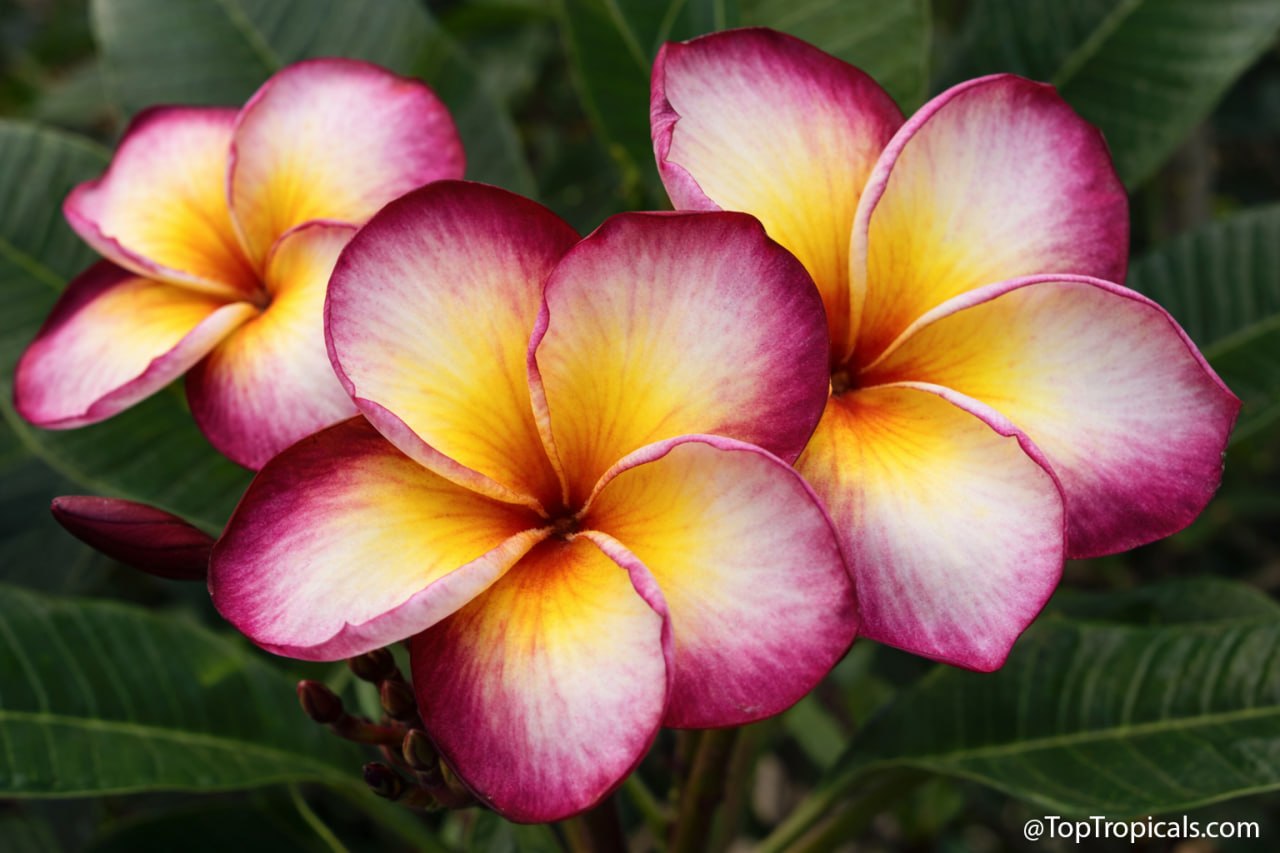
 ✦ Plumeria Sunset Symphony - creamy ivory, golden yellow, and coral-pink tones with deeper rose edges, creating a layered sunset effect that shifts from bloom to bloom.
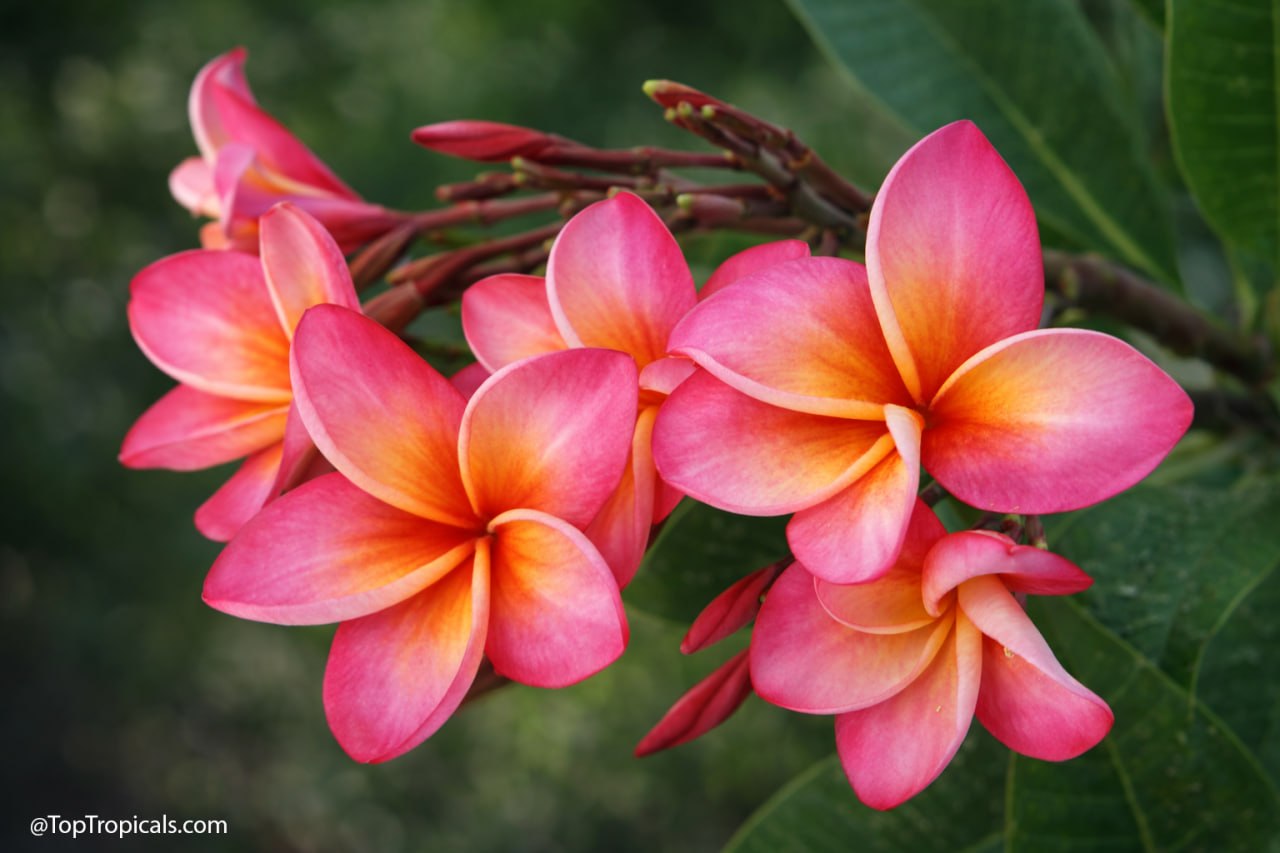
 ✦ Plumeria Dook - rich pink petals melting into a glowing orange and golden center. Bright, warm, and full of tropical energy that stands out from a distance.

💡 Plumeria tip: winter dormancy


In cooler months, plumerias slow down and may drop all leaves. That’s normal.
During this rest period, cut watering way back and let the plant sleep.
Growth will restart when temperatures rise.

🛒 Shop Plumeria Collection and Enjoy the fragrant blooms

📚 Learn more:
· Plumeria varieties in Plant Encyclopedia
· Bold reds and ruby tones - plumerias with real intensity. Feeding tip
· Dwarf plumerias - big blooms in small spaces. Sun tip
· Plumerias that stand out: bold colors and clean contrasts. Pot size tip
· 5 striking variegated plumerias you can’t ignore. Soil tip
· Plumeria rainbow: Symbol of the Tropics
· 5 simple rules to grow a fragrant plumeria and make it bloom like the pictures
· What is the most celebrated fragrant flower?
· Thailand Plumerias
🎥 How to get endless Plumeria Blooms

#Perfume_Plants #Container_Garden #How_to #Discover #PlumeriaRainbow

🟢 Join 👉 TopTropicals

Date: 24 Apr 2026

Bold reds and ruby tones - plumerias with real intensity

Plumeria Maneerat

Plumeria Maneerat

Plumeria Siam Ruby

Plumeria Siam Ruby

Plumeria Red Siam

Plumeria Red Siam

Plumeria Kled Tabtim

Plumeria Kled Tabtim

Bold reds and ruby tones - plumerias with real intensity. Feeding tip 🌈

Plumeria Plant Facts

Botanical name: Plumeria sp.
Also known as: Plumeria, Frangipani
USDA Zone: 9 - 11
Highligths Large shrub 5-10 ft tallSmall tree 10-20 ftFull sunWatering: Moderate. Water when top soil feels dryYellow, orange flowersRed, crimson, vinous flowersWhite, off-white flowersPink flowersPlant attracts butterflies, hummingbirdsDeciduous plantFragrant plantSeaside, salt tolerant plant
Get personalized tips for your region


This set is all about depth, richness, and that unmistakable red glow. From ruby shades to deep velvety tones, these plumerias bring strong color and a luxurious feel - the kind that instantly draws your eye.

🌸 Today's featured plumerias:


 ✦ Plumeria Maneerat - golden-yellow center fading into creamy tones and strong pink to red edges, creating a radiant, glowing effect. Full, layered blooms with a rich, jewel-like look.
 ✦ Plumeria Siam Ruby - deep ruby pink petals with softer rosy highlights and a luminous center. Smooth, rounded blooms with a polished, gemstone feel.
 ✦ Plumeria Red Siam - rich, velvety red flowers with deep, consistent color and a soft satin finish. Dense clusters create a bold, classic tropical look.
 ✦ Plumeria Kled Tabtim - vibrant pink petals deepening toward a warm orange-red center, outlined with a clean white edge. Bright, refined, and glowing with a ruby-like effect.

💡 Plumeria tip: feeding for flowers

Plumerias are heavy feeders, especially when actively growing.
Use a fertilizer higher in phosphorus to push blooming.
Liquid feeding like Sunshine Megaflor can be used regularly, while a controlled release like Green Magic gives steady nutrition over time.

🛒 Shop Plumeria Collection and Enjoy the fragrant blooms

📚 Learn more:
· Plumeria varieties in Plant Encyclopedia
· Dwarf plumerias - big blooms in small spaces. Sun tip
· Plumerias that stand out: bold colors and clean contrasts. Pot size tip
· 5 striking variegated plumerias you can’t ignore. Soil tip
· Plumeria rainbow: Symbol of the Tropics
· 5 simple rules to grow a fragrant plumeria and make it bloom like the pictures
· What is the most celebrated fragrant flower?
· Thailand Plumerias
🎥 How to get endless Plumeria Blooms

#Perfume_Plants #Container_Garden #How_to #Discover #PlumeriaRainbow

🟢 Join 👉 TopTropicals