Garden Blog - Top Tropicals

Date: 25 Nov 2025

What Avocado is better - Type A or Type B?
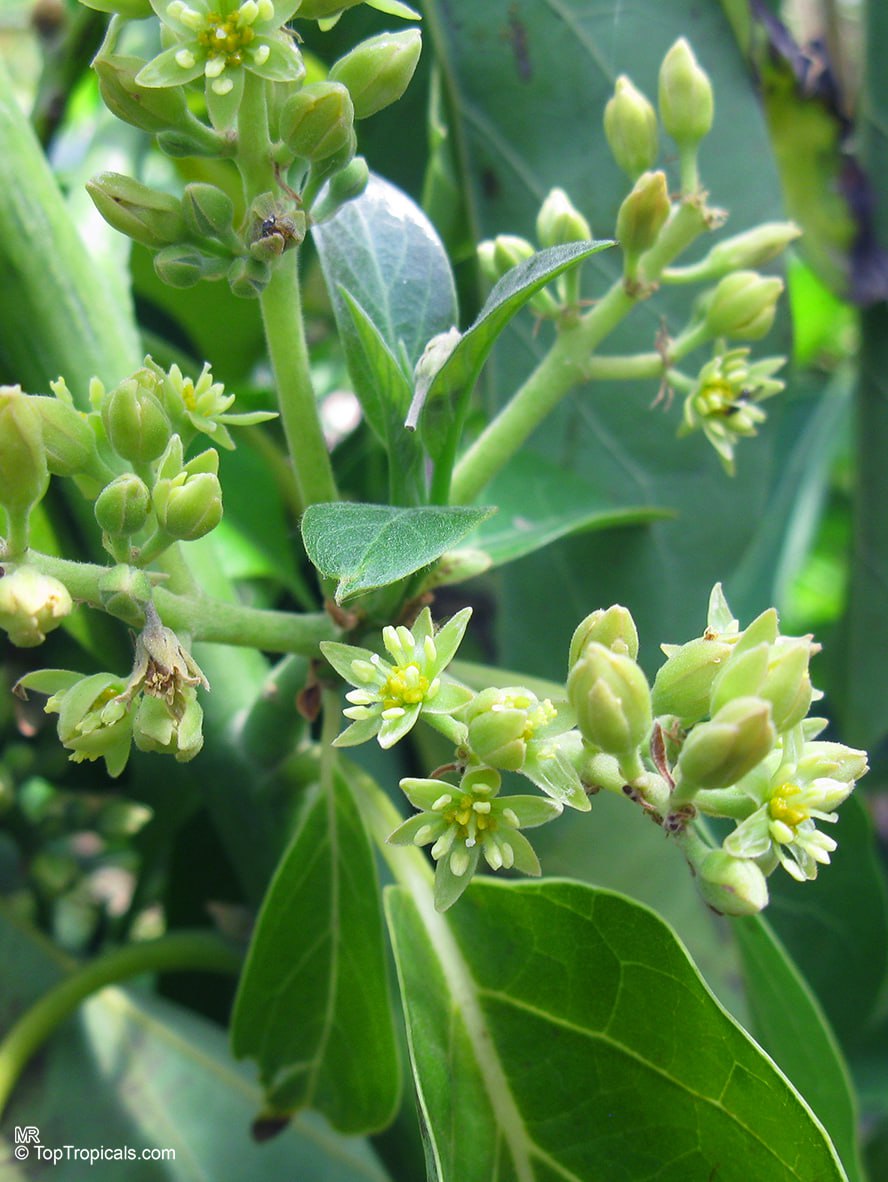
Avocado tree flowers

Avocado tree flowers

What Avocado is better - Type A or Type B?


Avocados are divided into two types based on how their flowers open - Type A and Type B. This has nothing to do with how the fruit looks, only with how the flowers work.

TYPE A:
The flowers open as female in the morning of the first day, then close. On the afternoon of the second day, they reopen as male.

The most popular type A avocado varieties:
Bernecker, Black Prince, Catalina, Choquette, Day, Donnie (Doni), Fantastic, Florida Hass (Haas), Lila (Opal), Loretta, Lula, Mexicola, Mexicola Grande, Red Russell, Reed, Russell, Simmonds, Ulala (Oh La La, Super Hass) , Waldin, Wurtz (Dual Type, A&B).

TYPE B:
The flowers open as female in the afternoon of the first day, then close. The next morning, they reopen as male.

The most popular type B avocado varieties:
Anise, Bacon, Beta, Booth 8, Brazos Belle (Wilma), Brogdon (Brogden), Buck, Ettinger, Fuerte, Hall, Hardee Red, Hialeah Red, Joey, Kampong (Sushi), Marcus Pumpkin, Maria Black, Miguel, Monroe, Nishikawa, Oro Negro, Pollock, Poncho (Pancho), Thomson Red, Tonnage, Winter Mexican, Wurtz (Dual Type, A&B), Yamagata.
  • 🟢 Each tree can make its own fruit (it’s self-fertile), but if you plant both types together, they will help each other make more fruit. The flowers of A and B types open at opposite times, so bees can carry pollen between them more easily. This means better pollination and a bigger harvest.
  • 🟢 For home gardeners, one tree is enough to get fruit, but having both A and B types nearby will give you a larger crop. If you grow avocados in pots, it’s a good idea to have at least one of each type.


✍️ In short:
One tree = some fruit
Two trees (A + B) = lots more fruit!

✔ ️Check out Avocado Variety Guide interactive chart. Sort them by flower type A or B, tree habit, fruit shape and quality, cold hardiness, origin, season and more!

🛒  Explore Avocado varieties

📖 Our Book: Avocado Variety Guide, Snack or Guacamole?


Hard copy
PDF File Download

📚 Learn more:


How Avocado trees flower and set fruit
Avocado Variety Guide
#Avocado #Food_Forest #How_to

Join 👉 TopTropicals
Date: 31 Jul 2025

Anthurium Collector Set

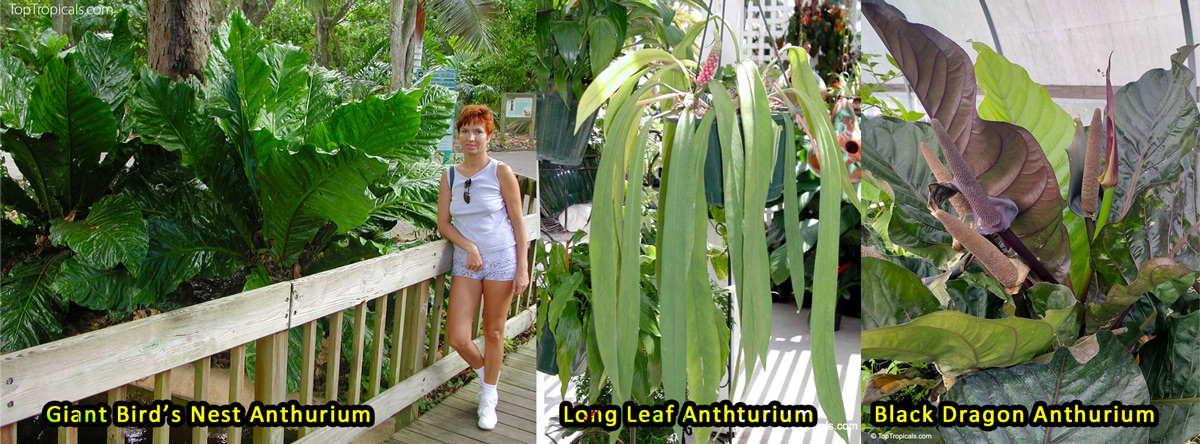
Giant  Bird's  Nest,  Long  Leaf,  and  Black  Dragon  Anthuriums  side  by 
 side,  showcasing  their  dramatic  foliage  and  size

These aren't your typical tropicals - they're collector-grade Anthuriums grown for foliage and texture. Each one brings something different, but they all thrive in the same kind of setting: shade or filtered light, warmth, and humidity. Perfect for growing in containers indoors or out.

Anthurium Black Dragon

This is the most dramatic of the trio. Upright, leathery leaves shift from dark green to nearly black depending on light. Instead of bright flowers, it produces a dark brown spadix and glowing red berries. A hybrid not found in the wild, it's grown from seed - no two are exactly alike.

  • Best for: Indoor focal plant, shaded patio, black ceramic pot
  • Height: 2–4 ft in container
  • Texture: Thick, architectural leaves
  • Highlight: Color shifts with light intensity

Grow Your Own Black Dragon

Read more about Black Dragon Anthurium

Anthurium hookeri – Giant Bird's Nest

This one's about scale. Broad, crinkled leaves with a cardboard-like texture form a bold rosette. It can get huge with time - up to 6 feet across. Perfect for gardeners who want the "instant jungle" look.

  • Best for: Shaded garden, large pots on porches
  • Height: Up to 5 ft; width even more
  • Texture: Wrinkled and leathery
  • Highlight: Bright red berries in maturity

Buy Giant Bird's Nest Anthurium

Read more about Giant Bird's Nest Anthurium

Anthurium vittariifolium – Long Leaf Anthurium

Graceful and rare, this species sends out narrow strap-like leaves that can reach 5–6 ft long. Ideal for hanging baskets or mounting. Bonus: it produces small pink fruit against deep green foliage.

  • Best for: Hanging displays, vertical planters, bright bathrooms
  • Height: Leaf length, not upright height - up to 6 ft
  • Texture: Smooth, ribbon-like
  • Highlight: Cascading growth and color contrast

Buy Long Leaf Anthurium

Read more about Long Leaf Anthurium

✅ How to Care for Anthuriums

  • Light: Bright, indirect light is best. Avoid direct sun, especially mid-day. These plants evolved in rainforest understory - think "dappled light under trees."
  • Water: Keep the soil lightly moist but not soggy. Let the top inch dry before watering. They hate wet feet.
  • Humidity: These are tropicals - they'll do fine in 50-60% humidity, but thrive at 70%+. Use pebble trays or place near other plants. Bathrooms with windows work great.
  • Soil: Use an airy mix: orchid bark + perlite + peat or coco coir. Drainage is key. Never use plain potting soil.
  • Fertilizer: Feed with SUNSHINE Robusta every 2–4 weeks during warm seasons. It's formulated for aroids and won't burn roots.
  • Potting: Use shallow, wide containers. Repot only every 2–3 years, or when roots crowd the pot. They don't like frequent disruption.
  • Temperature: Ideal: 65–85 F. Short dips to the 30s F are tolerated by mature plants, but avoid cold drafts.

Shop All Anthuriums

Date: 9 Aug 2025

Anthurium with leaves longer than you!

Anthurium vittariifolium- Long Leaf Anthurium

🍃 Anthurium with leaves longer than you!

  • 🌿 Ever seen an Anthurium with leaves longer than you are tall? Anthurium vittariifolium - Long Leaf Anthurium - is a true rainforest treasure from South America. Its strap-like leaves can reach an incredible 6 feet in length but stay only about 2 inches wide, creating elegant green ribbons that drape down like a waterfall.
  • 🌿 Grow it in a hanging basket and you’ll get a cascading curtain of foliage that instantly turns any space into a jungle hideaway.
  • 🌿 As if the leaves weren’t enough, this rare beauty produces clusters of bright pink berries that pop against the deep green leaves, adding an unexpected splash of color!
  • 🌿 It's rare, it's dramatic, and it's the kind of plant that makes people stop and ask, “What on earth is THAT?”


🛒 Grow the 6-foot leaf Anthurium

📚
Learn more:
#Nature_Wonders #Container_Garden #Shade_Garden
🟢 Join 👉 TopTropicals

Date: 2 Dec 2025

Lemon Candy Tree

🍋 Lemon Candy Tree


🟡 Garcinia edulis - Lemon Drop Mangosteen, Madrono. Tiny yellow-orange globes, golf-ball size, with clear, juicy pulp, and when you taste it, you understand the name instantly. Sweet and tart at the same time, like someone turned a lemon drop candy into a tropical fruit. Today Chiane and Ashley are going to taste the fruit and share with your their experience!

📱

#Food_Forest #Container_Garden

🟢 Join 👉 TopTropicals

Date: 1 Dec 2025

Learn more:

⭐️ The giant star shaped bloom you wont believe is real

  • ⭐️ Stapelia gigantea, the Starfish Flower, is one of those plants you notice from across the yard and immediately walk over to investigate. The blooms are huge - often close to a foot across - and look exactly like soft, fuzzy starfish dropped right onto the plant. Pale yellow petals with fine maroon lines give it that wild, otherworldly look.

  • ⭐️ Yes, it has a scent - just enough to fool flies, which is exactly what the plant wants. They’re the pollinators, and this flower knows how to get their attention. For us humans, the real show is the size, shape, and texture. It’s a living prop straight out of a sci-fi movie.

  • ⭐️ Even without flowers, the plant itself looks cool: thick, 4-angled succulent stems that sprawl and stack into a low, sculptural mound. In the ground it can spread a couple feet wide, and in a pot it becomes the ultimate conversation piece. And despite looking like a cactus, it’s actually in the Milkweed family. When it’s happy and sets seed, the pods open to release silky little parachutes floating away on the breeze.

  • ⭐️ Strange, bold, and absolutely unforgettable - this is one plant nobody walks past without asking about it.


🛒 Get your own Zulu plant

📱

YouTube short videos:

📚 Learn more:

Plant Facts

Stapelia gigantea
Zulu Giant, Carrion Plant, Starfish Flower
USDA Zone: 9-11
Small plant 2-5 ftFull sunModerate waterUnusual colorPlant attracts butterflies, hummingbirds

Stapelia gigantea in Plant Encyclopedia

#Nature_Wonders #Container_Garden
🟢 Join 👉 TopTropicals