Garden Blog - Top Tropicals

Date: 7 Mar 2026

SUNSHINE Boosters: The Professional Advantage

By Tatiana Anderson, Horticulture Expert at Top Tropicals with Smokey & Sunshine help

Sunshine  Boosters  plant  fertilizers  lineup  including  Bloom,  Pikake, 
 Robusta,  Omnibus,  Ananas,  Mango  Tango,  Citrus,  and  MegaFlor

Sunshine Boosters for different types of plants

Here is why SUNSHINE Boosters are the smart choice for your garden this spring:

  • Amino Acid Stability: Unlike traditional fertilizers that use synthetic EDTA chelators, our formulas are amino-acid based. This means 100% of the nutrients are bioavailable and consumed by the plant, leaving zero toxic residues or salt build-up in your soil.
  • Safe for Every Watering: Because our concentrations are scientifically balanced and mild, they are safe for daily use. This eliminates the "feast or famine" cycle of dry fertilizers and prevents accidental root burn.
  • Pure Taste for Edibles: Our delicate formulas do not contain excess salts, urea, or ammonium salts that can ruin the flavor of your harvest. Your fruit and vegetables will retain their pure, natural taste.
  • Pollinator Friendly: Our boosters are designed to be safe for honeybees and other beneficial insects, making them the responsible choice for an organic-style garden.

🌿For Potted Plants: Breaking the "Foodless" Cycle

Schlumbergera  Christmas  cactus  with  abundant  red  blooms  after  feeding 
 with  Sunshine  Megaflor  fertilizer

Schlumbergera - Christmas cactus - after boosting flowers with Sunshine Megaflor

Container-grown plants are trapped in soilless mixes (peat, bark, perlite) that are structurally great but naturally nutrient-deficient.

  • Total Nutrition: Since pots lack the natural "buffet" of the ground, SUNSHINE Boosters™ provide every essential mineral the plant cannot find on its own.
  • No Salt Build-up: Our amino-acid based formulas are consumed entirely by the plant, leaving zero toxic residue or root-burning salts behind.
  • Daily Safety: Our mild concentrations eliminate the "feast or famine" cycle of dry fertilizers, making them safe for use with every single watering.

For In-Ground Plants: Unlocking the Soil

Mango  tree  blooming  produsely  after  applying  Sunshine  Mango  Tango 
 Booster

Mango tree blooming produsely after applying Sunshine Mango Tango Booster

Even in the ground, plants often struggle to absorb what they need because soil compounds can "lock up" nutrients.

  • Enhanced Solubility: SUNSHINE Boosters create a slightly acidic environment that helps dissolve stubborn salts in the soil, making them accessible to roots again.
  • Precision Delivery: We provide mobile elements like Nitrogen precisely when the plant needs to push new spring growth.

🌿The Foliar Advantage: Direct-to-Leaf Delivery

Did you know a plant leaf can absorb nutrients even more efficiently than the roots? Foliar feeding is your "emergency button" for instant results.

  • Quick Fix: Foliar applications with Sunshine Superfood are the fastest way to correct yellowing leaves or visible deficiencies.
  • Metabolism Boost: Sprays like SUNSHINE-Epi act as a bio-regulator, helping plants recover from the stress of spring temperature swings.
  • Better Fruit: SUNSHINE Honey is applied to leaves to naturally move sugars to the fruit, increasing sweetness and flavor.

🌿The Calcium Problem: Solved

As your plants wake up this Spring, they need structural strength. Think of Calcium as the "cement" that holds plant cells together. Without it, new spring growth is doomed to fail.

Signs Your Plant is Starving for Calcium:

  • Deformed Leaves: New growth looks twisted, hooked, or curled.
  • Blackened Tips: The very edges of young leaves turn white, then quickly blacken and die.

The Industry Secret: The "Missing" Mineral

Most fertilizers, both dry and liquid, completely skip Calcium. Why? Because it’s a chemical nightmare to keep stable in a concentrated solution. Most manufacturers rely on your irrigation water to deliver Calcium, but tap water is inconsistent and often fails to provide what a hungry, growing plant needs.

The SUNSHINE Boosters: Stable Calcium in Every Bottle

We have successfully stabilized Calcium directly into every single Sunshine Booster formula. Whether you are using Bombino, Robusta, or Megaflor, you are delivering a precise, stable dose of Calcium with every watering. No lockout, no sediment, and no relying on the "luck" of your tap water. Just strong, healthy cell walls and perfect spring growth.

🌿SUNSHINE-Epi: The Year-Round Bio-Regulator

Whether it’s the transition of spring, the extreme heat of summer, or the dry air of indoor wintering, SUNSHINE-Epi is your plant’s primary defense. This natural Brassinosteroid acts as a powerful immune booster, helping plants navigate stress wherever it comes from.

  • Universal Stress Shield: Protects against temperature swings (both heat and cold), drought, and transplant shock.
  • Vigorous Development: Dramatically improves root growth and speeds up the metabolism of young seedlings and cuttings.
  • Eco-Safe: 100% non-toxic to humans, pets, and pollinators.

Note: While Epi is highly effective, it is a performance booster, not a substitute for proper care. It works best when paired with the right light, water, and a consistent feeding program. It won't bring a dead plant back to life, but it will help a struggling one find its footing.

🛒 Feed your plants

Don't let your garden wake up to an empty nutrition plate.
Smokey: Save your gas money for donuts. We're shipping the boosters for free.
Sunshine: Agreed. My charm covers the delivery cost.

No coupon code required: The free shipping is automatically applied at checkout.

Complete Nutrition: Stock up on Robusta, Superfood, and Epi for the Spring growth push.
Offer valid through 03/14/2026. Free shipping offer is valid on SUNSHINE Boosters liquid products only. Not valid on previous purchases and cannot be combined with any other offers, coupons, or discounts. Offer subject to change or cancellation without notice.

Sunshine  Boosters  plant  supplements  including  Superfood  micro  element 
 complex,  Epi  biostimulant,  and  Honey  fruit  enhancer

Sunshine Boosters micro elements and supplements - Superfood micro-element complex, Sunshine Epi biostimulant and Sunshine Honey supplement for better fruit

❓Frequently Asked Questions: SUNSHINE Boosters™

  • What water should I use for foliar spraying?
    Tap water works perfectly for most. However, if your water is very "hard" (leaving white mineral spots on leaves), switch to distilled water for a cleaner finish and better absorption.
  • How long does a diluted solution last?
    For maximum potency and to avoid nutrient degradation, try to use your diluted mixture within a few hours of preparation. Keep away from direct sun. Fresh is always best!
  • Can I use SUNSHINE Boosters as a daily foliar spray?
    Yes! You can mist your plants daily to maintain high vigor, but you must reduce the dosage (use half the recommended strength) to avoid over-feeding.
  • Can I mix boosters with pesticides or fungicides?
    It is best to apply them separately. Mixing fertilizers with chemical pesticides in one tank can trigger reactions that "lock out" nutrients or reduce the efficacy of the treatment.
  • Will the liquid stain my patio or hands?
    No. Unlike traditional fertilizers with heavy blue or pink dyes, our solutions are clear or very light-colored. If you spill it, simply rinse with water—no stains, no mess.
  • Can I mix different SUNSHINE Boosters together in one sprayer?
    Yes. All SUNSHINE Boosters are chemically compatible. You can combine a "growth" booster like Robusta with a "micro-element" complex like Superfood in the same water to save time.
  • Are these products safe to use around my pets?
    Absolutely. Our formulas are 100% non-toxic and amino-acid based. Just ask Smokey and Sunshine—they are perfectly safe for households with curious cats, dogs, and children.
  • Can I use these boosters on indoor plants?
    Yes. They are ideal for indoor use because they don't produce a "fertilizer smell" and won't cause salt crusting on your decorative pots or furniture.
  • Is it safe to use on fruit and vegetables I plan to eat?
    Yes. Because our formulas contain no urea, nitrates, or harsh salts, they don't leave a "chemical" aftertaste. They actually help improve the natural sugars and flavor profile of your harvest.
  • What is the best temperature for foliar spraying?
    Apply when temperatures are below 85°F. Early morning or late evening is best; this allows the leaves to remain wet longer, giving the plant more time to absorb the nutrients.

What Fertilizer to Use and How?

Green Magic controlled release fertilizer keeps plants green during active growth season - apply only once in 6 months.
Sunshine: Smokey, you saved my coffee tree. But what do I do now so it stays happy?

Smokey: Simple. Spray Sunshine Robusta every five days during active growth.

Sunshine: Five days? Smokey, I barely remember where I left my coffee mug five minutes ago.

Smokey: That is exactly why we use Green Magic.

Sunshine: Fertilizer for forgetful gardeners?

Smokey: Controlled release. Sprinkle once and it feeds the plant for six months.

Sunshine: Six months? I can have a very good nap in that time.

Smokey: Exactly. The plant keeps eating slowly while you keep napping.

Sunshine: Perfect. Remember, I will bring the coffee. You bring the donuts.

Smokey: And next week we will show you exactly how Green Magic works and why plants love it. Stay tuned.

🛒 Feed your plants

✍️ Learn more about fertilizers

Date: 16 Mar 2026

🌞 Spring Nutrition Strategy: How to Identify and Fix Plant Nutrient Starvation

Smokey  the  tuxedo  cat  holding  a  golden  mango  trophy  next  to  a  giant  mango  while  Sunshine  the  ginger  cat  relaxes  with  coffee  and  donuts  in  a  tropical  garden  contest  scene
Sunshine: Smokey, I knew from the start you would win. You used Sunshine Boosters and Green Magic. They are named after me, so I had insider knowledge. But my organic program is still good.

Smokey: Yes, it is good. However, it managed to grow your waistline, not the mango. Starting tomorrow, you begin exercising.

Sunshine: Exercising? Like running?

Smokey: No. Pulling weeds.

Read more about Smokey & Sunshine

🌱 The Spring Fertilizer Rush

It's the middle of March. The weather warms up, plants wake up, and gardeners rush to Home Depot to buy fertilizer. We see this every spring: one big feeding, then weeks or months of nothing.

Tatiana Anderson, horticultural expert from Top Tropicals, reminds gardeners that plants do not eat that way. They grow best when nutrients arrive little by little, not in one giant spring dump. That idea is the science behind Green Magic controlled-release fertilizer usage.

🎢 The Fertilizer Roller Coaster

After that big spring feeding, plants usually respond quickly. Leaves turn greener, growth speeds up, everything looks great. But a few weeks later something strange happens. Growth slows down. Leaves lose color. The plant looks hungry again. So gardeners fertilize again.

This cycle of nutrient spikes followed by starvation is very common with traditional fertilizers. Plants do not like roller coasters. They grow best with steady nutrition.

🚽 Where Traditional Fertilizers Go

Traditional fertilizers are usually made from soluble nutrient salts. When you water the soil or when it rains, part of those nutrients dissolve and become available to plants.

But plants cannot absorb everything at once. The unused portion continues moving with water through the soil. In gardens and container plantings, that excess often travels through drainage and eventually reaches nearby canals, lakes, or rivers causing algae growth.

These dissolved salts are also the reason gardeners sometimes see what is called "fertilizer burn". When too many salts accumulate around the roots, they can pull water out of plant tissues and damage sensitive roots and leaf edges.

It is also important to understand that traditional fertilizers are not the same as slow-release fertilizers. Traditional fertilizers dissolve quickly, while slow or controlled-release fertilizers are designed to release nutrients gradually over time.

This is why large fertilizer applications often lead to two problems: a short nutrient spike for plants and nutrient pollution.

⏳ The Idea Behind Slow Release

Gardeners and scientists recognized this problem a long time ago. If nutrients dissolve too quickly, plants receive a spike and the rest is washed away before roots can use it. The obvious solution was to slow things down. Instead of dumping nutrients all at once, slow-release fertilizers were developed to feed plants gradually over time.

The goal is simple: keep nutrients in the soil longer and deliver them to plants little by little, closer to the way plants actually grow.

⚖️ Slow Release vs Controlled Release

Not all gradual fertilizers work the same way. There is an important difference between slow-release and controlled-release fertilizers.

Slow-release fertilizers rely on natural processes such as moisture, temperature changes, soil microbes, or simple coatings that slowly break down. The release rate can vary depending on weather, soil conditions, and watering.

Controlled-release fertilizers use engineered coatings that regulate how nutrients leave the fertilizer granule. The coating acts like a membrane, allowing nutrients to move out gradually in a more predictable way.

In simple terms, slow-release fertilizers slow things down, while controlled-release fertilizers are designed to control how nutrients are delivered over time.

Black  Pepper  plant  (Piper  nigrum)  showing  nutrient  deficiency  before 
 treatment  and  healthy  green  leaves  after  correction  using  Green  Magic 
 fertilizer.

Black Pepper (Piper nigrum): nutrient deficiency corrected with Green Magic fertilizer.

🌡️ The 75°F Trap

Most controlled or slow-release fertilizers are tested under laboratory conditions where soil temperature is around 75°F. But in real gardens, especially in warm climates, soil temperatures can be much higher. Container soil in full sun can easily reach 90°F or more. Higher temperature speeds up chemical and biological processes, including nutrient release from fertilizer coatings.

As a result, a fertilizer labeled 6-month release at 75°F may actually finish releasing nutrients in about 3 months in hot soil. That means plants receive nutrients too quickly early in the season and then may run short of food later, right when growth is strongest.

At 90°F and above, the issue is not only faster feeding. The fertilizer coating can release nutrients so quickly that the soil solution becomes highly concentrated with dissolved salts. In containers especially, this sudden surge of salts can pull water away from the roots through osmotic pressure, effectively dehydrating the roots at the exact moment when the plant needs water most. Instead of steady nutrition, the plant experiences a brief nutrient spike followed by stress.

⚙️ Why Release Mechanisms Matter

Different fertilizers use different coating technologies. Some rely on simple coatings that release nutrients mainly in response to moisture. When it rains or the soil stays wet, nutrients are released faster. When the soil dries, release slows down. This moisture-driven mechanism can be unpredictable because it depends heavily on rainfall and watering patterns.

More advanced fertilizers use membranes designed to regulate nutrient movement based primarily on temperature. Because plant metabolism is closely tied to temperature, this creates a much more scientific and predictable feeding process. As temperatures rise and plants grow faster, nutrients are released more actively. When temperatures drop and plant activity slows, the release rate also slows.

This scientific, temperature-based mechanism helps deliver nutrients gradually and predictably, reducing the large spikes and sudden shortages that often occur with simpler fertilizer coatings.

Controlled Release Technology

Modern controlled-release fertilizers use polymer coatings that act like a thin membrane around each granule. Water enters the granule, nutrients dissolve inside, and then slowly move through the coating into the soil.

The speed of this process is influenced mainly by soil temperature, which generally follows the plant's natural growth rate.

Polyon coating technology is known for its very consistent polymer layer, which helps deliver nutrients more evenly from granule to granule. This consistency is one reason controlled-release fertilizers are widely used in professional nurseries and container plant production.

Green Magic fertilizer uses advanced Polyon controlled-release technology to provide steady background nutrition for plants without the large nutrient spikes common with traditional fertilizers.

⚠️ The Calcium Gap

One nutrient that is often missing from many controlled-release fertilizers is Calcium. Calcium is essential for plant cell structure. It strengthens cell walls and supports healthy development of new leaves, roots, and fruit. In many ways, its role is similar to how calcium supports bone structure in the human body.

Unlike many other nutrients, Calcium is not mobile inside plants. The plant cannot move it from older leaves to support new growth. This is why calcium deficiency usually appears first in the newest leaves and growing tips. When plants lack calcium, new growth may become distorted, weak, or fail to develop properly because the cells cannot form strong walls.

Another important detail is that Calcium is not mobile inside plants. Once it becomes part of plant tissue it cannot move to new growth, which is why fresh leaves are the first to show deficiency symptoms.

No matter how much NPK fertilizer is added, plants cannot grow properly without enough Calcium because new cells simply cannot build their structure.

Calcium is difficult to include inside polymer-coated fertilizer granules because many calcium salts are highly soluble and can interfere with the stability of the coating.

For this reason most controlled-release fertilizers focus on delivering nitrogen, phosphorus, and potassium, while assuming that Calcium will come from irrigation water or soil amendments such as gypsum.

Garden advice often recommends bone meal as a Calcium source. While bone meal does contain Calcium, it releases very slowly and depends on soil biology and acidity, so it may take months before plants can actually use it. A more reliable Calcium source for many growers is gypsum, which supplies Calcium. However, adding it to container mixes is risky because the correct amount is difficult to control.

The most reliable way to supply Calcium is simple: use Sunshine Boosters. These liquid fertilizers deliver readily available Calcium directly to plants in soil and in containers, supporting strong new growth and preventing the hidden deficiencies that often limit plant development. We explained this approach in detail in our previous newsletter.

The Two-Layer Feeding System

Professional growers rarely rely on a single fertilizer. The most stable approach is combining controlled-release nutrition with targeted liquid feeding.

Green Magic provides steady background nutrition through Polyon controlled-release technology, supplying nitrogen, phosphorus, potassium, and essential microelements gradually over time.

Sunshine Boosters complement this base feeding by delivering Calcium and additional micronutrients in a form plants can absorb quickly when growth is most active.

Together they create a balanced system: Green Magic feeds plants continuously, while Sunshine Boosters provide the nutrients that controlled-release fertilizers cannot easily deliver.

Green Magic builds the foundation, Sunshine Boosters power the growth.

Amaryllis  'Minerva'  producing  multiple  bright  red  and  white  striped 
 flowers  after  feeding  with  Green  Magic  and  Sunshine  Megaflor  bloom  booster.

Amaryllis 'Minerva' flowering profusely after feeding with Green Magic and SUNSHINE Megaflor bloom booster.

🛒 Feed your plants

Date: 7 Mar 2017

Taking care of Guanabana (Soursop) after shipping

Q: Since I have never grown a soursop tree before I need some pro help. My tree was delivered absolutely beautiful, leaves were a pretty green. I potted it and gave it a good drink of water and put it in a shaded area outside. Then the weather here became cool so I brought it in for a few days until the weather warmed, and it lost all the leaves. Is it in shock and will come around eventually? Will I be able to grow this tree indoors during winter?

A: Soursop - Annona muricata trees are very sensitive to temperature drops. This always causes leaf loss. You seem to be doing everything right. Do not water until soil gets slightly dry; keep it in bright shade. The weather should be good now with high temperatures and humidity rising. No fertilizer until the plant shows active new growth. Be patient with your plant, it should recover soon.

Soursop is an ultra-tropical tree and doesn't take any freeze. If you live in cooler climate, keep the plant in a pot (the good news is, Annonas in general have compact nature and are perfect for container culture). Bring the tree indoors during cold period, providing bright light.

Remember that grafted trees start flowering and producing fruit right away, unlike seedlings of Soursop that may take a few years till fruiting.

We have very interesting article about growing and fruiting Soursop in apartment. Check out Tropical Treasures Magazine #7.
Date: 31 Jan 2017

Plants of Love. TopTropicals Webinars

Plants of Love - Valentines Day Sale. For Valentines day, look beyond roses for a plant that will last a lifetime! It is not a surprise that the most popular plants that has been ordered from TopTropicals for Valentines day for the past 3 years, are: Vanilla, Chocolate, Grape, Strawberry tree, Rose apple - all things you get for your Valentines!

This year we are celebrating Valentines day with our special local event - "Aphrodisiacs, or Plants of Love".

When: Saturday, February 11, 2017, from 10 am to 2 pm
Where: Toptropicals Garden Center, 13890 Orange River Blvd, Ft Myers, FL 33905
Agenda:
10:00 am - Explore the grounds: Customers can come in to look through the nursery and guided tours through gardens.
12:00 pm - Aphrodisiac plants. Class on plants used for aphrodisiacs throughout history.
1:00 pm - Plant giveaway. Must be present to win one of the aphrodisiac plants in lecture.
2:00 pm - sale ends.
Special Love Discounts for local visitors! Snacks and drinks.

Just a few examples of the most famous plants of love that we will be talking about -
Coffea arabica - in East Africa and Arabia it was a sacred beverage to African sufis. For aphrodisiac results mix in cardamom and honey.
Banisteriopsis caapi, Ayahuasca - giant liana from tropical Amazon forests psychedelic, ritual inebriant that promotes potency. Drink is made from the bark and is taken in love rituals to revive the mythical past of the tribe.
Areca catechu, Betel Nut - seeds have stimulating effect on the entire body and eros. It's a traditional aphrodosiac in Ayurvedic medicine and is counted among the eight types of pleasure in the Brahmanic tradition. It has magical and religious properties and used as an offering to the Gods.
Theobroma cacao, Chocolate - mild stimulant, beans contain aphrodisiac. Antient Indian "recipe of chocolati" will be shared at the event! Cocoa was considered the "food of gods".
Cinnamon - in Southern Asia used as stimulant, in food or massage oil for erotic stimulation.
Cola nitida, Cola nut - used in love magic, was used as currency in W Africa.
Cananga odorata, Ylang-Ylang - increases eroticism with oil inhaled. Prescribed to treat impotency and frigidity.
Butea monosperma, Flame of The Forest - is traditionally used to manage male sexual disorders.
Mimosa pudica, Sensitive Plant - significantly increases the libido and hormonal levels of testosterone.
Satureja Viminea, Kama Sutra Mint Tree - used for love gel...
- and much more!

TopTropicals Webinars. Welcome to Top Tropicals Webinar! Discover the world of Rare Plants and surround yourself with a Tropical Paradise! Our plant experts will be answering your garden questions. Our next LIVE air time is just before Valentines Day - Saturday February 11, at 2 pm ET, with a topic of... of course, Aphrodisiac Plants! Get your questions ready!

Date: 26 Jan 2017

Aquarius Zodiac lucky plants

Aquarius - 1/22 - 2/18. Aquarius is an AIR sign ruled by odd-ball Uranus.
The water-bearer's plants will often grow in unusual places and may vary in appearance. They often have purple or blue flowers, or may have unusual colors.
The most healing and beneficial plants for Aquarius are the ones that help circulation, relax the nervous system, or promote inspiration. When Uranus was discovered, it replaced Mercury as ruler of Aquarius. Physiologically, Uranus rules the bioelectrical impulses that power the body's nervous system (nervous tension and nervous exhaustion brought on by powerful changes in the environment are related to both Mercury and Uranus). Physically, Aquarius rules the lower legs, the calves, and the ankles, and the electrical impulses that travel through the body's nervous system. The nervous system itself is ruled by Mercury, and Uranus is said to be a "higher octave" of Mercury. Since Uranus was discovered after the correspondences with plants had been established, the herbs used in Aquarius are Mercury herbs. Always difficult to pinpoint, quirky Aquarius appreciates the unusual and complex flavor of star anise. Use this star-shaped spice when you wish to bring happy surprises into your life.

Aquarius Zodiac lucky plants: Anise, Orchid, Golden rain - Koelreuteria paniculata, Bird of Paradise, Heliconia, Petrea, Mandevilla, Jasminum, Kiwi, Persimmon, Loquat, Olive, Alocasia, Colocasia, Citrus, Apple, Peppers, Gingers, Carambola, herbs spicy with an unusual flavor, White Pothos, Ivy, Shami - Prosopis cineraria, Neem, Medinilla, Sheesham Tree, Catnip, Passion fruit, Valerian, Aloe, Myrrh, Kava-kava, Cinnamon, Clove, Eucalyptus, Coffee, Cola nut, Nepenthes, Vanilla Orchid, Strongylodon - Jade vine, Tacca - Bat Lily, Eranthemums, Agapanthus, Orchid trees, Bolusanthus, Chamaedorea metallica, Clerodendrum ugandense, Clitoria, Duranta, Guaiacum, Jacaranda, Lavanda.

For other signs information, see full Plant Horoscope.

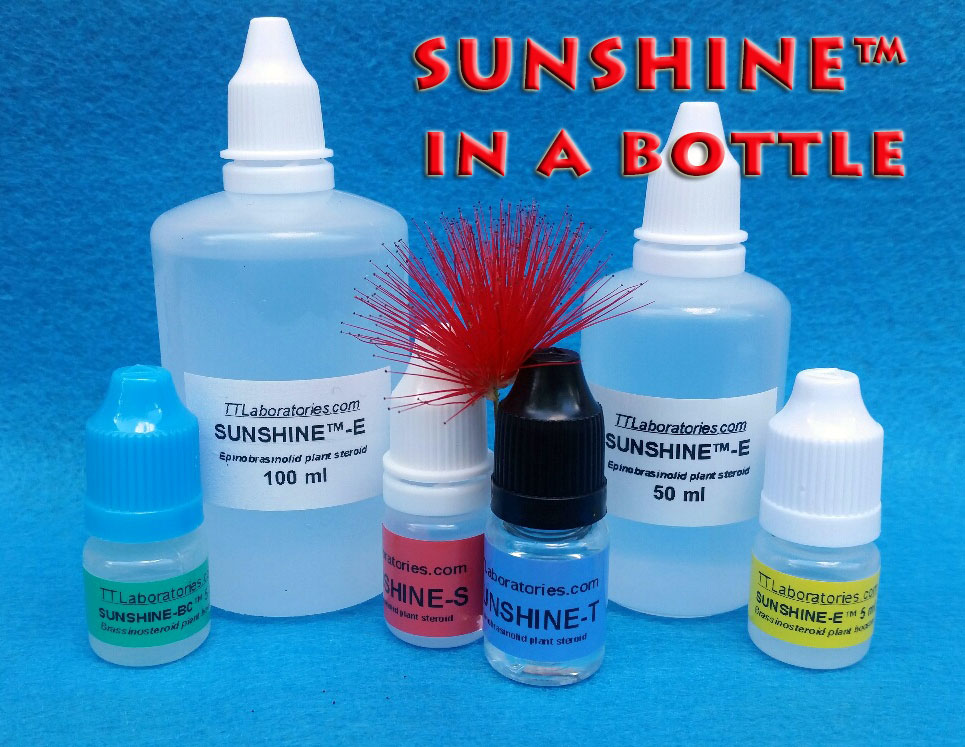
New Video: TopTropicals at TPIE show in Ft Lauderdale. Last week, your friends at Top Tropicals attended the 2017 Tropical Plant International Expo in sunny Ft. Lauderdale Florida. The Expo was an opportunity for Top Tropicals to introduce our SUNSHINE in a Bottle plant boosters as well as to bring a very rare plant Enchanted Incense to the tropical plant market!

Check out this video: TopTropicals at TPIE.

Stay updated with TopTropicals Videos by subscribing to our channel at YouTube.com/TopTropicals and get our latest video news of what's fruiting and blooming!