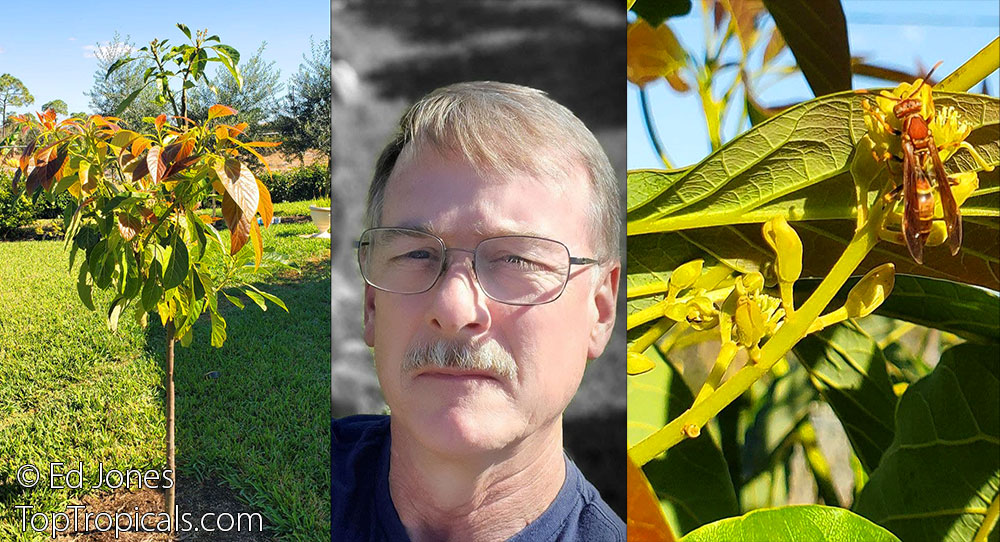
Ed's Avocado seedling blooming at age 2.5 years old... Go figure!
Q: Can I plant a seed from a store bought avocado and expect it
to bear fruit?
A: Avocados grown from seed do not always come true, meaning being the same as the avocado that produced the seed being planted. Also, avocados grown from
seed will take upwards of 8 years to flower and bear fruit unless grown by Ed Jones and his witchcraft. Ed Jones, the Avocado Guy... Yes,
he is also the Mango Guy, and the Booster Guy... We don't know how he does it. He grows the most beautiful fruit trees, many of them from seed and they all
seem to flower within two years! (See his blogs about his Star Fruit, Olive trees, and video about Shaping Mango Trees). All we know for sure, he uses
Sunshine Boosters for all his plant experiments.
As far as Avocado
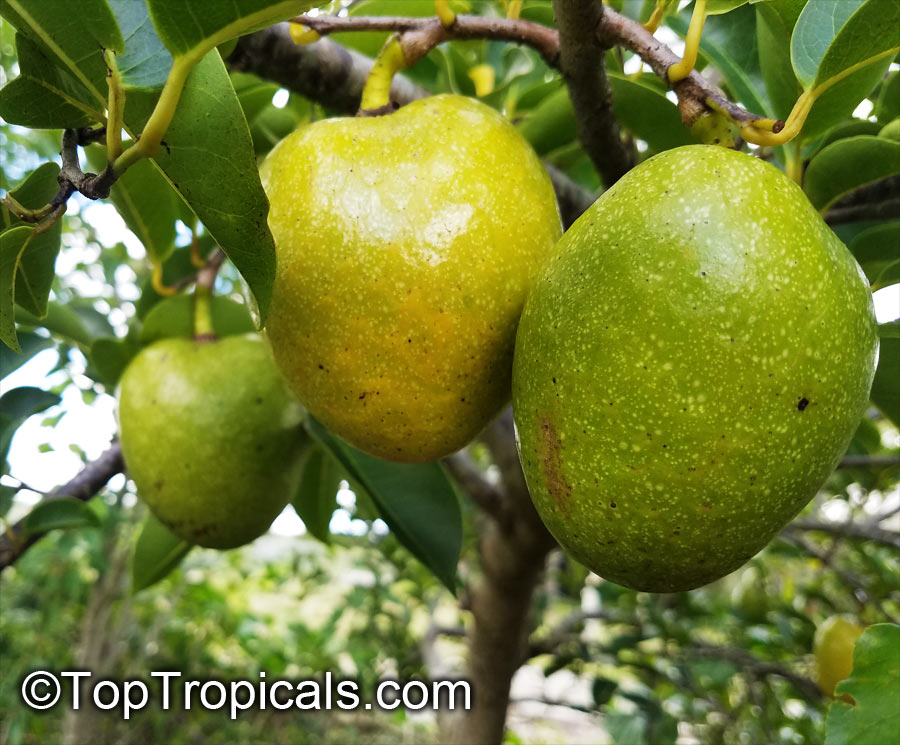
, we recommend a grafted variety, where a scion, or branch tip, of a known cultivar is grafted to good rootstock. These trees will usually flower right away and bear good amount of fruit within a couple
of years of being planted in the ground.
It's a good chance now to get a good grafted Avocado on our special Happy Value Sale while supply lasts, for only $59.95.
Date: 13 May 2022
New Video:
Golden Sugar Apple - Pineapple Annona
In this video we talk about a rare hybrid of Annona - Golden Sugar
Apple. This rare Annona is a species originally brought to us from Costa Rica. We
believe it to be a natural hybrid between A. muricata and A. glabra...
Fast growing, it forms a nice bushy specimen. It has a large, up to 1 lb
fruit, green when unripe, turning dark yellow to orange on ripening. The pulp
is golden to orange when ripe, with a strong Pineapple scent, and resembling
Jackfruit in texture. Flavor is like the custard apple but with pineapple,
papaya, apricot and melon overtones. Note that some people dislike the taste,
others find it good...
The tree tolerates flooding. It is also cold hardy! The plant would be very
interesting for rare fruit collectors as it offers a large, exotic fruit of
unusual color and taste, and appears to be much more hardy and water tolerant
than similar looking but sensitive A. muricata, A. montana and Rollinia.
Stay updated with TopTropicals Videos by subscribing to our channel at
YouTube.com/TopTropicals
and get our latest video news of what is fruiting and blooming!
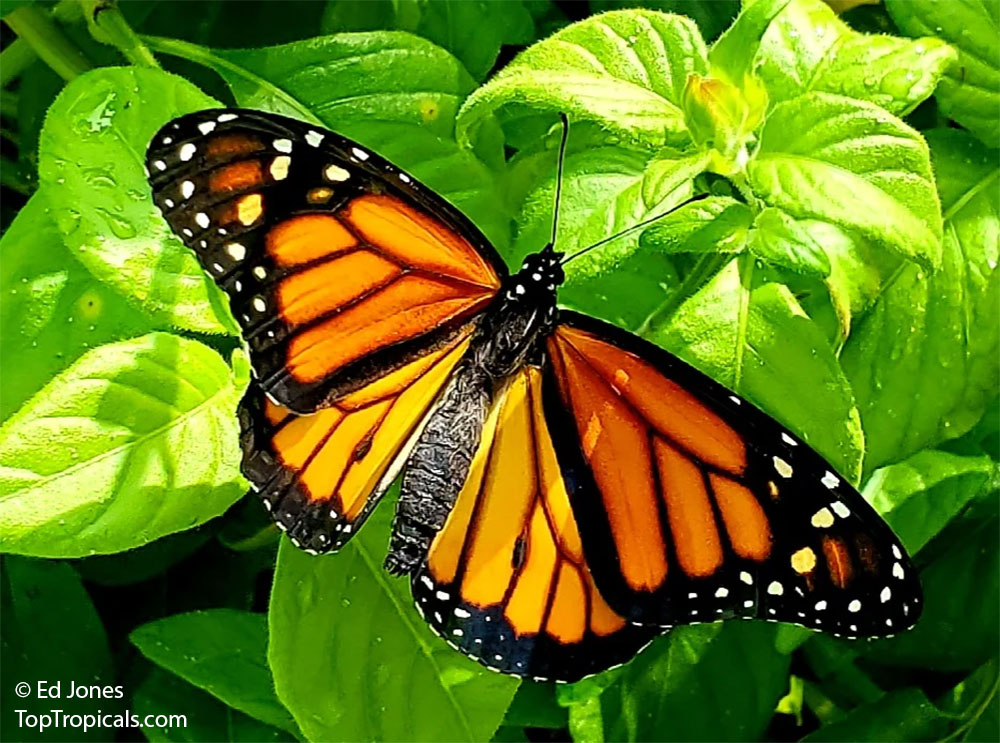
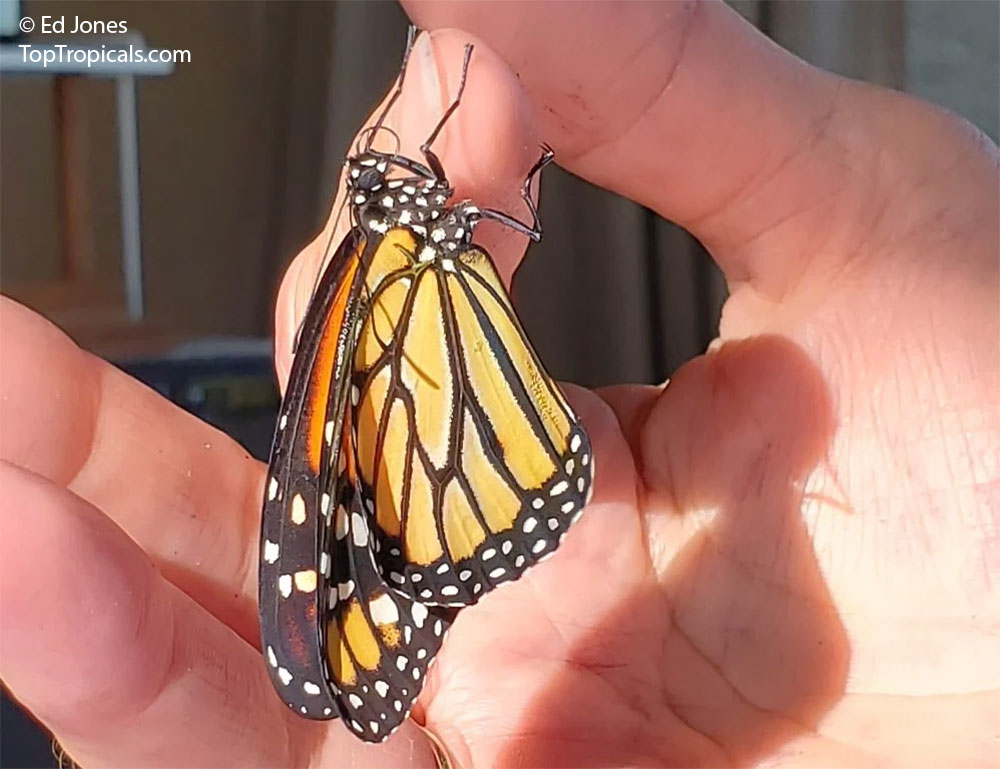
The Milkweed and the Monarch, how to
raise your own
by Ed Jones, the Booster Guy
...How to attract butterflies in your garden? What plants do butterflies
love? How to grow those plants when butterfly larvae keep eating them?...
Many gardeners ask these questions and butterfly attracting plants always
have been very popular. But did you know that you could actually turn your
garden into a little butterfly farm?...
Find out from Ed and Juvonda's butterfly mini-farm experience!
CONTINUE READING >
Cassia vs Bauhinia: which is better as an everblooming container tree?
Cassia vs Bauhinia: which is better as an everblooming container tree?
🌈 Cassia vs Bauhinia: which is better as an everblooming container tree?
🌸 Cassia (Senna) trees are very popular flowering trees - fast growing, free-flowering, relatively cold hardy, and they love the summer heat. Cassias come in several colors: yellow, orange, pink, red, and rainbow. Rainbow varieties (which are hybrids between yellow and pink cassias) are the most popular thanks to their multicolor blooms with swirls of yellow, pink, red, and orange. But while Rainbow Cassia is a spectacular flowering tree for southern gardens, is it a good choice for a container when you want color on your patio or pool deck?
🌸 Some yellow-flowering cassias make attractive bushes that bloom most of the year and stay compact, so they can be grown as container specimens: Cassia didymobotrya- Popcorn Cassia Senna alata- Empress Candles Cassia fistula- Golden Shower (a compact size winter blooming tree)
🌸 When it comes to Rainbow or pink cassias such as Cassia javanica - Apple Blossom Tree or Cassia grandis- Red Cassia and other species and hybrids (Cassia marginata - Rainbow Shower Tree, Cassia roxburghii - Ceylon Senna, Cassia x nodosa - Pink Shower), these are usually more vigorous trees that may take several years to bloom. Their flowering season lasts from a few weeks to a couple of months. These trees grow moderately fast but typically need to reach about 10 feet before they start flowering.
🌸 So, the answer is: if you want rich, deep color year-round from a container tree, go with Bauhinias - Orchid Trees. Most varieties grow well in pots, stay compact, and reach blooming maturity within just one season. The following varieties are everblooming and can produce flowers for up to 10 months of the year:
Bauhinia madagascariensis - Red Dwarf Orchid Tree. Blooms from winter through fall, up to 10 months a year. The most cold-hardy of all. Bauhinia blakeana - Hong Kong Orchid Tree. A large tree in the ground, but compact in pots if trimmed. Grafted trees flower right away. Winter bloomer, cold hardy to light frost. Bauhinia tomentosa - Yellow Orchid Tree. Flowers from Winter through Summer, cold hardy to light frost. Bauhiniamonandra - Napoleon's Plume Orchid Tree. Almost everblooming with the longest flowering period (less cold hardy than the first three). Bauhinia acuminata - Dwarf White Orchid Tree. Blooms from summer through winter (also less cold hardy than the first three).