Garden Blog - Top Tropicals

Date: 4 Mar 2021

Healthy Plants: Q&A from Mr Booster

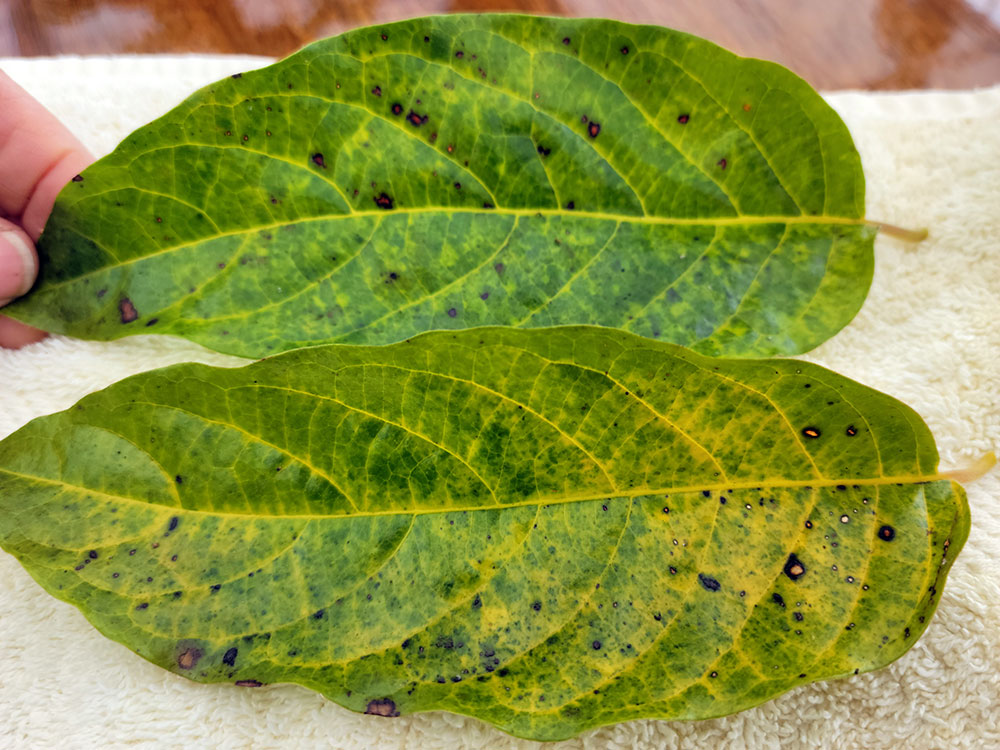
Ylang Ylang leaves after winter

Q: Hi, I purchased ylang ylang tree a couple of years ago. It's grown quite well in my Greenhouse but I'm having some trouble figuring out if I'm watering it too much not enough or if it has an insect. Can you please take a look at my photos and maybe give me a suggestion of what my problem might be?

A: It is normal for Ylang Ylang tree to get dark spots during winter time. Sometimes Cananga gets whole branches darkened (especially dwarf variety fruiticosa), some may even fall off. But they will be replaced with new growth in Spring-Summer. There is nothing wrong with your plant, it is just a reaction to cold and short day light when you keep this plant indoors. These leaves eventually will fall off as the weather warms up, and will be replaced with a new fresh green growth.
Luckily, Cananga is not susceptible to insects and diseases, but its leaves can look unattractive in winter. Make sure to keep watering at minimum until temperatures raise to 80's.
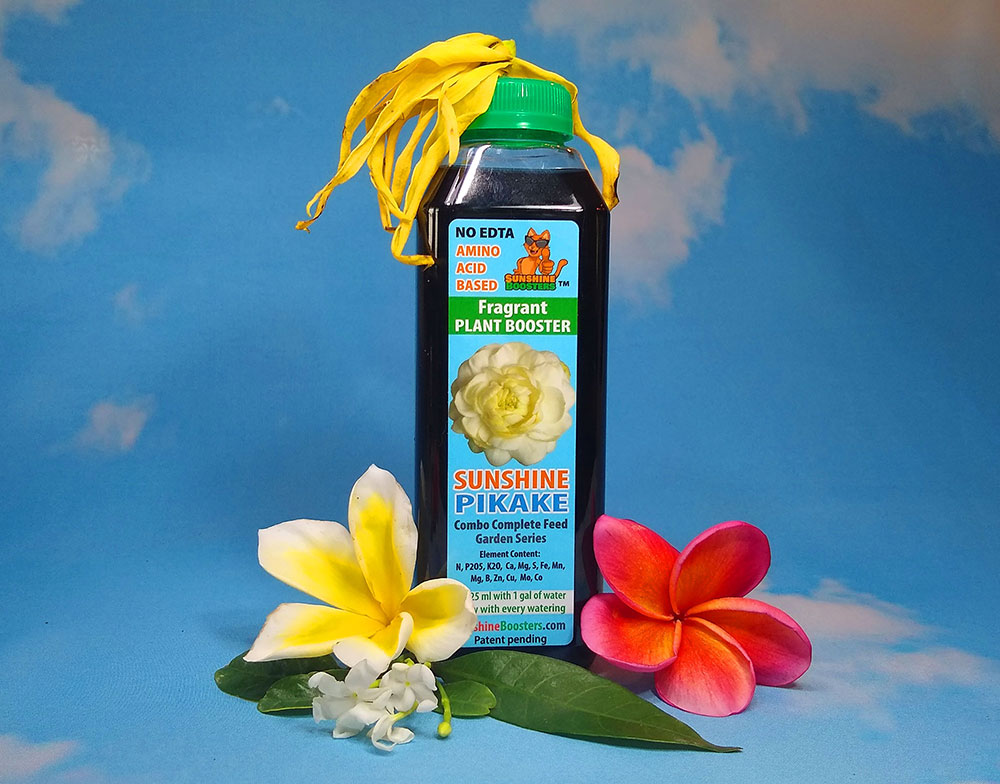
Start fertilizing as soon as new growth appears. We recommend SUNSHINE Pikake - Fragrant Flower Booster, an ultimate fertilizer for fragrant plants.

Date: 9 Dec 2020

Establishing Mamey Sapote

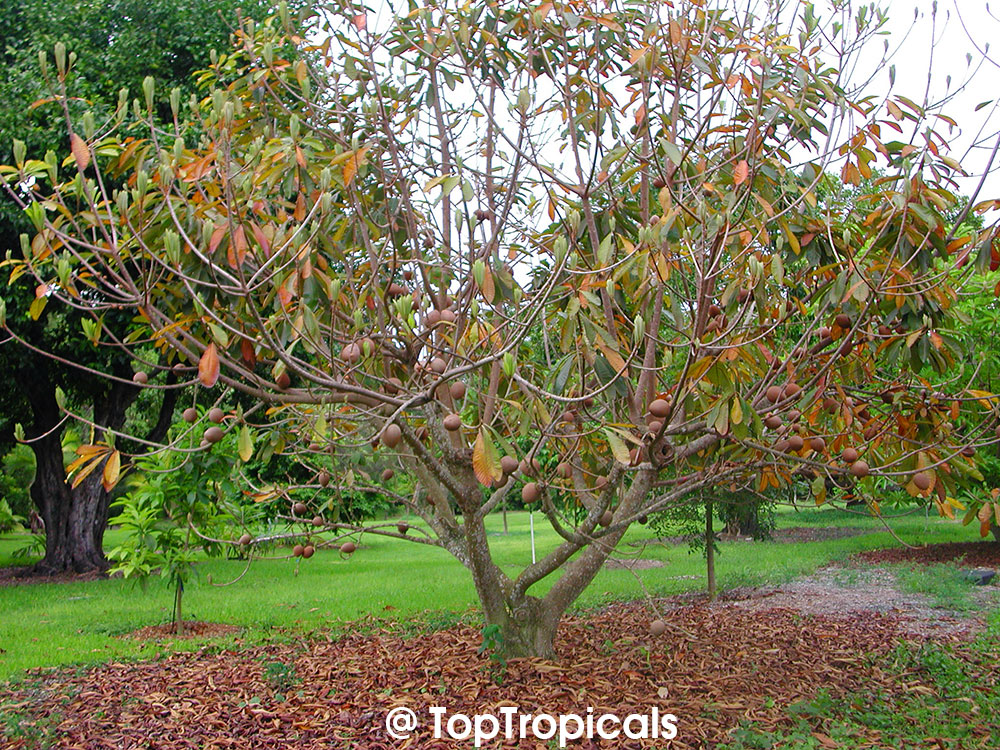
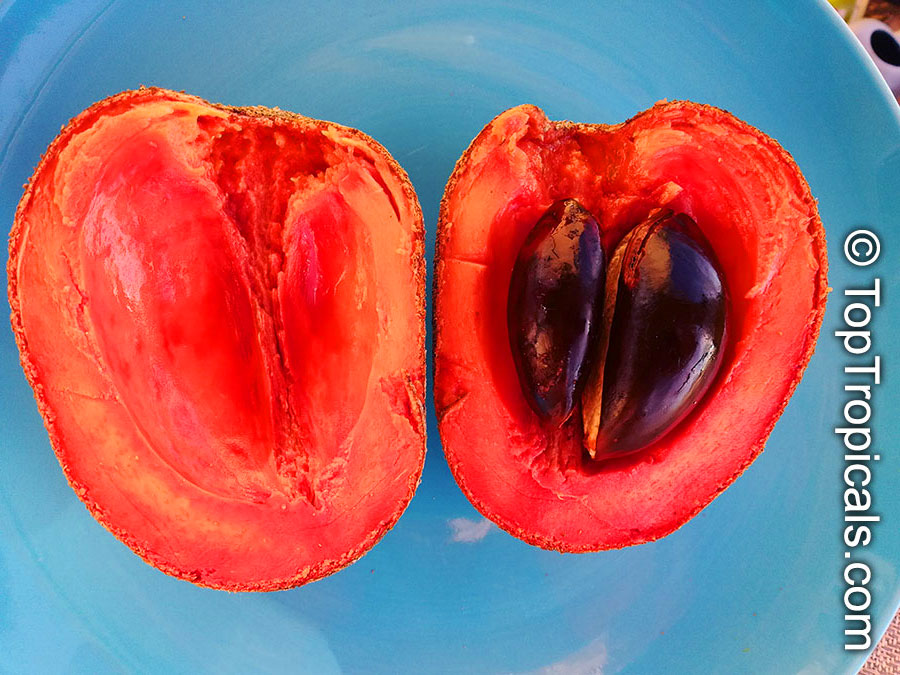
In the photo: Mamey Sapote lre-leafing.

Q: I purchased Mamey sapote last fall and am very excited about having it in my yard. It lost leaves during the winter, but then budded and put on a lot of beautiful leaves. I was hand watering since this covid stay at home event, and thought I'd put it in a larger container, 10 gallon. About 2 months after transplant and hand watering the leaves turned yellow. I cut back on watering, allowing some dryness between. Some leaves now have fallen off, but looks like new ones forming. What have I done and most importantly now, what do I need to do so she survives? I haven't yet decided exactly where to plant her... so hoping she can stay in container for a bit longer while recovering.

A: It is possibly a combination of over-watering and seasonal changes (re-leaf). During this time of the year, Pouteria sapote loses old leaves and grows new ones. This plant is semi-deciduous, which means, it drops leaves during unfavorable conditions (too dry, too wet, too cold, to hot, etc. = any stress). The new buds are healthy. Give it a couple of weeks. Reduce watering. Don't water again if the soil is still moist. If planted in the ground, it will be easier to control the moisture, as long as you plant it high enough (at least 3-4"above the surrounding area, like on a little hill, for a better drainage. See how to plant a tree.
Once you notice a new growth and healthy leaves, give the plant some food:
SUNSHINE C-Cibus - Crop Nutrition Booster
Mango-Food - Smart Release Fruit Tree Booster


Date: 18 Apr 2020

PeopleCats amid COVID-Cat-20
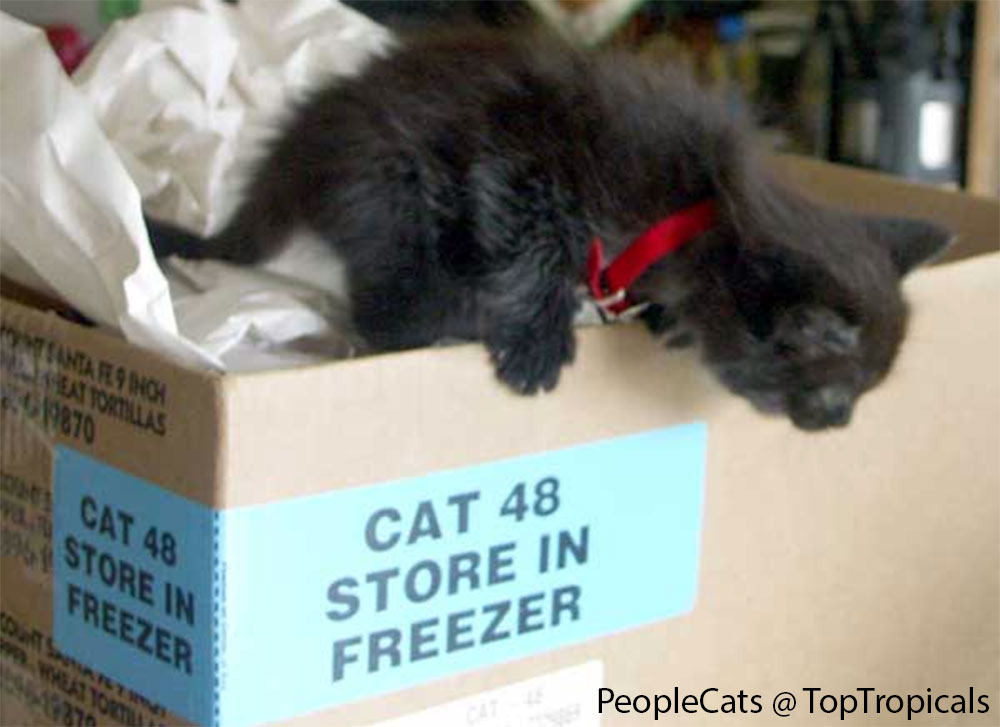
"It's not the size of the cat in the fight, it's the size of the fight in the cat"
- Mark Twain -

While the whole world is suffering the virus attack, cats are no exception. They do not get COVID-19, but they have their own coronavirus - a respiratory condition that may become very dangerous for them. And although cat coronavirus does not affect humans, we can transfer it to other cats through our hands/petting, shared bowls and bedding, etc.
At TopTropicals, we had several cats sick with the flu and it took us a long time and long hospital bills to bring them back to health! Below we are sharing with you a few tips from our own experience that may help you fight and treat cat coronavirus, that we call "Covid-Cat-20".
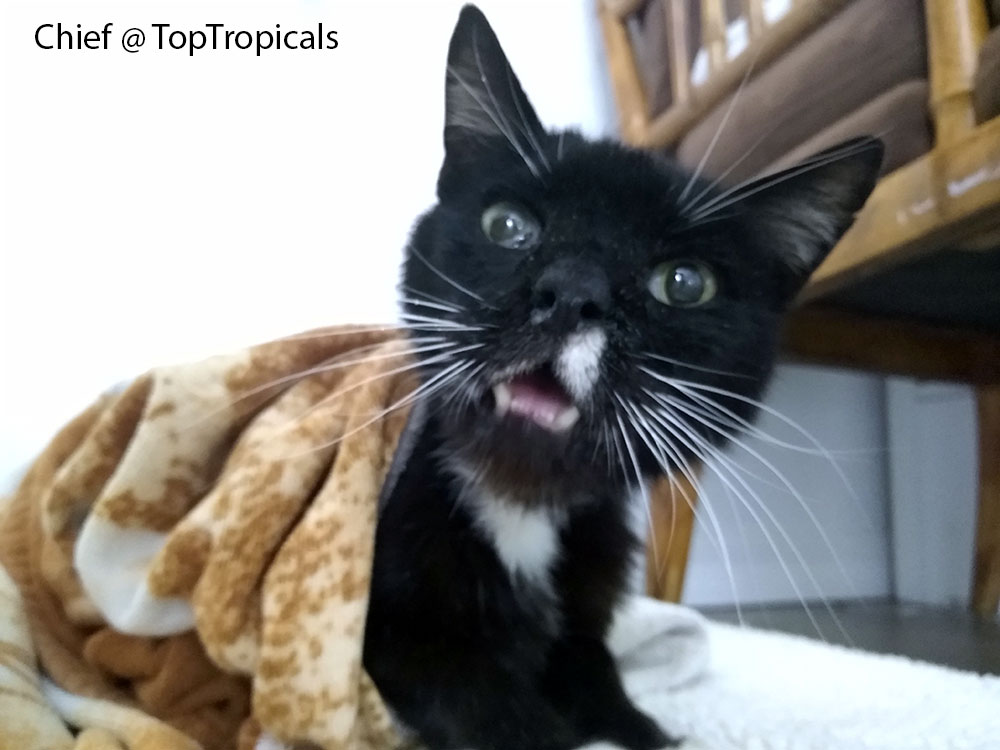
Chief is breathing through his mouth: "Stuffed nose sucks!"

How to treat Cat Coronavirus

When cats get a flu/virus/cold, they suffer congestion, sneeze and cough. Just like us humans. But for cats, stuffed nose is much worse trouble, because they can't smell food = they won't eat it! In tough cases, they won't even drink any water. Due to specifics of cat metabolism, if a cat doesn't eat and/or drink for more than a couple of days, it may become life-threatening. It is not the virus that kills a cat, it is dehydration, lack of nutrition, and possible secondary infections.

- Vet. During Covid-19 lockdown, many animal hospitals are closed, but if you are lucky to find a vet, it is wise to give the cat a long-lasting shot of antibiotic. You can't treat a virus with antibiotic, but it will prevent secondary infections (like pneumonia, etc.)
- Water is absolutely essential! Make sure your Cat drinks water. If he (she) doesn't want to drink on his own, you need to give him water with a syringe. As often as you can. Little by little. Or, ask a vet to put a "water pouch" under cat's skin. This will save the cat from dehydration.
- Food is the main key! Your cat must eat a normal size portion per day in order to fight the illness. Because he can't smell, it's possible he won't eat on his own. Offer him a smelly, soft/wet food of room temperature or slightly warmer: usually tuna works well. Get Salmon Oil and put on top of the food: it is smelly, plus a great vitamin supplement.
- Hand-feeding. If congestion is bad, even a smelly tuna may not help. Mix a spoonful of pate with some water and try to hand-feed this "soup" to the cat either using syringe, or a small spoon. Little by little. Remember, his nose is stuffed and he can't swallow and breath at the same time, so it must be tiny bites. (Wrap the entire cat tightly in a large thick towel to save yourself lots of scratching damage, leaving out just the face. Guaranteed, he won't like the procedure and you will be surprised how strong he is for a sick cat.)
- Supplements. For an extra nutrition support, you may use Critical nutrition food and other protein supplements. Consult your vet and you may want to try the following aids: High Calorie Liquid or Gel (easier to administer), HomeoPet Nose Relief (for de-congestion), Lysine Soft Chews, and Mirataz ointment (to promote appetite).
- Rest. Keep the cat indoors, in a warm place, away from drafts. Cover with a towel to make comfy. Keep lights dimmed. Change bedding, towels, blankets at least daily to keep clean, get rid of germs and drooling accidents.
- Quarantine from other cats, the cat coronavirus is super catchy! Find that spare room. Bleach, soap, alcohol and Hand Sanitizer - are your friends now to maintain germ- and virus-free environment.
- Mild cases. Some cats have mild symptoms (we've noticed that black cats and tuxedo cats are more susceptible regardless of age). In this case, do not panic - just give them time to recover. Lots of rest, privacy, and be sure to monitor water/food intake!
- Tough cases. Most cats look lethargic when sick. At some point, if within 3-4 days you don't see improvement and the coughing continues, you need x-ray to rule out pneumonia.

Stay well and healthy, PeopleCats!
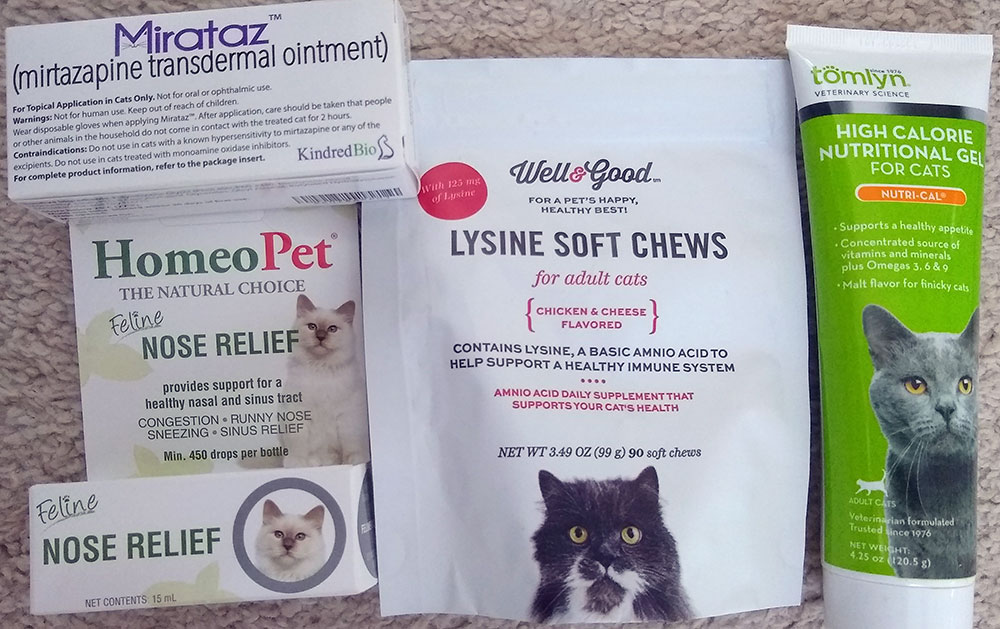
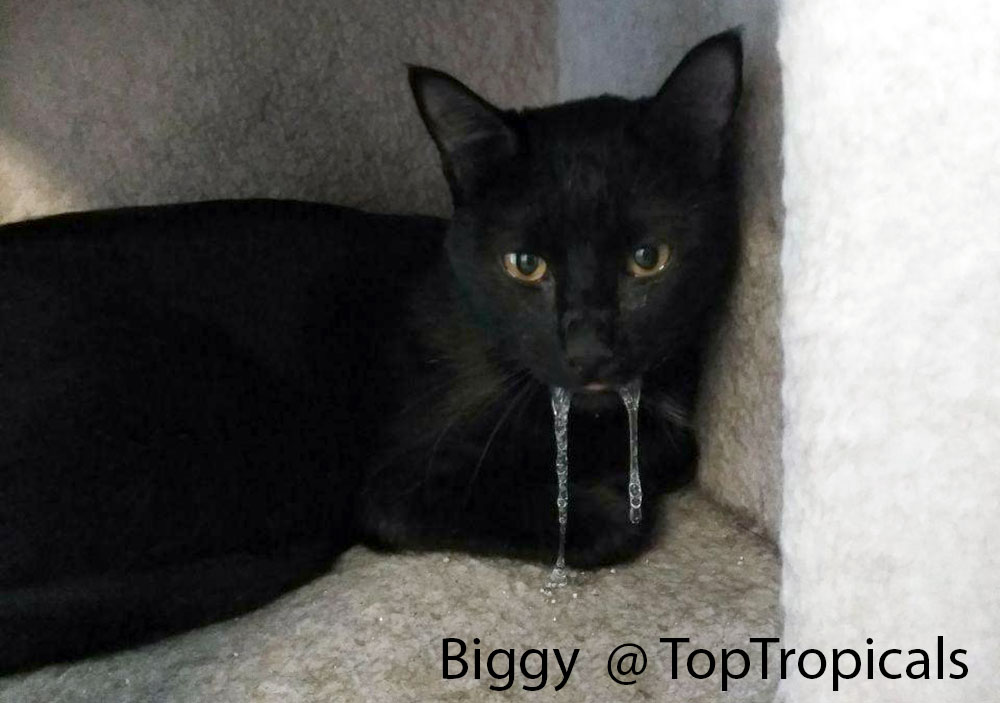
Biggy sneezed... Ooops, sorry for no mask!

TopTropicals PeopleCat Club

Thank you everybody for supporting us in helping PeopleCat Community!
Make your kind donation today and receive a surprise gift from us. Every little bit helps! Thank you and God bless you and your pets!
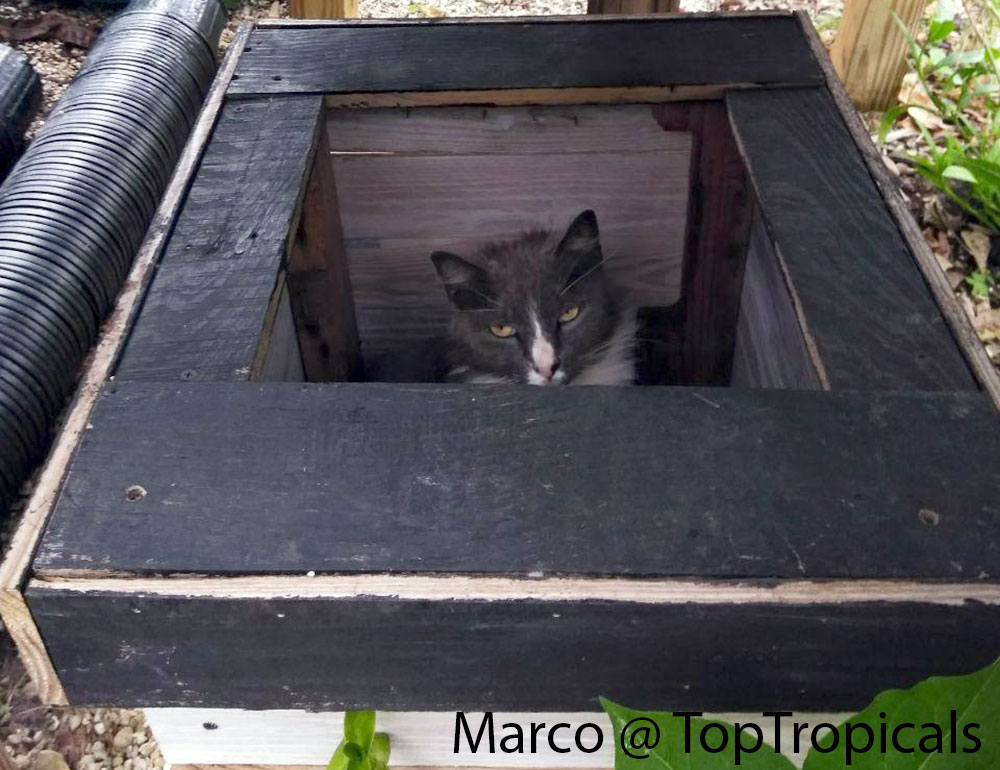
Coughing Marco is practicing Social Distancing

Date: 3 Mar 2020

Meet PeopleCats of TopTropicals. Cat of the Day: Poor Little Raja

In our last newsletter we told you about little Abu, a Baby-Purrrson that Kristi rescued from the woods where he had been surviving along with other feral cats: his little sister and his Mom who was badly injured in a car accident. We received messages from our customers asking if we were able to rescue the other two cats...
For the past few days Kristi, Jamie and Onika have been trying to capture them... The feral cats didn't want to come to humans, they were hiding away. The ladies were able to trap Abu with a tuna can... then tried and tried again with the other two with no luck... Even tried to call Animal control asking for help catching the animals so we could give them medical help. We were told that they don't trap cats! ("unless it's a cat-hating neighbor going against a crazy cat lady" - Crazy Cat Lady's comment). The girls continued their efforts again and again, with treats, traps and different capture plans... day after day.
Unfortunately, the sick mother-cat did not survive and we found her yesterday with her little baby crying over her cold body.
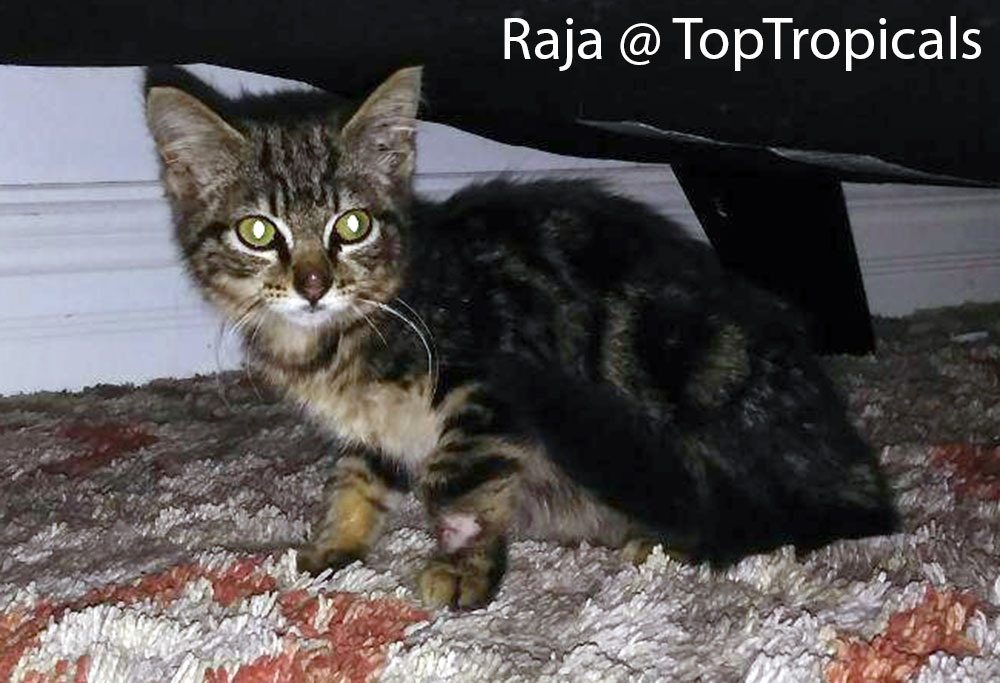
Kristi was able to grab the tiny kitten who was even smaller than her brother Abu. She named her Raja - a friend of Abu. Raja said that her poor mother's words were: "Go to that lady, my baby, she looks kind. It's my time to go now, and you will be in good hands..."
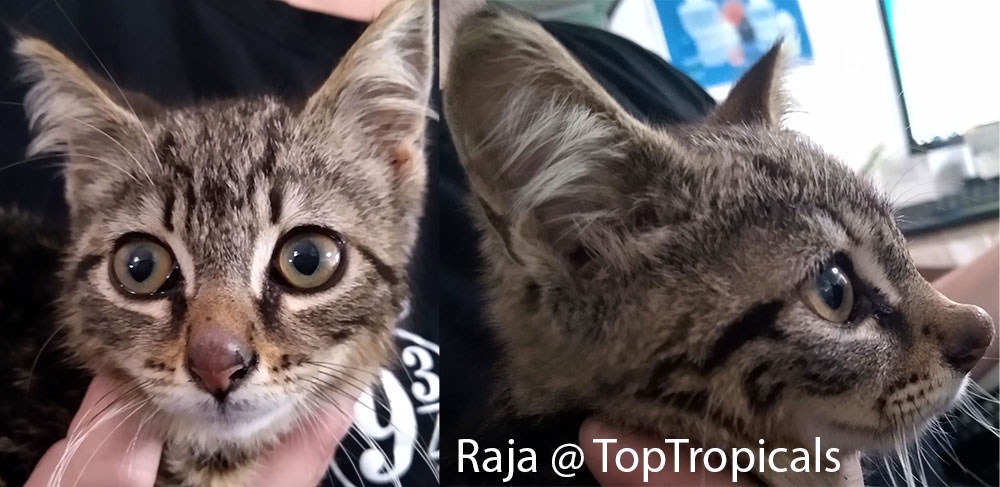
The little Raja was in very poor shape herself, with eyes full of tears. She was covered by fleas, and looked like passing out from anemia. Her paw was injured and infected, and her little nose... first we just thought she was pig-nosed! But her nose is also swollen. Kristi rushed her to the vet where Raja got treatments and meds. She got much better the same day and finally stopped crying. Raja finally recognized her brother Abu and cuddled with him.
Now Raja is on her way to recovery and will be sending her updates soon!

Thank you everybody for supporting us in helping PeopleCats. Every dollar you spend on TopTropicals plants is split between plant growers and PeopleCats who help us become better people.

Check out the Video: and more Cat of the Day stories.

Date: 5 May 2019

The most desired iconic Chanel flower...

TopTropicals.com

By Onika Amell, tropical flower specialist

Q: I live in Beverly Hills, Los Angeles. I'm looking for something fragrant to grow on my porch. I don't have a lot of space and am interested to find something unusual that won't grow too large. Any suggestions? I've heard about Chanel #5 tree and I wonder I can keep it in a pot?

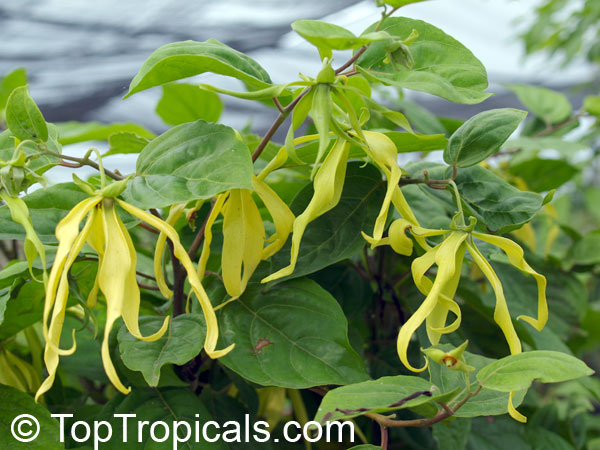
A: The Ylang-Ylang tree, Cananga odorata, emits a fragrance so soft and beautiful it became an essential ingredient of Coco Chanel's iconic and much-loved perfume Chanel No 5. Trouble is, it will grow into a giant. How do you get this kind of magic onto your lanai or porch? Opt for its smaller relative: Dwarf Ylang Ylang, Cananga fruticosa (pronounced ee-lang ee-lang, meaning: flowers of flowers).

The fragrance is a little less intense than its larger cousin, but still wonderful to have around. Let the fragrance drift slowly through the air into your home at night. The scent is strongest from dusk to dawn and it will need warm and humid conditions for a fuller aroma.
Dwarf Ylang-Ylang is ideal for folks with limited space as it can be grown in a container or as a house plant. It's a very unusual and interesting plant to add to your porch, lanai or garden. It's pretty easy to grow and disease resistant too. It will stay compact and in nice tree-like shape. Dwarf Ylang Ylang starts blooming quite young and will continue to bloom year-round with profuse blooming during the spring and summer months.
The tree prefers a high-humidity environment, evenly moist soil, warm temperatures and will grow best in plant hardiness zones 10-11 but can take short periods of cold.
Read more about Chanel No5 Flower...

Dwarf Ylang Ylang is certainly one of the most desired and sought after rare, fragrant plants. Get yours today!