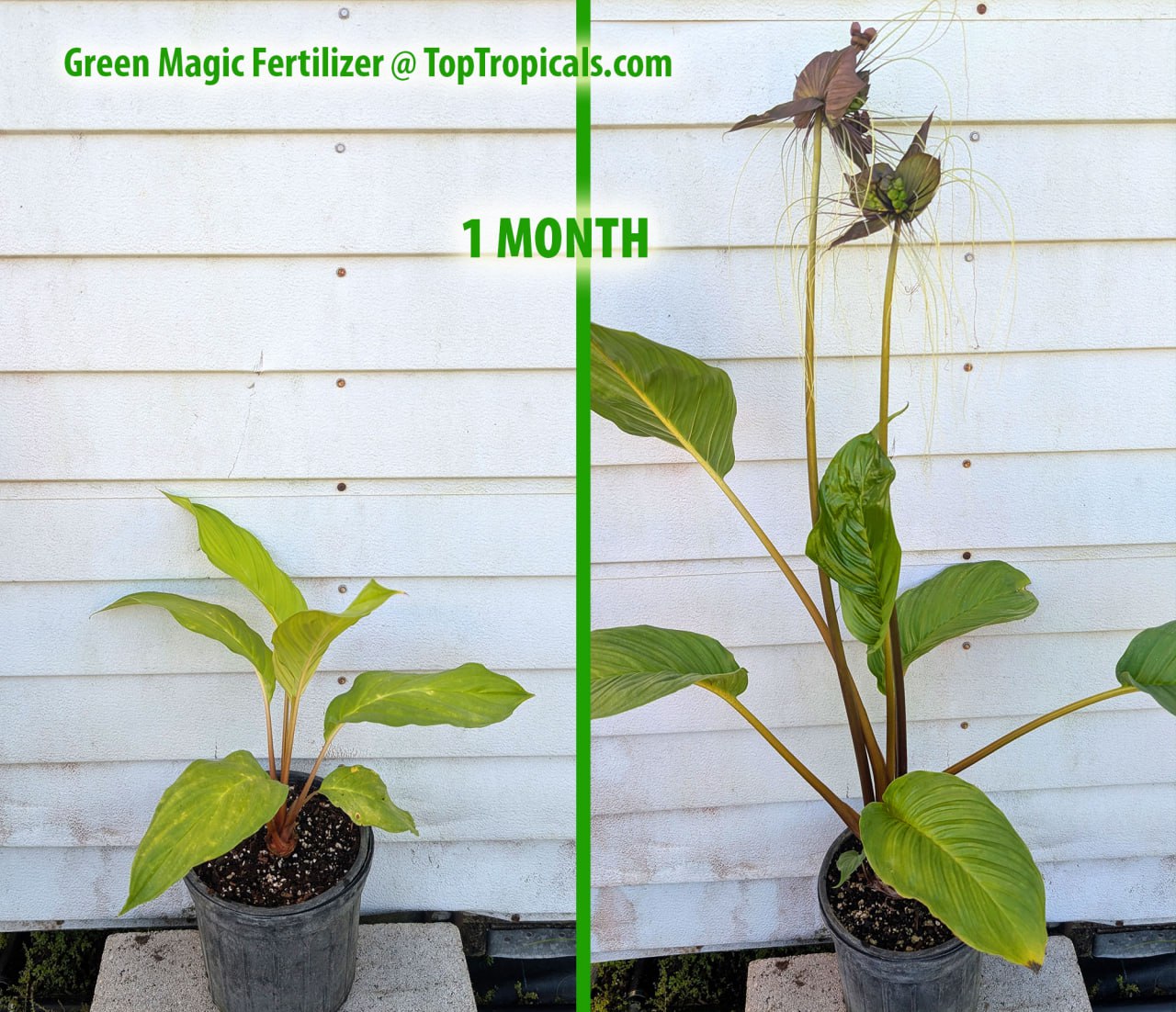
Smokey and Sunshine Wrap Up the Garden with Frost Cloth Before the
Chill.
Smokey: "Thermometer says 45. Time to wrap the bananas!"
Sunshine: "You wrap the bananas. I’ll guard the mulch… from this
sunny spot."
Smokey: "Teamwork, Sunshine. Teamwork."
🌡️ Cold nights are coming - but your
tropicals do not need to shiver!
Even in sunny Florida and other warm zones, one cold snap
can undo months of growth. Preparation is everything. Tropical plants can
handle a lot, but they dislike surprises. Let’s make sure
your garden stays safe, strong, and happy all winter long.
Tips from Tatiana Anderson, Top Tropicals Plant
Expert
👉 Group and Check Your Plants
You already know which plants are in pots and which are in the ground.
What matters now is prioritizing by cold sensitivity.
Identify the tender tropicals – papaya, banana, plumeria, adenium,
heliconia – and decide which ones get covered first when temperatures
drop.
Keep frost cloths or old sheets near those areas, ready to grab fast. If
your garden is large,
label protection zones or mark plants that always need extra care. The goal
is to have a plan, not a panic, when the cold alert hits.
Once you know your priorities, you can plan the rest of your protection
strategy.
👉 Feed and Mulch
Stop using high-nitrogen fertilizers by late fall. They push soft new growth
that freezes easily.
Add compost around the base of your plants and top with 3 to 4 inches of
mulch. Mulch acts like a blanket: it keeps warmth in, protects the roots,
and keeps soil moisture steady. Just make sure the soil drains well; cold
and soggy soil leads to root rot. In raised beds, check that water flows
away easily.
After you feed and mulch, it is time to look at how your local zone changes
the game.
👉 Zone-by-Zone Tips
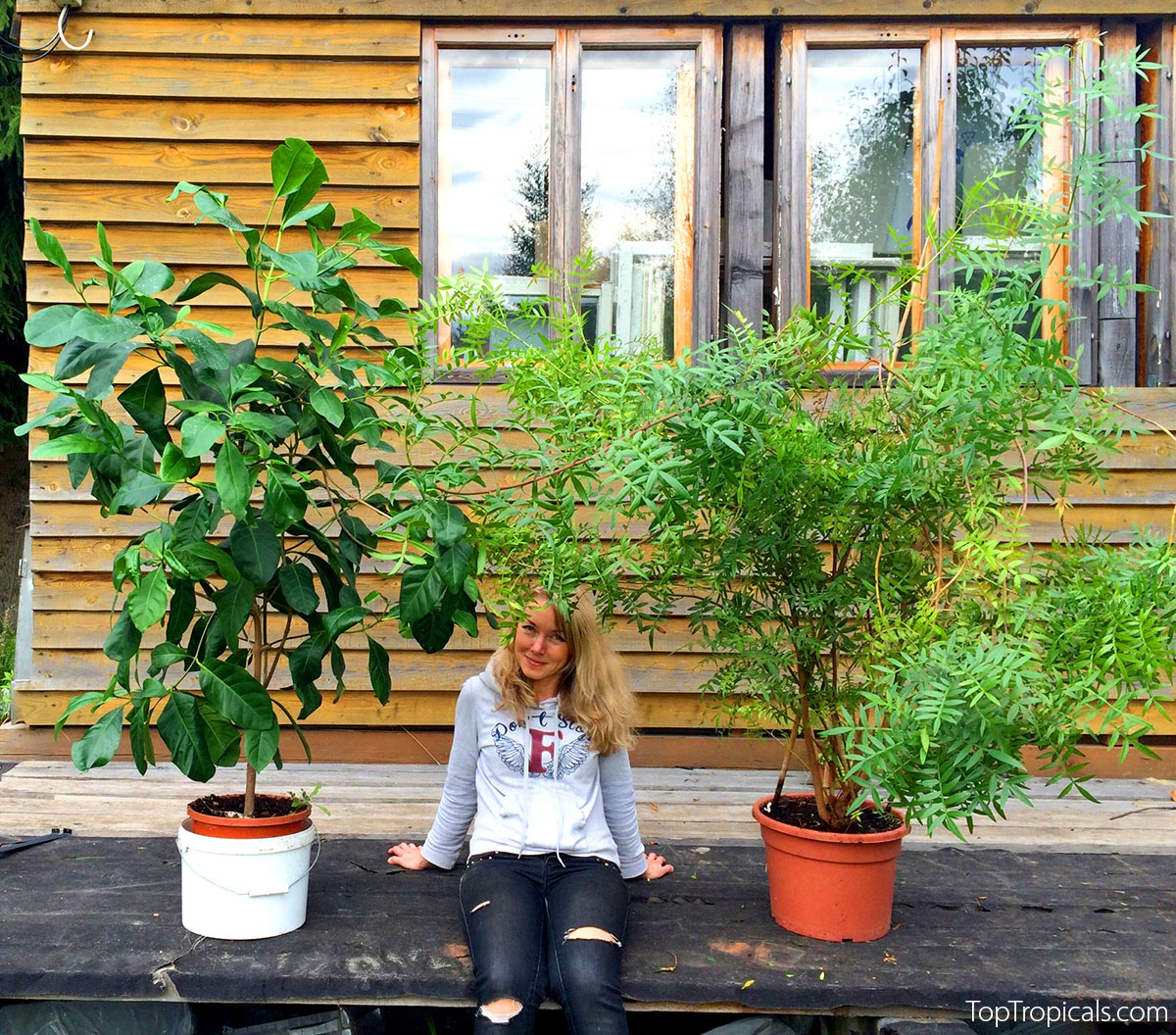
Moving Tropical Plants Indoors for Winter Protection
Zone 10: You are lucky! This is mostly a maintenance season.
Watch for root rot after heavy rain, trim lightly if needed, and protect
tender young trees during surprise chills. Keep some frost cloth ready just
in case.
Zone 9: This is the main action zone. Nights can dip into the
30s. Deep-water your trees once before cold nights to insulate the roots.
Apply heavy mulch, and have frost protection ready to go. If you grow
tropical fruit like mango or guava, consider wrapping young trunks in burlap
or foam pipe insulation.
Zone 8: This is where tropical gardening becomes creative. Stick
to cold-hardy tropicals such as loquat, guava, or cold-hardy avocado
varieties. Use portable greenhouses, wrap trunks, and move smaller plants
indoors or to a heated porch when frost threatens.
Now that the garden beds are set, let’s look at your pots and
containers – your most mobile plants.
👉 Container and Patio Plants
Potted plants are the easiest to protect but also the quickest to freeze.
Start reducing watering now so roots do not stay too wet in cooler weather.
Before moving them, check for insects hiding under leaves or in the soil.
Group your pots close to a wall for reflected heat and wind protection.
If you plan to bring them indoors, do it gradually. Move them closer to the
house for a few days before bringing them all the way inside to help them
adjust to lower light and humidity.
When the chill starts, many gardeners rush to move everything inside at once
– but a smooth transition works much better.
👉 Indoor Plants
When bringing plants inside, give them a good rinse to remove dust and bugs,
and flush the soil to wash out salts from summer fertilizing. Keep
them separate from your houseplants for a week to make sure no pests come
along. Expect some leaf drop – it is normal as they adjust to lower
light. Give them bright light near a window, and cut watering by about half
until spring. Avoid misting too much; good airflow matters more than
humidity during winter.
Many tropicals, like hibiscus, brugmansia, and crotons, may look tired for a
while, but they will bounce back quickly once days get longer.
👉 Timing Is Everything
The key is to prepare before the first cold warning. Check your weather app
regularly once nights start dropping into the 50s. Keep covers, mulch, and
supplies ready so you are not running outside at midnight with a flashlight
and a frozen hose. Have your frost cloths labeled by plant group and stored
in an easy spot. A little organization now saves a lot of stress later.
Many tropicals, like hibiscus, brugmansia, and crotons, may look tired for a
while, but they will bounce back quickly once days get longer.
Remember: the goal is to help your plants rest safely. Many gardeners prune
or fertilize too late in the season – we will talk about why that can
be risky next week." — says Tatiana Anderson, Top Tropicals Plant
Expert
Coming next mail-list: The best gadgets for cold protection (lights,
heaters, frost covers) and what NOT to do in winter.
Protecting Tropical Plants with Frost Covers at Top Tropicals
Nursery
Date: 21 Nov 2025
How to keep your house plants beautiful all year by feeding them right
Indoor garden
🍀 How to keep your house plants beautiful all year by feeding them right
🌱 Healthy house plants are not just about light and water. They need food, just like we do. A good fertilizer routine keeps them green, strong, and blooming through every season. Here is a simple guide to feeding indoor plants the right way.
🌱 General rules for fertilizing house plants
▪️Feed lightly but regularly. Indoor plants grow in limited soil, so nutrients run out faster. Small, frequent feedings work better than one heavy dose.
▪️Never fertilize dry soil. Water first, then feed.
▪️Reduce feeding in winter when growth slows.
▪️Watch your leaves. Pale, yellow, or slow-growing plants are asking for nutrients.
▪️Use a complete formula. House plants need both macro-elements (N-P-K) and micro-elements, not just nitrogen.
🌱 What fertilizer to use
Sunshine Boosters - the everyday diet.
Sunshine Boosters are simple, balanced liquid fertilizers you mix with water. They give your plants everything they need for steady, healthy growth. They contain the right blend of nitrogen, phosphorus, potassium, and trace minerals. They do not contain harsh chemicals, so they are safe for homes with pets and kids. Regular use keeps plants growing faster, stronger, and more resilient to stress.
Sunshine Superfood - the vitamin supplement.
If a plant turns yellow or looks weak, it often needs micronutrients. These are the plant version of vitamins, including iron, zinc, copper, and manganese. Sunshine Superfood delivers these quickly and in the right proportions. Mix it with water and apply when you notice yellowing or slow growth. It corrects deficiencies fast and keeps leaves lush and green.
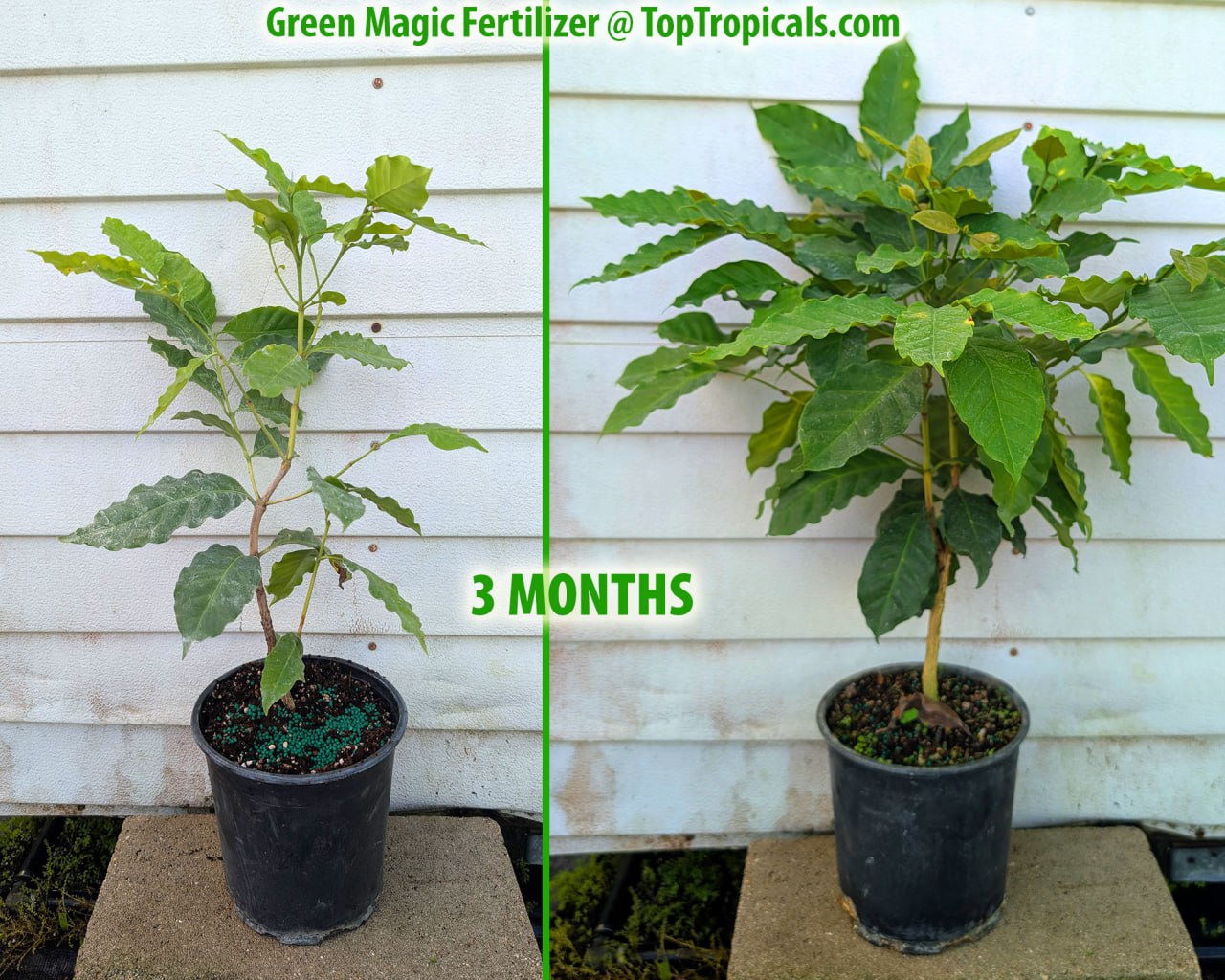
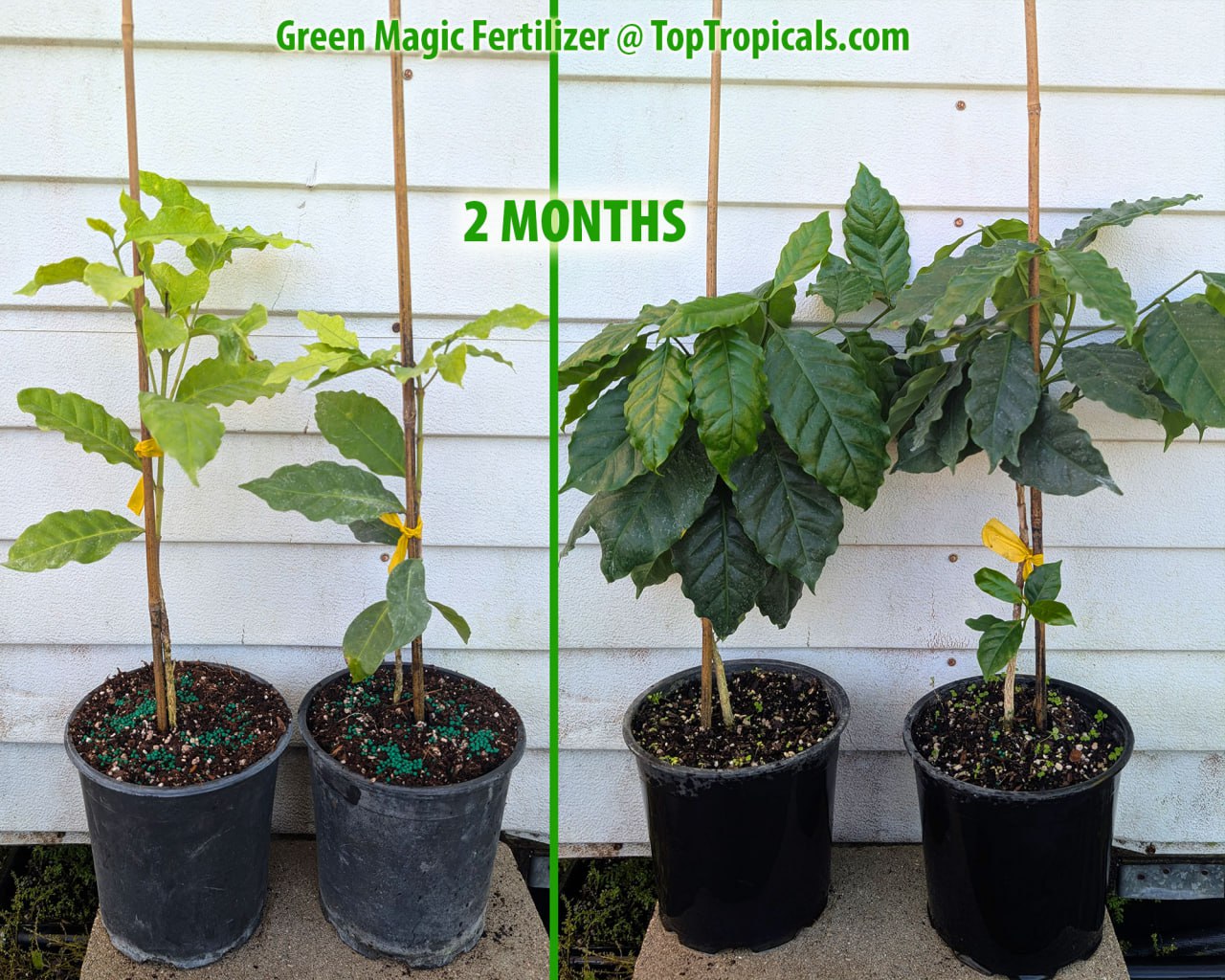
Green Magic - the long-term slow feeder.
Green Magic is a controlled-release fertilizer that works for six months. It uses poly-on coating technology to release nutrients slowly, without burning roots. It is perfect for repotting or for plant owners who want a set-it-and-forget-it option. Mix one teaspoon per gallon of soil during repotting or every six months. Excellent for container fruit trees and ornamentals that need steady feeding.
🌱 The simple routine
▪️For regular watering: use Sunshine Boosters.
▪️Once a month: add Sunshine Superfood to prevent yellowing.
▪️Every six months: mix Green Magic into the soil for long-term support.
With the right diet, your house plants stay green, strong, and beautiful year-round. Feed them well, and they reward you every day.
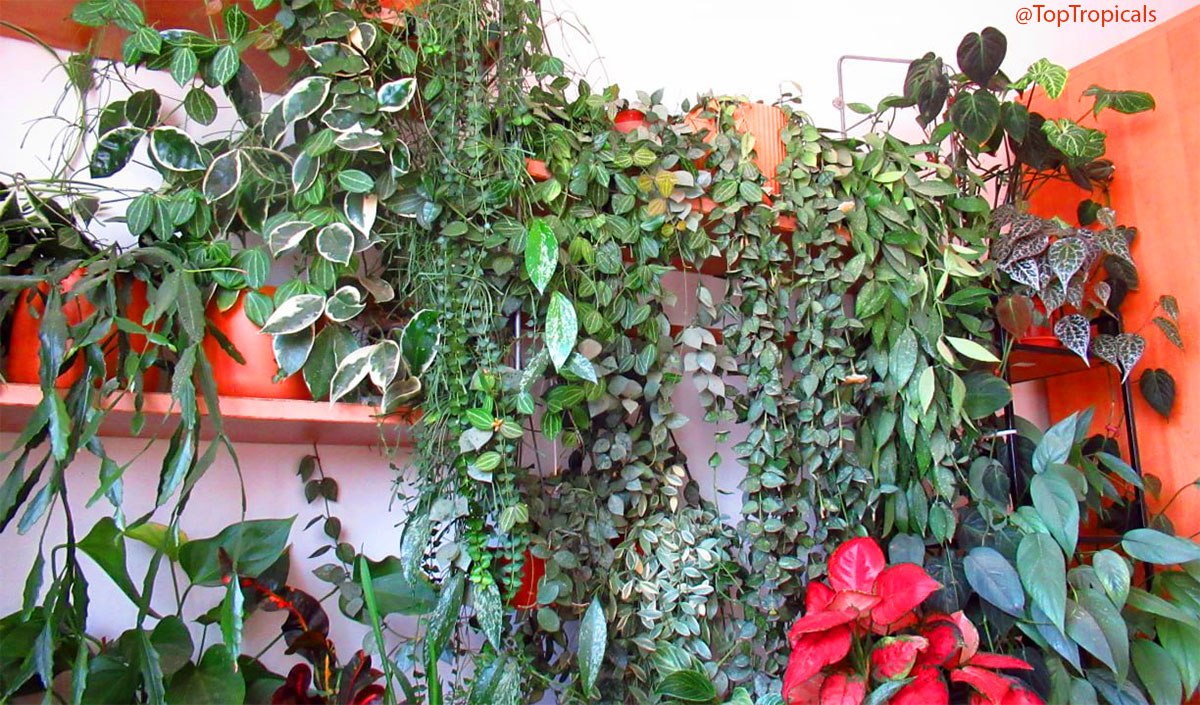
📸 In the photo: Indoor garden of Marina Rybka, Israel, the Editor of TopTropicals.
By Tatiana Anderson, Horticulture Expert at Top
Tropicals with Smokey & Sunshine help
Macadamia
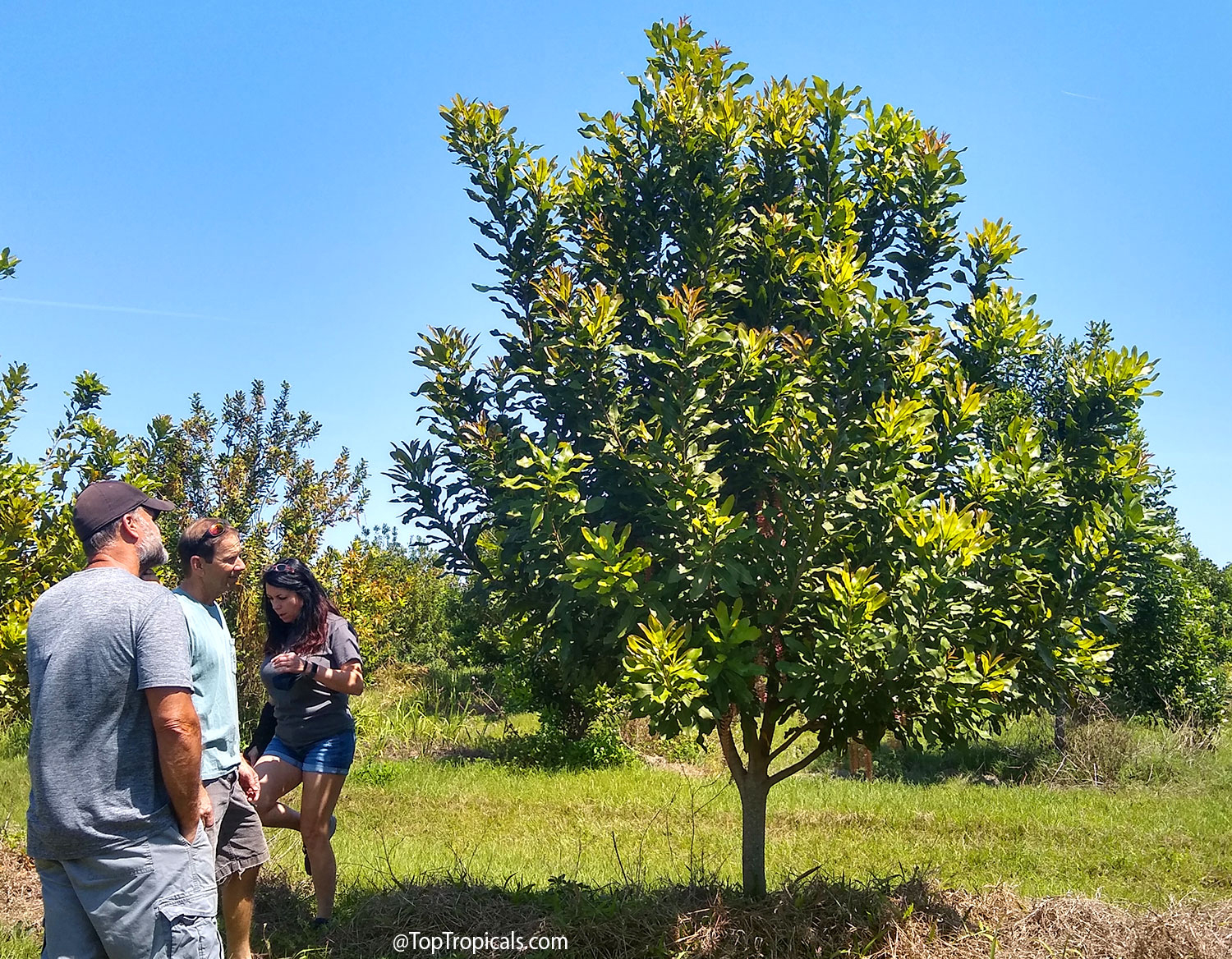
tree maturing into a productive, manageable canopy.
🌳 Growing Macadamia Tree
Macadamia is not a fragile tree, but it does have preferences. If you
respect them from the beginning, the tree rewards you for decades.
Start with the site. Drainage is everything. Macadamia will tolerate
cool weather better if planted in a well-drained area. Avoid low spots where
water sits after rain. If your soil is dense or clay-like, build a mound or
improve drainage before planting.
Choose full sun whenever possible for the best nut production.
Planting location matters. A south or southeast exposure near a wall can
create a warmer microclimate that buffers cold nights. Freeze plus wind is
more damaging than temperature alone. Macadamia handles cold better when
protected from winter wind.
Dig a hole about twice as wide as the container, but no deeper than the
root ball. Set the tree level with the surrounding soil. Do not bury the
trunk.
Water regularly during the first three months while the tree establishes
roots.
Fertilize lightly. Macadamia does not respond well to over-fertilizing.
Macadamias prefer mild liquid fertilizers, SUNSHINE
Boosters Robusta is ideal for it. You may also use controlled release Green
Magic every
6 months, it is especially formulated for hot climate. To keep leaves
healthy deep green without yellowing, micro elements must be applied on
regular basis, we recommend to always have handy Sunshine
Superfood micro nutrients complex.
Young trees should be protected if temperatures drop below freezing.
Once established, they become far more resilient.
Harvest timing: Nuts mature 6-7 months after flowering. Husk splits
naturally when ready. Fallen nuts should be collected quickly.
Flower and Nut Drop: Many gardeners panic when they see flowers or small
nuts drop, but Macadamia naturally sheds excess fruit. It does not mean
failure; the tree simply keeps what it
can afford to feed.
Macadamia is relatively low-maintenance, but watch for squirrels and rats.
They love the rich nuts as much as humans do, so be sure to collect fallen
nuts quickly.
Macadamia is not a fast-return crop. It begins producing a few years and
increases gradually. But once mature, it becomes a steady, reliable part of
your garden.
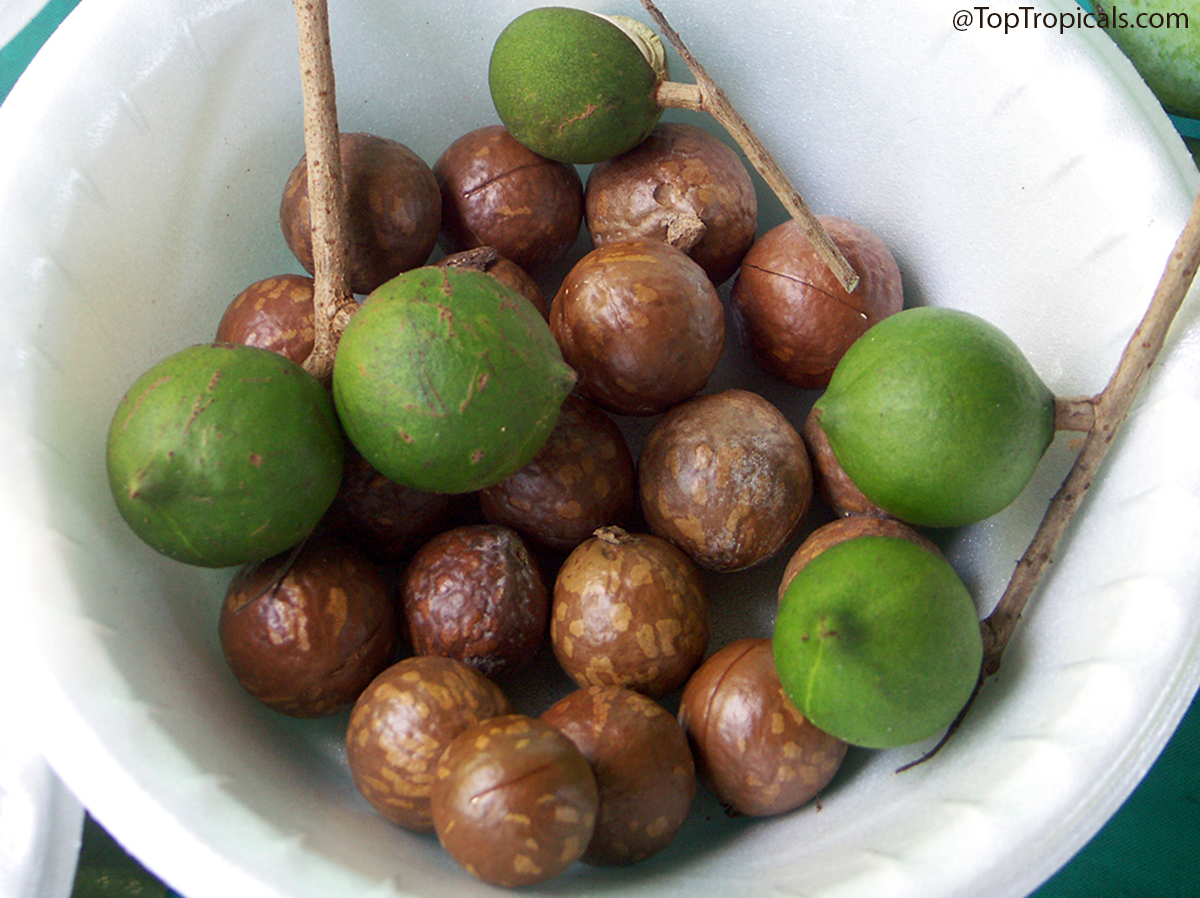
Macadamia fruit showing green outer husk and mature
brown shell inside.
🌱 Growing Macadamia in a Pot
Container size: Start large. A 15-25 gallon pot is ideal for long-term
growth.
Drainage: Critical. Use a container with multiple drainage holes.
Soil mix: Use a high-quality, well-draining container mix. Avoid heavy
garden soil. Top
Tropicals Abundance soil-less mix is specially formulated for pot
growing
Light: Full sun is best. Strong light improves flowering and nut
production.
Watering: Water deeply, then allow the top layer to dry slightly before
watering again. Avoid constant saturation.
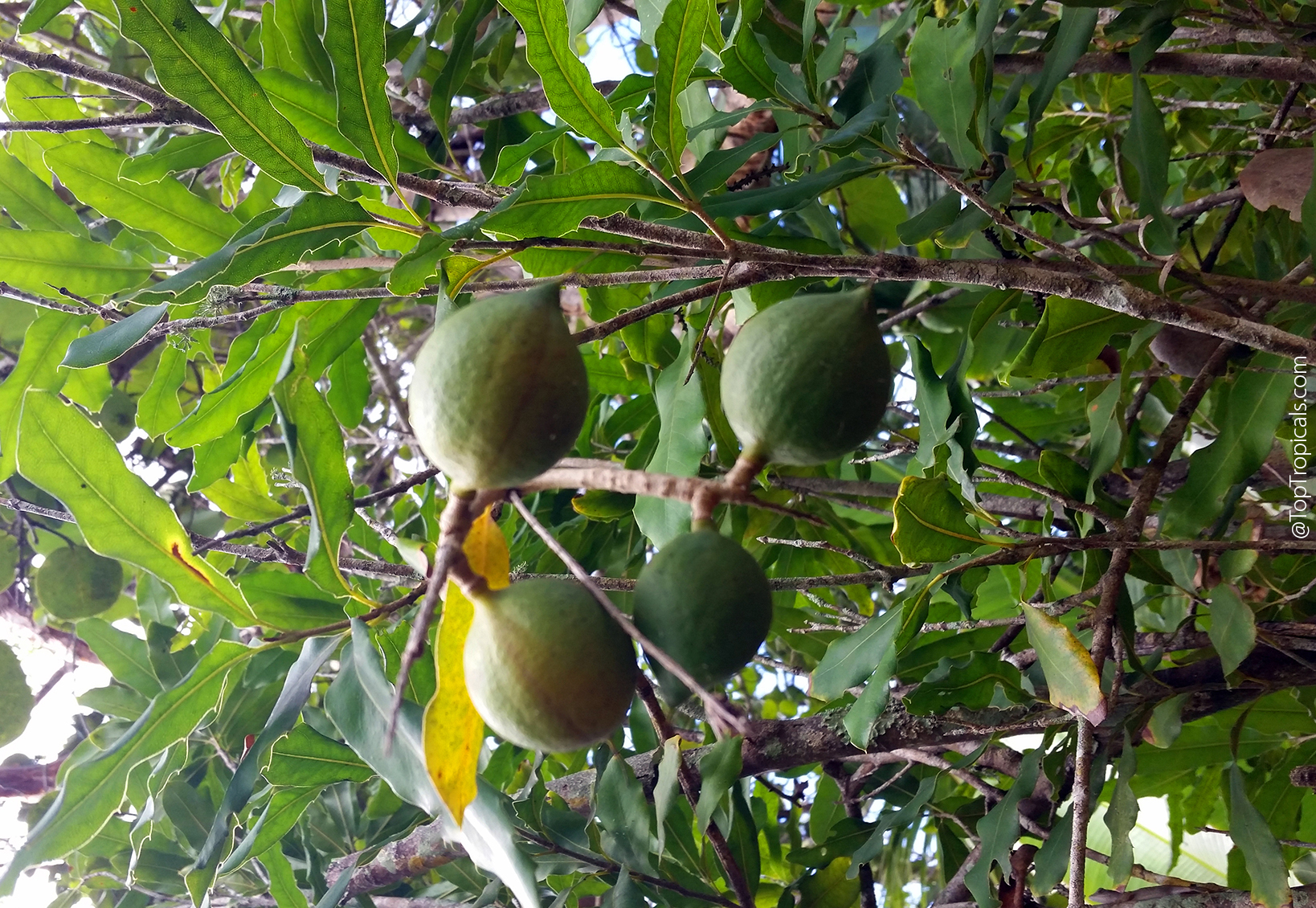
Macadamia nuts developing on the tree before the husk
splits.
🚫 Common Mistakes When Growing Macadamia
Planting in poorly drained soil:
The most common mistake. Macadamia will decline quickly in heavy,
waterlogged ground. If
drainage is questionable, plant on a mound.
Overwatering young trees:
Newly planted trees need consistent moisture, not constant saturation. Wet
roots lead to root problems.
Over-fertilizing:
Too much fertilizer causes weak growth and nutrient imbalance. Feed lightly
and avoid heavy nitrogen applications.
Planting too deep:
The top of the root ball should sit level with or slightly above the
surrounding soil. Do not bury the trunk.
Ignoring micronutrients:
Macadamia is very prone to iron, zinc, and copper deficiencies. Yellowing
leaves may signal a micronutrient issue. Applly Sunshine
Superfood on regular
basis.
Expecting instant production:
Macadamia takes time. Early years build structure. Patience is part of
success.
Skipping cold protection for young trees:
Established trees are tougher, but young plants should be protected below
freezing.
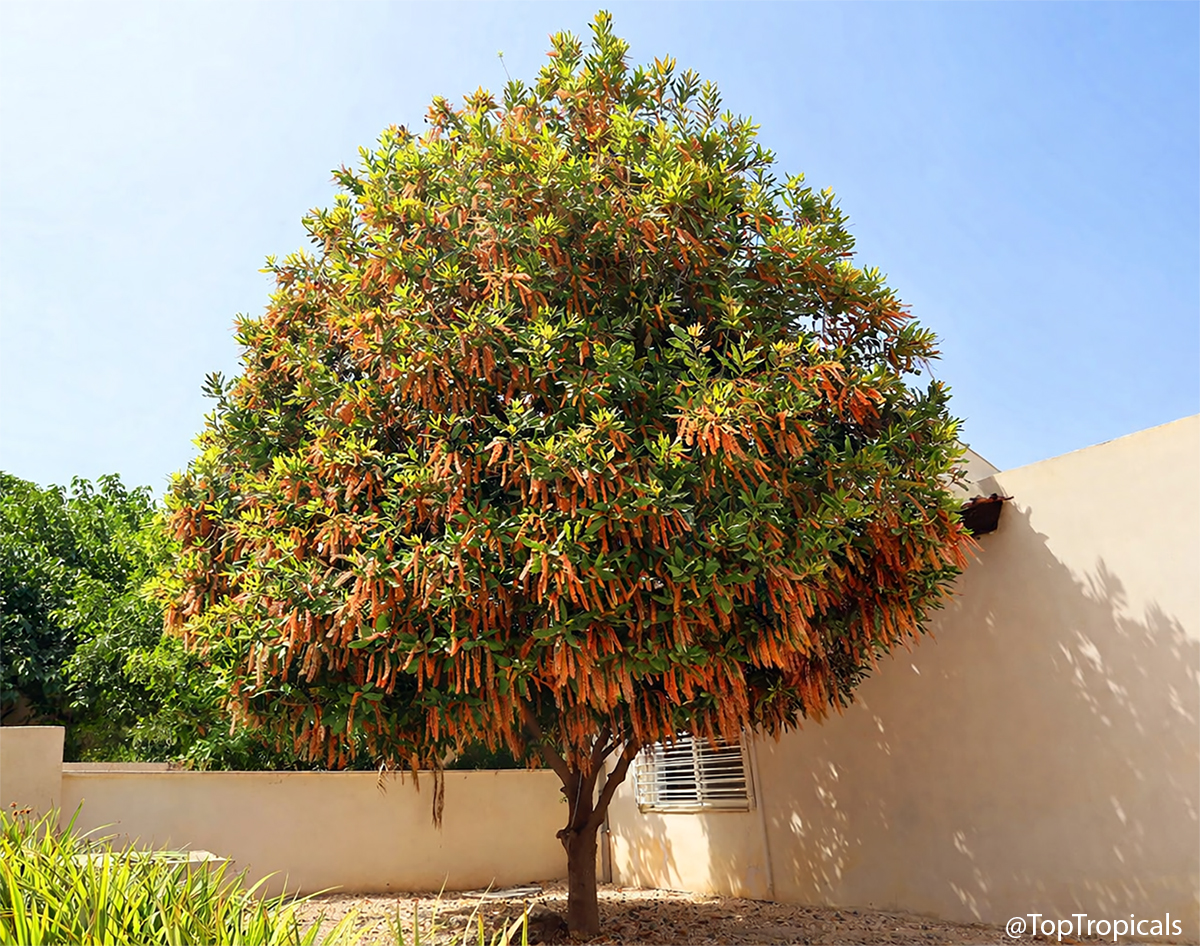
Macadamia tree in full bloom with abundant flower
clusters.
❓Frequently Asked Questions (FAQ)
Is Macadamia toxic to pets?
While the nuts are a superfood for humans, they are toxic to dogs. If
you have a dog that tends to forage in the garden, ensure you harvest
fallen nuts promptly or fence the base of the tree during the drop season.
Which varieties are best for the "Survivor" garden?
Look for Macadamia integrifolia (smooth-shell) or hybrids like
'Beaumont' (M.
tetraphylla x M. integrifolia). Hybrids often show slightly better cold
tolerance and more
consistent "home garden" production.
How tall will my tree get?
In the ground, an unpruned Macadamia can reach 20–30 feet. However,
they respond very well to "heading back" (pruning the top) to keep them at a
manageable 12–15 feet for easy harvesting.
Do I need two trees for cross-pollination?
Macadamias are self-fertile, meaning one tree will produce nuts. However,
planting two varieties near each other often results in a significantly
heavier "nut
set" due to cross-pollination.
Why are the leaves on my Macadamia prickly?
Don't panic—this is normal! Some species, particularly M.
tetraphylla, have serrated, holly-like leaves. This actually makes them
a great "defensive" hedge against intruders or deer.
When exactly should I harvest?
The tree tells you when it's ready. Don't shake the tree; wait for the nuts
to fall naturally. In Florida, this usually happens between August and
November. If the green outer husk hasn't split yet, let them sit in a
shaded, dry spot until they do.
My tree has "clusters" of flowers but no nuts. What happened?
Macadamias produce long racemes (flower spikes) with hundreds of tiny
blooms. It is normal for 90% of these to fall off. The tree only keeps what
it can afford to "feed." Boost your
success by using a combination of Sunshine
C-Cibus liquid
fertilizer and SUNSHINE
Superfood micro element supplement during the flowering stage to help
the tree retain more fruit.
Can I grow them from a nut I bought at the store?
Unlikely. Commercial nuts are usually roasted or dried at high heat, killing
the embryo. Even if a raw nut sprouts, it may take 10–12 years to
fruit and the quality is a gamble. Buying a grafted tree saves you a decade
of waiting.
We don’t just sell plants; we test them. The data from this
February freeze proves that with the right selection and proper drainage,
'tropical' doesn’t have to mean 'fragile.' Don’t wait for the
next cold front to find out what in your garden is
vulnerable. It is time to replace those empty spots with proven survivors
that offer both beauty and a premium harvest. If it can stand up to 25F in
our fields, it’s
ready for your backyard.
Coming in Part 2...
Smokey is already crunching the numbers on our next survivor, and Sunshine
found another tree that stayed perfectly green in the wind. Stay tuned to
see which fruit tree made the cut!
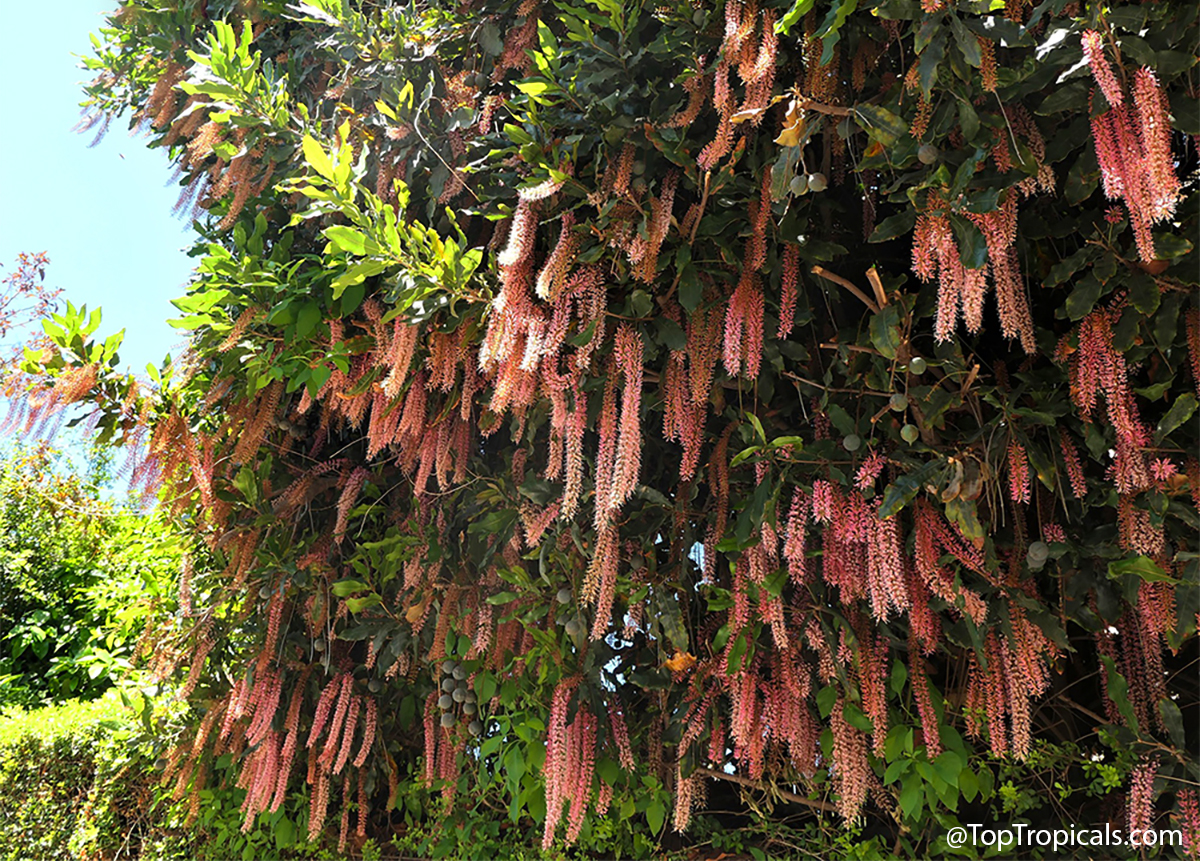
Macadamia
flowers forming long cascading racemes before nut set.
🌵Dragon Fruit (Pitaya) is one of the most rewarding exotic fruits to grow. Sweet pulp, striking looks, and plenty of health benefits make it a favorite. You'll see it in three main types: white-fleshed (Hylocereus undatus), red-fleshed (Hylocereus costaricensis), and yellow-skinned (Hylocereus, or Selenicereus megalanthus).
🌵Don't want to wait years for fruit? Here’s the good news: unlike many tropical trees that test your patience, dragon fruit is a fast-fruiting, easy-going cactus. With the right care, you can harvest in just 1-2 years from a cutting - or even the same season if you plant a well-established specimen.
🌵 How to get Dragon Fruit faster
Give it strong support - trellis, fence, or post. This cactus loves to climb.
Smart watering - water deeply in hot weather, then let the soil dry. Dragon fruit loves water during active summer growth, but remember it's still a cactus - don’t keep soil soggy.
Pollination matters - flowers open at night. Some varieties are self-fertile, but planting a few different types boosts fruit set. This is why it helps to keep several varieties close together.
Feed well - use organic liquid fertilizers like Sunshine Boosters C-Cibus with every watering, or Green Magic controlled-release fertilizer every 6 months.