Garden Blog - Top Tropicals

Date: 23 Mar 2020

Garden Sustainability Tips: Live your Life. Dig your Garden.
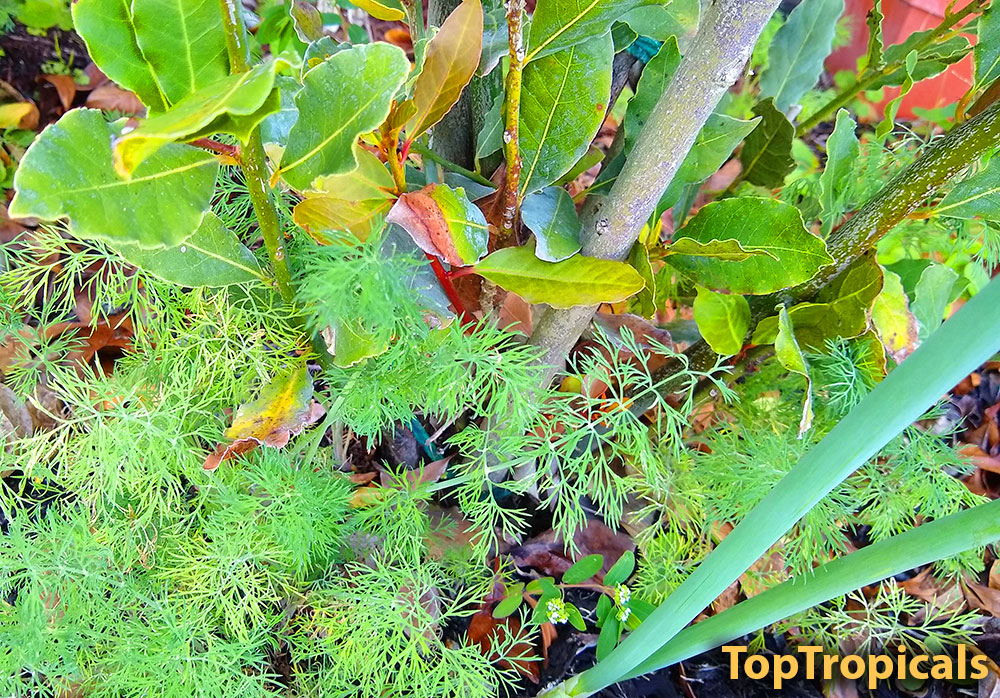
You can grow herbs and vegetables that can be easy incorporated into your home landscape. You don't need a raised bed for a few little things that will come really handy for your kitchen.

1. Parsley. Get a small 4"pot parsley plant from a local garden center. It grows super fast and just one plant can provide great healthy addition for your cooking for a few months. Plant in in full sun, under a tree or shrub, where it gets hit by a sprinkler.
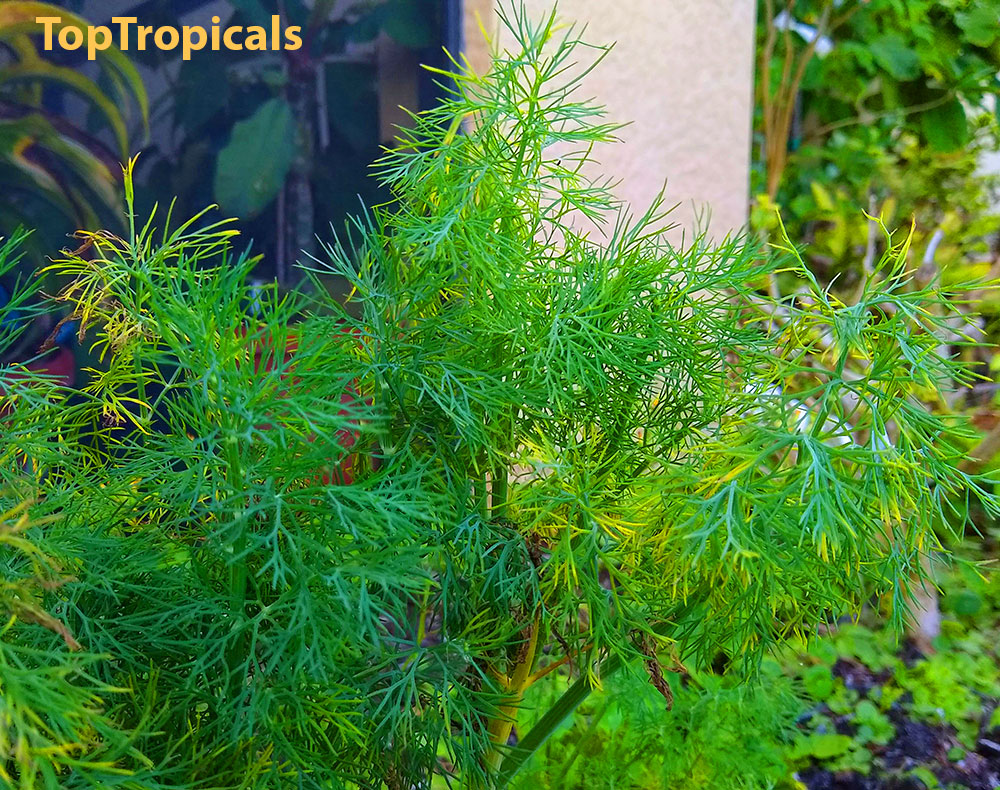
2. Dill. This one grows from seeds quickly and easily. It also needs full sun and regular water.
3. Chives, or Green Onion. Don't through away"bulbs"from chives you got from the store. Stick them in the ground, pretty much anywhere in your garden. You will have supply of fresh chives loaded with vitamins right away (withing a few days!) and for many months. You can also plant an onion bulb (root-end down... duh) - this one will produce greens even faster!
4. Bay Leaf. If you live in a mild climate, plant a Bay Leaf in your yard (closer to the door - closer to the kitchen!). It is a wonderful healthy spice for soups and stews that makes them super flavorful. If your winters are cold, keep the plant in a pot. Bay Leaf makes a great undemanding houseplant that needs bright light, but very little water.
5. Cherry tomatoes are easy to grow, heat tolerant and even grow in lower light, so they are easy to incorporate into any existing landscape. Get Sunshine Boosters to double your crop: see how it works.
6. More herbs and spices. Check out our large selection of herbs and spices - they are on sale today!
7. Garden work is a great exercise. While the gym is closed - get to gardening. Read about Fun workout and Calories Burning Gardening.
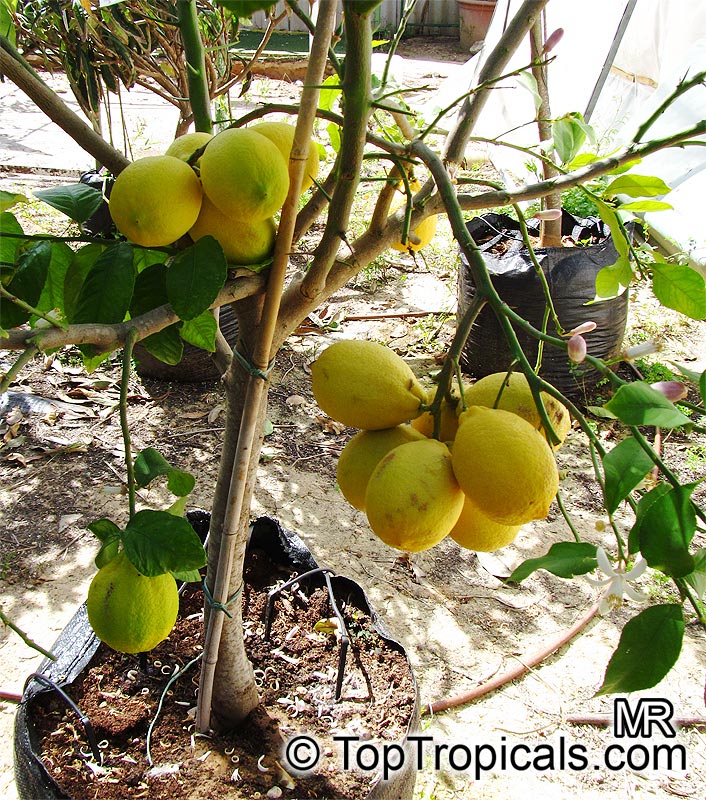
8. Lemons. Vitamin C is your best friend for boosting immune system, and Lemons have tons of it! In areas where citrus can grow outside, Lemon tree is a must-have for your garden, or at least find a friend who has one! Citrus also makes a great house plant, so you can keep it in a pot, too. Just make sure to have a grafted tree that will produce right away.

Lemon Juice Health Booster Recipe

1. Squeeze juice from 1 lemon and mix it with 1 cup of water.
2. Add ice cubes and 1-2 tbsp of any flavored syrup (optional). You may add some fresh mint for Mojito flavor.
3. Enjoy this drink at least once a day.
4. Get a bunch of lemons, squeeze fresh juice into ice cube trays and freeze. 1 lemon = makes 1 ice cube. Store in freezer and use 1-2 cubes to make the above drink, daily.

Besides being rich in vitamin C that will boost your immune system, Lemon juice is a Natural medicine that helps to treat:
- cold and flu
- headaches and high blood pressure
- stomach problems
- insomnia
- and much more
Drinking lemon juice on regular basis will make your body stronger and more resistant to infections and many illnesses.

Please take good care of yourself and your loved ones. Stay healthy.
Date: 16 Nov 2019

When to apply super boost?

Sunshine Boosters: a breakthrough in Winter fertilizing

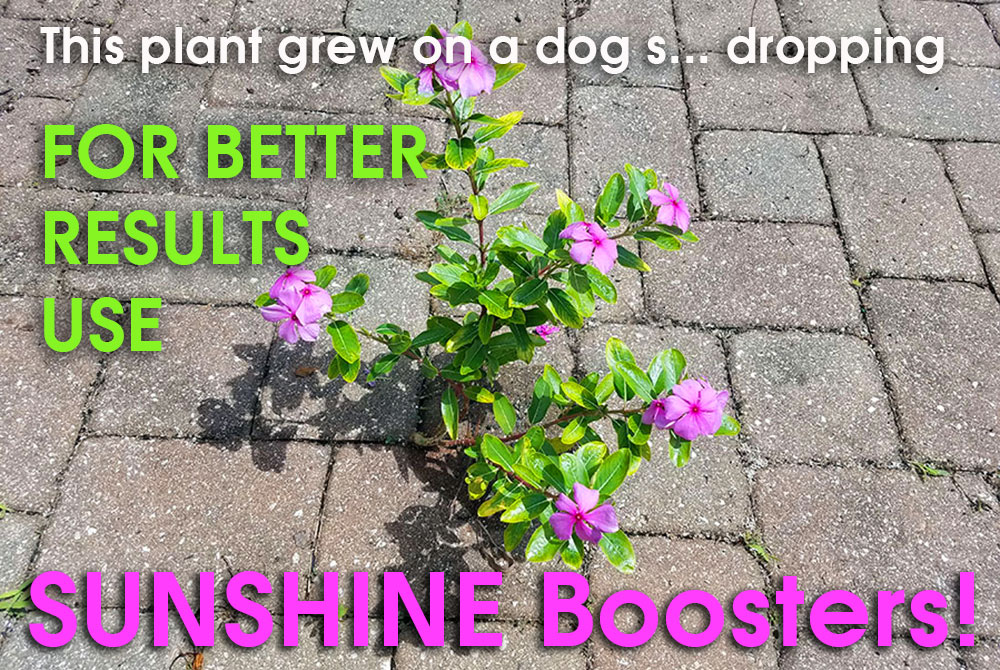
In the photo: plants are tough survivors. Life can't be stopped even by a brick road!

Q: Just wanted to know best time of day to apply super boost as spray and watering? Only listed to make sure night temp doesn't drop below 65F...

A: As a rule of thumb, plant's needs in fertilizers are very low in the cold season because they consume less nutrients during dormancy. For tropical plants, when minimum temperatures drop below 65F - we stop applications of dry (granulated) fertilizers until spring, to avoid root burn.
Liquid Sunshine Boosters are exceptions from this rule to a certain extent, for 2 reasons:
- they are amino-acid based which means, salts do not build up in the soil, and thus will not burn the roots even with slower plant metabolism.
- concentrations/formulas are mild and designed for as frequent as daily watering

Tips for winter fertilizing:

1) When a plant goes into full dormancy (drops leaves and does not show any new growth), you may stop fertilizing with any Macro NPK products (both dry and liquid)

2) If a plant is evergreen and continues growing during the cooler period, and especially if it is a winter bloomer, mild liquid fertilizers can be applied, depending on the stage of plant development.
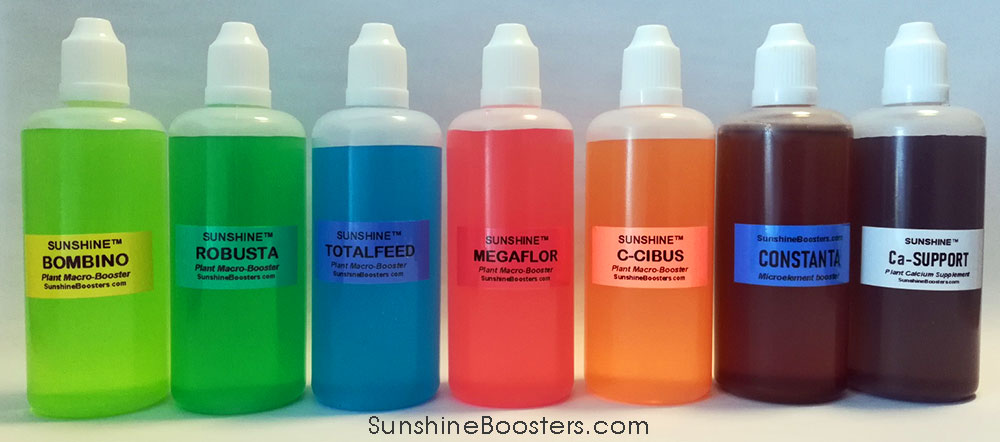
Robusta and TotalFeed are used for vegetative growth and pre-flower.
Megaflor and C-Cibus are used for winter flowering/ fruiting plants during the bloom stage.

See full list of liquid boosters

3) Micro-elements can be used all year round for all plants that are not dormant (do not drop leaves)

4) Always use Sunshine-Epi as a foliar spray to activate immune system and unlock protective mechanisms, BEFORE applying other boosters. It is especially important during Fall-Winter for improving cold tolerance and disease resistance.

5) Always apply foliar spray and/or drench the soil with solutions in morning hours so the plant has time to process the nutrients during daylight when metabolism is the most active.

6) Avoid any dry fertilizers during winter

Date: 22 Oct 2024

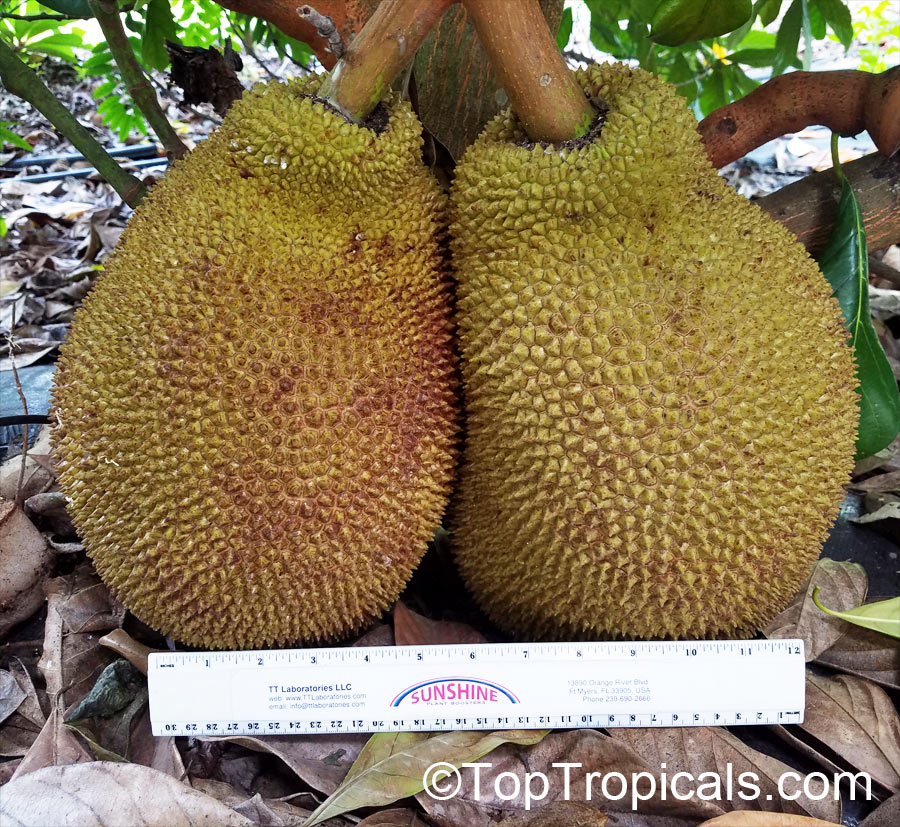
How to grow Jackfruit in a pot:
the biggest fruit in the world

Jackfruit  -  Artocarpus  heterophyllus

Q: Can I grow Jackfruit in a pot?

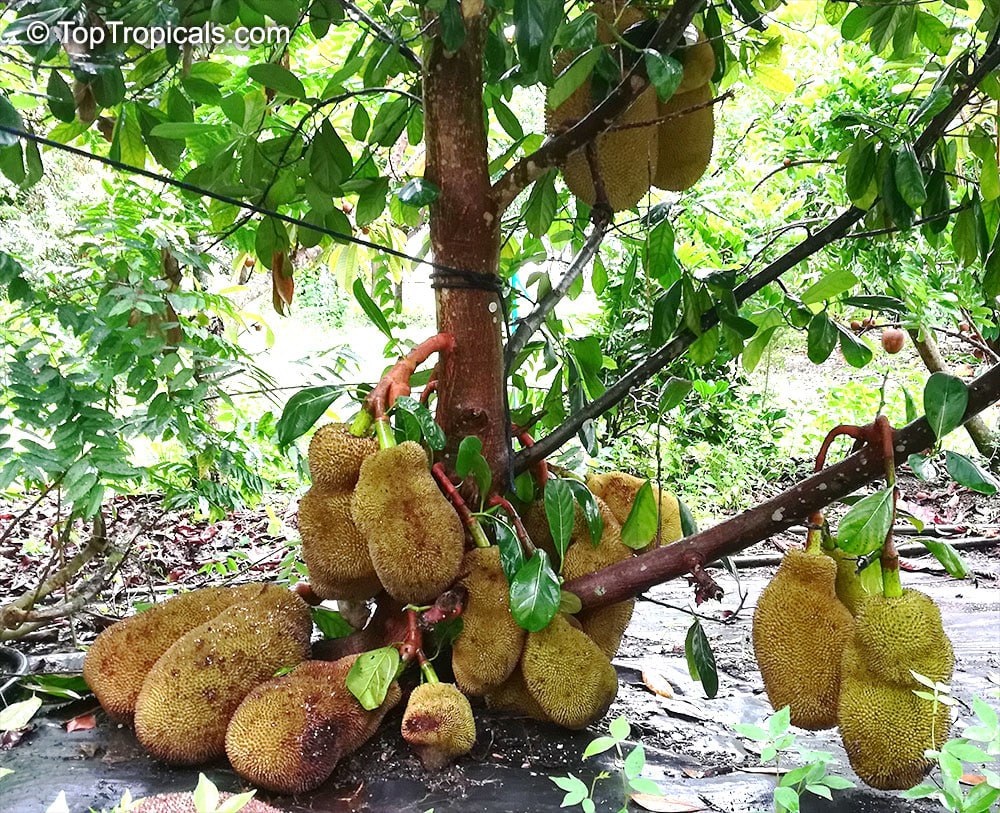
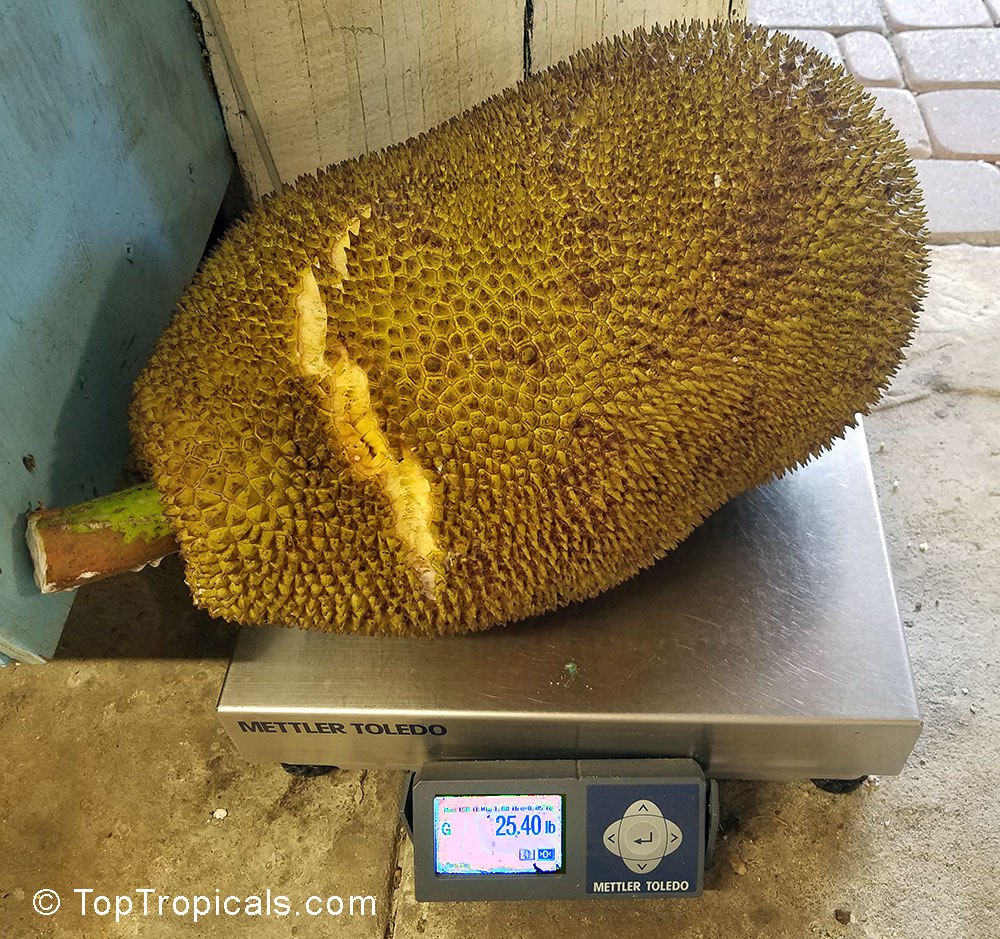
A: Yes, you can! Jackfruit trees, despite producing the largest tree-borne fruit in the world - up to 80 pounds and 36 inches long - can thrive and fruit in containers. The tree has a clever feature: it grows fruit only at the base of the trunk, allowing you to manage its height and size. With regular pruning, the tree can stay compact at just 6-7 feet tall, making it perfect for pot culture.

1. Getting started: pot sizes and growth tips

Start with: A 3-7 gallon container.
As it grows: Gradually increase to a 15-25 gallon pot by the time it reaches fruiting size (2-4 years).
Pruning is key: Keep the tree topped at 6-7 feet to focus its energy on fruit production.
Fertilize regularly: Use high-quality plant food like Sunshine Boosters C-Cibus to promote healthy growth and fruit development. C-Cibus is the best natural plant food for fruit and edibles.

2. Fun facts about Jackfruit - Artocarpus heterophyllus

Jackfruit  -  Artocarpus  heterophyllus

A mature Jackfruit tree can produce 200 pounds of fruit per year.
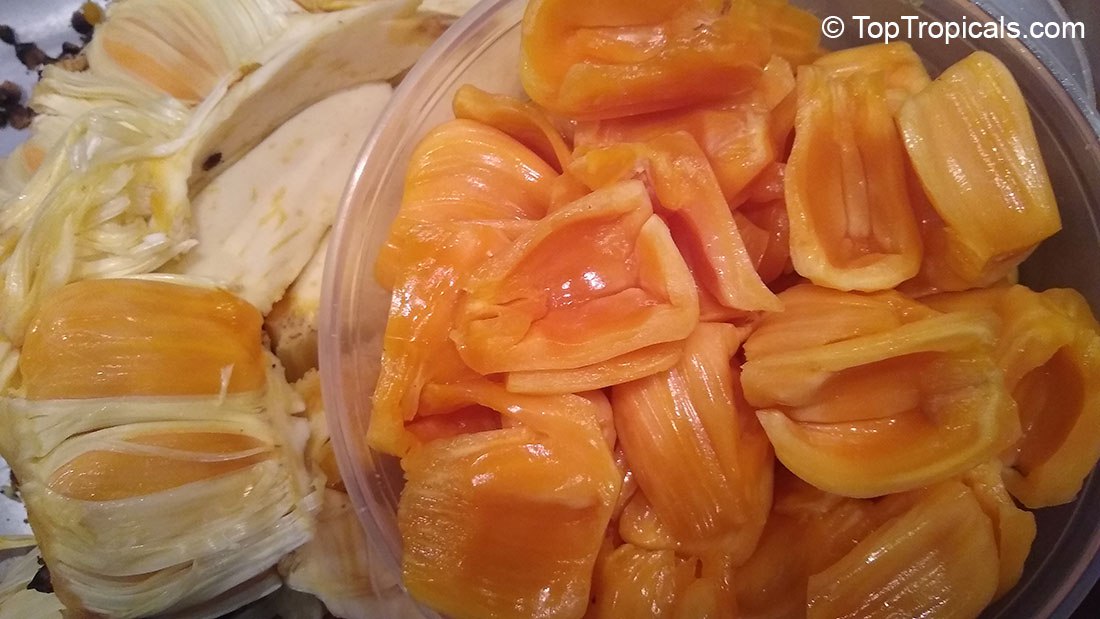
The fruit consists of large, sweet, yellow bulbs with a banana-like aroma.
Seedlings start fruiting within 3-4 years, with fruits ripening in just 4-6 months after flowering.

3. Cold tolerance of Jackfruit trees

Though often thought of as ultra-tropical, mature trees can withstand light frost for short periods without major damage. Keeping Jackfruit in pots also offers an easy way to move them indoors during cold spells if you're in a cooler climate.

4. Secrets for successful Jackfruit production

- Frost-free temperatures are essential.
- Use rich, organic soil with compost, manure, or peat moss.
- Maintain moist soil with regular watering.
- Constant pruning to keep the tree under 7 feet promotes healthy fruiting.
- Apply fertilizer and microelements regularly for better fruit quality.

By following these tips, you'll be able to enjoy the world's biggest fruit right from your patio!

Jackfruit  -  Artocarpus  heterophyllus

Learn more:
About Jackfruit
How to grow the biggest fruit on Earth
Cheena - Jackedack

Videos:
Jackfruit Fruit

Jackfruit  -  Artocarpus  heterophyllus

Jackfruit  -  Artocarpus  heterophyllus

Date: 29 Oct 2024

How to overwinter tropical plants indoors

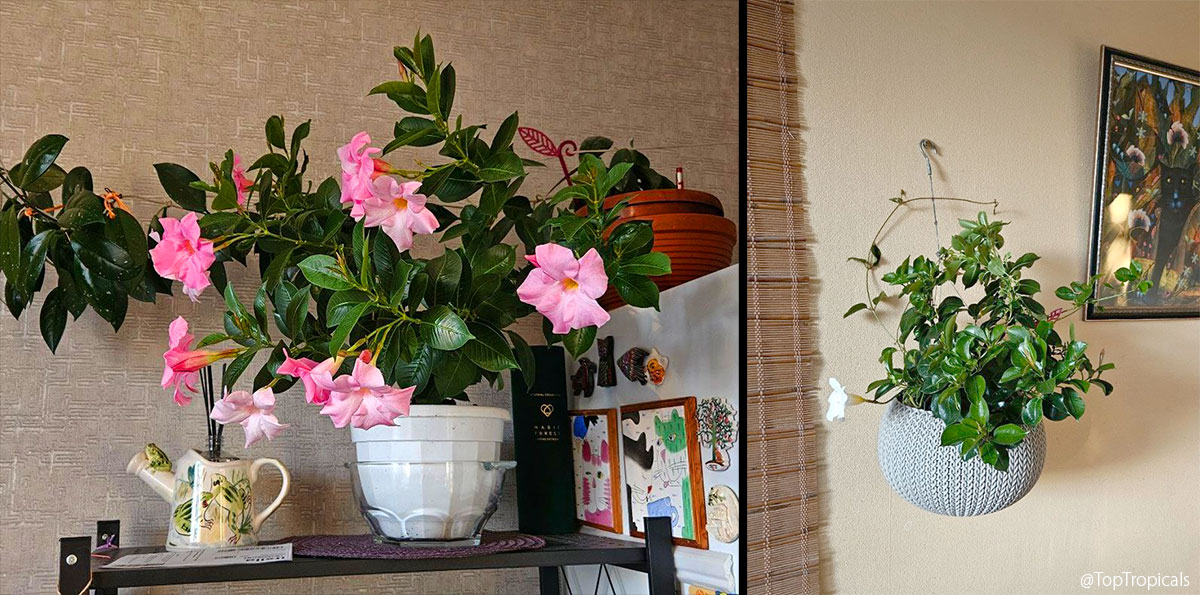
Mandevillas  indoors

10 key tips for successful overwintering

Q: I have two Mandevillas that thrived on my balcony all summer. Now that cold weather is approaching, I've moved them indoors to bright spots, but they're dropping and wilting leaves. How can I keep them healthy until spring? Should I fertilize them? Can Mandevillas grow indoors year-round?

A: First, keep in mind that the plants we call "indoor plants" or "house plants" are all tropical. However, not all tropical plants are suitable for indoor living. Some, especially shade-loving ones, thrive in indoor conditions, which is why we refer to them as "house plants" (philodendrons, monsteras, calatheas, peperomias, and many others, including some succulents). Others are less adaptable to the lower light and humidity typical of indoor spaces, but with a little extra care, you can overwinter them inside and move them back outdoors in spring. Mandevillas are no exception! Even tropical trees, including fruit trees, can tolerate a few months indoors if given the right conditions for semi-dormancy. Below are the 10 key tips for successfully overwintering tropical plants indoors.

1. Maximize Light: The more light, the better. There's no such thing as too much indoor light. If windows aren't enough, use LED grow lights, which stay cool and won't dry the air. Rotate plants every few days to prevent uneven leaf loss.

2. Reduce Watering: Less light and cooler temperatures mean plants need less water. Allow the soil to dry between waterings, and avoid overwatering - combination of cold + wet is especially harmful.

3. Maintain Moderate Temperatures: Most tropicals are happy with daytime temperatures around 75F and nights at 50-60F. In sunrooms or greenhouses, some can handle 45F if watering is kept to a minimum.

4. Boost Humidity: Avoid placing plants near heaters or vents that dry the air. Misting daily helps, or place pots on trays filled with water and pebbles to raise humidity around them.

5. Monitor for Pests: Check leaves weekly to catch insect problems early, as pests can cause serious damage or even kill the plant indoors.

6. Fertilize Smart: Use ONLY liquid, amino-acid-based fertilizers like Sunshine Boosters throughout winter; they won't burn roots since their dosage adjusts with reduced watering. Avoid dry, granulated, and EDTA-based fertilizers during winter and dormancy.

7. Use Micro-Nutrients: Along with macro-elements (fertilizers), supplement with micro-elements like Sunshine Superfood and bio-stimulants such as Sunshine Epi to build strong plants with robust immune systems, better able to withstand unfavorable conditions and resist diseases.

8. Hold Off on Pruning: Leaf drop and leggy growth are normal responses to winter. Wait until spring to prune, when new growth starts, to encourage branching and healthy foliage.

9. Don't Repot Yet: During dormancy, roots slow their growth. Repotting too soon risks root rot. Wait until spring when new growth appears to transplant into a larger container. Typically, roots grow in proportion to the above-ground parts.

10. Let Them Rest: Winter is a natural resting period. Avoid forcing growth - your plants will reward your patience with vibrant leaves and flowers when spring returns.

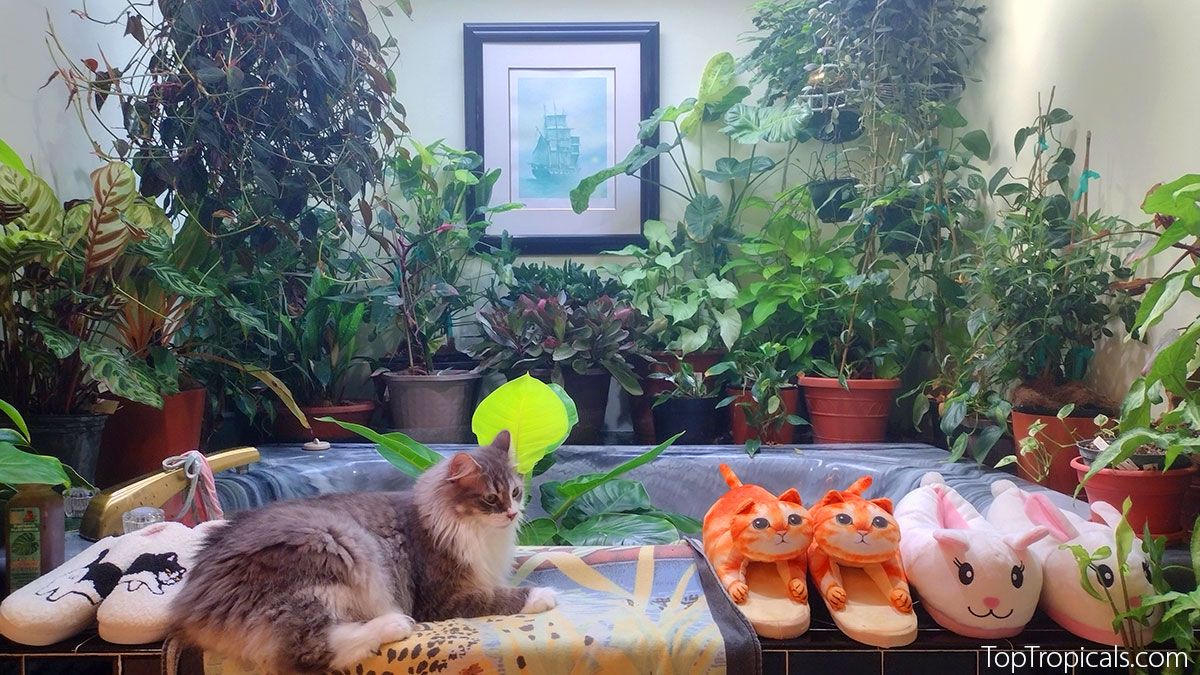
Cat  Indoor  Garden

Date: 18 Apr 2025

Want Constant Blooms? Plant Clerodendrums

Your Shortcut to a Colorful Garden

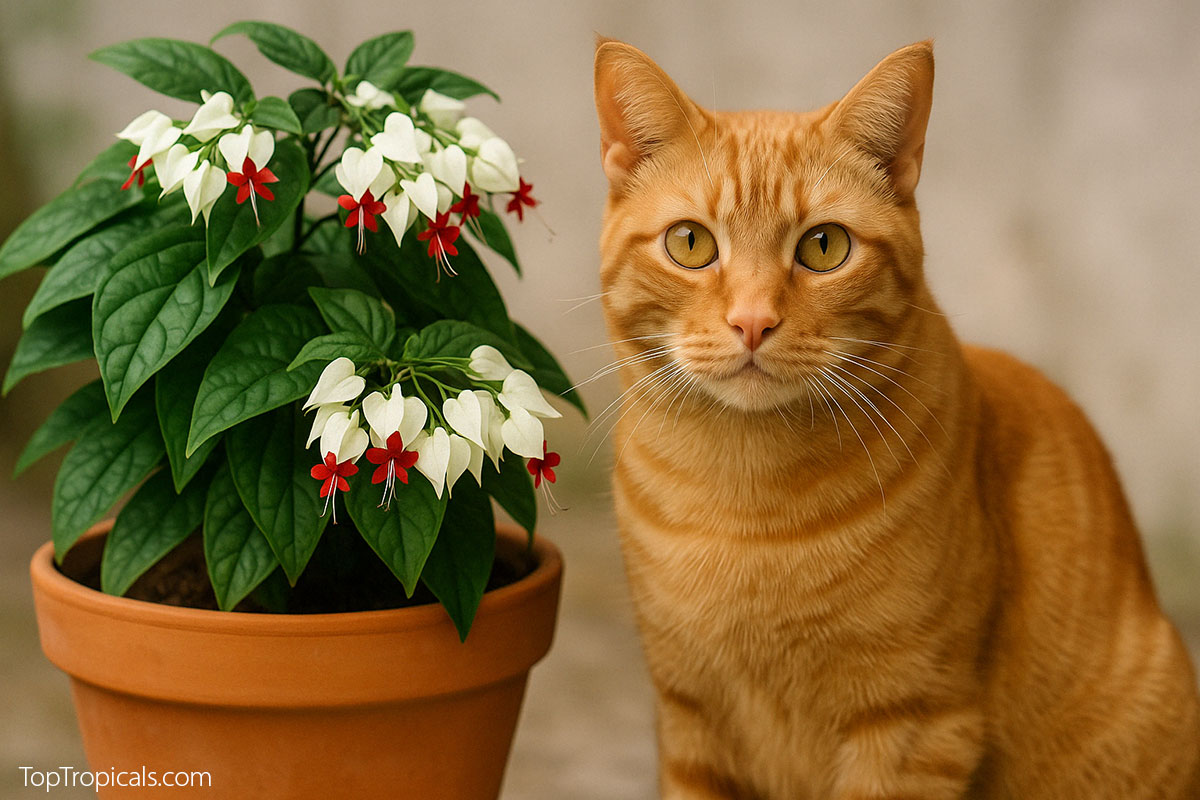
Cat  with  Bleeding  Heart  Clerodendrum

Q: Q: I live in Florida, and while everything is green, I want more color in my garden and patio. What low-maintenance perennials can add nonstop blooms without constant care? I'm tired of annuals that don't last. Do such plants even exist?

A: Yes, they do - and your perfect solution is Clerodendrums. These colorful tropical perennials grow fast, bloom for most of the year, and thrive in both sun and shade. They're easy to care for, relatively cold-tolerant, and come in many shapes: shrubs, vines, and even small trees. Ideal for both garden beds and containers.

Why Grow Clerodendrums?

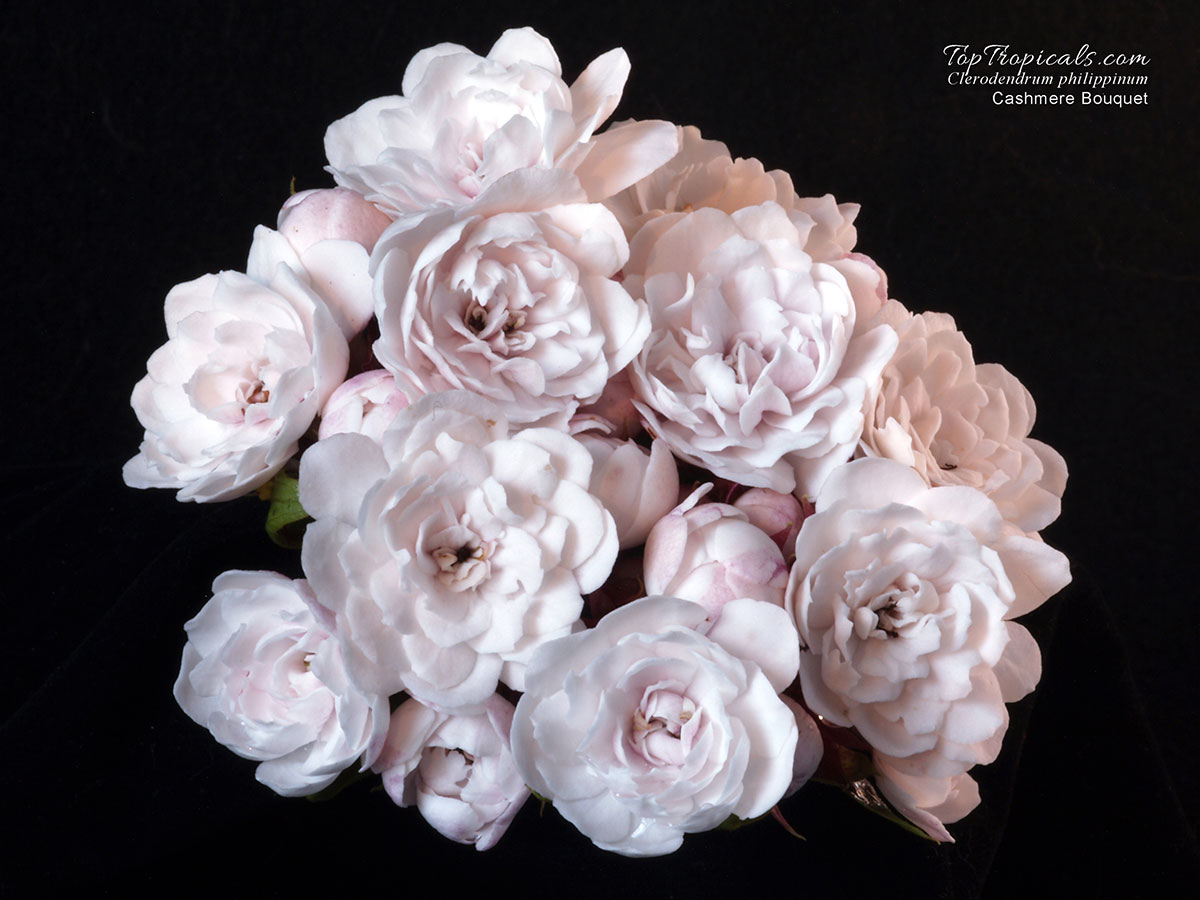
Clerodendrum  philippinum  -  Cashmere  Bouquet

Clerodendrums are tough, reliable, and visually striking plants:
- Fast-growing with a compact habit
- Available in many forms: shrubs, vines, and small trees
- Colorful flowers, many of them are sweetly fragrant!
- Thrive in sun or shade; cold tolerant; not picky about soil
- Bloom repeatedly or continuously
- Excellent for pots, patios, or indoors

Clerodendrums as Shrubs

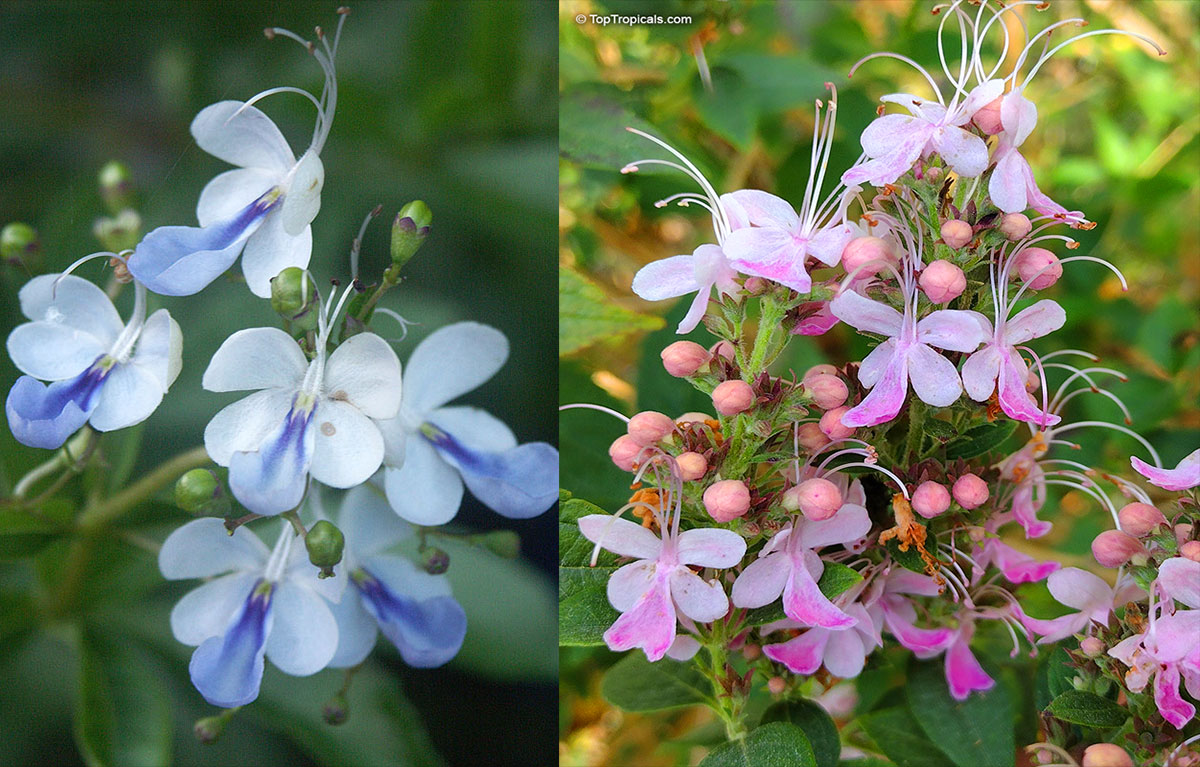
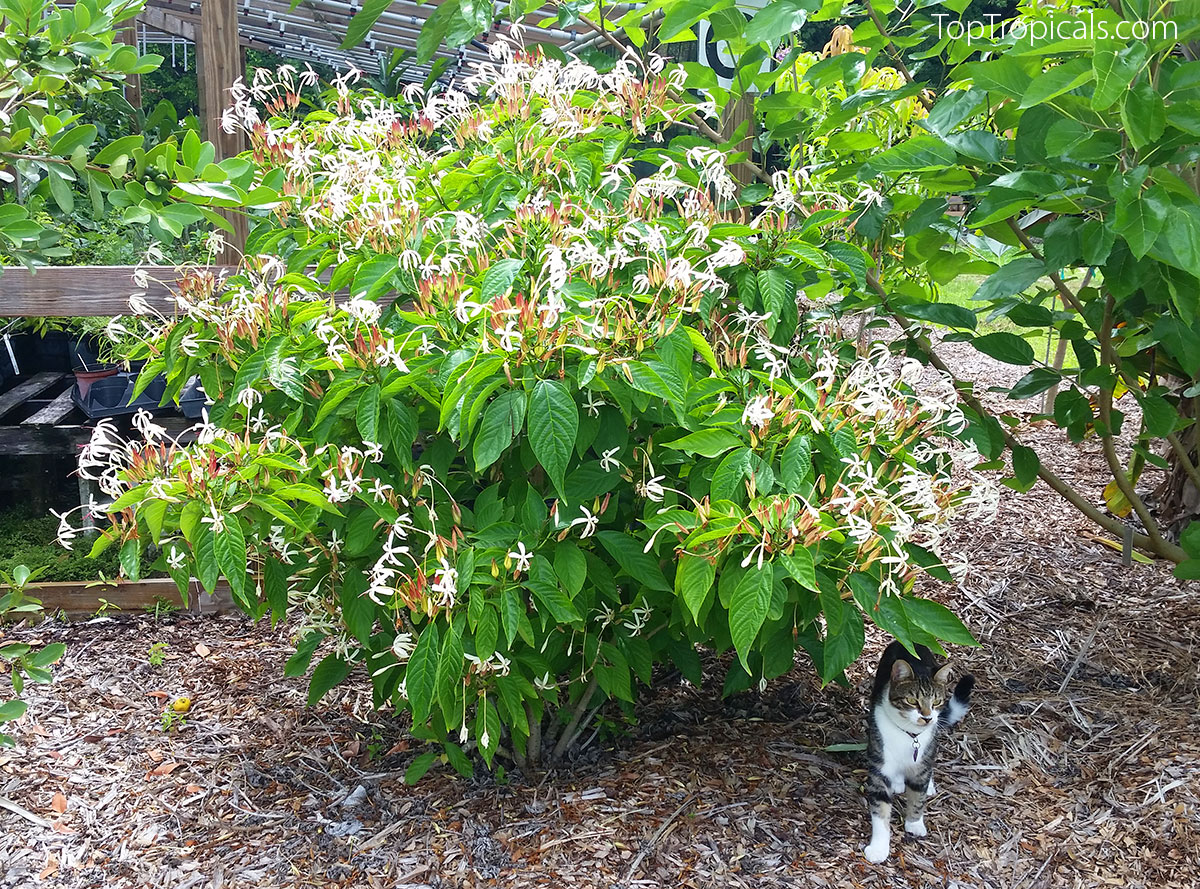
Clerodendrum  ugandense  and  mastacanthum

- Clerodendrum bungei - Glory Bower: fragrant pink blooms, spreads quickly
- Clerodendrum incisum - Musical Note: unique buds shaped like musical notes
- Clerodendrum inerme - Wild Jasmine: salt-tolerant, good for seaside areas
- Clerodendrum mastacanthum - Pink Butterfly Bush: long-blooming, eye-catching pink
- Clerodendrum paniculatum - Pagoda Flower: layered red-orange towers of flowers
- Clerodendrum philippinum - Cashmere Bouquet: double fragrant flowers, shade-tolerant
- Clerodendrum ugandense - Blue Butterfly: delicate blue blooms that attract pollinators

Clerodendrums as Vines

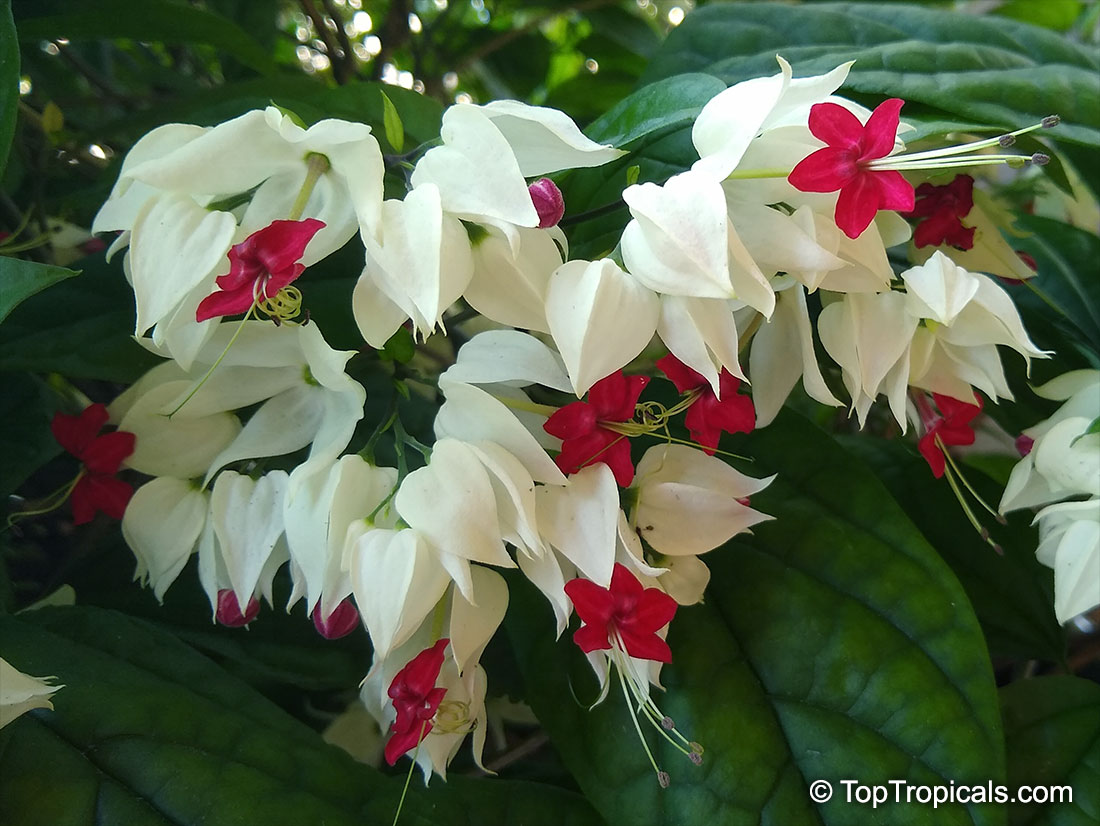
Clerodendrum  thomsoniae  -  Bleeding  Heart

- Clerodendrum thomsoniae - Bleeding Heart: classic red-and-white contrast, climbs easily
- Clerodendrum speciosum - Red Bleeding Heart: vivid magenta blooms, great on trellises

Clerodendrums as Small Trees

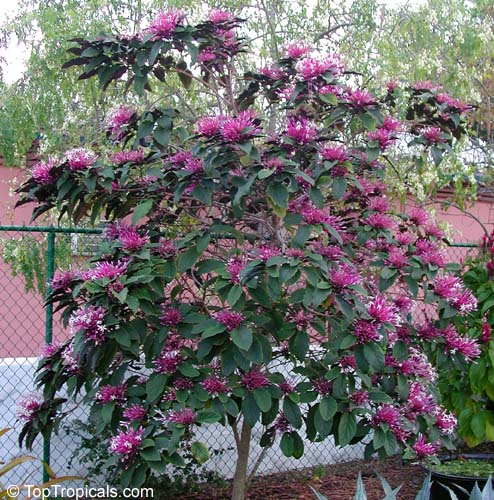
Clerodendrum  quadriloculare  -  Winter  Starburst

- Clerodendrum minahassae - Fountain Clerodendrum: upright, white flower sprays
- Clerodendrum sahelangii - Champagne Clerodendrum: cascading white blooms
- Clerodendrum quadriloculare - Winter Starburst: purple leaves, late winter blooms
- Clerodendrum schmitii - Chains of Glory: dangling flower clusters, unusual look
- Clerodendrum wallichii - Bridal Veil: long white flowers, graceful arching branches

Clerodendrum  minahasse