Garden Blog - Top Tropicals

Date: 24 Jun 2018

We can ID plants for you! Even Mango Elephant...

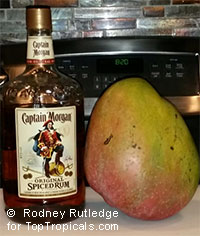
Q: I had a mango tree, the fruit was very large and no one knew the name of it. Can you please tell me the name of it or something about it? I have never seen this variety before. It weighed in at 7 lbs, it smells a little like bubble gum, its flesh is fiberless and the taste is watery with a little sweet. And do you have it for sale? I don't have the tree anymore. My pictures are about a year or two old, lighting struck the tree and it died so I have been trying ever since then to find another tree but I don't know what kind it is. I originally bought the tree on side of the road cause I always wanted a mango tree so I didn't care at the time what kind it was so I bought it but I was shocked at how big the mango was. However I collected rotten mangoes off the ground and planted the seeds. Only one germinated.

A: This mango is called Elephant. We will try to find this grafted variety and let you know when we have it. Unfortunately seedlings take many years to fruit (8-15 for mango) and usually do not come trues to seed.
The closest variety by fruit size is Lancetilla, it is a giant 5 lb fruit, of a very good quality. And the best tasting and the most popular - Nam Doc Mai!

Remember at Top Tropicals, we can help you to identify plants for you! Just send us a picture. Close up of leaves and/or flowers/fruit will be always helpful. Top Tropicals plant experts are always here to help!
Date: 24 Jun 2018

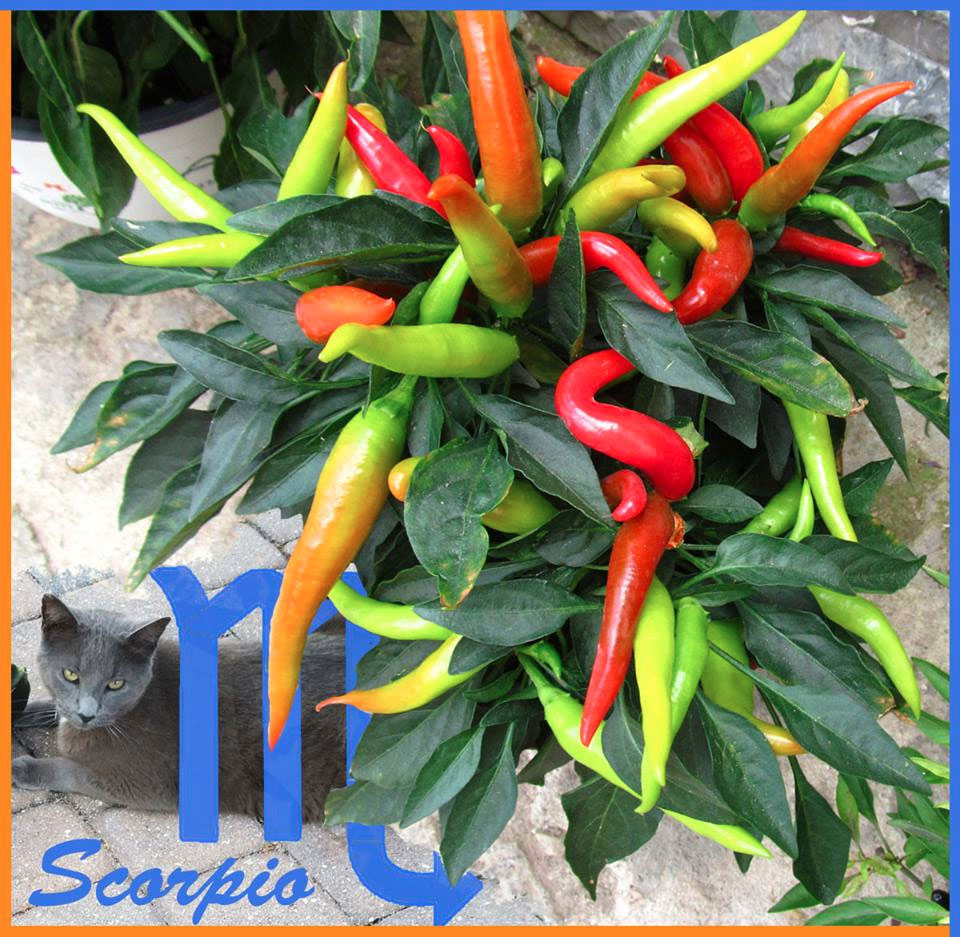
Plant Horoscope. Scorpio Zodiac lucky plants: Peppers, Ceiba, Baobab,Pistachio, Nutmeg

TopTropicals

Scorpio Zodiac lucky plants

Scorpio - 10/23-11/21. A WATER sign ruled by both Mars and Pluto. Scorpio's plants are often found in remote places or on poor ground. They will likely have thorns, can be red in color, and grow under adversity. The good news is, most of these plants are nearly indestructible! This makes them desirable for every gardener.

Scorpio Zodiac lucky plants: Peppers, Ceiba, Baobab, Pistachio, Nutmeg, Black-eyed Susan Thunbergia, Combretums, Dragon fruit, Medinilla, Camphor Basil, Cuban Oregano, Vanilla orchid, Hibiscus, Various cacti and succulents, Adenium, Honeysuckle, Cordyline, Spider plant, Jasmine, Gooseberries, Wild indigo, Bougainvillea, Aloe vera, Raspberry, Palmetto, Horseradish tree, Camphor, Allspice and Bay Rum, Jujube, Sweet Mimosa, Agave, Milkweed, Hong Kong Orchid Tree, Pony Tail, Dwarf Poinciana, Bottlebrushes, Clusias, Crocosmia, Zig-Zag Cactus, Dracaena, Fire Bush, Hoyas, Jatropha, Kalanchoe, Sausage tree, Devils Backbone, Pereskia, Red Plumeria, Firecracker, Rattlebox, Rhoeo, Calendula, Geranium, Thistles, Mint, Sage, Catnip, Coriander, Sandalwood, Ginseng, Euphorbias, Acacias.

For more info on Scorpio Lucky plants, links to these plants and other signs information, see full Plant Horoscope.

Date: 24 Jun 2018

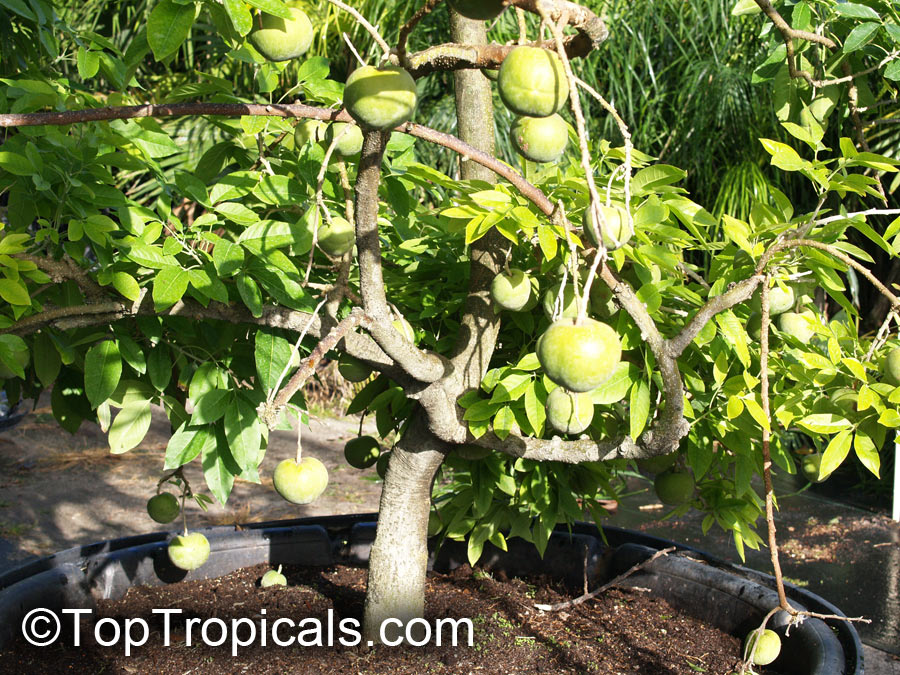
White Sapote from under graft

Q: My super sweet white sapote died back all the way to the roots but it's growing back from the roots and I'm wondering if that's just the rootstock growing back or if that's good fruiting wood that's going to make a nice healthy super sweet tree?

A: The "super sweet" White Sapote, or Casimiroa edulis, was probably variety Young Hands, Super Sweet White Sapote. It was grafted on seedling of White Sapote that has a pleasant somewhat-sweet flavor. The grafted variety you had is a little sweeter than that. So to answer your question, it is worth to give the tree a second chance as far as fruit quality is concerned, although it won't be the a grafted variety, if the new growth coming from under the graft point. The only problem is, non-grafted tree may take longer until it fruits. Grafted trees may fruit right away, seedlings may take a few years.

We suggest to use SUNSHINE-Sweet to enhance flavor of your White Sapote fruit, and make them sweeter, better tasting!

Date: 24 Jun 2018

TopTropicals

Florida winters and gardening

From Anna Banana, our Garden Center customer advisor.
Cool weather - no sweat. Here in Florida we are blessed to have warm winters. We just went to the beach for Christmas! Winter time is not only a good beach time, but also the best planting time here. Why? I always refer my customers to Murray Corman's article Tropical Planting Breaks the Rules. "...Wintertime does not just mean hard work for tropical gardeners. It is also a time to enjoy the fruits of our labor. Winter-blooming plants and the visitors they attract - birds, bats and butterflies - make the garden as enjoyable in winter as any other time of year. Tasks performed during the spring and summer up north have to be done during the fall and winter here. Why? The answer is elementary: It's too hot! Taking advantage of the coolest months of the subtropical year for heavy chores like planting trees has a twofold benefit: The gardener can make hay while the sun shines without getting heat stroke and the plants appreciate the moderate temperatures, enjoying a break from the stress of 93 degrees in the shade..."
Continue reading...

Winter flowering plants - are a blessing for a tropical gardener. See below what's blooming now! See our recommendations for winter flowering and fruiting plants (PDF).

Date: 24 Jun 2018

Full Sun Garden vs Shade Garden

"Someone is sitting in the shade today because someone planted a tree a long time ago." (Warren Buffett)

Q: I live in California and I have a large area of my garden in full shade. Are there any plants that will be happy there? I am looking for something colorful. I also have a smaller area in front of the house that has full sun almost all day long, but I am afraid this can be too hot for flowering plants? Can you recommend something?

A: Full sun gardens have a strong, bright look while shade gardens have cooler, subdued appearance. Both types of gardens are fun to design and maintain as long as you pick the right plants.
Full Sun Garden is the easiest to grow. Depending on exposure, it may require some plants that can tolerate the hottest summer days and the dry conditions in your area. The good news is, the majority of tropical and subtropical plants prefer full sun, so you have a large selection to pick from - fruit trees, flowering trees, shrubs, vines, and small perennials. The more sun, the more flowers and fruit you will get! However, keep in mind that sun gardens require more water, but generous mulching will help to minimize watering.
Shade Garden is much more restful in appearance, but sometimes may be a little more difficult to work with. As shade trees grow bigger and thicker, it may become too dark; nothing will grow in total darkness. In this case you need to prune back some branches to let more light in. Filtered sunlight or dappled light coming through the leaves of the trees is beneficial and considered light shade, which would be the best light conditions for shade loving plants to thrive. Although shady cooler spaces attract more insects and will require more attention to control them, they also have some advantages over sun gardens. You can enjoy working in cooler conditions, and your garden will require less water. Many foliage plants look more deeply colored and healthier than in full sun; white flowers shine instead of looking washed out!
Our favorite shade plants are fragrant brunfelsias , clerodendrums, and of course colorful gingers and heliconias. You may also consider ornamental foliage of Calatheas, lush Alocasias, Colocasias, and colorful Cordylines. Check out our shade loving plant list for more colorful suggestions. These are also great for indoor gardens!

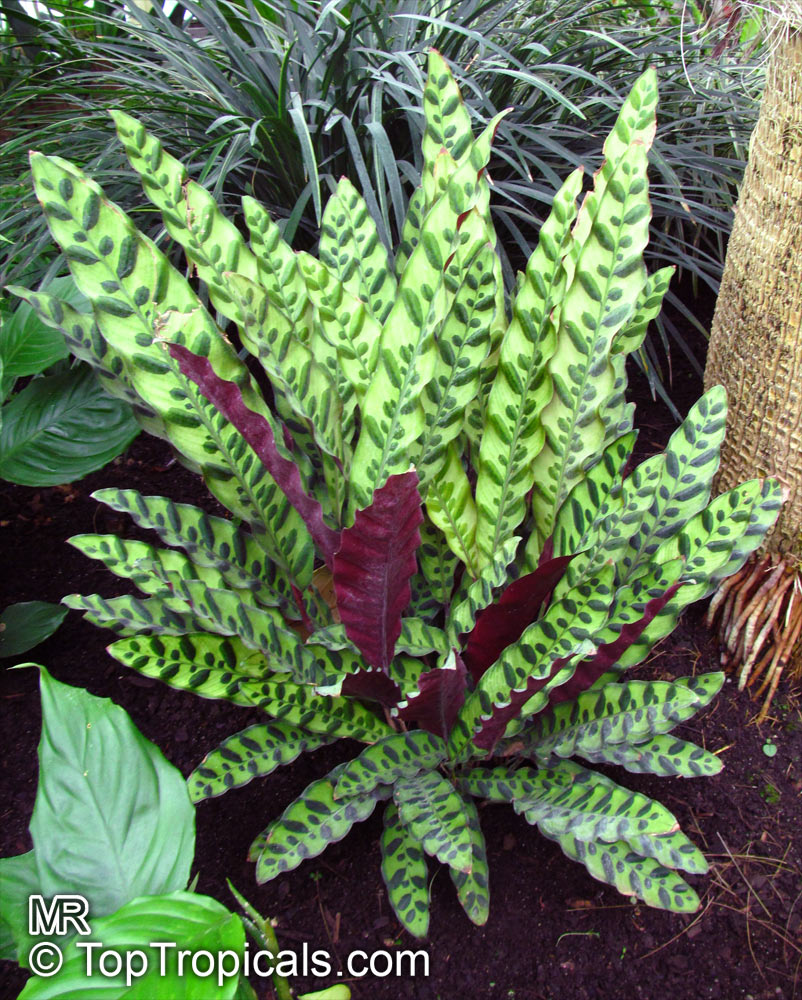
On the photo: Calathea lancifolia Rattlesnake