Date: 9 Jul 2019
Growing desert roses
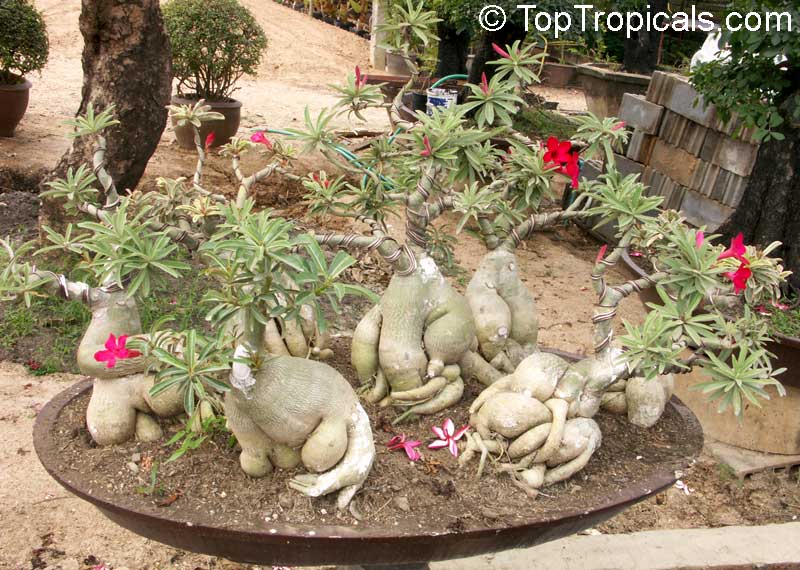
Q: I purchased a Desert Rose and planted it in Adenium mix. I keep it in full sun with once a week watering assuming this is a desert plant that likes lots of sun. Some leaves turned yellow and now I am not sure should I move it into shade or need to water more? Or maybe fertilize with something?
A: Desert Rose - Adenium, unlike cacti and other succulents, prefers filtered light. It can grow in full sun but leaves look healthier in light shade. Watering must be very moderate, however don't let soil harden like a rock: water again right after the soil gets dry. We suggest to use special Adenium Mix. Cactus mix may work well, as well as regular potting mix, in which case it is recommended to add a bit of limestone (we simply put sea shells on top of the pot - it looks very pretty!) - because adeniums prefer slightly alkaline soil (while most of tropical plants like acidic soils). If leaves turn yellow, this may be a sign of underwatering. Use water soluable fertilizer with high phosphate as foliage spray, and only on healthy plants, according to label dosage. It helps both caudex growth and flowering. Make sure to avoid fertilizer contact with a caudex.
RECOMMENDED SUPPLIES:
Adenium Plant Food - Flower and Caudex Booster
SUNSHINE-BC - Caudex booster
Adenium Soilless Mix
Read more about growing Adeniums:
What you need for successful growing Adeniums
Growing Exotic Adeniums
Date: 2 May 2019
How to propagate plants from cuttings. Top (Tropicals) secrets.
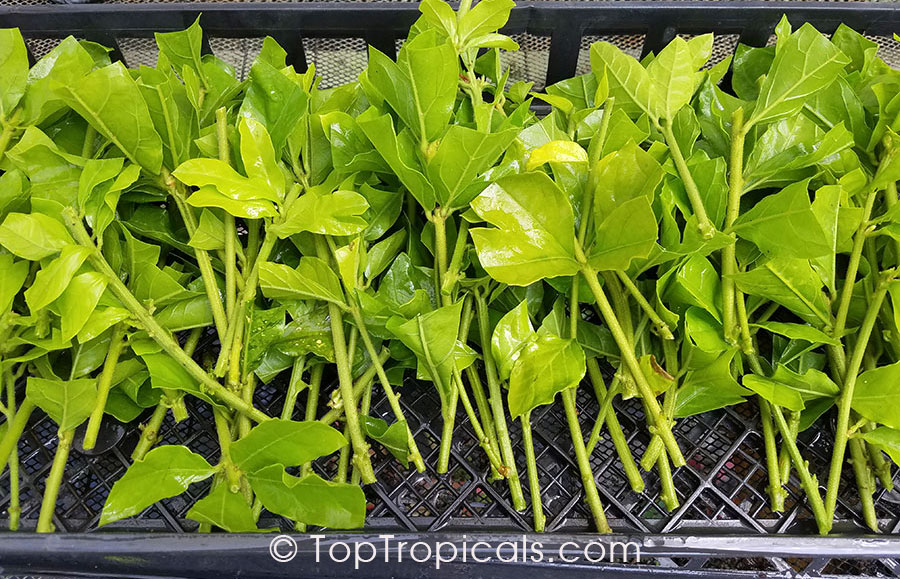
Q: After pruning my jasmine, I have so many branches and I don't have a heart to through them away, can I use them to make more plants? Please tell me what size cuttings and do I need to remove leaves? Should I just stick them in the ground? Will they root? I don't know if you will be willing to share your secrets?
A: We are always happy to know that you grow more plants, and make our World better! These are some useful tips for the propagation of tropical plants using cuttings:
- Cuttings and leaves. Use cuttings 2-5"long. Strip leaves from
the bottom. Cut larger leaves in half to reduce evaporation.
- Soak cuttings for 15-30 min in SUNSHINE solution.
- Mix. Use special well-drained mix with lots of soil conditioner: we
have a special professional propagation mix for cuttings.
- Mist. Put community pots or trays with cuttings in mist, or if you
don't have mist - cover the pot with a clear plastic bag to create a
mini-greenhouse.
- Shade. Keep propagation pots in bright shade and never allow direct
sun rays.
- Rooting hormone: yes, use it if you have it. Not only it promotes
root formation but also prevents from fungus so the cuttings won't rot. We use
Dip-N-Grow.
- Rooting and food. Check in 2-3 weeks for roots. Once you see the
little roots, begin fertilizing with a special Baby-Plant Food and make sure never exceed recommended doze otherwise
you may kill the cuttings.
- Establishing. Once roots start growing, plant in 4" pots in a well-drained potting mix and watch the beauty grow! Gradually move to
the full sun only when little plants establish and start new growth.
If you are lucky to make more rare plants than you can use, contact us, we will buy them from you or trade for your dream plants! In fact, one of our customers from many years ago started selling us baby plants that he propagated from our plants, and now has a successful business (Karma Nursery); we buy a lot of plants from him every month!
For more ideas on tropical plant propagation, see also:
- Secrets of turtle tank propagation
- 5 secrets of propagation
Date: 20 Apr 2019
More about Mulberries
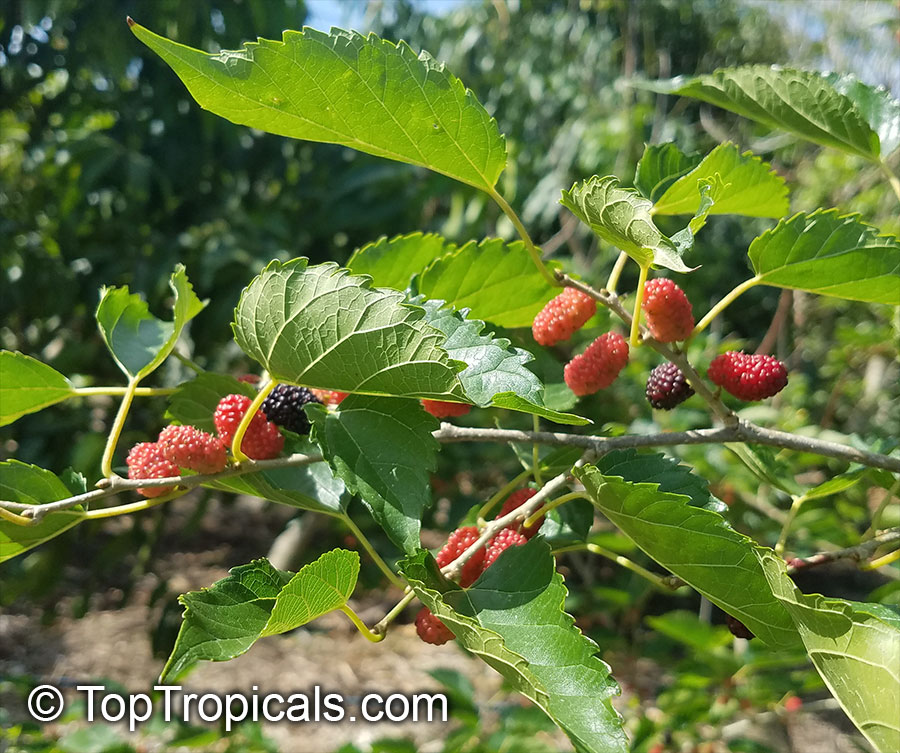
Customer comment on our Mulberry column in the previous newsletter:
...I planted a Himalayan mulberry, Morus macroura, about six years ago.
For several maddening years, it shot only very long, un-branching tentacles
out there, and it resisted my efforts to force some branching by pruning. It
would send another long, reaching shoot from the tip of the pruned branch,
with NO laterals. Several times, it did this. Finally, two years ago, it broke
buds that looked like they meant it all along those long branches, and in one
season, it fluffed out. The next season it elaborated on this, acting much
more like a proper tree. The fruit is fabulous, three or more inches long, very
sweet, with a rich berry flavor that's more raspberry than mulberry. I
guess it just needed more time. My understanding is that mulberries don't
really like to be pruned, but it needed to happen in this case, along a driveway,
so I reigned it in, and now it's a treasure. Be patient.
Cheers, your admirer, C
Check out our Mulberry trees.

Date: 17 Apr 2019
Mulberries - biggest, sweetest, and compact...
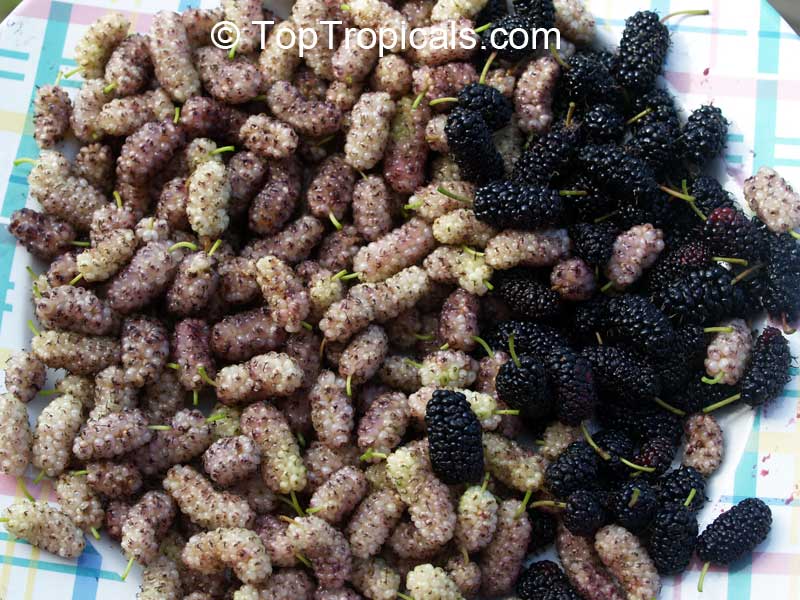
Q: What is the difference between Pakistani and Australian Mulberry plants? Would one be better suited for South Florida backyard? Can one be maintained/pruned to be a tall shrub vs a large tree? Which one has the sweetest fruit? Thank you for the previous plants we've purchased from you. They're all doing great.!
A: These two varieties are very similar indeed.
Both fruit are very large. Var. Pakistani fruit is a little longer than var. Australia and the tree is a more vigorous grower, but they both are
very sweet, even before the fruit fully ripen. Both trees are a good choice and
start fruiting at a young age.
We've had Australia in the ground in our garden for 4 years by now and
for some reason, it has been very slow growing which is normally not the case
with Mulberries. Maybe it is not fully happy with FL humid conditions.
There are two Mulberry varieties that can be maintained as bushes: Issai
and Dwarf
Everbearing. However, even vigorous Mulberry trees respond well to
pruning and can be kept compact for easy harvesting. Just make sure to prune before
the flowering season starts; here in S Florida Mulberries start flowering in
March, and fruit start ripening during April-May.
Check out our Mulberry trees.
Date: 10 Sep 2024
We remember 9/11, and we always will

"Darkness cannot drive out darkness; only light can do that. Hate cannot drive out hate; only love can do that." - Martin Luther King Jr.
As this day approaches, the weight of its memories fills our hearts - honoring the lives lost, the bravery of the heroes, and the resilience that carried us through such a difficult time.
In our journey of healing, let us stand united, supporting one another with love, kindness, and understanding. In times like these, tolerance and mutual respect, regardless of our differences, become gifts we share with the world.
Take a moment to appreciate what we have today, the people who surround us, and the ones who love us. Cherish them while they are here - today. Give a hug to those you love while you have the chance.
Nature offers us healing power in its quiet way. Fragrant flowers calm the mind, young fruiting trees represent renewal, every plant reminds us of life's resilience. As we reflect, may the beauty and growth around us help us find peace, and remind us of the strength that comes from standing together.
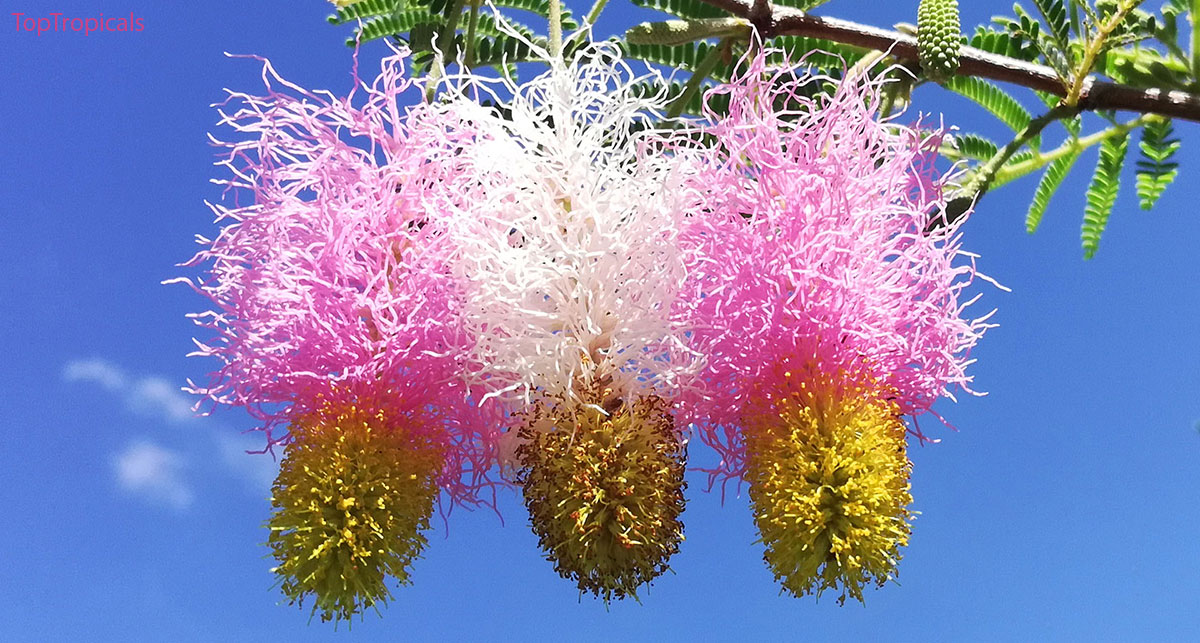
In the photo above: Dichrostachys cinerea - Princess Earrings, Sickle bush from West Africa is one of the most unusual and unforgettable flowers of cheerful color combination... Let them bring hope, joy and sunshine into your day.