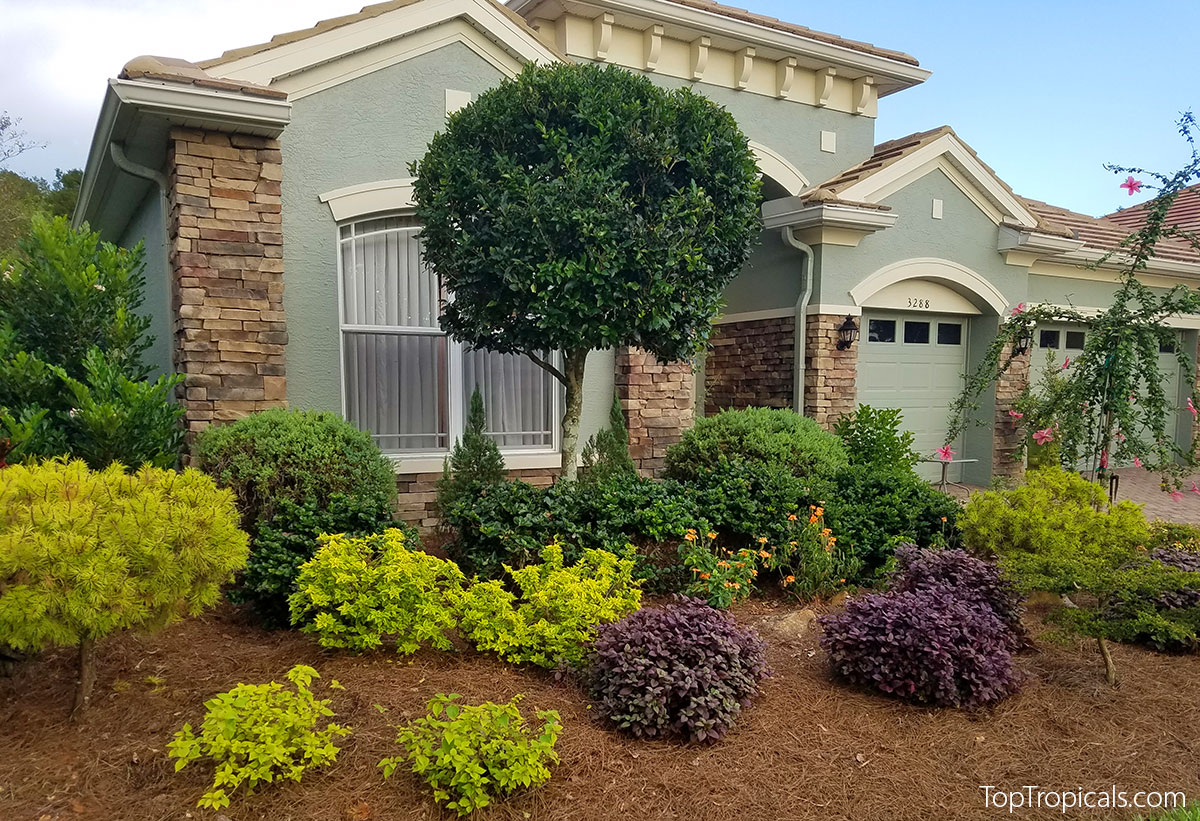
Garden Blog - Top Tropicals

Date: 8 Sep 2025

Four best low-growing perennials that bloom all summer

Crossandra, Heliconia Lady Di, Plumbago, and Spathoglottis ground orchids.

🌷 Four best low-growing perennials that bloom all summer


🌼 1. Crossandra


Crossandra is one of those plants that never really takes a break. Its ruffled orange blooms pop almost nonstop in warm weather, making it a reliable color source for borders, pots, or even as a filler around taller shrubs. Unlike many flowering plants that fade in midsummer, Crossandra keeps going through heat and humidity, thriving where others give up. It's compact, easy to trim, and works beautifully in small gardens or patios.

🌼 2. Heliconia psittacorum Lady Di


Heliconia Lady Di adds a tropical accent with its upright, torch-like blooms in fiery orange and yellow. What makes this variety practical is its manageable size compared to giant heliconias - it fits well in small gardens and large pots. Its flowers last long, both on the plant and as cut flowers, making it popular for summer arrangements. Once established, it keeps sending up flower stalks all season, giving a steady display of color and drama.

🌼 3. Plumbago


Plumbago is a gardener's friend in hot climates because it covers a lot of ground and throws out flower clusters all summer (sky-blue, white or red). It's versatile - train it as a shrub, hedge, or let it spill over walls and trellises. The flowers attract butterflies, and the plant is low-maintenance, tolerating pruning, sandy soil, and neglect. If you need a reliable plant to soften fences or add a cool color contrast to reds and oranges in the garden, plumbago is a winner.

🌼 4. Spathoglottis ground orchids


Ground orchids like Spathoglottis are practical because they give you the exotic look of orchids without the fuss. These hardy, clumping perennials send up spikes of purple, pink, or yellow blooms that last for weeks, repeating through summer in warm climates. They’re perfect for edging walkways or filling beds where you want constant color with minimal care. Unlike potted orchids that bloom once and rest, Spathoglottis keeps producing flowers right in the ground, almost year-round in frost-free areas.

🛒 Discover more flowering perennials

#Hedges_with_benefits #Container_Garden #Discover

🟢 Join 👉 TopTropicals
Date: 1 Oct 2025

Ten shrubs you need to have for winter colors

Garlic Vine, Dombeya - Tropical Hydrangea, Brunfelsia Yesterday-Today-Tomorrow, Fountain Clerodendrum, Tibouchina grandifolia - Glory bush, Chinese hat, Barleria - Philippine violet, Thunbergia - Kings Mantle, Eranthemum - Blue Sage or Lead Flower, Petrea vine - Queens wreath

🌷 Ten shrubs you need to have for winter colors


Many snowbirds ask what to plant when they’re here just for the season. The answer is simple: go for trees and shrubs that bloom in winter. Fall is the perfect time to get them in the ground so your garden will be bursting with flowers once the cool season arrives. In our earlier video, we shared 8 best flowering trees that will bloom for you in Winter. Now, here are the shrubs that will complete your colorful winter garden.

🌷 1. Mansoa alliacea - Garlic Vine
Known for its garlicky scent, it also puts on clusters of lavender to purple flowers in cool weather. Reliable and eye-catching, often trained on fences or trellises. 👉plant it

🌷 2. Dombeya wallichii - Tropical Hydrangea
Large pink pompom clusters hang like lanterns from the branches. Sweetly fragrant and showy, it creates a hydrangea effect right in winter. 👉plant it

🌷 3. Brunfelsia pauciflora Compacta - Dwarf Yesterday-Today-Tomorrow
Small and manageable, it opens purple flowers that fade to lavender and then white, giving the look of three colors at once. A cheerful winter bloomer for pots or borders. 👉plant it

🌷 4. Clerodendrum minahassae - Fountain Clerodendrum
This shrub lives up to its name with cascades of long white flower sprays, blooming heavily in the cooler months and brightening shaded corners. 👉plant it

🌷 5. Tibouchina multiflora (grandifolia) - Glory bush, Quaresmeira
Covered in clusters of soft, fuzzy purple blooms, this shrub adds tropical flair during the cooler months. Its velvety leaves are ornamental year-round. 👉plant it

🌷 6. Holmskioldia sanguinea - Red Chinese hat
Cup-shaped bracts form red “hats” around small flowers. This shrub stands out with unique form and long-lasting blooms. 👉plant it

🌷 7. Barleria cristata - Philippine violet
A hardy shrub with masses of purple-violet blooms in the cool season. It flowers when many plants are quiet, adding dependable winter color. 👉plant it

🌷 8. Thunbergia erecta - King’s Mantle
A compact shrub with velvety purple blooms and bright yellow throats. It’s neat, easy to manage, and flowers generously in winter. 👉plant it

🌷 9. Eranthemum pulchellum - Blue Sage, Lead Flower
Few shrubs can match its electric-blue spikes of flowers in winter. Compact and low-care, it brings a rare color to the cool season garden. 👉plant it

🌷 10. Petrea volubilis (racemosa) - Queen’s wreath
A woody vine-shrub that bursts into cascading sprays of lavender stars. It flowers heavily in winter, resembling wisteria in the tropics. 👉plant it
🛒 Explore Winter bloomers

📚 Learn more:


8 best flowering trees that will bloom for you in Winter
9 best tropical shrubs that bloom all summer long or year around
4 best low-growing perennials that bloom all summer

#Hedges_with_benefits #Discover

🟢 Join 👉 TopTropicals

Date: 24 May 2019

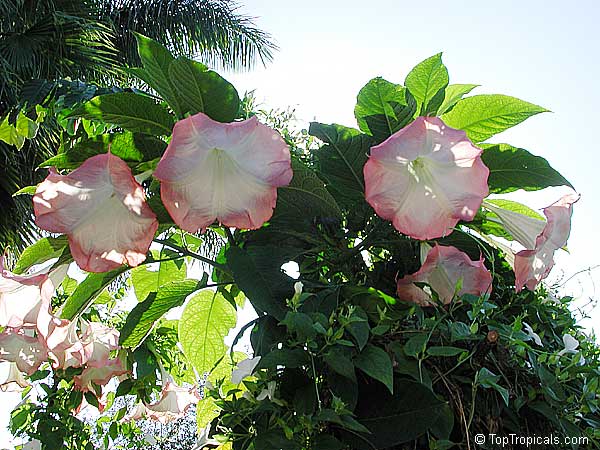
Heavenly Angel's Trumpet

TopTropicals.com

By Onika Amell, tropical flower specialist

Q: Can you please tell me which zones are the best for growing Angel Trumpets? When do they bloom and is there a specific fertilizer to use on them? Do you sell any variegated varieties?

A: If you are lucky enough to live in an area that doesn't freeze or only has light frosts, you can grow Brugmansia (common name Angel Trumpet) outside all year long. They are only entirely hardy in USDA zones 9-12, but they remain very popular throughout the United States. They do really well in coastal settings in the Southwest. They are simply glorious in the coastal areas of South California. In the southwestern states, as well as in the tropics, they bloom spectacularly throughout the spring, summer, and autumn.

Angel Trumpets are very heavy feeders and they need huge amounts of nitrogen. You can use a standard balanced slow-release fertilizer on Brugmansia, but then you must apply it very generously. We've created a specialized fertilizer just for them. Angel Trumpet Delight is a perfect Brugmansia food for frequent monthly feed. It's a 30-day Smart-Release formula that works wonders for Angel Trumpets. A a well-balanced combination of macro- and micro- nutrients with a slow release action, it provides continuous feed, maintains vigor and disease resistance. It also contains coated nitrogen, early release nutrients and extra iron (water soluble and chelated) for quick green-up.

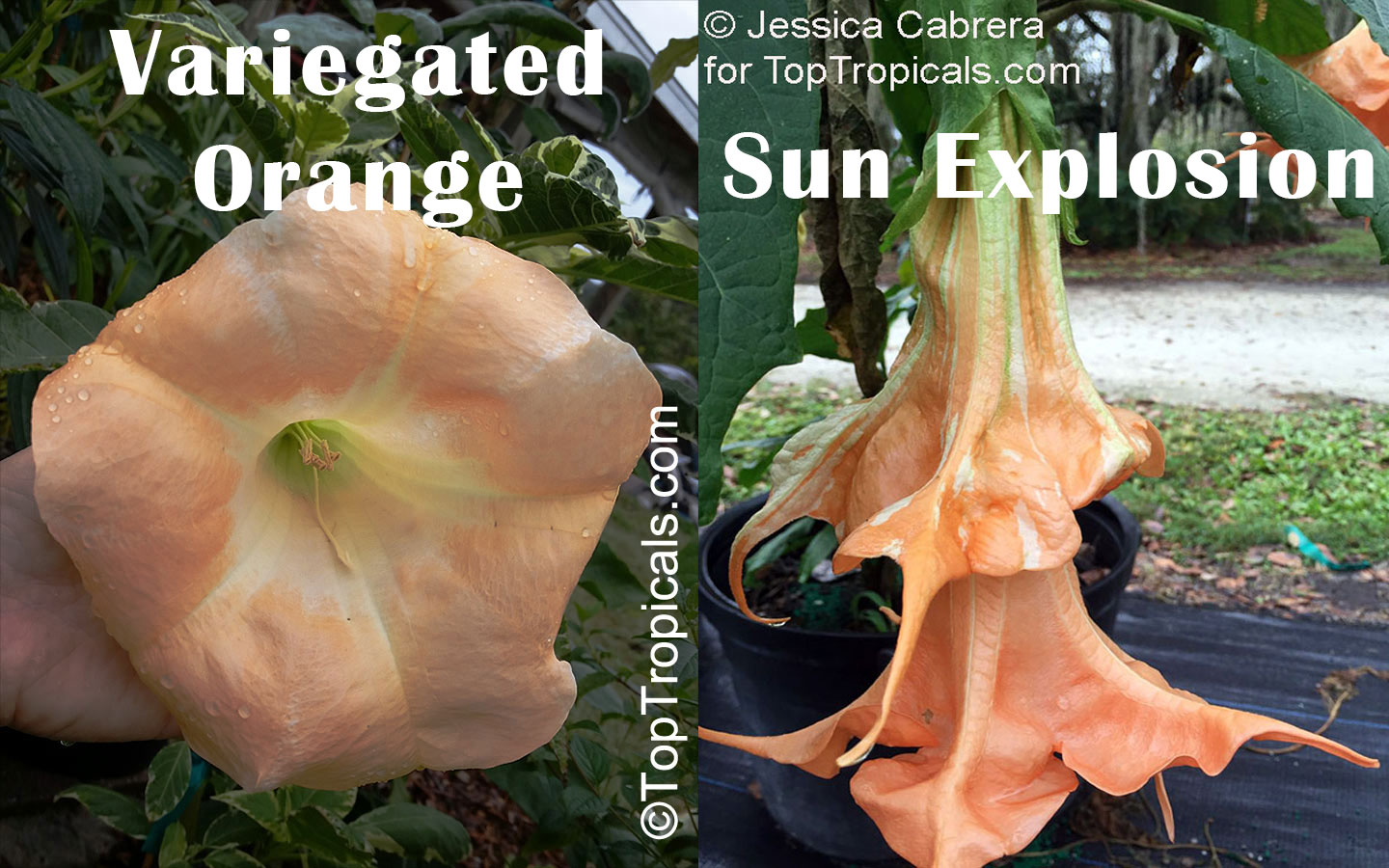
Angel Trumpets come in a dazzling array of colors: orange, yellow, green, white, pink, red, emerald and even purple (closely related Datura). One of our favorites is the beautiful Variegated Orange Angel Trumpet, a new hybrid with variegated leaves and a large single bloom that starts white and turns orange. Another amazing variety is "Sun Explosion" - with a variegated orange flower.

Most folks are usually in awe of the enormous trumpet flowers when they see it for the very first time. They most definitely need to be planted where they can be admired… near a deck, terrace, lanai or, entryway. The blossoms are short-lived, but numerous, continuous, and truly show-stopping! And they smell so good! This is a must have in any tropical garden. They can be grown either as a bush or a small tree. They are easy peasy to grow and root extremely easily, making them great as pass-along gifts for friends. They are sun-loving and super fast-growing plants. Plenty of water and fertilizers keep them happy and at their best. Did I mention they smell good too? ;)

TopTropicals.com

Date: 21 May 2019

Colors of Cannas

TopTropicals.com

By Onika Amell, tropical flower specialist

Q: I'm a beginner gardener and looking for something easy to grow that will add a lot of color to my garden fast.

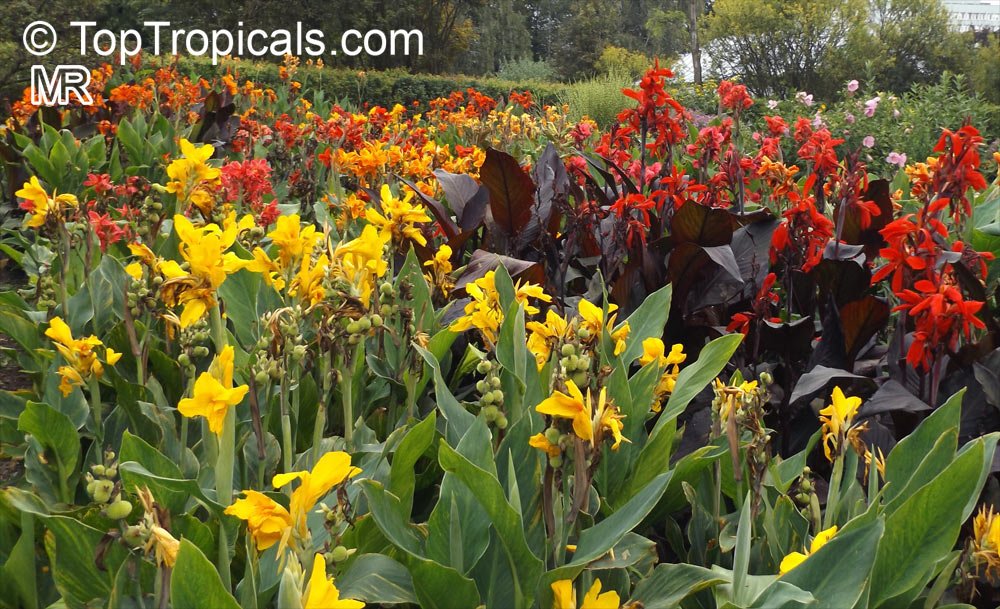
A: Try growing Canna lilies. They are a favorite of many gardeners as they are so easy to grow and always provide a reliable, beautiful show of flowers. In fact, Cannas are one of those plants that are spectacular even if they never bloomed. The leaves are tropical-looking, banana-like and huge! They range in a wide variety of shades and colors, always accentuating the large showy flowers on top.
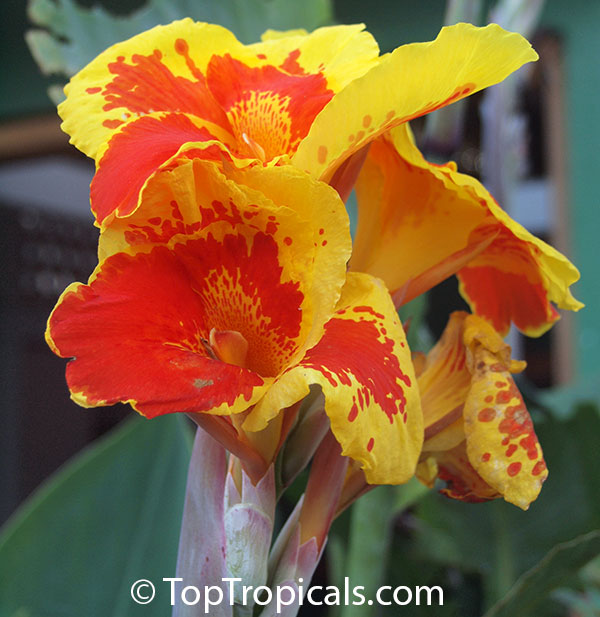
One of our favorite cannas right now is Canna Cleopatra - very striking and most unique. Large yellow flowers speckled with red spots, or red flowers and even flowers with a little bit of both. Foliage is exotic and very beautiful, often dark green, dark chocolate or a combination of both. This is a canna that will definitely illuminate your garden!

Caring for Cannas

Cannas like a lot of water, full sun and high heat. They are also heavy feeders and prefer soils that are well drained, organically rich and moist. The leaves will quickly tell you when the plant is hungry. Feed your cannas weekly with a water-soluble 20-20-20 fertilizer Broad Leaf Plus, and they will quickly respond with beautiful, lush growth. Deadhead often to encourage continued flowering. Cannas are winter hardy in US hardiness zones 7 and warmer. If you live in colder areas, the rhizomes need to be lifted in the fall, and stored indoors in a dark, warm spot until spring arrives. Be sure to divide clumps every three or four years. Give them lots of room as they grow into large plants, forming spreading colonies up to 7 feet high and 4 feet wide. Show them off in mass plantings, in large containers or in mixed flower borders. Lure in hummingbirds with these beauties!

TopTropicals.com

Date: 2 Oct 2024

Florida Native Plant Sale

Florida  Native  Plant  Sale

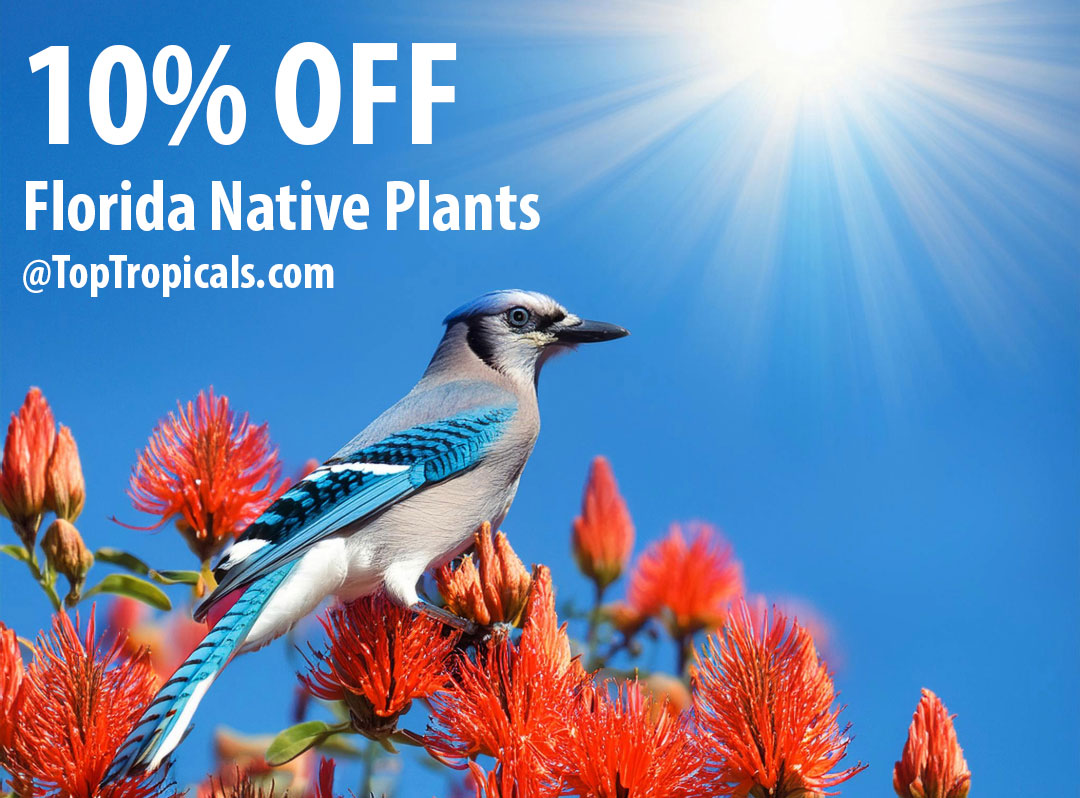
One Week Only: Instant 10% OFF

Take advantage of this limited time offer: 10% OFF Florida Native plants! With cooler weather on the way, these hardy plants are perfect for fall and winter planting. They're easy to establish and offer numerous benefits, especially for those in HOA communities.

Why choose Florida natives?

- HOA approved and welcomed
- Adapted to the local climate and soil
- Require less water, fertilizer, and fewer pesticides (if any, thanks to natural insect predators)
- Easy to grow - perfect for beginners - Provide essential habitat and food for local wildlife, including birds and butterflies

Go native and make your landscape thrive!

Florida  landscape