Date: 24 Jun 2018
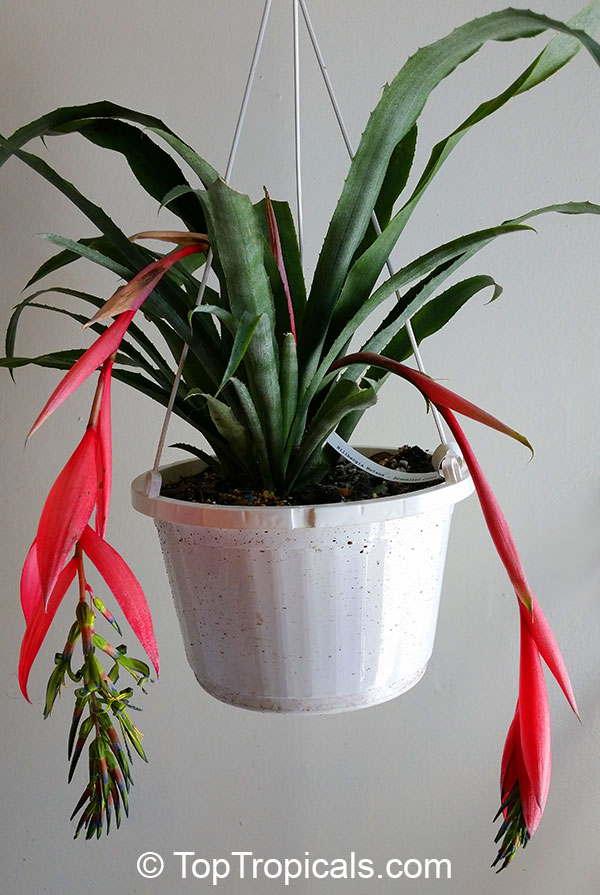
Plants that make you feel better
Researchers are claiming that gardening can be much more
than just a hobby, and that honing those green-finger
skills could actually have many benefits, including making
us healthier! The presence of plants has been found to be
helpful in many different settings, according to results
of several experimental studies:
At school and work:
1. Improve your learning abilities
2. Improve reaction times, attentiveness, and attendance
3. Increase energy and your performance, purpose and
motivation
4. Raise productivity and job satisfaction
At home
1. Relax and feel closer to nature while indoors
2. Make you feel needed
3. Have a clean air
4. Improve relationships and increase compassion.
In recovery:
1. Lower blood pressure (systolic)
2. Improve well-being
3. Lower levels of anxiety during recovery from surgery
4. Accelerate healing process
Date: 24 Jun 2018
Winter Flowering Plants
Take advantage of the late season tropicals! Brighten up your winters with spectacular flowers and winter producing fruit trees!
Many Floridians move up North during hot summer months,
our snow-bird season usually starts late September and
ends by Mother's Day in May. Many of our local seasonal
customers planting those flowering and fruiting species
that they can fully enjoy while staying in Florida. Below
you will find a few specials that are in bloom right now.
Check out full list of winter bloomers and
late season plants, and download a PDF chart of the most
interesting tropical plants that will flower and fruit for
you in Fall, Winter and early Spring. Some of them are
ever-blooming, others are late- or early season.
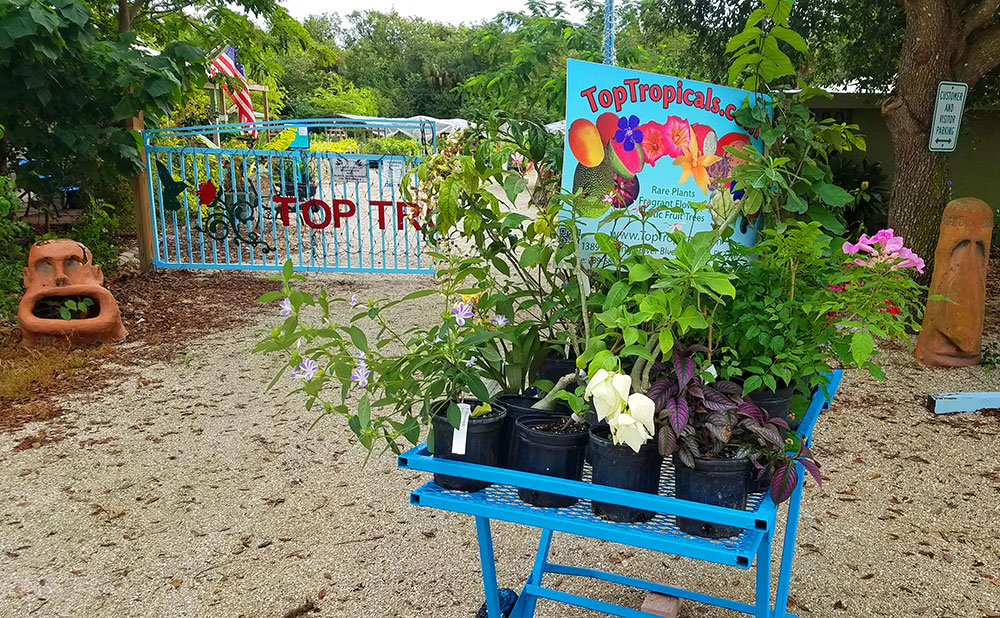
Visit our Garden Center in Ft Myers FL
Date: 24 Jun 2018

Florida winters and gardening
From
Anna Banana, our Garden Center customer advisor.
Cool weather - no sweat. Here in Florida we are
blessed to have warm winters. We just went to the beach
for Christmas! Winter time is not only a good beach time,
but also the best planting time here. Why? I always refer
my customers to Murray Corman's article Tropical Planting Breaks the
Rules. "...Wintertime does not just mean hard work
for tropical gardeners. It is also a time to enjoy the
fruits of our labor. Winter-blooming plants and the
visitors they attract - birds, bats and butterflies - make
the garden as enjoyable in winter as any other time of
year. Tasks performed during the spring and summer up
north have to be done during the fall and winter here.
Why? The answer is elementary: It's too hot! Taking
advantage of the coolest months of the subtropical year
for heavy chores like planting trees has a twofold
benefit: The gardener can make hay while the sun shines
without getting heat stroke and the plants appreciate the
moderate temperatures, enjoying a break from the stress of
93 degrees in the shade..."
Continue reading...
Winter flowering plants - are a blessing for a tropical gardener. See below what's blooming now! See our recommendations for winter flowering and fruiting plants (PDF)
Date: 24 Jun 2018
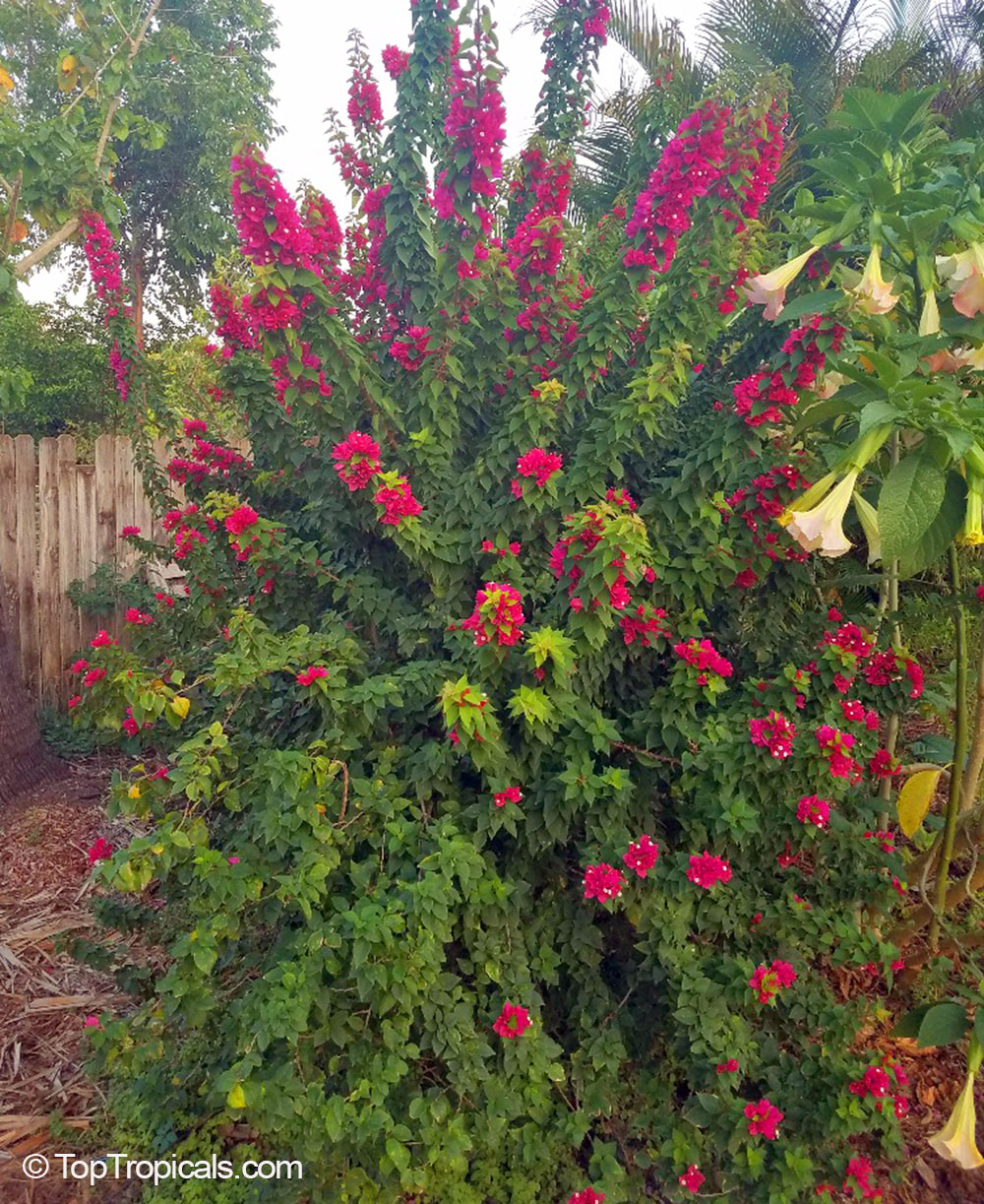
Growing Bougainvillea and Plumeria in Florida
Q: I have recently moved from New Jersey to Florida (Orlando area) and I am so excited to start my own Tropical Paradise Garden! A few years ago I visited Hawaii and saw many beautiful colorful Bougainvilleas as well as fragrant Frangipani. Do they grow well in Florida? These are flowers of my dream!
A:
Both Bougainvillea and Plumeria grow well in most
parts of Florida, especially South and Southwest.
Bougainvillea can tolerate some light freeze and can be
seen in the streets of Central Florida (young plants
require some cold protection for the first year), so it is
a very good candidate for your new garden. Keep in mind
that unlike in Hawaii, where they bloom year around,
Bougainvilleas tend to have a distinctive flowering season
which in Florida is winter time - these plants enjoy dry
weather that triggers their bloom. To enjoy Bright
bougainvillea flowers for a long time, apply balanced fertilizer, prune
regularly (this promotes flowering on new growth) and keep
established plants on a dry side. Dwarf cultivar Pixie is super compact and
can be grown in pots or in a small garden without any
pruning! See photo of Pixie on the left.
Plumerias, all-time perfume
favorites and symbols of Hawaii, are also residents of
many gardens and collections throughout state of Florida.
Their cold hardiness is close to the one of Bougainvillea,
however keep young plants protected from frost. There are
also many new exciting cultivars including multiple
"rainbow" colors, and several dwarf varieties, some of
them are evergreen - Plumeria obtusa
Date: 23 Nov 2025
How to overwinter the tropical Bird of Paradise
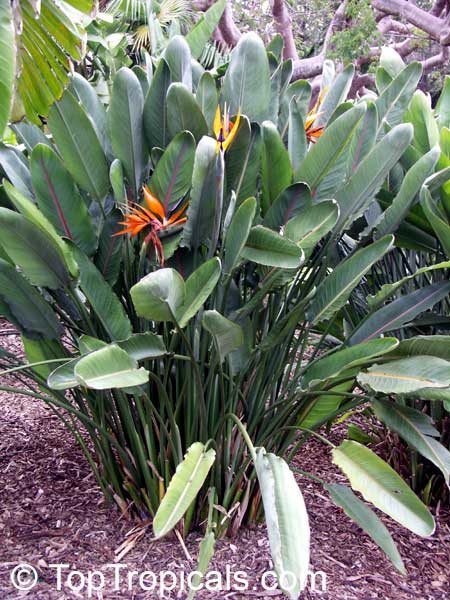
Strelitzia reginae - the Bird of Paradise, bug plant
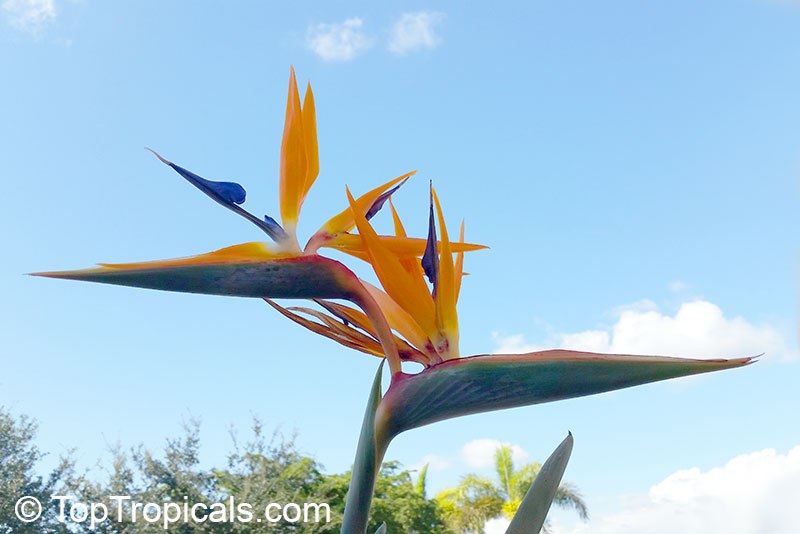
Strelitzia reginae - the Bird of Paradise, flower
❄️ How to overwinter the tropical Bird of Paradise
- Strelitzia reginae - the Bird of Paradise is a resilient tropical that can adapt to indoor conditions through winter if given bright light, moderate warmth, and careful watering. With a few preventive steps and timely protection, plants will stay healthy and reward you with vigorous new growth and blooms when warmth returns.
When should you move plants indoors?
Move Bird of Paradise indoors before nighttime temperatures consistently drop below 55F. Extended exposure to cooler air can slow growth and stress the plant. In central and south Florida, this often means late fall; in cooler zones, aim for early to mid-October. Once temperatures fall below 50F, leaf damage and root stress can occur.
What is the right location for a Bird of Paradise in winter, and why?
Place the plant in the brightest spot available - ideally near a south- or west-facing window. Strelitzia reginae is light-hungry even during dormancy. Low light leads to leaf yellowing, weak petioles, and slowed recovery in spring. If natural light is limited, supplement with a full-spectrum grow light set 12-18 inches above the foliage for 12-14 hours daily. Maintain room temperatures between 65F and 75F.
Do you need to do anything before moving them indoors?
Inspect the plant for pests such as mealybugs, scale, and spider mites, which often hide in leaf bases. Rinse the leaves and petioles thoroughly and check the soil surface for insects or snails. Prune off any damaged or aging leaves. If the plant has spent the summer in heavy rain, allow the soil to dry slightly before bringing it indoors to avoid fungus gnats or root issues.
Do plants need watering or feeding during winter?
Reduce watering. Indoors, the Bird of Paradise grows slowly in lower light, and excess moisture can cause root rot. Let the top 1-2 inches of soil dry before watering again. Avoid fertilizing during winter rest; resume feeding in spring when new growth appears. If the air indoors is very dry, increase humidity with a pebble tray or humidifier rather than overwatering.
Can you overwinter Birds of Paradise outdoors?
In frost-free areas of Florida (USDA zones 10-11), they can remain outdoors year-round. In zone 9, occasional cold snaps require protection. Mature clumps tolerate brief dips to about 30°F, but foliage burns easily at low temperatures.
What tips do you have for protecting plants outdoors?
When frost threatens, water the soil thoroughly a day before - moist soil retains heat better than dry. Cover the plant overnight with frost cloth or breathable fabric, not plastic, to trap ground warmth. For large clumps, wrap the base with mulch or straw to protect rhizomes. After cold events, remove damaged leaves but wait until spring to cut deeply, as live tissue below may still recover.
📚 Learn more:
How to grow Bird of Paradise
🛒 Plant Bird of Paradise
#How_to #Container_Garden
🟢 Join 👉 TopTropicals