Q: What is the difference between Pakistani and Australian
Mulberry plants? Would one be better suited for South Florida backyard? Can one be
maintained/pruned to be a tall shrub vs a large tree? Which one has the
sweetest fruit? Thank you for the previous plants we've purchased from you.
They're all doing great.!
A: These two varieties are very similar indeed.
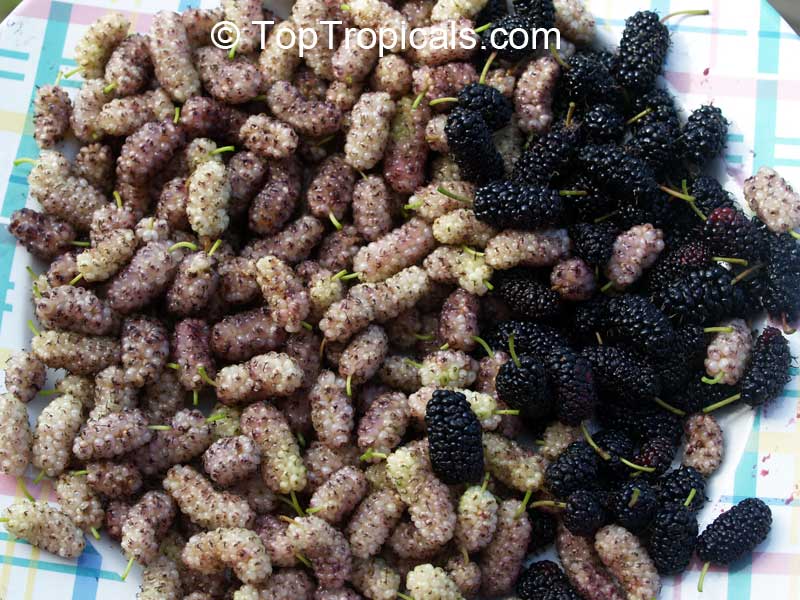
Both fruit are very large. Var. Pakistani fruit is a little longer than var. Australia and the tree is a more vigorous grower, but they both are
very sweet, even before the fruit fully ripen. Both trees are a good choice and
start fruiting at a young age.
We've had Australia in the ground in our garden for 4 years by now and
for some reason, it has been very slow growing which is normally not the case
with Mulberries. Maybe it is not fully happy with FL humid conditions.
There are two Mulberry varieties that can be maintained as bushes: Issai
and Dwarf
Everbearing. However, even vigorous Mulberry trees respond well to
pruning and can be kept compact for easy harvesting. Just make sure to prune before
the flowering season starts; here in S Florida Mulberries start flowering in
March, and fruit start ripening during April-May.
Fall is just around the corner, but Florida is still full of sunshine and
growing energy!
It’s one of the best times to plant - cooler days are coming, but
there are still months of warmth ahead for your garden to thrive. Our
nursery is bursting with big, healthy plants that grew all summer long -
loaded with blooms, fruit, and lush foliage, ready to shine in your
yard.
Come stroll the gardens with our PeopleCats,
enjoy the most beautiful season for planting, and let us help you find the
perfect picks for your space. Bring your friends and family for a weekend of
fun, color, and fresh ideas - this is your moment to plant, grow, and
enjoy!
30% OFF online prices
FREE plant with any purchase (including Guava)
Gift bags for first 25 customers with $50+ order
Special deals on select plants
Exciting raffle prizes
Green Magic fertilizer FREE samples
The LAST PERFORMANCE of the Famous Hand Pan Lady! (She is moving from
Florida)
See her previous performance at Top Tropicals - here
and here.
When northern gardens fade into gray, our tropicals wake up. Winter is
color season here - and even if you live up north, you can still enjoy these
same flowering trees indoors or on a sunny patio.
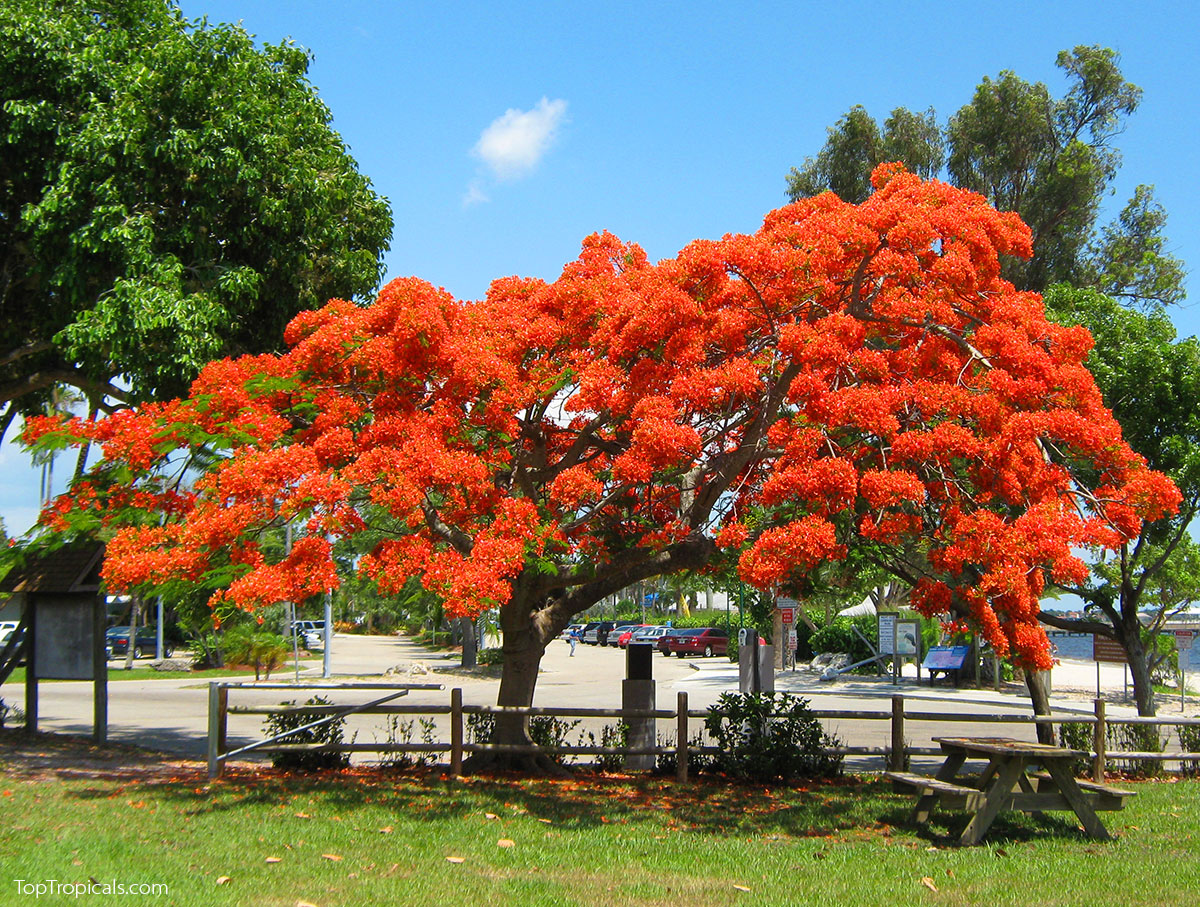
From the fiery Royal
Poinciana to the golden Tabebuia and
violet Jacaranda,
these eight trees prove that winter can bloom anywhere
How to Care for Winter-Flowering Trees
We're often asked, at Top Tropicals, “Can I really grow tropical
trees in winter?”
Yes — with the right light and care, you can.
Here’s what works best both outdoors and indoors, according to our
expert, Tatiana Anderson.
🌡️ Fall Planting Guide
Let’s talk about timing, because that’s the part most people
get nervous about.
Everyone asks: “Isn’t it too cool to plant now?” —
and the answer is no!
Fall and early winter are actually the best months for tropicals in Zones 9
to 11.
Here’s why: the air has cooled off, but the soil is still warm.
Roots love that combination. They quietly spread underground while the rest
of
the plant takes a break.
By spring, those roots are ready to feed a burst of new growth — and
that’s when you’ll see the first big flush of flowers.
Pick a sunny spot that gets plenty of light — six to eight hours
if you can.
Loosen the soil and mix in compost or pine bark so it drains well.
Dig a hole about twice as wide as the pot and just as deep.
Set the plant level with the ground, backfill, and water it deeply to
settle everything in.
Then add mulch — two or three inches is plenty — but keep it
away from the trunk so it can breathe.
Tatiana’s tip: “Fall planting builds roots while everyone
else is resting. By spring, your tree wakes up ready to grow.”
🌳 Outdoor Care (Warm Climates Zones 9–11)
Now, let’s talk about what happens after planting — because
real gardening starts once the plant is yours. Tropical trees thrive on
routine: steady sunlight, deep watering, and just a bit of attention.
Water them about once a week when the weather is mild, more often if
it’s dry or windy.
Always check the soil first — if it feels dry two inches down, go
ahead and water.
Mulch helps more than most people realize — it keeps roots cool in
summer and warm in winter, and it saves you from watering as often.
Now, for those of you in Zone 9, here’s the truth: your trees can
take a chill, but they don’t love surprises.
A quick night in the upper 20s F won’t hurt mature plants, but young
ones appreciate a little help — a frost cloth or being planted at the
south side.
And don’t underestimate the wind. Cold, dry gusts can burn leaves
faster than frost.
Use fences, hedges, or taller shrubs as windbreaks, and take advantage of
microclimates — those warm pockets next to the house, brick patios, or
corners that get extra afternoon sun.
Tatiana’s tip: “A tropical garden in Zone 9 isn’t
about fighting nature — it’s about cooperating with it. Find the
warm corners, protect from the cold wind, and your trees will thank you with
flowers all winter.”
🏚️ Indoor & Patio Care (Cooler Climates)
For our northern friends — yes, you can grow tropicals indoors!
You just need good light, warm air, and a little attention.
Pick a large pot, with drainage holes and a light tropical soil mix.
Place it in a bright window — south or southwest if you can —
or under grow lights for about 12–14 hours a day.
Keep temperatures between 65 and 85 F, and water when the top inch of soil
dries out.
Misting helps keep leaves clean and adds humidity.
Rotate the pot every couple of weeks so all sides get sun. In summer, move
your plant outdoors gradually so it can enjoy real sunlight — then
bring it back in before nights drop below 40 F.
Tatiana’s tip: “Don’t be afraid of growing trees in
pots. They adapt beautifully — just select the right trees and pay
attention to their needs.”
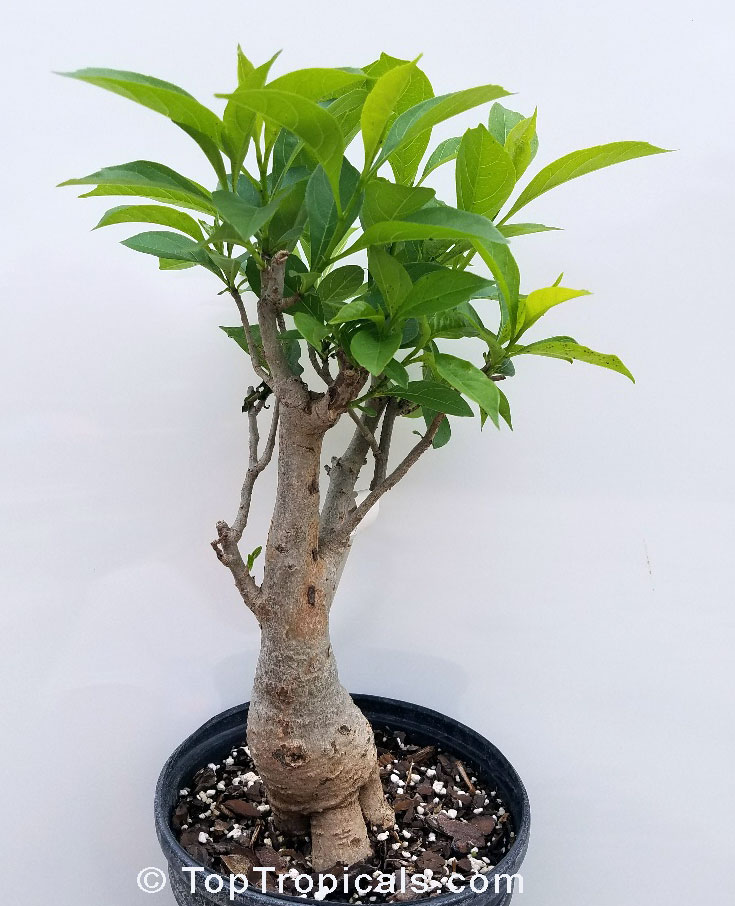
Q: How to
grow Baobab bonsai properly? How long does it take to shape a nice little
bonsai tree?
A: Baobab,
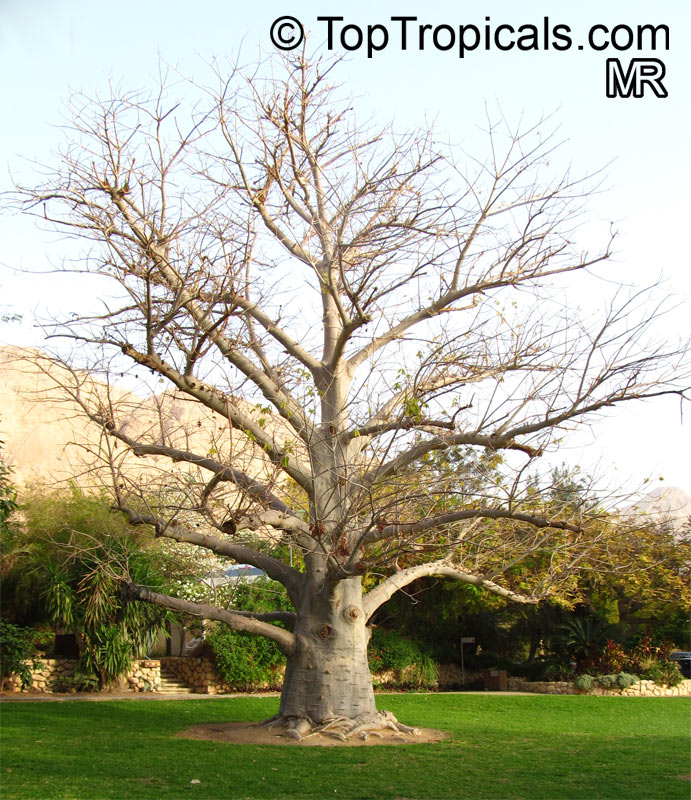
or Adansonia digitata, is a unique addition to a bonsai collection. Native
to Africa, it has an unusual structure and appearance. Some legends say that
the tree was cast down from the heavens and landed upside down, where it
began to grow. This story is no doubt a result of its appearance in the
winter, when the upper branches of the tree look more like roots than treetops.
The Baobab has some specific needs, but if you pay careful attention to its
requirements, this tree is not difficult to grow and makes an excellent
bonsai specimen.
1. Keep Baobab warm, it is sensitive to freeze.
2. Place Baobab in a bright, sunny window. Baobabs need at least six
hours of full sunlight per day, so a window with a western or southern exposure
is best. If your house doesn't get enough light, supplement natural light
with artificial grow lights. See article Indoor lighting for
tropical plants.
3. Water Baobab regularly during the growing season whenever the soil
is dry. Never water the tree when it is dormant (dropped leaves).
4. Feed Baobab a good-quality fertilizer about once a month. Apply
micro-element solution SUPERFOOD once a month, as well as SUNSHINE-BC plant booster for Bonsai and Caudex plants.
5. Prune the branches of your Baobab bonsai as often as they need it to
give the tree the shape you desire, pruning or pinching off branches that
are growing at odd angles or are too long. Trim early in the spring before new
growth appears.
6. Repot the baobab bonsai every year in Spring. Remove it from pot and
trim the roots back by one-third of their length, completely removing any
that are damaged or dead. Place it in a container that is twice the size of the
root ball and fill the pot with a well-drained soil like Adenium Mix.
It is believed that it takes forever to form a nice shaped tree, up to a
few years. However if you provide warmth and bright light, branches grow
very quickly, and an experienced bonsai hobbyist can make a unique specimen
within 2-3 years. And then, the tree will stay with you for 5000 years - it can
be passed from generation to generation!
Looking for the rarest plant? This is the one!
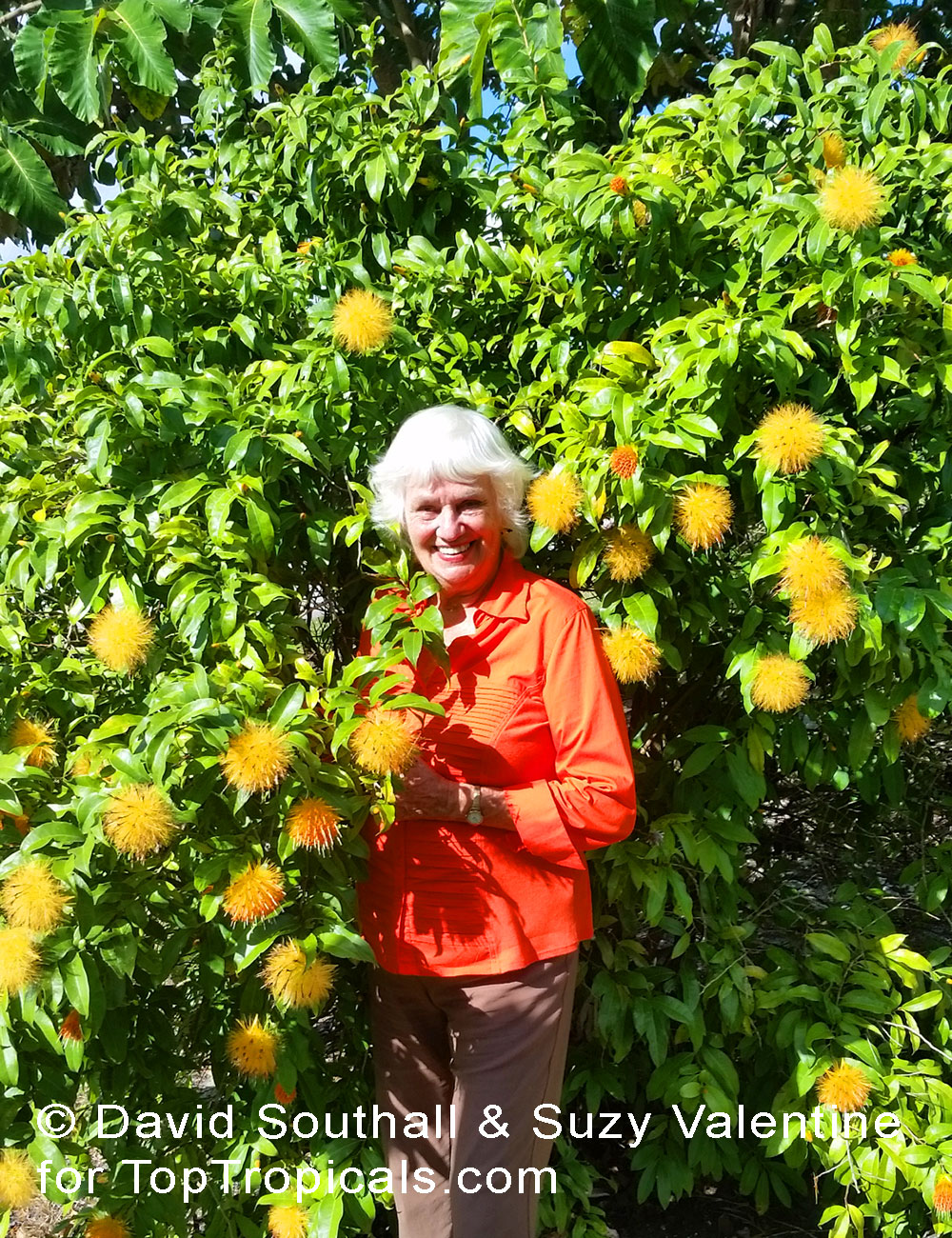
Stifftia chrysantha is an exotic, rare flowering small tree with
spectacular flowers, endemic to the vast tropical savanna ecoregion of Brazil
called Cerrado. It grows into a bushy, attractive tree between 8 and 15 ft tall
and starts flowering within 1.5 - 2.5 years from seed. It is a very rewarding
plant that blooms 9 months out of the year, starting in Winter with great
intensity during July-September, with each flower staying on the plant for
several weeks. Seeds ripen from September through November.
The tree belongs to Aster family (Compositae) and has nothing to do
with Powderpuffs which are from Bean (Fabaceae) family. The flower has 30 to 40
green, imbricated scales with short hairs, and actinomorphic corollas are
orange below and darker above. After flowering, the inflorescence blows apart,
which would scatter seeds. The dried center remaining is very attractive, like
a small dried flower, and lasts for many months.
Stifftia can be grown in full sun to partial shade and is relatively
cold tolerant, can take short cold spells. The plant doesn't like wet feet
and heavy/soggy soils; requires very well drained, acidic soil. We strongly
recommend to use our professional soilless mix. Let soil
slightly dry between waterings. It can be grown in full sun to partial shade and is
relatively cold tolerant, can take short cold spells. If grown in a pot, try
to keep the container shaded because roots don't like to be overheated. The
plant needs monthly applications of slow
release fertilizer as well as extra iron - use micro-nutrients to
keep leaves green and healthy.
See more pictures of this beauty.



 How to Care for Winter-Flowering Trees