Garden Blog - Top Tropicals

Date: 6 Feb 2023

Date: 22 Oct 2025

Which dry fertilizer to use - slow release or controlled release?

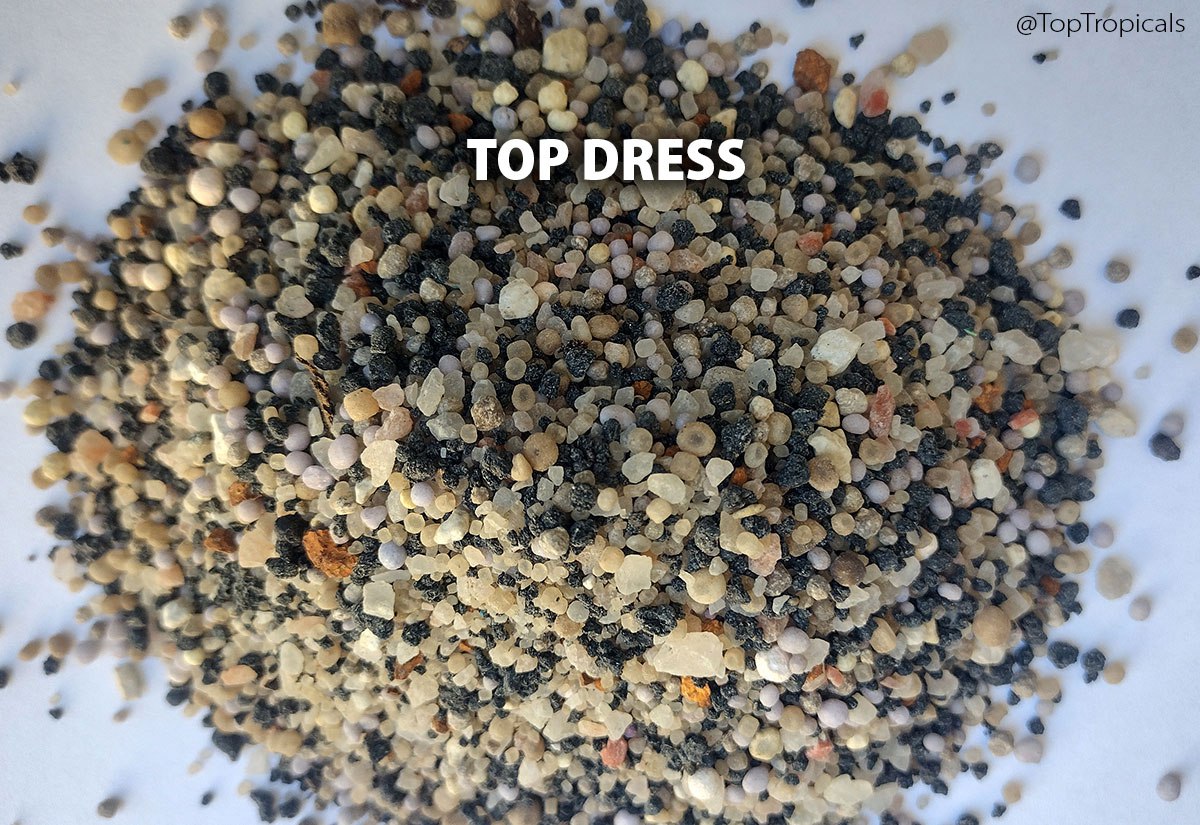
dry top dress fertilizer

dry top dress fertilizer

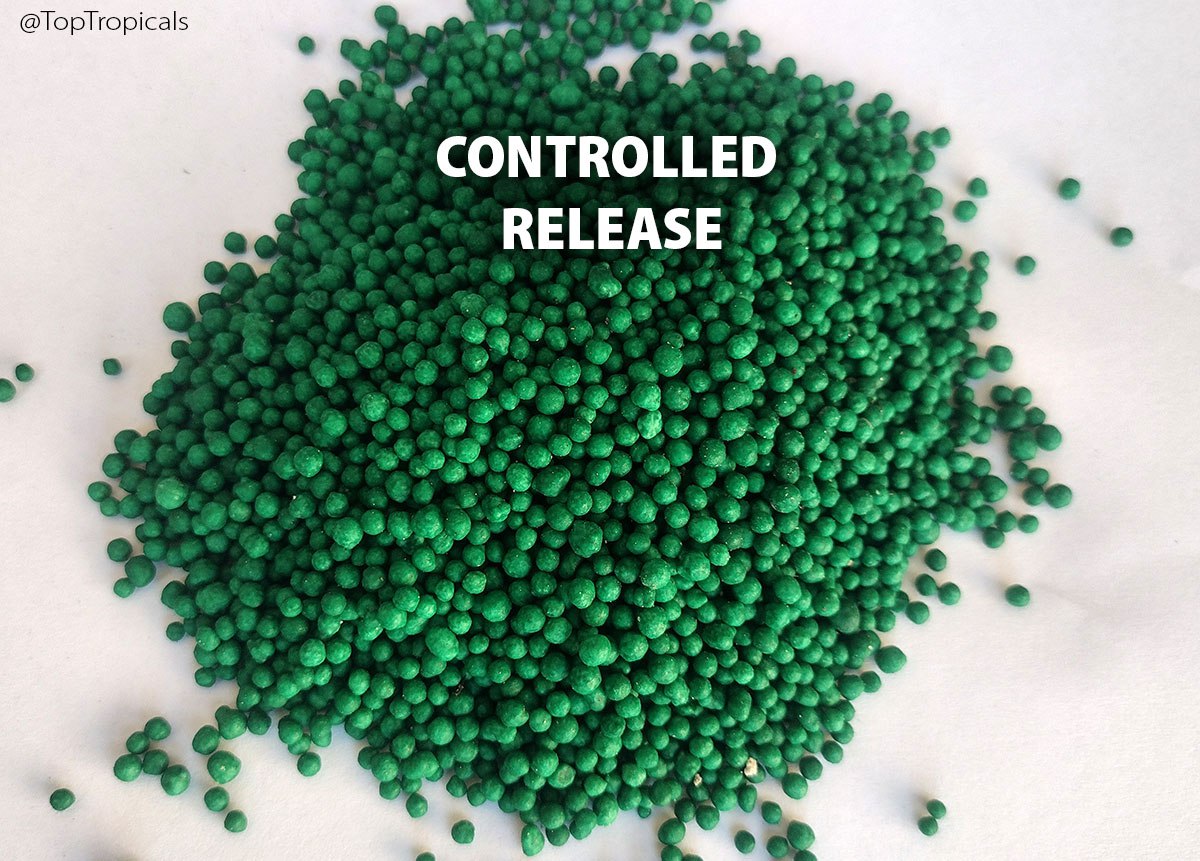
controlled release fertilizer Green Magic

controlled release fertilizer Green Magic

🌳 Which dry fertilizer to use - slow release or controlled release?


Q: You offer two kinds of dry fertilizers - Slow Release Trop Dress and Controlled Release Green Magic. What is the difference, and which one should I use? I used your water-diluted Sunshine Boosters with every watering, but now that I’ll be away for a few months, I just want to give my garden a long-lasting fertilizer.
  • ✔️ A: Top Dress Slow Release Fertilizer is used for quick greening-up. Although it’s called “slow release,” the nutrients become available fairly fast. It contains soluble nitrogen (N), phosphorus (P), and potassium (K) that dissolve with rain or irrigation, acting within a week or a few weeks depending on temperature and rainfall. It’s great for giving your plants a quick boost of “fast food.”
  • We use Top Dress mainly for in-ground plants. It can be used in pots only during warm weather and active growth, but not in cooler months, as it may burn roots. Since we introduced Green Magic, we mostly use Top Dress only for garden beds and landscapes.
  • ✔️ Green Magic Controlled Release Fertilizer is a true long-term, controlled-release fertilizer. Thanks to its PolyOn Technology coating, it provides steady, consistent feeding for 5-6 months. Unlike regular dry fertilizers that dump all nutrients at once, Green Magic releases them gradually - no burn, no guesswork, just steady nutrition.
Green Magic ideal for potted fruit trees, ornamentals, and houseplants. One handful keeps your plants fed for half a year. We use it for all container plants when potting up or refreshing soil every six months. It can also be used for in-ground plants if you want the best, most consistent results. Green Magic: try it out! (Sample here)

🛒 Shop Plant Food

& More

📚 Learn more:


#Fertilizers #How_to
🟢 Join 👉 TopTropicals

Date: 21 Sep 2019

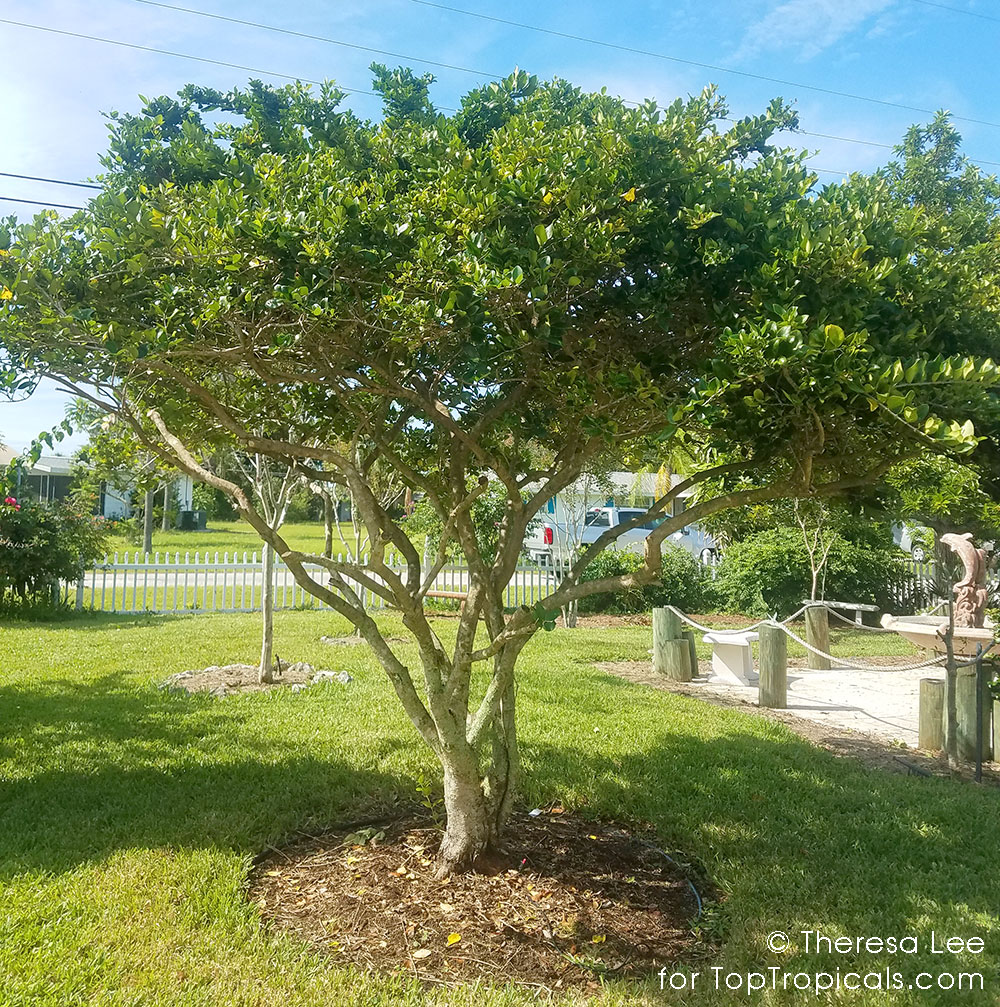
Shaping a tree and regrowing branches

Q: I have been so worried about the beautiful ligustrum on my property since my husband decided to "prune" it 2 days ago. He removed about 20 branches from the tree and completely altered the look of the canopy which was so full and lovely 😭. Please advise me if there is anything I can do to help this tree. Will any of the branches grow back? Will the canopy return? It looks practically bare to me now.... so heartbroken. Any advice and reassuring would be greatly appreciated.

A: The good news is, the tree will regrow new leaves and will branch out. The question is, how soon. Ligustrum is pretty slow-growing species and it may take a while until it gets to the shape that is close to the original.
On the other hand, pruning is beneficial almost for every plant, it promotes new growth and bushy shape. So do not panic, your beautiful tree has good chances to become even prettier.
To speed up the process of re-leafing and promote healthy new growth, we recommend the following:

1) Provide extra watering, assuming you have a sprinkler system that covers the yard. Water additionally 1-2 times a week using a garden house, for 1-2 minutes, saturating the soil around the tree and up to a drip line.

2) Apply the following fertilizers:
Tropical Greenhouse Plus - Foliage Booster
Tropical Allure - Smart-Release Booster

3) In addition to fertilizers, we recommend these 2 supplements that will enhance effect of fertilizers and make re-grow process even faster:
SUNSHINEâ„¢ SuperFood
SUNSHINEâ„¢ HumiHum - a natural humate vitamin for plant

4) Mulch well around the tree, keeping it 2-3" away from the trunk

This should help to get your tree back in shape!

Date: 28 Dec 2020

Healthy Plants: Q&A from Mr Booster

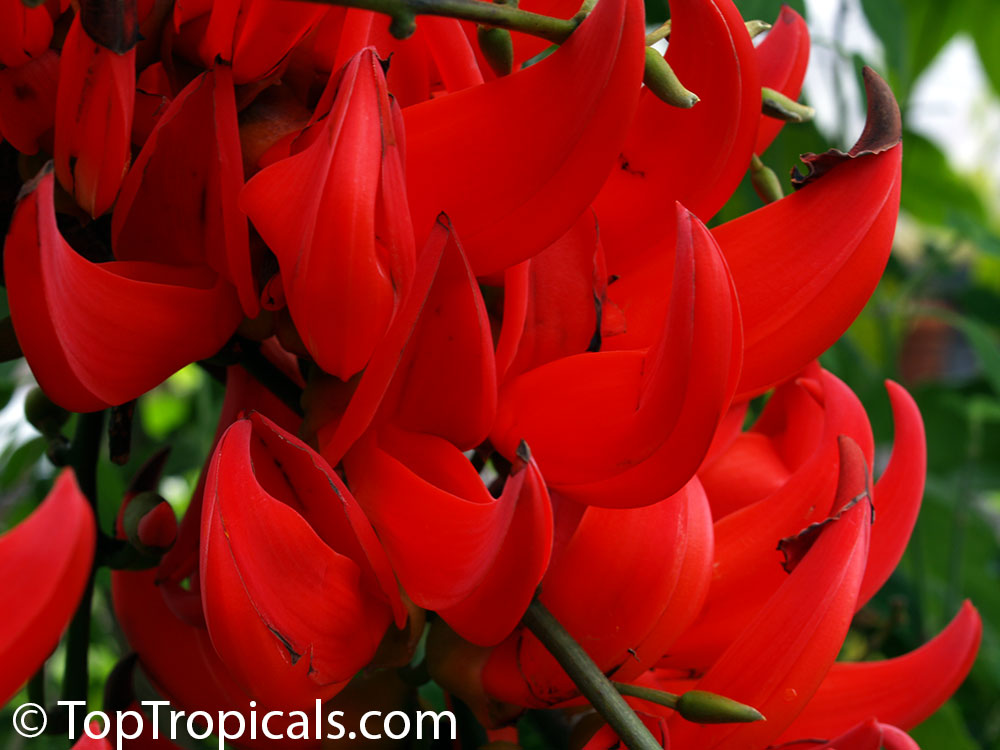
How to grow a happy Red Jade Vine?

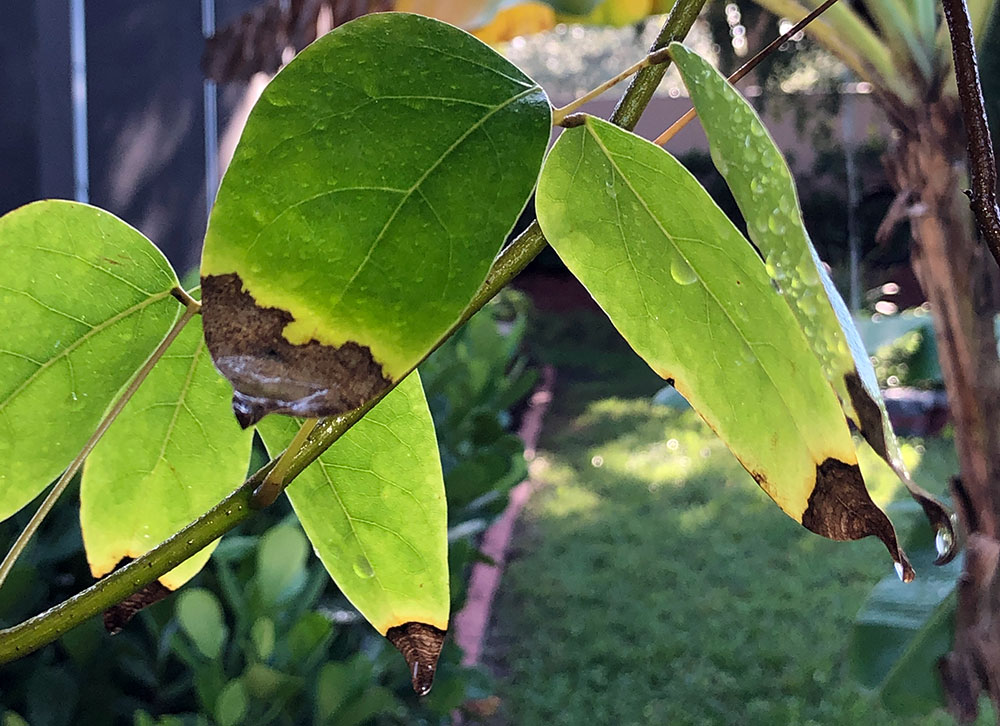
Q: My Red Jade Vine has the leaf tips turning brown. I water this plant four times a week and I am using a half a teaspoon of miracle grow bloom booster 15-30-15 per 2 gallons, every two weeks. In the beginning I had to water this plant off city water in South Fort Myers. Over the last two months I picked up a dechlorinator buggy plus threw that on my hose and I've been watering it with that but it didn't seem to make a difference. I put this plant in the ground last September. It has three shoots that run into the top of the tree, so it is growing but leaves seem to drop off down low at the base of the vine and the brown tipping running into the top of the plant. But not the newest shoot its leaves are solid green all the way at the top. Thanks for any advice.

A: Mucuna benettii - Red Jade vine - is not the easiest plant to grow, and we are glad your vine is growing well. For those who love this plant but not ready to face all challenges, we recommend its cousin - Camptosema grandiflora - Dwarf Red Jade Vine, which is much hardier and easier plant.
We looked at the photos and these are our thoughts.

1) The top of the plant with green fresh leaves definitely indicates that the plant is generally healthy and vigorous.
2) Dry tips of the old leaves may indicate excess salts in soil, in combination with the summer heat that it went through. Based on your feeding program description, that fertilizer may create a problem. Water soluble traditional fertilizers are EDTA-chelated which often causes nutrients lock up in soil and leaf drop. Try to stay away from that fertilizer for a month and let the rains and/or irrigation water flush the soil for a couple of weeks.
3) Red Jade vine is a very sensitive species. Normally, during hot season it is safe to use traditional fertilizers, especially slow-release granulated. However, with this plant we recommend you to switch to more delicate formula and use only liquid fertilizer.
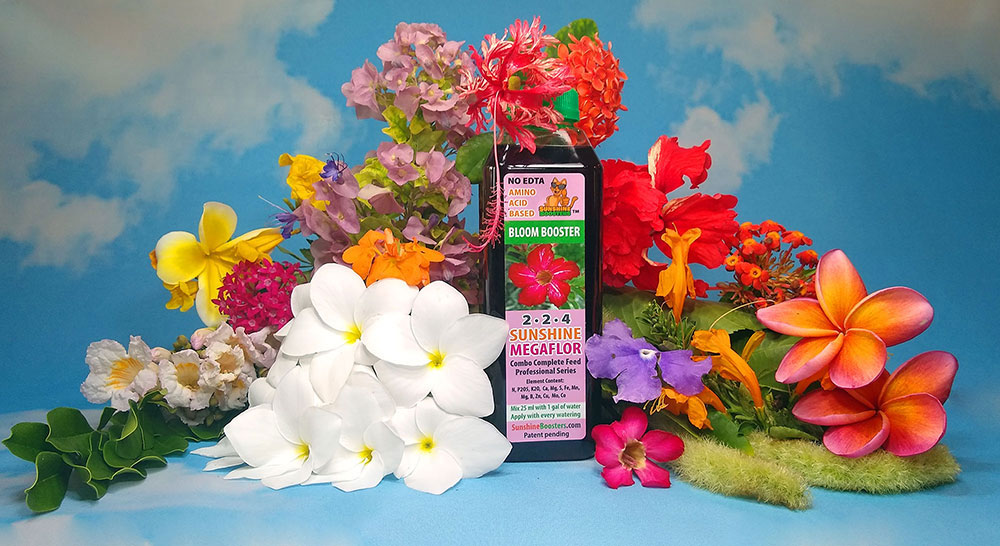
SUNSHINE Megaflor - Bloom Nutrition Booster will be the best. It is safe to use it as frequent as with every watering! It is amino-acid based, and will be totally consumed by the plant without nutrient lockup.
4) Another cause of dry leaf tips may be micro-element deficiency.
Megaflor booster already has all necessary micro-nutrients in it, plus you may apply some extra: SUNSHINE Superfood.
5) You may continue using regular water for watering (including city water) as long as you use amino-acid based plant food and supplements: they improve soil acidity (what tropical plants like is acidic soil, and Florida soils are alkaline). Additionally, to improve soil acidity which can be critical for this Mucuna species, you may add 1" layer of pure peat moss on top of the soil around the plant. Please keep us in loop how the plant is doing. It is pretty rare species in cultivation and we will be happy to help you to keep it thriving.

Date: 22 Mar 2017

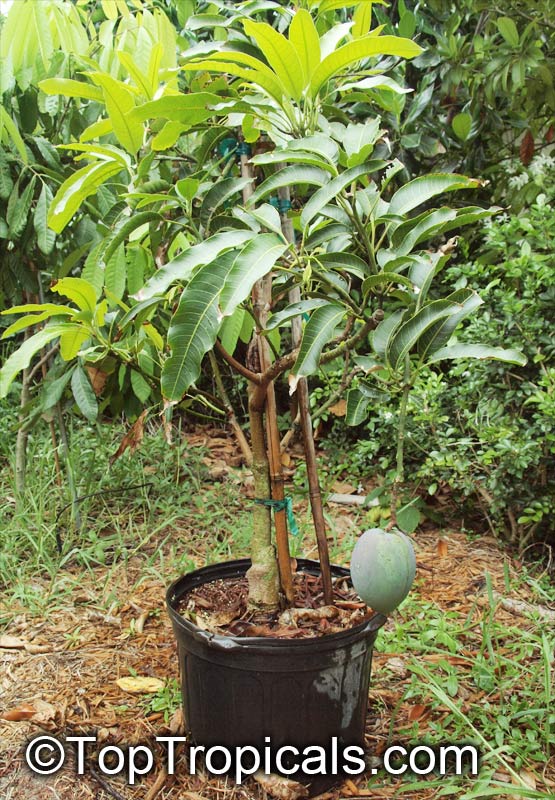
Condo Mango

Q: I was curious about indoor fruiting mango trees. I live in upstate New York and was thinking about trying to grow an indoor tree for fruit. I have a small heated greenhouse. Is there a variety that can be grown from seed that would suit my purposes and if not what is the most economical way I could obtain a cutting or small grafted plant? I keep my greenhouse around 60F in the winter and have no supplemental lighting. Are there any varieties that may work in a sunroom or other well lit indoor location?

A: There are many dwarf varieties of mango suitable for container culture. They are called "condo mangoes".
The most popular condo varieties are: Carrie, Cogshall, Cushman, Fairchild, Graham, Ice Cream, Julie , Mallika, Nam Doc Mai, Pickering. You may read more about them in our online catalog. You may also look into variety Lancetilla which is also a compact tree, and produces one of the biggest size fruit, up to 5 pounds. If you want some rare variety that hardly anyone else has - try Baptiste, an exotic Haitian dessert mango.

Your greenhouse should work for the winter time. Mango trees can take as low as mid 40s during winter and even lower as long as that cold is occasional. If you keep the temperature around 60, this should work well for over wintering. Just make sure to reduce watering to a minimum, because cool temperatures, low light and wet soil - is a bad combination for tropical plants, especially for mango trees which prefer to be kept on a dry side.

Many indoor gardeners have fruiting mango trees in their collection. However, keep in mind that the most important requirement for a mango is full sun. While you may over winter the plant for a few months in a low light conditions, in order for it to flower and produce fruit it needs lots of light. If moving the tree into full sun your yard during the summer is possible, this would be the best solution.

We always recommend SUNSHINE boosters for both over wintering tropical plants in colder climates, and for indoor gardening. SUNSHINE applications will help your tree to cope with cool temperatures and low light conditions. This will also dramatically increase flowering and fruiting performance. Another important factor for keeping your container plant healthy is quality of your potting soil. We offer a special professional mix that contains lots of good stuff: coconut fiber, peat moss, pine bark, and perlite. Fertilizing potted plants is also very important during the warm season, because this is the only way for them to get nutrients (which in the ground can be reached by spreading root system).

As far as seedlings vs. grafting - the only way to have a nicely fruiting mango tree is to plant a grafted variety. Seedlings start producing only after 8-15 years, and the quality of such fruit may be questionable. Only grafted plants can guarantee the desired taste of a variety. Besides, grafted mangoes start producing immediately - you may see fruit forming on plants as small as 3 ft, in 3 gal containers. However, during the first 1-2 years you will need to remove extra fruit and leave only 1-2 fruit so the plant doesn't get exhausted and has enough energy to establish strong root system.

For fun stories about growing mango, check out our Radio Show recording YO Tango Mango!