Date: 14 Apr 2025
How to Plant a Perfume Hedge
And What Does a Champaka Tree Look Like?
Practical Growing Guide
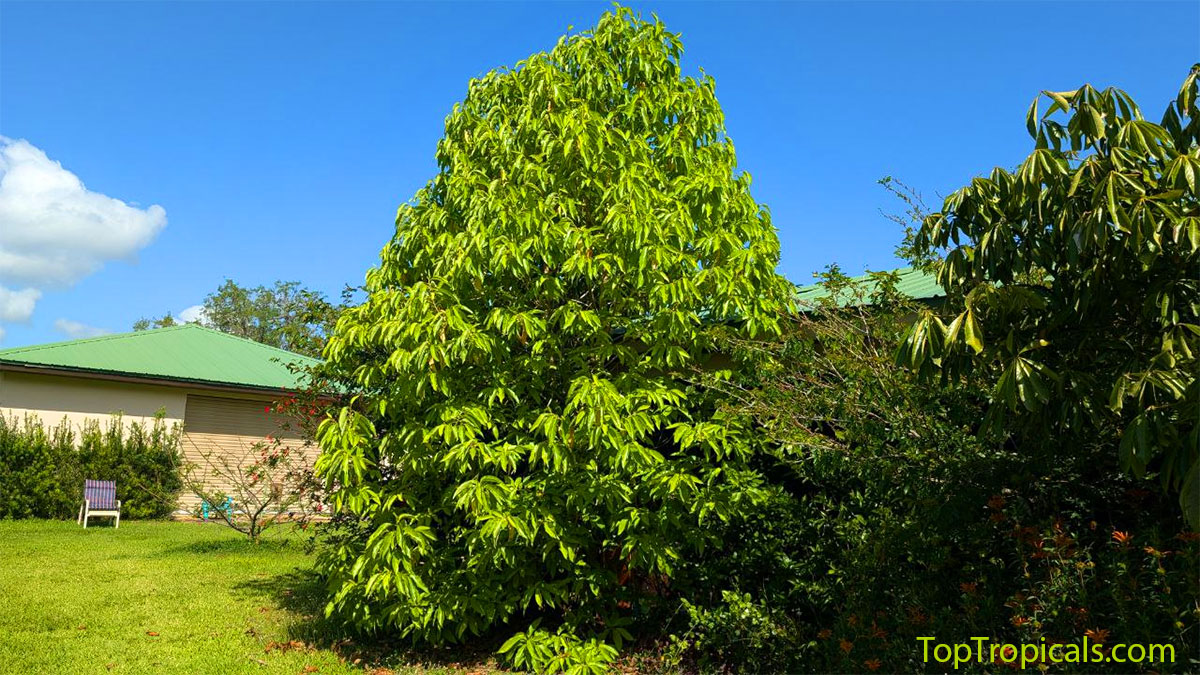
Photo above: Magnolia champaka (Joy Perfume tree) in landscape. This tree was planted 3 years ago from a 7-gal pot. The tree is now 5 years old from seed and has been covered with flowers for two seasons in a row. Check out short video.
Q: How big does the Champaka tree grow, tall and wide? And what is the growth habit? I'm thinking of planting a perfume hedge along my property with several of these beautiful trees (8-10 trees). How far apart should I plant them and what container size should I start with? And how soon will they start blooming?
A: Magnolia champaka, or Joy Perfume tree is the most desirable perfume tree for Southern landscapes - and a Signature Plant of Top Tropicals! You can see several of these stunning trees around our B-Farm in Sebring, including the one right by the office front door.
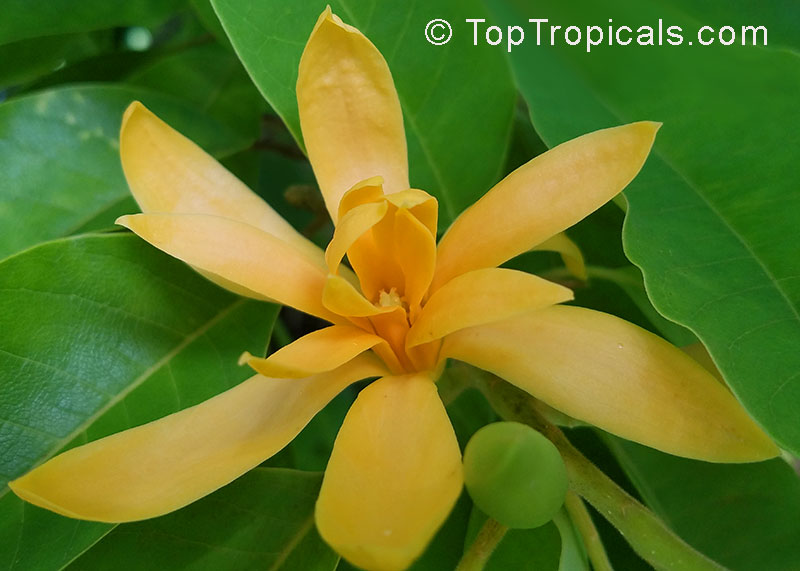
The flowers are used to make the world's most expensive perfume, Joy - and they smell like fruity bubble gum... you won't be able to stop sticking your nose in this flower! The Joy Perfume Tree blooms on and off year-round.
The lemon-lime, light green leaves are lush, soft, and tropical-looking, with a unique and beautiful color.
The Champaka tree has a striking columnar shape and becomes very bushy and full when established - whether in a pot with a proper fertilizer program or in the ground. In Florida, mature trees can reach 20-25 ft tall, although in true tropical environments they may grow much taller. Check out short video of a mature tree. It doesn't get very wide, and if you are planning to plant several trees as a perfume hedge, you can space them as close as 10 ft apart. This tree - light green, fragrant, evergreen, fast-growing, bushy, and dense - makes the perfect perfume hedge!
Champaka trees begin flowering within 2-3 years from seed. Singing birds love this tree and often build nests in its bushy crown during spring. The tree is relatively cold-hardy and can withstand light freeze for short periods once established. Just make sure to provide regular watering.
We have beautiful Champaka trees in all sizes:
3 gal pot:
3-4 ft tall - ready to bloom within a year, can be shipped
7 gal pot: 5-6
ft tall - ready to bloom, can be shipped
15 gal pot: 7-8
ft tall - have already bloomed, pick up or delivery*
25 gal pot: 10
ft tall - have already bloomed, pick up or delivery*
* Free delivery for qualified orders - contact us for estimate
Plant Your Perfume Hedge Today!
Imagine walking along a path lined with Champaka trees - Joy -fragrant blossoms drifting through the air, lush green leaves swaying gently, and birds singing above. With just a few trees, you can create your own heavenly hedge of joy and fragrance. Let your garden bloom with elegance, beauty, and the world's most luxurious scent!
Date: 9 Apr 2024
How to start a tropical garden?
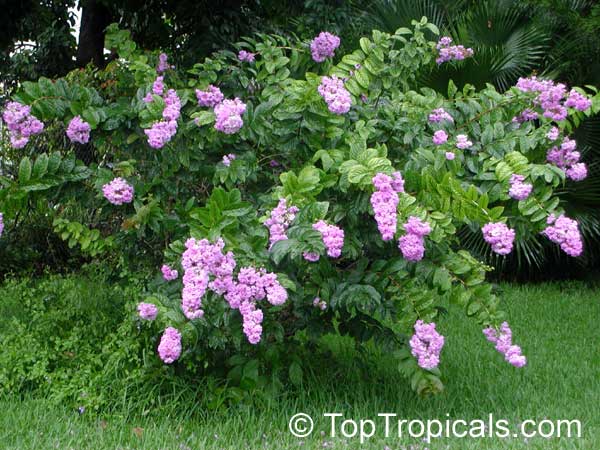
Photo above: Lagerstroemia speciosa - Queen Crape Myrtle. Gorgeous flowering tree with cascades of lilac flowers. One of the most popular trees in Southern gardens.
Q: It's spring, finally! I can't wait to plant my paradise garden with lots of tropical flowers. We moved into a nice new house but the yard has nothing but grass. Where do I start?
A: When you start your garden from scratch, you
need to plant your trees first. It's a perfect timing!
Getting tropical
flowering trees now is really important for making your garden strong and
beautiful. Trees are like the bones of your garden, giving it shape and shade.
If you plant them in spring, they have enough time to grow strong roots
before winter. This helps them survive better.
Trees also give shade to other plants so they can grow well too. It's like
building a house - you need to start with the frame before adding other
parts. So, it's a good idea to get those trees now before moving on to shrubs and
vines.
Remember to provide regular fertilizing program which is the most important
during season of active growth. The more food your tree gets, the stronger
and faster it grows! For flowering trees, we recommend Sunshine Boosters Megaflor formula.
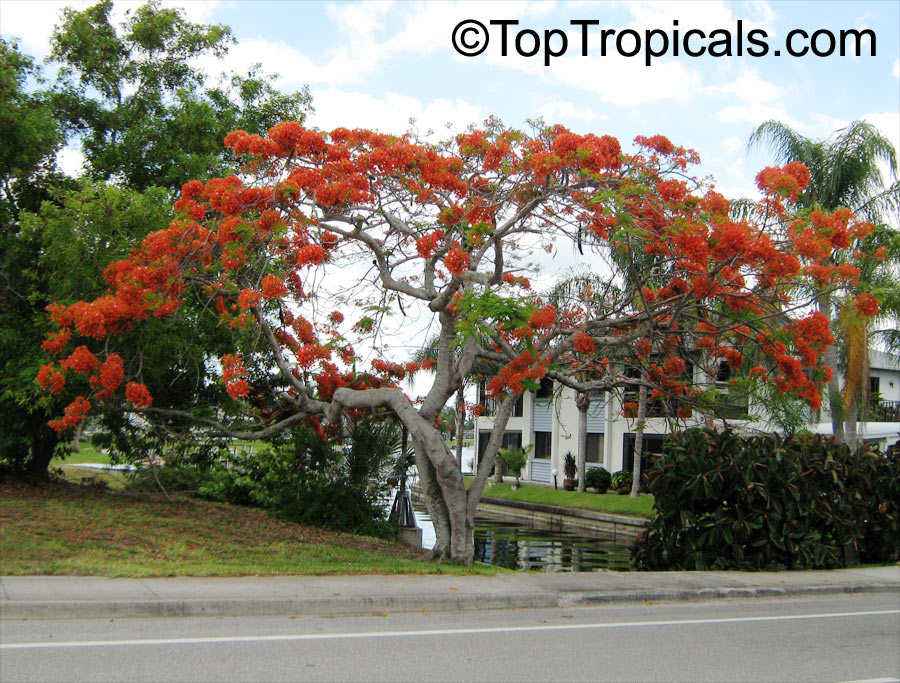
Photo above: Royal poinciana
Date: 11 Mar 2026
📅 Do Not Miss: March 21 - Spring Equinox Plant Market
🍩 Saturday, March 21, 2026: 9 am - 4 pm

Smokey: You'd be perfect for a Gulf beach cafe. But gardeners don't come here for donuts.
Sunshine: Really? Then why do they come?
Smokey: Some gardeners lost plants to the freeze. Others want trees that will handle winter better. Cold-hardy avocados. Macadamia. Grumichama. And some just come for fun - to see the PeopleCats.
Sunshine: And my charm... and my donuts will make it more fun.
Read more about Smokey & Sunshine
Ft Myers Garden Center: 13890 Orange River, Ft Myers,
FL
Sebring B-Farm
: 9100 McRoy Rd, Sebring, FL
More Spring Equinox Plant Market details
🌞 Welcome to our Spring Equinox Plant Market, proudly hosted by the PeopleCats of Top Tropicals.
This one feels different.
After Florida’s record freeze, many gardens are brown, trimmed back, or missing a few old friends. We felt it too. And now - we rebuild.
The equinox marks equal day and night. More light ahead. New growth beginning.
And the PeopleCats are ready🐾.
- 🐱King is back on gate duty - inspecting every vehicle for proper plant-hauling capacity.
- 😺Paisley is rearranging freeze survivors and new arrivals like a design consultant.
- 😼Snitch is supervising recovery efforts from a comfortable chair.
- 😸Persephone is checking under tables for "hidden spring energy."
- 😻Sushi and Loki are preparing for guided garden tours - recovery edition.
This is not just a plant market. This is the spring reset.
👍 Why You Should Come
It is finally warm in Florida. After several nights of hard freeze, some plants survived - and some didn’t. This event is your chance to see real freeze champions in person.
If you lost plants, you are not alone. If you are ready to plant smarter, this is your moment.
Walk the gardens. See proven winter survivors. Discover cold-hardy fruit trees and resilient ornamentals. Get practical advice about replanting after freeze. This is rebuilding - Florida style.
♥️ What Makes This Event Special
We are featuring:
- Verified freeze survivors
- Cold-hardy fruit trees
- Tough flowering trees and shrubs
- Replacement plants for damaged landscapes
- Smart layering ideas for frost-resilient gardens
- You will see which species handled 25F with wind and multiple nights of freeze - with no protection.
Real-world test. Real results.
Cold hardy fruit favorites include:
- Cold-hardy Avocado varieties, including varieties, which are cold hardy to 15-20°F: Joey, Fantastic, Mexicola, Poncho, Brogdon and more.
- Macadamia Nut Trees
- Eugenia Cherries, including Rio Grande and Grumichama
- Gin Berry and Jaboticaba
- Loquat and Cattley Guava
- Peaches and Pomegranates
🌸 Cold hardy subtropical flowering trees including:
- Bauhinias and Tabebuias
- Mexican Bird of Paradise - Caesalpinia mexicana
- Jacaranda and Magnolia
🎉Event Highlights
- 30% OFF online prices
- FREE plants with purchase
- $5-10 specials
- Exciting raffle prizes
🌳Don't just mow - grow!
Start your food forest, beat rising prices, and plant a future your family will thank you for.
Date: 10 Apr 2025
Pre-hurricane season tips: how to protect your trees from winds
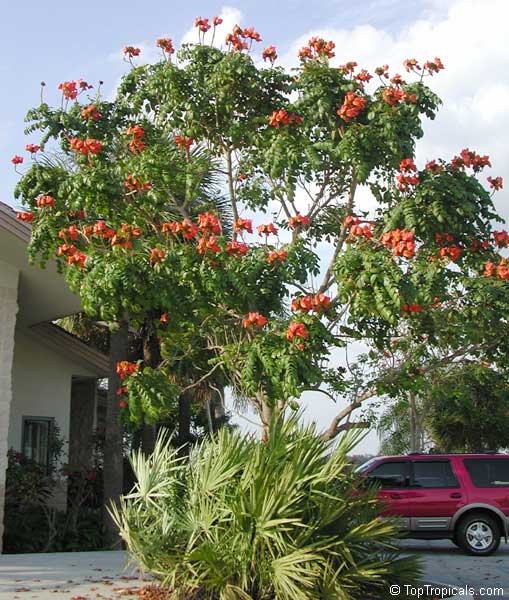
Spathodea campanulata - African Tulip Tree
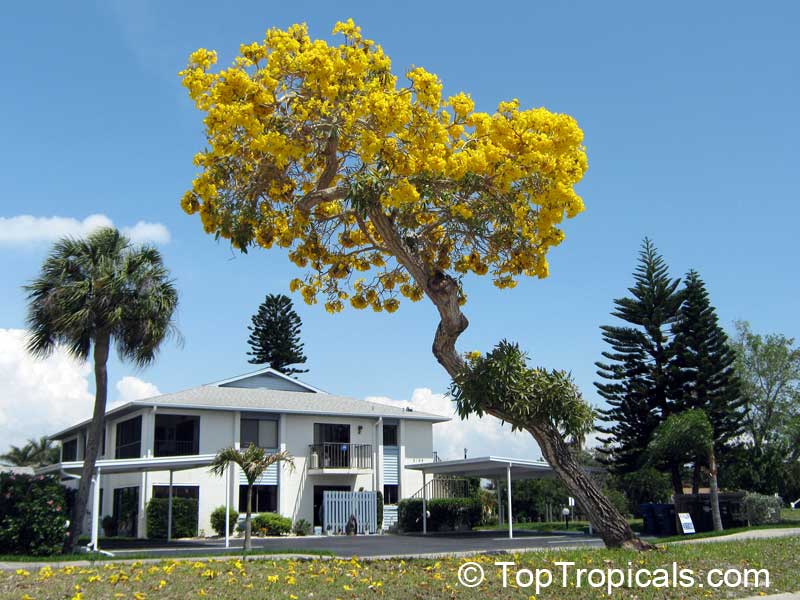
Tabebuia caraiba - Yellow trumpet tree crooked with wind
🌪 Pre-hurricane season tips: how to protect your trees from winds
Some trees like mango have deep roots and handle wind well. Others - like our favorites Spathodea campanulata - African Tulip Tree or Tabebuia caraiba - Yellow trumpet tree (in the photos) - need extra care. You've likely seen crooked Tabebuias in South Florida or lost a bushy Tulip Tree to strong winds. Their wide crowns act like sails in a storm.
💨 To help your trees withstand wind damage:
- ✅ Stake young trees with strong support - use a tripod-style setup (three bamboo sticks or boards secured around the tree for balance from all sides)
- ✅ Check and adjust supports every 6 months
- ✅ Trim long or rubbing branches - they break first
- ✅ Add extra support if a storm is coming (larger trees benefit from sturdy tripod-style bracing with boards)
- ✅ Lighten bushy growth, less sail = more survival
💡 Some remove all leaves from plumeria before a hurricane - it works!
💡 We pruned our Tulip Tree and Ceiba - and they withstood Hurricane Milton while others fell
- ✅ If a tree falls, stand it up ASAP and support it. Trim broken branches - they’ll remind you what needed pruning before, not after!
- ✅ Trees protected young, grow strong for life.
🛒 Grab your beautiful Tulip Tree and Tabebuia Tree today - support them early for strength and beauty later!
📚 Learn more:
Everyone loves these tulips growing on a tree
#How_to #Trees #Discover
🔴 Join 👉 TopTropicals
Date: 28 Apr 2021
Cold hardy tropical fruit trees for Zone 9
Q: Can you suggest tropical fruit that can be grown (cold hardy) in Zone 9?
A: There are quite a few tropical/subtropical trees that will
grow well in zone 9. Our favorites are:
Figs - very cold hardy and drought tolerant.
Loquats - grafted trees that start fruiting right away, reliable
producers.
Tropical Mulberry - very fast growing trees that can take freeze, heavy
producers.
Macadamia - these trees are of a compact nature, very easy to grow and
start producing nuts right away.
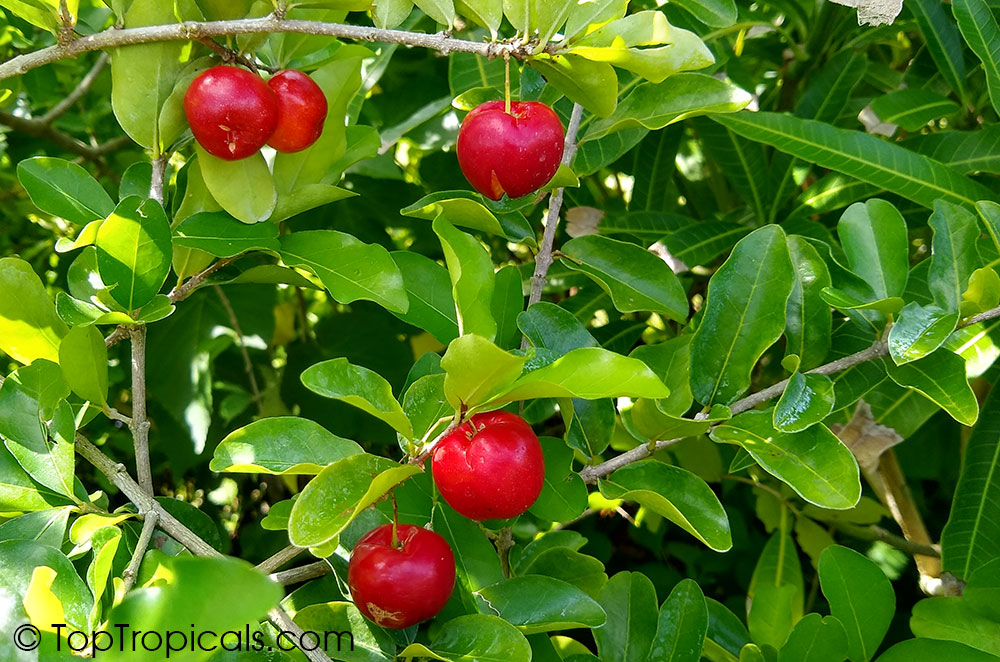
Many different varieties of Eugenias - tropical cherries - all-time favorites. Another tropical cherry - Malpighia, or Barbados cherry - starts fruiting in small size under one food tall! Great for containers.
Tropical (Low Chill) Peaches, Nectarines, and Plums. See full list of low-chill, relatively cold hardy fruit
trees.
And of course -
Bananas!
Don't forget to fertilize your fruit trees to improve their cold hardiness!