Garden Blog - Top Tropicals

Date: 16 Jun 2019

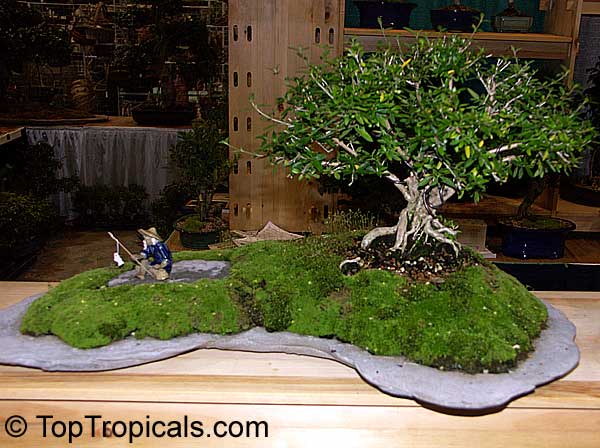
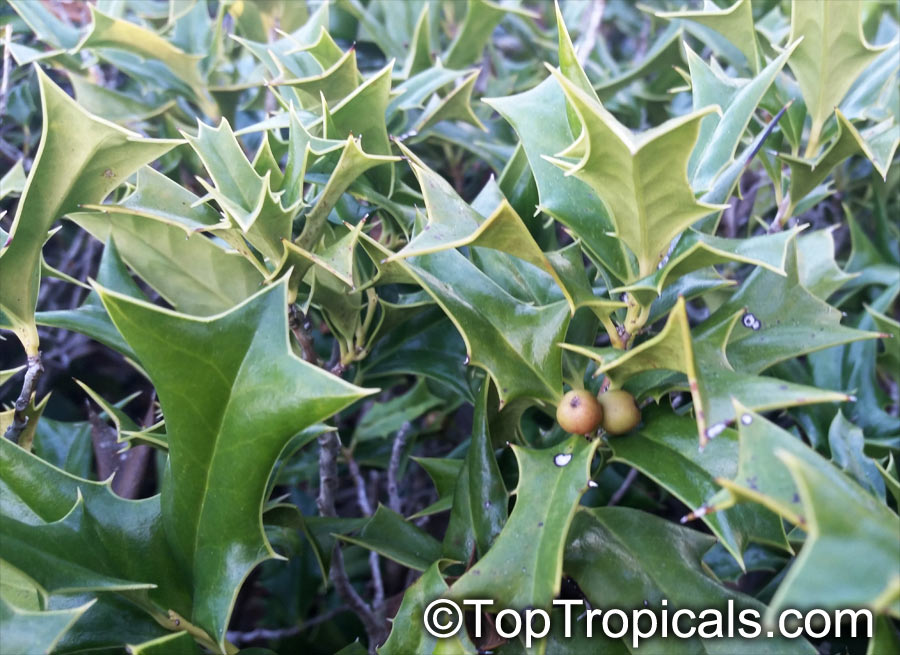
Horned Holly - a cool bonsai plant
By Onika Amell, tropical plant specialist

Q: I live in Chickasaw, Alabama. I am a beginner bonsai grower. I received a lovely little Horned Holly as a birthday present and I want to know if it is a suitable plant to bonsai?

A: The Ilex cornuta - Horned Holly, or Chinese Holly, is very popular as a bonsai species. It is loved for its very beautiful and distinctive rectangular foliage and for its small, white flowers which give way to large, red berries. The berries are larger than those of the European Holly. The leaves are rectangular and unusually shaped with three large spines at the apex. This bonsai will take both sun and shade, but semi-shade is preferred in midsummer. If indoors, give it plenty of bright light. When kept outdoors, your Horned Holly bonsai will need some frost protection and should be sheltered from strong or cold winds. It will need a fair amount of water and should not be allowed to completely dry out. Watering during the heat of summer is especially important, as well as in spring right before the fruit production, and should be reduced during winter. This species will also appreciate regular misting of the foliage. Repot this bonsai every 1 to 2 years in early spring, using bonsai soil - TopTropicals Adenium Soilless Mix. Fertilize the holly every two weeks throughout the growing season using either a balanced fertilizer diluted to half strength. We recommend for this purpose Tropical Greenhouse Plus - Plant Booster. Pruning should be done in early spring.
Horned Holly is also very popular as a hedge plant as it grows dense and compact. It will grow to between 3 and 5 feet tall and will spread to an equal distance, giving it a round, shrubby form. It is cold hardy! Zones 6 through 9. It will tolerate a wide variety of soils as long as it is well-drained. It likes sun or part shade. It is heat and drought tolerant once established, and are often used in xeriscaping. Its branches produce dark olive-green foliage that is often cut for indoor decorations during the holidays.

Limited time special offer:
buy 1 get 1 free for only $10!

Date: 3 Jul 2024

What is the best showy shrub to plant under a shade tree?

Tabernaemontana divaricata - Pinwheel Jasmine, Crape Jasmine

What is the best showy shrub to plant under a shade tree?

  • 💮 Tabernaemontana divaricata, also known as Pinwheel Jasmine or Crape Jasmine, is a true garden gem, blooming year-round to bring constant beauty to your outdoor space.
  • 💮 This cute bush can be also shaped into a small tree.
  • 💮 It looks beautiful beneath palms or trees.
  • 💮 Blooms year-round with pretty, white, pinwheel-shaped flowers.
  • 💮 Needs bright light for profuse blooming, but can tolerate shade conditions.
  • 💮 Makes your garden look stunning all year around.


🛒
Get Pinwheel Jasmine

#Hedges_with_benefits

🏵 TopTropicals

Date: 18 Apr 2016

Seeds germination in summer

Q: What is the best way to germinate seeds in summer? Should I keep trays indoors or put them outside?

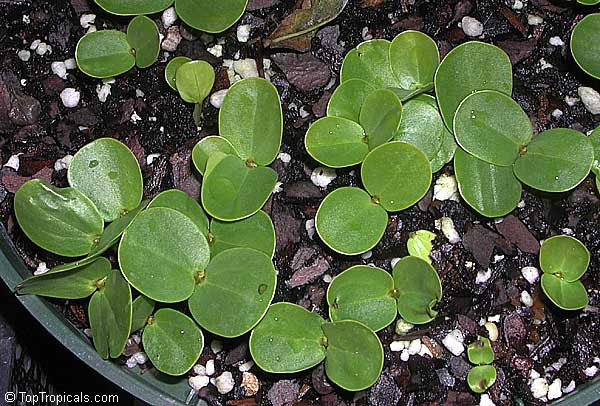
A: Summer is the best growing season for plants, and for their propagation. Seed germination process of tropical plants usually benefits from warm, and even hot temperatures, so keeping pots with seeds outside in full or partial sun can be the best way. However some seeds may be more sensitive than others, or require slightly cooler or higher temperature for germination. These are a few tips that may help:

- For seed germination, use only well drained mixes, containing either peat moss or coconut fiber to retain moisture. Some succulents may require adding sand to the germination mix. You may also try our Professional Formula Seed Germination Mix.

- Large tropical seeds, like palms, or seeds of Fabaceae (Bean) family, can be grown in full sun. Their germination will benefit from higher temperatures (up to 90-95F). Make sure to keep soil moist. Cover them well, with 3/4 to 1 inch of soil.

- Fruit seeds (large size) should be germinated either in individual cells or small pots (3-4" diameter).

- Small to medium size seeds can be grown in so-called community pots. Seedlings can be separated after they establish their first roots.

- Tiny seeds should be planted closer to the surface, covered with only 1/4-1/8 inch of soil; some seeds require bright light for germination, so full sun will be a plus. Some small seeds like Ficus for example, prefer to be broadcasted on the surface, uncovered. Put containers with such seeds in bright shade, as you don't want the surface of the soil to dry out.

- Once your seeds sprouted, move them in filtered light - bright to medium shade depending on tenderness of the species. (Gingers prefer shade, while succulent sprouts can stay in brighter light). Regardless of water/sun needs of the species, all young sprouts and first leaves are sensitive to hot sun and may get burned or even killed. Once a baby plant has a few leaves and well-branched root system, you may start moving trays into a brighter light.

- Do not overwater young seedlings, keep soil slightly moist but not soggy.

See full list of available seeds.

Date: 9 Aug 2021

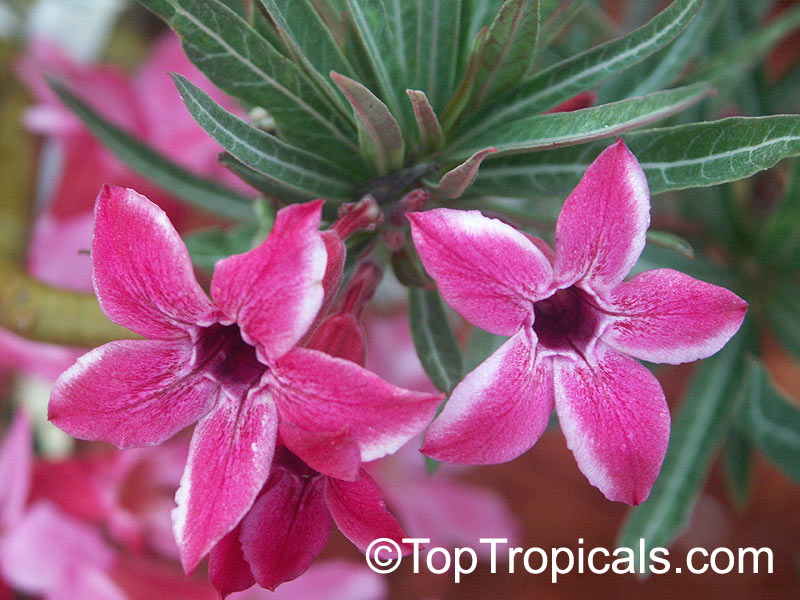
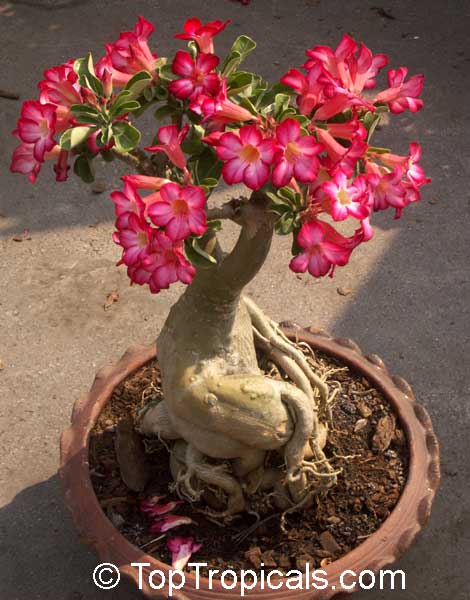
Care of Desert Roses

Q: I am looking forward to my three desert roses I just ordered from you and I am wondering how to take care of them, especially during winter time. Should I put the pots in full sun or shade? What kind of soil do they like? How often should I water them? When it gets cooler, should I bring them inside? We do have occasional frost here during winter.

A: Here are a few tips for your desert roses:

1. When received Adenium from mail-order, unpack carefully; branches are fragile. Plant in well-drained potting mix. Cactus mix will do, but we recommend special Adenium mix. If using regular acidic peat-based potting mix, you may add sea-shells on top of soil to neutralize acidity: adeniums prefer alkaline soils. Using clay pots is beneficial. Water once and do not water again until soil gets dry. Place in bright shade until new leaves sprout, then the plant can be moved to full sun.

2. Adenium is a succulent, but not a cactus. It needs watering, however let soil dry before waterings. Reduce watering during cool season and discontinue when plant gets dormant (drops all leaves in winter).

3. Bright light is the best for profuse flowering. However, adeniums look much healthier in slightly filtered light rather than in all-day full sun.

4. Fertilize and spray leaves with liquid fertilizer SUNSHINE Megaflor - Nutrition Bloom Booster. Phosphorous is responsible both for flowering and caudex development. Avoid caudex, spray over foliage only. Dry fertilizer can be used only during hot months.

5. Watch for spider mites during hot and dry season.

6. Give plants a break during winter dormant season. Keep in bright shade and reduce watering to 1-2 per month or stop watering if temperature is below 65F.

More info on growing Desert Roses:
What you need for successful growing Adeniums
Overwintering Adeniums outside of tropics
Growing Exotic Adeniums - Growing Exotic Adeniums

Date: 13 Oct 2024

What is the prettiest flower for shade?

Spathoglottis Tropical Punch - Sorbet Ground Orchid

⚜️ What is the prettiest flower for shade?

❗️ Ground orchids grow in regular garden soil instead of in the air on tree branches, come in many colors and shapes, bloom in sun or shade and are very easy to grow!

🎥 Spathoglottis Tropical Punch - Sorbet Ground Orchid

📚 Learn more from previous posts:


📱 Watch YouTube video: Ground Orchids

🛒 Order Ground Orchids

#Shade_Garden #Container_Garden

🔴 Join 👉 TopTropicals