Free natural shampoo: squeeze it and see what comes out!
Pine Cone Ginger - Zingiber Zerumbet, Shampoo Ginger
💄 Free natural shampoo: squeeze it and see what comes out!
💄Pine Cone Ginger (Zingiber Zerumbet), is called Shampoo Ginger due to its unique, milky substance found in the cones. If you squeeze these bright red cones, a fragrant, milky liquid seeps out - traditionally used in Asia and Hawaii as a natural shampoo. Even today, you’ll find it in commercial shampoos.
💄 But there's more to it than hair care. All parts of the plant carry a spicy fragrance, the cones make striking, long-lasting cut flowers, and the whole plant adds a tropical vibe to your garden.
💄 And here's a fun history twist: Pine Cone Ginger is a "canoe plant", carried across the Pacific by ancient Polynesian voyagers. Imagine - this little shampoo factory traveled the ocean in canoes centuries ago!
Would you try washing your hair with this tropical ginger?
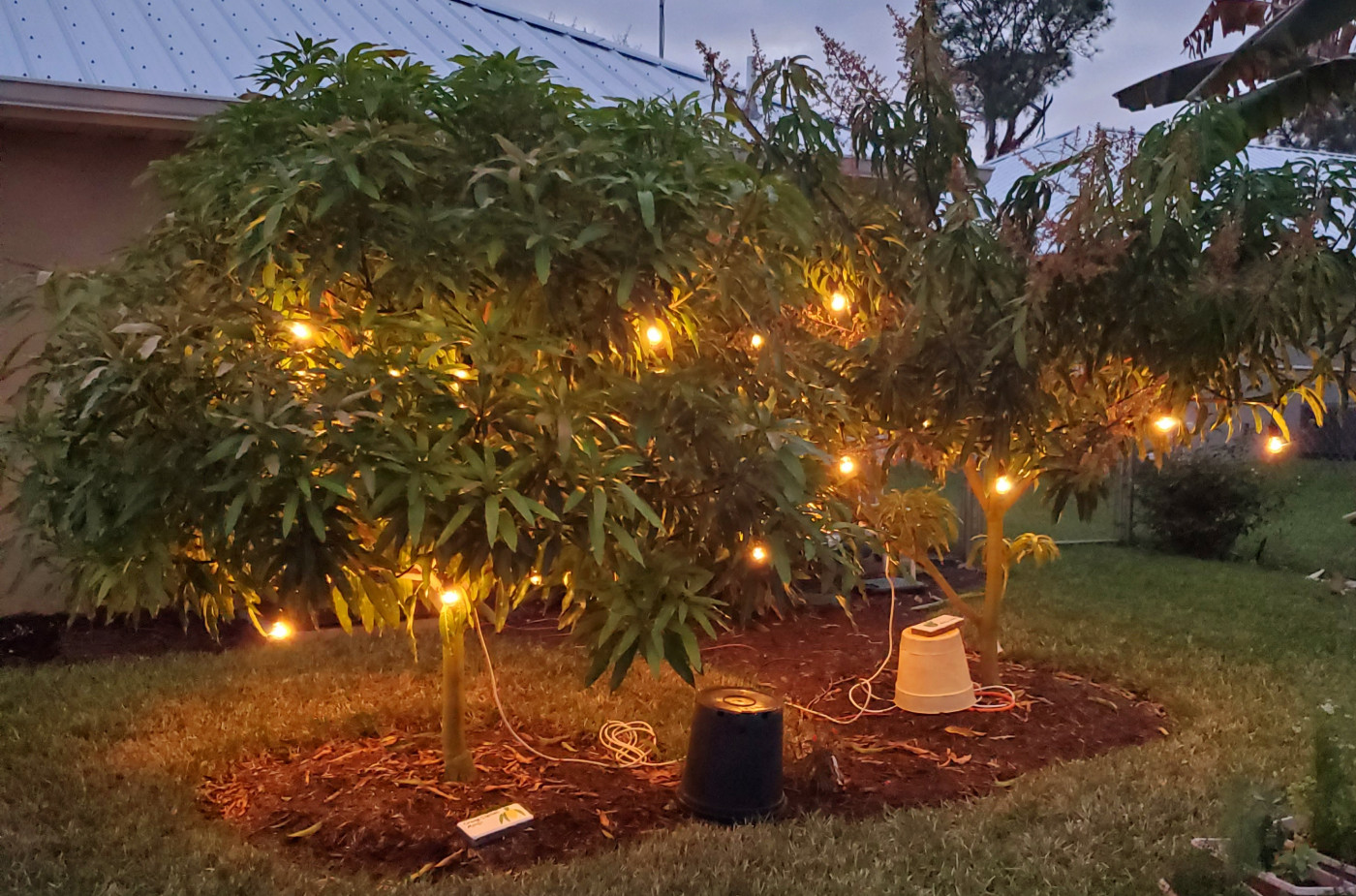
...Well, you did it didn't you? You love fresh mangoes, don't you?
Wouldn't it be great to be able to pick your own mango fresh off a tree in
your back yard?
So you bought a mango tree hoping to do just that. You are in USDA growing
zone 10 or 11 aren't you? If so, you should have no problems with weather
extremes other than possibly an occasional frost in zone 10A. If you can cover
your tree, you will not likely see any damage. But what if you are a little
further north and you have decided to try your luck on the magnificent mango
fruit tree? Mangoes are a tropical fruit tree best grown in tropical zones with
temperatures that stay above 40F. If you are in zone 9A or 9B, you may still
have luck growing a mango tree...
Q: Can you please tell me which zones are the best for growing
Angel Trumpets? When do they bloom and is there a specific fertilizer to use on
them?
Do you sell any variegated varieties?
A: If you are lucky enough to live in an area that doesn't
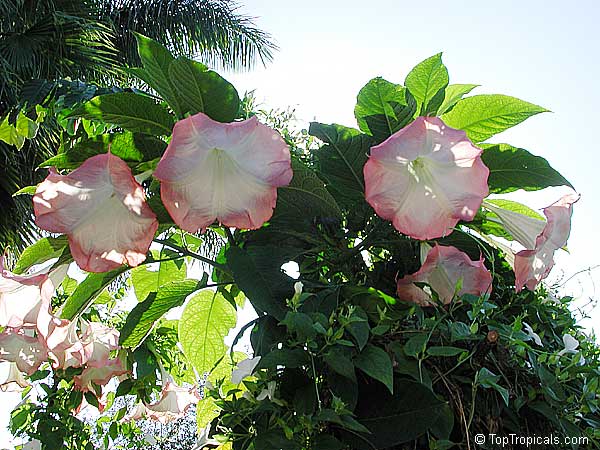
freeze or only has light frosts, you can grow Brugmansia (common name Angel Trumpet) outside all year long. They are
only entirely hardy in USDA zones 9-12, but they remain very popular
throughout the United States. They do really well in coastal settings in the
Southwest. They are simply glorious in the coastal areas of South California. In the
southwestern states, as well as in the tropics, they bloom spectacularly
throughout the spring, summer, and autumn.
Angel Trumpets are very heavy feeders and they need huge amounts of
nitrogen. You can use a standard balanced slow-release fertilizer on Brugmansia,
but then you must apply it very generously. We've created a specialized
fertilizer just for them. Angel Trumpet Delight is a perfect Brugmansia food for frequent monthly
feed. It's a 30-day Smart-Release formula that works wonders for Angel
Trumpets. A a well-balanced combination of macro- and micro- nutrients with a slow
release action, it provides continuous feed, maintains vigor and disease
resistance. It also contains coated nitrogen, early release nutrients and extra
iron (water soluble and chelated) for quick green-up.
Angel Trumpets come in a dazzling array of colors: orange, yellow,
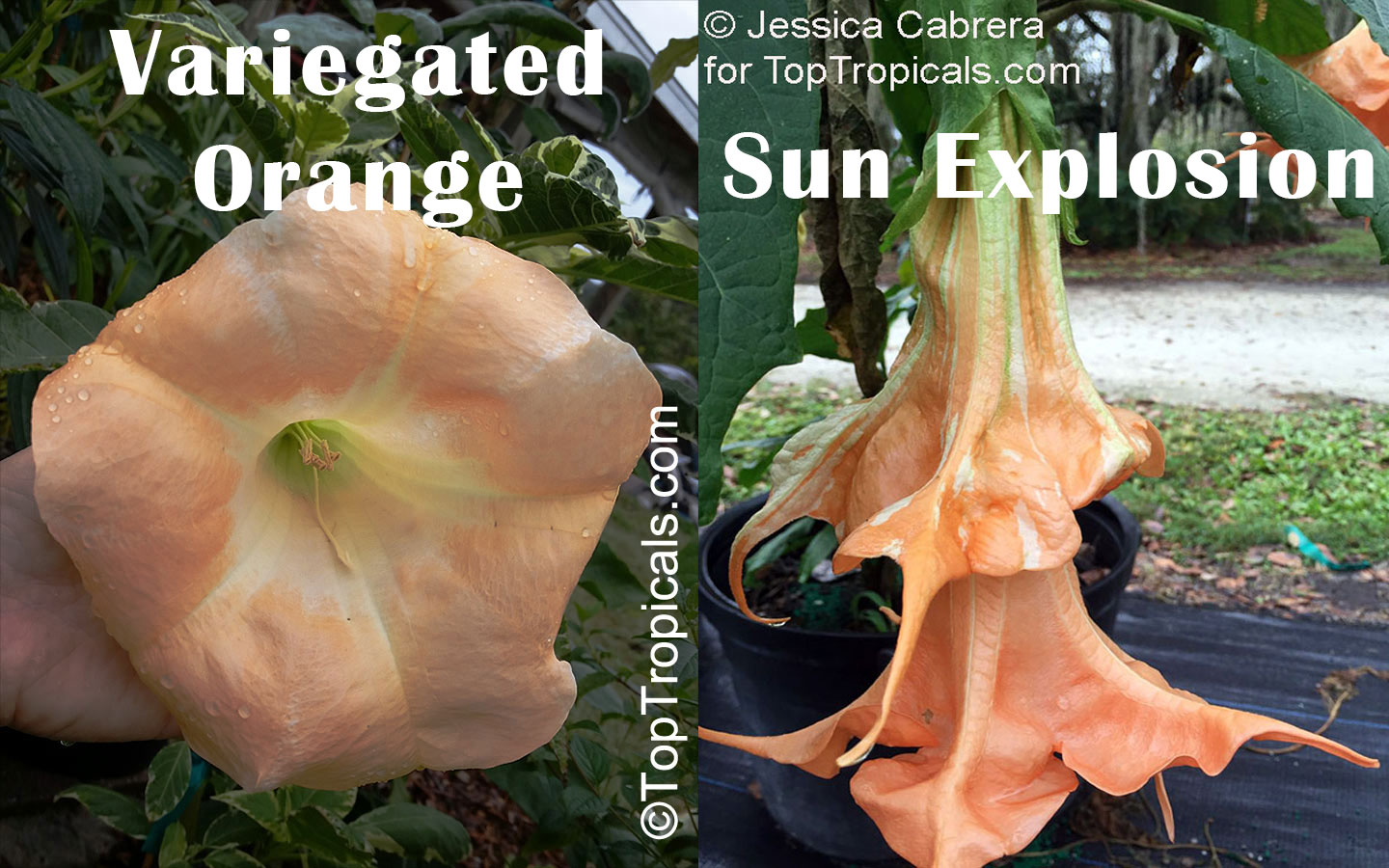
green, white, pink, red, emerald and even purple (closely related Datura). One of our favorites is the beautiful Variegated Orange Angel Trumpet, a new hybrid with variegated leaves
and a large single bloom that starts white and turns orange. Another amazing
variety is "Sun Explosion" - with a variegated orange flower.
Most folks are usually in awe of the enormous trumpet flowers when they
see it for the
very first time. They most definitely need to be planted where they can be
admired… near a deck, terrace, lanai or, entryway. The blossoms are
short-lived, but numerous, continuous, and truly show-stopping! And they smell so
good! This is a must have in any tropical garden. They can be grown either as a
bush or a small tree. They are easy peasy to grow and root extremely easily,
making them great as pass-along gifts for friends. They are sun-loving and
super fast-growing plants. Plenty of water and fertilizers keep them happy and
at their best. Did I mention they smell good too? ;)
Date: 21 May 2019
Colors of Cannas
By Onika Amell, tropical flower specialist
Q: I'm a beginner gardener and looking for something easy to
grow that will add a lot of color to my garden fast.
A: Try growing Canna lilies. They are a favorite of many
gardeners as they are so easy to grow and always provide a reliable, beautiful show
of flowers. In fact, Cannas are one of those plants that are spectacular even
if they never bloomed. The leaves are tropical-looking, banana-like and huge!
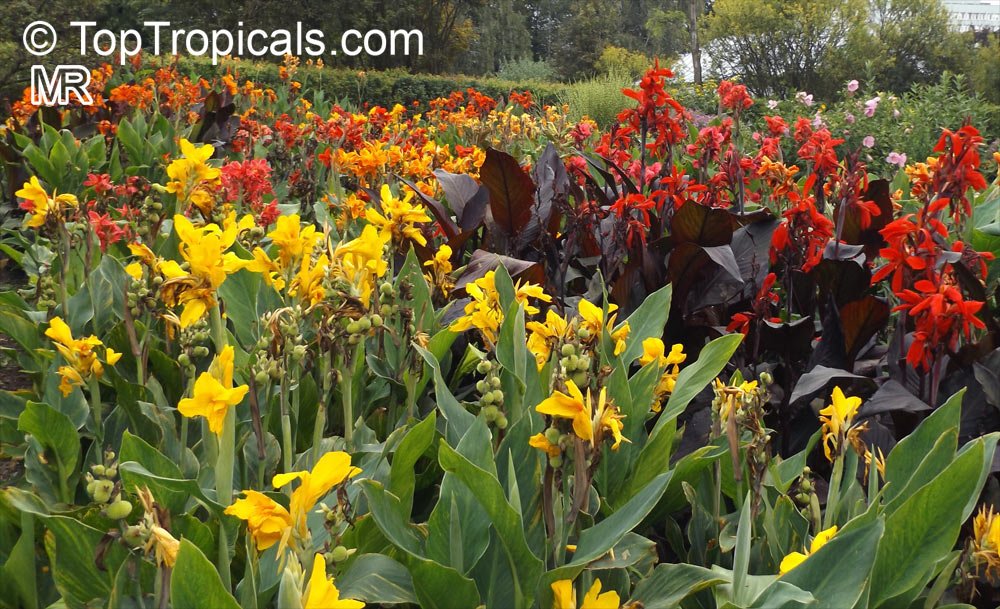
They range in a wide variety of shades and colors, always accentuating the
large showy flowers on top.
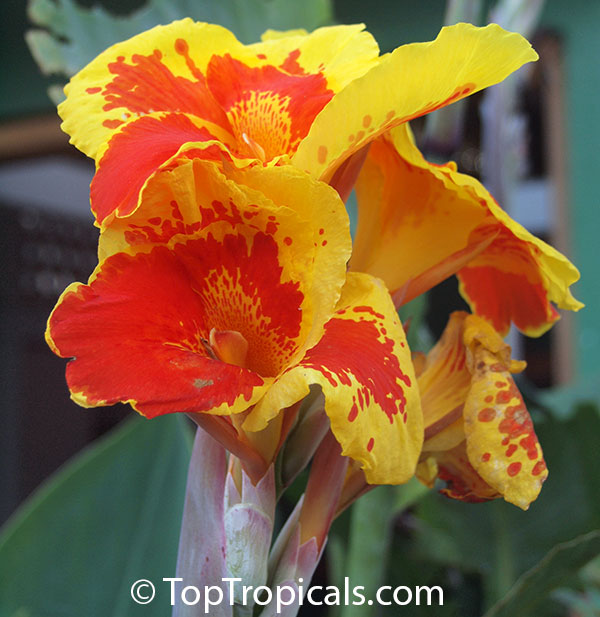
One of our favorite cannas right now is Canna Cleopatra - very striking and most unique. Large yellow flowers
speckled with red spots, or red flowers and even flowers with a little bit of
both. Foliage is exotic and very beautiful, often dark green,
dark chocolate or a combination of both. This is a canna that will
definitely illuminate
your garden!
Caring for Cannas
Cannas like a lot of water, full sun and high heat. They are also heavy
feeders and prefer soils that are well drained, organically rich and moist.
The leaves will quickly tell you when the plant is hungry. Feed your cannas
weekly with a water-soluble 20-20-20 fertilizer Broad Leaf Plus, and they will quickly respond with
beautiful, lush growth. Deadhead often to encourage continued flowering.
Cannas are winter hardy in US hardiness zones 7 and warmer. If you live in
colder areas, the rhizomes need to be lifted in the fall, and stored indoors in a
dark, warm spot until spring arrives. Be sure to divide clumps every three or
four years. Give them lots of room as they grow into large plants, forming
spreading colonies up to 7 feet high and 4 feet wide. Show them off in mass
plantings, in large containers or in mixed flower borders. Lure in hummingbirds
with these beauties!