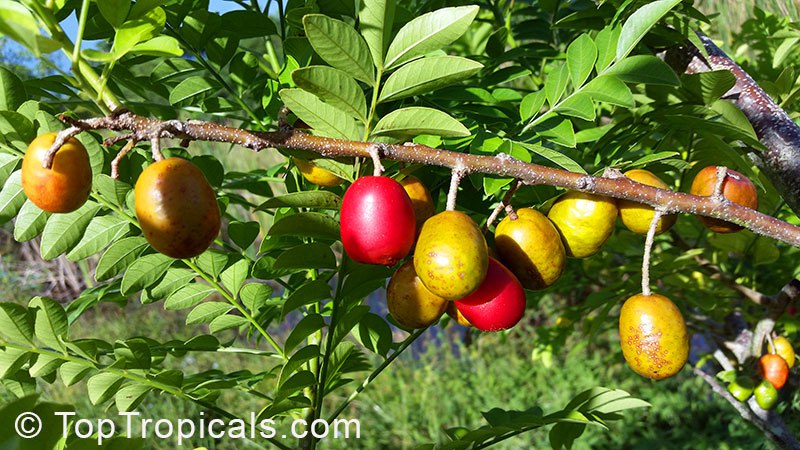
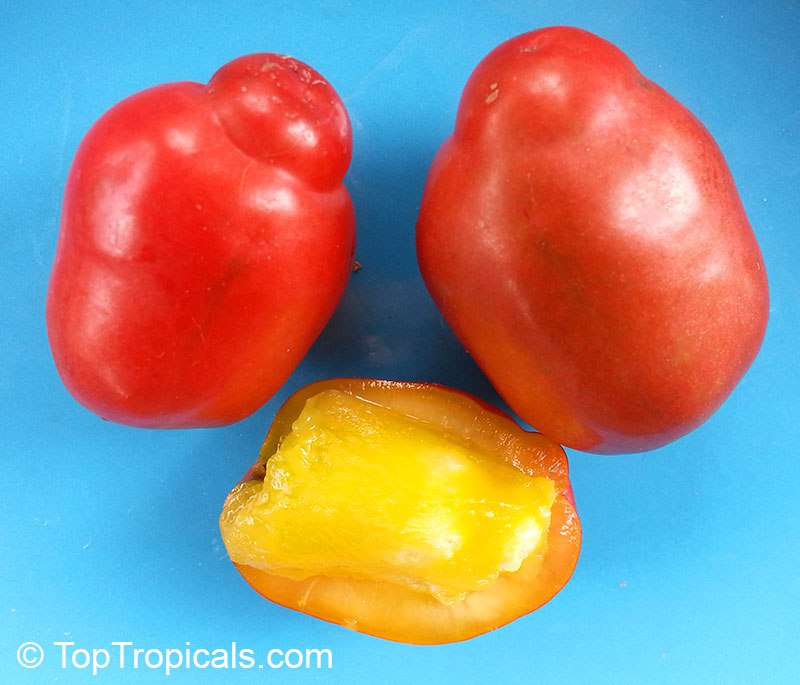
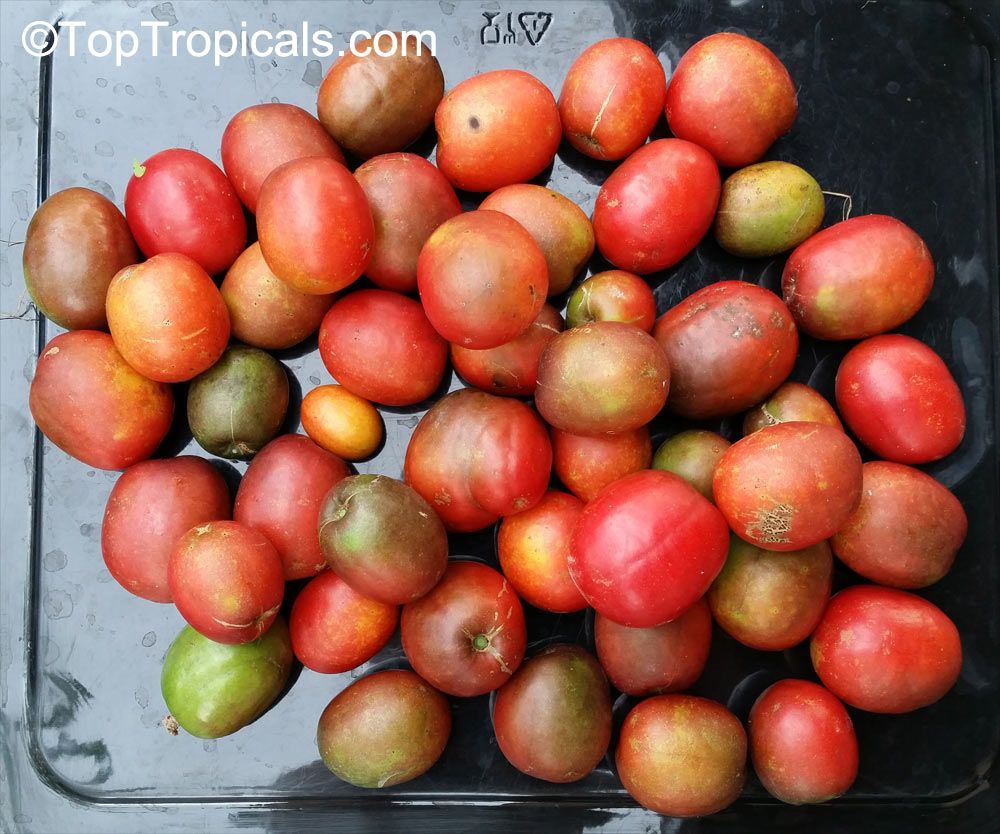
💋 The Hog Plum tree, also known as Purple Mombin, produces juicy and sweet fruits with a unique plum-like flavor.
💋 The tree is valued for its vibrant spring blooms, which emerge from bare branches in shades of red, purple, or yellow, signaling the fruit to come.
💋 Hog Plum tree offers different fruit varieties: red, yellow, and orange.
💋 Fruit are enjoyed fresh, pickled, stewed, or made into delicious Mombin Butter.
💋 Easy-to-grow nature and rapid growth of the Hog Plum tree make it a favorite, thriving even with minimal care. It iis often used for creating living fences due to its fast growth and easy propagation.
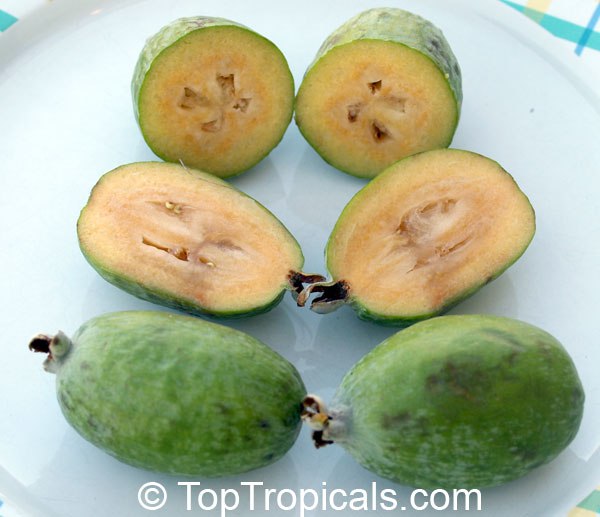
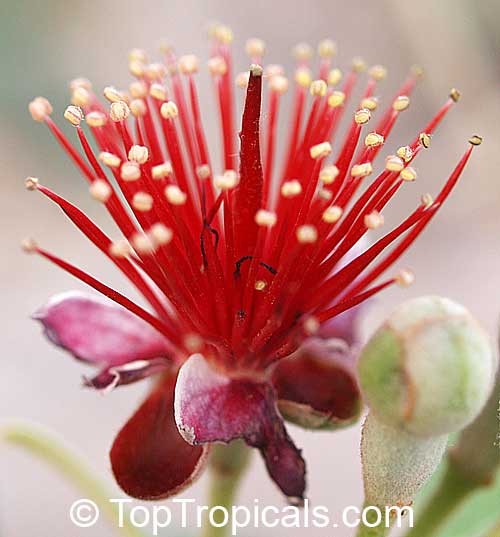
Why is it called Pineapple Guava? It tastes just like strawberries! Feijoa Superfood
Pineapple Guava, Guavasteen, Feijoa sellowiana
Pineapple Guava, Guavasteen, Feijoa sellowiana
🍓 Why is it called Pineapple Guava? It tastes just like strawberries! Feijoa Superfood.
Feijoa is certainly one of the easiest fruit trees to grow as it does not require much care.
Feijoa is an attractive, evergreen large shrub that produces lovely edible flowers and fruit.
The fruit is eaten fresh, added to smoothies, fruit salads, used to make delicious jam (that tastes like Strawberry Jam on steroids!), and wicked chutneys.
This is what we discovered inside Jackedak - the biggest fruit on earth!
Cheena - Jackfruit x Chempedak (Artocarpus x integer)
🍈 This is what we discovered inside Jackedak - the biggest fruit on earth!
🍐Meet Jackedak - the superstar of the jackfruit world!
🍐Originally grown from a seedling of Cheena (Jackfruit x Chempedak, Artocarpus x integer), this TopTropicals hybrid fruited in just 3 years and blew us away with its flavor.
🍐Each massive fruit (20-25 inches!) is super sweet, crunchy, and rich, with hardly any latex - making it easy to prep and impossible to resist.
🍐 Jackedak is also a garden hero: it fruits low on the trunk, so you can keep it short and tidy, and it's survived both light frost and 48 hours under 3 feet of floodwater during hurricane Irma in 2017, without breaking a sweat.
🍐 If you want the best-tasting jackfruit hybrid we've ever tried, Jackedak is the one!
Illinois Everbearing Mulberry - Morus alba x rubra
💗 Why gardeners say this is the best Mulberry ever
🍇 Illinois Everbearing Mulberry (Morus alba x rubra) is a recent discovery we’re excited to share. It may be the best variety we’ve grown, and if you only plant one mulberry, this should be the one.
🍇 Very hardy and adaptable. Illinois everbearing is a cross between the white and red mulberry, and it seems to have inherited the best qualities of both. It is suitable for USDA zones from 5 to 10! It survives -20F and even colder, yet it also thrives in heat and poor soils. That wide adaptability makes it one of the most dependable fruiting mulberries for many regions.
🍇 Quick shade, quick fruit, long season. The tree grows fast, about 3 to 5 feet a year, turning into a 20 to 30 ft shade tree in just a few years. It has a long, everbearing harvest season and early start: some people have even had fruit the first year after planting. The berries are about an inch and a half long, shaped like stretched out blackberries. They ripen steadily through summer, not all at once, which is why it is called everbearing. That means you can walk out and pick handfuls from July right into September.
🍇Delicious and abundant. The flavor is what really sets it apart. Sweet, juicy, with a little tang, many gardeners say it is the best tasting mulberry they have had. You can eat them fresh, dry them, or cook them down for jam. Birds love them too, so you may end up sharing. But there will be enough for all: it produces abundant yields of 15 to 25 pounds per tree by year two or three.
🍇 Easy to grow. It is a low maintenance tree, generally free of pests and diseases. Once established it is easygoing.
🍇 Universal and long-lived. Plant it for the fruit, plant it for the shade, or plant it for the wildlife it draws in. Its foliage is also attractive, with deeply carved, oak-like leaves that add ornamental value to the tree. Illinois everbearing is not just a productive tree, it becomes part of the rhythm of your summer garden. While most mulberries live a few decades, some Illinois Everbearing trees may endure much longer with good care.