Date: 19 Jul 2020
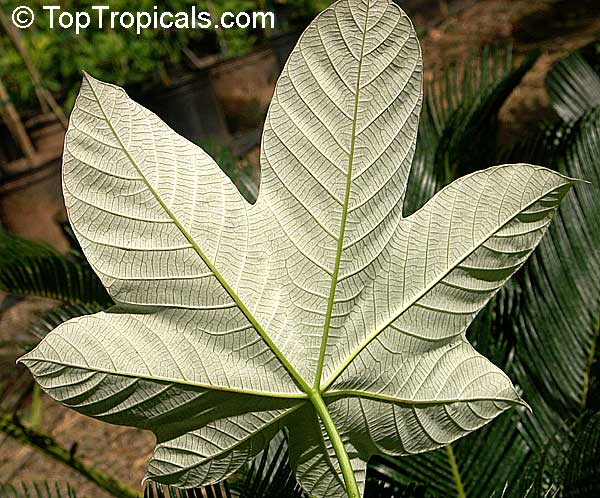
Sugar grains on leaves?
by Mark Hooten, the Garden Doc
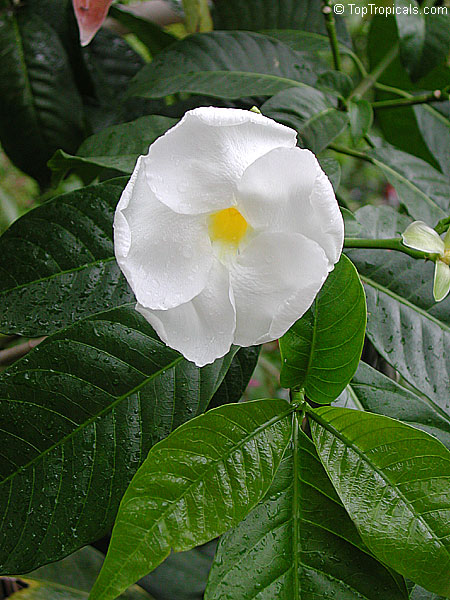
Q: On my Stemmadenia tree I noticed tiny drops (like white sand grain or sugar crystals) and wonder if this is a disease or some kind of insect and what can I do about it?
A: Sometimes certain vigorously growing (mostly tropical) plants
develop suspiciously-looking tiny "growths" mostly on the undersides of their
leaves. Without strong magnification, they can be easily mistaken for mealy
bugs, scale insects, or any number of parasitic disease vectors.
However, according to plant pathologists, these are actually harmless
excretions actually exuded by the plants themselves. A chemical analysis of these
tiny granules shows that they are nothing more than polysaccharides.
Polysaccharides are basically complex chains of sugar/glucose molecules which are
simply a production of all plants undergoing photosynthesis. Polysaccharides are
at the beginning of the entire food-chain. These odd tiny sugar-grained
nodules are actually only semi-crystalline complex sugars which certain plants
have over manufactured and have had no choice but to excrete through their
stomata (breathing pores).
I have personally observed Cecropia, Psychotria, Spondias (Hog Plum), and Guavas doing this... there are many others. Nothing to worry about,
they are harmless, but if they bother you - wash them off with a hose water.
Date: 30 Jun 2020
Plants like to snack!
How to feed Poinciana tree
(and other tropical flowering trees)
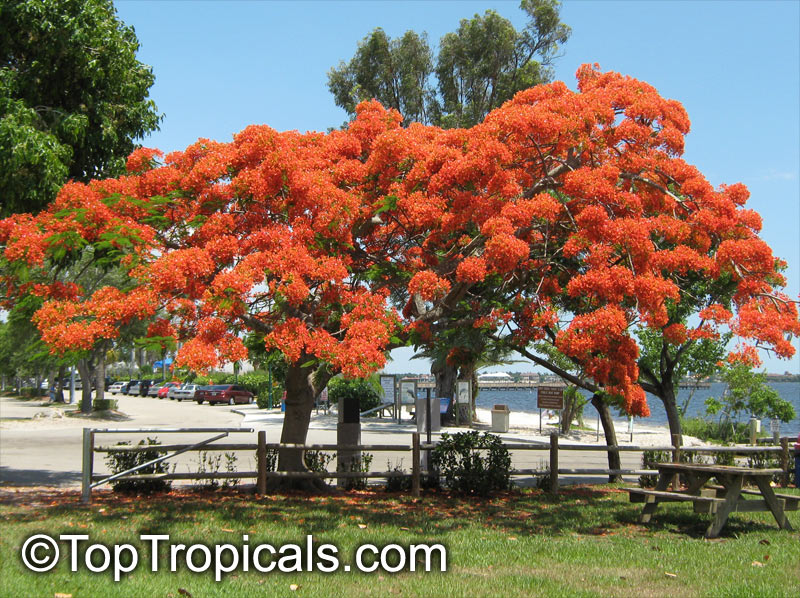
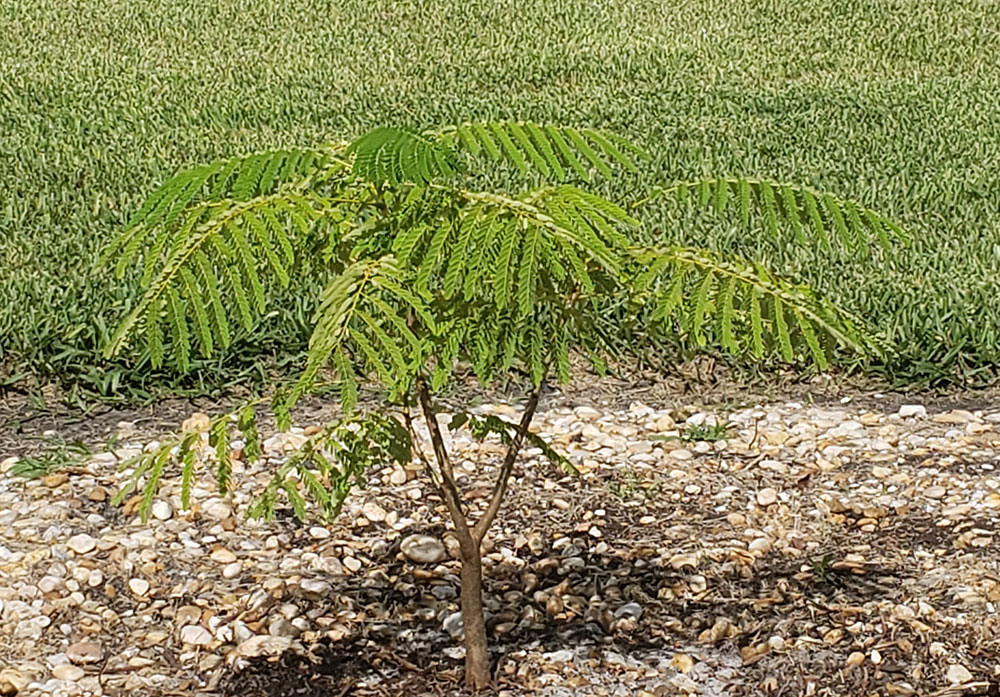
Q: We purchased a Royal Poinciana tree from TopTropicals not too long ago and we gradually gave it more sun until finally we were able to plant it in direct sunlight where it's been for a week or so. Rain has been sporadic lately so I'm giving it a little bit of water every day. It seems to be doing fine. I do have a question about whether the leaves are as green as they should be? I read online that I should fertilize it with gardenia / ixoria fertilizer in March, June, and October. I looked on homedepot.com but didn't really find anything that goes by that name. Would fertilizer help? Can you suggest a fertilizer?
A: Your Poinciana tree looks pretty healthy and happy,
congratulations with a great job!
Traditional (old-school) fertilizer recommendations usually suggest feeding
a plant 2-3 times a year with a slow-release fertilizer. And although a
plant will benefit from any fertilizer application (extra food is always good),
however, for the best results, faster growth, sooner and more profuse
blooming, your should use complete plant nutrition products - liquid fertilizers (see
why liquid
fertilizers are better than dry).
Here is an example. Some people eat a big heavy meal once a day which we
all know, is not very healthy. Other people eat balanced food more frequently
but in smaller portions - this is always the best way to go.
From this point, plants prefer SNACKING - frequent feeding, but with less
concentrated, mild and balanced nutrients.
For your beautiful Poinciana tree (and other flowering plants), we suggest
the following nutrition program:
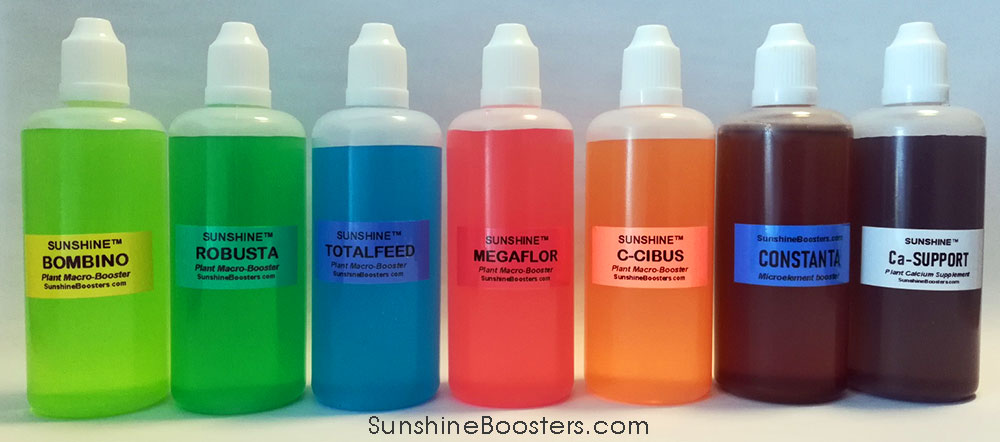
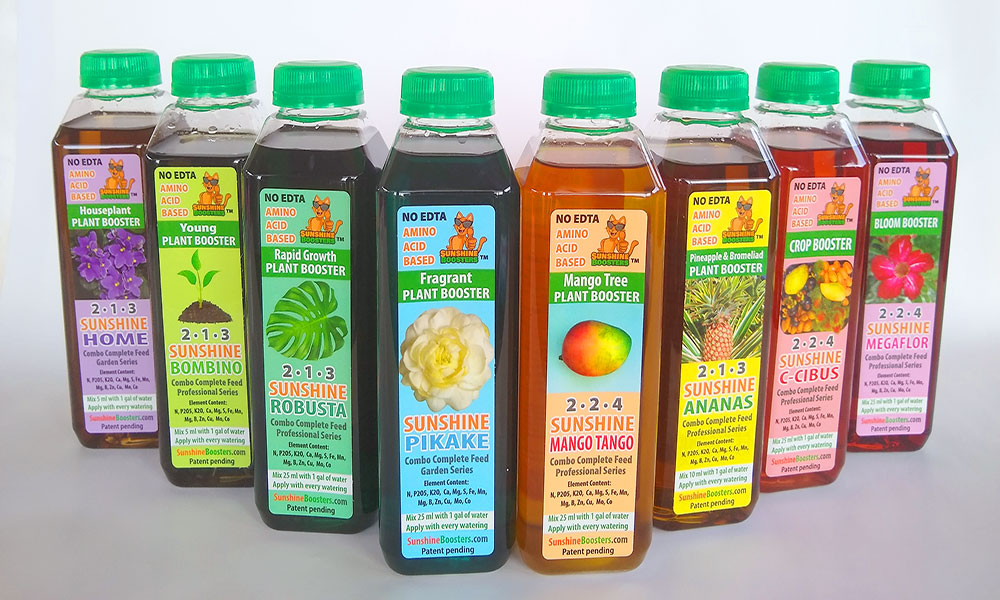
1) SUNSHINE Megaflor - Bloom Nutrition Booster - you may use this fertilizer as frequent as with every watering, it won't burn the roots, and will provide a complete nutrition for all plant needs throughout the year. You can continue fertilizing with Megaflor even during winter time. Sunshine Megaflor will help you to keep the plant healthy, vigorous, and resistant to stress and diseases. It turns leaves green and makes the plant strong so it will start flowering sooner for you.
2) Tropical Allure - Smart-Release Booster. Apply it once a month during hot season only (in Florida - from March to November).

Date: 17 Mar 2020
We got a letter that we must share!
To the folks at Top Tropicals,
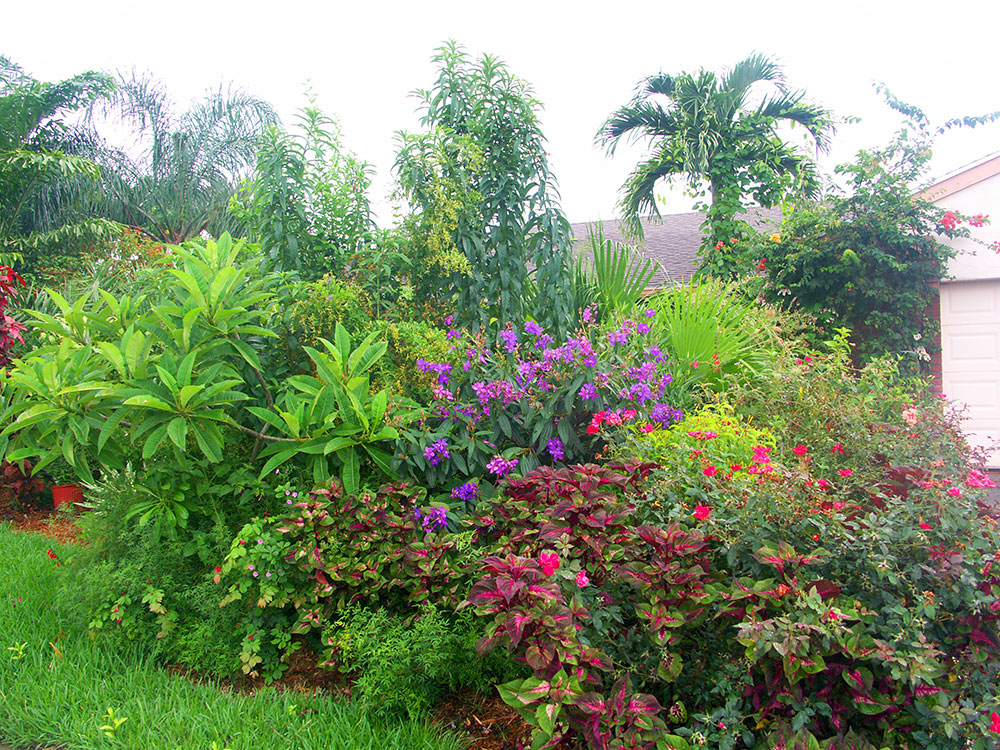
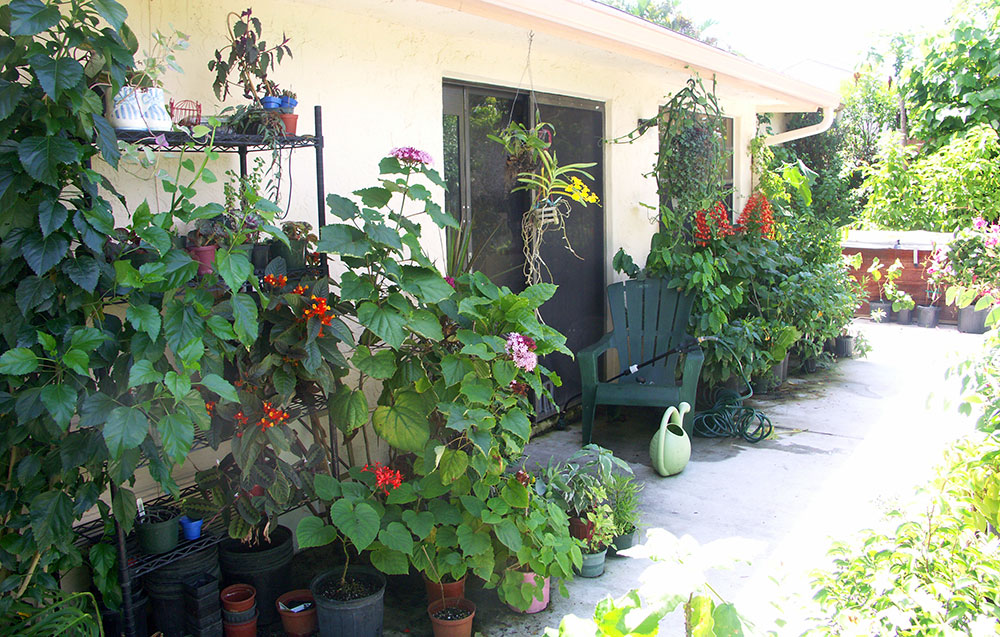
This is not really a question, more of a statement of gratitude. Top
Tropicals has been my go to resource for everything tropical plant related for more
than a decade... You have always been a source of information, knowledge and
of course, beautiful plants. And now, more than ever, in these stressful
times, I find myself returning to the world of plants that I love so much.
Staying out of the public and away from friends and familiar places is hard on
many of us. I guess they are calling it "social distancing" and I understand the
sensibility of it all. So I take great comfort in spending relaxing time
with my other friends and family, my plants. The weather is getting warmer,
Spring is in the air, and I choose to not worry about things I can't change and
instead I will devote time, energy and love to my special plants. Thank you
Top Tropicals for being there for all of us gardeners and plant lovers. I look
forward to browsing your newsletters each week to see pictures of the People
Cats and to pick out my next best friend!
Sincerely, Becky M. - Woodland Hills, CA
Date: 19 Jan 2020
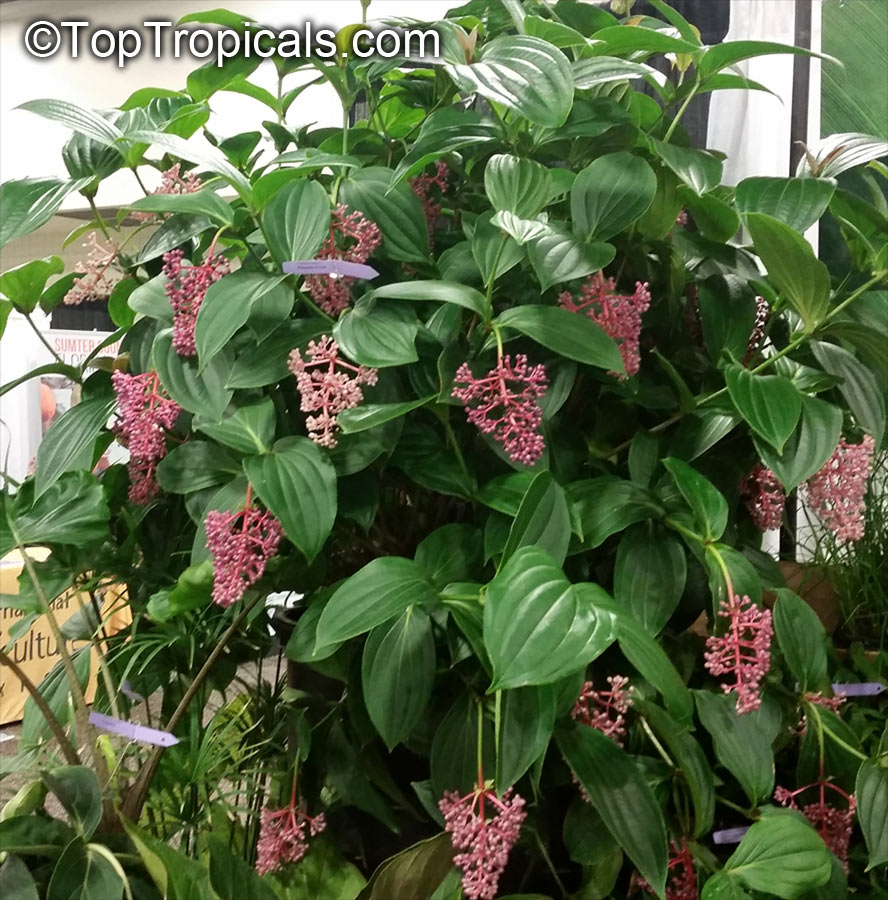
The Rolls Royce of House Plants: Medinilla
by Onika Amell, tropical plant expert
...This is an extremely showy tropical plant with bunches of bright pink
blooms that will flower for months on end. What a stunning and colorful
plant! Showy should be its middle name. It is one of those plants that truly
evokes feelings of elegance and drama...
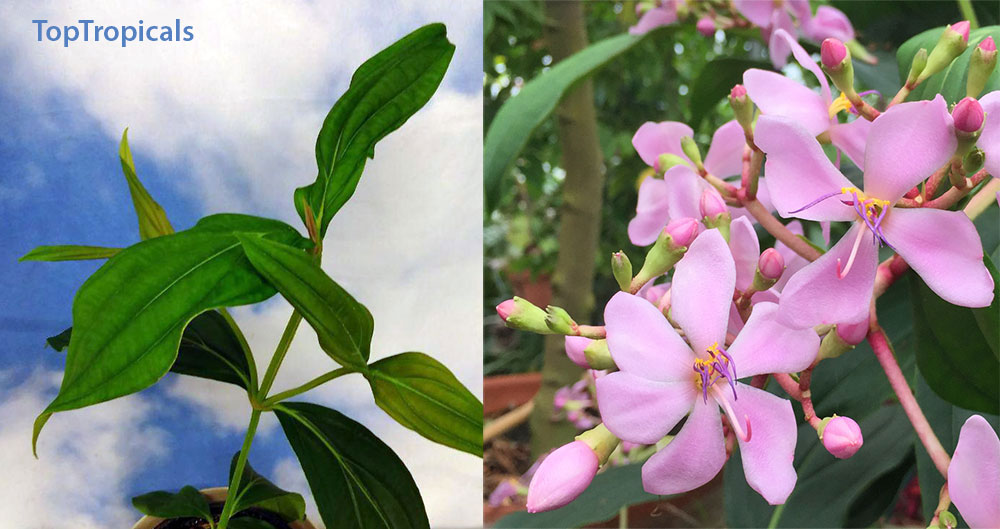
Medinilla apoensis - Philippine Pink is particularly rare and hard to find
in the trade. The flowers on this particular Medinilla is not hidden
underneath so it is not necessary to grow it in a hanging basket like so many other
species. It is a tall upright grower that will flower throughout the summer.
For all you obsessed collectors out there, do not hesitate. This Medinilla is
not in many US collections. The plants we have right now are at least 1-1.5
feet tall and are blooming size. Wink wink ;)
CONTINUE READING >>
Date: 16 Nov 2019
When to apply super boost?
Sunshine Boosters: a breakthrough in Winter fertilizing
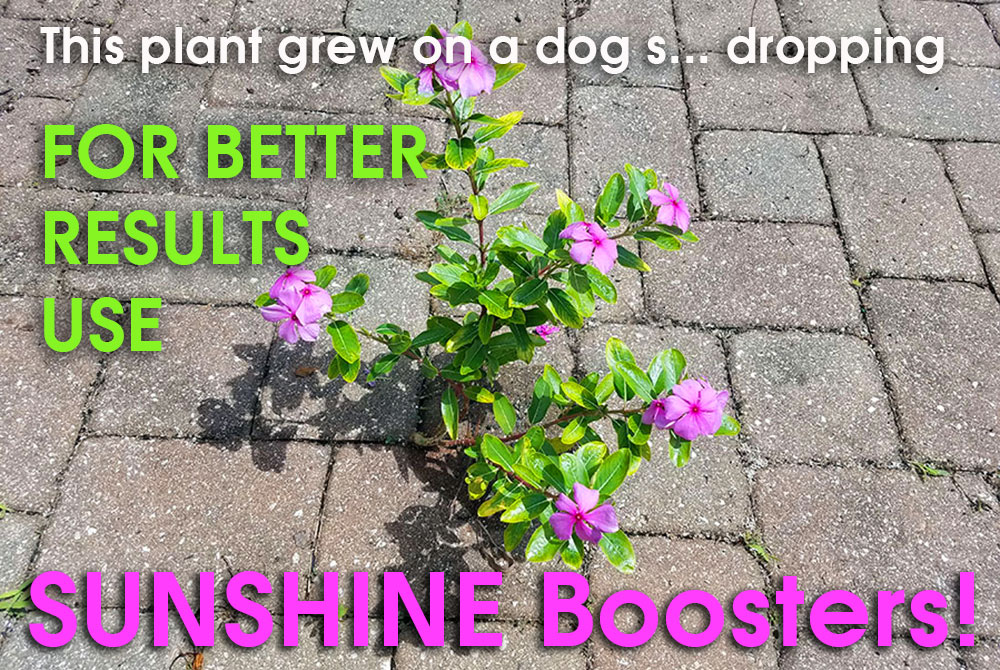
In the photo: plants are tough survivors. Life can't be stopped even by a brick road!
Q: Just wanted to know best time of day to apply super boost as spray and watering? Only listed to make sure night temp doesn't drop below 65F...
A: As a rule of thumb, plant's needs in fertilizers are very low
in the cold season because they consume less nutrients during dormancy. For
tropical plants, when minimum temperatures drop below 65F - we stop
applications of dry (granulated) fertilizers until spring, to avoid root burn.
Liquid Sunshine Boosters are exceptions from this rule to a certain extent,
for 2 reasons:
- they are amino-acid based which means, salts do not build up in the soil,
and thus will not burn the roots even with slower plant metabolism.
- concentrations/formulas are mild and designed for as frequent as daily
watering
Tips for winter fertilizing:
1) When a plant goes into full dormancy (drops leaves and does not show any new growth), you may stop fertilizing with any Macro NPK products (both dry and liquid)
2) If a plant is evergreen and continues growing during the cooler
period, and especially if it is a winter bloomer, mild liquid fertilizers can be
applied, depending on the stage of plant development.
Robusta and TotalFeed are used for vegetative growth and pre-flower.
Megaflor and C-Cibus are used for winter flowering/ fruiting plants during the bloom
stage.
See full list of liquid boosters
3) Micro-elements can be used all year round for all plants that are not dormant (do not drop leaves)
4) Always use Sunshine-Epi as a foliar spray to activate immune system and unlock protective mechanisms, BEFORE applying other boosters. It is especially important during Fall-Winter for improving cold tolerance and disease resistance.
5) Always apply foliar spray and/or drench the soil with solutions in morning hours so the plant has time to process the nutrients during daylight when metabolism is the most active.
6) Avoid any dry fertilizers during winter