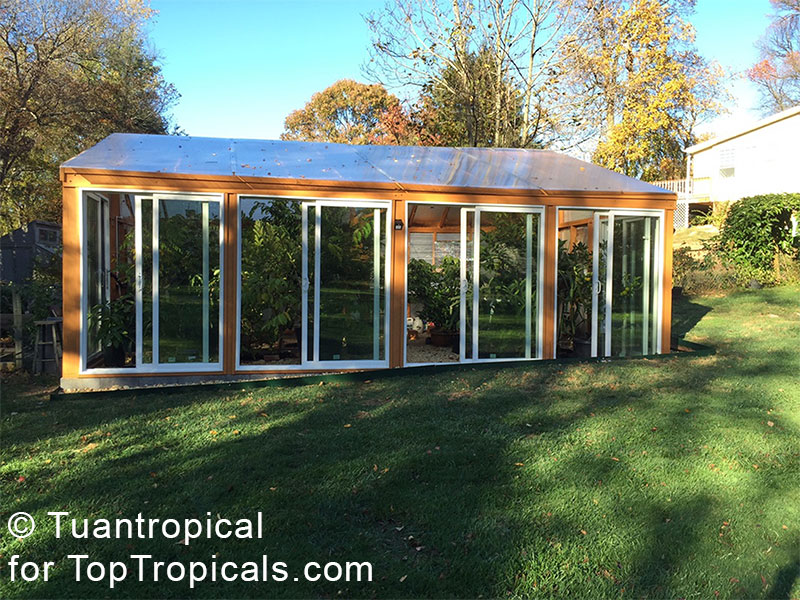
Date: 2 Feb 2022
5 most rewarding tropical fruit trees
Top Tropicals @ Garden America Radio Show
...The most popular garden radio show Garden America is featuring Top Tropicals topic "5 most practical and rewarding fruit trees for subtropical areas".
1)
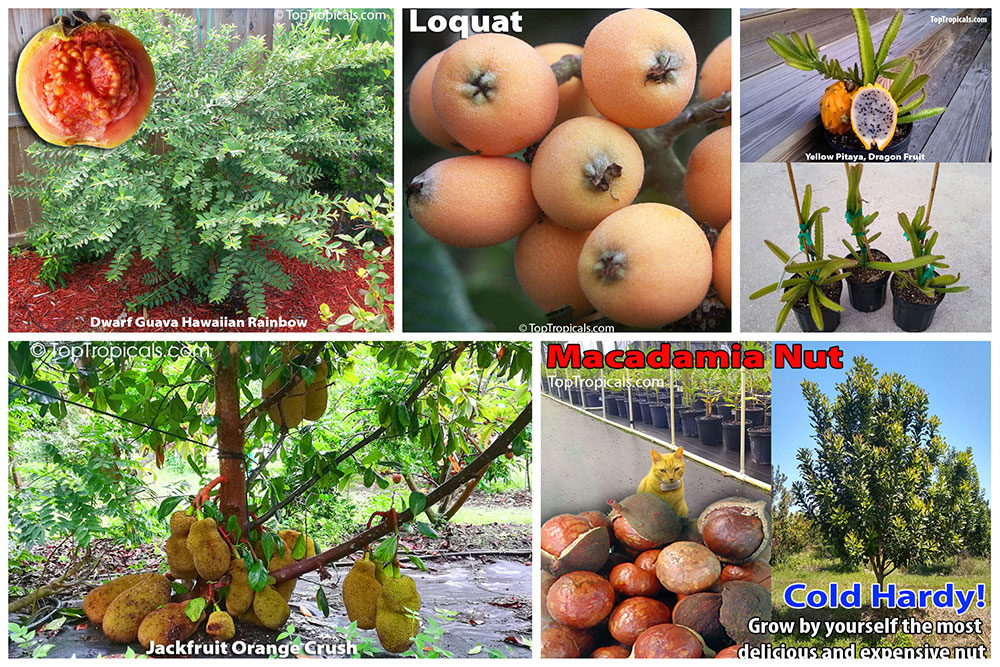
Jackfruit Orange Crush (Artocarpus heterophyllus)
...We recently obtained this variety and it is hands down the best Jackfruit we ever tasted. It is
crunchy, sweet, aromatic, with bright orange pulp...
2)
Dwarf Guava Hawaiian Rainbow (Psidium nana)
- A very small version of the favorite aromatic Guava.
- Grows only up to 5-6 ft tall with a short trunk and branching, bushy habit.
3)
Yellow Pitaya, Dragon Fruit (Selenicereus megalanthus)
- This particular species of Dragon fruit is the sweetest and has great
flavor unlike most pitayas
- doesn't mind regular water and rains but is also drought-tolerant
4) Loquat (Eriobotrya japonica)
- Can be kept as a very compact tree, and fruits in a pot.
- Flowers and fruits right away. The plants are covered with flowers now
and setting fruit.
- Very cold hardy to upper 20's, drought tolerant, fast growing
5) Macadamia Nut
(Macadamia integrifolia x tetraphylla)
- The most delicious and popular sweet nuts that are usually so expensive,
can be produced in your garden!
- Cold hardy, fast growing, and very productive.
Listen to Facebook-Live Show (recording):

Date: 12 Jan 2022
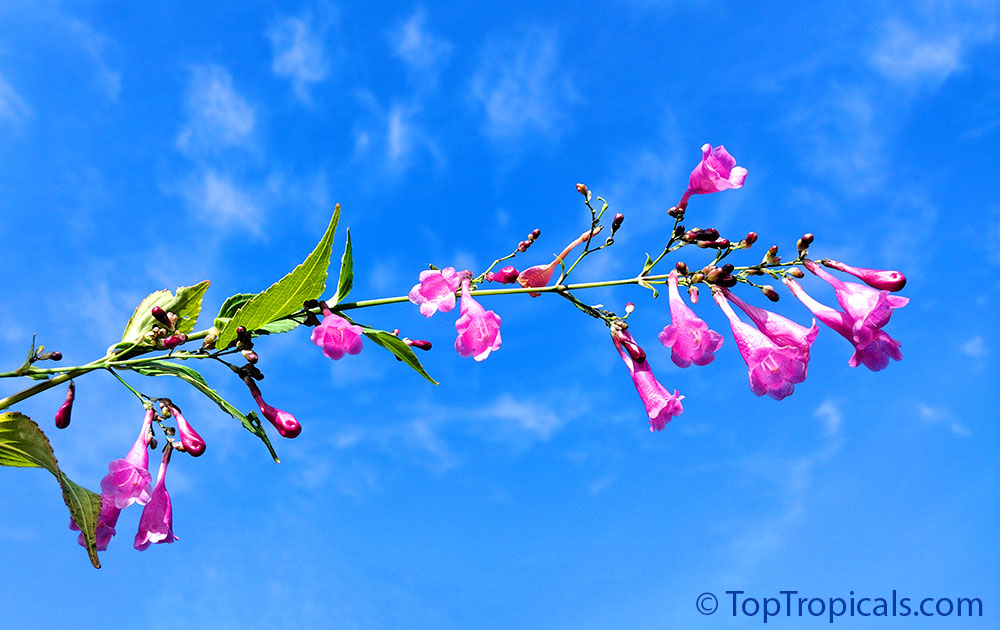
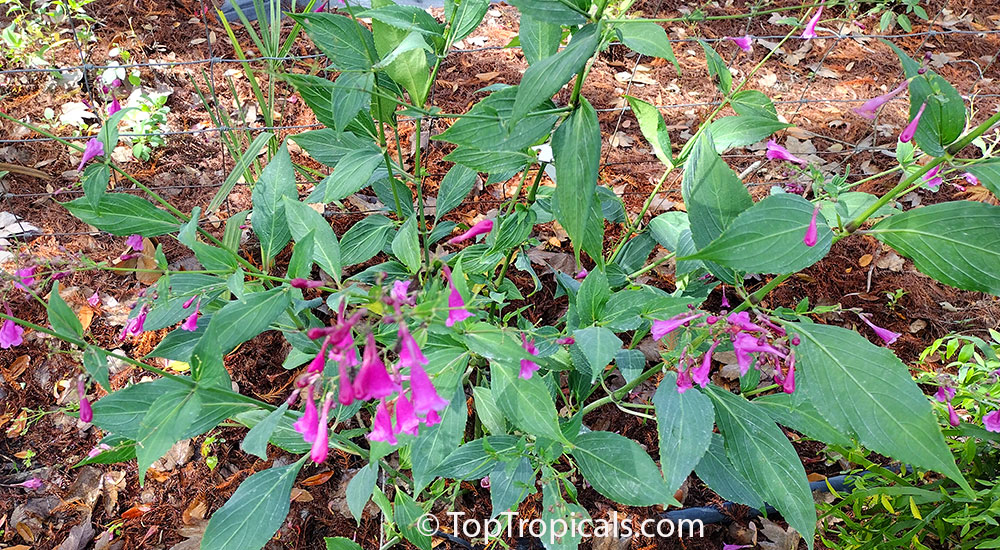
Strobilanthes, Chinese Rain Bell
- a source of Blue, Green, and Purple...
by Alex Butova, the Witch of Herbs and Cats
...Spectacular, elegant, fountain-like small shrub, featuring thin
arching branches covered with pink bell flowers from Fall throughout Winter and
Spring. And yet is has a rich history of use: extensive medicinal properties as
well as a source of the famous dye Assam Indigo. The leaves and stems
contain indican, used in production of the classic Blue Indigo Dye. A dark Blue dye is obtained
from the twigs. It is combined with Turmeric (Curcuma longa) to make Green, and with Safflower (Carthamus tinctorius) to make Purple...
...Cold hardy, compact, yet fast growing and easy, it makes a wonderful container specimen even for beginners...
CONTINUE READING >>


Date: 8 Dec 2021
Event Mementos (Saturday 12/4)
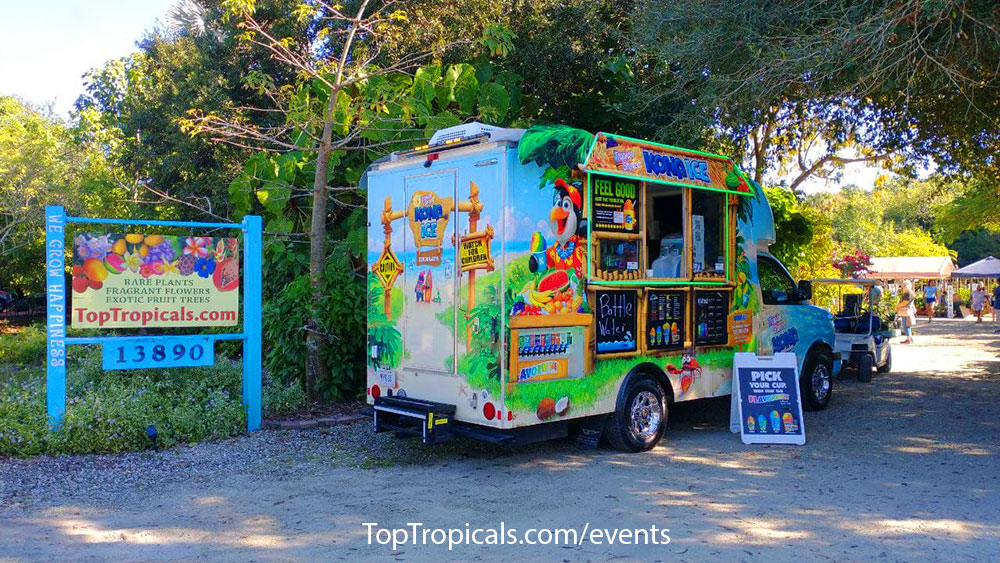
We thank all of our guests for joining us last Saturday for the Holiday
Sale. We met lots of great people who got lots of great plants and goodies!
Our vendors offered wonderful treats and entertainment and everyone could find
something special! The food was not only tasty but also COLORFUL!
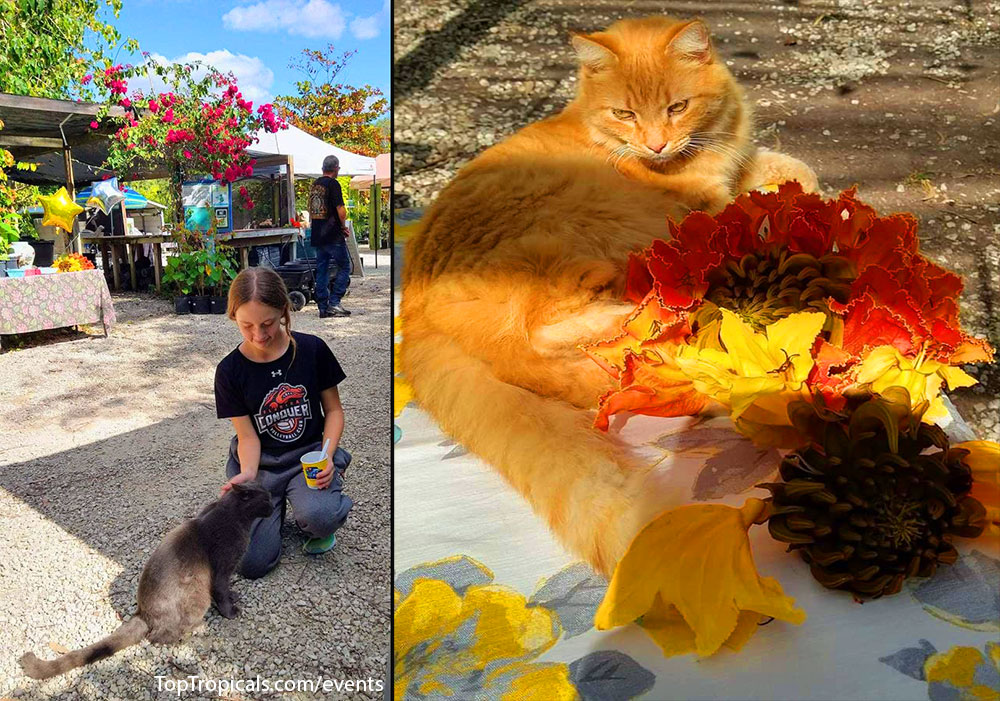
Special Thanks to our PeopleCats who ran the show, as always!
Come back again to our next event in a few months, info coming soon.
SEE EVENT MEMENTOS >>
Date: 24 Nov 2021
Winter is coming tips
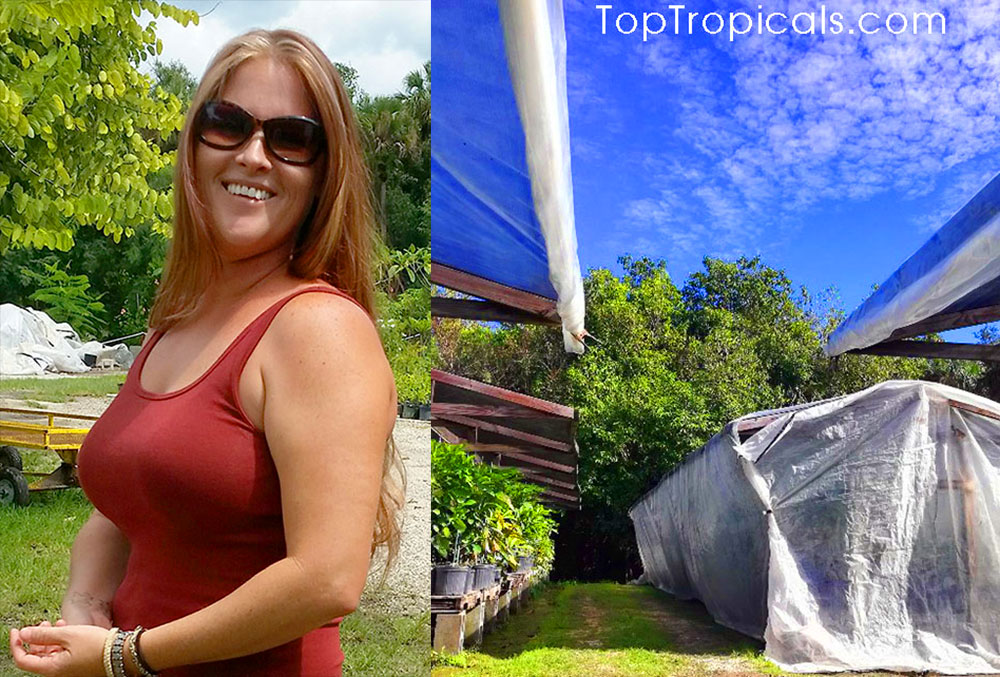
Reminder from Kristi, the Tropical Flower Girl
As the weather gets cooler, many of you move your potted tropical plants
indoors. Please remember:
1. Leaf drop. Lower air humidity, lower light and short day may
cause some leaf drop. This is normal for seasonal environment change.
2. Reduce watering as it gets cooler and darker. Under lower light
and in cooler temperature, plants won't need much water; some plants go dormant and only need minimum water (so soil doesn't completely dry out). Excess water may damage roots and kill a plant in winter.
3. No dry fertilizer in winter. Active growth stops. Let the plant
to go into dormancy or simply have a rest. You can continue liquid Sunshine Boosters according to regular dosage chart with every
watering. Since the watering is reduced, the plants will get only as much food as
needed for getting through the winter.
4. Watch for insects by inspecting leaves regularly. They may attack
plants more likely in the indoor conditions. You may use organic NoBug insecticide especially for your indoor plants.
Stay Warm!
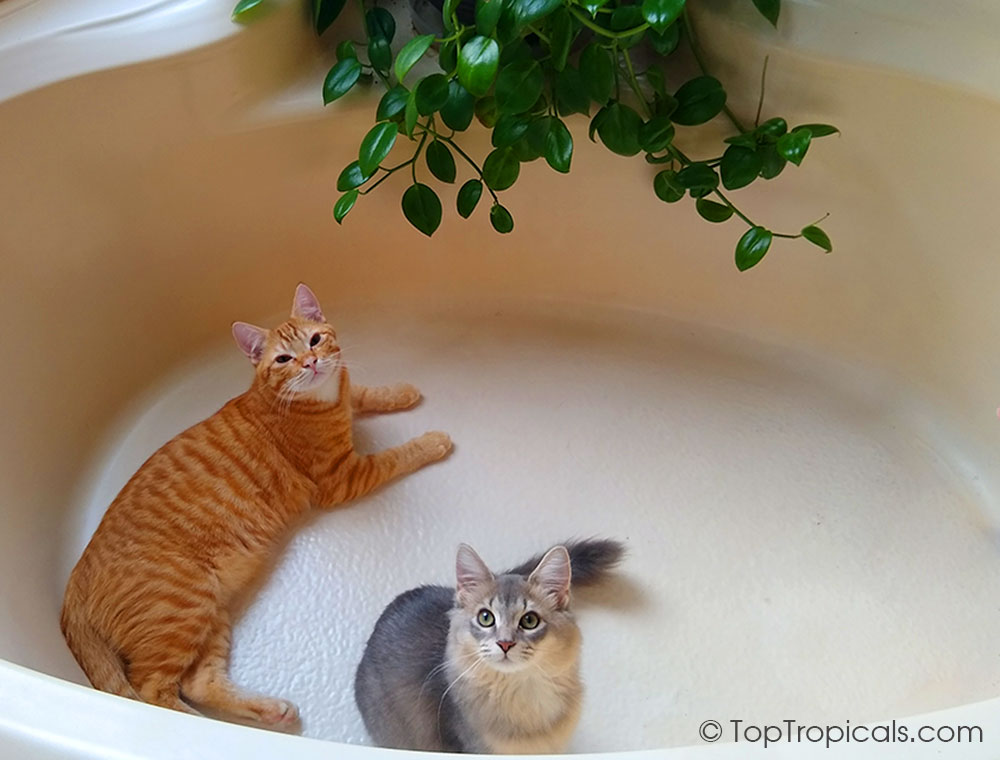
In the photo: Mr Big and Zoe-the-Scooby-Doo sharing a warm tub with Emerald Peperonia
Date: 10 Jun 2021
Growing Champaka in Virginia
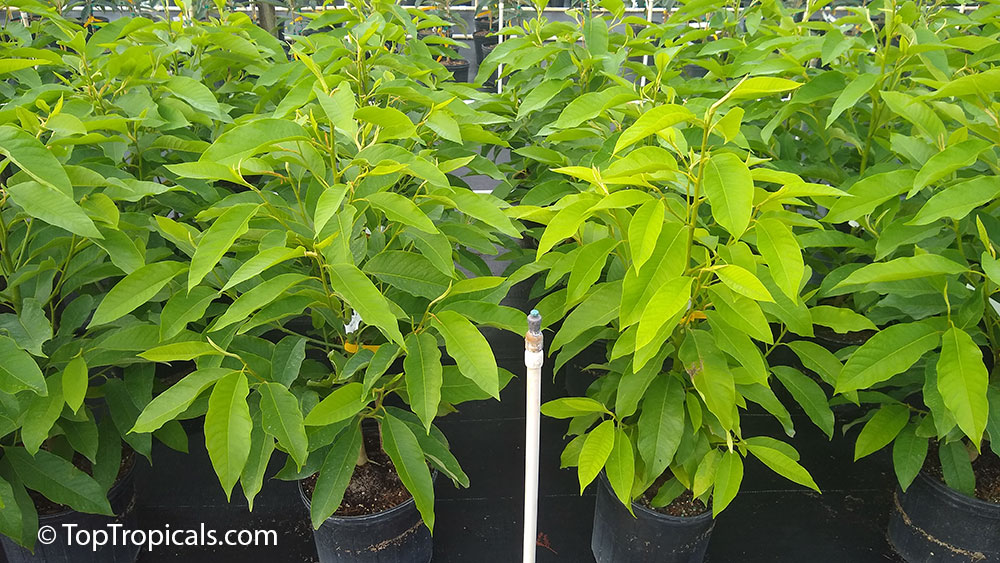
Q: I purchased a Magnolia champaca 1 gallon a few years ago. It is still growing as I bring it into my greenhouse in the winter. I live in VA. This spring I planted it in the ground hoping it might bloom which it did not. Will it survive our fairly mild winters with several freezing days with some special attention? What would you do?
A: Magnolia champaca is a tropical tree and won't survive winter in VA. It can not take hard freeze. Your only option is, to keep it in a pot and bring inside. If the temperature inside your greenhouse is too low, this may affect the plant's ability to flower. For example, if it stays 35-40F for a whole month - although it is not a hard freeze and the plant may survive, but the duration of the cold period is more critical than the low temperature itself. Champaka can survive a few hours even at upper 20's, but not many days with cool temperatures. The temperature in winter should be maintained at least above 55F during day time (the higher the better) and at least above 45F at night.
If the tree has grown too big, you may trim it. If the root ball is too
large, roots can be trimmed too (similar way like they do with bonsai) before
repotting. However, trimming must be done either during warm season and active
growth, or in Spring, when the tree starts waking up and promotes new
growth.
To encourage flowering, start fertilizing your Champaka with a liquid bloom
booster - SUNSHINE Pikake - Fragrant Flower Booster. It can be used year round
including winter months, and it is safe to apply with every watering. This way
you will provide to the tree enough energy for the next flowering season, so
flowers can be expected in late Spring - Summer.
Read more about greenhouse growing: Greenhouse in Virginia.