Date: 11 Jan 2021
Tropical gardener beginning-of-year checklist

Final pre-Spring check of whatever we had forgotten! For a gardener, the year ahead is a chance to do things you want, as a way to achieve the things you need to do. If your number one New Year's resolution is to garden more (a want-to item), you also will be exercising more (a need-to). Or if you plant a new edible garden (want, want, want), you will end up checking off "eat more leafy vegetables and fruits" from your to-do list!
12 steps to get ready for 2021 season:
1 - Spray fruit trees and houseplants with insecticide and micro-elements
2 - Continue spraying SUNSHINE-Epi to improve plant hardiness
3 - Protect tender plants during cold spells and especially from freeze
4 - Reduce watering during cooler months, keeping the root zone on a dry
side
5 - To give your plants a kick start, fertilize with liquid SUNSHINE Boosters fertilizers - they are safe to be used year round
6 - Plant fruit trees: winter planting is beneficial to avoid heat stress for roots
7 - Plant Butterfly and Hummingbird Attractants
8 - Plant bulbs, vegetables and herbs. Use eco-safe, natural SUNSHINE boosters for all your edibles.
9 - Plan your summer garden and order seeds early
10 - Start tropical plants from seeds (indoors for cooler climates)
11 - Start ordering tropical plants and beneficial soil mix to get them established after shipping in pots
12 - Clean and oil garden tools

Date: 4 Dec 2020
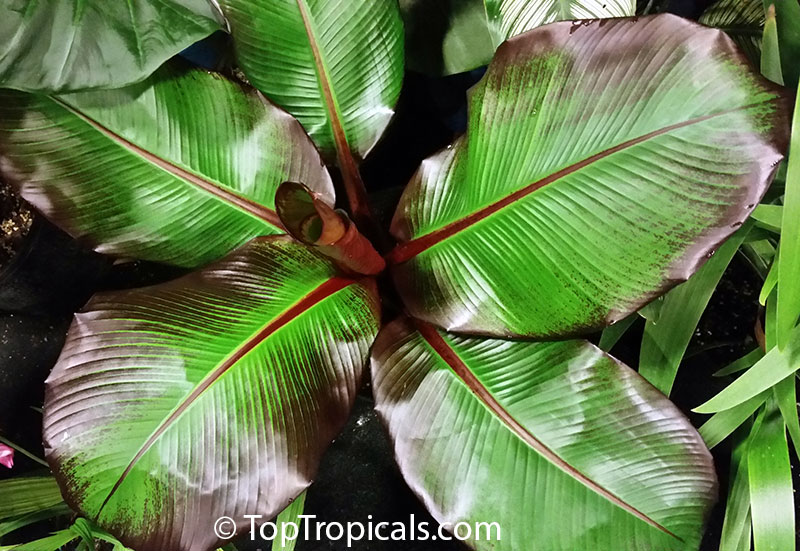
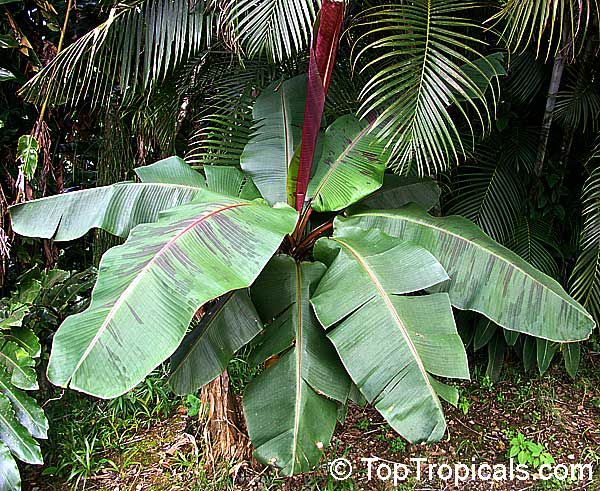
Musa ensete Maurelli - Red Abyssinian Banana
by Onika Amell, tropical plant expert
Q: I am looking for a colorful, tropical plant with in particular, coarser texture, to add to planting beds next to my decks and around my swimming pool. Any suggestions? I am located in St. Petersburg, FL.
A: Consider incorporating some fast growing Red Abyssinian Banana, also known as wild banana or Ethiopian banana. This is a fantastic ornamental from East Africa and an excellent choice to create a tropical feel and to add coarse-textured foliage. This plant is not a true banana and therefore does not produce any edible fruit. American gardeners were rather slow to discover this enormous perennial, but finally woke up to them over the last decade to a point where they now are considered to be one the most beautiful ornamental banana plants for the landscape and for good reason...
CONTINUE READING >>

Date: 2 Aug 2020
Macaranga grandifolia - Elephant Ear Tree
The very quintessence of tropical foliage luxury
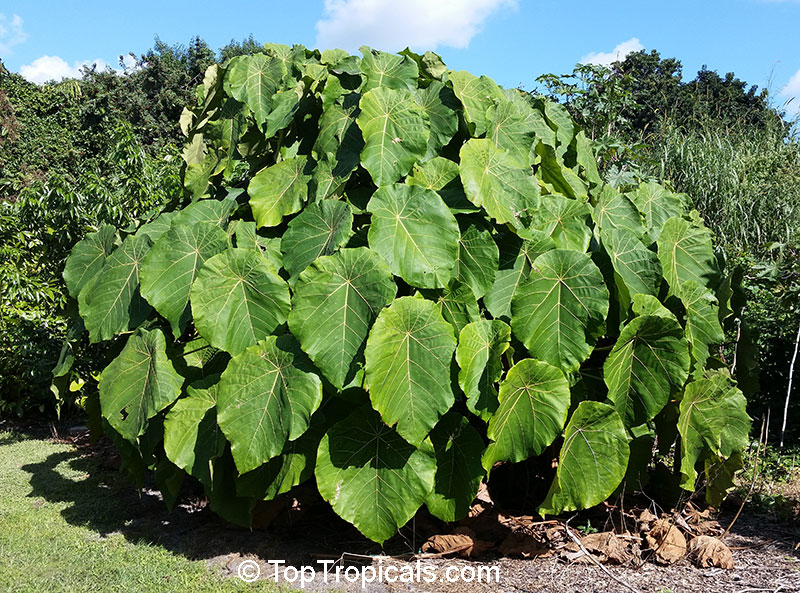
by Mark Hooten, the Garden Doc
Why is this wonderful little tree so unknown here in Florida? I can only guess it's because people don't see them, and therefor don't know about them, and that basically no nurseries grow them. Yet it's one of the most utterly spectacular foliage plants conceivable... Provided with an appropriately warm climate such as South Florida or elsewhere, there is no reason they should not be seen more often (for purposes of utter awe).
CONTINUE READING >>
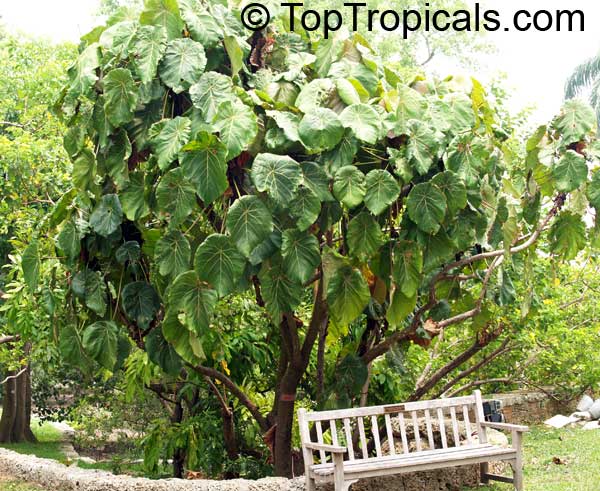

Macaranga's genuinely grand foliage much more resembles the ears of actual elephants (esp. the Asian species) than do the leaves of the much more commonly known and grown "elephant ears" meaning certain Alocasia and Colocasia
Date: 26 Jul 2020
The best grafted Loquat varieties
at 15% OFF for 3 days!
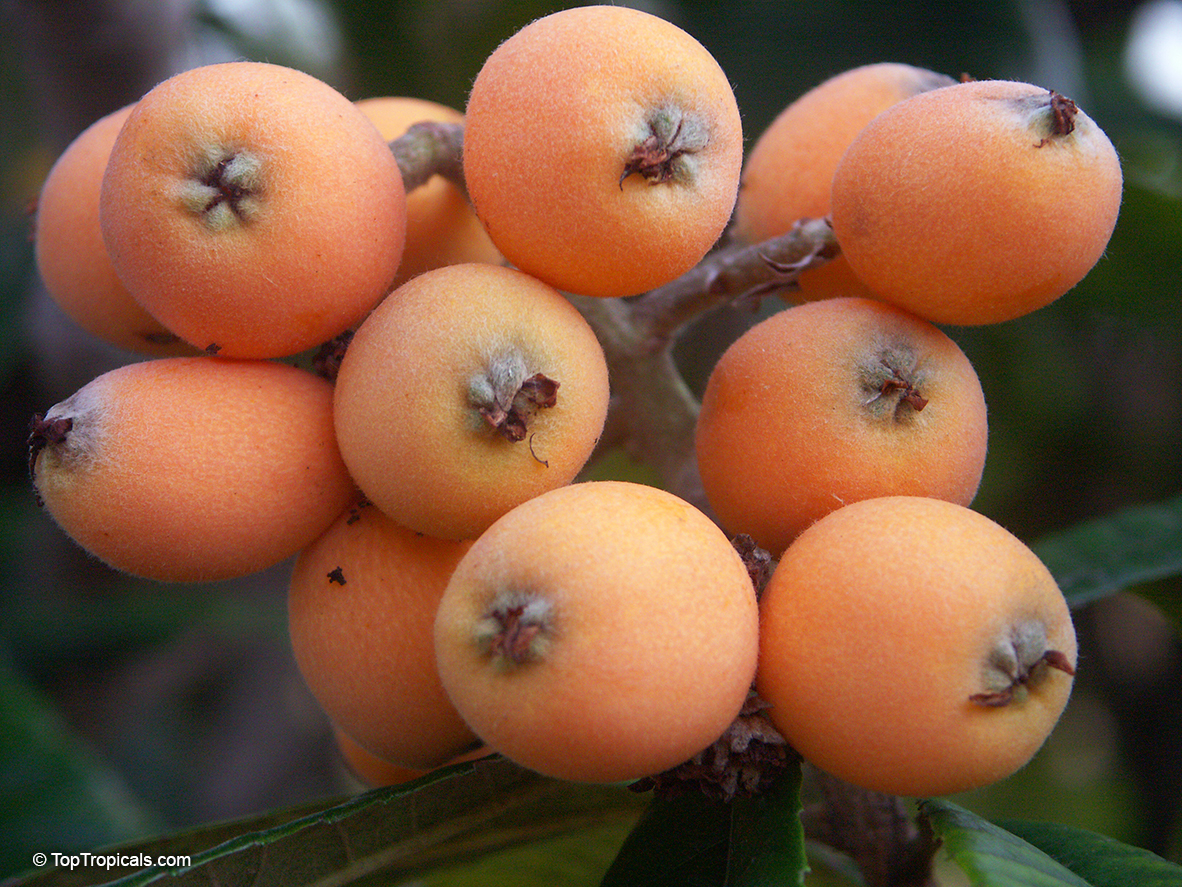
Q: I have a nice Loquat tree started from seed. I understand it will not bear fruit unless grafted. Can you graft the tree in your nursery? If this is not possible let me know the cost of Loquat tree and I buy it from your nursery.
A: From our experience, Loquat trees grown from seed bear fruit
much sooner (within 5-6 years) than seedlings of such trees as Mango and
Avocado (8-15 years). Also, unlike Mango and Avocado, the fruit quality of a
Loquat seedling is usually not too bad. However, in order to have a tree with a
superior fruit, it is recommended to plant grafted variety for a guaranteed
tasty crop. If your seedling is already a large plant (with a trunk diameter
over 5 mm), it may be too late to graft it, because quality graft requires fresh
wood.
If you have plenty of room in your yard with enough space for both grafted
tree and a seedling, you may still plant the seedling in the ground and give
it a chance to produce in a few years. If your garden space is limited, we
recommend you to plant a grafted variety and enjoy fruit as soon as the next
year.
The most popular grafted Loquat varieties, heavy
producers:
Champagne
Christmas
Gold
Nugget
Yehuda
SALE: 15% OFF now, no min. order!
- $20% OFF discount code PARENTS2020 for orders over
$200
- 5% automatically off all orders over $100
= make it a steal!
Offer expires 7-28-20
If you are local, stop by our Garden Center and we will pick the biggest
and the best tree for you. Or just order online and get it in just a few
days to your doorstep!
See full list of Loquat varieties available at the moment.
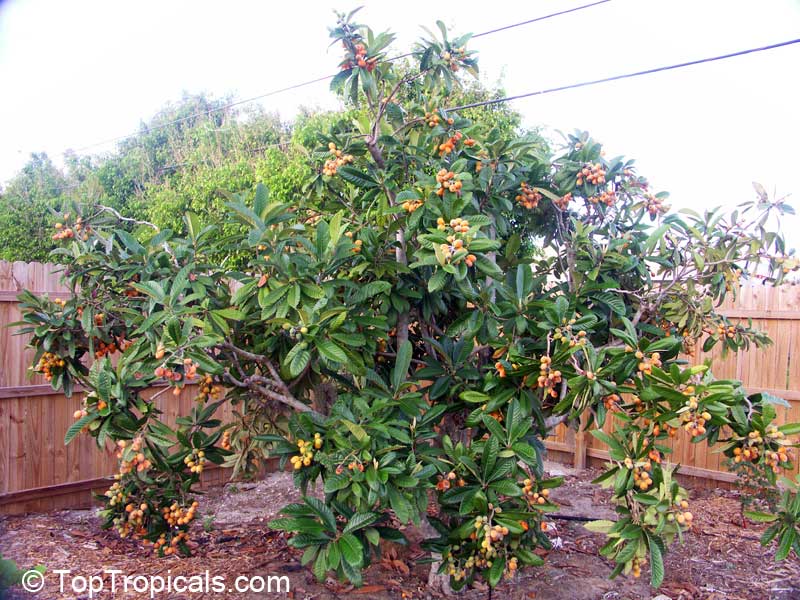
Date: 27 Feb 2020
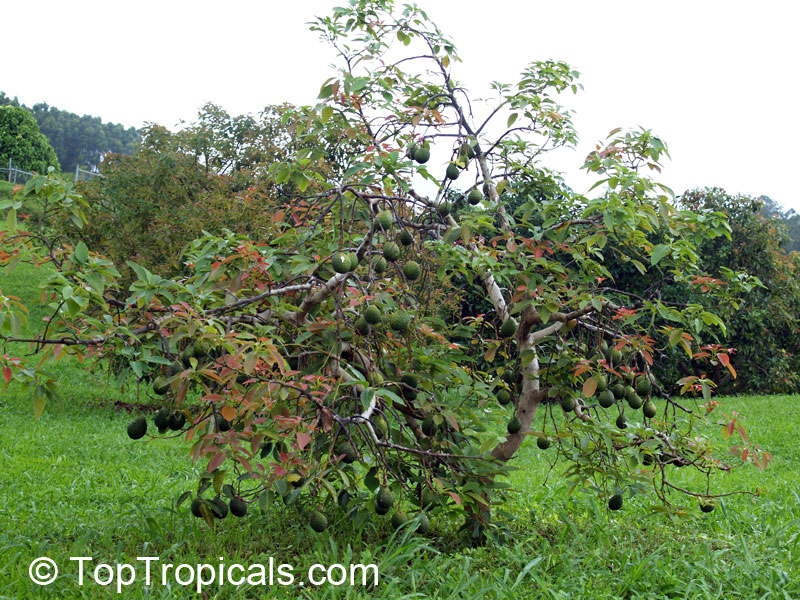
7 secrets of a Happy Avocado Tree
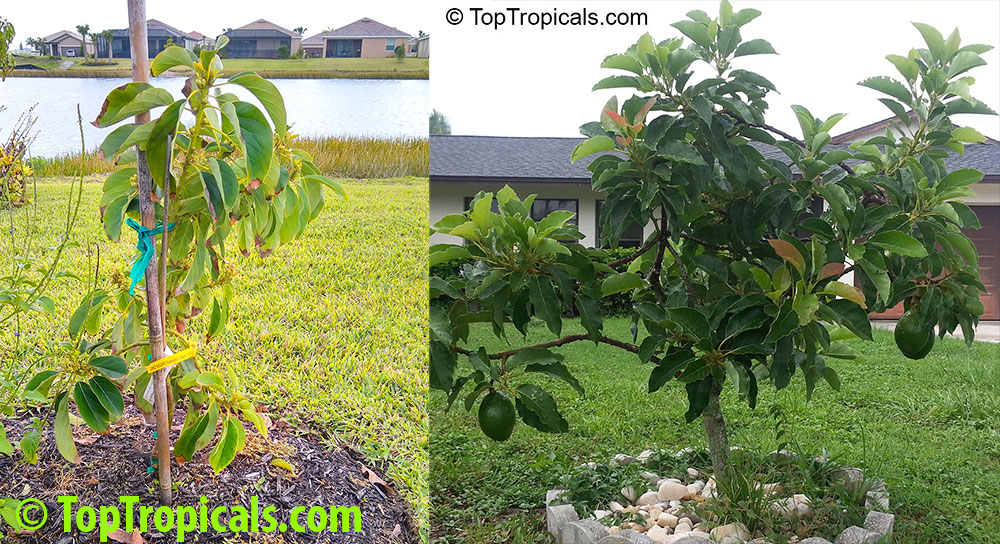
Q: I purchased an avocado tree from local garden centers three times but every time it dies on me. My neighbor has a nice tree in his yard and it grows beautifuly. I just purchased one online from you and I need to know what I was doing wrong? Are there any secrets how to make an Avocado tree happy? I have a big garden and several mango trees, but no luck with Avocado...
A: Avocado tree is famous for being such a pain to establish. But once it starts growing, it's growing! We will share a few simple tricks how to make it right.
1. Plant high and provide good drainage. Wet feet is number one
reason for failing an avocado tree. It doesn't like wet soil and won't
tolerate soggy conditions. Plant it in the highest spot of your yard and slightly on
a "hill" (3-4"higher than the surrounding ground).
DO NOT plant Avocado tree in low spots or wet spots of your yard. Save
those spots for Cannas or Black Sapote or even a Mango if you want a fruit tree there.
2. Use quality soil. Use only well-drained soil with high content of
organic matter. You may add compost to existing sandy soil, or add some professional potting mix that contains pine bark and perlite. Remove
rocks from the hole if you see any while digging. Dig a big hole and fill it
with a good soil; compact the soil in the hole very well before setting the
root ball. Reminder: plant the tree high!
3. Water regularly. After planting an Avocado tree in a nice high
spot with a good drainage, start watering it... daily! Avocado likes water,
although it doesn't like wet feet! Once you figure out this combination, you've
got the recipe of success. Water by hand daily for the first week after
planting, then twice a week for couple weeks, then once you notice new growth -
you may rely on sprinklers, but keep watching the tree and don't let the soil
over-dry. It must be slightly moist, but not soggy.
4. Fertilize. For such finicky tree, we suggest mild formulas of
fertilizers. Dry fertilizers may burn roots, especially of a young tree. Even
smart-release granulated fertilizers should be used very carefully. The best
way to feed your young avocado tree - get a complete set of Sunshine Boosters Pro system. It has all necessary elements for all
stages of plant development and never burns the roots. Sunshine Boosters Pro can
be used with every watering - no need to guess how much and when. Besides,
it is a natural fertilizer based on amino acids - exactly what you want to use
on your fruit trees and other edibles!
5. Boost immune system of the tree. Apply Sunshine Epi plant hormone every 2 weeks as a foliar spray to boost
immune system and metabolism of the tree and protect it from diseases. Epi makes
plants (especially young plants) grow twice faster! It also enhances effect
of fertilizers by increasing plant metabolism.
6. Do not prune until you see significant growth. The tree is small
and can use as many leaves and branches as possible for photosynthesis and
healthy metabolism. We suggest to avoid pruning for at least the first year. On
the second year your tree most likely will be covered with flowers (assuming
you followed fertilizer program). Let it go through the blooming stage and
setting fruit; prune in Fall after fruiting is over.
7. Keep number of fruit to minimum for the first crop. Don't let the
small tree exhaust itself. Keep just 2-3 fruit to develop. The next year, no
need to control fruit quantity, the tree will develop as many as it can
support.
P.S. If you got the tree from a mail-order, remember to establish it
in a pot before planting in the ground; move gradually from shade to sun.
Follow planting instructions.
Learn more about Sunshine Nutrition System - a Natural solution for your garden.