Date: 7 Oct 2018
Multi-flowering Hoyas:
from Mark, the Garden Whiz
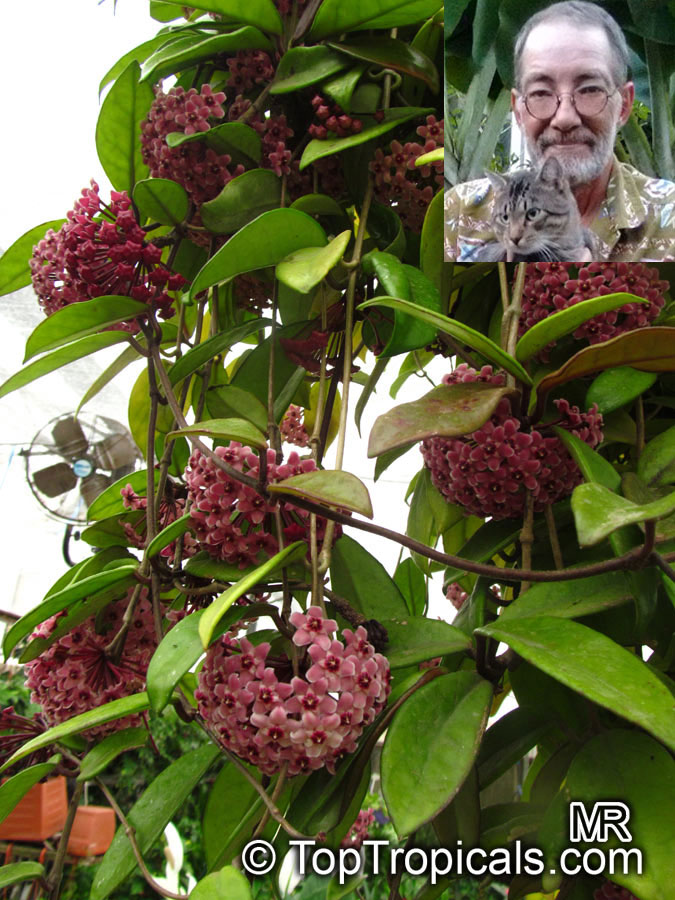
Q: A few months ago, i was given a Hoya vine. At the time, I was told to not cut-off the flowers but was never told why. However now that it IS flowering, they are so wonderful I would like to. Is there really a reason to not clip them off?
A: Actually, that was very good advise. Unlike most plants we encounter, hoyas develop perennial flower spikes. This means that each spike flowers more than just once! In other words, after the flowers on such a spike have gotten old and fall off, the knobby ended spike remains. Then, after a period of time, that same spike will develop another ring of flower buds. Depending on what kind of hoya it is, these perennial flower spikes may continue to periodically make more flowers for several years! And while the plant will continue to make more of these perennial spikes its whole life, the flowering display becomes better all the time as more and more spikes grow. (By the way, these are technically called "flowering spurs"). So every time a spur might be cut for ornamental purposes, it'll be one less place the vine can flower from in future years.

Date: 13 Sep 2018
Season Colors from Kristi, TopTropicals Flower Queen
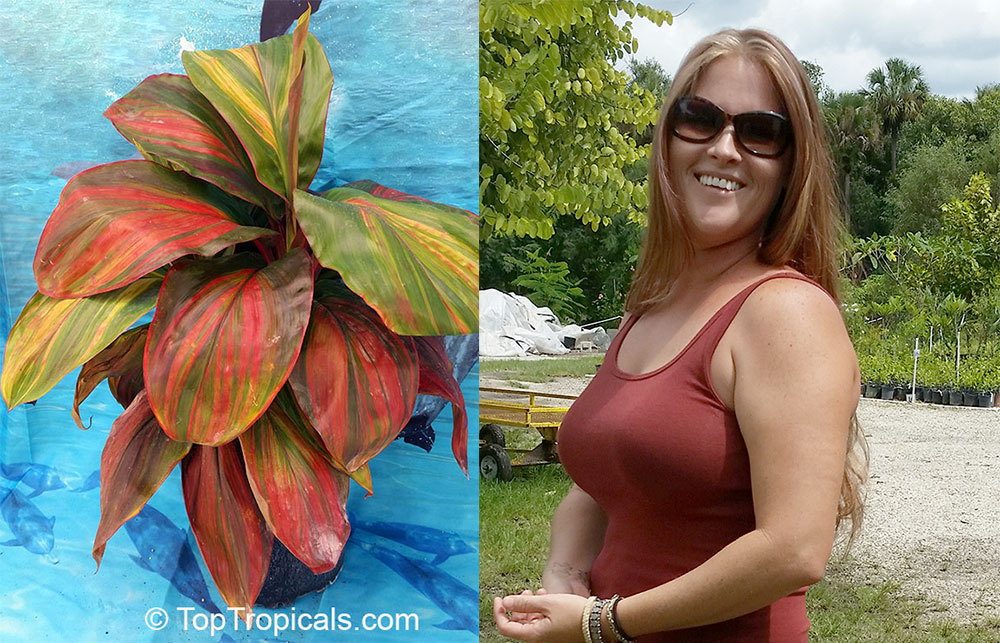
Q: I live in New Jersey and I have a collection of potted tropical plants in my sun room. Our Fall season comes in bright colors, do you have something with colorful foliage for Fall?
A: For our northern customers it's almost time for the changing of the seasons. It is a very exciting and enjoyable time. The onset of fall means, less humidity, cooler nights and the Fall foliage. Here in Florida we do not get the chance to see the changing of the leaves, except maybe a few like Florida Maple Tree. So we use plants that mimic the season change, for all year round color! These are a few examples of the plants with colorful leaves that you may use for your Fall colors, plus remember - there is always a big list of Fall and Winter Flowering Tropicals!
Colorful tropical plants for Fall
Hibiscus tiliaceus - Variegated MahoeAcalypha wilkesiana - Chicago Brick Copper Leaf - see all acalyphas
Mussaenda philippica x flava - Calcutta Sunset Marmelade
Pseuderanthemum atropurpureum Purple Haze
Acer rubrum - Red Maple
Adenium Nil with red veined leaves
Cerbera x manghas hybrid - Enchanted Incense
Cordyline fruticosa Willies Gold - see all codyline
Graptophyllum pictum Chocolate Queen
See Fall and Winter Flowering Tropicals.
Date: 15 Aug 2018
Care for a Baobab Bonsai
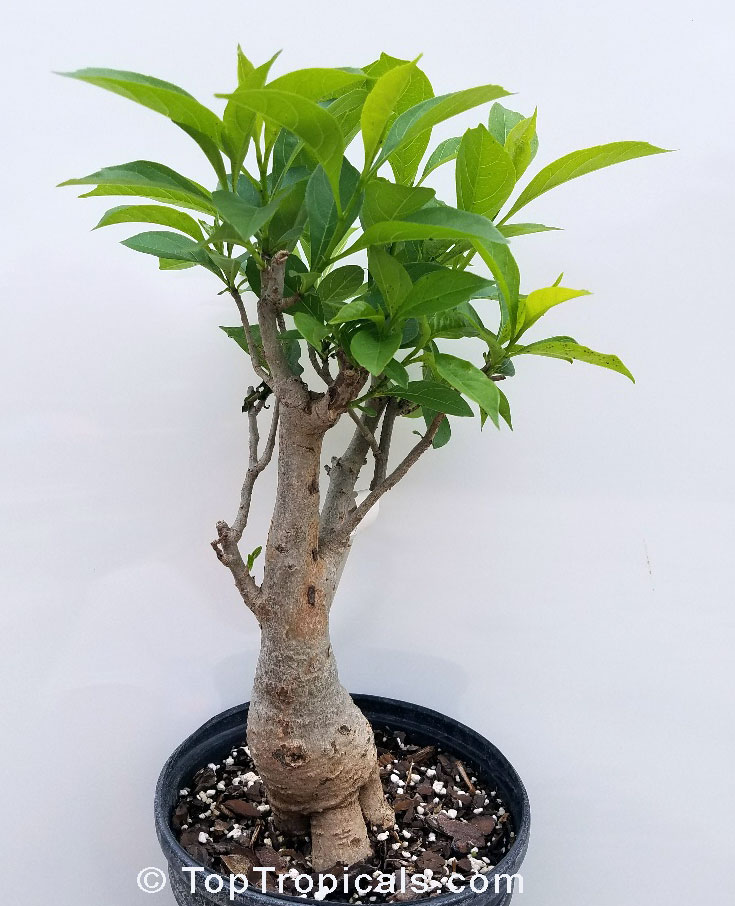
Q: How to grow Baobab bonsai properly? How long does it take to shape a nice little bonsai tree?
A: Baobab,
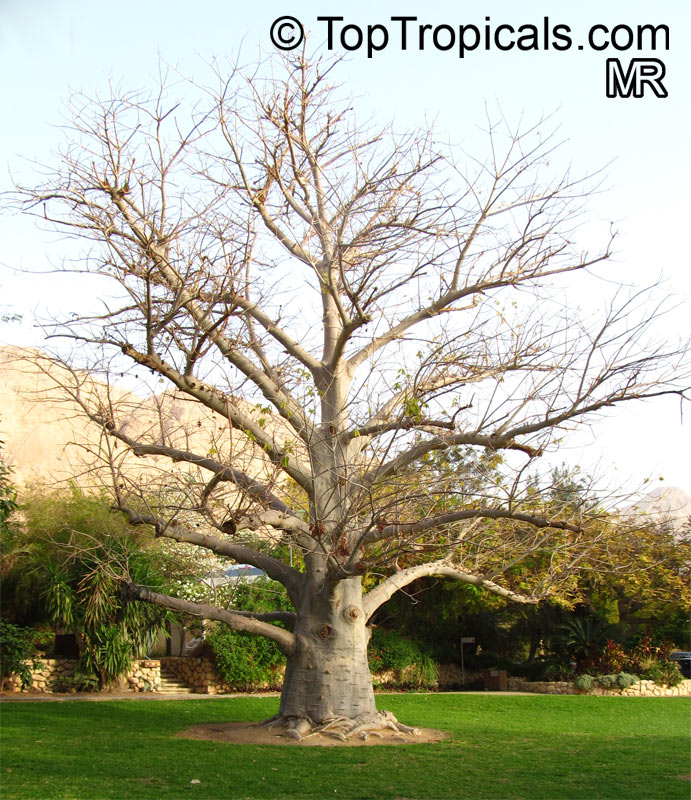
or Adansonia digitata, is a unique addition to a bonsai collection. Native
to Africa, it has an unusual structure and appearance. Some legends say that
the tree was cast down from the heavens and landed upside down, where it
began to grow. This story is no doubt a result of its appearance in the
winter, when the upper branches of the tree look more like roots than treetops.
The Baobab has some specific needs, but if you pay careful attention to its
requirements, this tree is not difficult to grow and makes an excellent
bonsai specimen.
1. Keep Baobab warm, it is sensitive to freeze.
2. Place Baobab in a bright, sunny window. Baobabs need at least six
hours of full sunlight per day, so a window with a western or southern exposure
is best. If your house doesn't get enough light, supplement natural light
with artificial grow lights. See article Indoor lighting for
tropical plants.
3. Water Baobab regularly during the growing season whenever the soil
is dry. Never water the tree when it is dormant (dropped leaves).
4. Feed Baobab a good-quality fertilizer about once a month. Apply
micro-element solution SUPERFOOD once a month, as well as SUNSHINE-BC plant booster for Bonsai and Caudex plants.
5. Prune the branches of your Baobab bonsai as often as they need it to
give the tree the shape you desire, pruning or pinching off branches that
are growing at odd angles or are too long. Trim early in the spring before new
growth appears.
6. Repot the baobab bonsai every year in Spring. Remove it from pot and
trim the roots back by one-third of their length, completely removing any
that are damaged or dead. Place it in a container that is twice the size of the
root ball and fill the pot with a well-drained soil like Adenium Mix.
It is believed that it takes forever to form a nice shaped tree, up to a few years. However if you provide warmth and bright light, branches grow very quickly, and an experienced bonsai hobbyist can make a unique specimen within 2-3 years. And then, the tree will stay with you for 5000 years - it can be passed from generation to generation!
Check
out this plant... with FREE shipping to all states!
Se also Baobab Bonsai Kit and save more!
Date: 29 Jul 2018
Fragrant garden
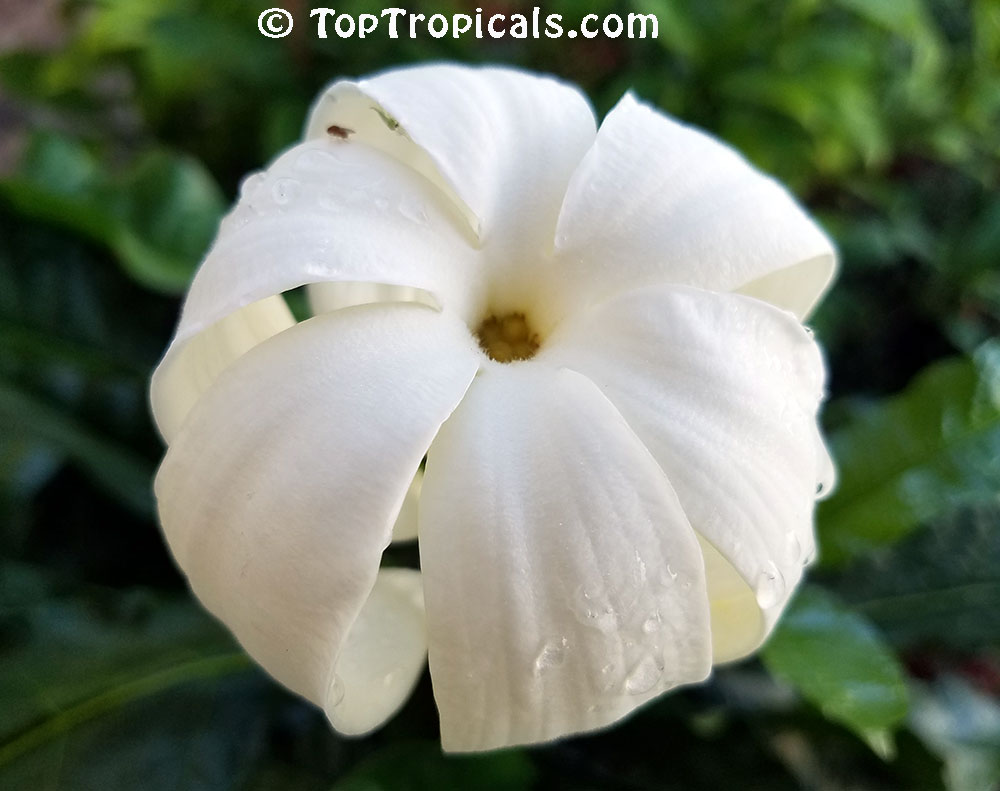
Q: I love fragrant plants and I want to make a fragrant garden. Your website offers amazing selection. A friend of mine told me I should be careful with planting fragrant plants next to each other, and that mix of fragrances may create a funny combination. Are there any flowers that don't go together?
A: Flower scents, unlike perfumes, are pure natural and not as intoxicating to create funny combinations. Although some of them can be strong and even overwhelming. Example - Night Blooming Jasmine, Cestrum nocturnum, which fragrance at night is super-sweet; however most people like it. Reality is, even Night Blooming Jasmine planted next to Gardenia won't create a bad mixture, although one scent may somewhat take over another. In any case, with wind blowing in your garden, you will never be disappointed with fragrant garden. Some plants, like Ylang Ylang - Cananga odorata, or Magnolia champaca, create very fine fragrance that can be smelled yards away, other flowers you will need to stick your nose into.
Check out plants for fragrant garden
Date: 24 Jun 2018
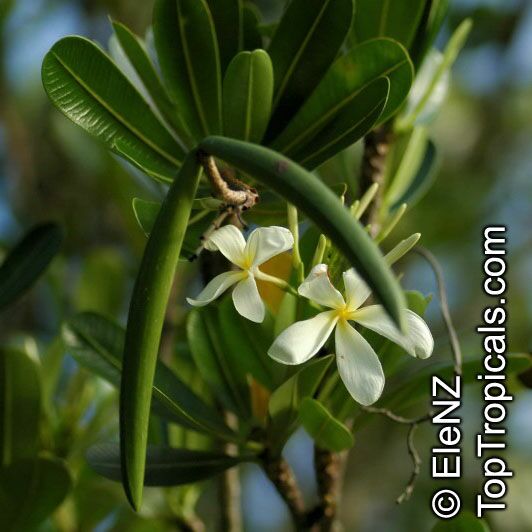
Tip of the day: Growing Plumeria from seed
Q: I purchased a Plumeria from your company. It has done quite nicely and now has produced a seed pod. Please forward me information on how to care for it and use the seeds that may be inside to propagate another plant.
A: Wait until seeds are ripe (seed pod turns brownish). Soak seeds overnight. Use only well drained soil, or cactus mix. Insert heavy end of seed 1/4"into soil, leaving feathered end exposed. Place the pot in direct sunlight. Don't allow soil to completely dry out, but don't let it be soggy. Germination occurs usually within 3 weeks. Do not overwater. For more information on growing Plumerias, see our slideshow guide: