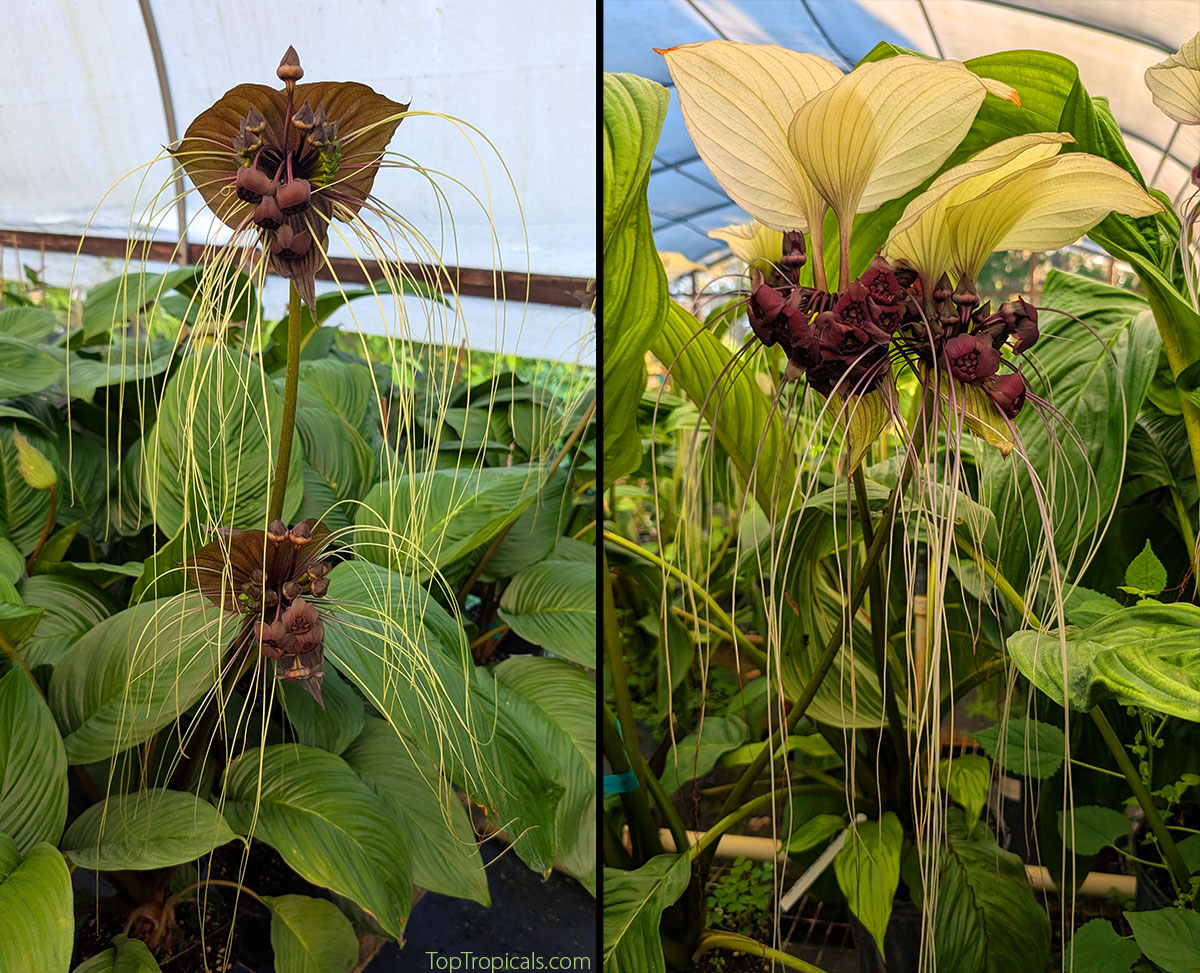
Black and White Bat Lilies (Tacca chantrieri and Tacca
nivea) side by side in bloom
How to Care for Bat Lilies
by Top Tropicals
Plant Expert Tatiana Anderson
🌞 Light
Bright, filtered light. Morning sun or dappled shade is perfect.
Avoid direct midday sun outdoors — it can scorch the leaves.
Indoors, place near a bright window with sheer curtains or use a grow
light.
🌡️ Temperature
Warm and stable, ideally 70-85 F during the day.
Protect from cold drafts or sudden chills.
Ideally, do not let temperature drop below 45 F, although Taccas can
tolerate short period of upper 30's.
💧 Watering
Keep soil evenly moist but not soggy.
Water when the top inch feels barely dry.
Use lukewarm water.
Avoid letting the pot sit in water.
💨 Humidity
High humidity (60-80%) is key.
Mist leaves often, use a humidity tray, or keep near a humidifier.
In greenhouses or bathrooms with a skylight, it thrives naturally.
🌱 Soil
Use rich, loose, well-draining mix
Combine bark, peat, and perlite for ideal airflow around the roots.
Best mix for growing tropical Tacca in pots - soilless potting mix Abundance
. It provides perfect drainage and has a texture similar to a jungle
rainforest media.
🍽️ Feeding
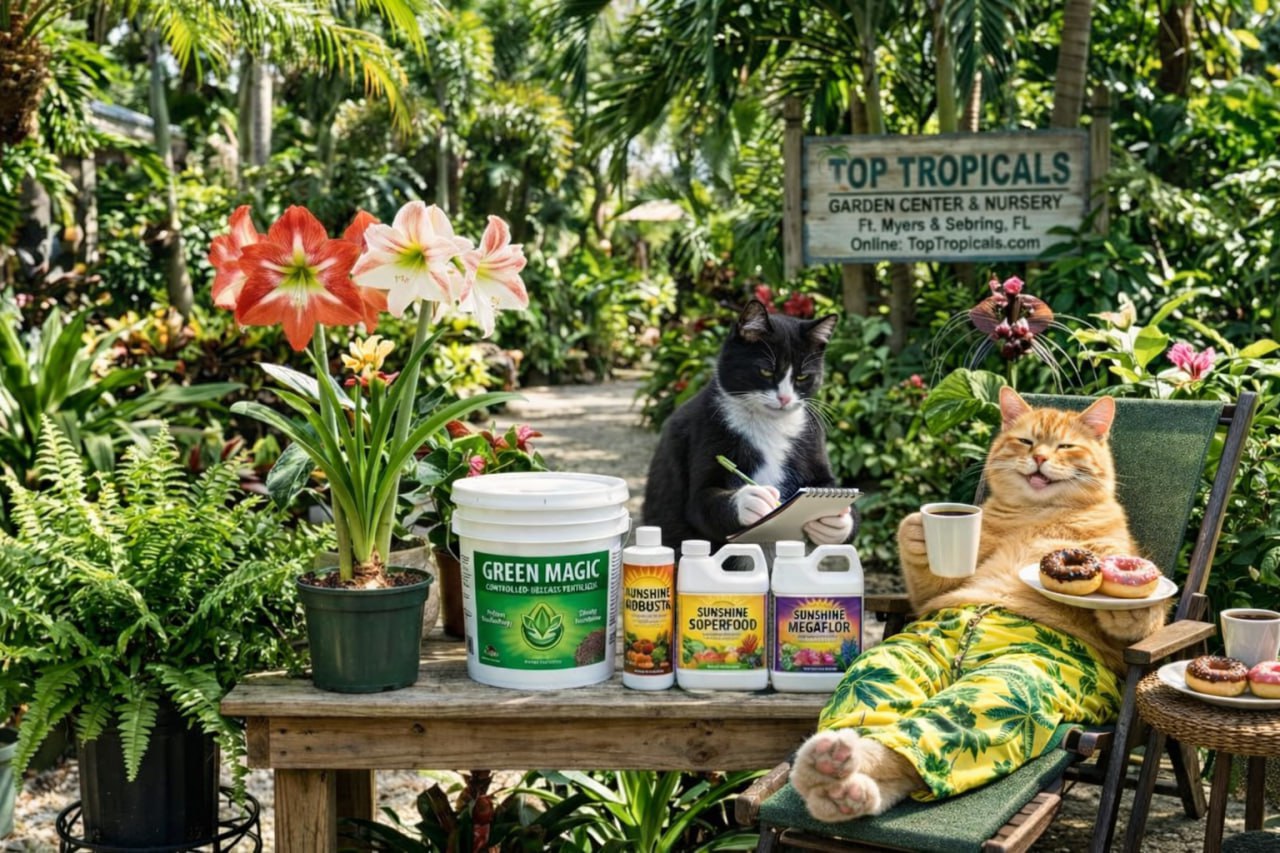
During growth season (Spring through Fall), feed with Green
Magic controlled release fertilizer every 6 months. For even
better results, you may apply liquid fertilizer Sunshine
Boosters Rubusta.
Stop feeding dry fertilizer in cooler months when growth slows. Liquid
Sunshine Boosters are safe to use with every watering, year around.
🏡 Indoor Growing
Great for bright bathrooms, sunrooms, or any warm, humid corner.
Rotate pot occasionally for even growth.
Keep away from heating vents and AC drafts.
🌴 Outdoor Growing (in warm climates)
Partial shade or filtered light under trees.
Excellent in large containers that can be brought inside for
winter.
Shelter from heavy rain and wind.
Sunshine: "So… it’s a diva?"
Smokey: "Exactly. But take care of it - and it rewards you with wings!"
Smokey and Sunshine: "Happy Halloween!"
🐈 Sunshine: So Green Magic feeds the plant for months. Does that mean I can forget about Sunshine Boosters? 🐈 Smokey: Not quite. Green Magic is the steady base diet. Sunshine Boosters are the weekly power drink during active growth. 🐈 Sunshine: Ah. Like my regular meals and donuts on top. 🐈 Smokey: Exactly. Plants eat slowly from Green Magic, and once a week they get a fresh boost. 🐈 Sunshine: Sprinkle once, then boosters every week. The plant grows, I drink coffee, and nobody forgets anything important. 🐈 Smokey: Except where you left the donuts. 🐈 Sunshine: Smokey... nobody forgets donuts. Ever!
The Magic Number 65: when tropicals finally wake and the 7-Day Rule you should know
Champaka tree new growth sprouts
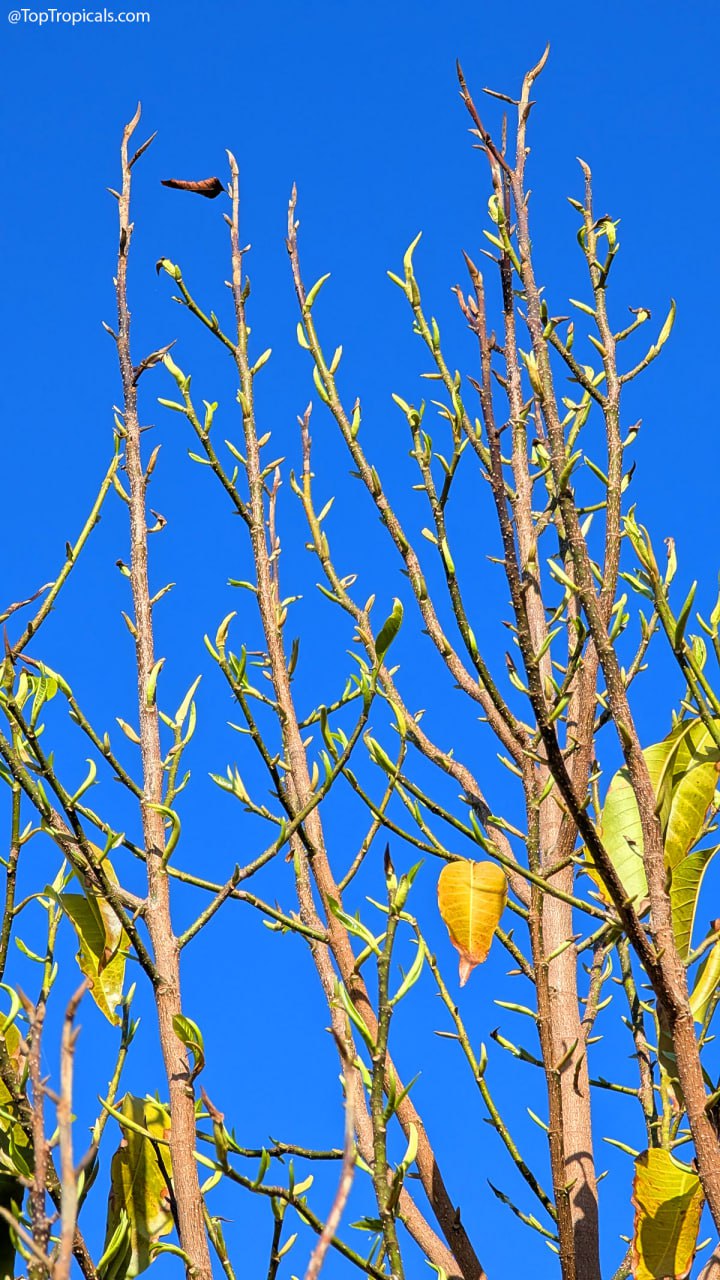
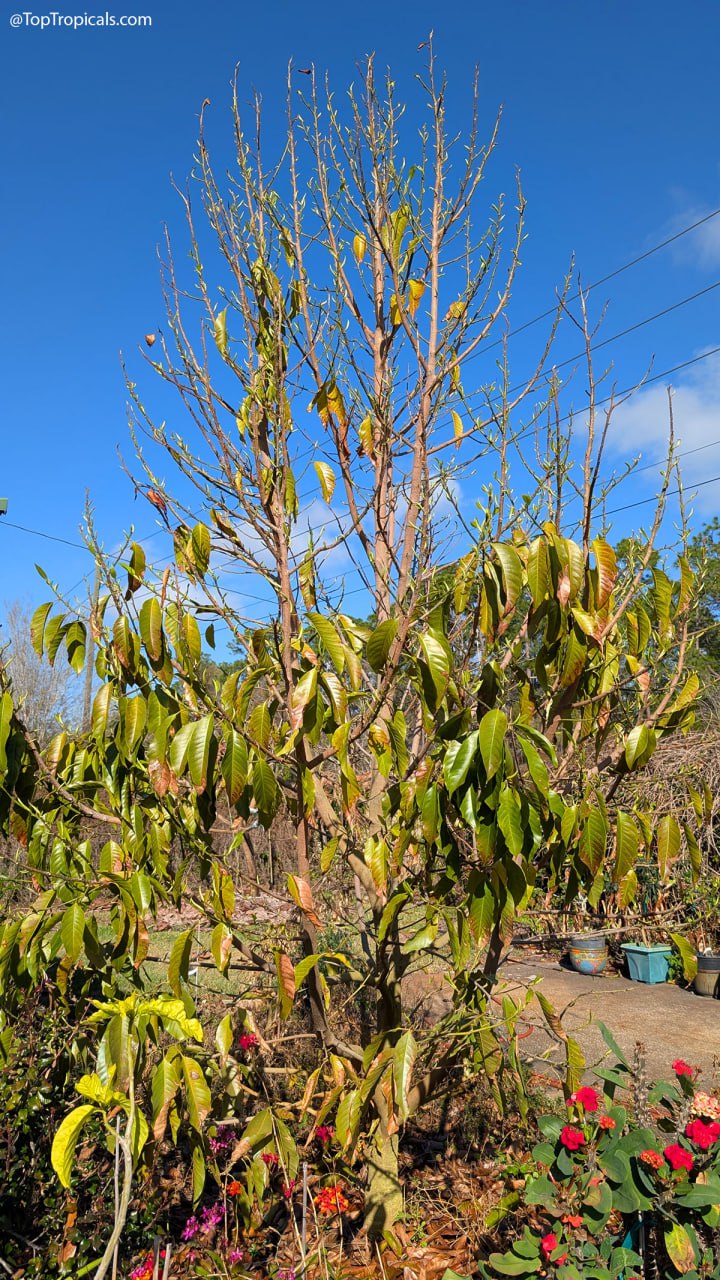
A Champaka tree (Joy Perfume Tree) first fresh sprouts
The Magic Number 65: when tropicals finally wake and the 7-Day Rule you should know 🌱
Discover the "Magic 65" rule for waking up your garden and the exact time to start fertilizing for maximum growth. Learn the specific temperature threshold that signals your tropicals to wake up and how to handle spring cold snaps.
🌿 If you’ve been staring at your dormant trees and shrubs wondering if they survived the winter, you aren't alone. The most frequent question every spring is: "When will my tropical plants start sprouting?"
🌿 While the calendar might say spring, tropical plants don’t use a watch - they use a thermometer. If you want to see green shoots and active growth, there is one "Magic Number" you need to watch: 65F 🌡
🌿 The 7-Day Rule for Tropical Growth
The gold standard for the tropical world is simple: plants generally wake up when minimum nighttime temperatures remain at or above 65F for at least one full week.
🌿 Why 65°F?
Tropical species are biologically programmed to stay dormant to protect their cell structure from cold damage. A single warm day won't fool them, but seven consecutive nights of 65F+ signals that the "growing season" has officially arrived. Once you hit that 7-day mark, you’ll see buds pushing and fresh leaves finally sprouting.
🌿 Can You Force Them to Wake Up Faster?
Patience is a virtue, but if you’re looking to "push" your plants, focus on two things: 🌞 Sun Exposure: Ensure they are in the brightest spot possible to warm the soil. ♨️ Heat Retention: Use dark mulch or move potted plants onto concrete surfaces that retain daytime heat.
🌿 When to Start Fertilizing
❌ Don’t reach for the fertilizer until you see that active growth. Feeding a dormant plant can lead to root rot or wasted nutrients. 👉 The Signal: After that first week of 65F nights. ✅ The Action: Once you see green tips, start your fertilization routine. This is when the plant actually has the metabolic "engine" running to use those nutrients.
🌿 Watch Out for the "False Spring"
Before you go all-in, ensure the risk of a hard freeze has passed. A minor cold snap - a few nights in the 50s - won't kill your progress, but it will act as a "pause" button. If cool weather persists, tropicals may "lock up" and return to dormancy. If that happens, simply reset your clock and wait for the next stretch of 65F nights.
🌿 Ready for the Wake-Up Call? Fuel Your Tropical Growth!
Don’t get caught empty-handed when that 7th day of 65F hits. Stock up now so you can feed them the moment they wake up. Using the right nutrients during the active growth phase is key to lush blooms. Check out our curated selection of professional-grade fertilizers:
📷 Recovery in Action: The Joy Perfume Tree - Champaka showing off its first fresh sprouts in March after a chilly Florida winter. This is exactly what happens once you hit that 7-day streak of 65F nights! 📚 Learn more: ✦ Why is my Champaka Tree dropping leaves?
To trim or not to trim? When and how to trim damaged plants after winter
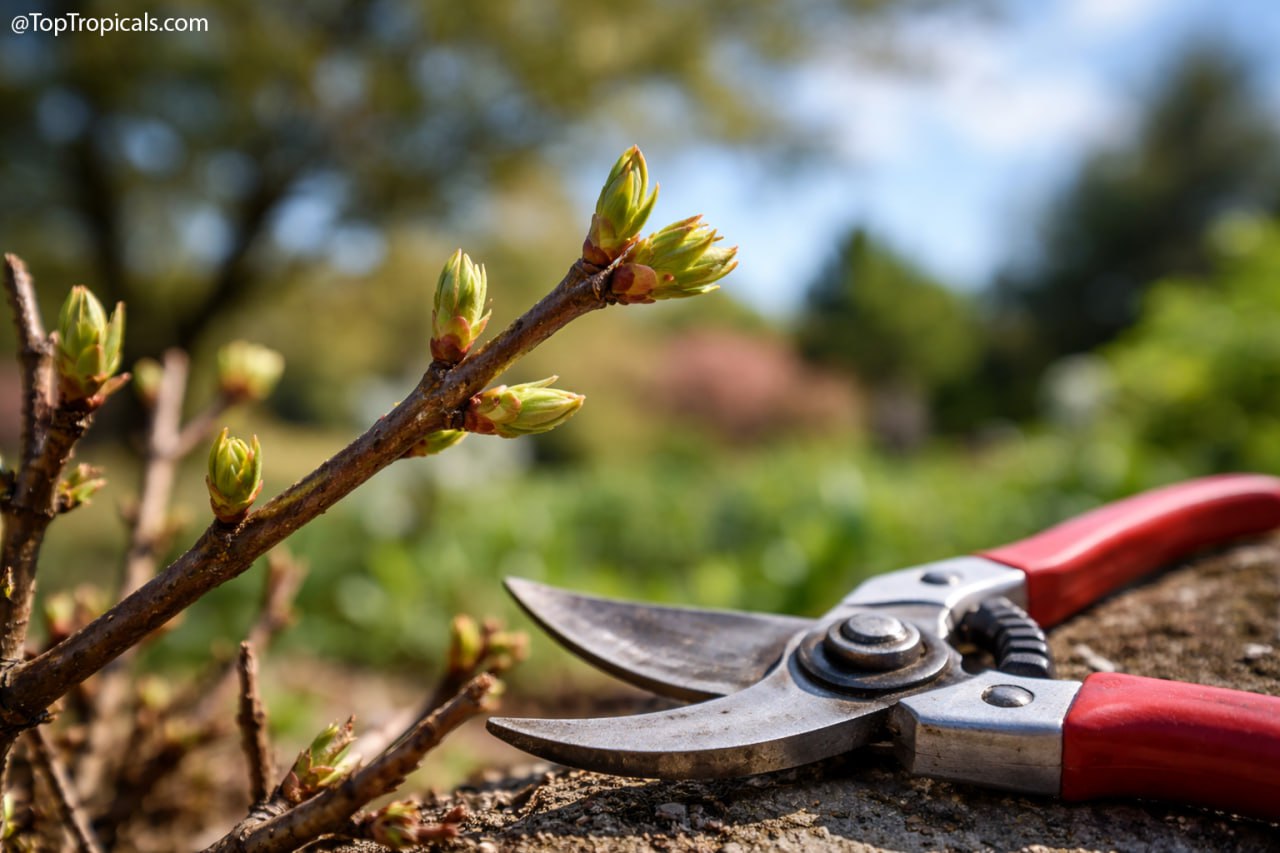
Sprounting buds on a dormant branch and pruners
✂️ To trim or not to trim? When and how to trim damaged plants after winter
Florida just went through a record freeze (Feb 2026). Now gardens look rough - brown leaves, blackened tips, mushy stems. The big question: do you cut now or wait?
Here is the simple rule.
✂️ When is the right time to trim?
Do not rush.
Wait until the danger of more freezes has passed and you start seeing new growth. In most of Florida, that means late winter to early spring.
Why wait?
Dead foliage actually protects living tissue underneath. If you cut too early and another cold snap hits, you can cause more damage.
If a plant is completely collapsed and clearly mushy, you can remove that material. But for woody shrubs and trees - patience pays.
✂️ How far should you trim?
Trim back to healthy, green wood. Start by removing:
· Black, mushy, or obviously rotted stems
· Broken branches
· Completely dried leaves
Then cut slowly and test as you go. Do not cut everything to the ground unless you are sure it is dead.
Many tropicals look terrible after freeze but recover beautifully in warm weather. Te rule of thumb is: once minimum temperatures stay above 65F for over a week, the active growth starts.
✂️ How to tell if a branch is dead or alive
Use the scratch test. Lightly scrape the bark with your fingernail.
· Green underneath - it is alive
· Brown and dry - likely dead
Move down the branch toward the base. Often only the top portion is dead.
Also check flexibility. Live branches bend slightly. Dead ones snap.
✂️ Important - do not give up too soon
This is where many gardeners make a mistake.
After a few weeks - sometimes even months - plants can push new growth through what looks like a dead branch. Buds may appear higher than expected, not just from the roots.
✂️ You may see growth:
· Along the stem
· From lower nodes
· From the trunk
· From the base
Some plants look gone - then suddenly leaf out again.
✂️ Final thought
After a hard freeze, the best tools are patience and a careful eye.
Wait for warmth. Trim slowly. Check for green. And give your plants time to surprise you.
Tropical gardens are tougher than they look.
Eight favorite plants of romance, affection, and emotional connection
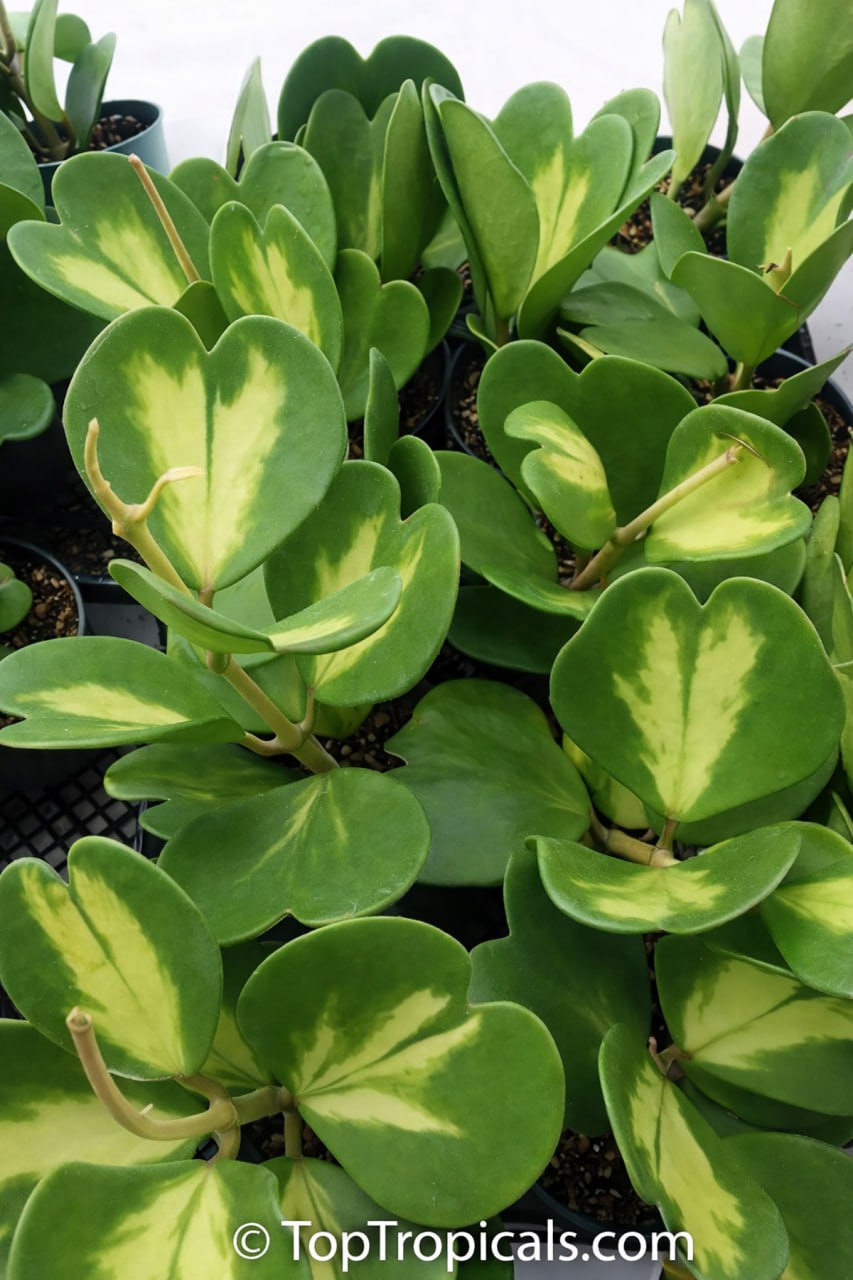
Sweetheart Hoya (Hoya kerrii)
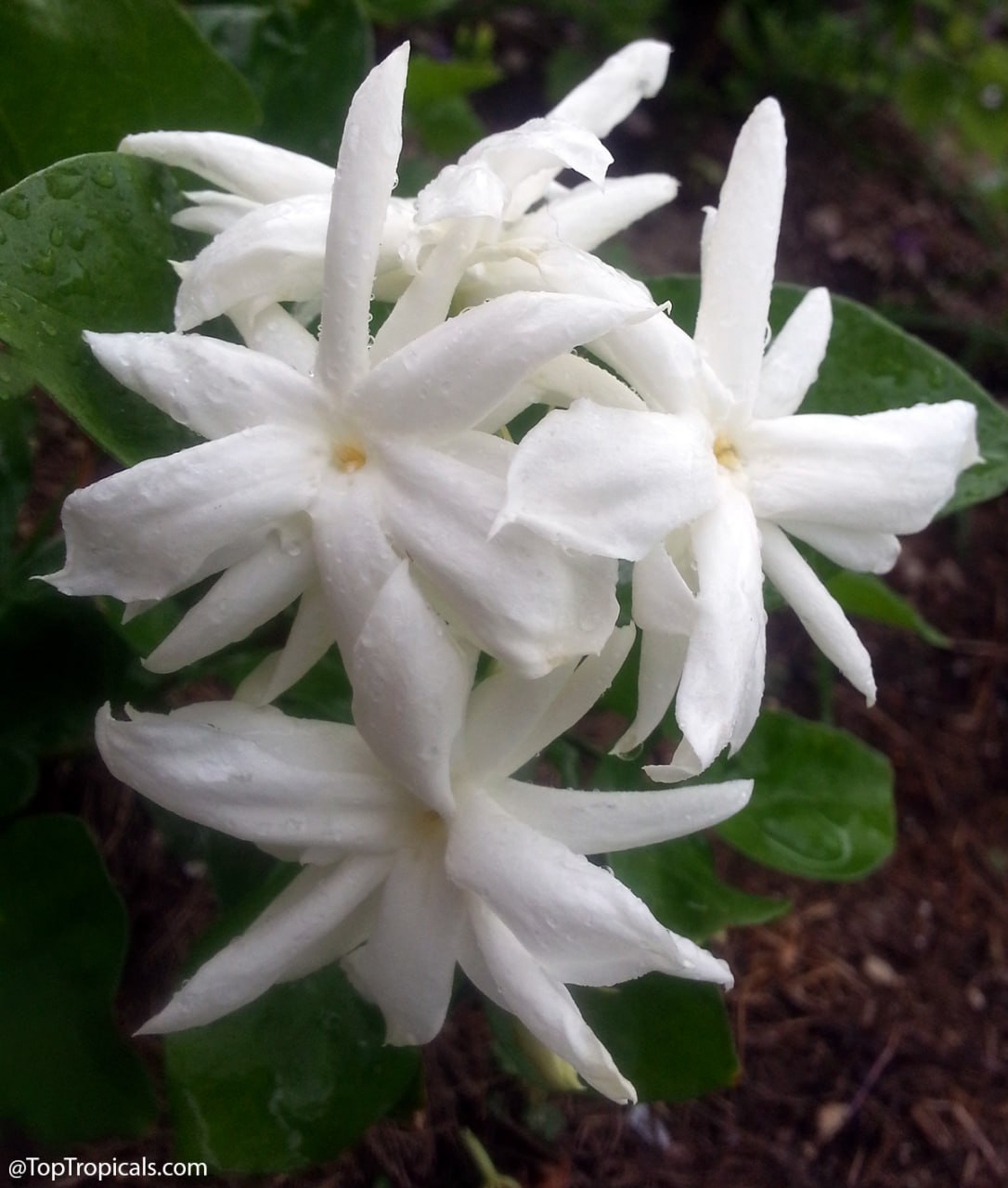
Jasminum sambac
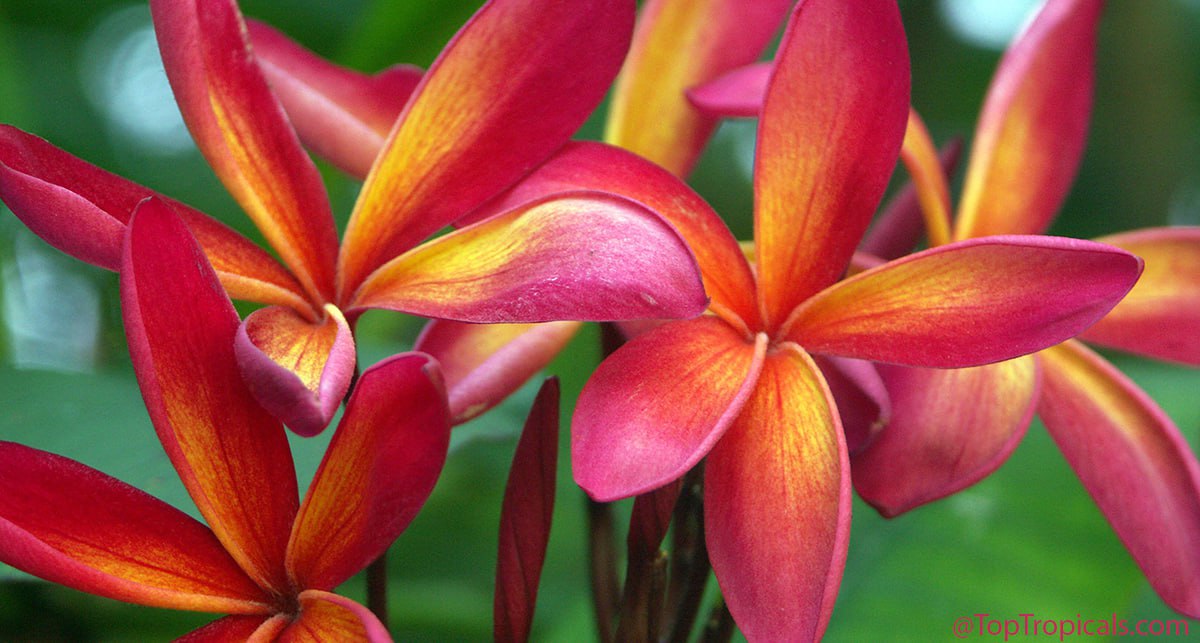
Plumeria (Frangipani)
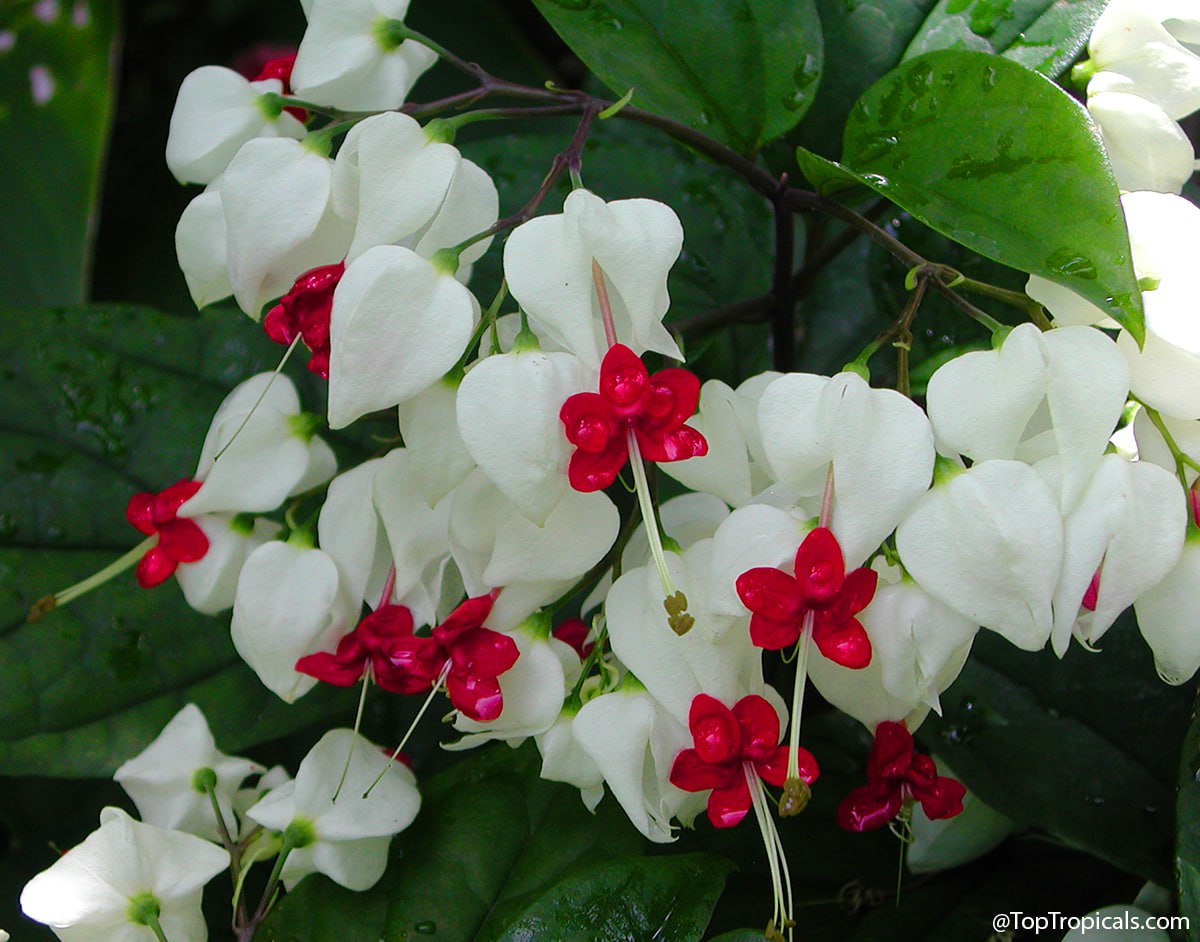
Clerodendrum thomsoniae, Bleeding Heart Vine
💕 Eight favorite plants of romance, affection, and emotional connection
These plants communicate love visually and emotionally. They are associated with beauty, admiration, devotion, and long-lasting relationships.
💖 1. Anthurium
With its unmistakable heart-shaped spathes, anthurium is one of the strongest visual symbols of love. In Latin America, it represents hospitality, passion, and enduring affection, making it a natural Valentine plant. 👉 Anthurium gift
💖 2. Orchids
In many Asian cultures, orchids symbolize refined love, fertility, and deep emotional connection. They are associated with elegance, respect, and long-term devotion rather than fleeting romance or infatuation. 👉 Orchid gift
💖 3. Valentine’s Sweetheart Hoya (Hoya kerrii)
Hoya kerrii is known for its thick, heart-shaped leaves, making it one of the clearest visual symbols of love. This long-lived vine represents loyalty and lasting commitment, and is found in several varieties with different leaf variegation patterns: regular green leaf, variegated Moonlight (gold on green) and Sunshine (white-and green).
Wax Hearts Plant Facts
Botanical name: Hoya kerrii Also known as: Wax Hearts, Sweetheart Hoya, Valentine Hoya, Heart leaf
In Polynesia and Southeast Asia, plumeria represents love, beauty, and new beginnings. In Hawaii, its flowers are a classic part of leis and have become an enduring symbol of romance, affection, and island love.
Plumeria Plant Facts
Botanical name: Plumeria sp. Also known as: Plumeria, Frangipani
Jasmine Sambac is strongly associated with romance, devotion, and spiritual love. In Hawaii it is used in leis, while in the Philippines, this so-called Sampaguita jasmine symbolizes purity, fidelity, and deep affection and is woven into garlands for lovers, weddings, and sacred ceremonies.
Sambac Plant Facts
Botanical name: Jasminum sambac Also known as: Sambac
Hibiscus symbolizes delicate beauty, attraction, and the fleeting intensity of passion. In many tropical cultures, it is associated with feminine energy and romantic expression. 👉 Hibiscus gift
💖 7. Clerodendrum Bleeding Heart
Clerodendrum thomsoniae, called the Bleeding Heart Vine, is known for its red, heart-like flowers held inside white lantern-shaped bracts. It has long been associated with love, emotional vulnerability, and deep personal bonds, making it a natural fit for Valentine symbolism.
Bleeding heart Plant Facts
Botanical name: Clerodendrum thomsoniae Also known as: Bleeding heart, Glory bower, Clerodendron
Traditionally associated with marital happiness and fidelity, Stephanotis has long been used in wedding garlands and bouquets in tropical regions. 👉 Stephanotis gift 🛒Explore gift plants 🎁 Get a Gift Card
 How to Care for Bat Lilies