Date: 24 Jun 2018
How to keep your plants green
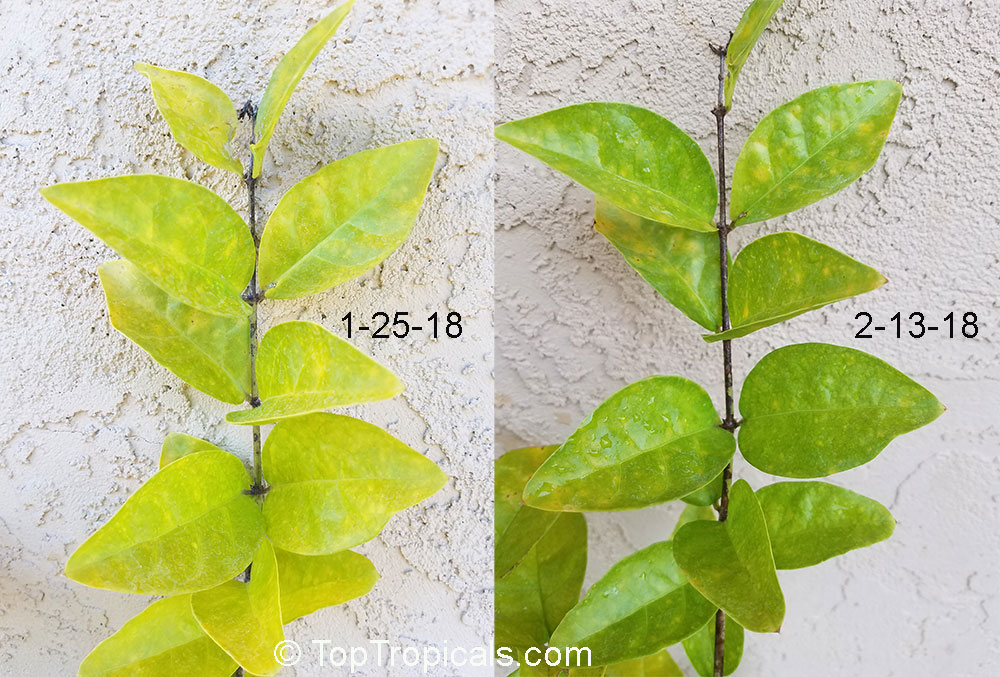
We continue experimenting with a new plant health booster SUNSHINE SuperFood. Couple weeks ago we grabbed a very sad looking jasmine with completely yellow leaves... It suffered from winter cool night temperatures plus some overwatering that caused weak roots and due to that - a number of deficiencies. The plant looked pretty hopeless as far as turning yellow leaves back to green. The best bet to revive it was to cut it short, remove old leaves and wait for new healthy growth... but we decided to try SuperFood. And it worked! Since the plant was almost hopeless, we put it in a far corner and forgot about it. Imagine the surprise when we looked again and it was green! See full plant photo of this jasmine.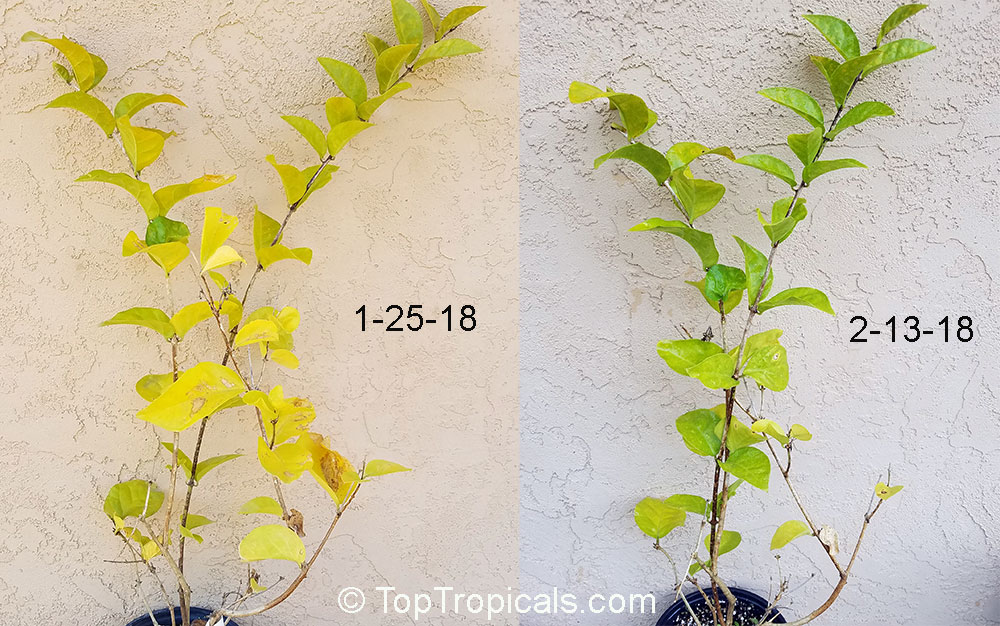
Try SUNSHINE SuperFood on sick
looking plants, especially with yellowing and/or deformed
leaves. There are no miracles, but this one works a like a
Miracle! All you need is a few drops of SUNSHINE SuperFood - item 6000!
Read more about SUNSHINE
SuperFood...
Buy 5-ml bottle for only $4.95

Date: 24 Jun 2018
How to make a Mango tree bloom and fruit
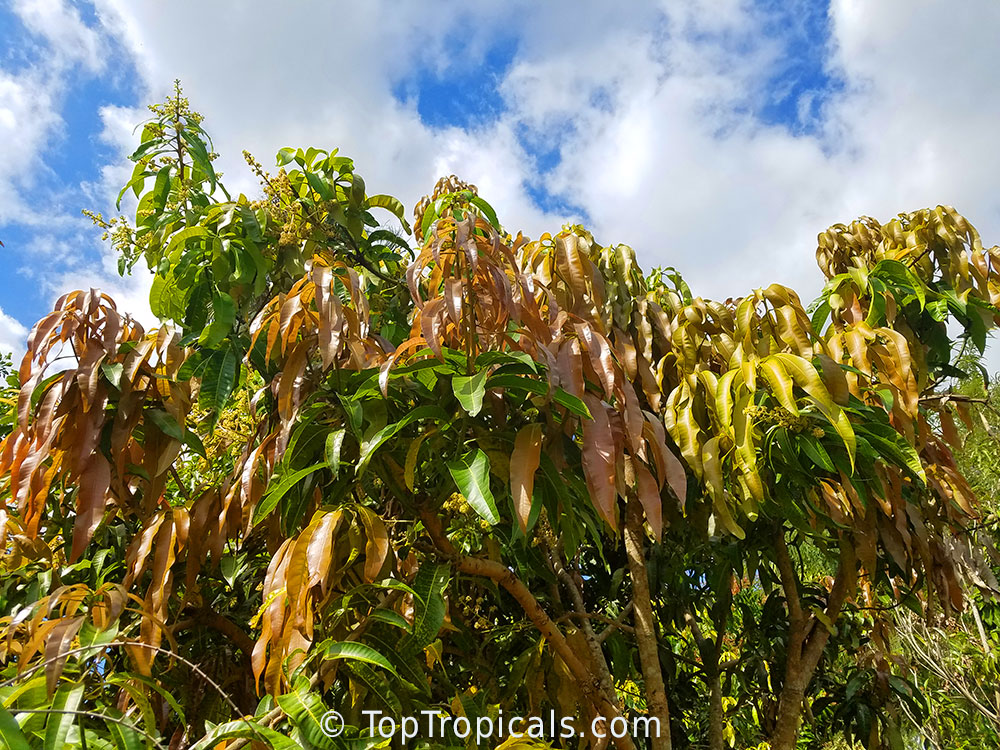
Mango trees are especially beautiful during spring time when they flush out multi-color new leaves! But you want your mango be not only beautiful but fruitful as well. Here are some tips:
1) Fertilize Mango tree with a balanced slow release fertilizer starting March. Use 1 tsp of granulated fertilizer per 1 gal of soil, or a handful or two for an in-ground tree. You may add one application of foliar spray of a water-soluble bloom booster fertilizer (the one for Roses or Azaleas will work). This will give your tree a good macro-nutrient kick-start.
2) Spray entire tree with SUNSHINE-Superfood solution. This will provide all necessary micro-elements and keep the plant healthy and strong throughout the season. Repeat treatment once a month until harvest time.
3) For sweeter fruit, apply SUNSHINE-Honey
Date: 7 Oct 2018
Featured Plant. Jasminum sambac Belle of India
Lovely Jasmine Belle of India makes you feel pretty and loved!
This one is the most wanted variety with
elongated petals that are sweetly scented. Compact and
slow growing shrub, it makes a great houseplant and
flowers freely throughout the year. The most profuse
flowering is from Spring to Summer.
Called pikake in Hawaii, Jasmine sambac is the plant
used to flavor the jasmine tea and making perfumes.
Perfect houseplant takes both sun or shade, it is a
beautiful fragrant everbloomer for your home and garden.
Belle of India is a slow grower, with pale green pointed
leaves and double flowers with elongated narrow petals.
Prefers filtered light for a better look of the leaves,
but will tolerate full sun. In fact the more sun the
more flowers you get.
Secrets of successful culture:
1) use only well-drained potting soil
2) keep the plant a little bit on a dry side so roots
don't get too wet. Water again when the soil gets
slightly dry.
3) Use micro-element mix - SUNSHINE Superfood works
the best. It will keep leaves nice and green and induce
more profuse flowering.
Stay updated with TopTropicals Videos by subscribing to our channel at YouTube.com/TopTropicals and get our latest video news of what is fruiting and blooming!
Date: 16 Jan 2026
The most asked-about tree in the Sunshine State: Bauhinia
Purple Orchid tree - Bauhinia purpurea
🌸 The most asked-about tree in the Sunshine State: Bauhinia
- 🌸 If you visit Florida in winter, chances are you will notice a tree covered in orchid-like flowers and wonder what it is. That tree is often an orchid tree, most commonly Bauhinia purpurea. It is fast growing, wide spreading, and blooms from late winter through spring, sometimes with a second round in summer. The flowers range from magenta to lavender, are lightly fragrant, and stand out even from a distance. The leaves are just as distinctive - split into two halves like butterfly wings, which is why these trees are also called butterfly trees.
- 🌸 Orchid trees are easygoing and practical. They thrive in full sun, tolerate many soil types as long as drainage is good, and need little water once established. Growth is quick, often 2–3 feet per year, making them excellent shade trees for hot climates. The flowers attract bees, butterflies, and hummingbirds, and in some cultures the buds and blossoms are used in cooking, while the bark has a long history in folk remedies. Beautiful, useful, and low maintenance, orchid trees are a perfect fit for Southern landscapes.
🛒 Discover Bauhinias - Orchid trees
📚 Learn more:
- Bauhinias - Orchid trees in Plant Encyclopedia
- Compact Bauhinias - everblooming container trees
- Cassia vs Bauhinia: which is better as an everblooming container tree?
- You won’t believe this red orchid tree exists!
- Rare Orchid Tree you may never find again and everyone wants
- Why gardeners love the Pink Butterfly Tree: blooms, shade, and zero fuss
- Napoleons Plume - Orchid Tree that blooms in a pot
- How to grow Orchid Trees in pots
- Bauhinias: trees with Orchid Flowers and Butterfly Wings
- Why Bauhinias are called Orchid Trees: orchid flowers with butterfly wings...
- Bauhinia blakeana - Hong Kong Orchid Tree
- Bauhinia galpinii (punctata) - Pride of De Kaap or Nasturtium Bauhinia
#Trees
🟢 Join 👉 TopTropicals
Date: 15 Jan 2026
When the Black Bat Lily decides to bloom
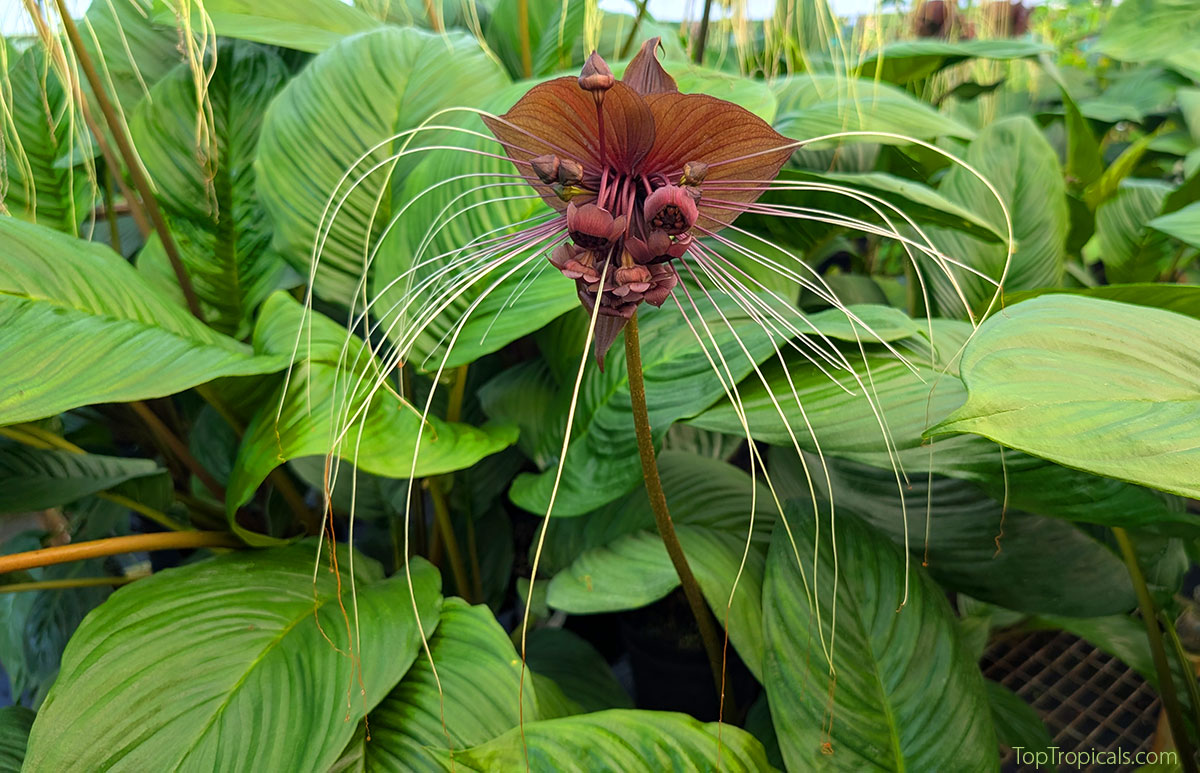
Every so often a plant blooms and the whole greenhouse seems to slow down.
That is what happened this week with the Black Bat Lily, Tacca chantrieri. We have grown Taccas for years, but when the black ones open properly, it still feels special. The flowers are dark and quiet, almost unreal up close. They do not shout for attention. They make you lean in.
Right now, we have a lot of them blooming at the same time. If you have never seen one in person, photos only get you part of the way there. The wings are darker than you expect, and the whiskers seem to go on forever. People walk into the greenhouse, stop, stare, and usually ask the same question: "Is that real?" - Yes. It is.
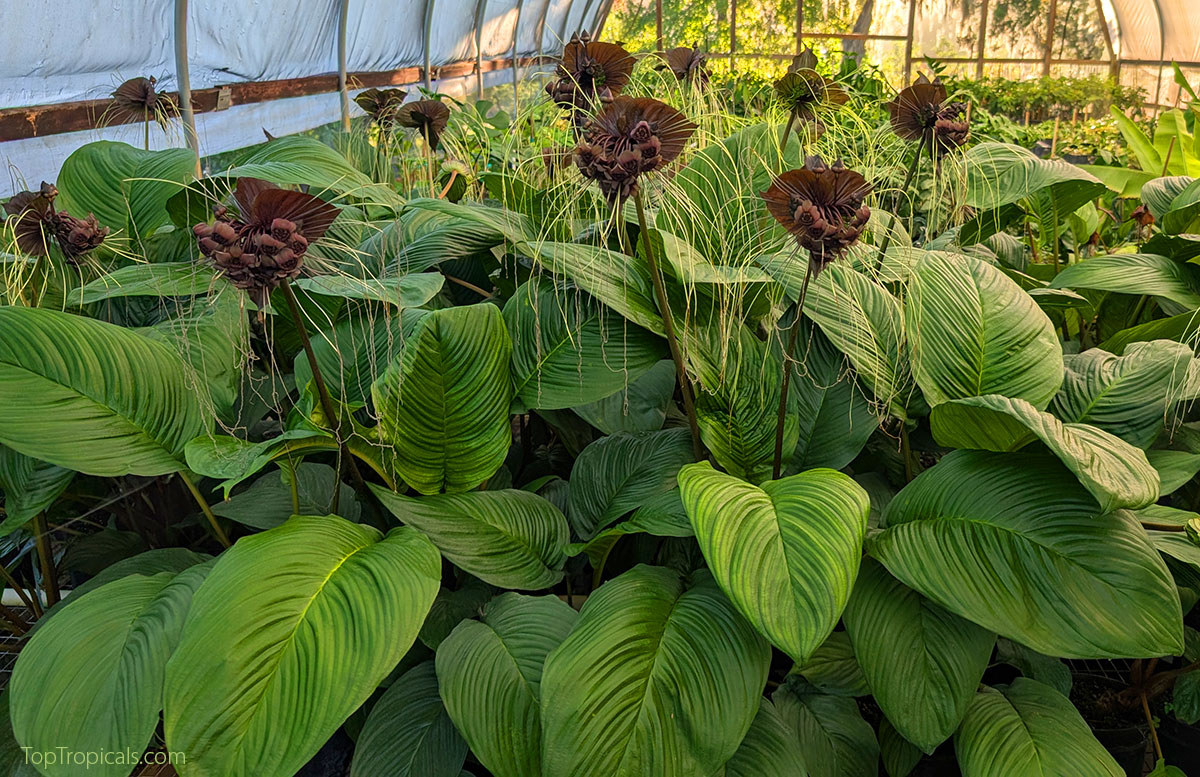
A quick honest note, because this matters. The blooms themselves are delicate and may not travel well. That is just the nature of this plant. The plants, however, are strong, well established. With the right conditions, they bloom again. This is not a one-time trick.
Black Tacca is not a beginner houseplant, but it is also not impossible. It likes filtered light, steady warmth, and humidity. It does especially well in a greenhouse or a bright indoor spot where you already keep plants that enjoy moisture. It is the kind of plant you keep close, not one you forget in the corner.
We are offering them now simply because they are ready and looking their best. If you have been waiting for one, this is a good moment.
You can see the Black Bat Lily here: https://toptropicals.com/store/item/2345.htm
Just wanted to share something we are enjoying in the greenhouse right now. Some plants come and go. Some stay with you.
Tacca (Bat Lily) FAQ
What is Tacca?
Tacca, also known as Bat Lily or Devil Flower, is a tropical plant grown for its unusual bat-shaped flowers with long whisker-like filaments. The most popular species is Tacca chantrieri, the Black Bat Lily.
Is Tacca hard to grow?
Tacca is not a beginner plant, but it is not impossible. It does best with warmth, humidity, and filtered light. Gardeners who already grow orchids, calatheas, or other humidity-loving plants usually do well with Tacca.
Does Tacca need a greenhouse?
A greenhouse is ideal, but not required. Tacca can be grown indoors in a bright spot with indirect light and good humidity, such as near a humidifier or in a bright bathroom with a window or skylight.
Will my Tacca arrive in bloom?
Plants may be blooming in the greenhouse, but flowers are often removed before shipping because they are delicate and do not travel well. The plants are well established and capable of blooming again with proper care.
How often does Tacca bloom?
Tacca does not bloom constantly. It may take time to establish before flowering, but once settled, it can bloom seasonally and may produce multiple flowers in warm, humid conditions.
Does Tacca grow from a bulb?
Tacca grows from a rhizome, not a bulb. The rhizome stores energy and allows the plant to regrow and bloom again.
Why does Tacca have long whiskers?
The long filaments are thought to help attract pollinators such as flies by mimicking the look of decaying organic matter. While unusual, this is part of the plant's natural pollination strategy.
✍️ More about growing Tacca🛒 Get your own Tacca plant
🎥Watch our videos about Tacca