Garden Blog - Top Tropicals


Date: 23 Oct 2020
PeopleCats of TopTropicals. Cat of the Day: the mischievous Jim the Second

In May 2020 we celebrated 16th birthday of Jim the Founder - the Cat who established
TopTropicals. It broke our hearts when this Old and Wise Purrrson peacefully passed away
this August :(( We want to believe that he is now in Cat Paradise... but we
miss him terribly - both humans and PeopleCats. Google the Cat lost his appetite and went into a deep depression after
he lost his best buddy... To get him distracted from his separation stress,
we decided that Google needs... a Project.
Here he is. Jim the Second. About a month ago we found him in a Human
Society shelter. He was a tiny fur ball size of a palm of a hand. But he proudly
carries his Godfather's name, for a reason - he likes to EAT - just as much as
Jim the First. He eats 3 times more than Google, and he talks a lot. And of
course, he pulls everyone's tail, and kicks everything that is kickable...
The Veteran Google complains that young generation of PeopleCats nowadays
are nothing but trouble... but they've become friends anyway! Google feels
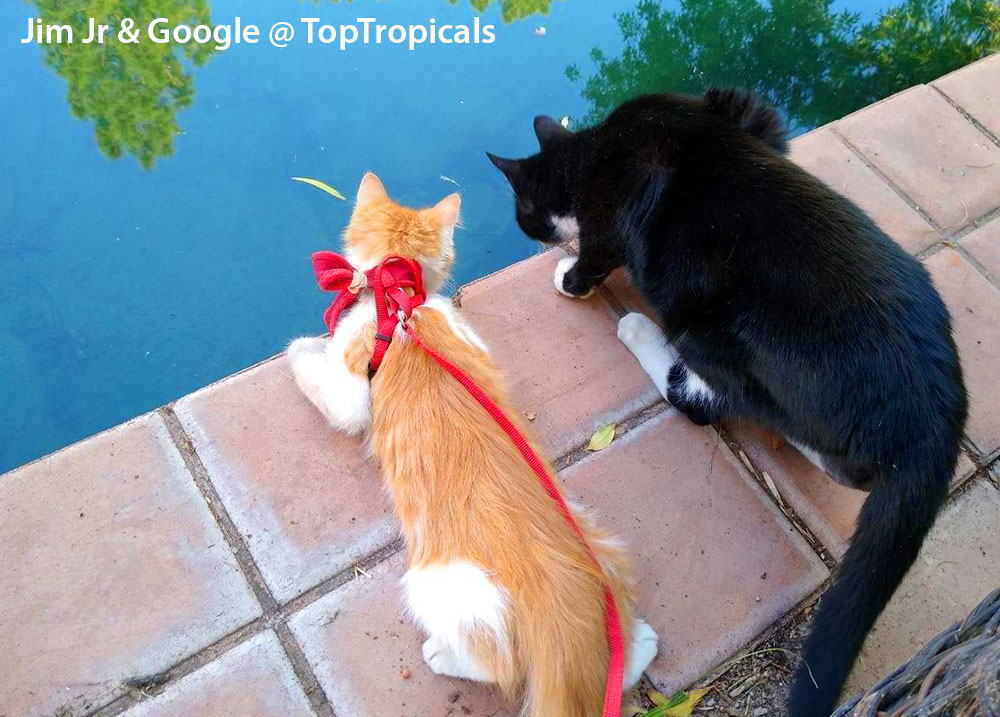
much happier now. He just took Jim Jr to his first walk outside to the lake and
showed him some fishing techniques...
Bon voyage Little Jim, you soon will master it all! As Mr Booster claims, Orange Cats Bring Happiness!

TopTropicals PeopleCat Club and Zoo
Thank you for supporting us in helping PeopleCat Community!
Make
your kind donation today and receive a surprise gift from us! Every little
bit helps. Thank you and God bless you and your pets!
Date: 24 Aug 2019
Growing a Plumeria Tree
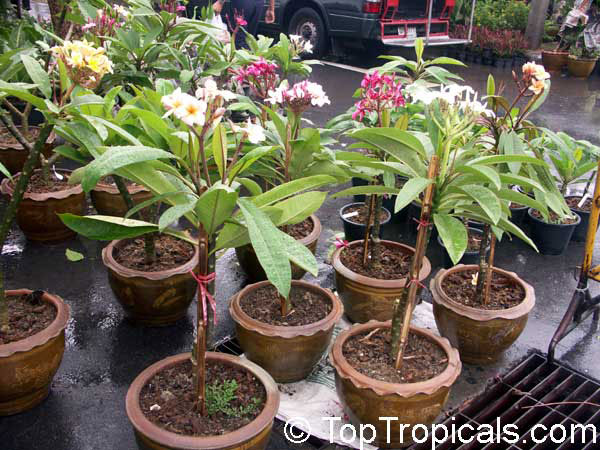
Q: I have a graft plumeria that is growing sideways. The leaves seem to be growing upside down. I tied it up with yarn and a bamboo stick last night. Will it grow strong enough to support itself without stakes or should I just let nature take its course and take the yarn and stake away?
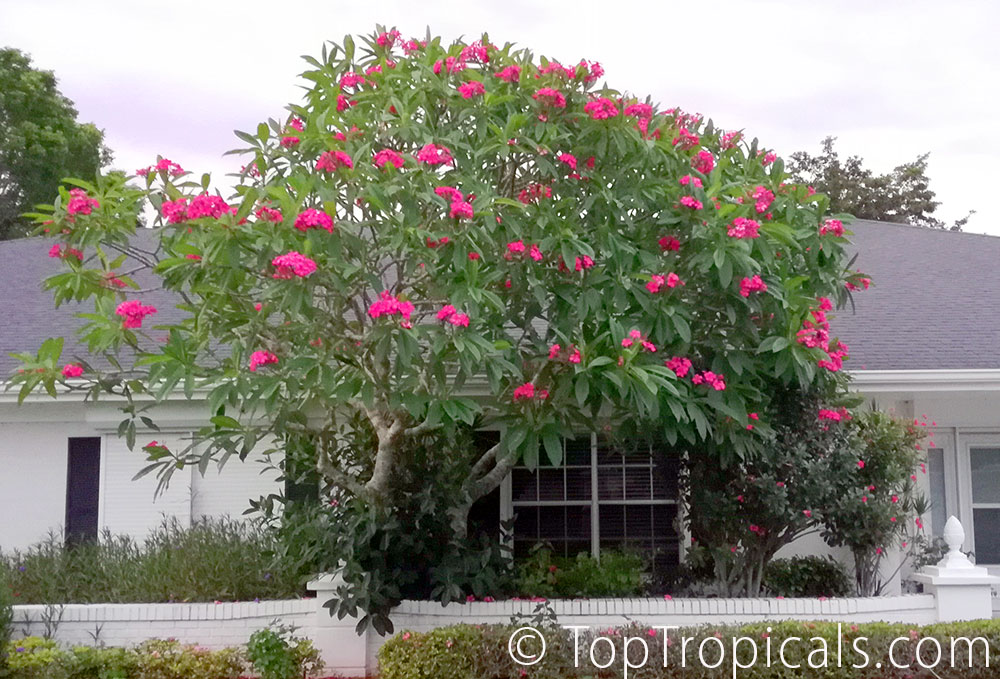
A: You should definitely help the tree and keep the stick. The tree will eventually straighten out. It will have a strong trunk and you will be able to remove the supports.
Make sure to feed the Plumeria tree to provide enough energy for fast
growth and strong trunk:
Plumeria Top Dress - Smart-Release Booster.
Check out all Plumerias from our store, they are 15% OFF today!

Date: 16 Jun 2019
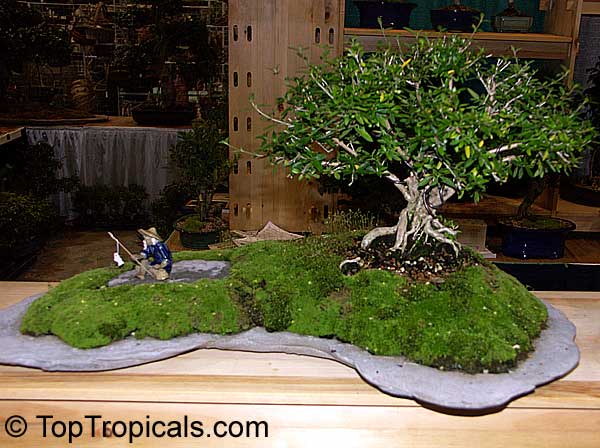
Horned Holly - a cool bonsai plant
By Onika Amell, tropical plant specialist
Q: I live in Chickasaw, Alabama. I am a beginner bonsai grower. I received a lovely little Horned Holly as a birthday present and I want to know if it is a suitable plant to bonsai?
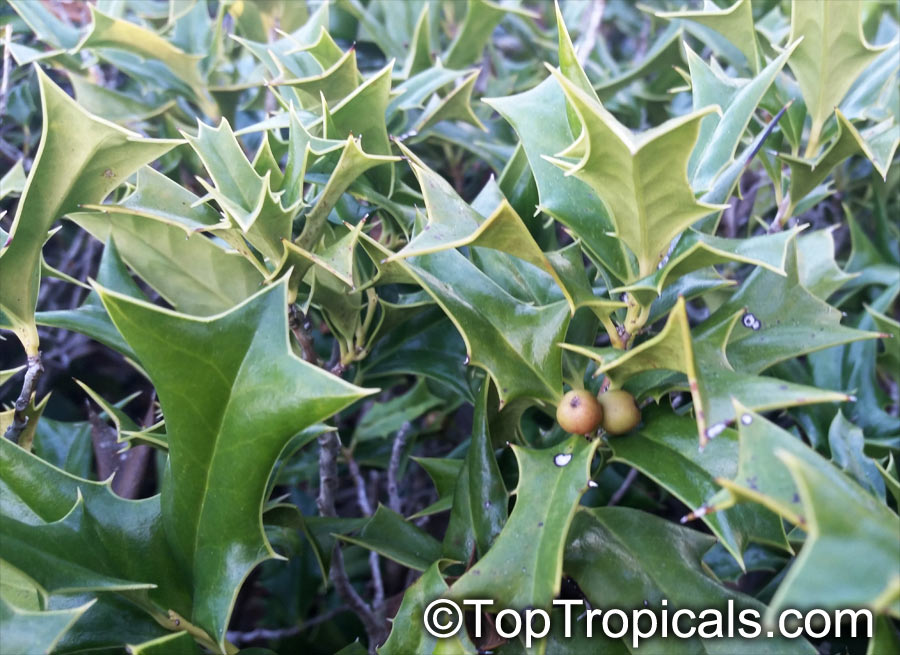
A: The Ilex cornuta - Horned Holly, or Chinese Holly, is very popular as
a bonsai species. It is loved for its very beautiful and distinctive
rectangular foliage and for its small, white flowers which give way to large, red
berries. The berries are larger than those of the European Holly. The leaves are
rectangular and unusually shaped with three large spines at the apex. This
bonsai will take both sun and shade, but semi-shade is preferred in midsummer.
If indoors, give it plenty of bright light. When kept outdoors, your Horned
Holly bonsai will need some frost protection and should be sheltered from
strong or cold winds.
It will need a fair amount of water and should not be allowed to completely
dry out. Watering during the heat of summer is especially important, as well
as in spring right before the fruit production, and should be reduced during
winter. This species will also appreciate regular misting of the foliage.
Repot this bonsai every 1 to 2 years in early spring, using bonsai soil - TopTropicals
Adenium Soilless Mix. Fertilize the holly every two weeks throughout the
growing season using either a balanced fertilizer diluted to half strength.
We recommend for this purpose Tropical Greenhouse Plus - Plant Booster. Pruning should be done in
early spring.
Horned Holly is also very popular as a hedge plant as it grows dense
and compact. It will grow to between 3 and 5 feet tall and will spread to an
equal distance, giving it a round, shrubby form. It is cold hardy! Zones 6
through 9. It will tolerate a wide variety of soils as long as it is
well-drained. It likes sun or part shade. It is heat and drought tolerant once
established, and are often used in xeriscaping. Its branches produce dark olive-green
foliage that is often cut for indoor decorations during the holidays.
Limited time special offer:
buy 1 get 1 free for only $10!

Date: 14 May 2019
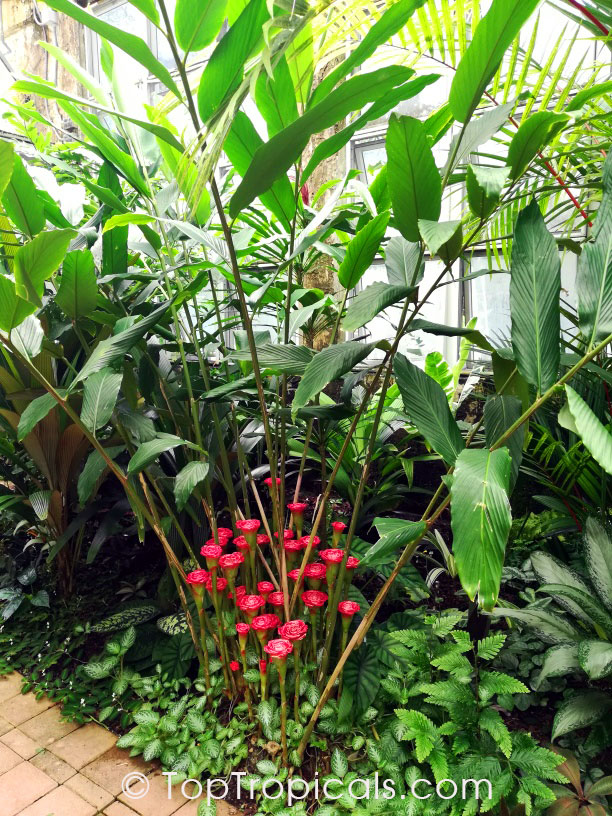
How to get gingers to bloom
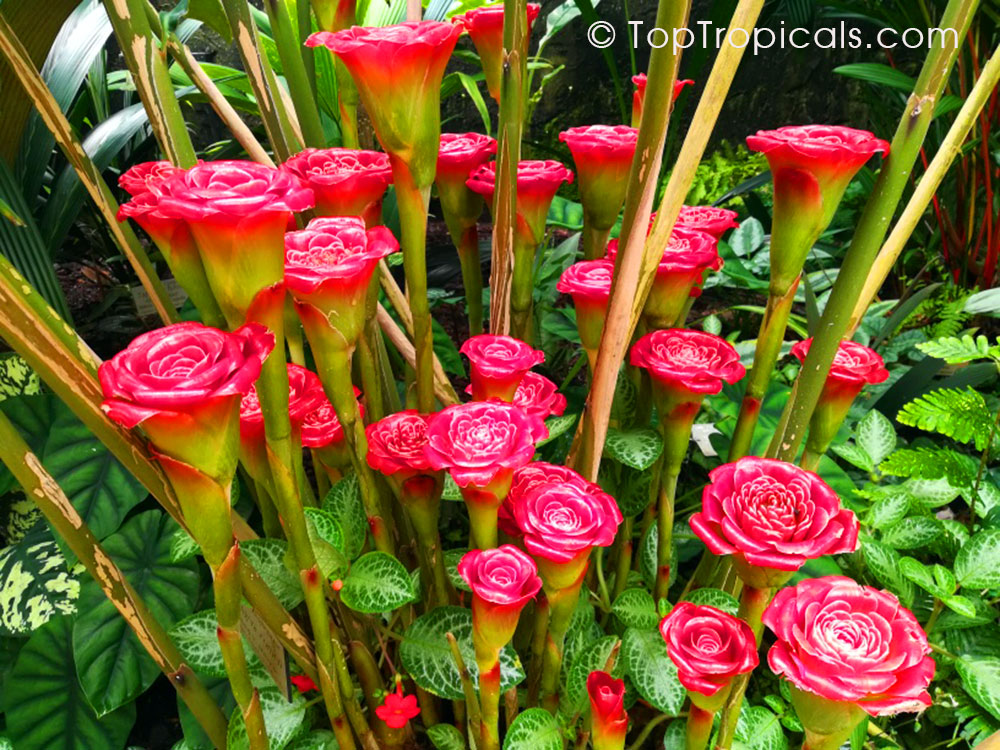
Q: I have several gingers in my yard, including Red Torch, Lobster Claw, and Red Bamboo Ginger, they grow beautifully but only produce large dark green leaves and no flowers. Is there anything I can do to make them bloom? Do they need any special fertilizer?
A: Gingers are easy to grow tropical plants with so many benefits, giving us unique spice, and showy flowers (including long-lasting cut flowers!) - where other plants fail, especially in deep shade. They are not fussy about soils and even water once established. To keep your gingers happy, follow these simple steps:
1. Bright light is essential for flowering, but planting gingers in
semi-shade or filtered light will keep them stress-free from burning summer rays.
2. Water gingers regularly until they established and start producing
new leaves and stems. Once they start clumping, you may reduce watering to a
minimum 9once a week or so), or rely on your sprinkler system.
3. Once the plant is established, start using fertilizer to induce
flowering and healthy growth.
- We recommend granulated "smart release" fertilizer for all tropical
plants. For gingers, the best formula is Tropical Allure. It provides all macro- and microelements essential for
the healthy growth of the plant.
- Apply balanced water-soluble plant food for Gingers, Heliconias and
Bananas -
Broad Leaf Plus - once a month.
- Additionally, you may also add to the menu flower booster Pink N Good Daly Plant Food - this fertilizer is used in very low
concentration and can be used with every watering.
4. Remove old dry and yellowing leaves with sharp cutters to avoid pest
problems and keep good air circulation around these clumping plants.
5. Keep soil covered with 1"mulch to protect from weeds and maintain
the optimal amount of moisture for the rhizomes.
Check out our specialized fertilizers for different plants - for all your gardening needs!