Ten
New Year Resolutions:
Diversity in Tropical Garden
1. Diversity. Grow different plants. Add more types of tropical
plants to your garden for a colorful and diverse look.
2. Save Water. Use water wisely by installing drip systems,
collecting rainwater, and using mulch to keep the soil moist.
3. Improve Soil. Make your soil healthier by adding compost or
manure regularly. Healthy soil promotes robust plant growth and enhances
overall garden resilience.
4. Deal with Pests Smartly. Keep pests in check with a plan - use
natural solutions and check your plants often. Preventing program is easier
than dealing with infestations.
5. Right Fertilizing. Feed your plants with Eco-frintdly
fertilizer such as
Sunshine Boosters (safe to use year around). If you use slow-release
fertilizers - apply in right amounts, from March to November.
6. Trim Regularly. Keep your garden tidy and healthy by pruning
and removing dead or sick parts of the plants.
7. Companion Planting. Explore which plants work well together to
enhance nutrient uptake, fight pests and provide shade for those species
that need it.
8. Right Climate and Zone Pushing. Pick plants that love your
climate, considering sunlight, temperature, and humidity. For more sensitive
tropical plants, work on a plan for cold protection: grow them in pots or set up
temporary covers.
9. Teach Others. Share your gardening knowledge with the
community. Propagate your plants from seeds, cuttings, divisions - and share them
with friends and neighbors. Remember: live plant is the best gift, and love is
sharing!
10. Make a Relaxation Spot. Create a cozy corner in your garden
with comfy seating or hammock, shade, and maybe a water feature for a peaceful
retreat.
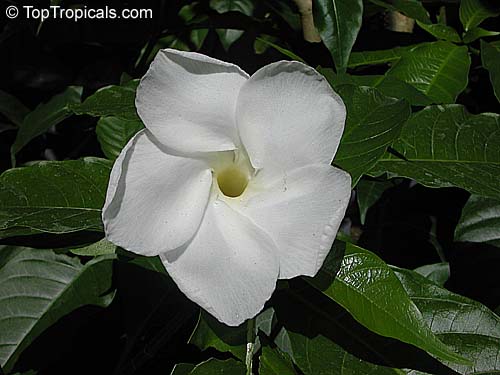
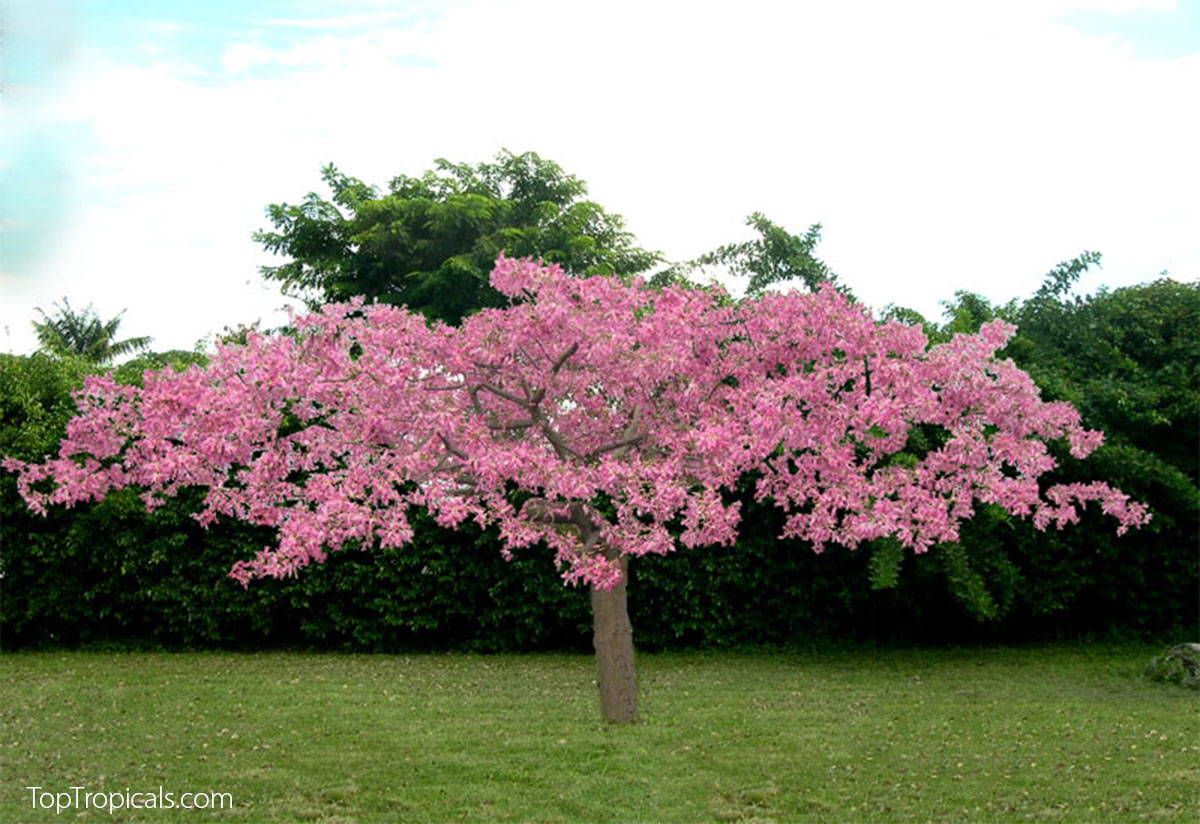
What is a garden without fragrance? Unknown to so many gardeners because
of its rarity, the Milky Way tree or Stemmadenia litoralis is one of those trees that are simply
unforgettable. This is without a doubt one of the most fragrant flowering trees you can
plant in the tropics or warm greenhouse conditions...
When this tree is in full bloom, masses of large, white, tornado-shaped
flowers cover the branches. The fragrance is something to behold… soft,
vanilla sweet and musky. Leaves are dark green and sparkly and a striking contrast
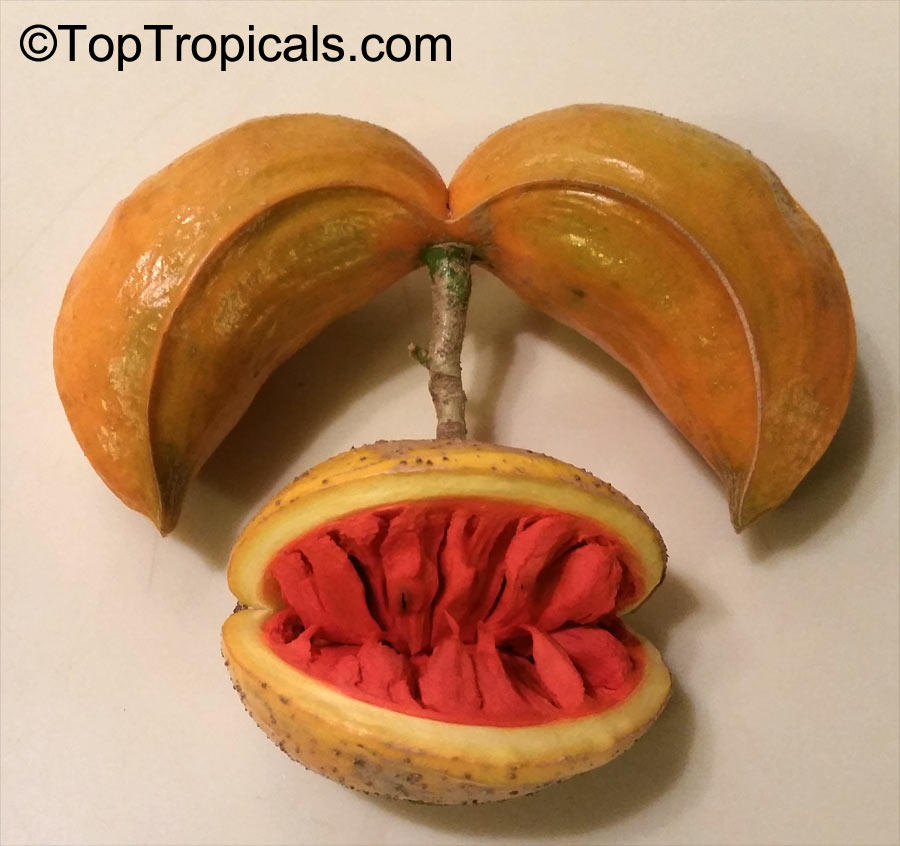
against the large, white flowers. Even the seed pods are pretty,
double-horned and orange-gold, born in pairs and hanging from the tree. This tree is so
ornamental!..
We take this opportunity to extend our grateful thanks to all visitors
and friends of our garden and website. The entire Top Tropicals team wishing
you a Happy New Year with Happy New Plants!
In 2019, Top Tropicals plans include (but are not limited to):
- improved design of the website, online store and shopping cart
- many new introductions of rare flowering plants including Red Jade
Vine, lots of new Adeniums
- rare fruit trees, including Mangosteen, Nutmeg, Clove and more
- extended selection of rare tropical seeds
- many new videos of rare tropical plants
- free and discounted shipping
Stay informed with our Newsletter updates!
New Year Resolutions for Gardeners in 2019
January is the month to plan and dream about your yard and garden. Grow
your garden a few steps at a time each year: pick a few resolutions for 2019
and plan accordingly. Next year, a few more, and so on until you build the
garden of your dreams.
This winter, resolve to:
- Hang a bird feeder.
- Order seeds of some rare plants so you can have an early start.
- Prune a tree into an espalier - it's a perfect time before Spring.
- Ask your grandparents what they grew in their gardens.
- Build a raised bed for succulents.
- If you live in a warm climate, plant a fruit tree or two.
- Start a compost pile.
- Plant a palm tree.
- Try some plant boosters to improve your plants hardiness.
- Chose Flowering trees, shrubs and vines suitable for areas in your garden that still have room...
- Install a rain barrel.
- Eat outside as often as possible.
- Show a child how to plant a tree.
- Provide a water source for bees and butterflies. They are not only
cool, but also pollinators that will help to set fruit and seeds!
- Call TopTropicals for garden advise - what to plant, where to plant,
and how not to kill it!
- Plant a berry-bearing tree or shrubs to feed the birds. Mulberry, Blackberry, Tropicals Cherries - are always good choices. They are 15% OFF now, offer expires 1/8/19.
- Rake and save fallen leaves for winter mulch for your garden beds.
- Save seeds from flowers to plant next year.
- Give plants as gifts all year long.
Happy gardening in 2019!
Date: 17 Nov 2025
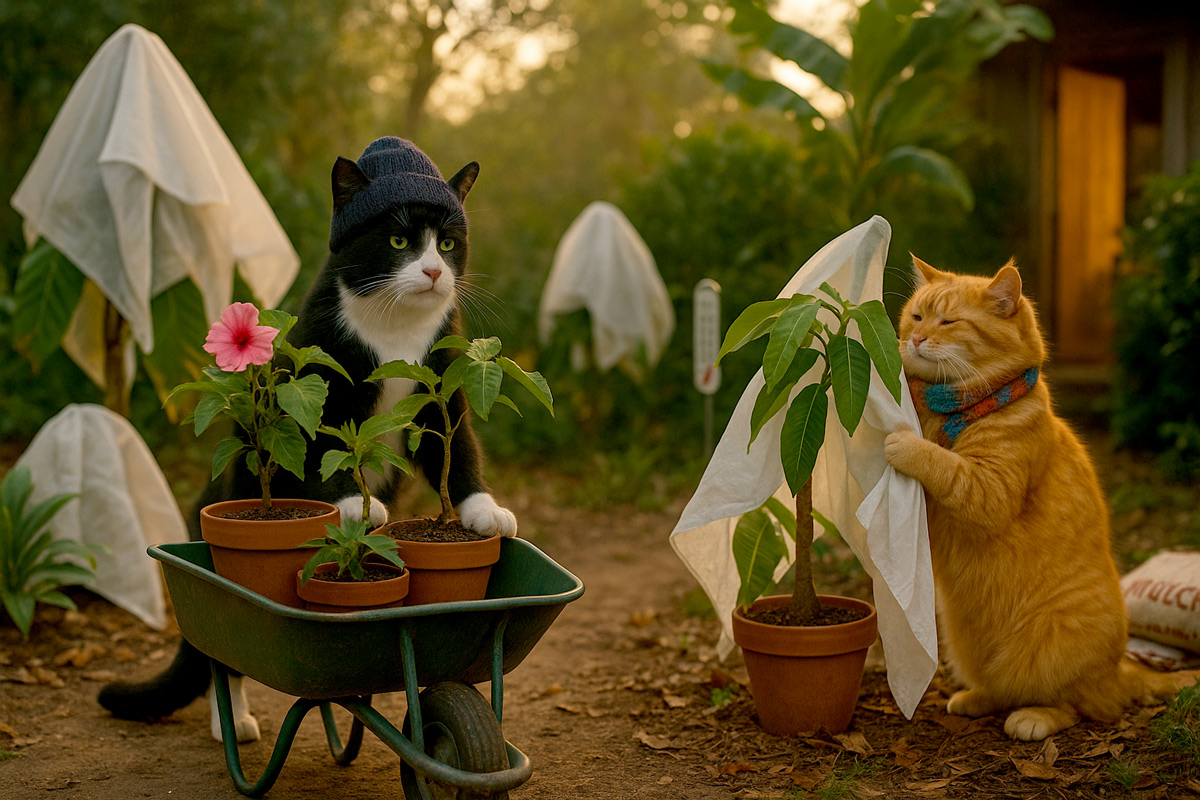
❄️Cold Night Survival Guide
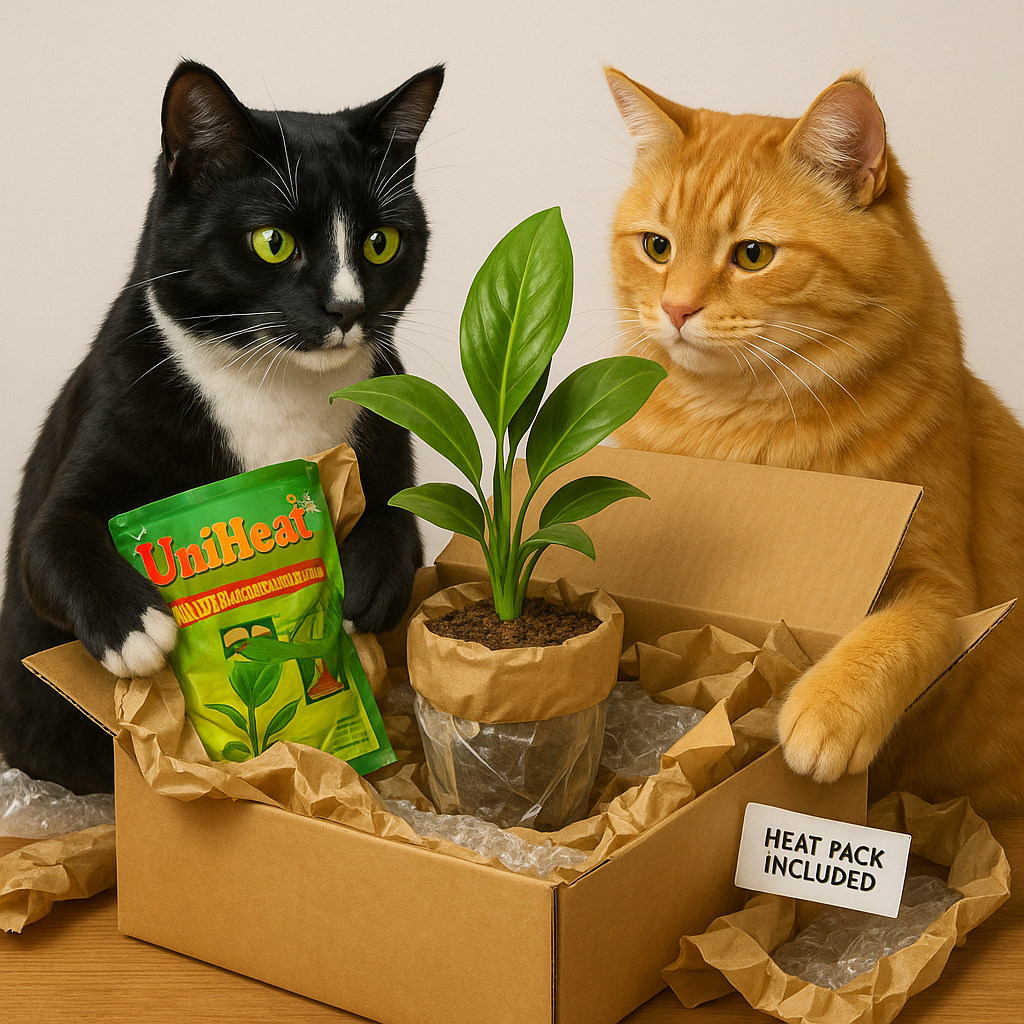
Smokey and Sunshine Prepare Plants for the Cold Night.
Smokey: Come on, Sunshine, help me move these plants inside before it gets
dark!
Sunshine: I am helping... see? I’m supervising the mango
tree.
Smokey: You call that supervising? The frost cloth’s upside down!
When the forecast drops into the 30s, panic is not a plan. This is your
simple, clear checklist to protect every tropical in your garden. Think of
it as the quick emergency manual that goes hand in hand with the previous
cold-weather newsletter.
"We
all love our tropical flowers, mangoes, bananas, and rare fruit trees. A
single cold night does
not have to be a disaster. The key is knowing what to do, when to do it, and
what mistakes to avoid." - Tatiana Anderson, Top Tropicals Plant
Expert
🌡️ FROST AND FREEZE
A frost and a freeze are not the same. A frost is when you see ice crystals
on leaves or grass, while a freeze is when the air temperature drops below
32 F. The tricky part is that you can get
frost even when the air is above freezing, and you can have a freeze with no
frost at all. It all depends on humidity and the dew point. If the dew
point
is below freezing, the ground can cool faster than the air, letting frost
form even when your thermometer reads 35 or 36 F. And once the air itself
drops below 32 F, even for an hour, tender tropicals can be damaged. For
plants, a freeze is far more dangerous, because freezing air pulls heat out
of stems, branches, and roots. Frost usually burns leaves, but a true freeze
can injure wood, kill buds, and damage the entire plant.
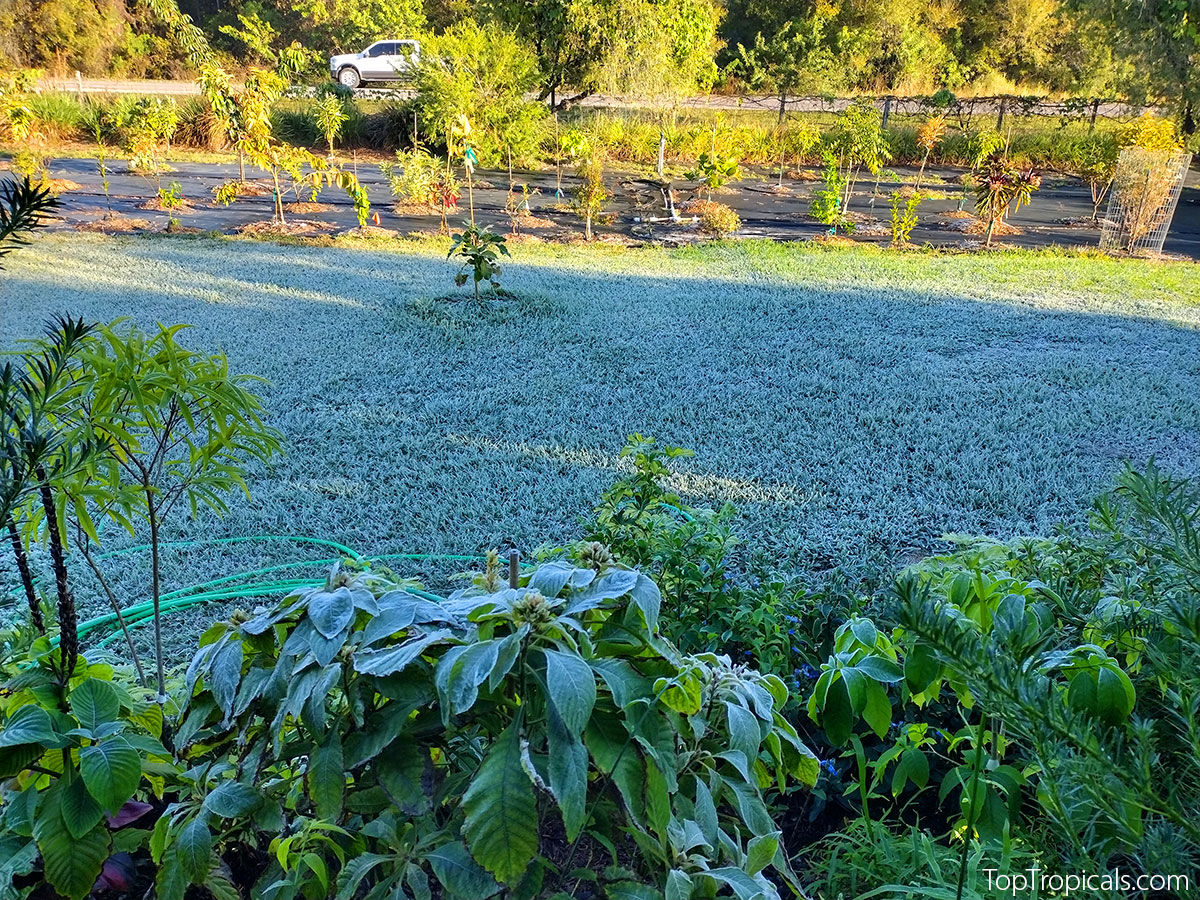
Frost on the grass and leaves on Winter morning in Central
Florida
WHAT TO DO
AND NOT TO DO BEFORE A COLD SNAP
✔️ 5 THINGS TO DO:
Water well. Hydrated plants tolerate cold better than dry, stressed
ones.
Add mulch. A thick layer around the base keeps roots warm.
Block the wind. Move pots to a sheltered corner or patio.
Cover at night, uncover in the morning. Let plants breathe and get
light.
Add gentle heat if needed. Non-LED Christmas lights or a small old style
15-20W light can raise temps a few degrees.
❌ 5 THINGS NOT TO DO:
Do not prune or trim. Fresh cuts freeze first.
Do not overwater. Wet, cold soil invites root rot.
Do not let plants dry out either. Wilted plants freeze more easily.
Do not use dry fertilizer. Gentle liquid feeds like Sunshine
Boosters are safe to use with every watering: its intake naturally slows
down as watering decreases.
Do not look only at the thermometer. A long, windy night can be worse
than a short freeze.
TEMPERATURE
ACTION GUIDE (40 to 25 F)
40 to 38 F: Move potted plants to shelter, water soil, and cover
tender tropicals.
37 to 33 F: Use frost cloth and anchor it down so the wind does
not lift it.
32 to 30 F: Add a heat source like non-LED lights.
29 to 25 F: Double-cover sensitive plants, wrap trunks, and
protect roots heavily.
COLD
TOLERANCE BY PLANT TYPE
Before a cold night, it really helps to know your plant’s exact
cold limits. Every species is different, and young plants are always more
sensitive than mature ones. Take a few minutes to look up your varieties in
our Tropical
Plants Encyclopedia
— it will tell you the safe temperature range, how much protection
each plant needs, and which ones must be covered or moved before the next
cold snap hits.
Bananas: leaf burn below 37 F
Mango, Annona: hurt around 32 F
Cold hardy avocados: Mature tree can take about 25 F. Young trees must
be protected
Olives, Citrus, Guava, Jaboticaba: usually OK outside with mulch
QUICK-ACTION
TABLE
Before the cold arrives, make yourself a quick list of every plant and
what action each one needs. It saves time when temperatures start dropping
and keeps you from scrambling in the dark. Check that you have enough frost
cloth, blankets, and supplies on hand so you can cover everything without
rushing. Planning ahead makes cold nights much less stressful.
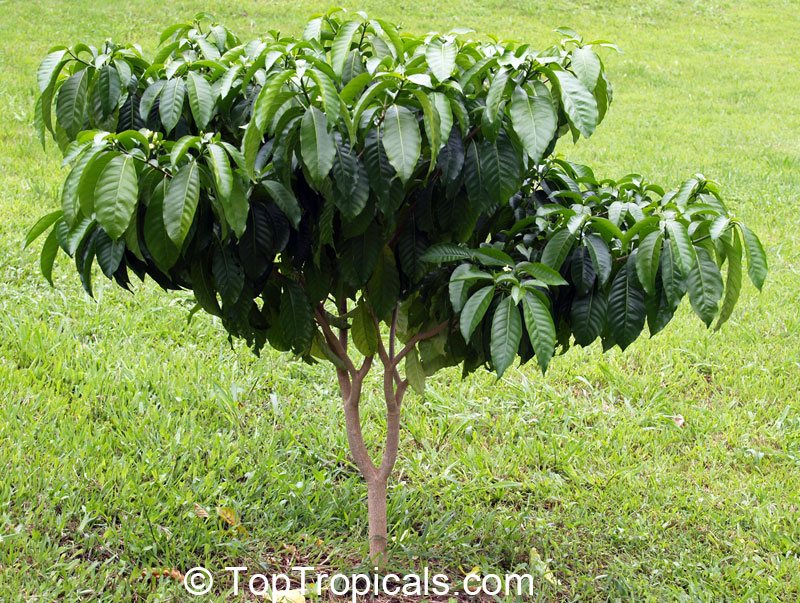
Bring Indoors: Cacao, Bilimbi, Coffee. They need warm, bright
light.
Cover Outdoors: Mango, Jackfruit, Banana, Annona. Use frost cloth, not
plastic on leaves.
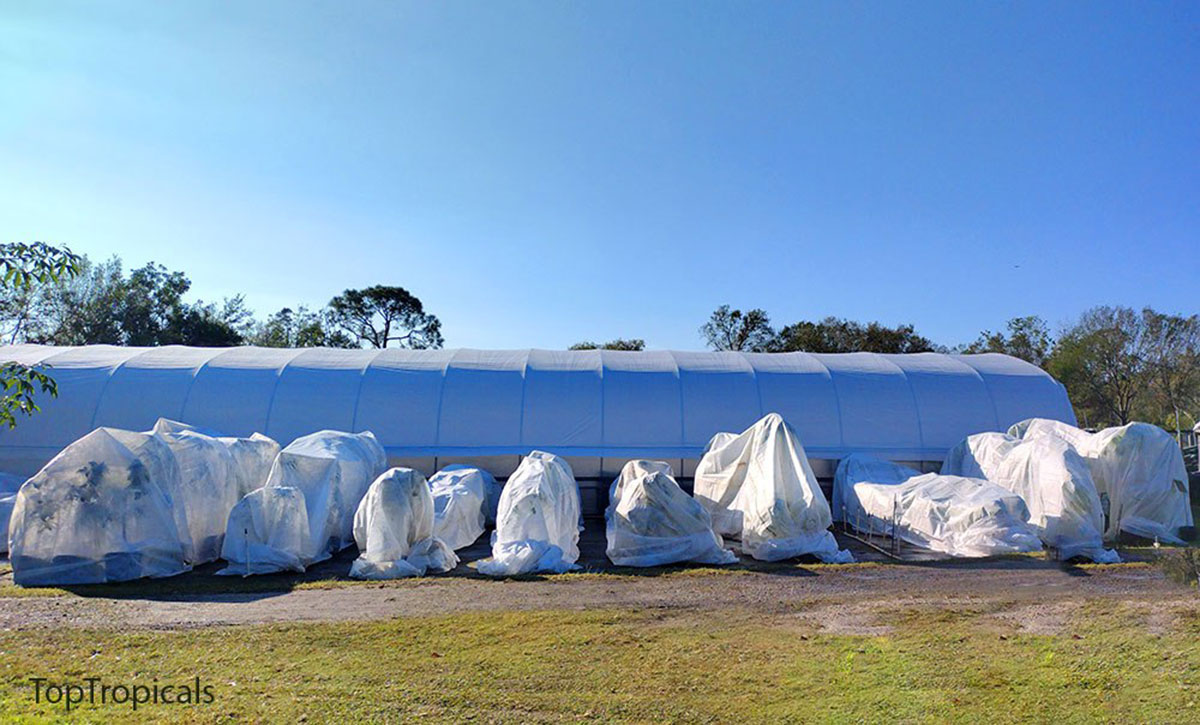
Covering large mango and avocado trees in pots at TopTropicals during
cold nights
GADGETS AND
TOOLS THAT HELP
Indoor helpers: LED lights, small heaters, bottom-heat mats,
timers.
Outdoor helpers: frost cloth rolls, mini greenhouses, non-LED Christmas
lights or small incandescent lights, smart thermometers.
Always keep electrical safety in mind, especially if you are using extension
cords outdoors. Use only weather-rated cords, keep all connections off the
ground, and protect plugs from moisture. Make sure heaters and lights are
stable, secured, and never touching fabric covers. A few minutes of safety
check
can prevent a dangerous situation on a cold, wet night.
And if you want to keep plants strong through winter, add Sunshine
Boosters to your watering routine. It is gentle, safe in cold weather,
and gives plants an extra edge.
AFTER THE
COLD PASSES
In the morning, uncover plants. Leaving covers on during the day can trap
heat and cook the tender new growth, especially under the sun. The only
exception is true frost cloth designed for all-day use, which allows air,
light, and moisture to pass through. Regular blankets, sheets, and plastic
must come off as soon as the sun rises.
Do not cut anything yet. A plant can look completely dead after a freeze,
but many branches are still alive under the bark. Cutting too soon removes
wood that would recover on its own. Wait until new growth begins in spring.
That is when you can see exactly which branches are truly dead.
Use the scratch test. Gently scratch the bark with your nail or a small
knife. If the layer underneath is green, the branch is alive. If it is brown
and dry, it is likely dead. But even then, wait until warm weather to be
sure, because sometimes only the tips die back while the lower part of the
branch survives.
Once the weather stabilizes, resume light feeding. Plants coming out of cold
stress need gentle support, not heavy fertilizer. A mild liquid feed like
Sunshine
Boosters helps them rebuild roots and push new growth without burning
tender tissue.
Your tropical garden can survive any cold night if you prepare right. Cold
snaps always feel stressful in the moment, but once you know your plants,
have the right supplies, and follow a simple plan, it becomes routine. A few
minutes of preparation before dark can save months of growth and keep your
collection healthy all winter.
Frost cloth is the true workhorse of cold protection: it keeps heat in,
keeps frost off, and will not suffocate plants the way plastic or blankets
can. Having a few rolls ready means you never have to scramble at the last
minute. Sunshine
Boosters give your plants gentle support during the colder months so
they stay strong enough to bounce back quickly when warm weather
returns.
A little planning now will pay off in spring, when your mango, banana,
citrus, and all your favorite tropicals come back happy and ready to
grow.
Is it deadly snake? 2025 was the Year of the Snake
Black garden snake
🐍 Is it deadly snake? 2025 was the Year of the Snake...
That scary-looking black garden snake? Totally harmless.
In Florida, most black snakes you see around gardens are Black racer or Black rat snake. They are not poisonous, not deadly, and actually great neighbors. Black racer - Coluber constrictor Black rat snake - Pantherophis alleghaniensis
Both are non-venomous, common in Florida gardens, and often mislabeled as "deadly" just because they look bold and move fast.
▪️They are actually shy - would rather run than fight
▪️Excellent pest control - they eat rats, mice, frogs, and insects
▪️Often mistaken for dangerous snakes because they are fast and jet black
▪️If you see one, it means your garden ecosystem is healthy
So no, this is not a deadly snake - just a free garden helper doing its job. Let it pass, and it will disappear as fast as it showed up!