Date: 18 Apr 2024
How to water a new Mango tree?
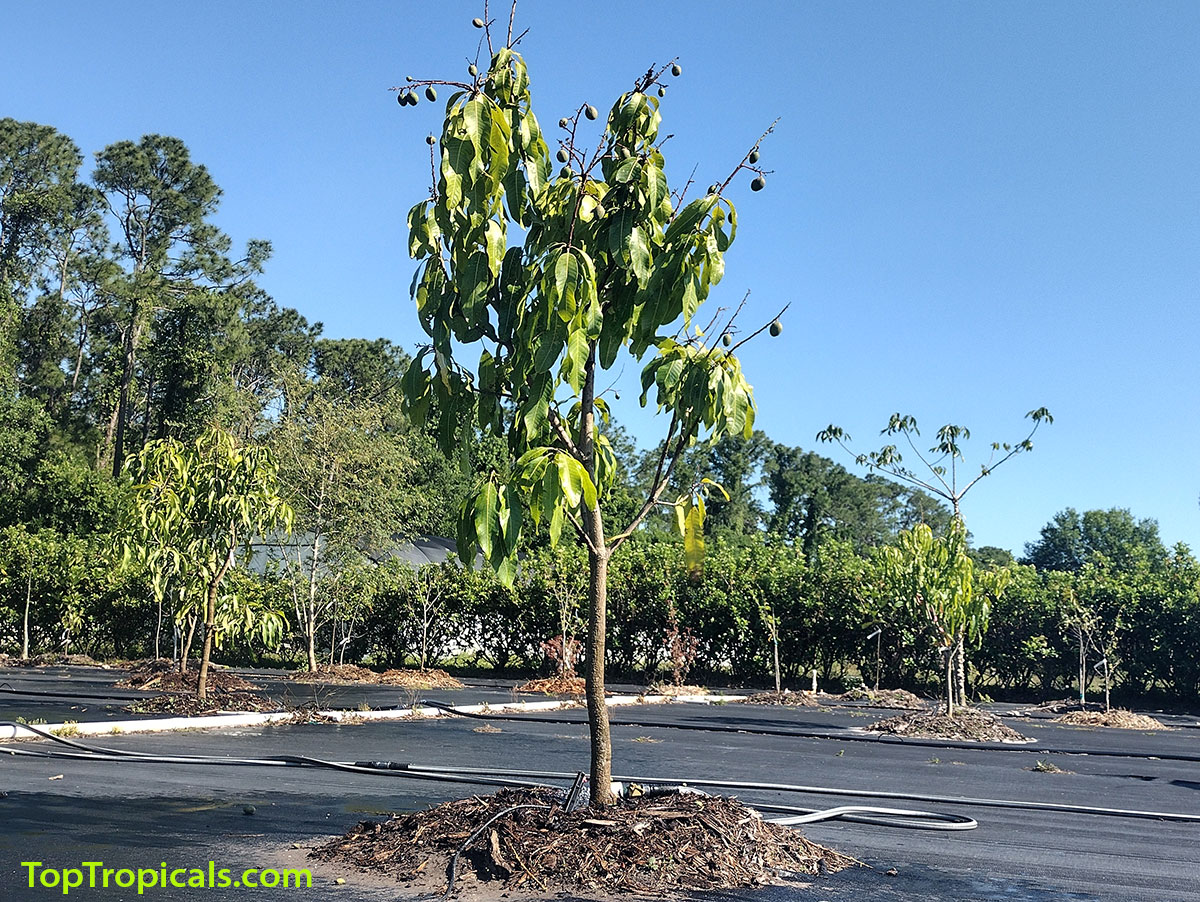
Q: I got a large mango tree from your garden center recently, planted in the ground, but noticed the corners of the leaves turning brown. It was full of little fruit when I planted it but now they are falling off... I wonder how much should I water the mango tree? We have lawn sprinkler system that runs daily, is this enough?
A: Generally speaking, never rely solely on your sprinkler system when planting a new tree, especially during the first week or even several weeks if you have no rain. By rain, we mean a nice downpour. Here in Florida, we usually have a hot and dry spring, and while springtime is great for starting new trees, additional hose-watering becomes essential for establishing them during the first months.
Dry leaves are a signal of under-watering. Make sure to hand water your mango tree every day for at least the first week after planting. Even if you have an individual sprinkler for the tree, ensure that the soil around the rootball receives enough water, not only around the trunk. Surprisingly, the bigger the tree, the more it may suffer from a lack of water, and sprinkler watering does not saturate the large root system, sometimes only reaching around the trunk. Big tree means lots of leaves and branches - they all get thirsty!
Mangos are pretty drought-tolerant trees, but only once established. They even benefit from hot, drier air (means less leaf fungus). However, young trees require regular irrigation until they start growing new leaves and branches.
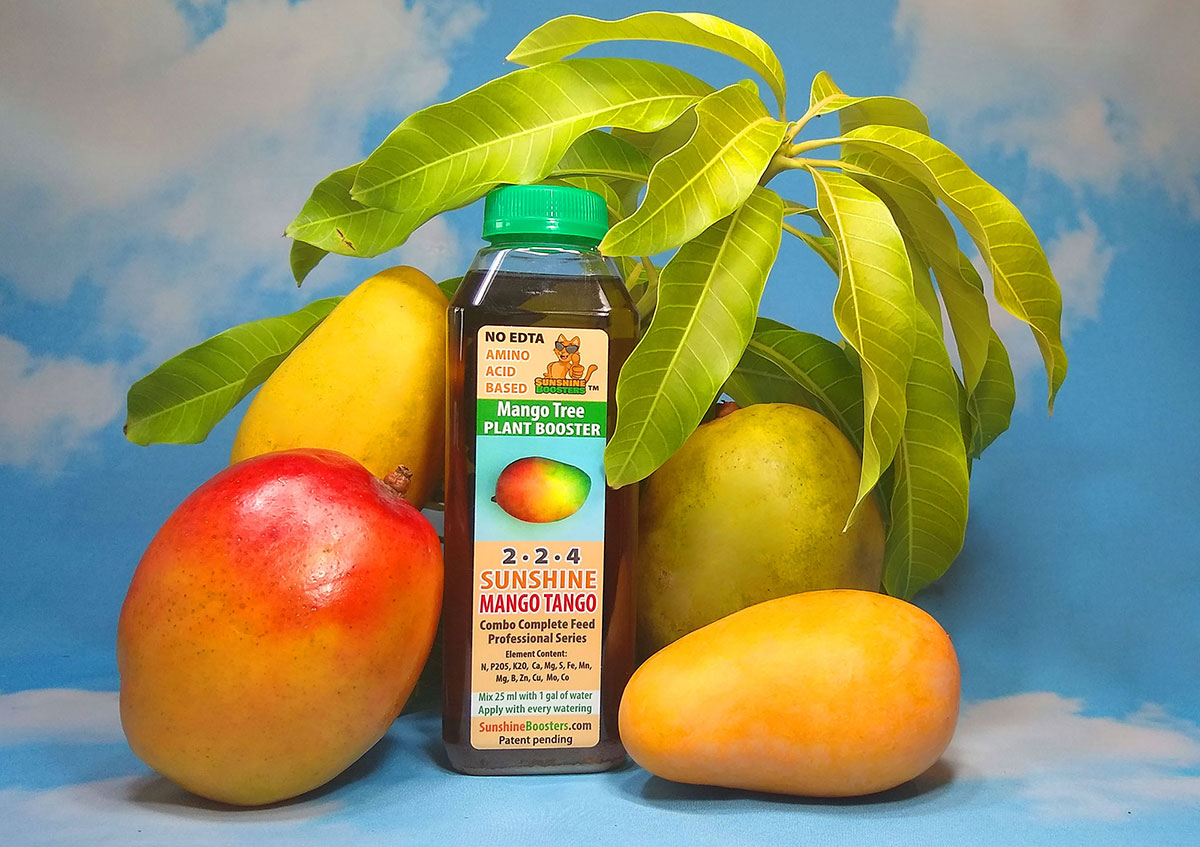
Note that fertilizing your Mango tree is especially important during the spring and summer seasons - the period of active growth. This ensures that the tree takes the best advantage of nutrients with a faster metabolism encouraged by high temperatures. Give your tree a chance to build up lots of energy for the cooler winter as well as for the next flowering and crop season. To ensure a strong tree and reliable crop with no fruit drop, apply Sunshine Mango Tango liquid fertilizer with every watering and watch your mango tree become a Champ!
Date: 17 Dec 2024
How to care for your mango tree in winter
Q: I bought a few mango trees from you this year, and they're doing great! So far, winter's been pretty mild here in Florida, but I know January and February can get chilly. Is there anything special I should do to keep my trees happy so I can enjoy fruit next year?
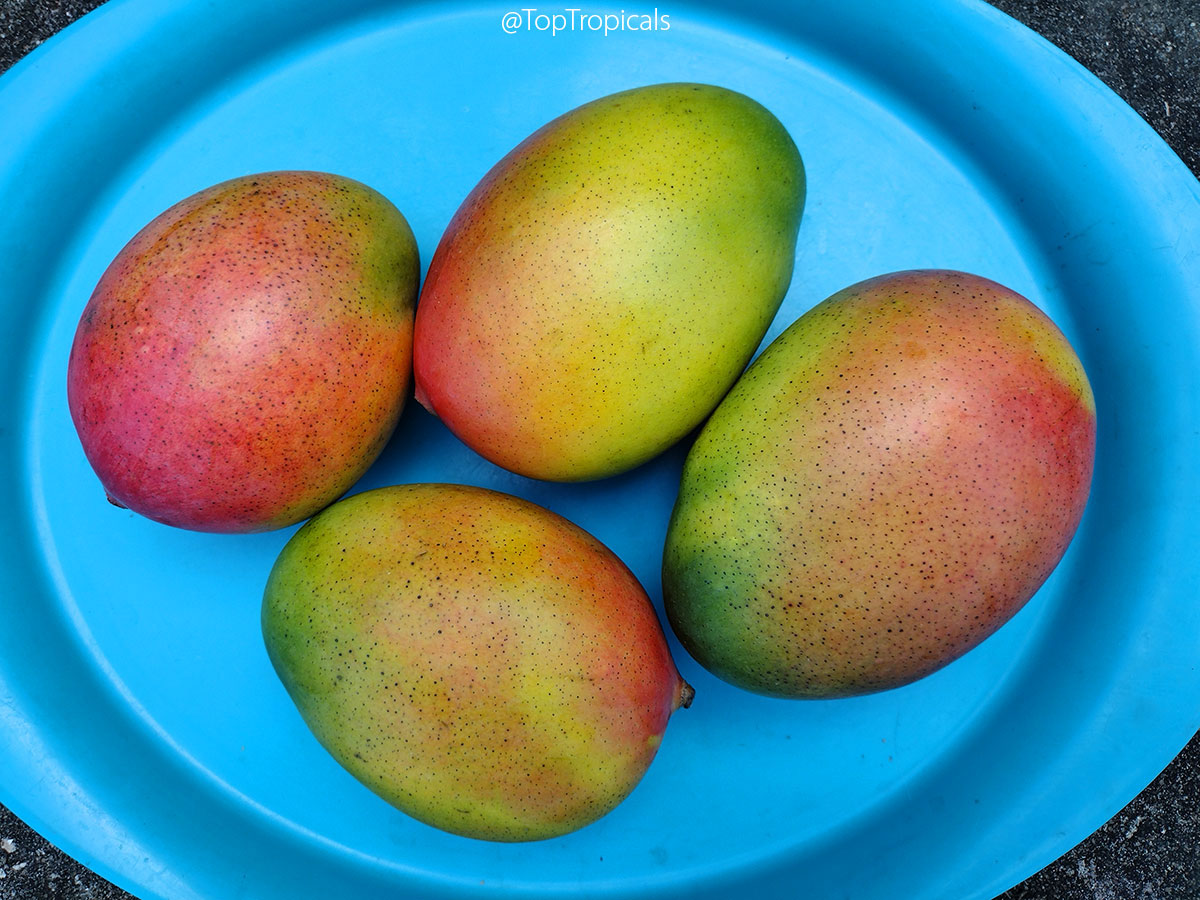
A: If you want to enjoy mangoes like ours (in the photo) next summer, protecting your tree in winter is a must! Give it the care it needs now, and you'll reap sweet rewards when the warm weather returns.
Keep it cozy and protected: Mango trees love warmth, so when winter comes, they need extra care to stay happy.
Temperature: Mango trees are sensitive to cold. If temperatures drop below 35F, cover the tree with frost cloth or burlap to protect it. For potted mango trees, move them indoors or to a greenhouse.
Watering: Reduce watering during winter. Mango trees don't like soggy roots in cold weather. Let the soil dry slightly between waterings.
Mulching: Add a thick layer of mulch around the base of the tree to insulate the roots and retain warmth. Keep the mulch a few inches away from the trunk.
No pruning: Avoid heavy pruning in winter, as it can stress the tree. Besides, pruning promotes young tender growth that may get cold damaged. Save major trimming for spring.
Feeding: Stop dry fertilizer in winter. The tree slows its growth, so too much dry fertilizer can do more harm than good. You can continue using Sunshine Boosters Mango Tango year-round because it is water-soluble and natural, and the amount of food needed will adjust with reduced watering.
Date: 8 Jan 2026
Is winter killing your mango flowers? 33 winter-proof mid-season mango varieties in 90-sec tour
33 winter-proof mid-season mango varieties
❄️ Is winter killing your mango flowers? 33 winter-proof mid-season mango varieties in 90-sec tour
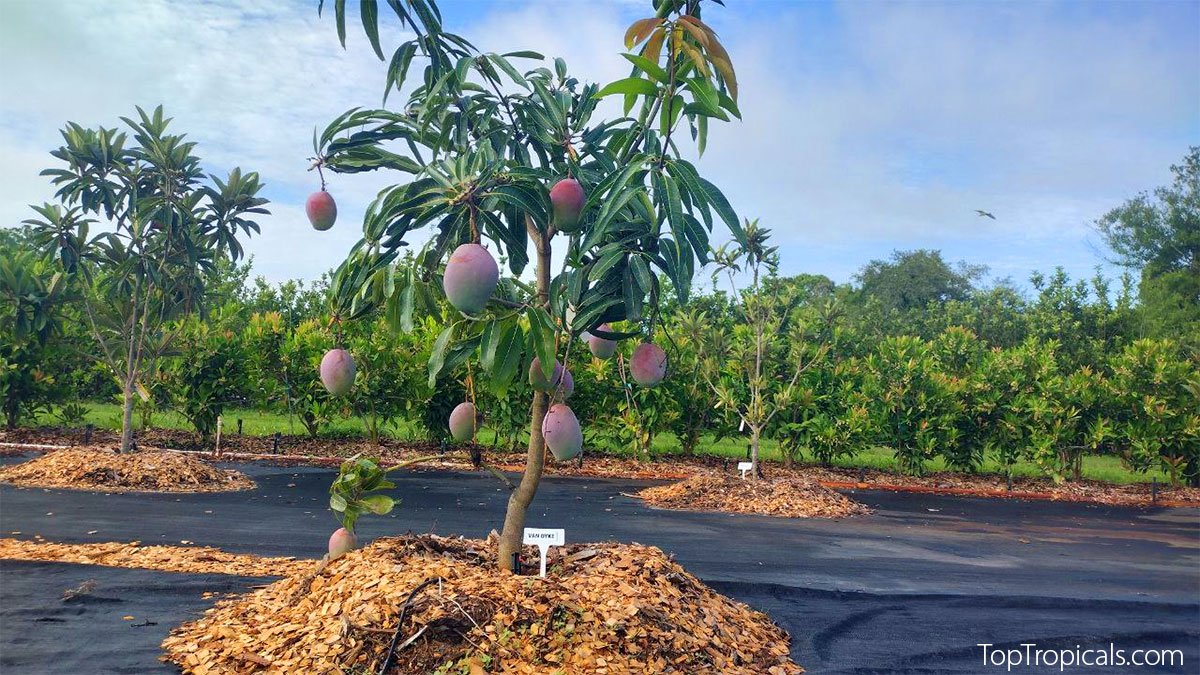
- 🥭 Mid-season mango varieties make up the heart of the mango harvest. They are not as early as the first winter bloomers and not as late as the extended-season types, but they fill out most of the season.
- 🥭 Mango trees are winter bloomers, but freezing temperatures can damage them, especially when the trees are still young.
- 🥭 Right now it is January, and many mid-season mango trees are in bloom or just starting to bloom. While a winter cold snap can damage flowers, mango trees are resilient and often re-bloom once warmer weather returns.
🥭 A list of winter-proof mid-season mango varieties in Top Tropicals garden - Winter 2026
Blooming time: late December - January, may re-bloom February-March
- · All Summer
- · Alphonso
- · Angie
- · Baptiste
- · Carrie
- · Cogshall
- · Creme Brulee
- · Cushman
- · East Indian
- · Edward
- · Florigon
- · Fralan
- · Fruit Cocktail
- · Fruit Punch
- · Gary
- · Glenn
- · Gold Nugget
- · Harvest Moon
- · Julie
- · Juliette
- · Lemon Zest
- · Madame Fransis
- · Maha Chinook
- · O-15 (OMG)
- · Pim Seng Mun
- · Pineapple Pleasure
- · Rapoza (Dwarf Hawaiian)
- · Super Julie
- · Suvarnarekha (Sundari)
- · Triplesec (Seacrest, 40-36)
- · Ugly Betty
- · Venus
- · Venus
- · Wise
🛒 Explore Mango varieties
📚 Learn more:
- · #Mango_Rainbow - varieties you should try
- · How to take care of a mango tree in winter
- · Mango winter tips
#Food_Forest #Mango #How_to
🟢 Join 👉 TopTropicals
Date: 17 May 2024
5 simple rules how to grow a fragrant Plumeria tree and make it bloom for you, just like on the pictures
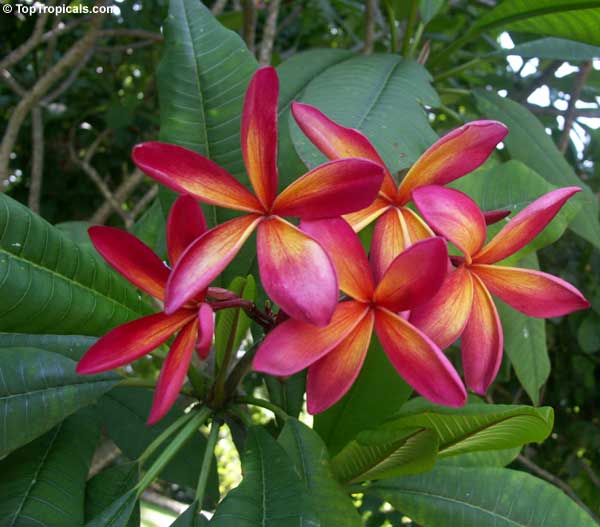
Plumeria, Frangipani red rainbow
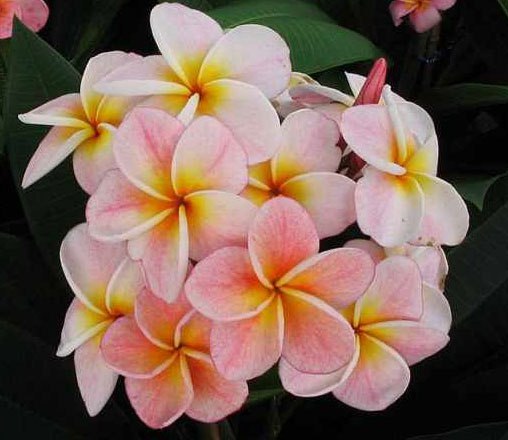
Plumeria, Frangipani pink rainbow
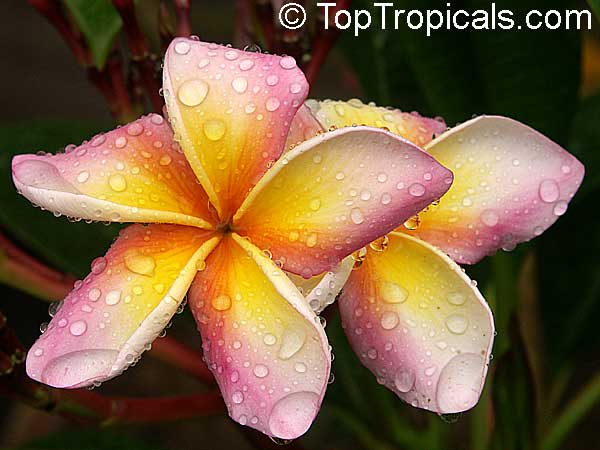
Plumeria, Frangipani rainbow
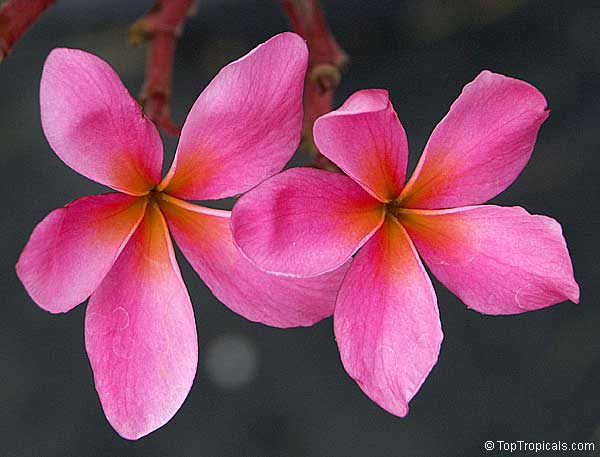
Plumeria, Frangipani dark pink
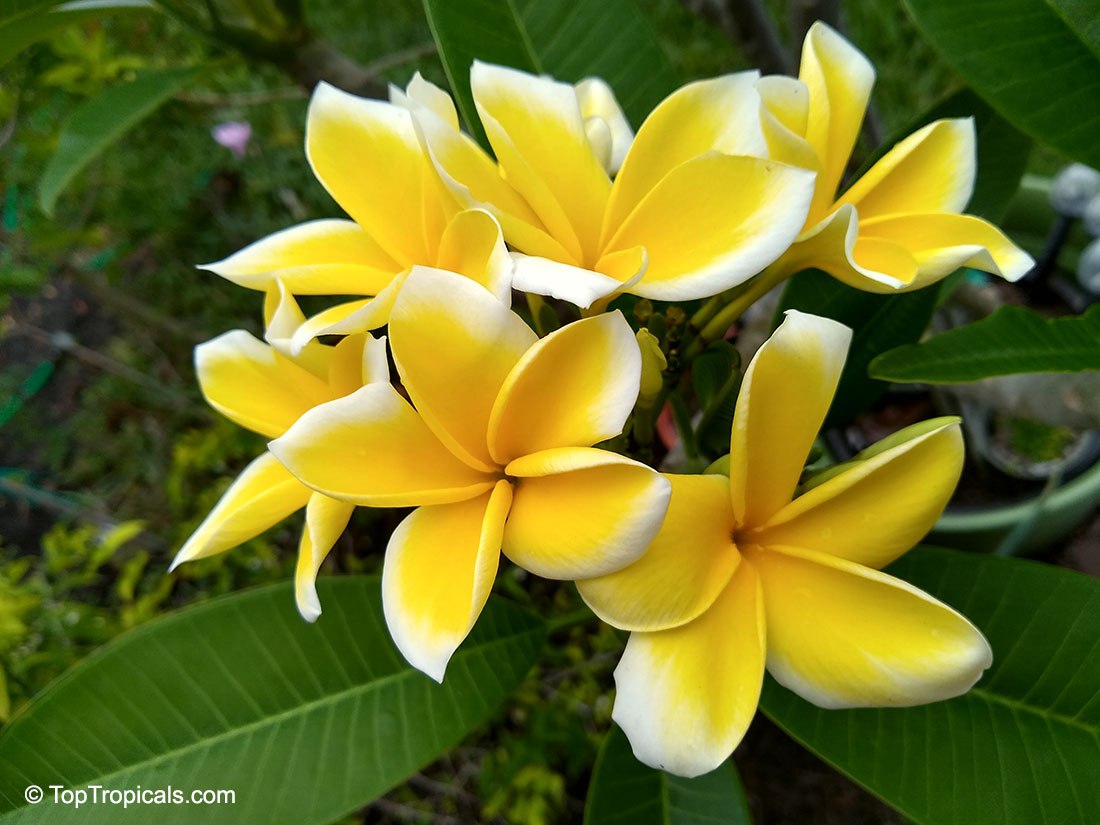
Plumeria, Frangipani yellow
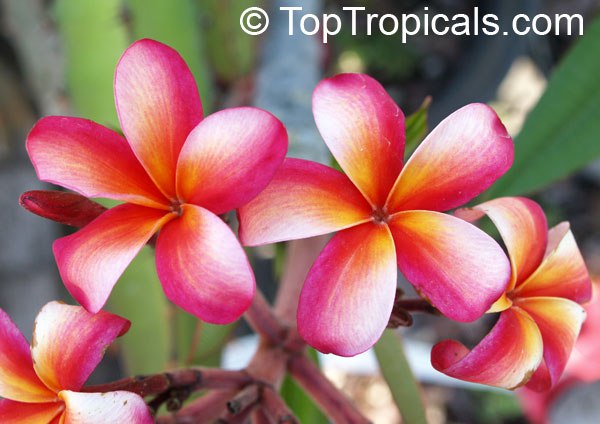
Plumeria, Frangipani red rainbow
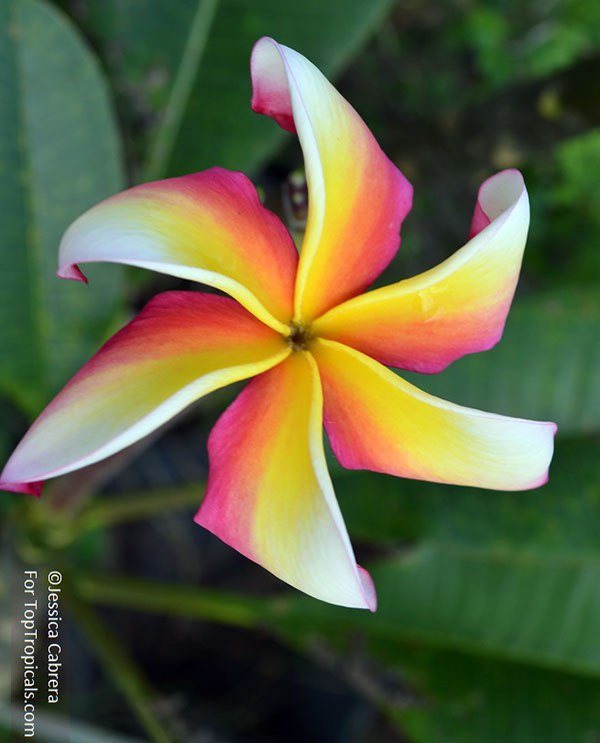
Plumeria, Frangipani rainbow
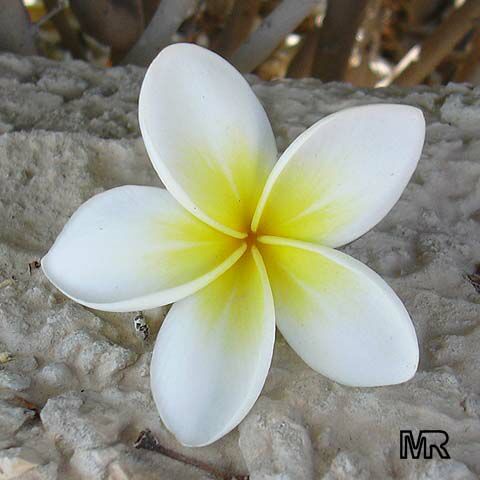
Plumeria, Frangipani white
- Soil must be well-drained: use potting mix with good amount of perlite, bark, and coconut fiber. We recommend Sunshine Abundance professional soil mix for best results.
- Container must be the size of the root ball and not much bigger, to avoid water-logging. Plumeria likes dry conditions. Water only when the soil gets slightly dry.
- Full sun is a must. If grown indoors, keep the plant in the brightest spot and take it outside for the sun bathing when possible.
- Dormancy in winter: this little tree drops leaves during winter. When it happens, reduce water to the minimum and let your Plumeria rest until it starts sprouting new leaves.
- Fertilize for the most profuse flowering with a plant food that is high in Phosphorus. Plumeria is a heavy feeder. We recommend Sunsine Megaflor Bloom Booster liquid fertilizer - it can be used with every watering and year around.
Enjoy the fragrant blooms!
🛒 Choose from fantastic colors of Plumeria
#Perfume_Plants #Container_Garden
🏵 TopTropicals
Date: 28 Sep 2025
Guava: The Healthiest Fruit You Can Grow
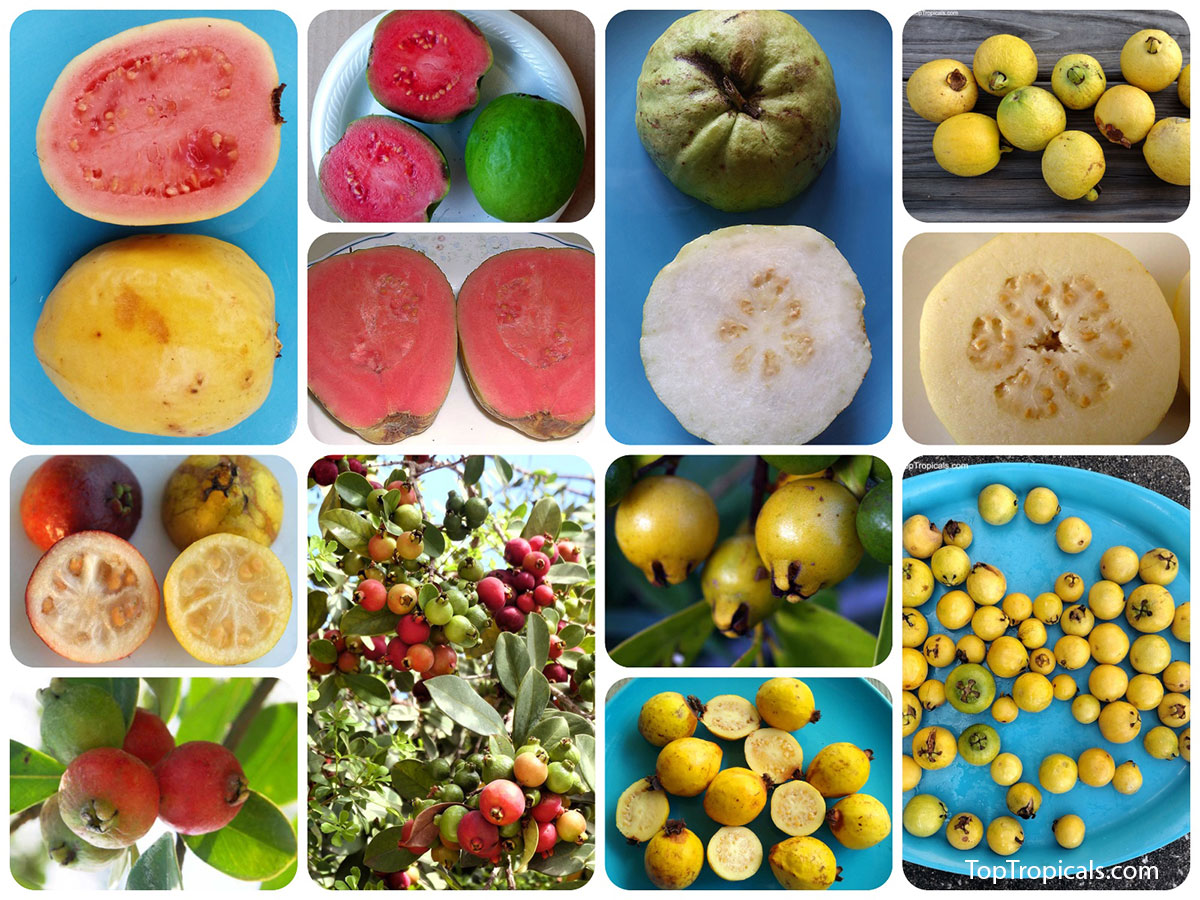
Guava varieties: Pink flesh (upper left quarter), White flesh and Cas (upper right quarter), Red Cattley Guava (bottom left quarter) and Golden Cattley (bottom right quarter).
Let’s talk Guava. Few fruits check as many boxes: flavor, productivity, health, and adaptability. We’ve grown guava trees at Top Tropicals for years here in Florida, and it never fails to surprise people with how easy it is — and how quickly it rewards you.
🌿 Health Benefits
We know the first question:"Why guava in addition to all the other fruit trees I could plant?"Because guava is one of the healthiest tropical fruits you can eat and grow — and it produces faster than almost anything else.
- Vitamin C powerhouse — guava has four times more vitamin C than oranges. One fruit covers your daily needs and then some.
- Potassium and fiber — good for balancing blood pressure and keeping your heart strong.
- Antioxidants like lycopene and vitamin C — these keep your skin glowing and help protect your cells from damage.
- Dietary fiber — aids digestion and helps keep blood sugar steady.
- Guava is a true"food as medicine"tree you can plant right in your backyard or in pot.
♥️ Our Favorite Varieties are Available Now
We currently have a DOZEN excellent guava varieties in stock selected by our plant expert Tatiana Anderson — something special for every garden. Our top picks are:
Pink Guavas
- Barbie Pink – Yellow pear-shaped fruit with thick pink flesh, sweet and juicy. Cold hardy for a tropical fruit. The best seller.
- Hong Kong – Large, round, smooth pink fruit. Sweet flavor, very few seeds, and very productive.
- Tikal – Our top pick. Fast-growing, disease-resistant, and produces the sweetest pink guavas with very few seeds.
White Guavas
- Indonesian White – Aromatic, classic white-fleshed guava with an excellent tropical flavor.
- Kilo White – Giant fruit up to 2 lbs (1 kilo) each! Few seeds, creamy white flesh, and fruits even in containers.
Compact/Dwarf
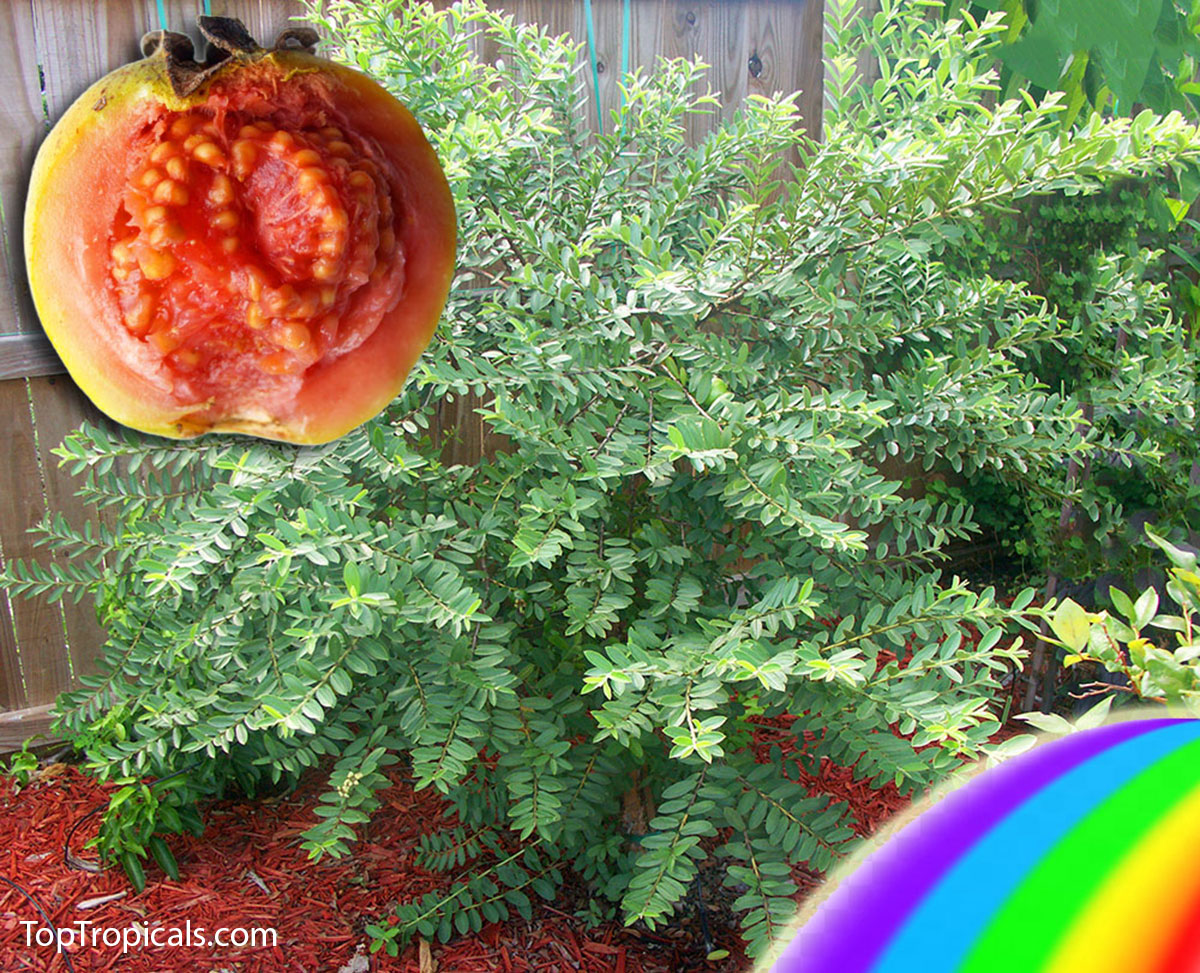
Dwarf Guava Hawaiian Rainbow
- Dwarf Hawaiian Rainbow – Stays under 6 ft, perfect for patios and pots, yet produces full-sized fruit.
Specialty Varieties
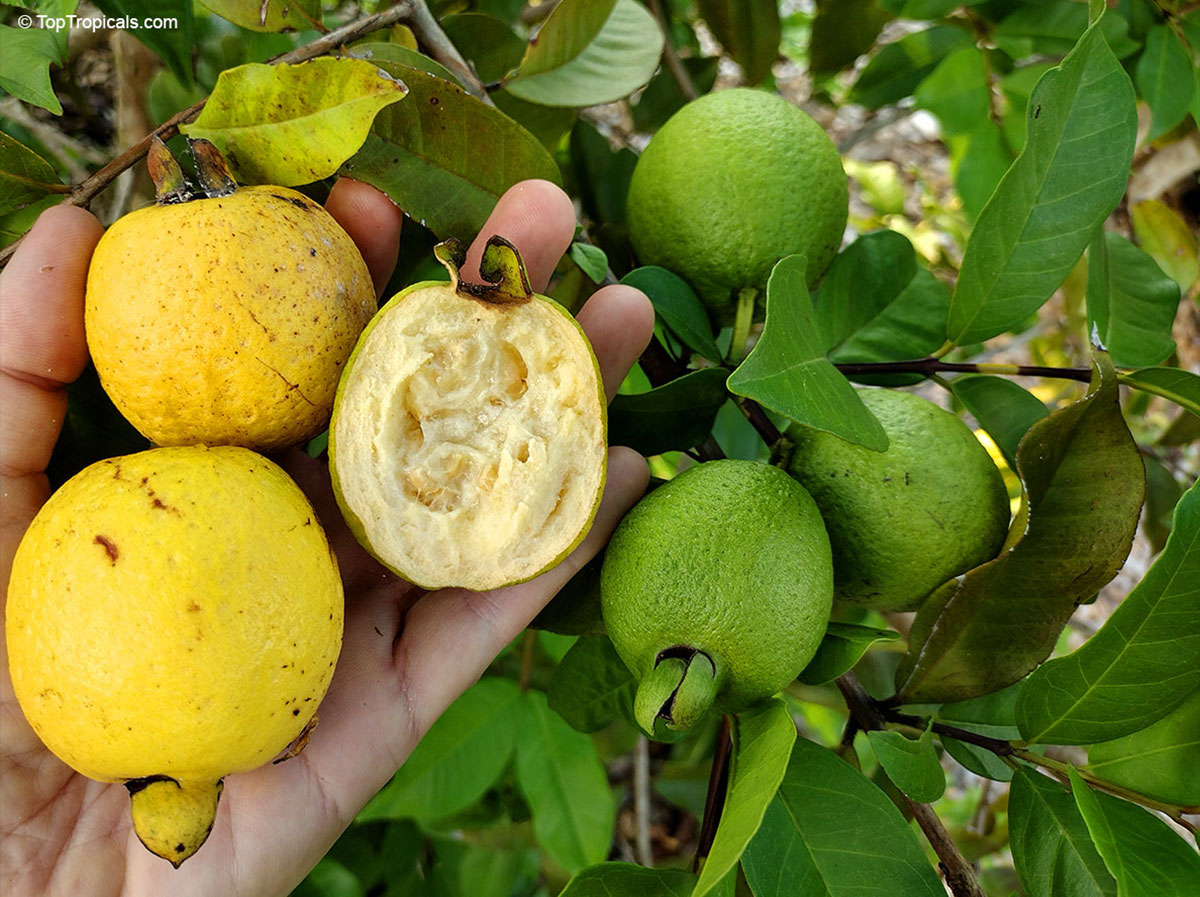
Cas Guava with zero sugar for Costa Rican Agua de Cas drink
- Cas Guava – Bold, tangy, almost zero sugar. The traditional Costa Rican Agua de Cas drink comes from this fruit. Cold hardy.
- Hawaiian Gold, Yellow Strawberry Guava – The sweetest Strawberry Guava, golden fruit, great for fresh eating and drinks.
- Brazilian Araca Pera – Rare hybrid used for Guava Wine in Brazil. Tart, concentrated juice makes excellent wine, sorbet, or jelly. Learn more...
- Pineapple Guava, Guavasteen – Feijoa sellowiana. Strongly perfumed fruit, best enjoyed when the pulp is mixed with sugar – like forest strawberries. Cold-hardy, tolerates freeze, and doubles as a great windbreak. Learn more...
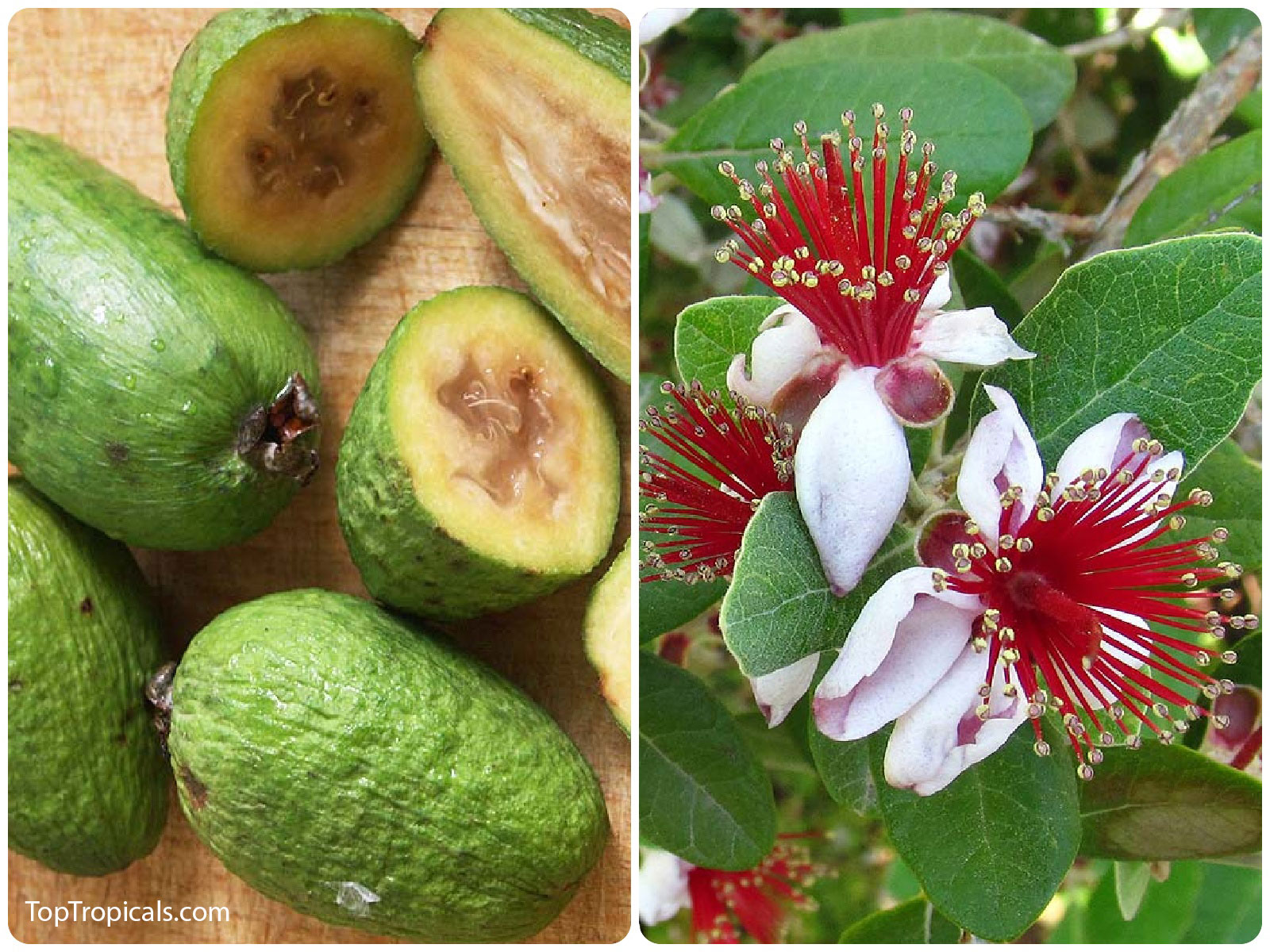
Pineapple Guava, Guavasteen – Feijoa sellowiana
Every one of these thrives here in Florida or in warm climate. Some are better in pots, some as landscape trees, but all produce generously.
🎥 Watch short videos about Guava:
💲 Special Offer – 20% off Guava Fruit Plants!
Get 20% OFF already discounted Guava plants with code
GUAVA2025
Min order $100. Excluding S/H, valid online only, cannot be combined with other offers.
Hurry, offer expires October 02, 2025!