Garden Blog - Top Tropicals

Date: 10 Jan 2026

How to grow Patchouli indoors

Patchouli - Pogostemon cablin

How to grow Patchouli indoors

Patchouli - Pogostemon cablin is easy to grow indoors if you give it what it likes. It is one of those plants that does double duty - it looks great and makes your home smell amazing. Those big, soft leaves release that deep, earthy scent just by being there.

☘️ Light and temperature


Patchouli loves bright shade. Think filtered light near a window, not harsh direct sun. Too much sun can burn the leaves, especially indoors. In lower light, it still grows well and keeps its fragrance. It is a tropical herb, so keep in warm - at room temperature.

☘️ Water and soil


This plant loves water. Use a well-draining soil mix and a pot with drainage holes, but do not let it dry out. Daily watering is usually fine in warm conditions. Good air circulation is important.
Growing patchouli is similar to growing herbs in containers - just be more generous with water than you would be with basil or oregano.

☘️ Containers and growth


Patchouli grows fast. Start in a 1-gallon pot, but plan to move it up to a 3-gallon container fairly quickly. More room means bigger leaves and a stronger scent.

☘️ Feeding


Feed regularly. You can use Sunshine Boosters Robusta with every watering, or apply Green Magic controlled-release fertilizer every 6 months and at each transplant. Patchouli responds quickly to feeding with lush growth.

☘️ Pruning and uses


Prune as the plant gets bigger to keep it full and bushy. Do not throw the leaves away - dry them for sachets or use fresh/dry leaves for tea.

☘️ Propagation


Patchouli roots very easily from cuttings. Snip a healthy stem, place it in water or moist soil, and it will root fast. It is one of the easiest plants to share with friends.

If you want a plant that grows fast, smells incredible, and actually does something useful indoors, patchouli is hard to beat.

🛒 Grow calming Patchouli Scent at home

📚 Learn more:

Patchouli Plant Facts

Botanical name: Pogostemon cablin, Pogostemon patchouli, Pogostemon heyneanous
Also known as: Patchouli, Pucha-pat
USDA Zone: 9 - 11
Highligths Groundcover and low-growing 2ft plantSmall plant 2-5 ftSemi-shadeFull sunWatering: Moderate. Water when top soil feels dryWatering: Regular. Let topsoil dry slightlyOrnamental foliageSpice or herb plantEthnomedical plant.
Plants marked as ethnomedical and/or described as medicinal, are not offered as medicine but rather as ornamentals or plant collectibles.
Ethnomedical statements / products have not been evaluated by the FDA and are not intended to diagnose, treat, cure, or prevent any disease. We urge all customers to consult a physician before using any supplements, herbals or medicines advertised here or elsewhere.Fragrant plant
Get personalized tips for your region

Patchouli - Pogostemon cablin in Plant Encyclopedia
Health Benefits of Pogostemon cablin (Patchouli, Pucha-Pat)
Patchouli: more than just a pretty scent
Archeologists found Patchouli perfume from Ancient Rome
Patchouli tea recipe

#Perfume_Plants #Remedies #Food_Forest #How_to

🟢 Join 👉 TopTropicals
Date: 22 Oct 2025

Which dry fertilizer to use - slow release or controlled release?

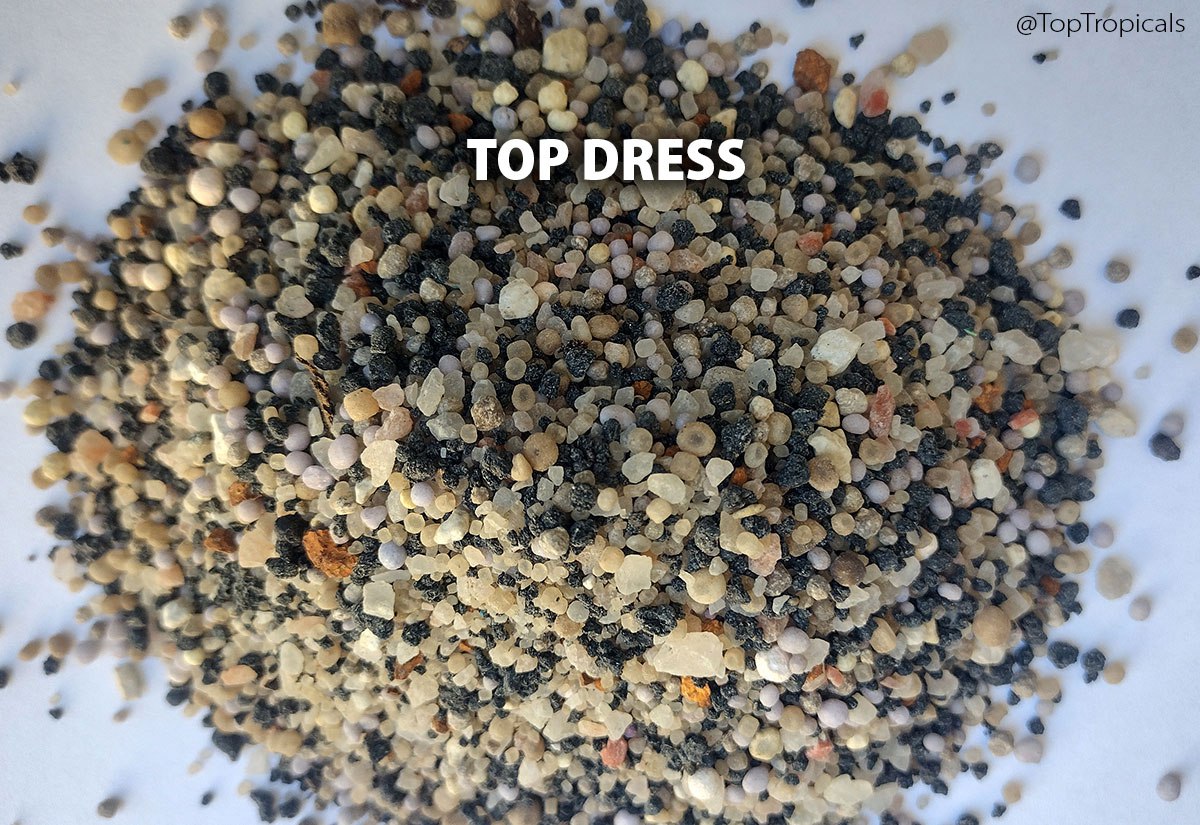
dry top dress fertilizer

dry top dress fertilizer

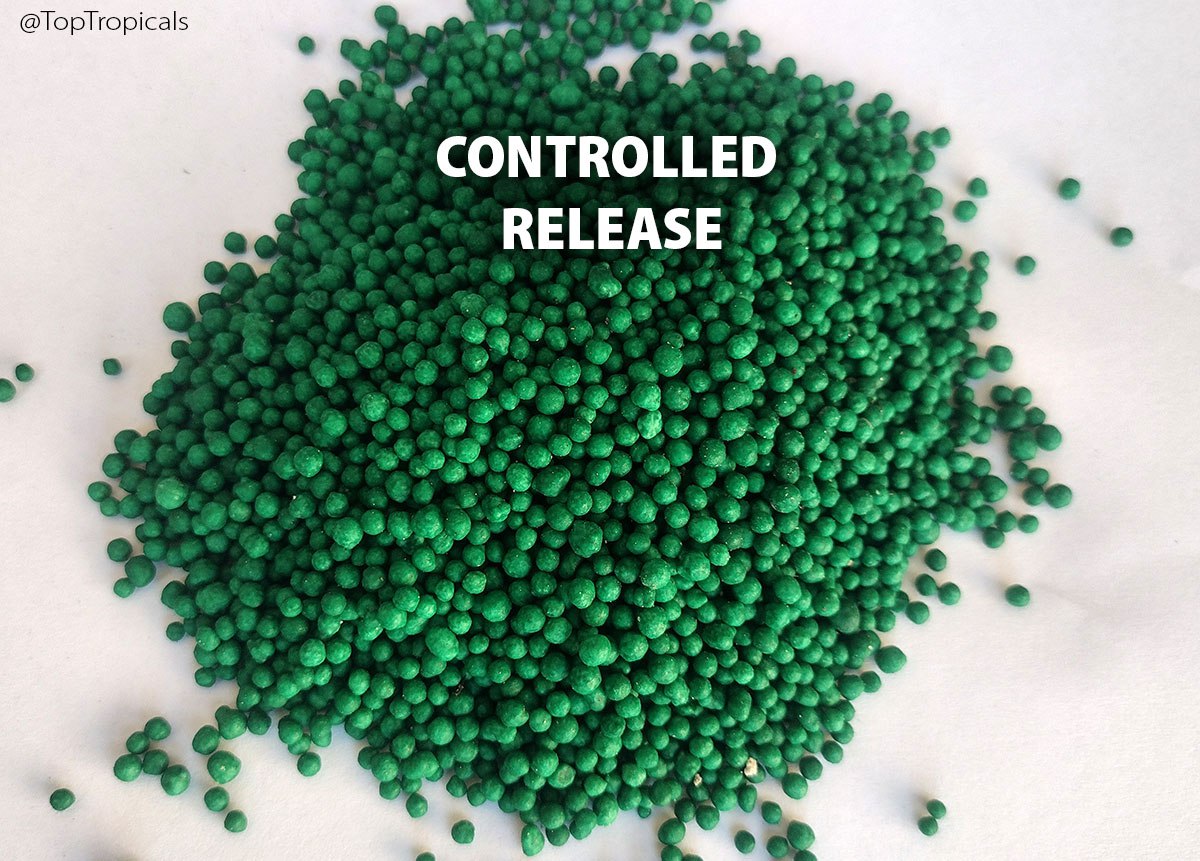
controlled release fertilizer Green Magic

controlled release fertilizer Green Magic

🌳 Which dry fertilizer to use - slow release or controlled release?


Q: You offer two kinds of dry fertilizers - Slow Release Trop Dress and Controlled Release Green Magic. What is the difference, and which one should I use? I used your water-diluted Sunshine Boosters with every watering, but now that I’ll be away for a few months, I just want to give my garden a long-lasting fertilizer.

✔️ A: Top Dress Slow Release Fertilizer is used for quick greening-up. Although it’s called “slow release,” the nutrients become available fairly fast. It contains soluble nitrogen (N), phosphorus (P), and potassium (K) that dissolve with rain or irrigation, acting within a week or a few weeks depending on temperature and rainfall. It’s great for giving your plants a quick boost of “fast food.”
We use Top Dress mainly for in-ground plants. It can be used in pots only during warm weather and active growth, but not in cooler months, as it may burn roots. Since we introduced Green Magic, we mostly use Top Dress only for garden beds and landscapes.

✔️ Green Magic Controlled Release Fertilizer is a true long-term, controlled-release fertilizer. Thanks to its PolyOn Technology coating, it provides steady, consistent feeding for 5-6 months. Unlike regular dry fertilizers that dump all nutrients at once, Green Magic releases them gradually - no burn, no guesswork, just steady nutrition.
Green Magic ideal for potted fruit trees, ornamentals, and houseplants. One handful keeps your plants fed for half a year. We use it for all container plants when potting up or refreshing soil every six months. It can also be used for in-ground plants if you want the best, most consistent results. Green Magic: try it out! (Sample here)

🛒 Shop Plant Food & More

📚 Learn more:


Green Magic effect: before and after
The SECRET growers never tell you: simple trick how to bring plants back to life and keep green
Give your plants their magic treat
How to make plants green quickly: Green Magic - the fertilizer that truly works like magic!
How to to make leaves green
What Fertilizer to Use Now and How? Part 1, Part 2, Part 3
Why my plant turned yellow and why plants need Micronutrients?
Why Should I Use Sunshine Boosters
Why is my palm tree turning yellow?
Which fertilizer to use: Organic or Inorganic?
How to make plants green
The Truth about fertilizers

#Fertilizers #How_to

🟢 Join 👉 TopTropicals

Date: 24 Jun 2018

Cold hardy tropical fruit trees for Luisiana

Q: I've just moved to Louisiana and have been wondering whether it would make sense to plant some tropical fruit trees in our garden. Average lows in New Orleans are 41 deg F in January and February, although we did hit 25 once with the Arctic vortex. I'm interested in litchi, longan, rambutans, and persimmons. Do you have varieties that can tolerate Louisiana's temperature range? I'd love mangosteen but I don't suppose they will survive. Do you have any suggestions on tropical fruit trees that I could try?

A: Average temperatures are for statistics only; it is actual temperatures that may hurt your cold sensitive plant. This is what you should keep in mind when starting your tropical fruit collection:
1) Ultra-tropical plants like Rambutan can not survive winters below 45-50F. However, they can be successfully grown in containers in a greenhouse or moved indoors into a sun room during cold periods.
2) Tropical plants like Litchi and Longan may take some light frost once established. Still, for areas with freeze our advice is - keep them in pots and move inside in case of cold.
3) There is a number of subtropical fruit trees that are hardy enough to take some freeze. Persimmon, Feijoa, Fig, Cattley Guava, Jujube, Kiwi, some Eugenias and others. Please refer to our Tropical Fruit Sensitivity Chart.
4) Remember that plant's ability to survive winter depends on several factors, not only temperature itself. Important factors are: wind protection (chill wind kills rather than low temperature itself), exposure, how close the tree is planted to the house, plant maturity and its overall strength and health. If a plant had received good nutrients during summer, has well established root system, planted in enclosed area protected from winds and has plenty of bright sunlight - it has better chances to survive than a weak plant in warmer conditions.
5) Use SUNSHINE plant boosters for improving cold tolerance of your tropical plant. It only takes a few drops, and only costs $5!

Date: 18 Jan 2017

10 plants that can make you happy.
3D garden ideas.

3D garden ideas.
Q:
Can you make my yard bigger and prevent it from freezing?

A: Yes, we can make your backyard bigger by adding a 3rd dimension - trees as a upper level, shrubs as a second level, vines in between, low growing perennials below them. Add ground covers and potted plants as separate specimens in between in-ground planted trees and shrubs. One more separate dimension is orchids and other epiphytes that happily grow on the trees. This multi-level structure will allow you not only collect so many plants, but also maintain them in a natural environment, similar to how they grow in a wild.

As far as preventing from freezing - it depends. You can use greenhouse, cover plants, create microclimate under large canopies, etc. Some tropical plants are tolerant to light frost, once established. If it gets below freezing in your area for more than a few hours, and especially if you have numerous nights with frost throughout winter, we recommend to keep plants in pots (BTW, this way you save space and can collect even more!). Pots can be moved to protected area during cold nights. The more established the tree, the more chances to survive colder temperatures. You may also use propane heaters during cold nights.
We also use plant booster SUNSHINE boosters to increase plants cold tolerance.
Cold protection is a lengthy subject. Here is some more information on cold protection. Also, we recommend to check out our magazine Tropical Treasures (about pushing the limits of tropical gardening) for a detailed article on cold protection.
These are specific articles on Zone-Pushing in different issue #s regarding dealing with cold. See downloadable issues:
(#1) Growing Tropicals in Nontropical Climate, Three Freezing Nights in Southwest Florida
(#2) Temperature drops - an alert or a rehearsal?
(#5) Dealing with cold snaps, Cold hardy beauties
(#7) When winter is around the corner, Growing exotic Cordyline in colder climate
(#8) When the weather outside is frightful
(#9) Winter champions
(#11) Ready-for-winter checklist for in-ground plants
(#13) Winter checklist
(#18) Dealing with cold damaged plants
You may also order hard copies.
If temperatures drop below freezing in your area, remember to add Heat Pack to your order!


10 plants that will make you happy.

Everyone wants to be happy. Did you know that growing plants is not only fun but can also make you happy? In our new series we will introduce to you 10 plants for your tropical collection that will make you happy.
Visit our Facebook, YouTube Channel and stay happy!

Check out this video: 10 plants that will make you happy. Plant # 1 - Rose Apple.

Stay updated with TopTropicals Videos by subscribing to our channel at YouTube.com/TopTropicals and get our latest video news of what's fruiting and blooming!

Date: 6 Jan 2017

6 easiest fruit trees and 5 spices to grow in containers indoors

Q: This is why I want to move so that I can grow absolutely anything I want from your catalogue. Prefered Puerto Rico. Right now I live in New York and there is absolutely nothing I can grow there.

A: Of course living in Puerto Rico brings more opportunities to grow tropical species. However, you can create your unique tropical paradise even living in New York. We have many customers from up North who successfully grow tropical species (and get them to flower and fruit) in greenhouses, and even indoors.
Here are a few suggestions of tropical fruit trees that adapt well for container/indoor culture - for both beginners and advanced gardeners.

Top 6 fruit trees great for indoors / container culture / beginners
1. Mango (Mangifera indica). Select from one of smaller mango varieties
2. Sugar Apple (Annona squamosa)
3. Guanabana, Soursop (Annona muricata)
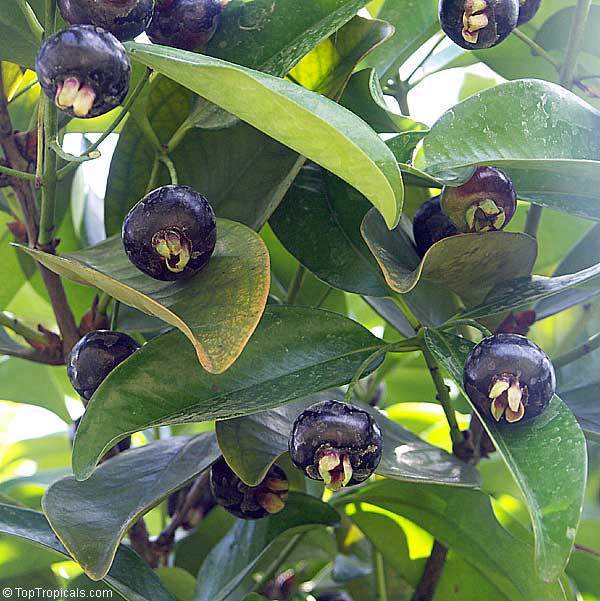
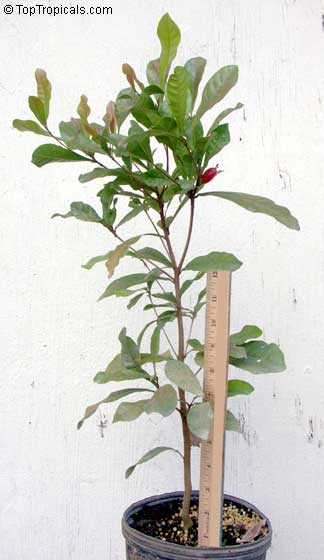
4. Miracle Fruit (Synsepalum dulcificum)
5. June Plum (Spondias cytherea)
6. Guava (Psidium guajava)

5 top spice plants (the spice will be with you right away, you don't have to wait for it to grow)
1. Allspice (Pimenta dioica)
2. Cinnamomon or Campor tree
3. Bay Leaf (Laurus nobilis)
4. Mint Tree (Satureja vimenea)
5. Vanilla orchid (Vanilla planifolia)

See a brief article of growing tropicals outside of tropics.

Don't forget to get some SUNSHINE boosters for your plant collection - for both successful indoor culture and cold protection!

See also our magazine Tropical Treasures) - Pushing the Limits of Tropical Gardening, with list of issues.