Date: 29 Jul 2018
Fragrant garden
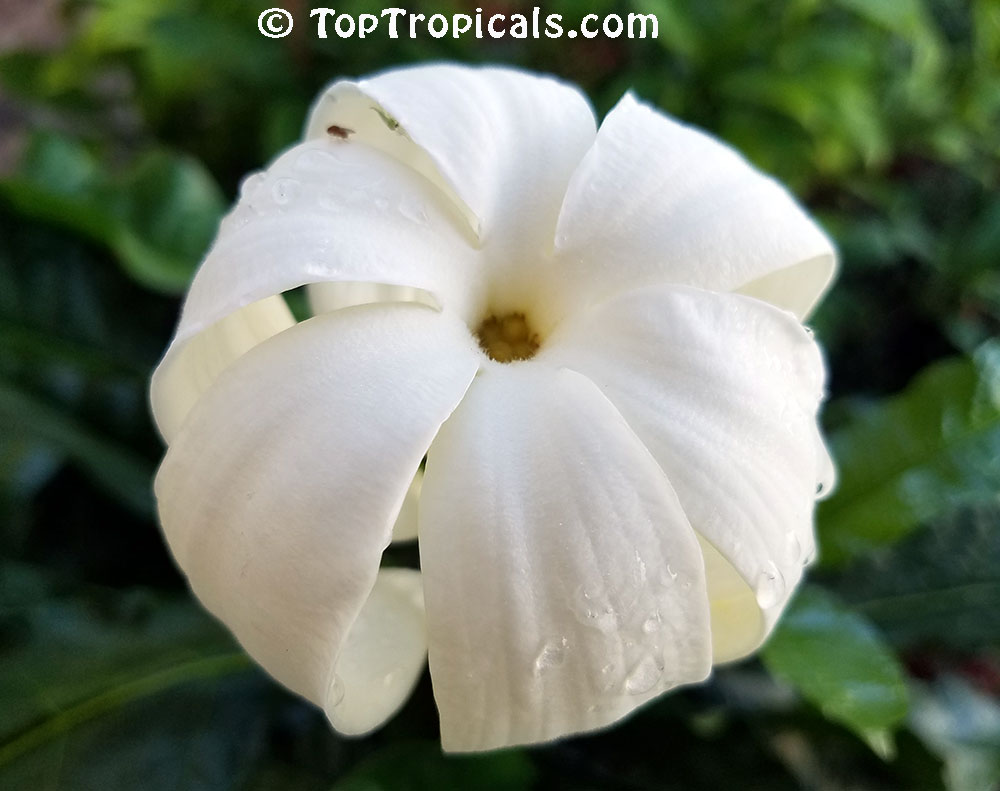
Q: I love fragrant plants and I want to make a fragrant garden. Your website offers amazing selection. A friend of mine told me I should be careful with planting fragrant plants next to each other, and that mix of fragrances may create a funny combination. Are there any flowers that don't go together?
A: Flower scents, unlike perfumes, are pure natural and not as intoxicating to create funny combinations. Although some of them can be strong and even overwhelming. Example - Night Blooming Jasmine, Cestrum nocturnum, which fragrance at night is super-sweet; however most people like it. Reality is, even Night Blooming Jasmine planted next to Gardenia won't create a bad mixture, although one scent may somewhat take over another. In any case, with wind blowing in your garden, you will never be disappointed with fragrant garden. Some plants, like Ylang Ylang - Cananga odorata, or Magnolia champaca, create very fine fragrance that can be smelled yards away, other flowers you will need to stick your nose into.
Check out plants for fragrant garden
Date: 24 Jun 2018
The Enchanting Datura
New article by
Jane Jordan
"...Commonly known as the Devils trumpet, Datura has long
been associated with witchcraft and voodoo rituals.
Ideally suited for moon or night gardens, the blooms are
fragrant and particularly so at night..." Continue reading...
5 important
tips for successful growing Datura and
Brugmansia;
1. Full sun
2. Use fertile soil that must be vewry well-drained. Plant
in elevation
3. Ample water encourages fast growth, but never allow wet
feet!
4. Fertilize heavily during hot season
5. Propagate Brugmansia with semi-woody cuttings, Datura -
with seeds that have a long shelf live
Buy Datura and Brugmansia
Date: 24 Jun 2018
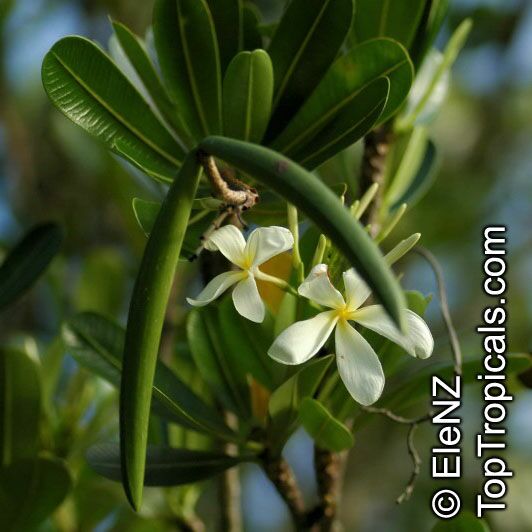
Tip of the day: Growing Plumeria from seed
Q: I purchased a Plumeria from your company. It has done quite nicely and now has produced a seed pod. Please forward me information on how to care for it and use the seeds that may be inside to propagate another plant.
A: Wait until seeds are ripe (seed pod turns brownish). Soak seeds overnight. Use only well drained soil, or cactus mix. Insert heavy end of seed 1/4"into soil, leaving feathered end exposed. Place the pot in direct sunlight. Don't allow soil to completely dry out, but don't let it be soggy. Germination occurs usually within 3 weeks. Do not overwater. For more information on growing Plumerias, see our slideshow guide:
Date: 24 Jun 2018
How to keep your plants green
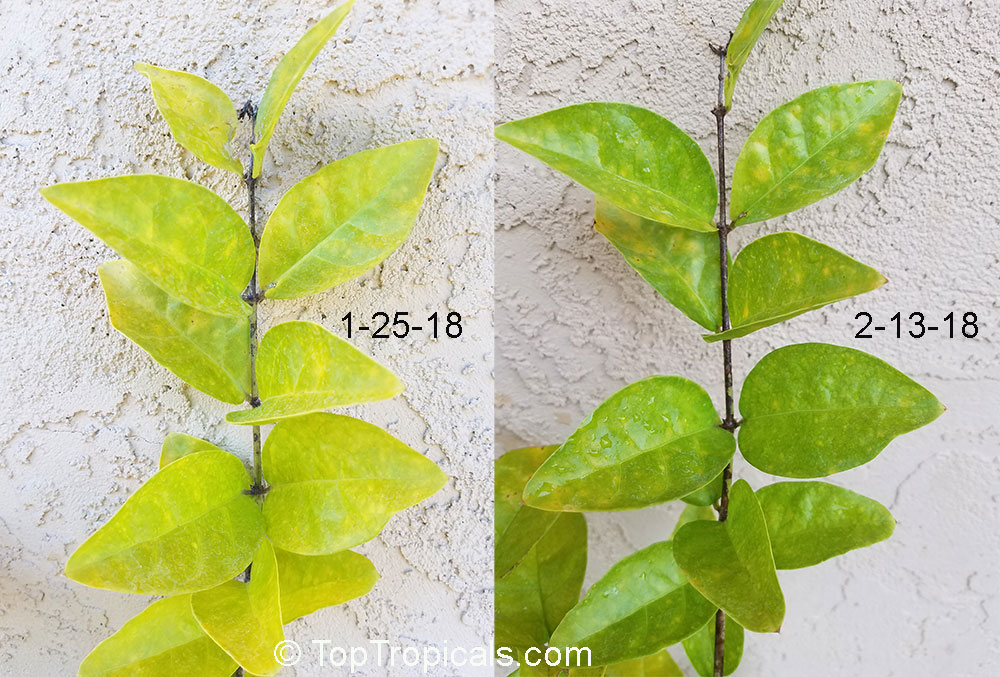
We continue experimenting with a new plant health booster SUNSHINE SuperFood. Couple weeks ago we grabbed a very sad looking jasmine with completely yellow leaves... It suffered from winter cool night temperatures plus some overwatering that caused weak roots and due to that - a number of deficiencies. The plant looked pretty hopeless as far as turning yellow leaves back to green. The best bet to revive it was to cut it short, remove old leaves and wait for new healthy growth... but we decided to try SuperFood. And it worked! Since the plant was almost hopeless, we put it in a far corner and forgot about it. Imagine the surprise when we looked again and it was green! See full plant photo of this jasmine.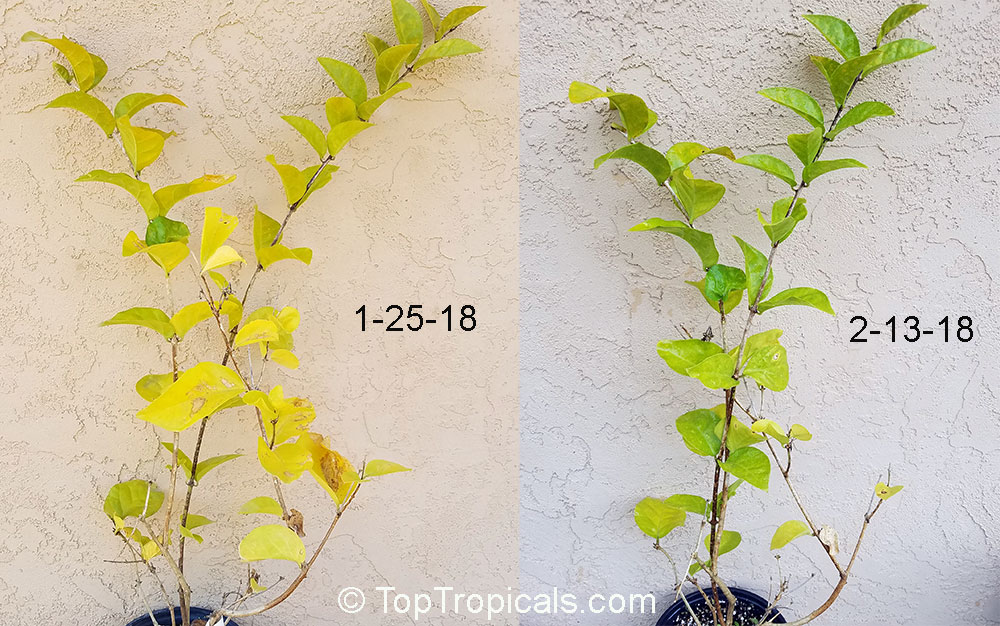
Try SUNSHINE SuperFood on sick
looking plants, especially with yellowing and/or deformed
leaves. There are no miracles, but this one works a like a
Miracle! All you need is a few drops of SUNSHINE SuperFood - item 6000!
Read more about SUNSHINE
SuperFood...
Buy 5-ml bottle for only $4.95

Date: 9 May 2017
Secrets of flowering of Jasmine Sambac
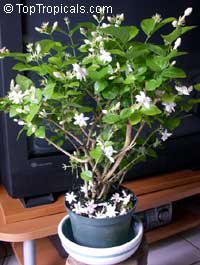
Q: Q: My Jasmine sambac Maid of Orleans is growing very fast and produced lots of branches and dark green leaves, when will I see flowers? I only saw 2 or 3 flowers since since Spring. I is planted by East wall of the house. Should I use some special fertilizer perhaps?
A: Jasmine sambac is a tropical bush or vine that enjoys hot summers. Since it
tolerates wide range of light conditions, it can be grown both in shade or sun; this is why it is highly recommended for indoor
culture where light level is limited. Remember though that profuse blooming directly depends on the light level. Your Eastern
exposure location may not be providing enough light for the flowering. Dark green leaves are also a sign of a filtered light
sitution. Extra fertilizing may not help to induce flowering if the light is low, although it is always beneficial for a plant
(it may just start producing even more leaves and branches). The ideal conditions for Sambac's flowering are - full sun all
day long, high temperatures (upper 80's-90's, even over 100F is fine), and very good drainage. Some gardeners call Jasmine
sambac "almost a succulent", referring to its low watering needs. To be exact, this plant requires regular watering, but will
produce lots of flowers only providing perfect drainage. You may never see flowers if the plant has wet feet or water-logging
occurs. If your summers are rainy (like in Florida), make sure your jasmine is planted with at least 4-5"elevation and not in a
low/wet spot.
See Top Tropicals Video about jasmine Sambac: