😂 Cut it open, scoop out the seeds (they're not part of the fun), peel off the skin, and chop it up. Now enjoy the tropical sweetness – no passport required!
🎥 Or, if you are desperate and have no time for prep – do it like Cash in the video!
Winter can be tough on plants, especially on tropical varieties. But with a little preparation, you can protect your garden and keep your plants safe from the cold. Here's how:
Winter Care Tips for Tropical Plants
Cut watering: Reduce watering to prevent root rot. Cold + wet = dead roots.
Water before frost: Thirsty plants are more vulnerable. Water them before a cold night to prevent damage.
Wind protection: Wind is more harmful than temperature drops. Plant near structures like houses or trees for shelter.
Prepare for long cold periods: If cold weather lasts for hours, use all available protection, including Christmas lights and propane heaters.
Don't use dry fertilizer in winter: Heavy fertilizing encourages tender growth, which is more susceptible to cold damage. Sunshine Boosters liquid fertilizers are safe to use year around as their intake is controlled by reduced watering. Use fabric covers, not plastic: Plastic can cook plants in the sun, while fabric allows better ventilation.
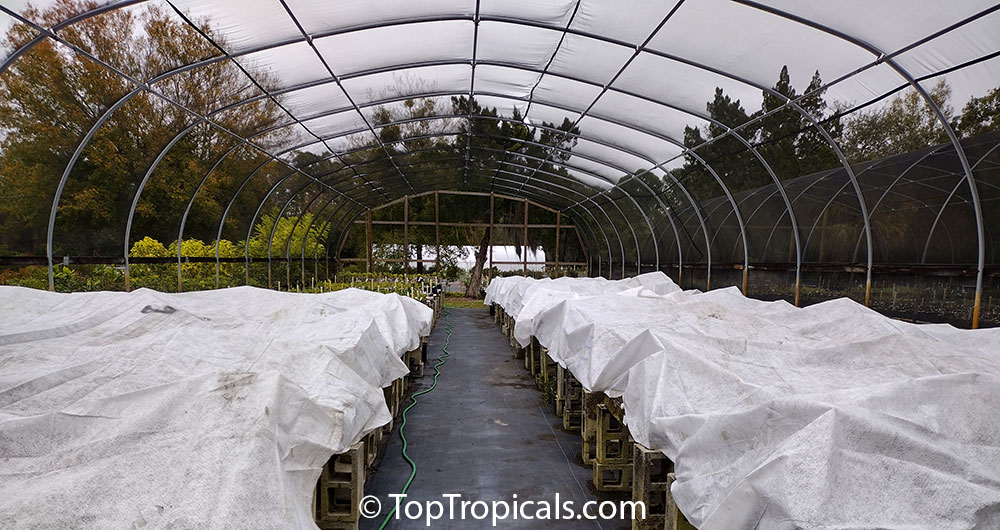
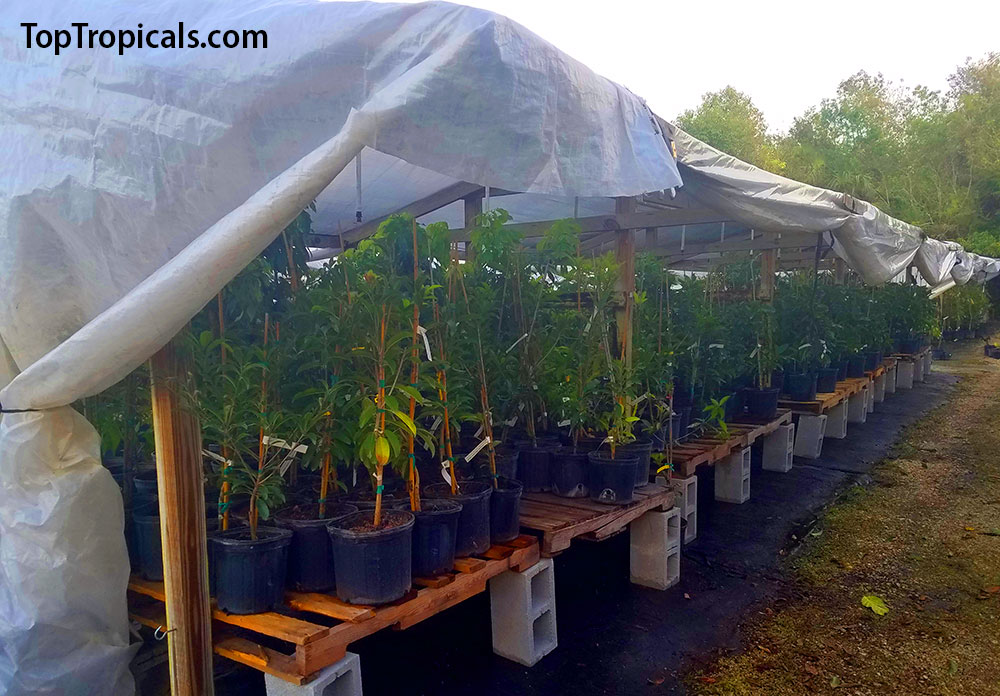
Photo above: we cover our plants in the nursery with a thin synthetic fabric (sintepon) called "frost cloth" or "strawberry cloth". It is light, breathable and allows light and water to go through unlike plastic that creates heavy water pockets.
Prepare for Cold Nights
Wrap plants: On cold nights, cover individual plants or trees with sheets or blankets to shield them from wind chill.
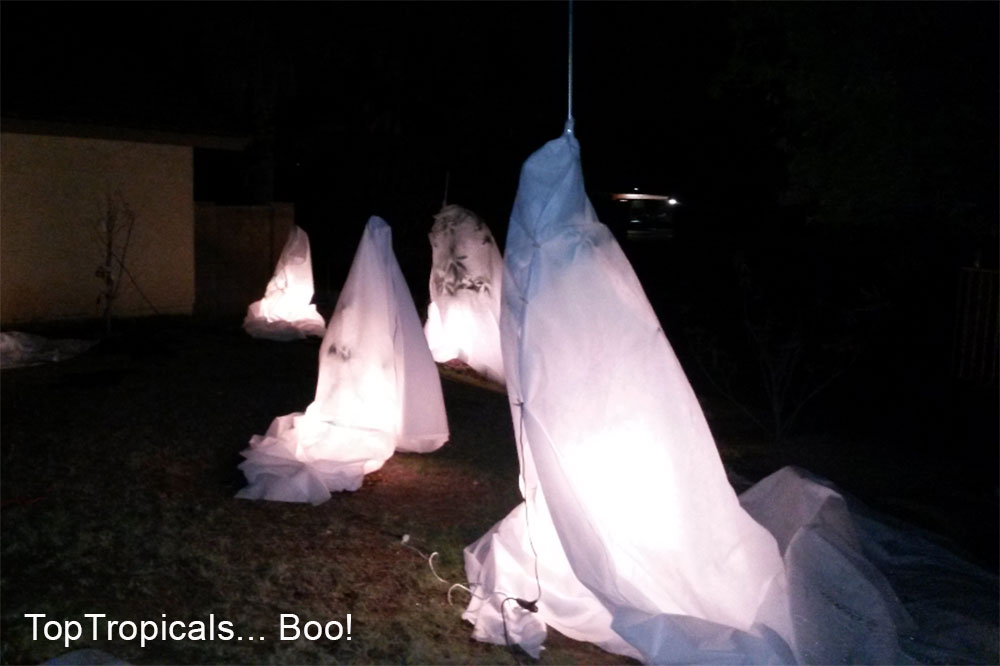
Use Christmas lights: A simple string of lights can add extra warmth, protecting your plants during frosty nights.
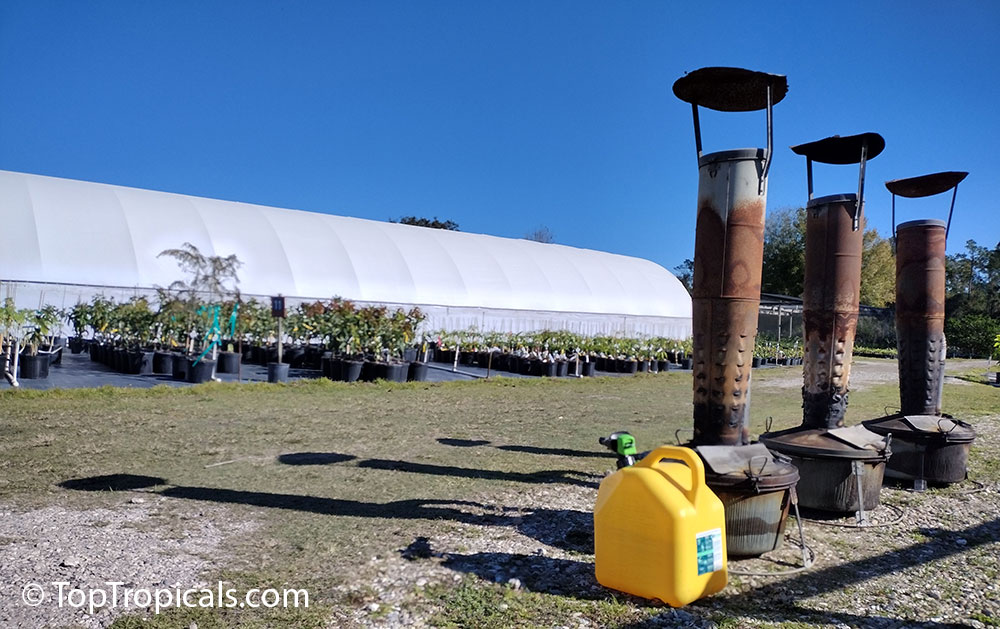
Use propane heaters: For added warmth in a larger area, place a propane heater near your plants. Make sure to follow safety guidelines and keep the heater at a safe distance from flammable materials. This can help maintain a few extra degrees of warmth, especially in more open garden spaces or temporary greenhouses. Always ensure proper ventilation to avoid harmful gas buildup.
Photo above: we use both propane and kerosene heaters at the nursery
Large Collections? Build a Temporary Greenhouse
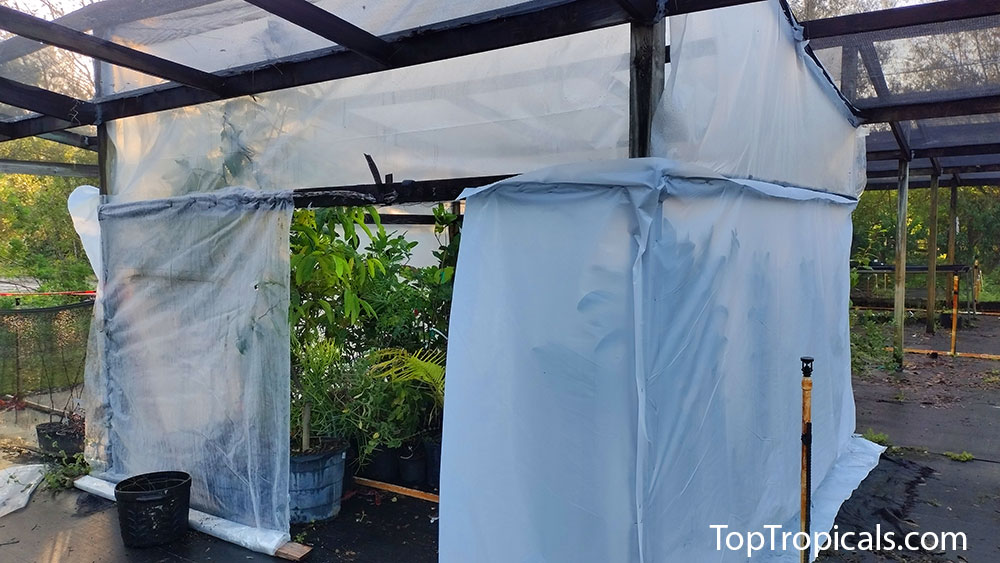
Affordable winter greenhouse: For large plant collections, you don't need an expensive greenhouse. A mobile carport with plastic or fabric covering, costing around $200, can house up to 100 plants!
Photo above: Temporary wrapping around plant collection with a plastic or frost cloth protects from a windchill. It may also win you a few degrees even without a heater. In this particular case, according to our temp sensors, with 30F outside, it was 41F inside this "dome", no heaters used.
Southern Exposure and Garage Storage
Southern windowsills: Compact tropicals can thrive on southern-facing windowsills, getting plenty of sunlight during the day.
Move plants inside: If you have larger collections, move them into a well-lit garage for the colder nights or longer periods.
Photo above: using Christmas lights around plants while wrapping with frost cloth.
Key Factors for Survival
Cold duration: Tropical plants can survive brief cold spells but long durations, even above freezing, can be deadly.
Wind-chill: Wind chill can be harsher than the temperature itself.
Exposure: Southern-facing slopes hold heat longer, making them ideal for your plants.
Humidity: Proximity to lakes or oceans can create a milder micro-climate.
Gradual temperature Drops are safer. Plants adjust better to slow temperature changes than sudden cold blasts. Gradual cooling allows plants to prepare, reducing the risk of damage.
Strengthen Plant Hardiness
Health and maturity: Well-established, healthy plants are more cold-hardy. Boost plant immunity: Use products like SUNSHINE-Epi to improve cold resistance. Apply it before and during cold snaps to protect your plants. Healthy plant is hardy. Make sure to fertilize your plants on regular basis - healthier and stronger plants are more cold hardy.
With these steps, you can protect your plants and help them survive the winter months. Stay
warm and keep your garden thriving!
Podcast with Horticulturist Mark Hooten:
How to Protect Tropical Plants in Winter
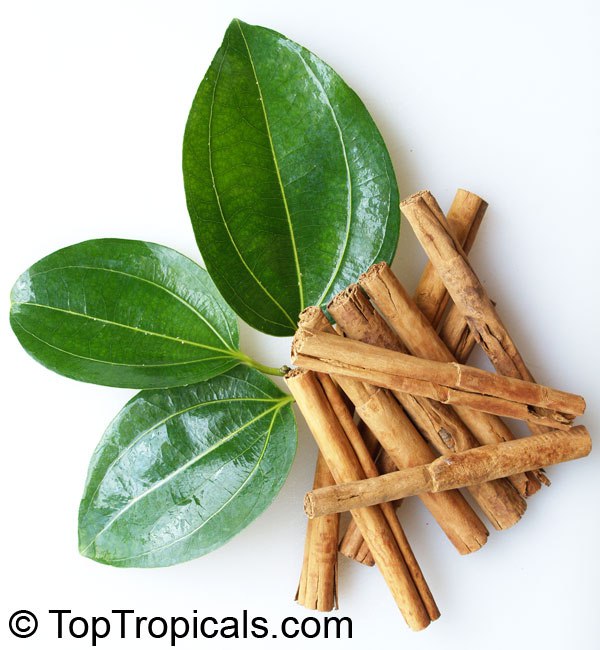
Cinnamon helps increase libido and reduce anxiety, - says the Nutritionist.
This spice also has antifungal and anti-inflammatory properties. In addition, it is widely used in cosmetology for hair care, enhancing shine and radiance while adding elasticity.
🍷 Do you like guava juice? It’s packed with flavor!
🍉 Did you know you could enjoy fresh guava juice from your own tree?
It’s as easy as 1-2-3! All you have to do is plant your own guava tree.
🍉 The 1-3 gal plant will start fruiting for you in no time. And you can expect a large crop in just a couple of seasons.
🍉 Guava trees thrive in mild climates with frost-free winters, but can tolerate light frost once established. And if you live in a colder climate - no worries. Guava is the perfect container fruit tree. You can bring it inside during cold nights and still enjoy fresh fruit every year.
🍉 Just don't forget to water - guavas are heavy drinkers.
🍉Order your Guava tree today from TopTropicals.com - delivered right to your door!
What is the biggest papaya fruit on the smallest tree?
Papaya TR Hovey
🔔 What is the biggest papaya fruit on the smallest tree?
🍈 We discovered an amazing Papaya variety. It is called TR Hovey. This dwarf tree is only 4-5 ft tall and yet produces giant sweet papayas size of a melon!