Date: 6 Nov 2023
Cat
Horoscope
Scorpio Zodiac Cats 10/24-11/21
By Alex Butova, the Witch of Herbs and Cats

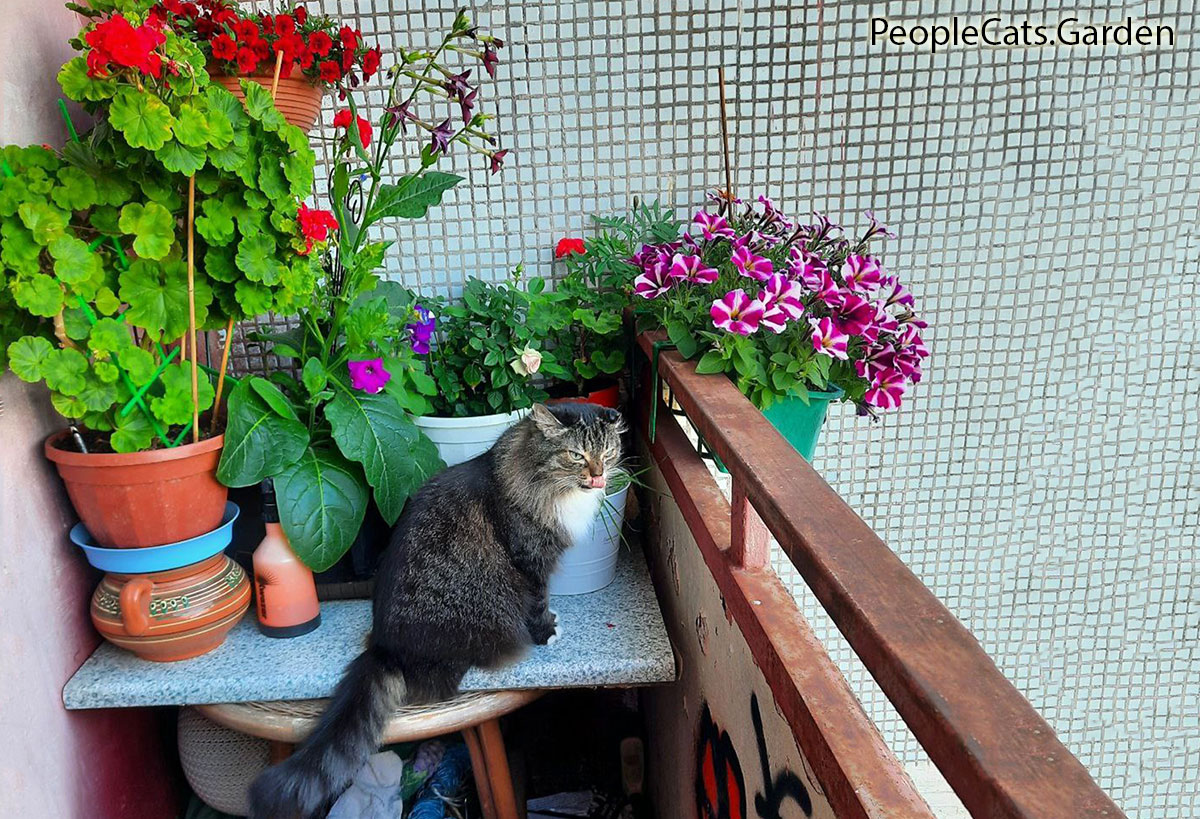
In the photos: Typical Scorpio cat Sonya, born 11-4-2010.
How to know the astrological sign of your cat?
The astrological sign of a cat can be determined by either their date of
birth or adoption, as adoption is often considered a second birth for
cats...More >>

Love all around them, be
they cats, other animals, or humans...
Scorpio Cats exhibit a profound passion for life and love, extending not only to their own romantic affairs but also to the relationships of those around them, be they cats, other animals, or humans. These feline individuals thrive on being intricately involved in everything...
Scorpio Cats are inclined to assert dominance in any situation...
Scorpio Cats are known for their intense focus. Once they set their sights on something, they pursue it relentlessly, demonstrating fearlessness and a confrontational spirit...
One of the most distinctive traits of Scorpio Cats is their unwavering fidelity and loyalty. You've heard stories of cats separated from their families who travel miles to get back to them? They were probably all Scorpios!..
Scorpio Cats harbor a fondness for tall flowering shrubs and fragrant creepers with large blossoms. They possess a unique connection to scents, and while ordinary cats may recoil from potent odors, Scorpio Cats exhibit a particular affinity for select aromatic plants. For instance, while most cats are drawn to Catnip (Nepeta cataria) and Valerian root (Valeriana officinalis), Scorpio Cats go wild for the fragrances of Patchouli and Chinese Perfume Plant (Aglaia odorata). Even female perfumes containing oils from these plants bring the Scorpio Cat bliss, as they savor the scent and affectionately attend to the "mistress" of this aroma...
Date: 22 Mar 2017
Condo Mango
Q: I was curious about indoor fruiting mango trees. I live in upstate New York and was thinking about trying to grow an indoor tree for fruit. I have a small heated greenhouse. Is there a variety that can be grown from seed that would suit my purposes and if not what is the most economical way I could obtain a cutting or small grafted plant? I keep my greenhouse around 60F in the winter and have no supplemental lighting. Are there any varieties that may work in a sunroom or other well lit indoor location?
A:
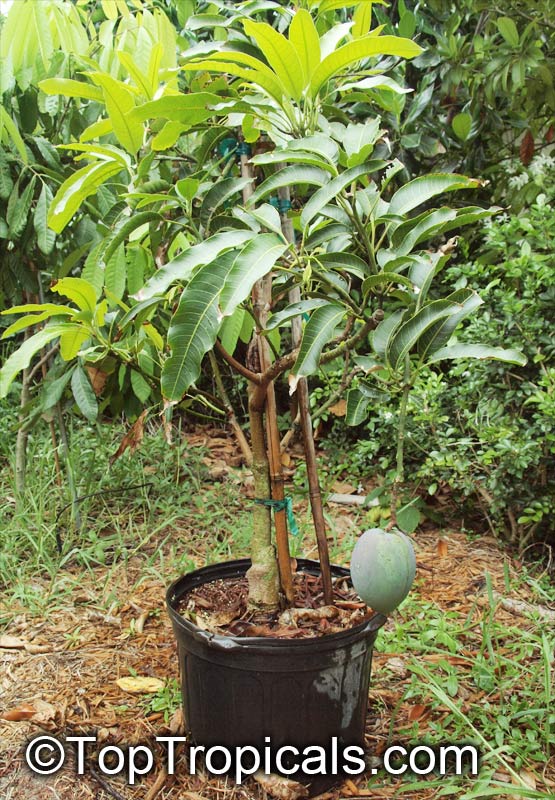
There are many dwarf varieties of mango suitable for container culture. They
are called "condo mangoes".
The most popular condo varieties are: Carrie, Cogshall, Cushman, Fairchild,
Graham, Ice Cream, Julie
, Mallika, Nam Doc Mai,
Pickering. You may read more about them in our online
catalog. You may also look into variety
Lancetilla which is also a compact tree, and produces one of the biggest size
fruit, up to 5 pounds. If you want some rare variety that hardly anyone else has -
try Baptiste, an exotic Haitian dessert
mango.
Your greenhouse should work for the winter time. Mango trees can take
as low as mid 40s during winter and even lower as long as that cold is
occasional. If you keep the temperature around 60, this should work well for over
wintering. Just make sure to reduce watering to a minimum, because cool
temperatures, low light and wet soil - is a bad combination for tropical plants,
especially for mango trees which prefer to be kept on a dry side.
Many indoor gardeners have fruiting mango trees in their collection. However,
keep in mind that the most important requirement for a mango is full sun.
While you may over winter the plant for a few months in a low light conditions,
in order for it to flower and produce fruit it needs lots of light. If moving
the tree into full sun your yard during the summer is possible, this would
be the best solution.
We always recommend
SUNSHINE boosters for both over wintering tropical plants in colder
climates, and for indoor gardening. SUNSHINE applications will help your tree to
cope with cool temperatures and low light conditions. This will also
dramatically increase flowering and fruiting performance. Another important factor for
keeping your container plant healthy is quality of your potting soil. We
offer a special
professional mix that contains lots of good stuff: coconut fiber, peat moss, pine
bark, and perlite. Fertilizing potted plants
is also very important during the warm season, because this is the only way
for them to get nutrients (which in the ground can be reached by spreading
root system).
As far as seedlings vs. grafting - the only way to
have a nicely fruiting mango tree is to plant a grafted variety. Seedlings start
producing only after 8-15 years, and the quality of such fruit may be
questionable. Only grafted plants can guarantee the desired taste of a variety.
Besides, grafted mangoes start producing immediately - you may see fruit forming
on plants as small as 3 ft, in 3 gal containers. However, during the first
1-2 years you will need to remove extra fruit and leave only 1-2 fruit so the
plant doesn't get exhausted and has enough energy to establish strong root
system.
For fun stories about growing mango, check out our Radio
Show recording YO Tango Mango!
Date: 13 Jul 2023
Fertilizing during rainy season
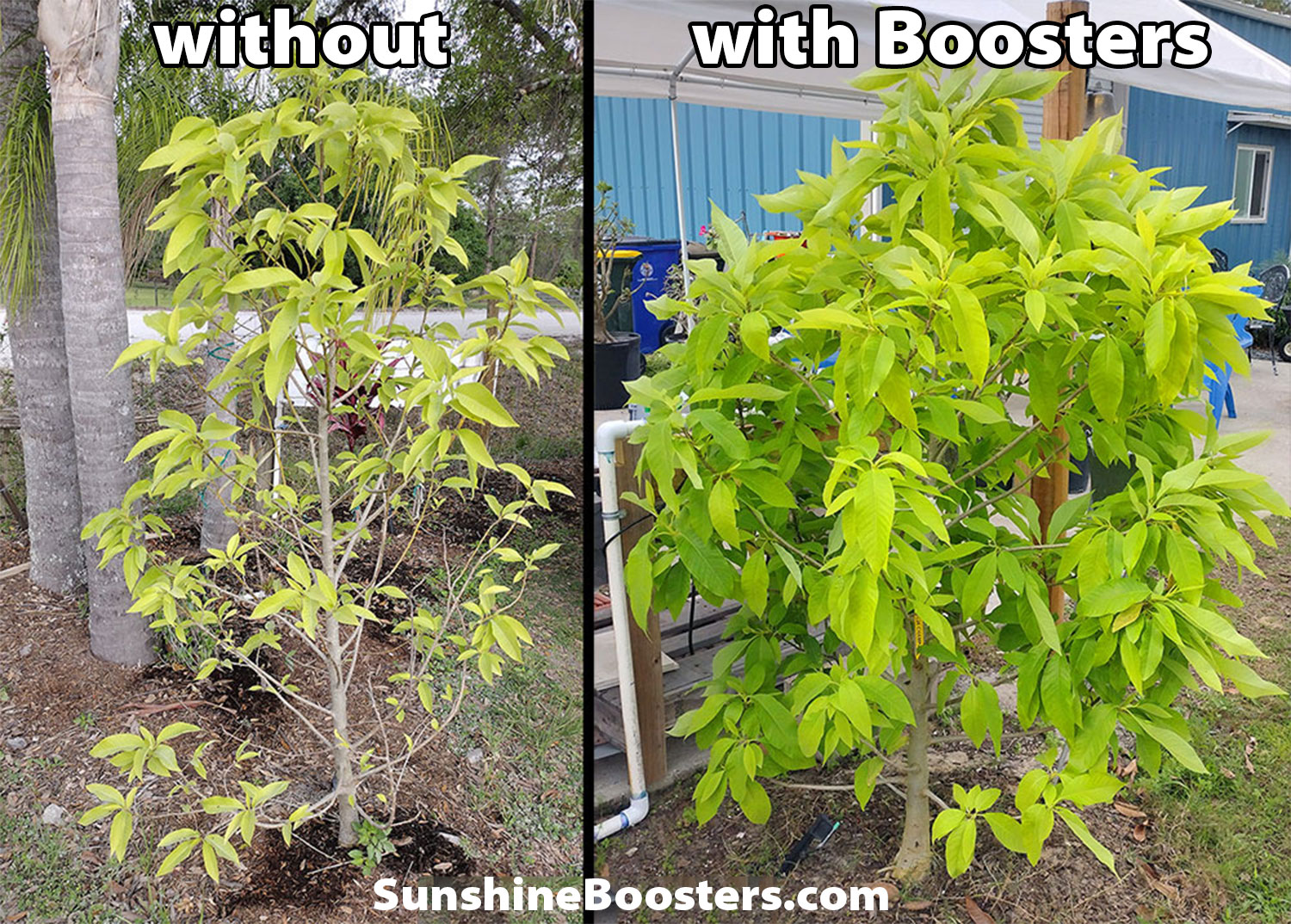
Q: I have installed your Robuster unit to fertilize my fruit trees, but here in Florida, it is the rainy season and most of the time I do not need to irrigate during the summer. What do you recommend to keep up with fertilizing program?
For in the ground plants
If there are frequent rains, it's not necessary to use any fertilizers except for slowly soluble ones. During rainy periods, use a slow release fertilizer. Simply scatter 3 oz per 100 square ft. You can adjust the amount based on your specific area and number of plants.
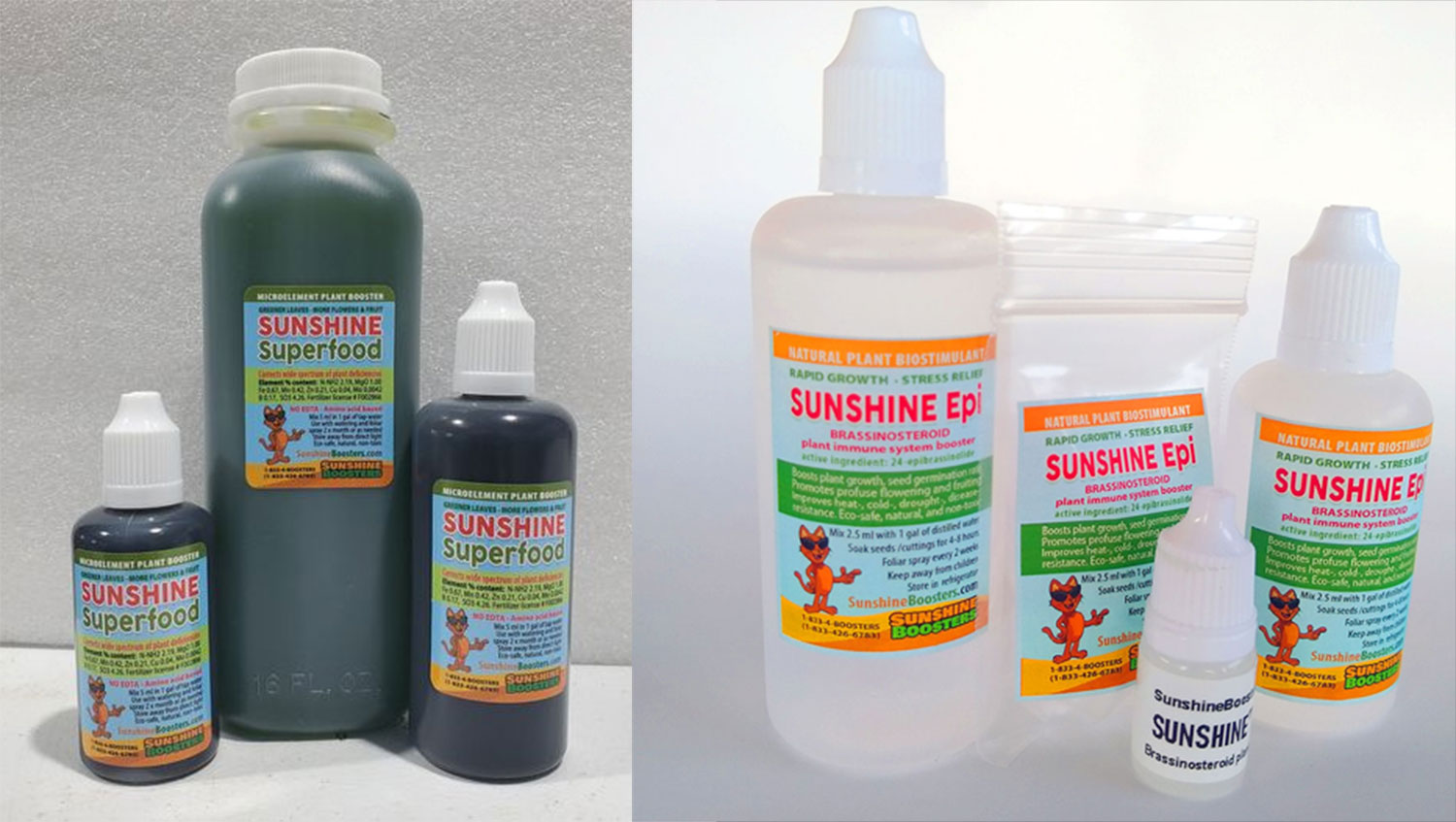
Additionally, for foliar treatments, use Sunshine SuperFood microelement supplement and Sunshine Epi biostimulator.
When you water next time, regardless of whether it rained or not, resume
using liquid Sunshine Boosters.
For potted plants
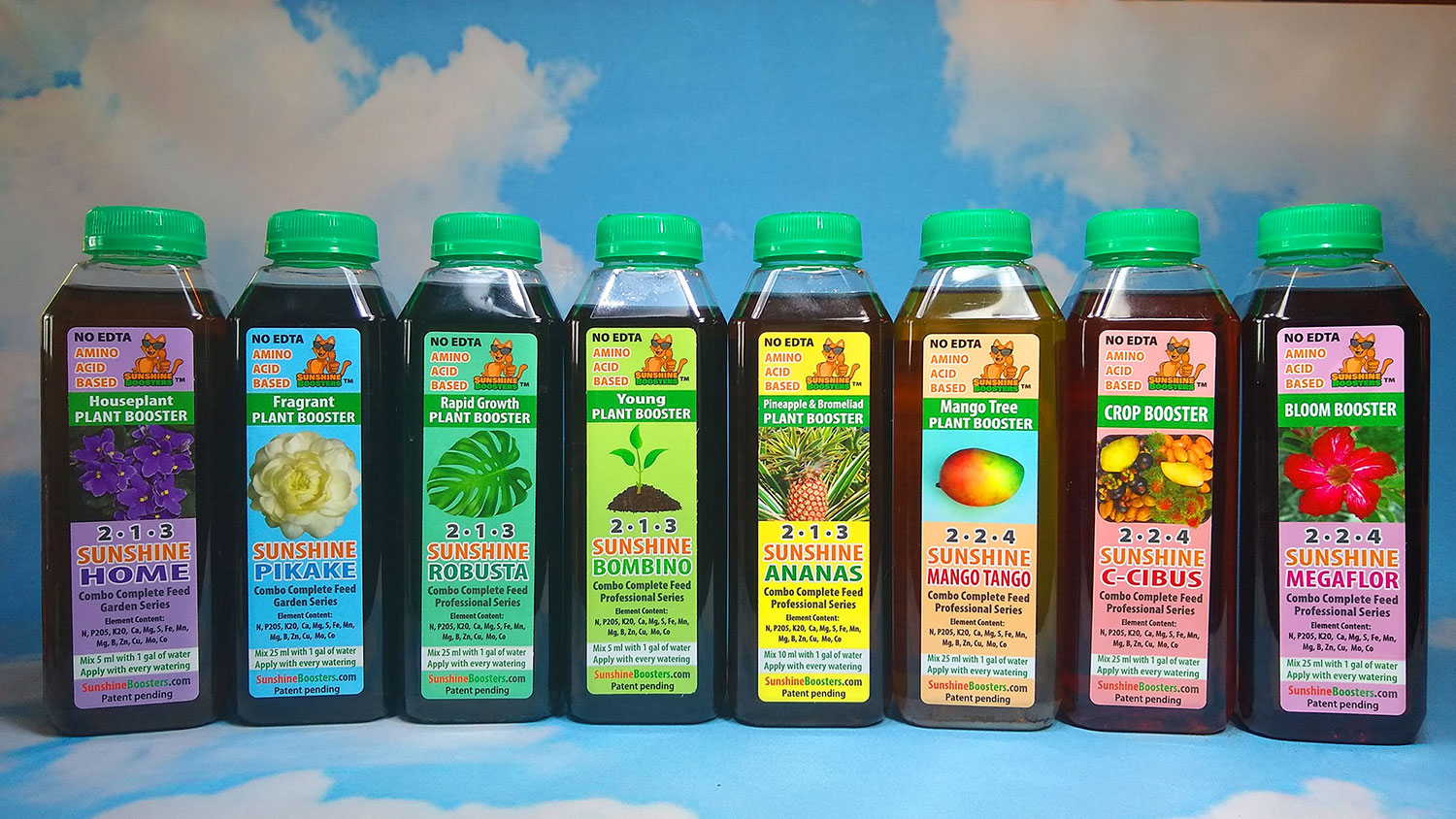
When you water your potted plants, use liquid Sunshine Boosters. Every 1 or 2 weeks (we recommend weekly), apply Sunshine Garden Series (the same type you are using when watering) for foliar treatment. Use the same dosage as you would for watering. By following these recommendations, you can ensure that your plants receive the appropriate nutrients during the rainy season.

Date: 28 Jun 2023
Six reasons to grow
Elephant Ears in your garden
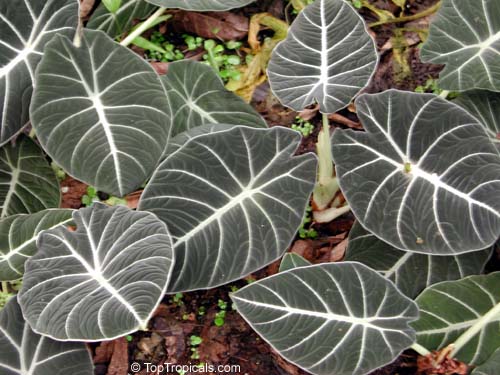
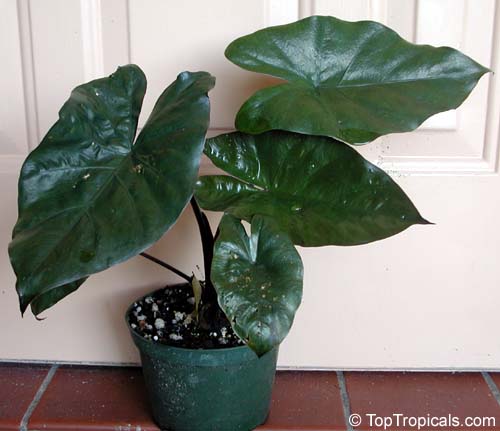
Alocasias and Colocasias, commonly known as Elephant Ears, are both remarkable and popular plants that can bring a touch of tropical elegance to any garden. Here's why they are often considered great additions:
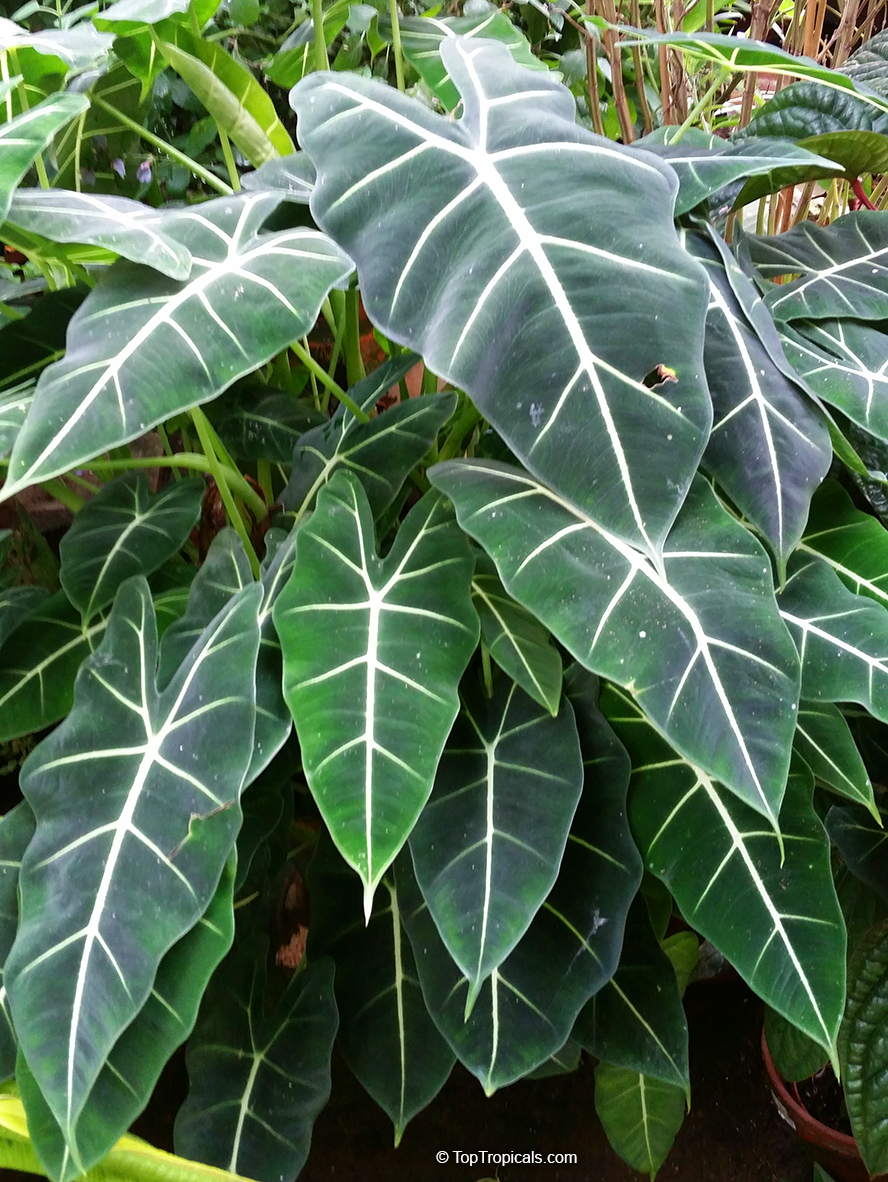
1. Striking Foliage: One of the most captivating features of colocasias and alocasias is their large, lush foliage. The leaves can be enormous, resembling the shape of elephant ears, hence the common name. The foliage is usually rich green, but there are also varieties with hues of purple, black, or variegated patterns. These vibrant leaves create a dramatic focal point in any garden setting.
2. Tropical Aesthetic: Colocasias and alocasias have a distinct tropical vibe that can transform your garden into a lush oasis. Their exotic appearance lends itself well to creating a tropical-themed garden or adding a bold accent to other styles of landscaping. Their large, architectural leaves add a sense of drama and create a stunning backdrop for other plants.
3. Versatility: These plants can be grown in various garden settings. They work well in containers, making them suitable for patio gardens or balcony displays. In larger landscapes, colocasias and alocasias can be planted directly in the ground, either as standalone specimens or as part of mixed border plantings. They can also be utilized around water features or in bog gardens since they enjoy moist conditions.
4. Low Maintenance: Once established, colocasias and alocasias are generally low maintenance plants. They thrive in full to partial shade, preferring a consistently moist soil. Regular watering and occasional fertilization will help them grow vigorously. While they are generally hardy, some varieties may require protection during colder months or overwintering in frost-prone regions.
5. Impressive Size: With proper care and favorable growing conditions, colocasias and alocasias can reach impressive sizes. Some varieties can grow several feet tall, creating a stunning vertical element in the garden. Their size and presence make them ideal for adding structure and height to planting arrangements.
6. Unique Varieties: Colocasias and alocasias offer a wide range of cultivars and species, each with its own distinct characteristics. From the classic Colocasia esculenta to the more exotic Alocasia macrorrhizos, there are numerous options to choose from. You can select plants with different leaf shapes, colors, and patterns to suit your taste and garden design.
Date: 22 Feb 2022
How to survive Winter in South Central Florida
A touching story
by Ed Jones, the Booster Guy
...As much of the country is still in the midst of winter, I believe the
worst has passed for us here in the South Central part of Florida...
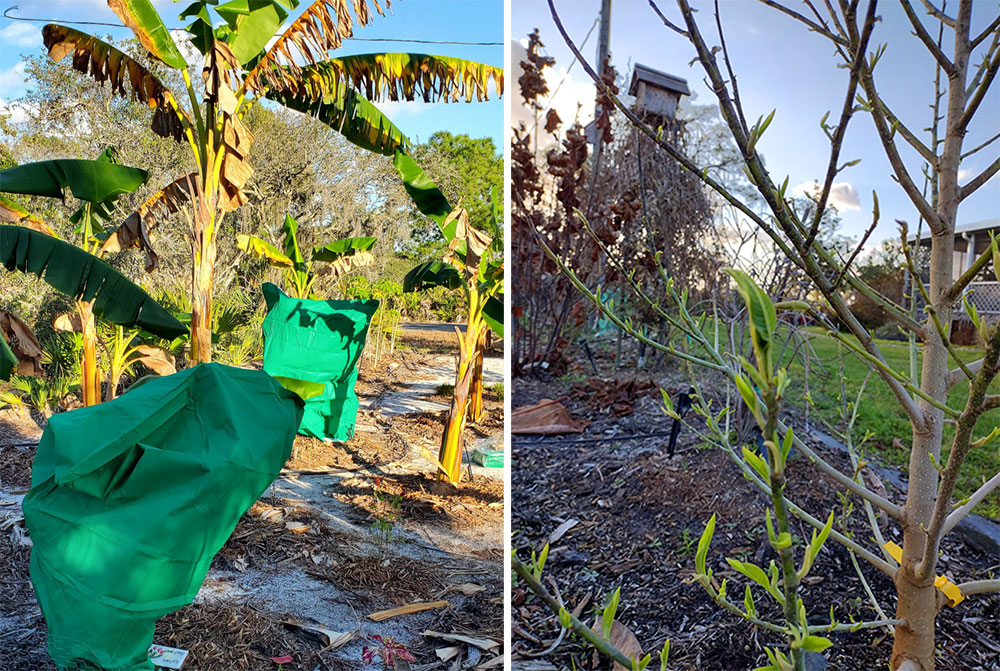
...This Winter, almost all of zone 9b and some of zone 10a had frost and
many had a hard freeze...
...Now, many of us here in this part of the state enjoy growing subtropical
plants and trees. There are many that grow well here and most can handle a
frost or even a dip to the high 20s for a short time. Smaller and more
recently planted trees and bushes are most at risk...
...At the Top Tropicals nursery here in Sebring, home to over 20,000
plants, we scrambled for several days to try to protect as many of our plants as
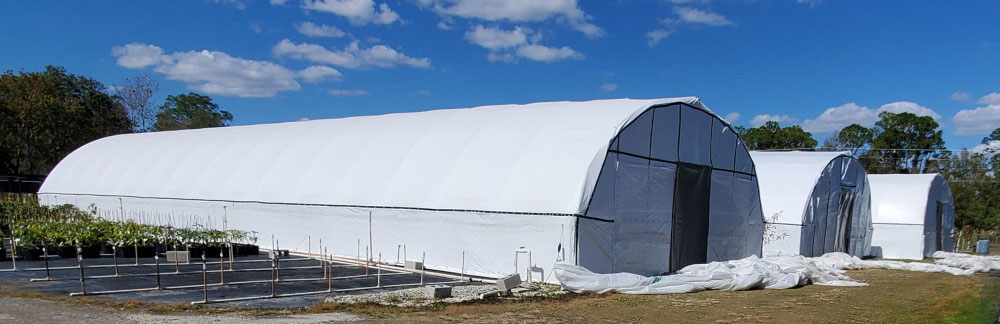
possible. We moved smaller plants into some of our hoop houses that had propane
heaters...
...After 2 weeks of moving plants in and out of protection, we were all
pretty worn out; happy that everything survived and hoping that we would not
have to do that again anytime soon. Slowly, things at the nursery are beginning
to resemble our old normal. Seeds are being planted, cuttings are continuing
to grow and grafting season will be upon us soon. We are all very happy for
that...
...What to do and not to do when the freeze is coming and you have mango,
avocado, and other tropical fruit trees and tender tropicals? Here is some
news from the Orchard and many more coming... check it out and stay with our
updates to learn more!